Prize Cattle Herd – 1949
Prize Cattle Herd – 1949 Read More »
Historical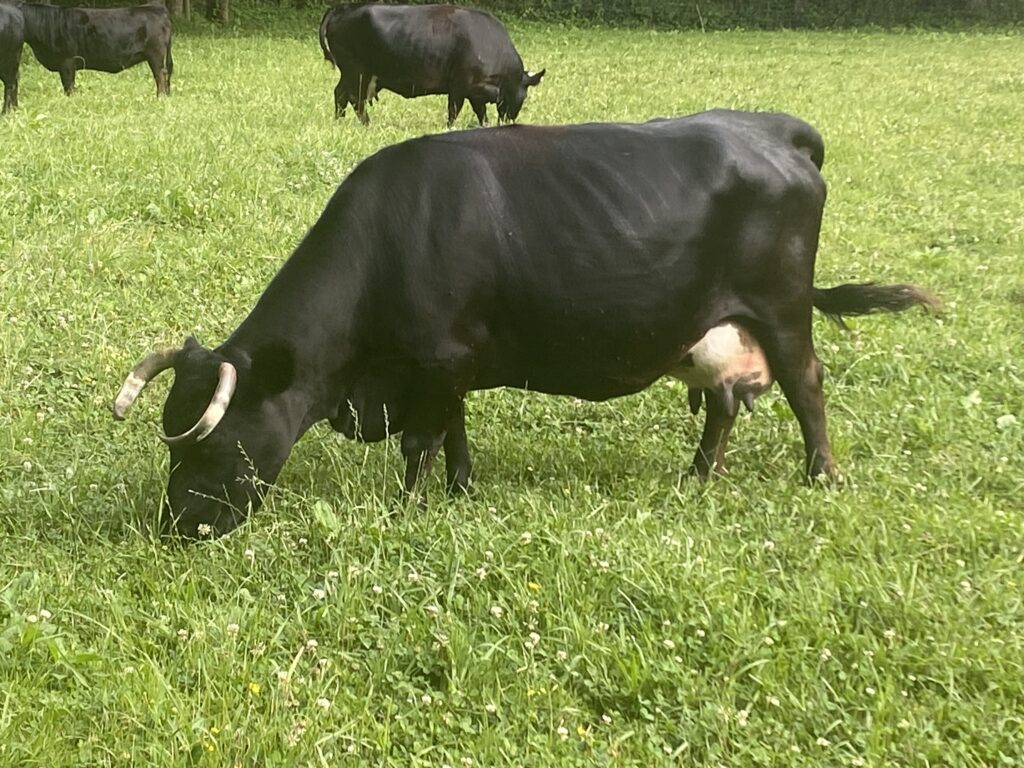
Dwarfing within the Dexter breed is entirely hereditary and does not occur in an individual as a result of a mutation.
Genetics of the Dexter Breed Read More »
Historical
This is an interesting article on how people are returning to the old ways and using more and more of their processed beef. Healthier alternatives are growing in your pastures!
https://www.theatlantic.com/health/archive/2025/08/cowmaxxing-wellness-cow-tallow/683826
How much of your Dexter do you use? Read More »
Beef
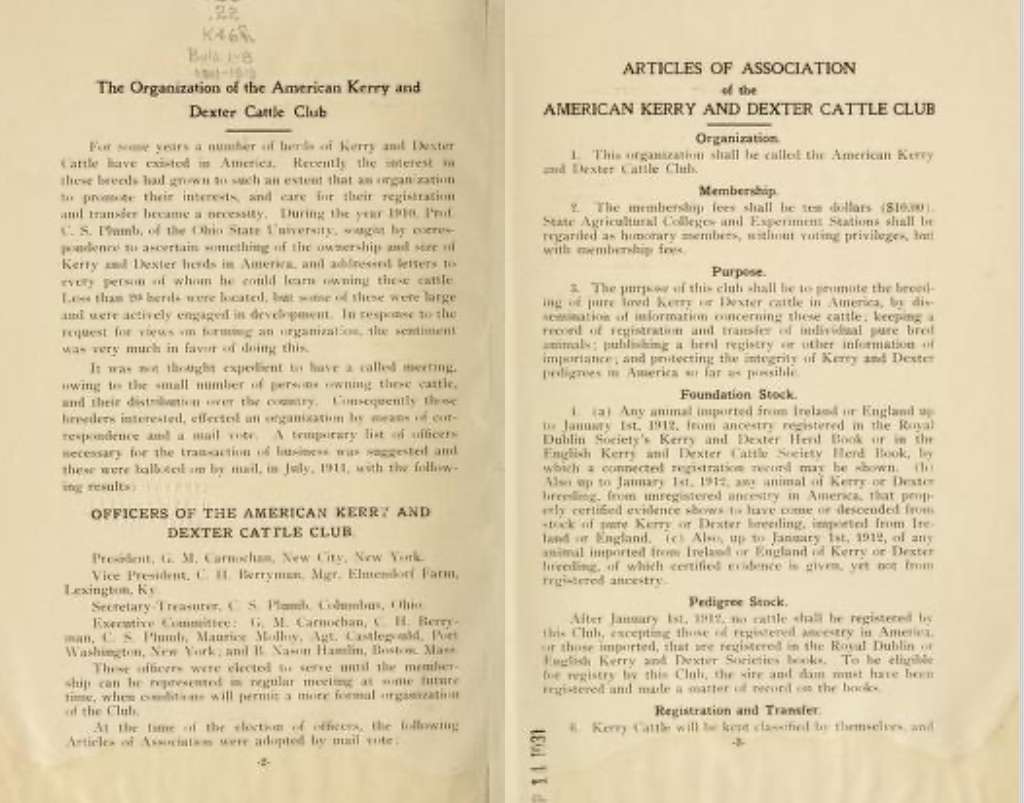
For some years a number of herds of Kerry and Dexter Cattle have existed in America.
The First American Dexter Cattle Club Read More »
Historical
Mike Baker describes features of market readiness for both finished and unfinished beef and dairy crosses.
Determining the Market Readiness of Beef Cattle Read More »
Beef Herd Health
Learn how to have 1/2 a cow butchered for your family to get the right cuts
Half a beef, What cuts to request Read More »
Beef Selling
By Judy Sponaugle of Legacy
Another registry “innovation” finds the US herd a hodgepodge of mediocre and forgettable initialed herd names. The US is the ONLY country in the world that has so little respect for Dexters they guarantee breeders basic anonymity by using initials of farm names as herd identifiers! Goodness but it IS forgettable.
Here’s an example. I was trying to convince a new breeder about to register a first calf NOT to use the initials encouraged by the US registries for it all but determines anonymity for their herd. Truth be told. . . . there are only two initialed herds in the US I remember by initials, both because the owners were/are prominent in the breed. So, . . . I gave this person examples of wonderful and imaginative herd names, and then I looked at the state of Virginia ( where the owner lived) and picked out three herds with initials. I know most herds and owners by heart through constant research. . . and I looked at the initials and began the process of trying to remember the herds. It was a struggle! One of the herds I knew very well because my own bloodlines founded the herd and it was a perfect example of how even a constant researcher will NOT recognize herd initials. Almost guaranteed anonymity and obscurity unless the person becomes a huge long-term breeder with a large herd.
Woodmagic was chosen by Beryl Rutherford because it was based on a favorite book from childhood, and all her Dexters were named after woodland creatures and birds. Grinstead brings a smile to one’s face, with or without the beautiful photos of that herd and it’s dominance in pedigrees through the years. Most English herds were named after the homes or estates or towns where they grazed. It would be interesting to know the history of the choice of La Mancha for the Robertson family’s Dexter herd, but Round Chimneys leaves little to the imagination. Parndon was a parish in Essex, England, and the origins of Ypsitty is still a mystery to me. My least favorite herd name in the English records is Bryn-y-pin because it was difficult to type.
American herd names prior to the 90’s were also imaginative and memorable. Peerless certainly lived up to it’s identity, and every Missouri Dexter owner would immediately know the roots of “Shome”! Shamrock immediately brings to mind the hallowed green leaf of Ireland, while Rainbow and Rainbow Hills are colorfully soothing to imagine. Talisman is a herd name I always liked, and there is a Virginia herd that lives in literal “Paradise”. The Lone Star and Cascade herds identify their geographic locations but also denote history, and Chautauqua identifies an area of NY where the herd is located. ( Another typing challenge for me).
Then we have SGF and SMD. These herds are owned by long-time well known breeders. Can you immediately identify these herds or do you have to stop and think as I did with a herd I knew as well as my own? In England, or Australia, or even Canada, you would most likely know these herds as Spruce Grove or Silver Maple and the identifier would be far more memorable.
One registry started this and the other continued this nonsense of encouraging owners to use initials and give US Dexter herds guaranteed mundane, boring, and unimaginative herd identifiers. This is an “only in America” tradition that needs to fade into the obscurity IT deserves. Please registrars. . . . STOP . .. . .suggesting to owners to use initials. If you are fairly new to the breed. . . . . then CHANGE those initials to a memorable herd identifier and INSIST on it.
IF. . . you are a new breeder and happen to read this page. . . . . . . . . . . . . your Dexter breeding program deserves a unique identity. I strongly urge you not to be led down the initialed path to anonymity.
THINGS TO CONSIDER ABOUT YOUR HERD IDENTIFIER. A LITTLE BIT OF HISTORY! Read More »
Historical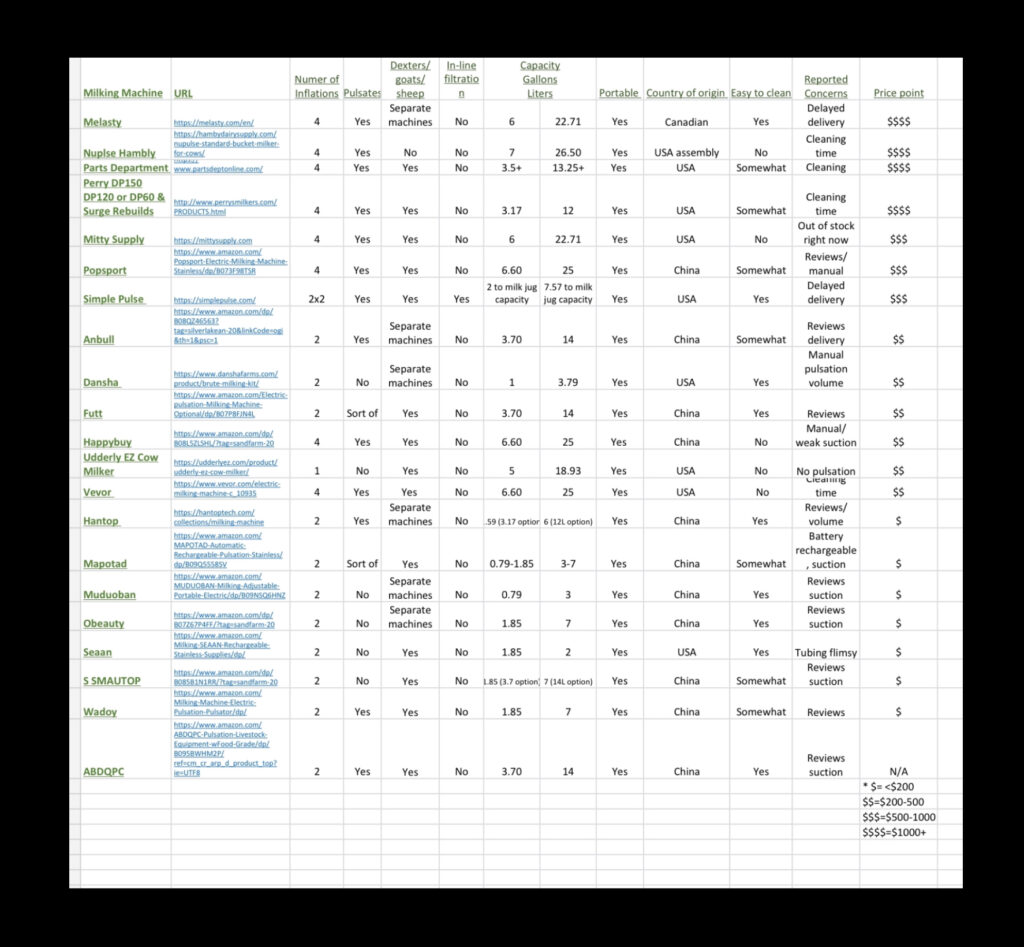
The milking machine market can be so confusing. In an effort to help you wade through what is currently on the market, I created this spreadsheet.
For the budget conscious, make sure that it has a true pulsation, an added bonus is ease of cleaning.
While I have tried to include everything on the market, I am sure I have missed a few.
https://1drv.ms/x/c/c79950faab991348/EUgTmav6UJkggMeSOwAAAAABhxnazfsIBA0-qpk3ObFlAQ
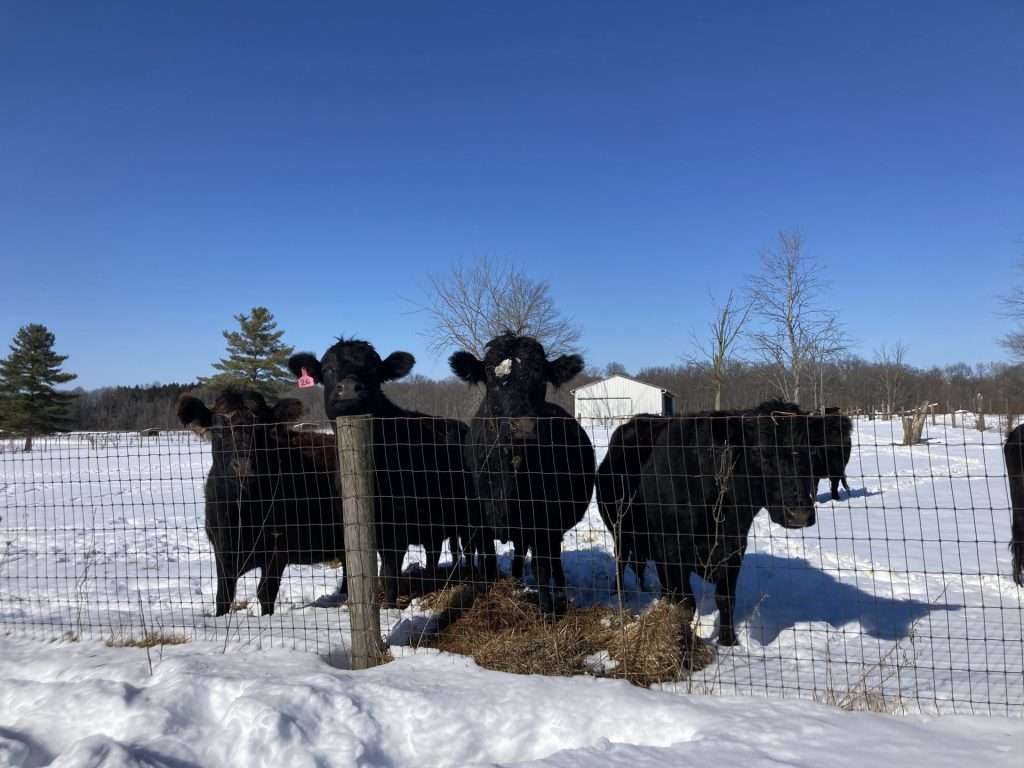
Here is a great video from Greg Judy about the benefits of grazing cattle through snow. He includes tips on keeping water from freezing, looking out for parasite issues, and keeping your operation profitable.
Grazing Through Snow Read More »
Farm Management
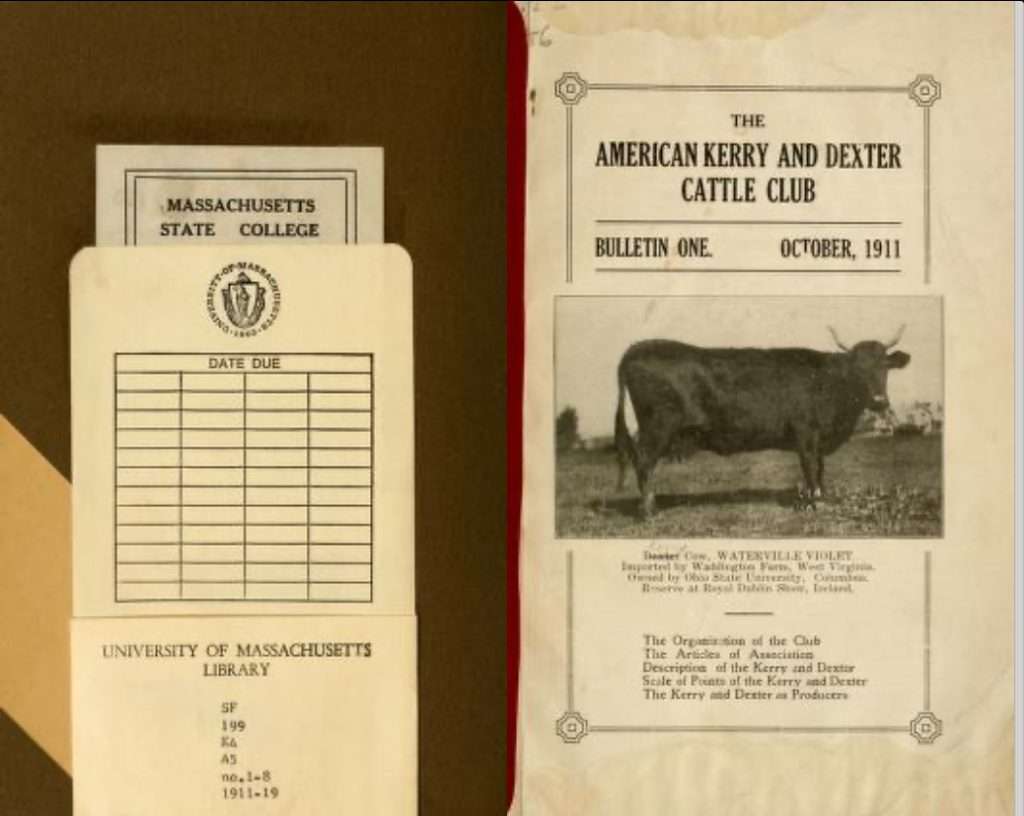
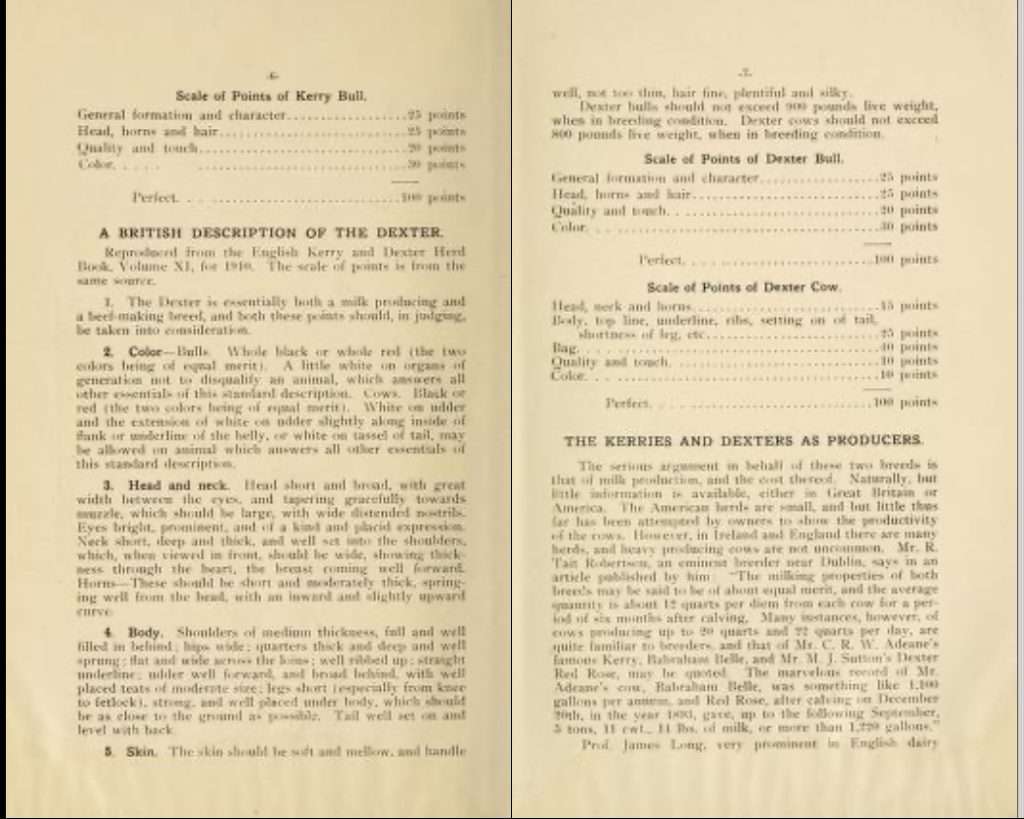
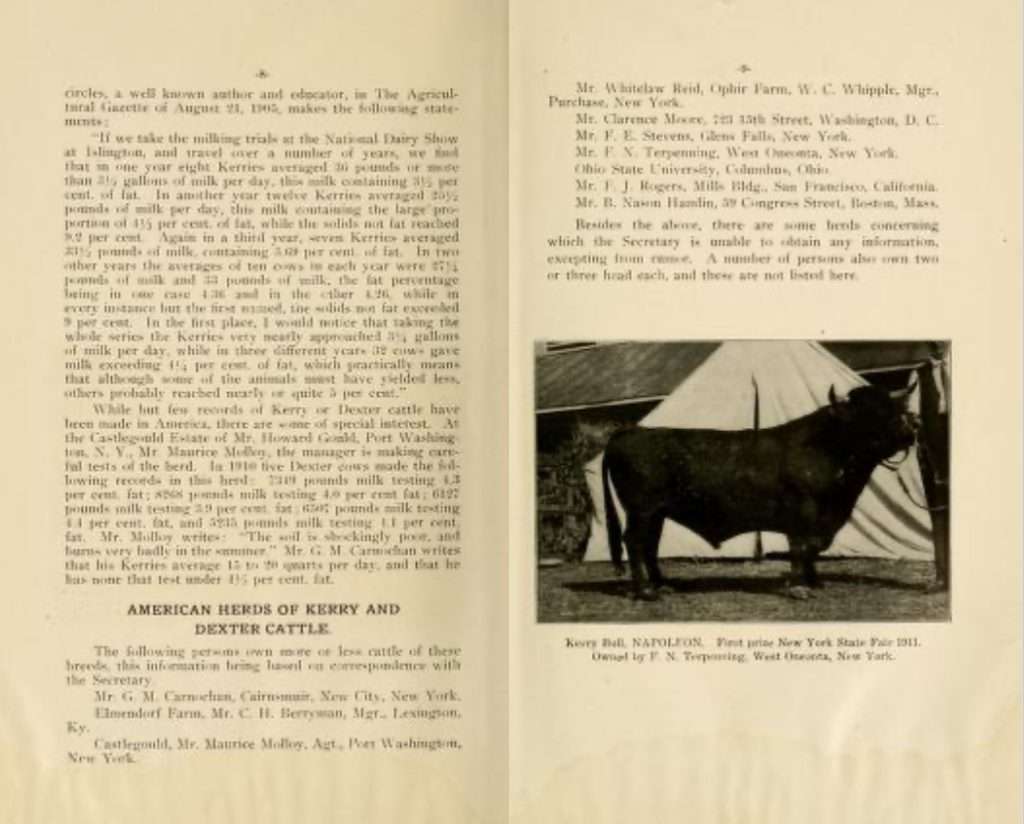
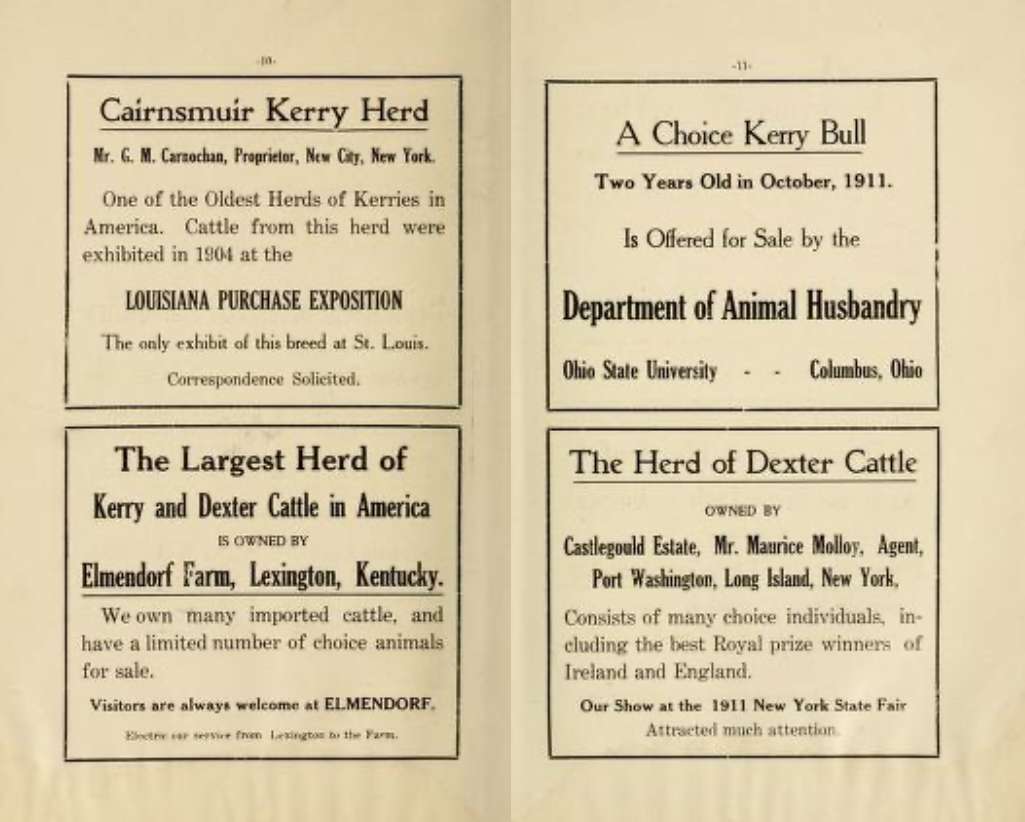
Many thanks to Judy Sponaugle of the Legacy Registry for providing the Irish Dexter Cattlemen with this valuable information. This is the first in a series of excerpts from The American Kerry and Dexter Cattle Club.
It is a great find for all you Dexter history buffs! Seeing some of the old advertisements and recognizing some of those herds was a thrill for me.
The American Kerry and Dexter Cattle Club ….series 1st Installment Read More »
Historical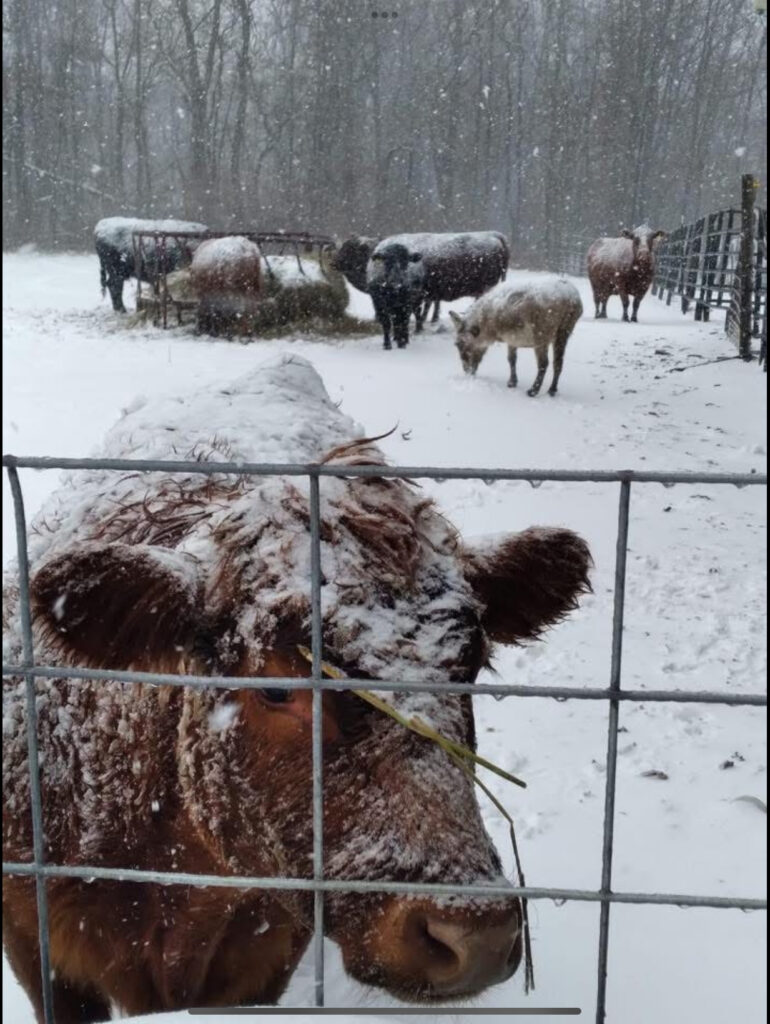
Cattle expected to live outside during the winter should remain outside to adjust to the changing conditions as winter approaches.
https://extension.umn.edu/beef-cow-calf/preparing-your-cattle-severe-winter-weather
Cattle and Severe Weather Read More »
Herd Health
A chute that fits the unique type and size of livestock.
The Ideal Squeeze Chute Read More »
Farm Management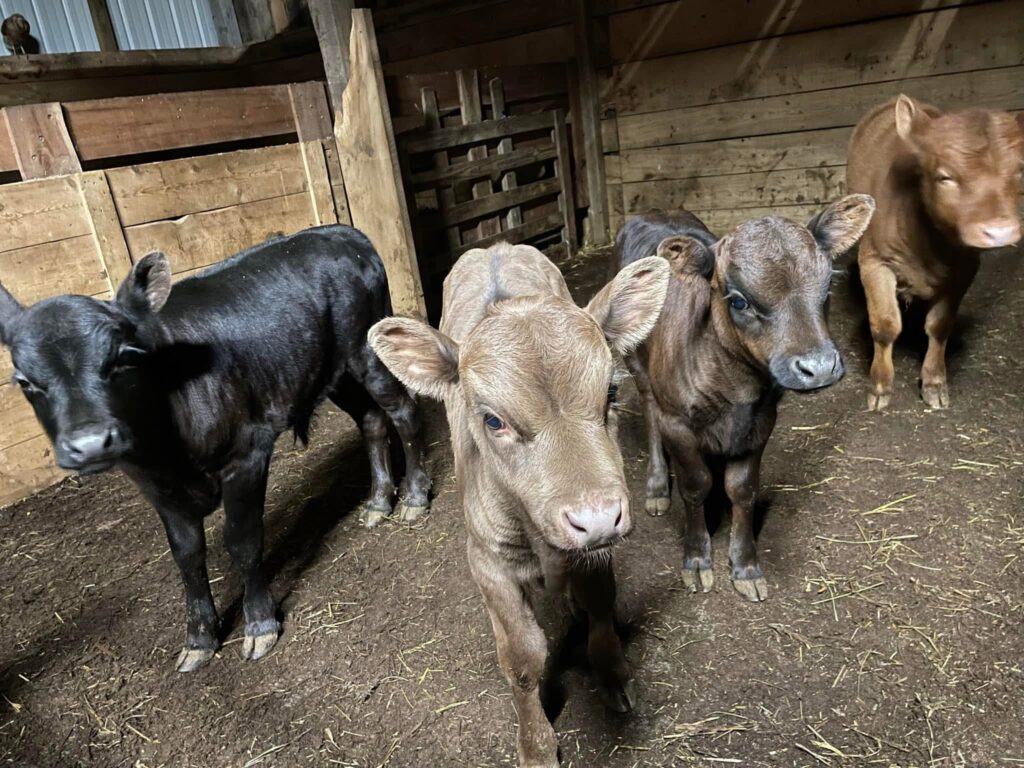
Now’s the time to start planning ahead. Here’s a checklist to help you plan and prepare to improve
Calf Refresher & A Checklist Read More »
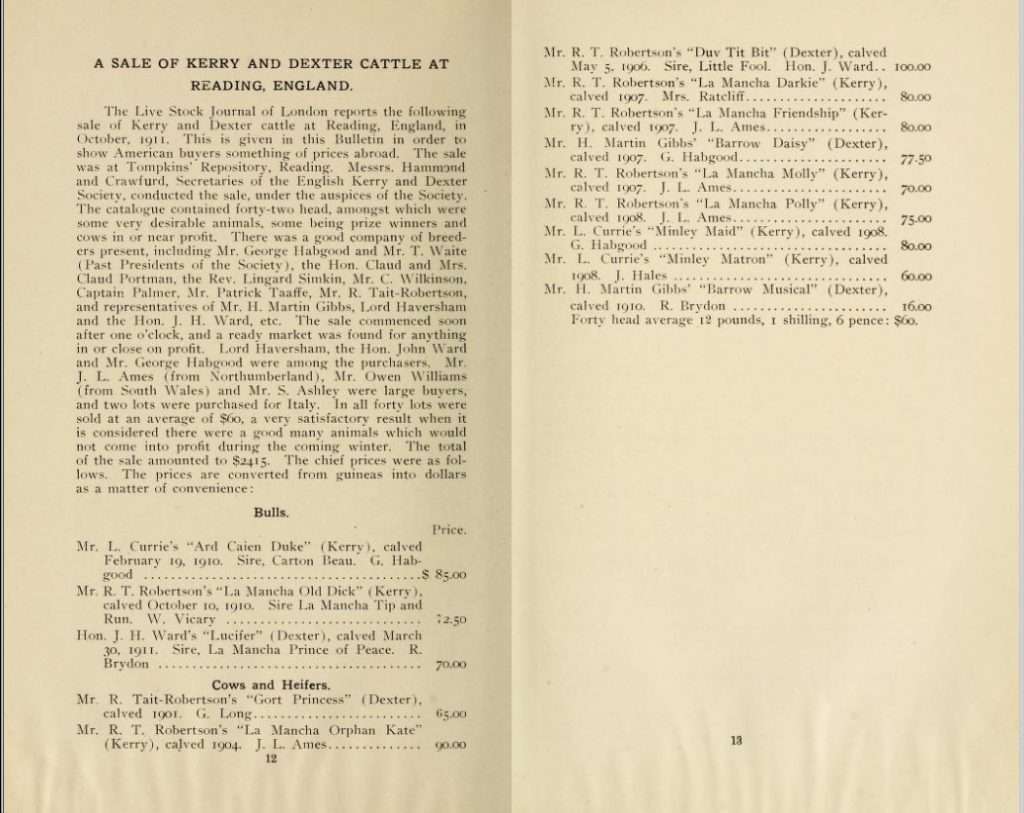
Herd HealthHere is the second installment in the series of The American Kerry and Dexter Cattle Club brought to us by Judy Sponaugle of Legacy. Hope your enjoying the series!
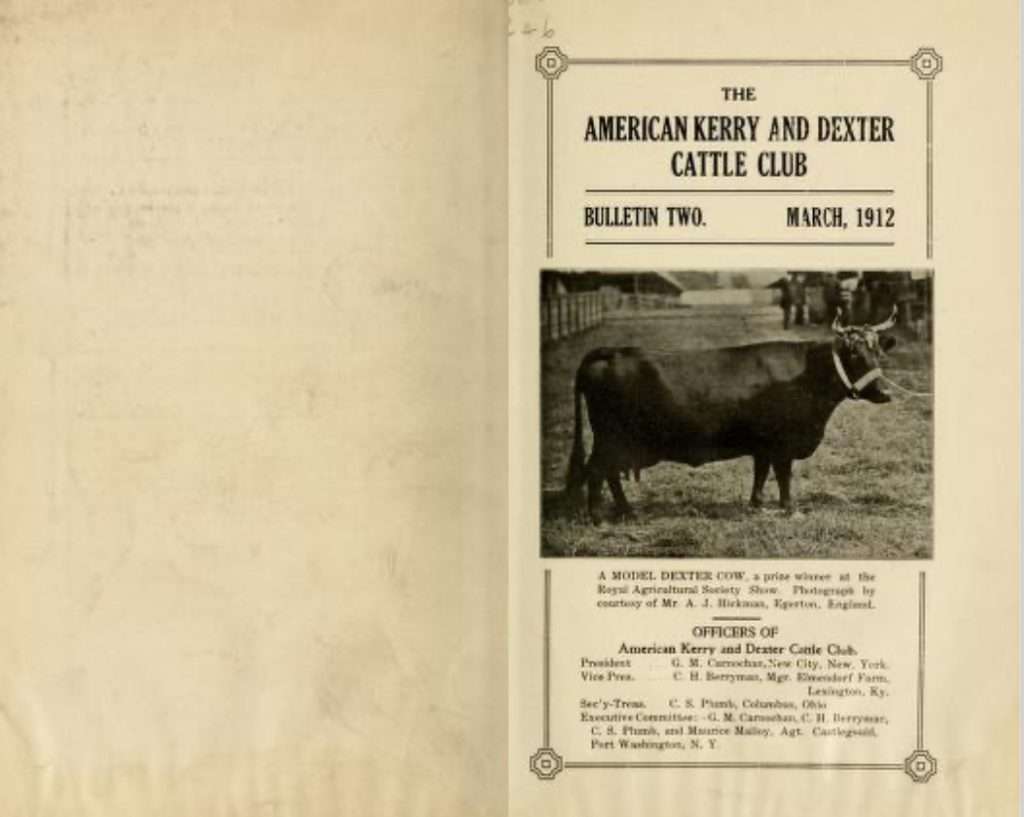
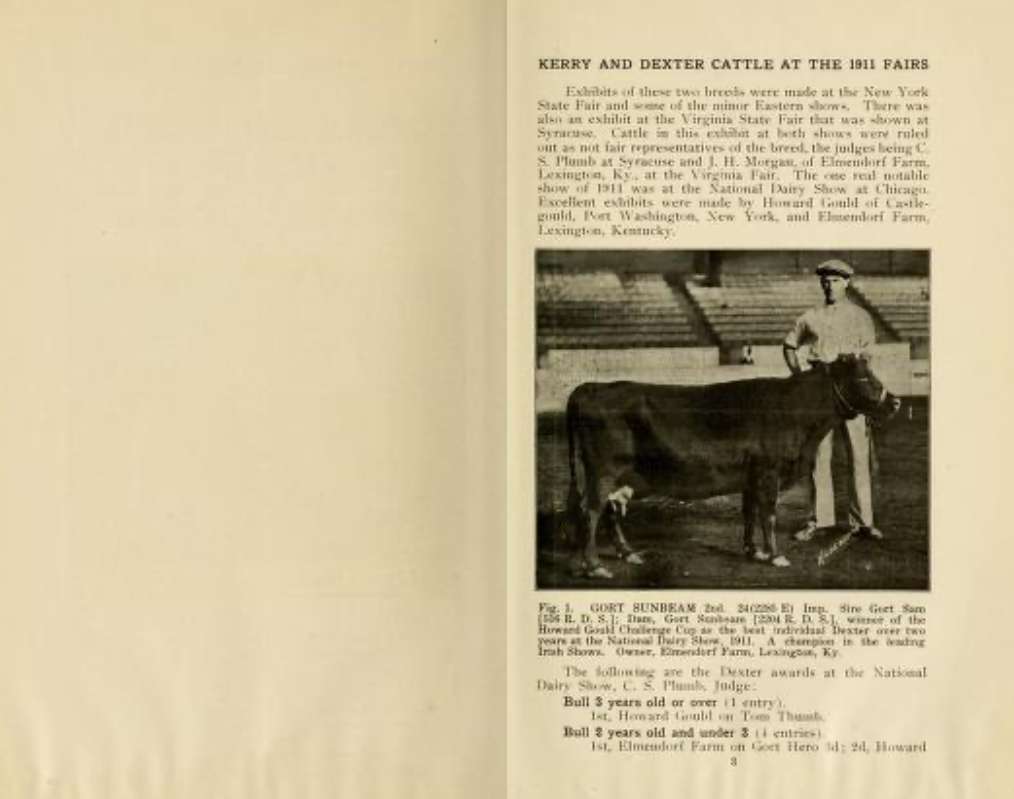
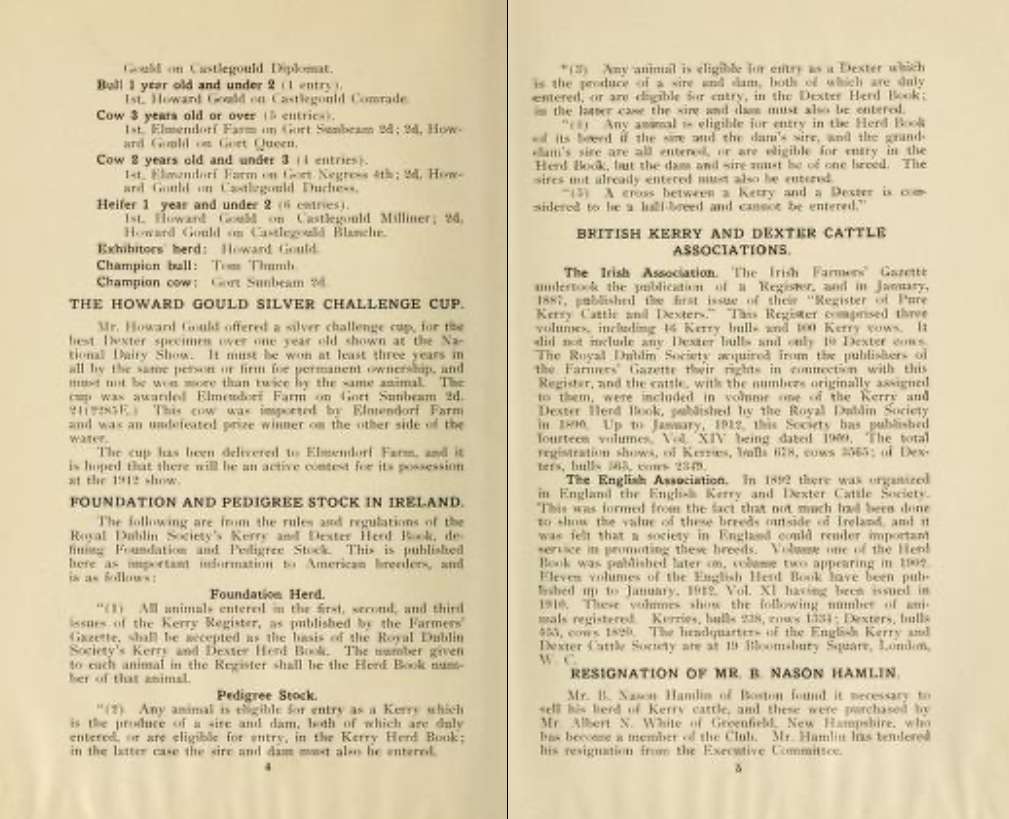
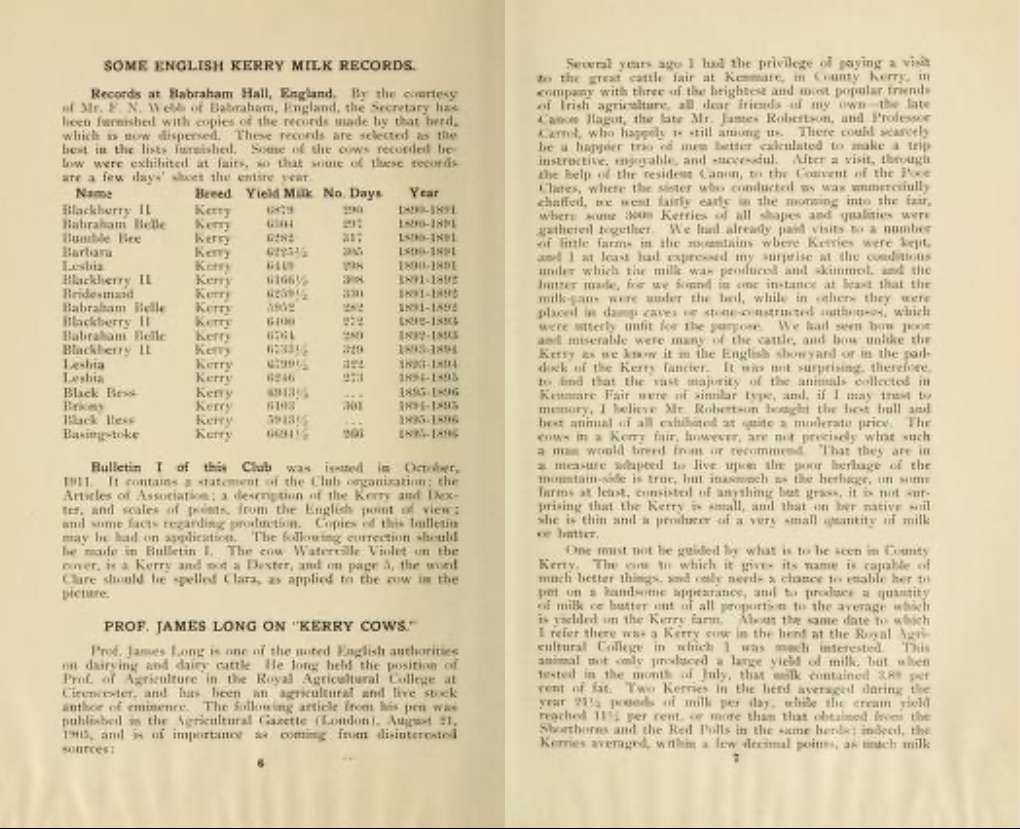
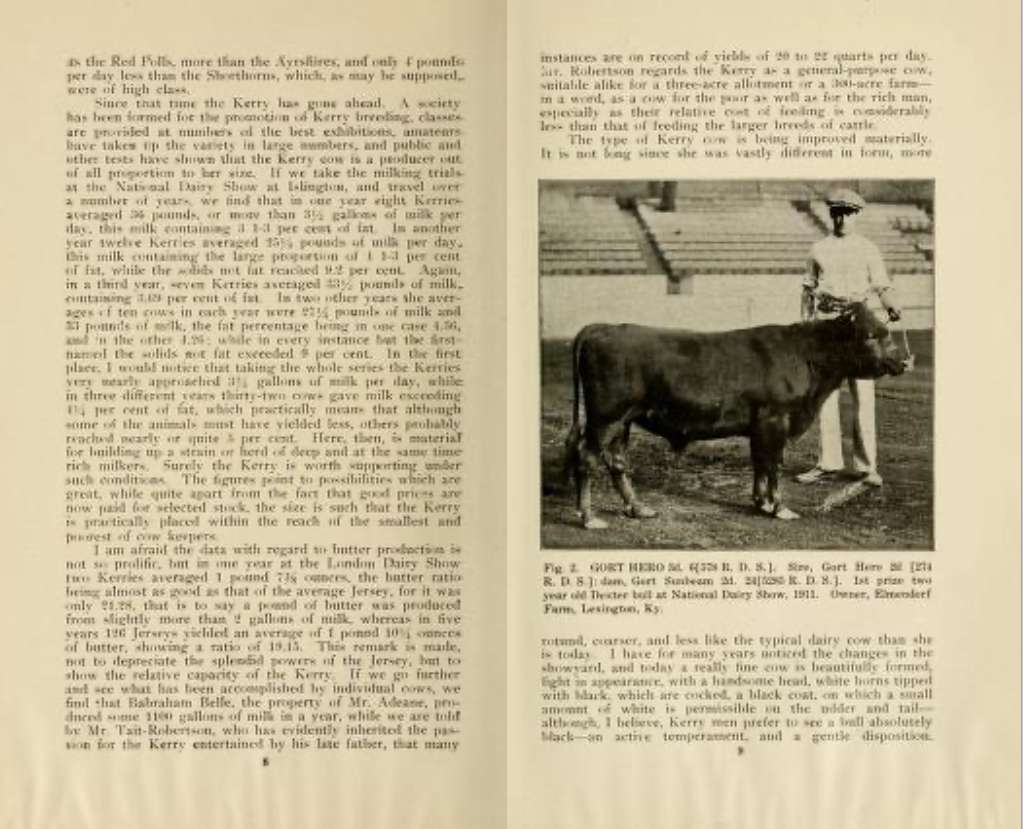
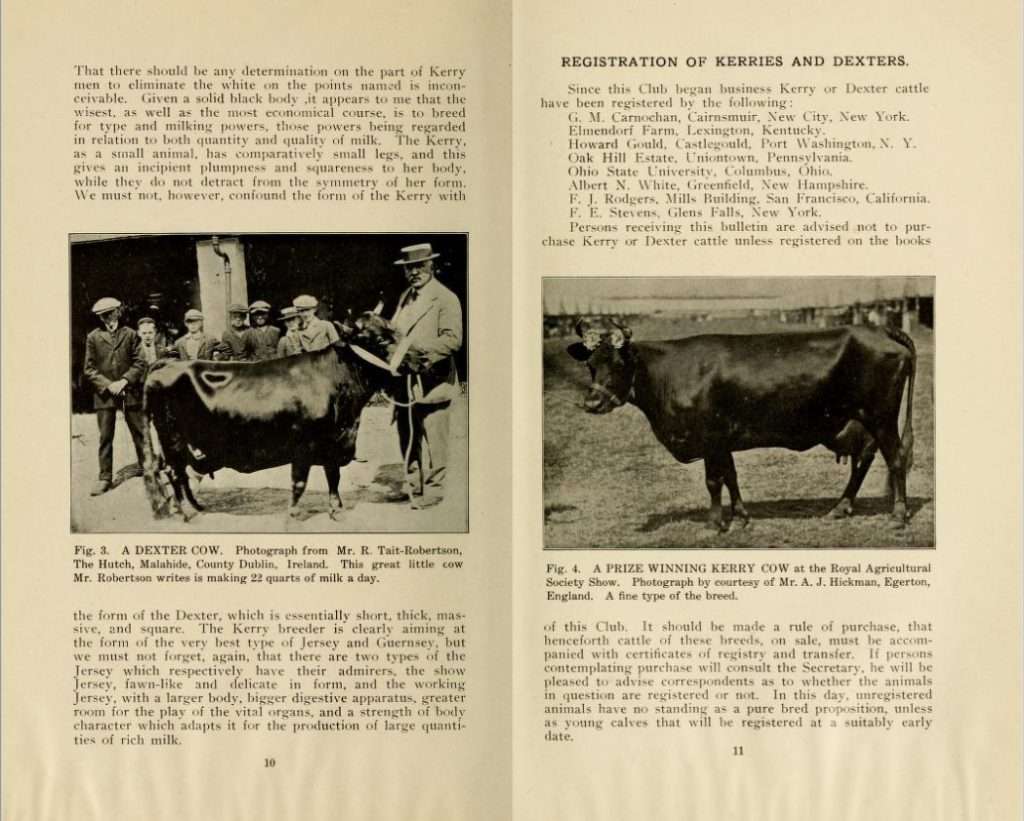
The American Kerry and Dexter Cattle Club….series 2 Installment Read More »
Historical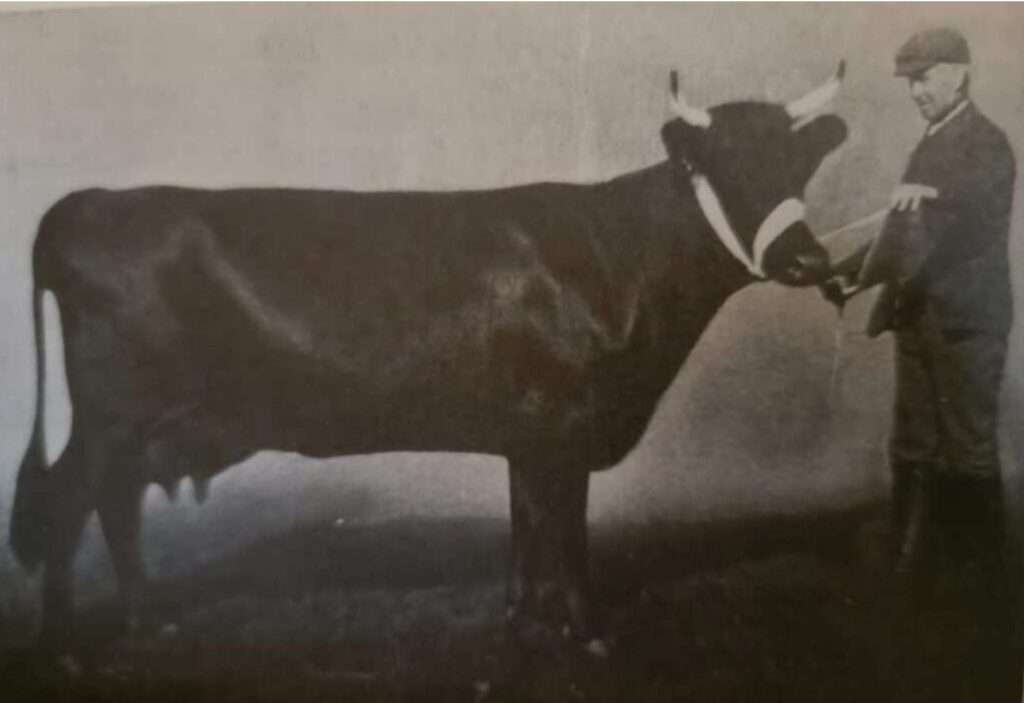
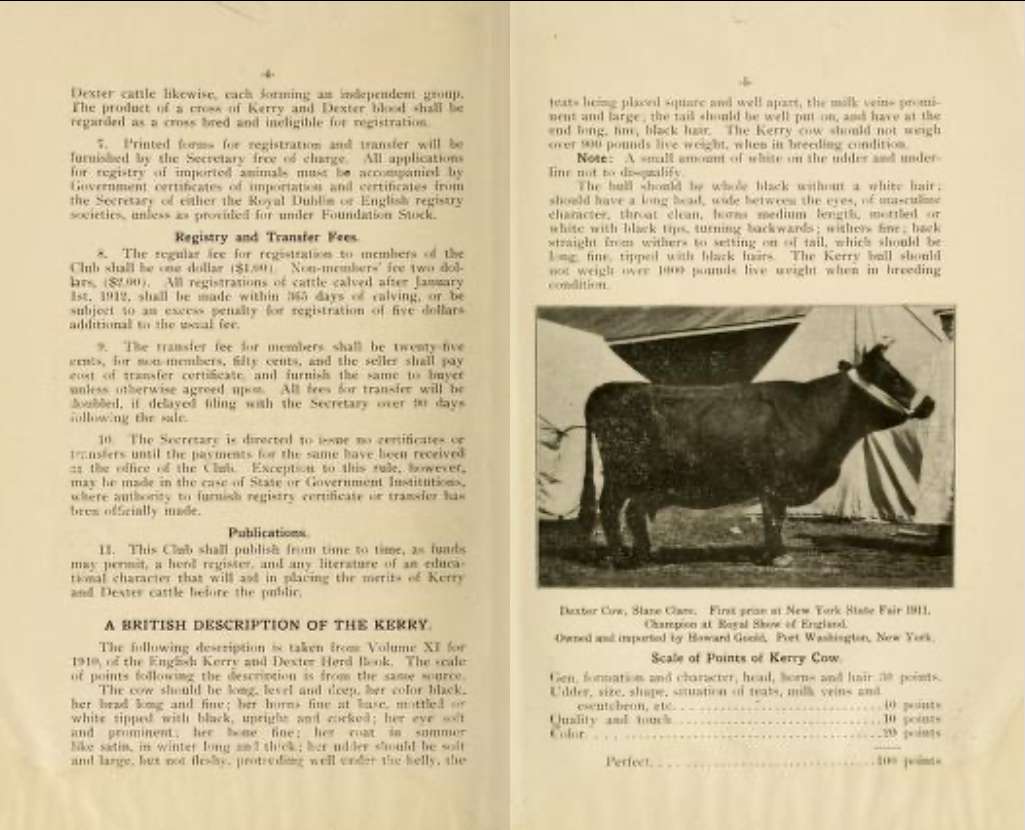
How much dairy should we put in to a Dual purpose Dexter cow. If you were to consult the English herd books they would say 40 percent for the “Bag” with the remaining percents being 15 for the “Head and neck”, 25 for the “Body, top line, under-line, ribs, setting of the tail, shortness of the leg, ect.”, 10 for “Quality and Touch” and 10 for “Colour”. So 40 points goes to the quality of the udder while 25 points gets divided up between the “Body, top line, under-line, ribs, setting of the tail, shortness of the leg, ect.”. It seems to me that in Dexters the focus today tends to fall primarily on mostly two aspects alone: shortness of leg and body type with general conformation coming in at the end. Even with 3 aspects it only accounts for 25 points for a Dexter. So there is a hyper focus on 25 % of a Dexter while the 40 percent in often neglected. The length of a cow’s leg and it’s depth are not the only traits that define a Dexter. Of course, we can’t forget the other traits that almost no one talks about, the “Head and neck”. You don’t get much meat off a head but it adds a distinct breed defining trait to a cattle type to set them apart.
It’s interesting to note that Kerry cattle that became a distinct dairy breed separated from the dual-purpose Dexter also list 40 points for the udder. The only difference is that more details are mentioned about the bag, “Udder, size, situation of teats, milk veins and escutcheon”.
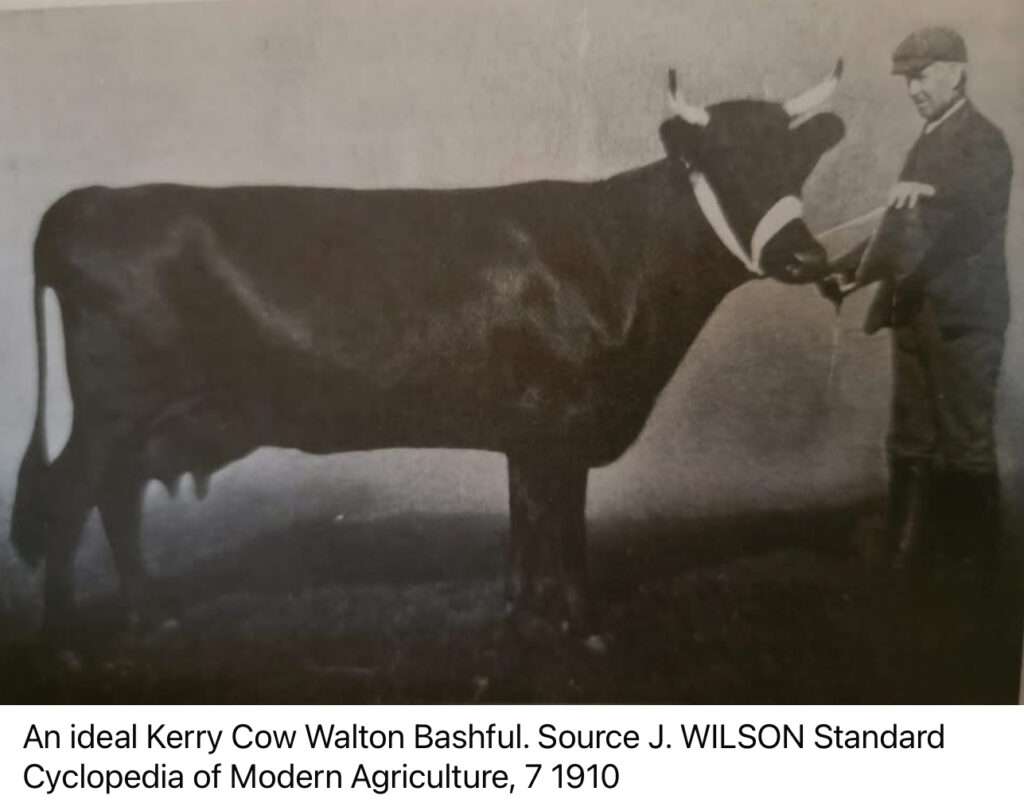
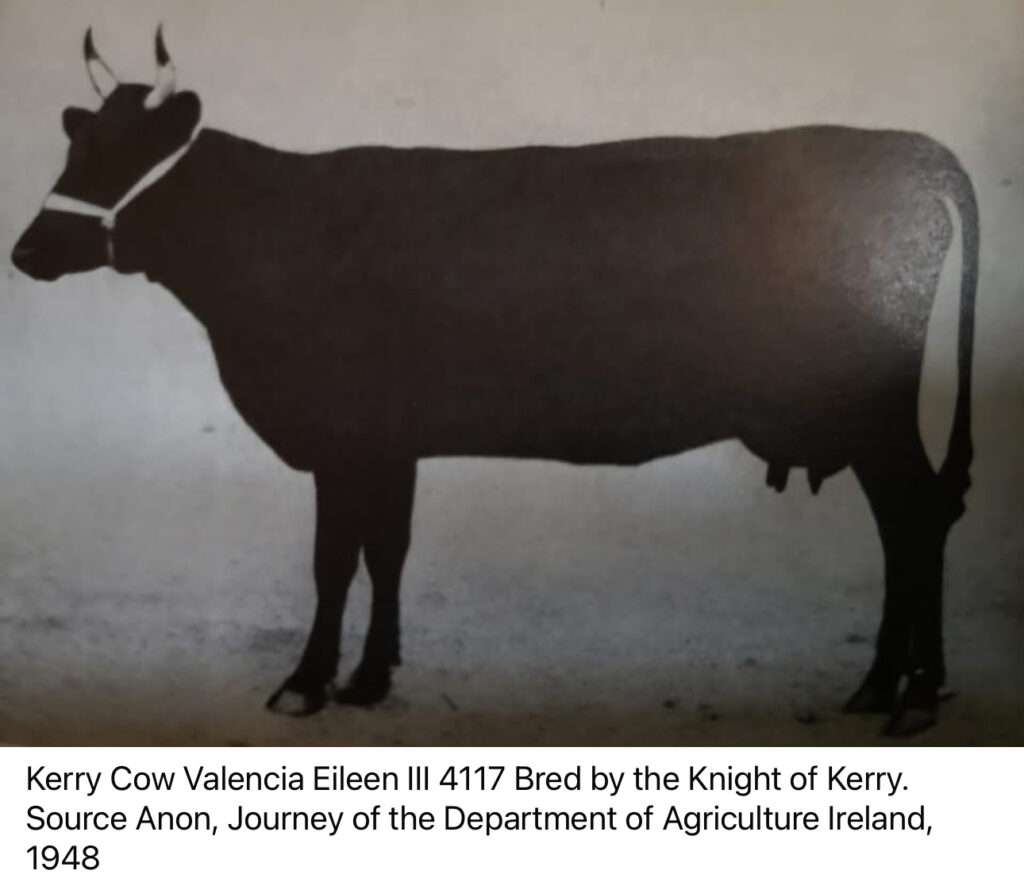
Now before major concern sets in, consider that this point system is based on an ideal cow. There will always be cows in a breed that are not ideal, but the goal is to breed for the ideal cow. If you look at the 3 pictures of Kerry cattle, I will share you will see that Walton Bashful is listed as ideal and her udder is the best of the three cows shown. I’d say if an udder is ideal enough for a Kerry it can likewise be good enough for a Dexter that uses the same 40 percent system. Of course, there is no problem with having an even better udder than this cow does! The next Kerry is Valencia Eileen III. You will immediately see that she could improve on her forward attachment, but she was a Kerry all the same. The final cow is Ard Caeina Una. You will see she has some attachment issues, and you will tell that her udder is hanging lower by her hocks. The placement of her teats are too close and awkward but they were still put to use, as you will see by reading her milk record. Her yield 14,562 lbs with her butterfat at 4.33 percent. Still a valuable Kerry cow. With Dexters we need to seek generational improvement in dairy traits as Dexter’s udder points are just important as Kerry cattle, but we also need to remember that improvement is generational and culling cows with good production and butterfat won’t instantly fix a problem. It could lead us to a breed full of cows with very tight nonproductive udders just because new people think a tight looking udder is an aesthetically pleasing udder.
The Dual Purpose Dexter And The Kerry History Read More »
Historical
Of Irish origin, the Dexter was highly valued by peasant farmers of the 1800’s
The Smallest Breed – a Long History Read More »
Historical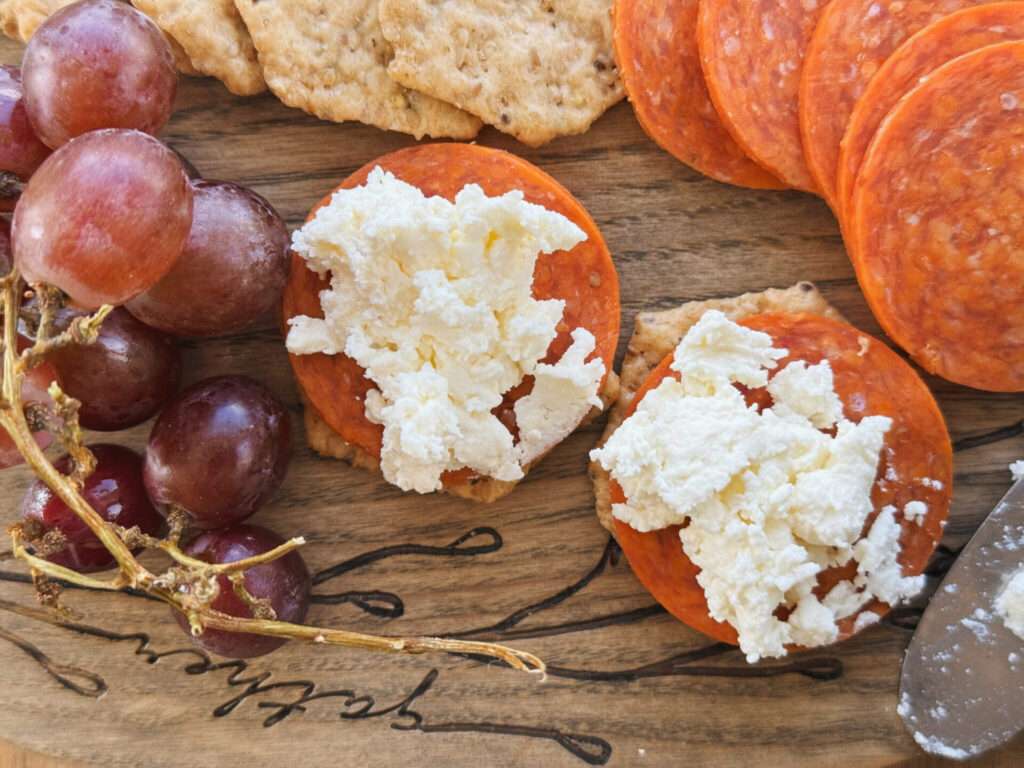
This the name used to describe chèvre cultured cow milk. Traditionally made chèvre is done with goat milk, but the process can be made with cow and sheep milk also. When made with sheep milk it is called brebis. We have experienced all three and love each of them. Give it a try and see what you think.
HAVE YOU EVER HEARD OF BOVRE? Read More »
Milking
Legacy Dexter Cattle Registry seeks to preserve Irish Dexter bloodlines from the English upgrade/appendix registry. Support Legacy Irish Dexters by registering your Irish Dexters.
The Gift From Our Ancestor Read More »
Historical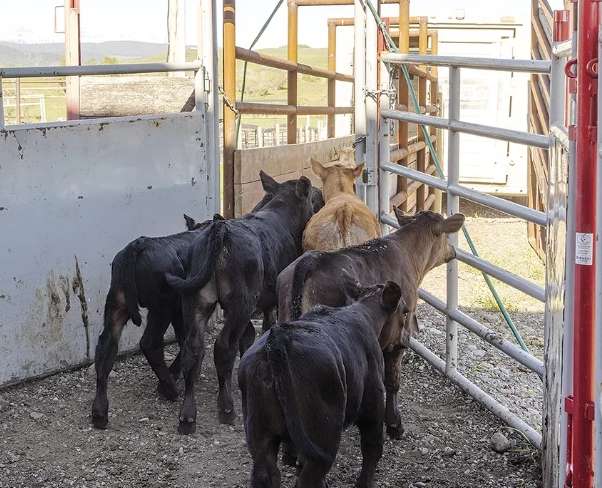
Preparing cattle to travel to their new home can be overwhelming. Reliable transportation, health papers, disease testing – here’s what you need to know before shipping livestock across state lines.
https://www.agproud.com/articles/61584-cattle-drives-preparing-your-livestock-for-interstate-travel#:~:text=Tagging%20along:%20Identification,before%20shipping%20recently%20sold%20livestock
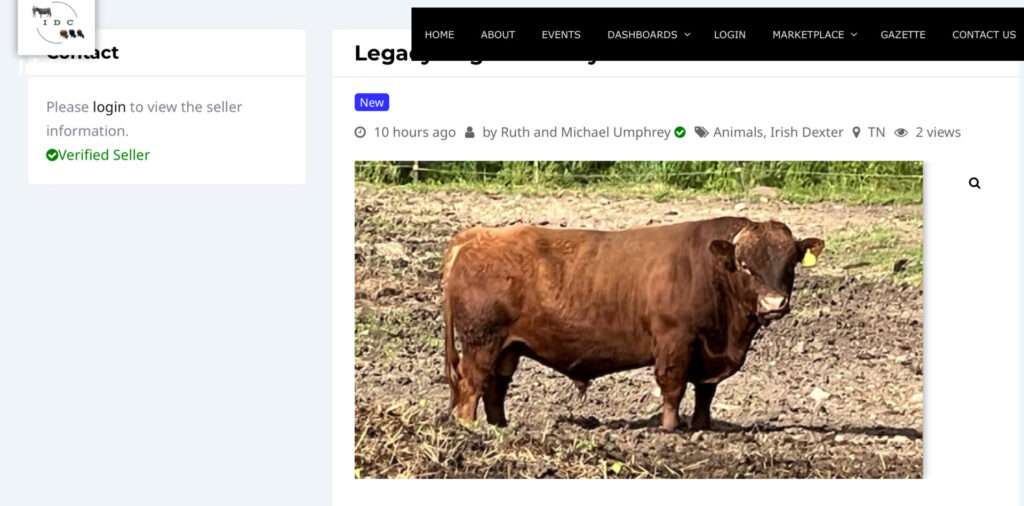
I think one of the hardest things for farmers, ranchers and homesteaders is when they need to sell something off the farm. That journey should start well before you need to sell something.
Let’s look at the model I use for selling of Dexter beef.
I share all of the information about our wonderful breed I can, on social media …especially things like, dropping the names of famous chefs that have come to appreciate the quality of our beef. I also share podcasts, articles and pictures of Dexters in the field, on the plate and in its packaging from the butcher.
So now you have some beef that will be ready to be processed in a few months and you don’t need it for your family. This is when you need to start looking for potential customers.
How to get started
The first thing you need to do is decide what you are going to sell and its value. One of the easiest ways to do this is to look at the market…check out sites like the Irish Dexter Cattlemen, Craig’s List and local social media sites. By comparing what you see on these you will be able to determine what the price point of what is selling in your area.
Things to keep in mind are is it grass-fed and grain finished or grass-fed and grass finished. The grass-fed grass finished tends to command a higher price. Another consideration is vaccinated, as more and more folks are looking for unjabbed…this is a term I see more and more. The more specialized your finished product is, the more you can ask. I say you can ask…because not every customer values that. It’s about building the clientele at this point.
Build your own customer base
Once you start to get customers, you will then need to retain them and encourage them to tell their friends. We always follow up immediately after they get their first quarter or half. Your butcher can also be a big help to you. He sees and works with a lot of different breeds and will have a much bigger customer base than you. A really good butcher is so important to your finished product and especially your yield. My butcher is wonderful about sharing what we have produced and bragging on it for us!
Not everyone knows what Dexter cattle are and that we have, well in my opinion and many of our customer’s opinion, one of best dual purpose , beef and dairy breeds. So, how do you get them to see the value of your beef and our breed? For us, it was finding like minded folks. People who were not looking for meat from the local grocery store. Someone who understood, that by buying the whole, half or quarter of the Dexter they would see an overall better value than the price of just the burger. Our burger is ancestral beef, another differential that sets us apart from many of the other farmers in our area. It includes a percentage of organ meat. This maybe valued by your customer, if they are health conscious…or maybe not important to others or even a put off, to some.
Once they have bought from you, you need to ask them when they will need more. You want to retain that customer and build on that base. If they rave about it…ask them to tell their friends and family. Word of mouth is so much less work and keeps your pipeline full. If you can’t fill their needs, find another Dexter owner who you can work with and help each other. For us, it’s about getting them to buy Dexter.
Dealing with objections
Common objects are:
I don’t know if I have enough freezer space…or how big a freezer do I need. We have many articles, videos and personal writings on the this in the IDC Gazette But the amount of beef produced is a huge selling feature, as the Dexter doesn’t give the average family, too much to deal with.
In many states they need to pay you for the Dexter and the butcher for the processing. In other states, they are done at USDA facilities and payment can be made to you including the processing. Or it can be sold as individual cuts. If selling individual cuts, more homework will need to be done determining the prices of those individual cuts. So, money can be a factor, as some will need to accrue for it unless you are selling individual cuts.
And my all time favorite objection …I need to talk to my husband or my wife…and then you hear crickets. You still need to follow up. Understanding objections can only help you hone your selling skills and prepare you for crazy objections like this last one….lol
Using the Irish Dexter Cattlemen Marketplace
I use the ad I generate using the Irish Dexter Cattlemen for selling. Why? Because it’s looks professional, I don’t have my own website and I don’t want to write a bunch of different ads.To best utilize the ad, I take a picture of it, so they have something to look at and then copy and paste the link of the ad into different social media groups and sometimes even Craig’s list. Not everyone uses social media or Craig’s list. So, by using the IDC Marketplace, I have exposure there on the website and in the FREE monthly newsletter, giving me two more vehicles for selling. By doing it this way, I only write the ad once and then copy and paste, giving it a professional and consistent look. Feed back from some of the buyers off the site have been very positive. They like that everything is in the ad…registration numbers if applicable, location, price and if it is negotiable and that they can have a private conversation.
When sharing on social media I choose local sites, as shipping, is not much of an option with cost of shipping and the need to keep it frozen. I also use the Irish Dexter Cattlemen featured post on FB and some of the cattle groups that serve my area, as it’s just not feasible for people to drive great distances for their beef.
Repetition
Just because you post something once doesn’t get it sold. People don’t typically look back through post from a week ago or a month ago. When they’re wanting to buy something they usually look back maybe a couple of days.
I suggest you post on Thursdays or Fridays and again on the weekend to get people looking at what you have available.
If you are keeping your pipeline full, and you are building your clientele, the repetition will not need to be as much. You will develop wait lists and those lists will need to be worked. Just because they’re on your waitlist doesn’t mean they’re going to buy again. You need to touch base with them periodically and keep it current because they may have decided to buy somewhere else. I find if you touch base with them monthly or every other month, you’re more likely to keep them on your list of potential buyers.
So in conclusion, the important things to remember are
Look professional.
Start to sell before your are taking your Dexter for processing.
Build up the quality of the breed and its beef….you never know you may sell breeding stock too to that beef customer.
Learn to deal with objections in a positive manner.
Remember, posting it once doesn’t get it sold.
Here is one of my favorite podcasts for educating buyers about our wonderful breed.
I sincerely hope this helps you…if you have more ideas, feel free to comment. I would love to hear some of your feedback or unique ways of selling your beef and breeding stock.
Farm Sales…A Way I Find works Read More »
Selling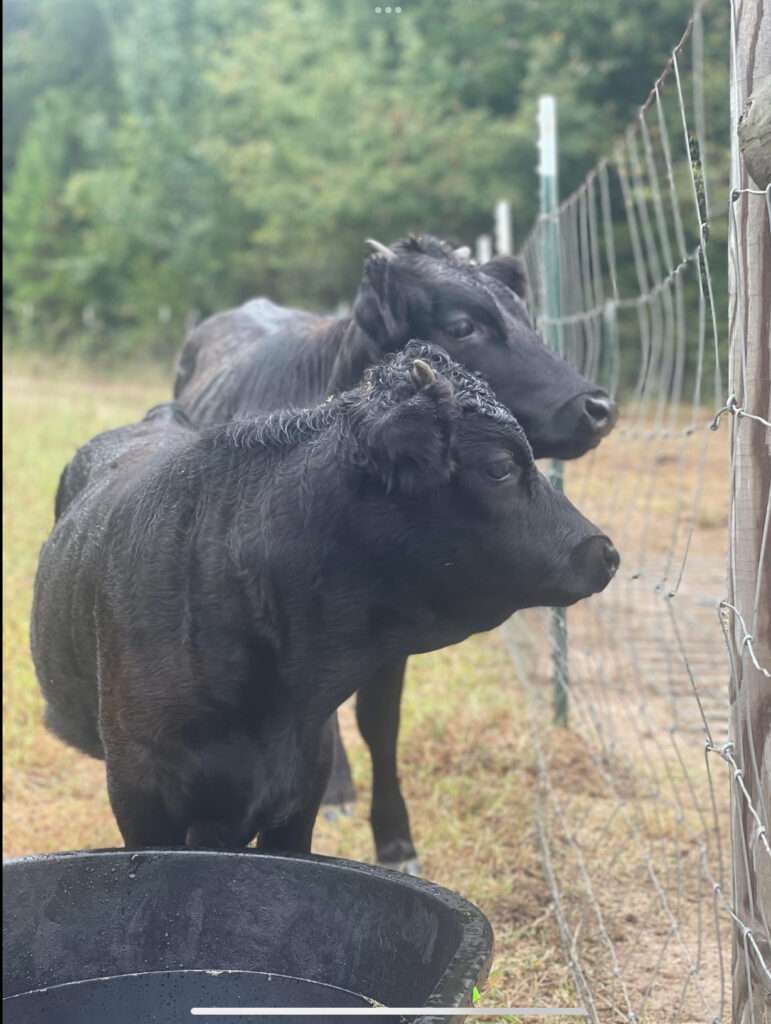
Our journey to homesteading began about five years ago. My husband and I were searching for self-sustainability, a quieter life, and a deeper connection to the land. Raised in the suburbs with every modern convenience, we only knew which grocery store had the freshest beef. That was the extent of our food sourcing knowledge.
Once we acquired our acreage, we started, as many do, with chickens. At the time, I hadn’t even considered milking animals myself, so I went looking for farm-fresh milk. I found a local source, and with it, a whole new world. We began picking up a couple of gallons each week, but it didn’t take long before we wanted to produce our own.
That’s how we ended up with Nubian goats.
I was intimidated by the idea of milking and caring for them, but goats felt less daunting than a full-sized milk cow. Still, I had always loved and admired the Dexters at pickup. Just being around them brought a peace I couldn’t explain. They were a dream, something for “someday.”
Fast forward a few years, and someday finally came.
About a month ago, we brought home our first Dexters: a heifer and a steer. And how’s it going? In a word? beautifully.
The first thing I noticed was their peaceful nature. Just being near them calms my nervous system in a way I can’t begin to describe. I’m absolutely head over heels in love. I’ve started thinning down my goat herd to make room for more Dexters in the future.
I’m learning to be a pasture and grass farmer (also moving fencing, adding pastures) all to better serve my Dexters. I’m excited to contribute to the breed by selecting strong lines and continuing the work that’s already been poured into my girl, Fiona.
Am I still intimidated by the idea of milking them? Absolutely.
Will I do it anyway and love it once the time comes? Without a doubt.
There’s still so much to learn—about pasture management, breeding, and eventually milking—but I’m ready. With the right mentors and a heart full of determination, we’ll thrive. Fiona and Chuck are home now, and so are we. This is just the beginning of a lifelong journey with Dexters, and I couldn’t be more excited to walk it one peaceful step at a time.
I’m looking forward to many years alongside this incredible breed.
Dexter Arrival: A Homesteading Dream Realized, Hayburner Acres Read More »
Homesteading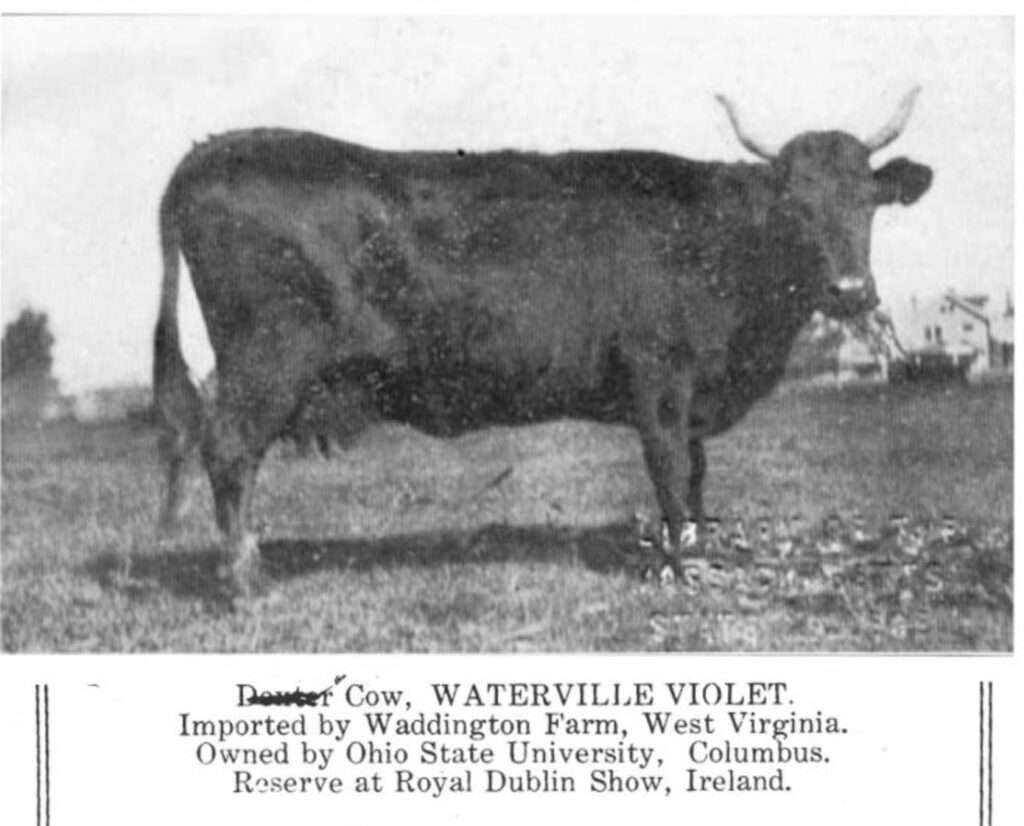
When you consider that people in the past were a bit confused about the difference between a Dexter (Dexter Kerry) and a Kerry you understand why it confuses people now. The fact that Dexters were called Dexter Kerry for many years after the two breeds were split from each other, continued to confuse people, thinking that Dexters were still no different than the Kerry breed. It’s interesting to note that in the Royal Dublin Society Kerry cattle were described as shorter than other cattle, so short that a full-grown cow was said to be the size of just a yearling (that was in 1890 when most breeds of cattle were smaller than they are now). As you can see Dexter cattle were not the only short ones as Kerry cattle have a long history of being smaller in stature too. If you have Dexters you can recognize that there is a strong similarity in the description of size among many of them. I have people come to my farm and confuse a full grown dehorned cow for a yearling of another breed. Once the two breeds were separated there immediately would have been a breeding divergence. Very detailed breed standards were already created that defined Dexters before 1911 at the time of the first printing of The American Kerry and Cattle Club Bulletin one. Following those standards for all the years prior would have helped pave the way for the breeds to be separated and defined as their own, but yet the confusion remained as can be seen in the below picture, because the breeds had so many similarities.

The cow in this photo above is from Bulletin One of The American Kerry and Dexter Cattle Club. It was printed in October 1911. This is the old name for the ADCA (American Dexter Cattle Association). The cow photographed is named Waterville Violet and in her description the title Dexter has been crossed out. Was this just a scribble that someone made at a later date randomly or was it something scratched out to add a correction after it was printed?
If you check the records in the ADCA you will find no Waterville Violet mentioned. If you look for a Kerry cow by the name of Waterville Violet you will turn up multiple citations of her as a Kerry cow. It looks like Violet was a Kerry heifer who calved in 1902 so we can get an idea that she was already quite mature by the time she was mentioned in the 1911 Bulletin. As much as things can be confusing it’s fair to say Dexter or not there are still purebred registered Dexters of today that look like Violet.

James E. Butler owned the Waterville herd. Mr. Butler owned and bred both Kerry Cattle and Dexters, as many of the original breeders of Dexters did because in selection the black more dairy type became Kerry and the cattle a bit thicker, black and red, possessing dual purpose traits became Dexters. Butler was also one of the judges at shows for evaluating Dexters for the entry into the herdbooks. He had a long history in the area. James Butler would have been an excellent choice for a judge due to his first-hand knowledge of Kerry and the native cattle of the land. Waterville is known as Coirean in Gaelic or “Little Cauldron”. It is a village in Kerry. The ring of Kerry passes through this town. It’s good to know that Dexters and Kerry cattle were being selected and registered by men with first-hand knowledge like James E. Butler of Waterville. I would suppose they were far more confident in the difference between a Dexter and Kerry when they were making their evaluations. I hope this has shed a little more light into the past of Dexter and even Kerry cattle.
For Many the Dexter breed may have a confusing Past. Read More »
Historical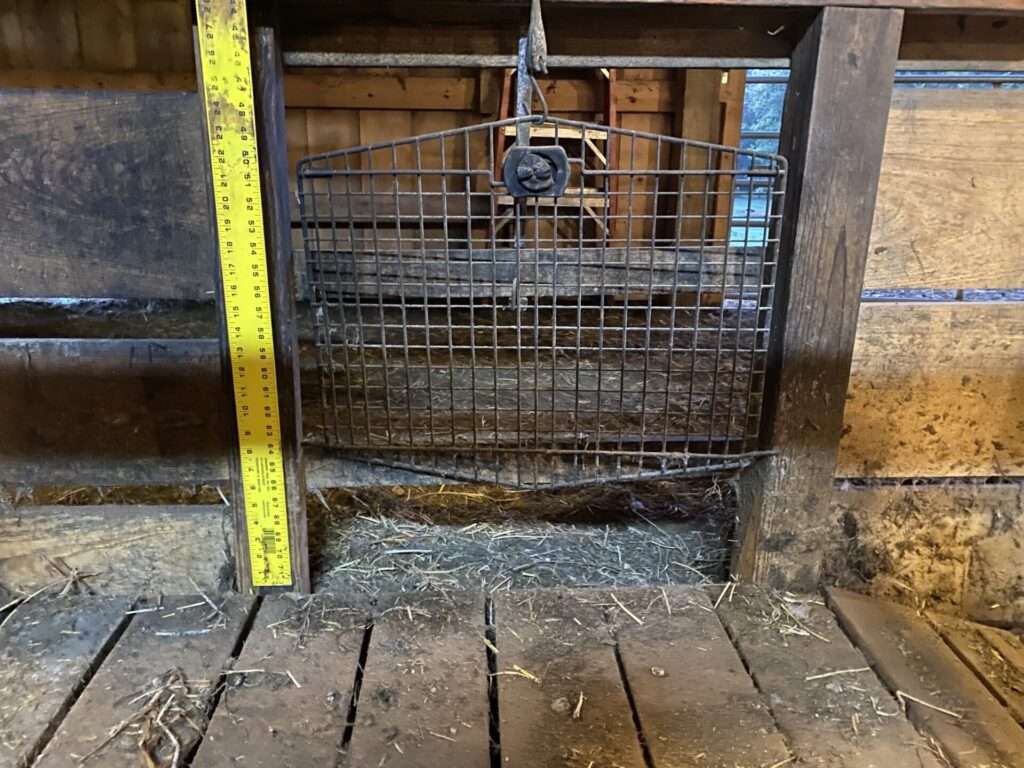
For the first time milker or the heifer that is getting milked for the first time, there are some important things to remember for success. The article below goes over some of the basics.
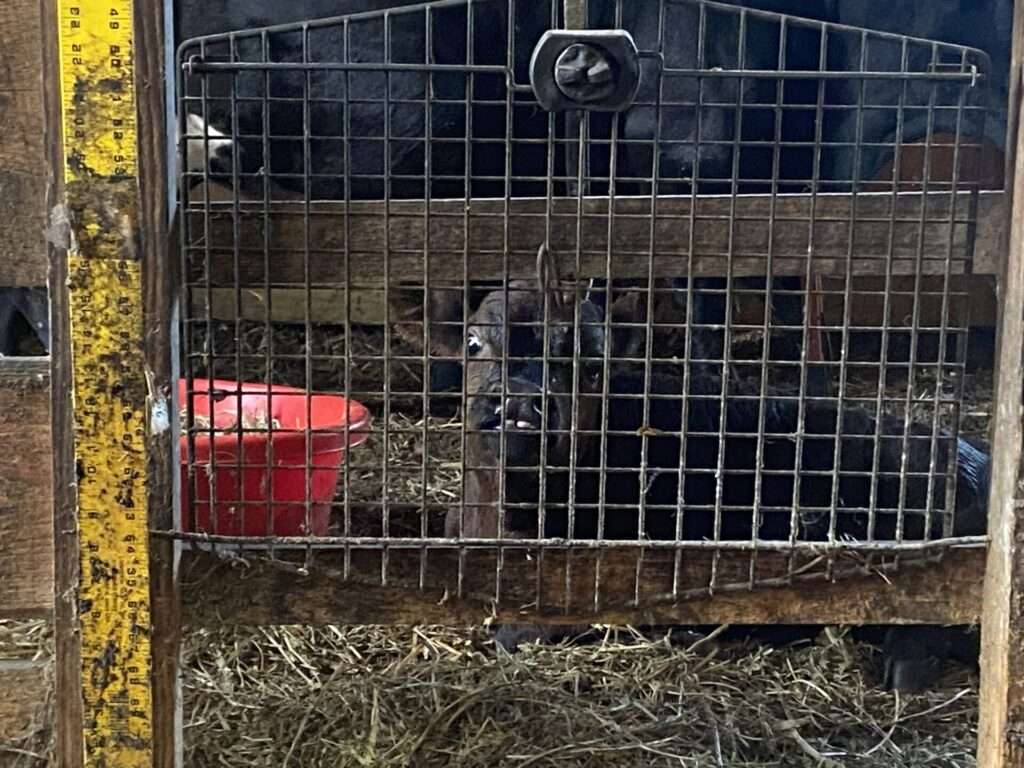
We have, thankfully, only had a few that were very stubborn. We found that putting the calf in front of the cow, so she can see it helps…but when nothing works…we have reverted to letting the calf nurse one side for a short time. I do say short time, as they can drain their moms with amazing speeds.
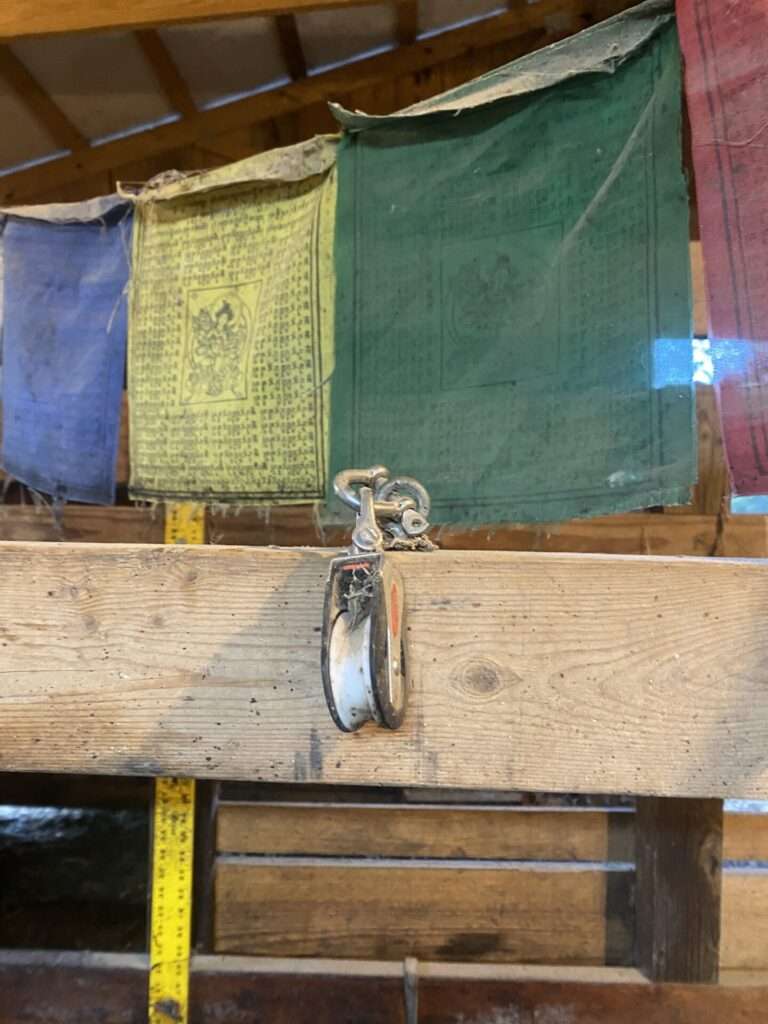
I have included photos of our calf let down gate to give you some ideas that have worked for us. You can see the calf thru the little gate on the first photo. On the second photo you see the pulley. When we need to use this system…which we thankfully have only had to a few times, we tie a rope the the gate, un hook the bungee, feed the rope thru the pulley and the whole gate goes up and down so we can quickly drop it once mom starts to let down.
MILK LET DOWN – HINTS AND TRICKS Read More »
Milking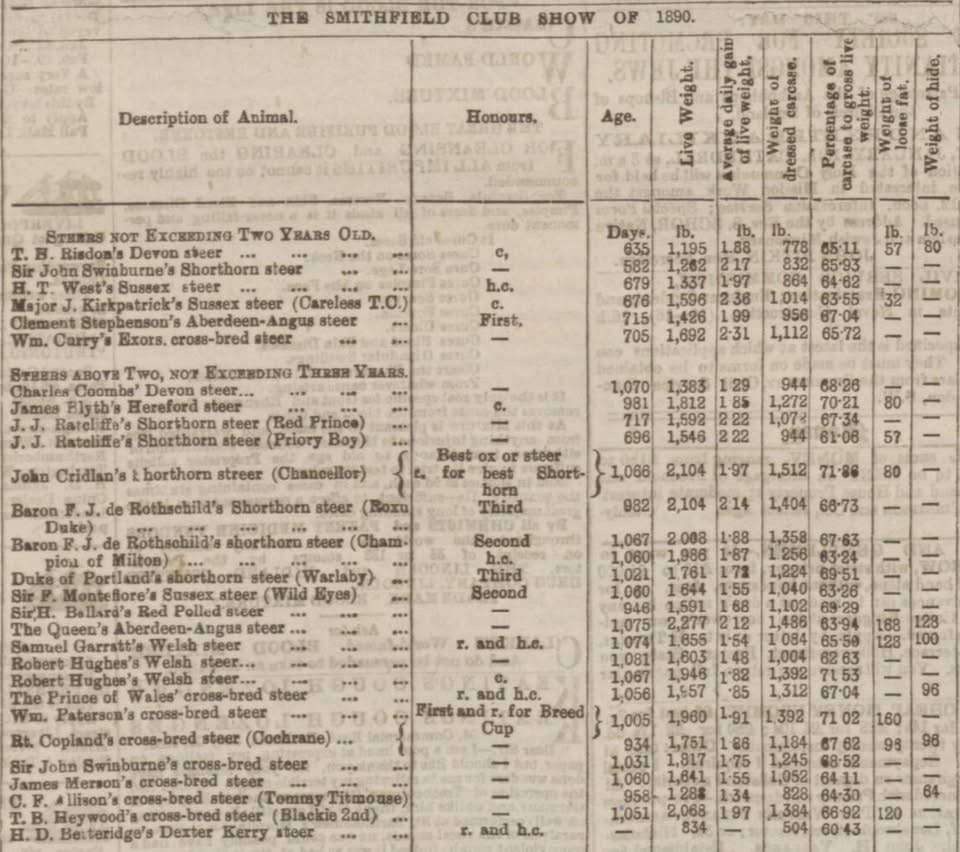
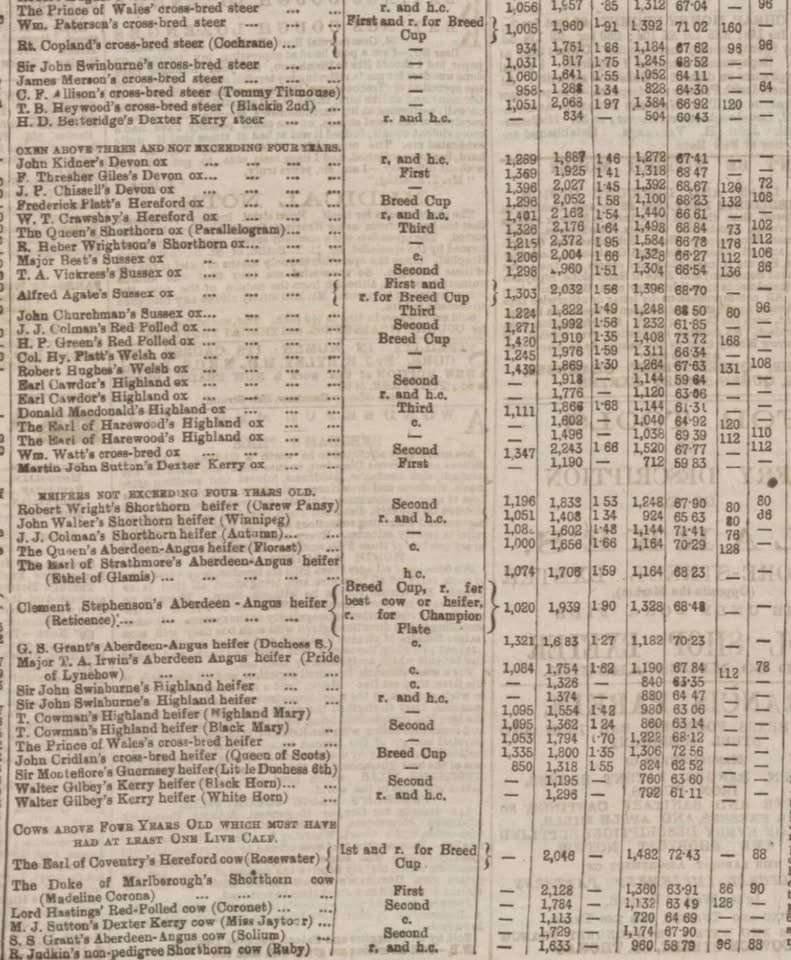
Calling all Beef Breeders!!! For anyone who likes a bit of Beef in their dual-purpose Dexters here’s something for you! Have you ever wondered what the Live weight, the Average daily weight gain of live weight, Weight of dressed Carcass, Percentage of carcass to gross live weight, Weight of loose fat and Weight of hide was on a Dexter Kerry or a Kerry and a Dexter Kerry cross was at the formation of the Royal Dublin Society in 1890? I wish all fields were complete as some are missing but it’s a good start. Well, here are some answers for you, so let’s see how these weights compare today. Comments are welcomed. By the way Tommy Titmouse was an Angus Dexter Kerry cross.
LET’S TALK DEXTER WEIGHTS! Read More »
Historical
After a small sampling from one herd, it appears that the Dexter breed does have this highly inheritable genetic marker. It appears that the marker is found in those cows with the most milk production. This makes total sense, as they refer to the genetic marker as found in most easy keeping cattle.
Unfortunately no bulls were part of the initial testing and semen is not able to be tested for this marker.
So, now that we know the marker is there for the Dexter breed and that it seems to be in cows with most milk…we need more folks to test. It has been suggested that it maybe easy to get a few drops at ear tagging time and a simple tail stick for the older ones.
If you would like more information on how to get your herd tested, please reach out to the Irish Dexter Cattlemen and we will help you get started. It requires only a few drops of blood on a Tenet card sampler. The card is then sent of for sequencing.
It takes 5 days to get to the lab and 10-30 days for the sequencing to happen after being received. They send your your results by email. Pretty simple procedure.
The thing that was most interesting was it was found in the cows with the most milk production. How cool would it be to be able to predict possibly milk production and beef tenderness? Duality!
In case, you need to brush up on this. Below is the podcast that started this adventure. This is NOT the Neogen testing that has been happening by a group of Dexter breeders.
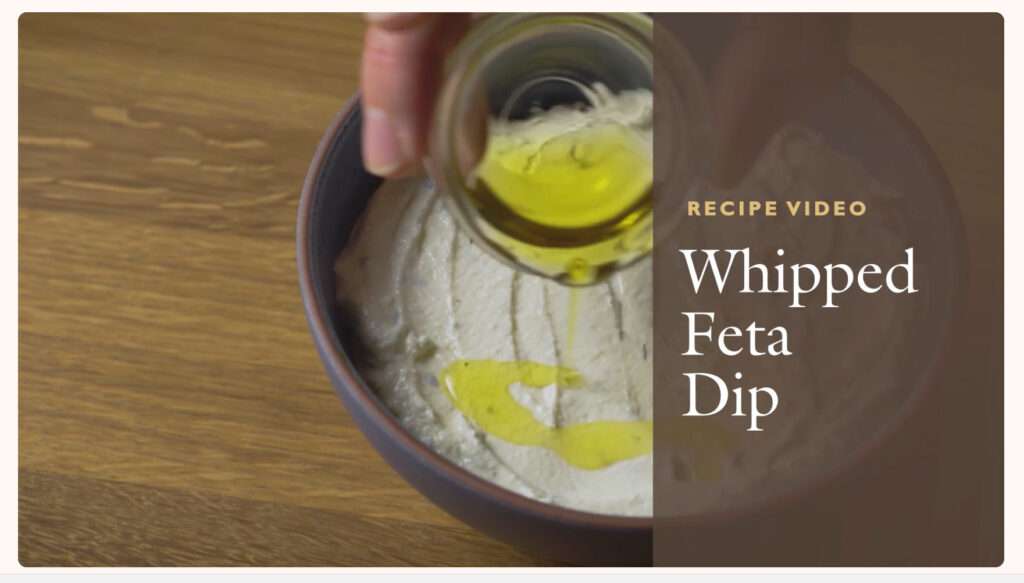
This was fabulous…while I made it with goats milk…I could have made it with Dexter milk, but I had it already made from goat.
Don’t skip the rinsing or it will be too salty
Sure to impress you with chips, pita, sourdough bread…….
I use a version of the recipe below to make feta as well….bon appetite!
https://www.americastestkitchen.com/articles/1273-whipped-feta-dip
Feta dip from cows milk feta…easy and quick! Read More »
Homesteading