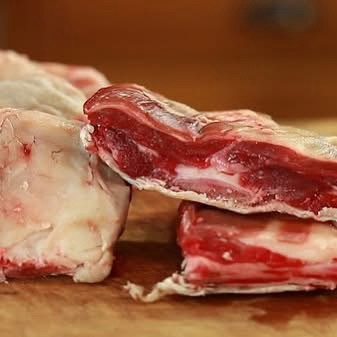
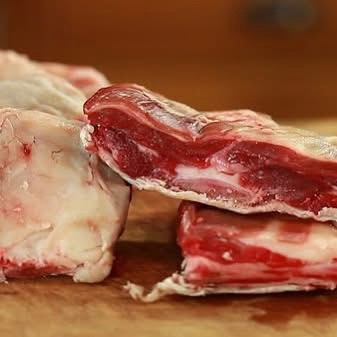
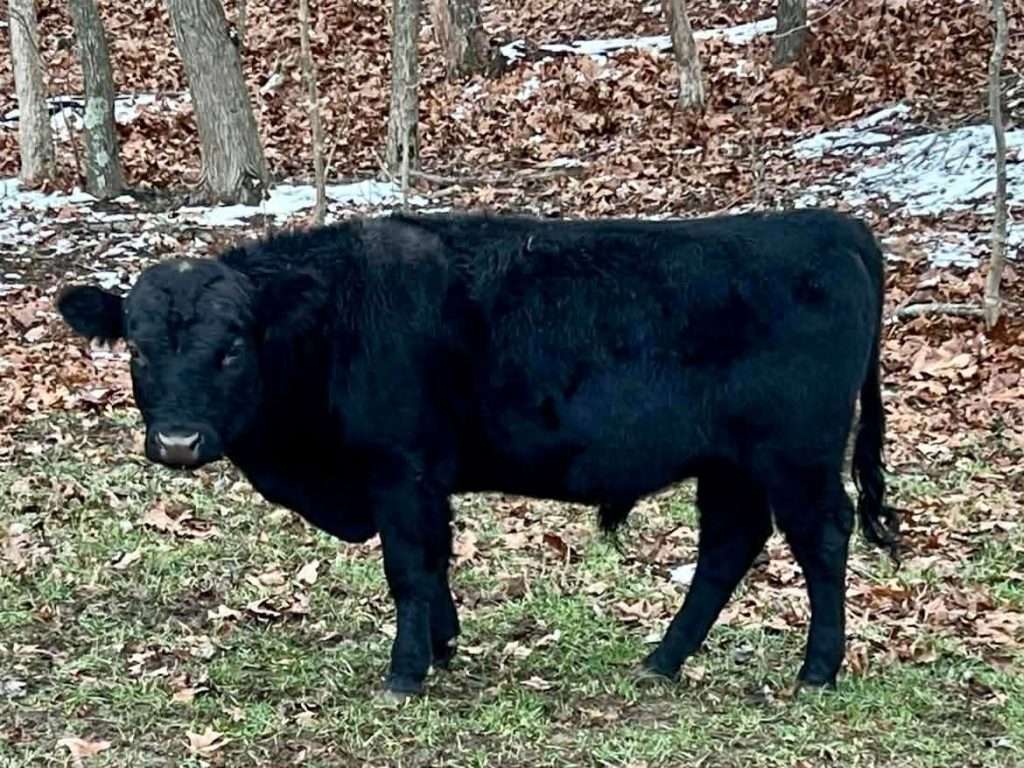
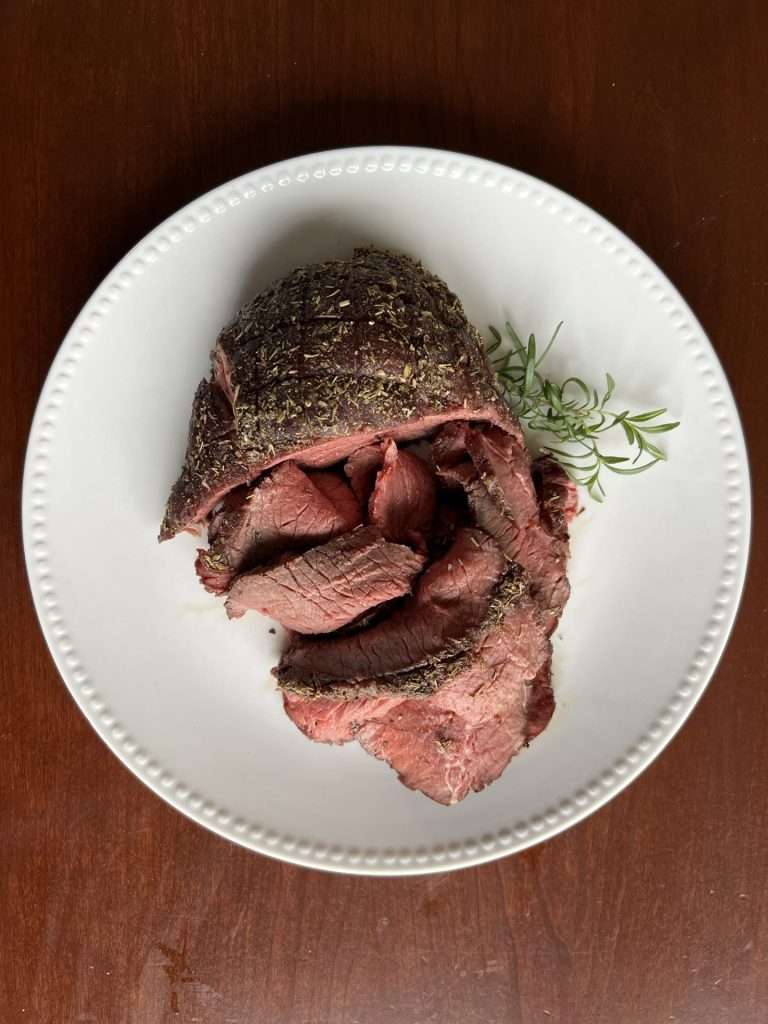
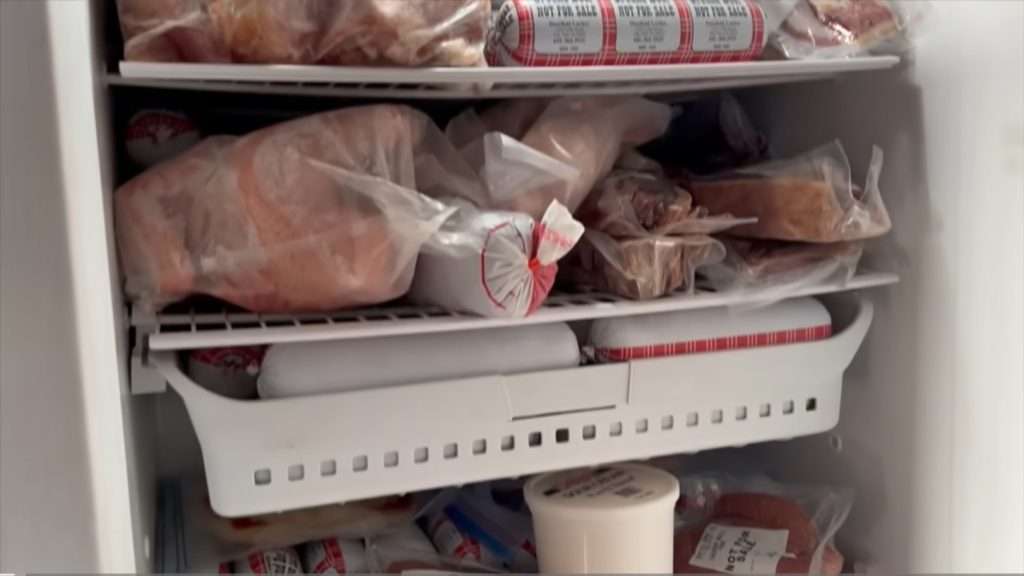
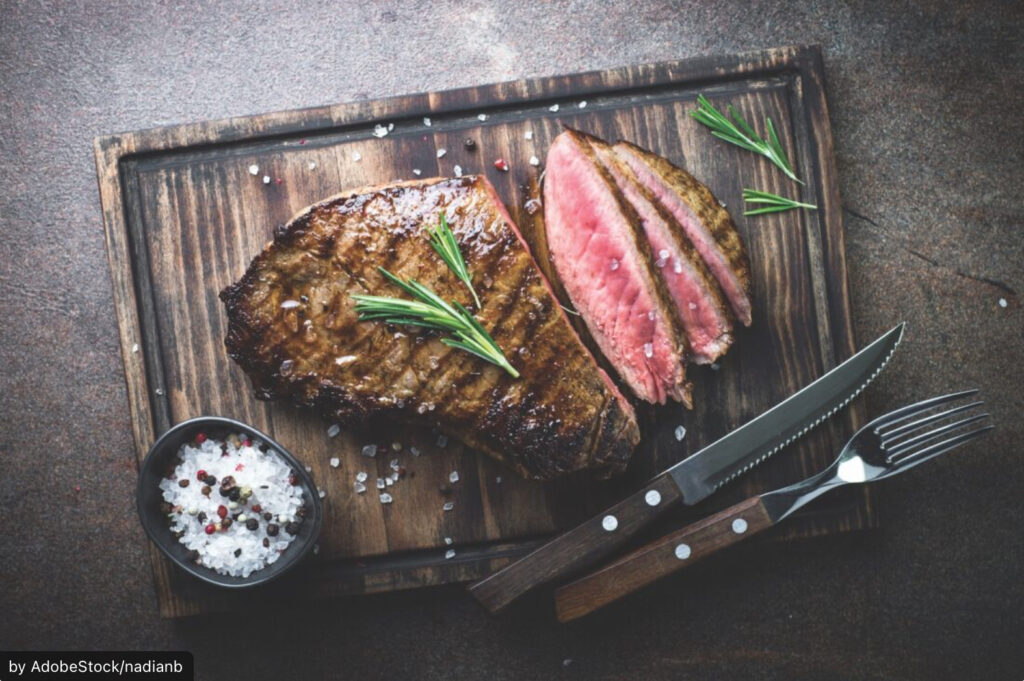
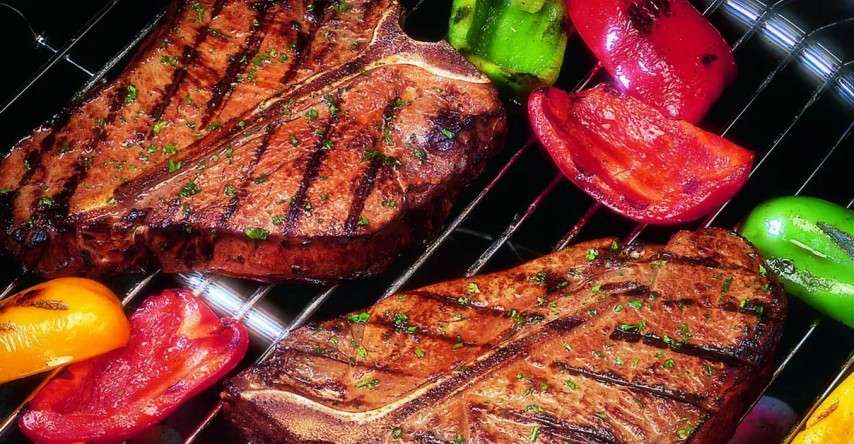
St. Patricks Day is coming up, and what better way to celebrate the day than with some home cooked, Dexter corned beef! The link below is to a recipe I’ve been using for several years with great success. Corning is a traditional way of curing beef meat. It does take time, so you want to give yourself 5-7 days. This recipe does not use curing (also called pink) salt so it is nitrate free. You can add beets if you’d like the traditional color, or leave them out for just as tasty (though less colorful) corned beef.
COVID. It sucked. No matter what aisle of the plane that you sit in, even if you just want to stand in the middle, it sucked. There was tragedy, heart ache and despair. Some are still recovering. Some never will. All that said, it was eye opening for me. An introvert by nature (though very few of those that meet me will agree with that description), COVID was somewhat of a respite. It forced, for better or worse, solitude. For me, it brought peace. It got me thinking about our world and my place in it. It was time to start questioning old habits and accepting the norm. It was time to start doing.
Where do I start? As my late Dad would say, at the beginning. I started to look for property in a rural area. That was my first mistake. I didn’t have a solid foundation as to what I wanted to do. I looked at field, woods, and pastures. Some had homes, and others did not. About all of the properties were a good distance from where I lived and some were located in other States. After becoming exhausted and frustrated, I realized that my search was futile. I needed to establish what I wanted to do and with what animals.
My initial thought was horses. My thought is I could breed horses, and/or run a boarding business. It was my wife, ever the cynic, who asked the first pointed question. “Do you know how to ride a horse?”
Contrary to popular opinion in my household, I was a seasoned equestrian and rodeo champion. At least in my mind I dreamed I could be. That said, I scheduled horse back riding lessons. While I enjoyed the lessons, and riding, I started to think it was going to take a lot of time and experience to take other people’s horses in and provide appropriate care. But alas, fate had other plans. My wife quit asking about trivial things such as my ability to take care of horses and we sold our home and bought a home with horse stables and acreage. For me, it was heaven.
Then reality set in. I remembered what the goal was. The goal was to raise our own food. Horses would be welcome, but horse meat will never be in our diet.
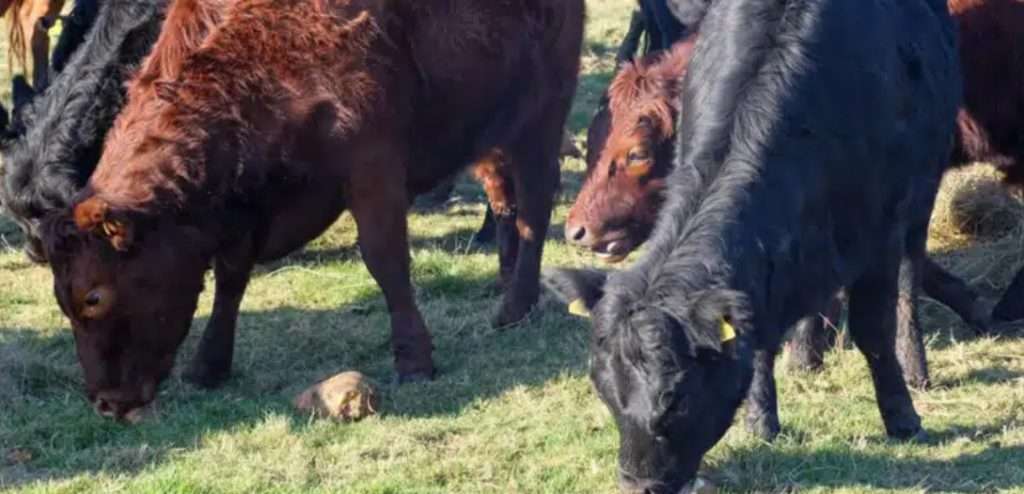
The internet, love it or lump it, is a source of a great deal of information. I play the game. In that, I mean, I disregard all the “great” comments, and all the “terrible” comments and seek the middle, I tried to not seek articles that I favored but cast a wide net looking for neutrality. Just the facts, ma’am. What I found intrigued me. Dexter cattle. Ideal for beef, milk, and smaller areas of land. Hearty animals and docile in nature. Not miniature, but smaller in stature. Less intimidating for the new and not an animal that has to be considered a pet.
I compared to different breeds. I was intrigued by grass fed and milk that many argue is better suited to sensitive stomachs. Not only for feeding my family, but the potential of feeding others. I was not looking for marketing gimmicks but trying to fit a niche. My niche. I was told finding the acreage was the hardest part of raising cattle. I can say with 100% certainty, that is a lie. But I am having so much fun living my dreams with our Dexter cattle.
A little bit about the author for those who have read this article or maybe even the first article and scrolled to the bottom of this article just to see if someone had the guts to admit writing this. I own and operate a small farm called “Our Yellowstone LLC” in Illinois. I couldn’t do it alone, but will keep my wife’s name out of it to protect her innocence.
We’ve been raising our own beef for years. Before that, we raised rabbit and chicken, and hunted deer to fill our freezer. It’s been so long since we had to purchase meat from the store, I forget how lucky we are. Especially now that we raise Dexter cattle.
I’m always pleasantly surprised when we get feedback from our beef customers. I take for granted that we get to eat beef this flavorful and tender on a regular basis. My all time favorite message from a new customer is this: “Your beef is fantastic. It tastes the way I remember beef tasting in my childhood.” Delicious beef, reminiscent of a slower time.
A new customer just a few weeks ago texted, “beef is awesome! Color and texture is amazing.” This is really a confirmation of our goal to improve tenderness. The flavor has always been top notch, and we’ve been refining tenderness and marbling with success! Being grass-fed only, this has taken a longer road to accomplish, but what satisfaction!
Another customer recently wrote, “Thank you!!! It’s literally the ONLY meat I trust eating myself or feeding my kids!!!” We are so grateful to be trusted in this way! Our little Dexter cows really make this possible, with their great foraging skills, and ability to convert that forage into flavorful, tender, and nutritious meat for our community.
Have you tried Dexter beef? If not, you really don’t know what you’re missing. But, don’t just take my word for it! Find a Dexter beef producer in your area. We can help with that. Head over to the Irish Dexter Cattlemen Marketplace to look for beef in your area. Keep checking back as we add more producers from across the US.
Here is a really good podcast about what you and your customers should expect when getting a cow processed . It can be intimidating to buy beef in bulk for the first time. Share with your customers to help them fully utilize a whole or half cow, which is a big (and worthwhile) investment.
Please keep in mind that these numbers are for a standard breed cow. The numbers for the Dexter will be less, but the return will be a higher ratio. Dexter ratios are closer to 60-65% with less inputs, easier on pastures and a whole lot of personality!
Dexter beef is a breed of cattle that is known for its quality and taste. It is commonly known in foodie circles that Dexter beef is some of the tastiest around and really good to eat.
”With the rise of farm-to-table eating and artisanal meats many diners are seeking out flavorful beef from non-commercial cattle breeds. One such breed gaining popularity is Dexter beef a tender, succulent meat from small, hardy cows native to Ireland.”
This podcast covers some of the questions we all have when starting out with cuts from our Dexters. The cuts will be the same…just different overall yields. They have some interesting ideas for selling to your customer base.
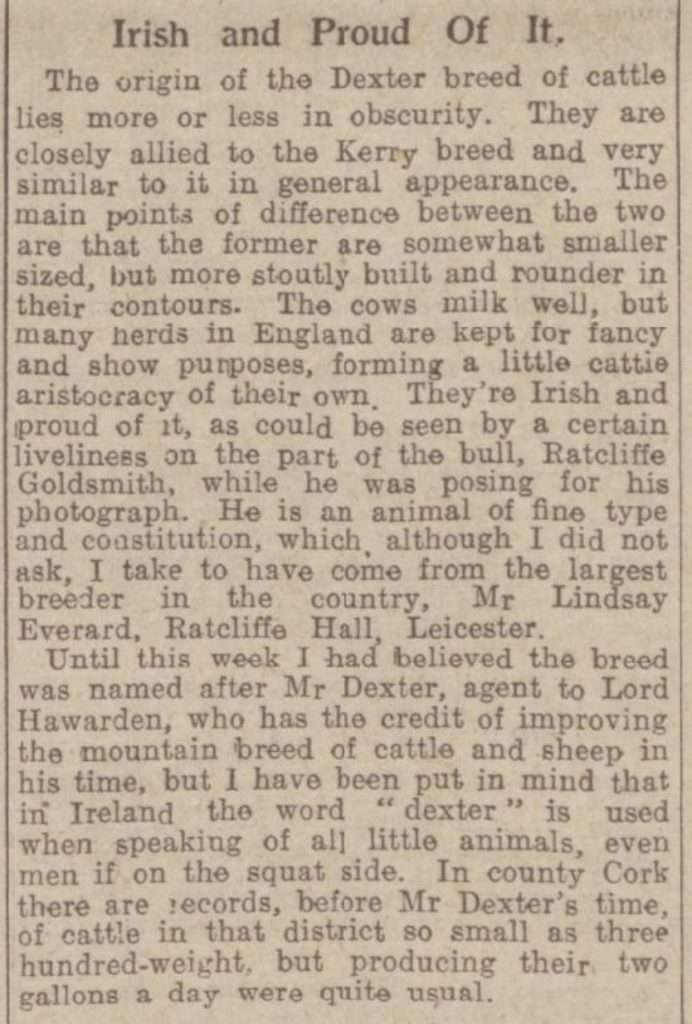
Where ever they roam Dexters are Irish and Proud Of It!
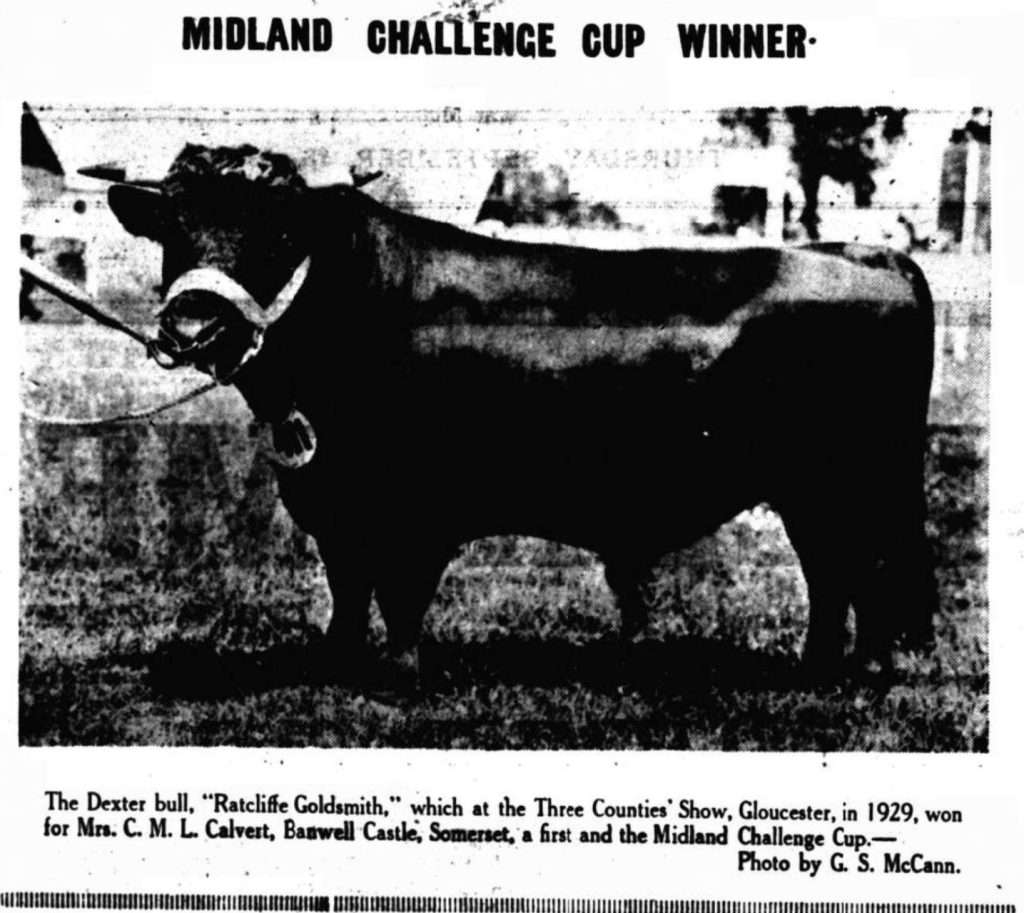
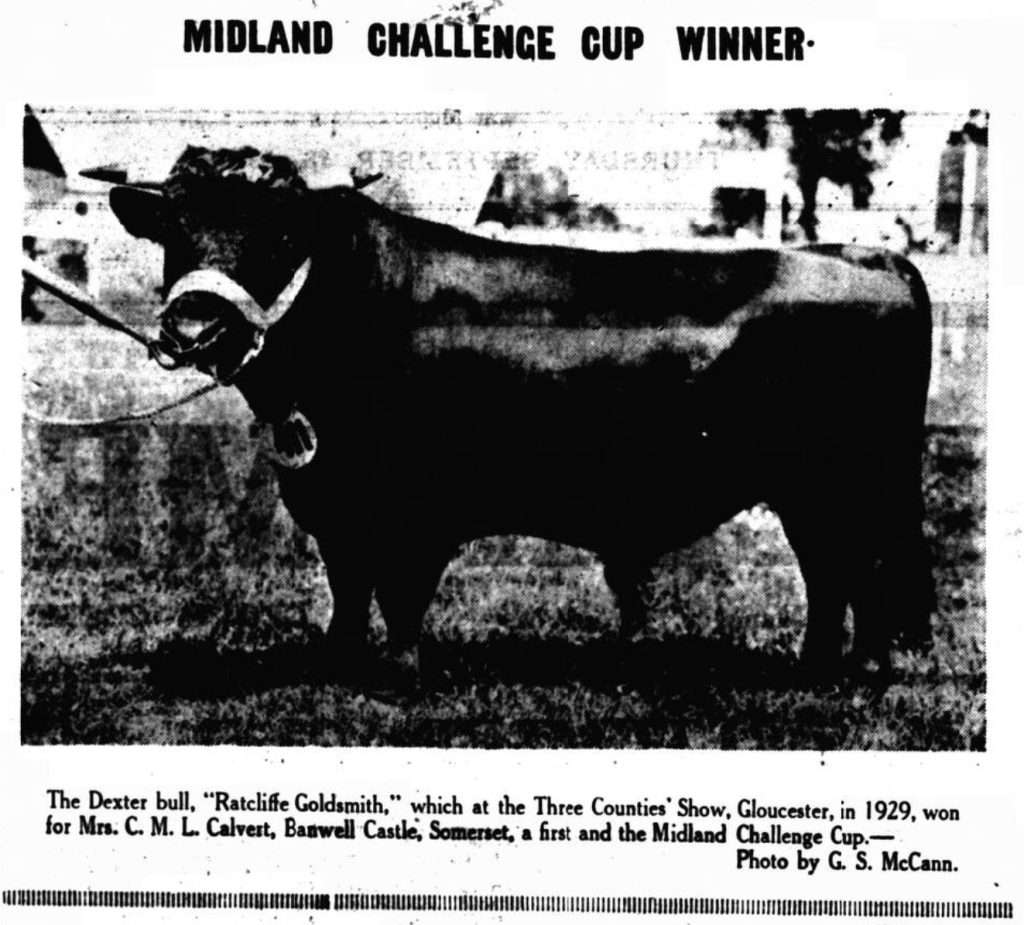
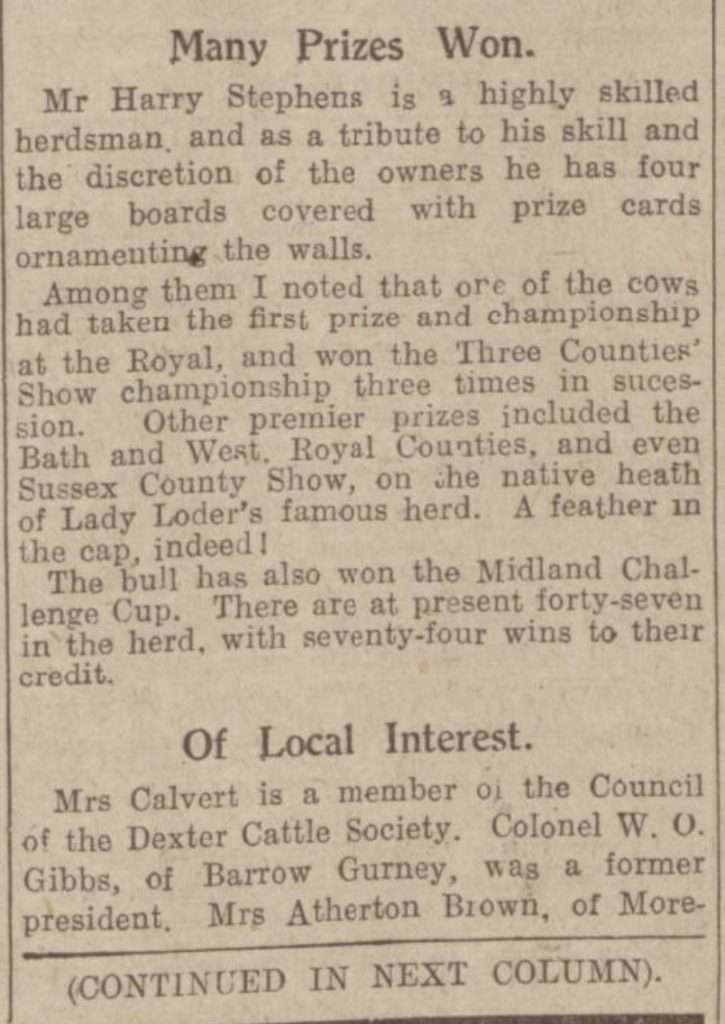
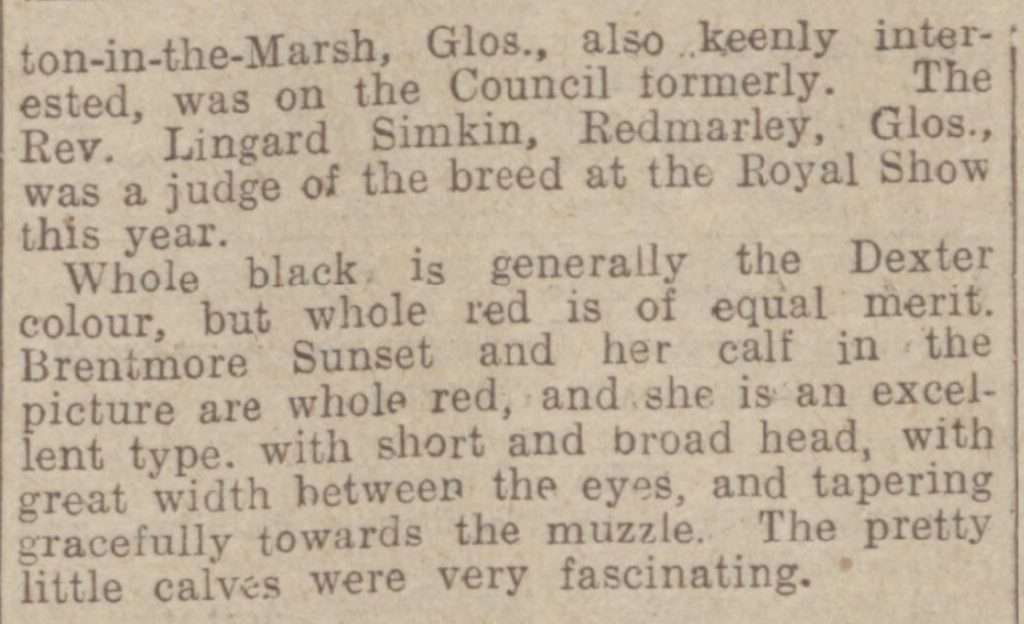
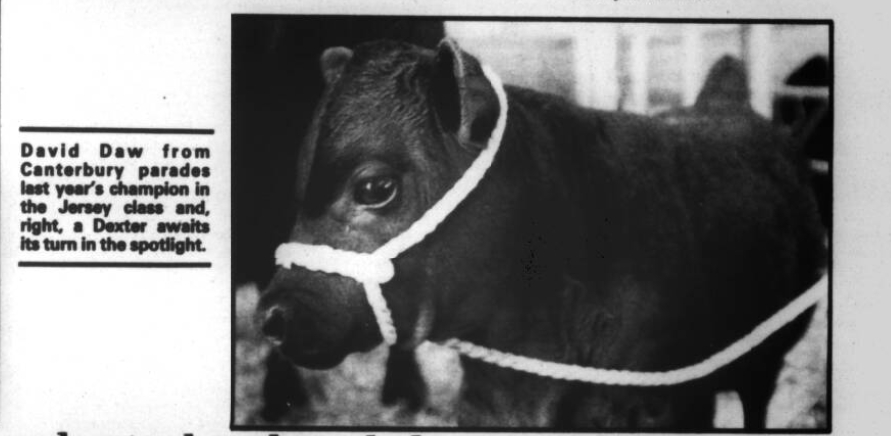
Dexters are well known as Irish Dexters even if many other points about them are debated. The above bull though registered with the Dexter Cattle Society is an Irish Dexter with a “fine type and constitution” as the article states. I checked, he certainly was owned and breed by Mr. W. Lindsay Everard of Ratcliffe. This article holds true to the fact that Dexters are known to be of a small type of cattle. That very small cattle were known to roam Ireland before “Mr. Dexter” was ever penned in History. In Kerry there was known to be some of the smallest type of cattle one can imagine, long before Dexters were ever established or organized into a true breed. So small of an animal that it is mentioned in this paragraph, but yet still producing 2 gallons of milk a day is a marvel indeed. The brown article was written on 14 Nov 1929, it’s from the Western Daily Press Bristol. The picture was taken from a later newspaper published in 1930. Though the Dexter was well known to produce ample milk and was “closely allied to the Kerry breed and very similar to it in general appearance.” The differences being that “Dexters are “more stoutly built and rounder in their contours”.
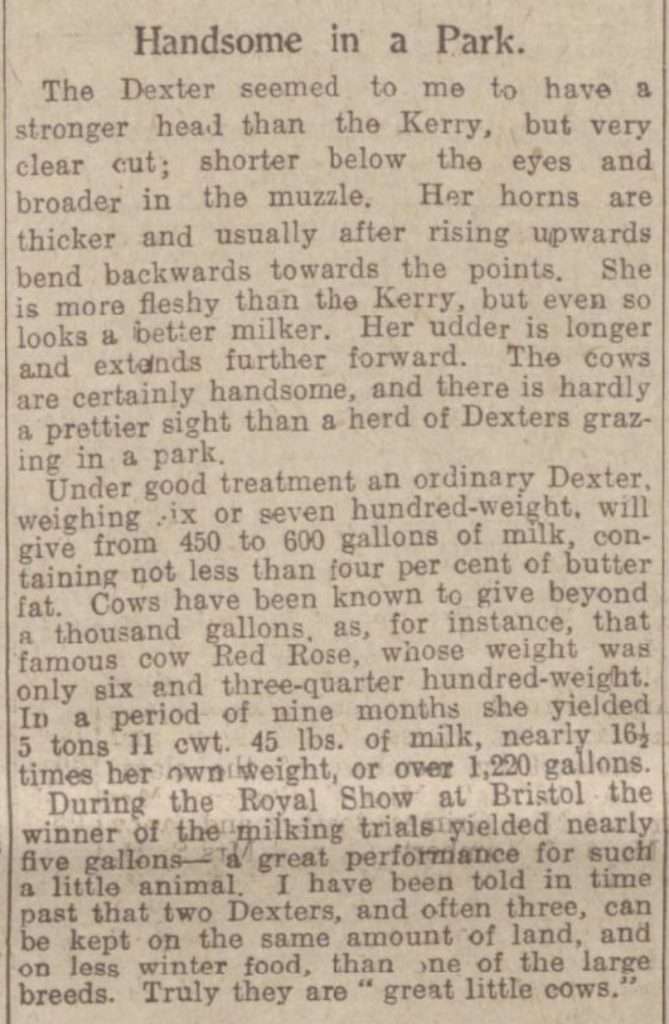
The Dexter has a “stronger head than the Kerry, but very clear cut, shorter below the eyes and broader at the muzzle”. The description of her horns are as follows ” Her horns are thicker and usually after rising upwards bend backwards towards the points”. It is interesting to note that she is even fleshier than the Kerry but was thought to look a better milker than the Kerry. Short cows with large udders seem to showcase the udder in a much more extreme way than a longer legged cow though the udder could be of the same size. The article really goes on to highlight the excellent milking attributes of a Dexter to great lengths. A point worth mentioning is that “there is hardly a prettier sight than a herd of Dexters grazing in a park”. I personally can’t help but look out at my hills and know this rings true to me today, just as much as it must have to the writer of this article in the past! Dexters truly are practical and beautiful when bred for all these amazing Historical traits!
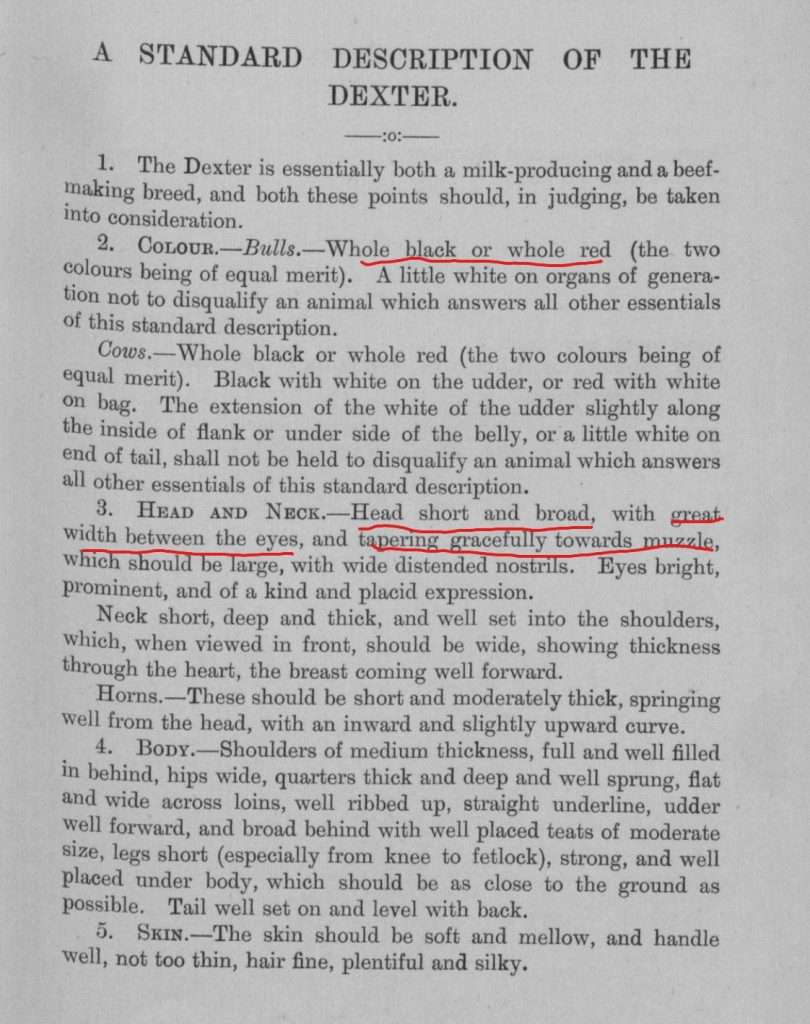
Breeders have long been concerned with breeding to “type” and a few points to mention in this last photo that align with the Standard Description of a Dexter is the color being “Whole black or whole red”. The “Head short and broad” with “great width between the eyes”, and “tapering gracefully twords the muzzle. Dexters definetley impress with their specific beautiful traits and charming ways which took hold of many a wealthy land owner who could aford to buy any exotic cattle they chose. In conclusion Dexters and their “pretty little calves are very fascinating”! They are Irish and Proud of it and those of us who breed them, have been taken by their Irish Charms.
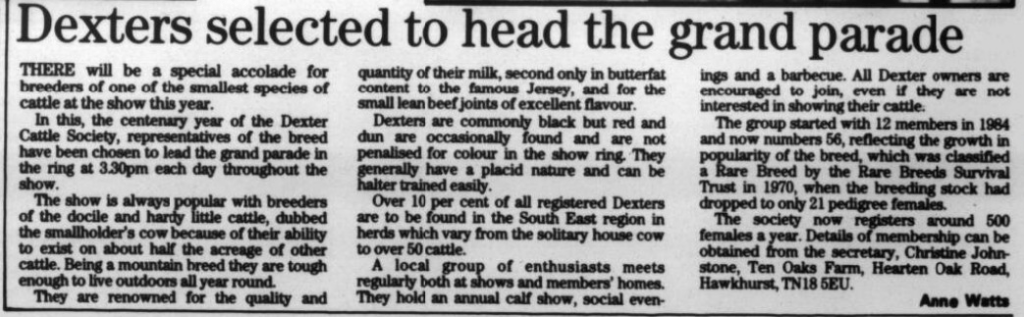
Dexters have long been promoted the same way time and time again, “Docile and Hardy little cattle, dubbed the smallholder’s cow because of their ability to exist on about half the acreage of other cattle.” This is the niche market of a Dexter. They are well suited to beginners because they can endure a bit of accidental neglect from new owners and be a great fit for people who have small acreage. Today when large acreage is becoming increasingly expensive in many areas, but people are feeling a strong draw to get back to the country, the small acreage Dexter cow is the most perfect sell point. This is a Hallmark of the breed and one that should be promoted.
Quality and Quantity of their Milk and Beef
Dexter cattle are also a good fit for people who need a smaller amount of both meat and milk, but yet they are still “renowned for the quality and quantity of their milk, second only in butterfat content to the famous jersey, and for small lean beef joints of excellent flavor”. There are other breeds than Jersey that outperform Dexters in cream content but usually they are not breeds that produce a good quantity of milk. The Highland for instance produces about 10% butterfat, but for its larger size produces quite a bit less by volume for its size. This is why the Dexter is an all-around great little cow.
Great for Small and Big families alike
The current average amount of people in a US family today is 3.15, so in a small 3-person household butchering a Dexter steer goes a very long way. As Dexter beef producers we will have a much easier time selling whole or halves to people. This avoids having to get a USDA certified meat facility which in some areas could save you more money on butchering costs. Many people are more accustomed to the idea of buying meat in a smaller quantity when they need or want it. With smaller sides you can market to people to be able to only fill a portion of their chest freezer and have space left over for other things. If you have a larger family that enjoys eating lots of beef and drinking more milk, no problem, enjoy the benefit of growing out a larger herd with more Dexters!
This article was written 09 July 1992, and you will see the addition of dun is mentioned to the original color of black and red. Dun was added to the allowable Dexter colors and today many people never knew that black and red are the only 2 original colors.
This is an interesting article on how people are returning to the old ways and using more and more of their processed beef. Healthier alternatives are growing in your pastures!
Selling meat directly to consumers is a popular method of adding value to established ranches. For some ranchers, selling directly to consumers is even the primary method of sale. Regardless of how it fits into the operation, there are some key marketing strategies that will take sales to the next level when applied correctly.
In this podcast, we learn about things we need to consider before we even schedule our meat for processing. Interesting fact is the return on the Dexter is higher than what is stated here. We experience much closer yields to 70% and our carcasses are smaller…so the freezer space issue is not as significant with the larger breeds.
Since many of us are homesteaders or practice some kind of preserving, I thought I would take a moment to discuss an alternative to canning, pressure canning and dehydrating.
Are you scratching your head, thinking where is she going with this?
Consider freeze drying. While the initial cost seems daunting, it really is an excellent way to preserve your Dexter milk, yogurts, cheeses, colostrum and beef for 25 YEARS! Think about when you’re over loaded with one veggie or another during gardening season. The veggies, herbs or eggs when they are abundant, can be frozen and put into the freeze dryer anytime. We still can and pressure can, but this gives us a whole new option.
We purchased a medium Harvest Right about a year and half ago and have been amazed at all the things we can preserve….it is less time consuming and in our opinion, and better quality product in many cases.
Canning of dairy is frowned upon by the USDA and in some cases consider unsafe, although people do it. Freeze drying on the other hand, processes the dairy at lower temperatures and therefore does not pasteurize it…so if raw is your goal, it is good alternative. If you pasteurize, you still follow the same method. We pour a quart of milk on each tray and let the machine do its thing. We have done it both with cream in and cream out…the choice is yours. We find it needs to be blended when reconstituted, or another favorite is dry in our coffee, just like coffee creamer!
If you’re into selling, freeze dried milk and other products can be a good source income. Take a look at the price of powdered milk in the store! It is not uncommon to see freeze dried milk for $30-40 a gallon. Let’s clarify this. One gallon of freezer dried milk reconstituted into one gallon of drinkable milk…almost quadruples in price.
And don’t forget your Dexter beef! Consider this scenario….you have some cuts left from your last processing and you would really like to eat it before you get into the next one. Well, freeze dry it and then you have preserved it for 25 years. It makes great gifts, as it is so light to ship.
How do you use this freeze dried beef? We like to pour some of our Dexter bone broth over it. Let it sit in refrigerator over night and then use it in the next day or so. The beef will only absorb as much broth as it can. It doesn’t get mushy, which can happen with veggies. Cook with it like you usually do.
Hope this article helps you on your farm, ranch or homestead. I just love this technology and thought I would share.
Even if you feed a little grain…it is way better than what is in store and being passed off as grass fed. Check out this video from a well known doctor.
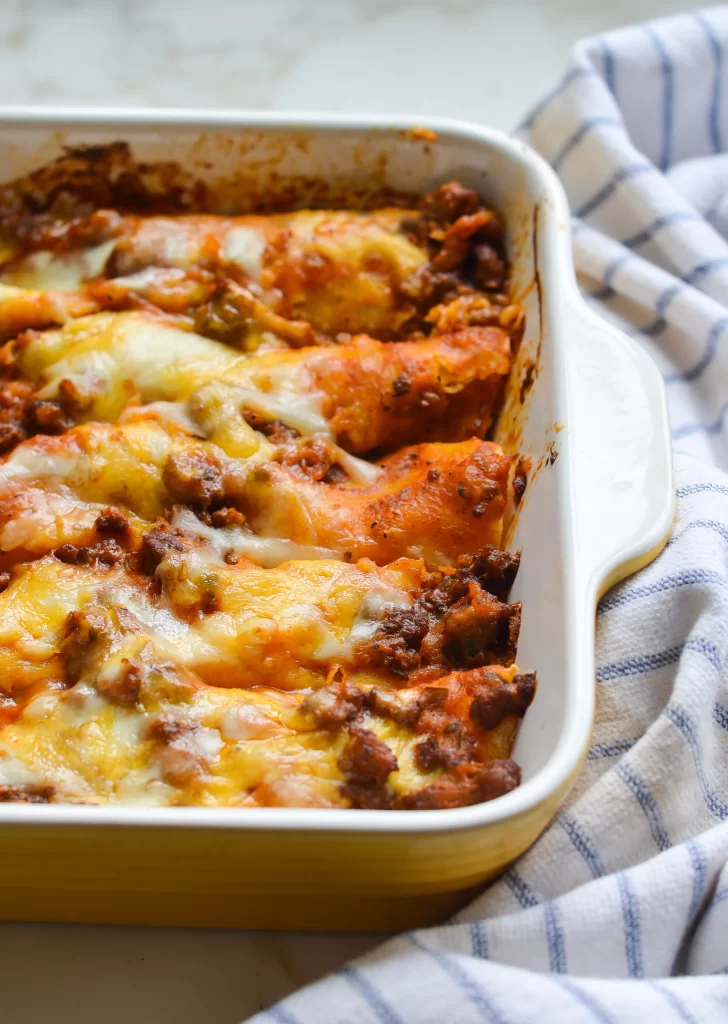
Tried and true ground beef recipe. Quick and easy! Whip up this cheesy, crowd-pleasing beef enchilada recipe in just about an hour, and bring authentic Tex-Mex flavor straight to your dinner table!
Grocery stores are a great way to put your business into overdrive, giving customers new options in ever-fashionable packaging. Whether you are looking to sell at local convenience stores or big-box wholesale grocers, it presents the perfect opportunity for your product.
Interested in learning more about how to get your product into grocery stores? In this ultimate guide, Mako PKG takes you through the whole process from start to finish.
I think one of the hardest things for farmers, ranchers and homesteaders is when they need to sell something off the farm. That journey should start well before you need to sell something.
Let’s look at the model I use for selling of Dexter beef.
I share all of the information about our wonderful breed I can, on social media …especially things like, dropping the names of famous chefs that have come to appreciate the quality of our beef. I also share podcasts, articles and pictures of Dexters in the field, on the plate and in its packaging from the butcher.
So now you have some beef that will be ready to be processed in a few months and you don’t need it for your family. This is when you need to start looking for potential customers.
How to get started
The first thing you need to do is decide what you are going to sell and its value. One of the easiest ways to do this is to look at the market…check out sites like the Irish Dexter Cattlemen, Craig’s List and local social media sites. By comparing what you see on these you will be able to determine what the price point of what is selling in your area.
Things to keep in mind are is it grass-fed and grain finished or grass-fed and grass finished. The grass-fed grass finished tends to command a higher price. Another consideration is vaccinated, as more and more folks are looking for unjabbed…this is a term I see more and more. The more specialized your finished product is, the more you can ask. I say you can ask…because not every customer values that. It’s about building the clientele at this point.
Build your own customer base
Once you start to get customers, you will then need to retain them and encourage them to tell their friends. We always follow up immediately after they get their first quarter or half. Your butcher can also be a big help to you. He sees and works with a lot of different breeds and will have a much bigger customer base than you. A really good butcher is so important to your finished product and especially your yield. My butcher is wonderful about sharing what we have produced and bragging on it for us!
Not everyone knows what Dexter cattle are and that we have, well in my opinion and many of our customer’s opinion, one of best dual purpose , beef and dairy breeds. So, how do you get them to see the value of your beef and our breed? For us, it was finding like minded folks. People who were not looking for meat from the local grocery store. Someone who understood, that by buying the whole, half or quarter of the Dexter they would see an overall better value than the price of just the burger. Our burger is ancestral beef, another differential that sets us apart from many of the other farmers in our area. It includes a percentage of organ meat. This maybe valued by your customer, if they are health conscious…or maybe not important to others or even a put off, to some.
Once they have bought from you, you need to ask them when they will need more. You want to retain that customer and build on that base. If they rave about it…ask them to tell their friends and family. Word of mouth is so much less work and keeps your pipeline full. If you can’t fill their needs, find another Dexter owner who you can work with and help each other. For us, it’s about getting them to buy Dexter.
Dealing with objections
Common objects are:
I don’t know if I have enough freezer space…or how big a freezer do I need. We have many articles, videos and personal writings on the this in the IDC Gazette But the amount of beef produced is a huge selling feature, as the Dexter doesn’t give the average family, too much to deal with.
In many states they need to pay you for the Dexter and the butcher for the processing. In other states, they are done at USDA facilities and payment can be made to you including the processing. Or it can be sold as individual cuts. If selling individual cuts, more homework will need to be done determining the prices of those individual cuts. So, money can be a factor, as some will need to accrue for it unless you are selling individual cuts.
And my all time favorite objection …I need to talk to my husband or my wife…and then you hear crickets. You still need to follow up. Understanding objections can only help you hone your selling skills and prepare you for crazy objections like this last one….lol
Using the Irish Dexter Cattlemen Marketplace
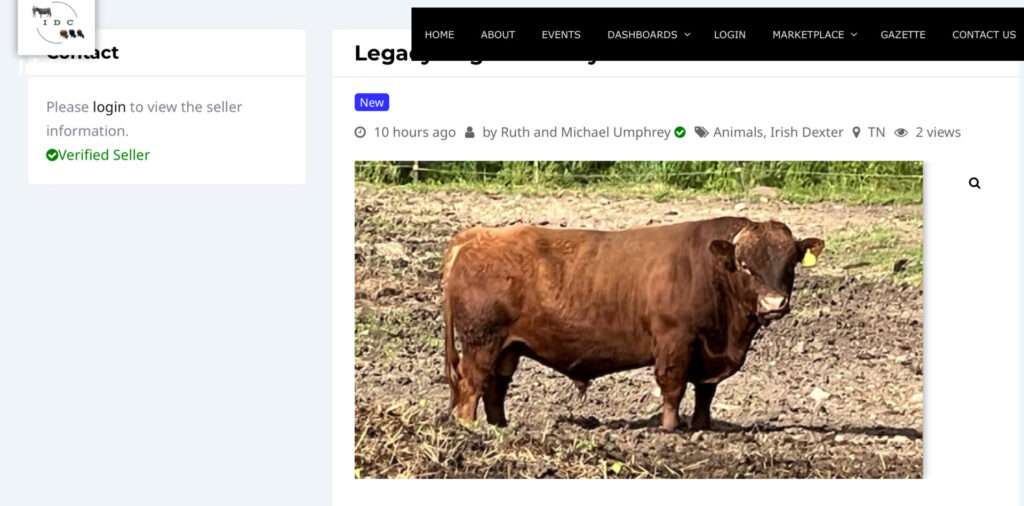
I use the ad I generate using the Irish Dexter Cattlemen for selling. Why? Because it’s looks professional, I don’t have my own website and I don’t want to write a bunch of different ads.To best utilize the ad, I take a picture of it, so they have something to look at and then copy and paste the link of the ad into different social media groups and sometimes even Craig’s list. Not everyone uses social media or Craig’s list. So, by using the IDC Marketplace, I have exposure there on the website and in the FREE monthly newsletter, giving me two more vehicles for selling. By doing it this way, I only write the ad once and then copy and paste, giving it a professional and consistent look. Feed back from some of the buyers off the site have been very positive. They like that everything is in the ad…registration numbers if applicable, location, price and if it is negotiable and that they can have a private conversation.
When sharing on social media I choose local sites, as shipping, is not much of an option with cost of shipping and the need to keep it frozen. I also use the Irish Dexter Cattlemen featured post on FB and some of the cattle groups that serve my area, as it’s just not feasible for people to drive great distances for their beef.
Repetition
Just because you post something once doesn’t get it sold. People don’t typically look back through post from a week ago or a month ago. When they’re wanting to buy something they usually look back maybe a couple of days.
I suggest you post on Thursdays or Fridays and again on the weekend to get people looking at what you have available.
If you are keeping your pipeline full, and you are building your clientele, the repetition will not need to be as much. You will develop wait lists and those lists will need to be worked. Just because they’re on your waitlist doesn’t mean they’re going to buy again. You need to touch base with them periodically and keep it current because they may have decided to buy somewhere else. I find if you touch base with them monthly or every other month, you’re more likely to keep them on your list of potential buyers.
So in conclusion, the important things to remember are
Look professional.
Start to sell before your are taking your Dexter for processing.
Build up the quality of the breed and its beef….you never know you may sell breeding stock too to that beef customer.
Learn to deal with objections in a positive manner.
Remember, posting it once doesn’t get it sold.
Here is one of my favorite podcasts for educating buyers about our wonderful breed.
I sincerely hope this helps you…if you have more ideas, feel free to comment. I would love to hear some of your feedback or unique ways of selling your beef and breeding stock.
Our journey to homesteading began about five years ago. My husband and I were searching for self-sustainability, a quieter life, and a deeper connection to the land. Raised in the suburbs with every modern convenience, we only knew which grocery store had the freshest beef. That was the extent of our food sourcing knowledge.
Once we acquired our acreage, we started, as many do, with chickens. At the time, I hadn’t even considered milking animals myself, so I went looking for farm-fresh milk. I found a local source, and with it, a whole new world. We began picking up a couple of gallons each week, but it didn’t take long before we wanted to produce our own.
That’s how we ended up with Nubian goats.
I was intimidated by the idea of milking and caring for them, but goats felt less daunting than a full-sized milk cow. Still, I had always loved and admired the Dexters at pickup. Just being around them brought a peace I couldn’t explain. They were a dream, something for “someday.”
Fast forward a few years, and someday finally came.
About a month ago, we brought home our first Dexters: a heifer and a steer. And how’s it going? In a word? beautifully.
The first thing I noticed was their peaceful nature. Just being near them calms my nervous system in a way I can’t begin to describe. I’m absolutely head over heels in love. I’ve started thinning down my goat herd to make room for more Dexters in the future.
I’m learning to be a pasture and grass farmer (also moving fencing, adding pastures) all to better serve my Dexters. I’m excited to contribute to the breed by selecting strong lines and continuing the work that’s already been poured into my girl, Fiona.
Am I still intimidated by the idea of milking them? Absolutely. Will I do it anyway and love it once the time comes? Without a doubt.
There’s still so much to learn—about pasture management, breeding, and eventually milking—but I’m ready. With the right mentors and a heart full of determination, we’ll thrive. Fiona and Chuck are home now, and so are we. This is just the beginning of a lifelong journey with Dexters, and I couldn’t be more excited to walk it one peaceful step at a time.
I’m looking forward to many years alongside this incredible breed.
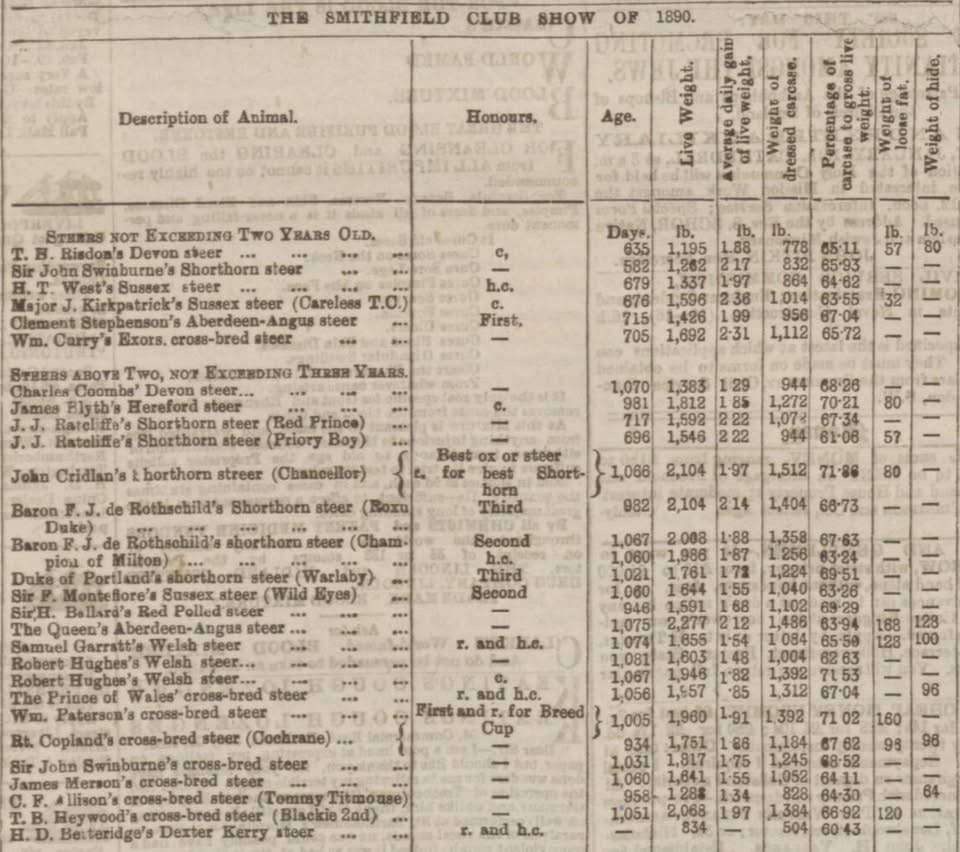
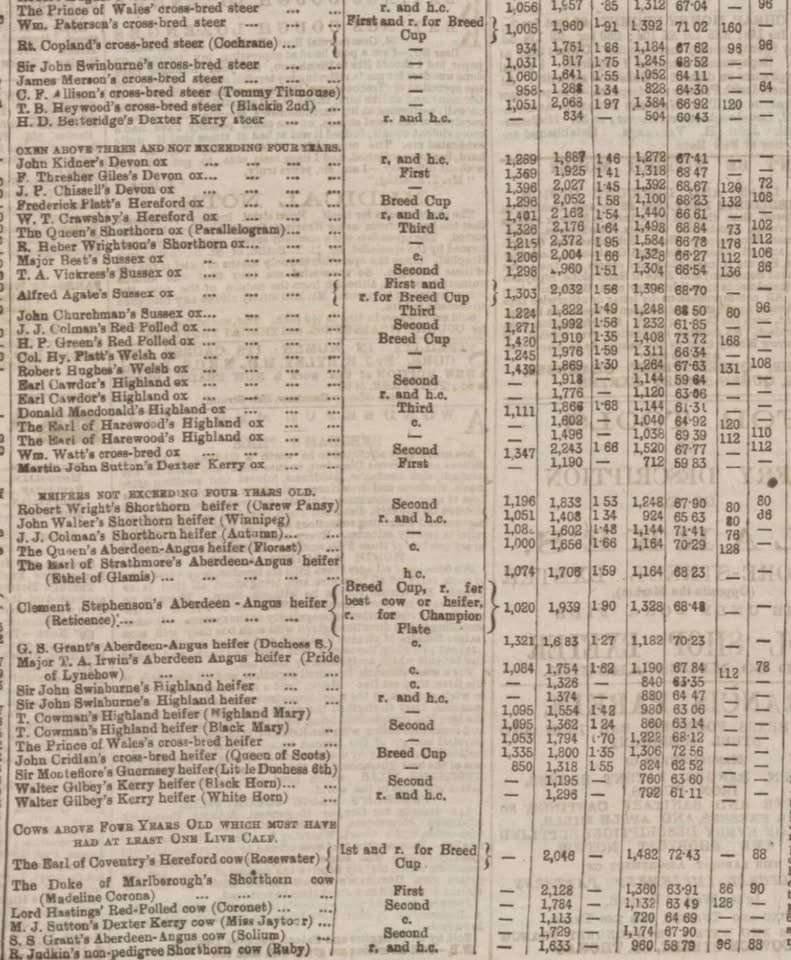
Calling all Beef Breeders!!! For anyone who likes a bit of Beef in their dual-purpose Dexters here’s something for you! Have you ever wondered what the Live weight, the Average daily weight gain of live weight, Weight of dressed Carcass, Percentage of carcass to gross live weight, Weight of loose fat and Weight of hide was on a Dexter Kerry or a Kerry and a Dexter Kerry cross was at the formation of the Royal Dublin Society in 1890? I wish all fields were complete as some are missing but it’s a good start. Well, here are some answers for you, so let’s see how these weights compare today. Comments are welcomed. By the way Tommy Titmouse was an Angus Dexter Kerry cross.
After a small sampling from one herd, it appears that the Dexter breed does have this highly inheritable genetic marker. It appears that the marker is found in those cows with the most milk production. This makes total sense, as they refer to the genetic marker as found in most easy keeping cattle.
Unfortunately no bulls were part of the initial testing and semen is not able to be tested for this marker.
So, now that we know the marker is there for the Dexter breed and that it seems to be in cows with most milk…we need more folks to test. It has been suggested that it maybe easy to get a few drops at ear tagging time and a simple tail stick for the older ones.
If you would like more information on how to get your herd tested, please reach out to the Irish Dexter Cattlemen and we will help you get started. It requires only a few drops of blood on a Tenet card sampler. The card is then sent of for sequencing.
It takes 5 days to get to the lab and 10-30 days for the sequencing to happen after being received. They send your your results by email. Pretty simple procedure.
The thing that was most interesting was it was found in the cows with the most milk production. How cool would it be to be able to predict possibly milk production and beef tenderness? Duality!
In case, you need to brush up on this. Below is the podcast that started this adventure. This is NOT the Neogen testing that has been happening by a group of Dexter breeders.