beef

Information on Irish Dexter beef

Breed standard…Detailed English Dexter Breed standard that well defines Dexters unique traits.

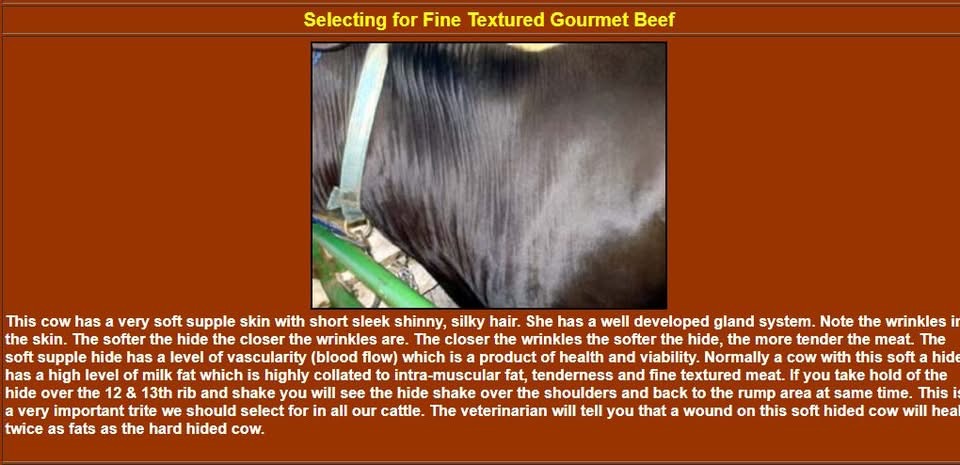
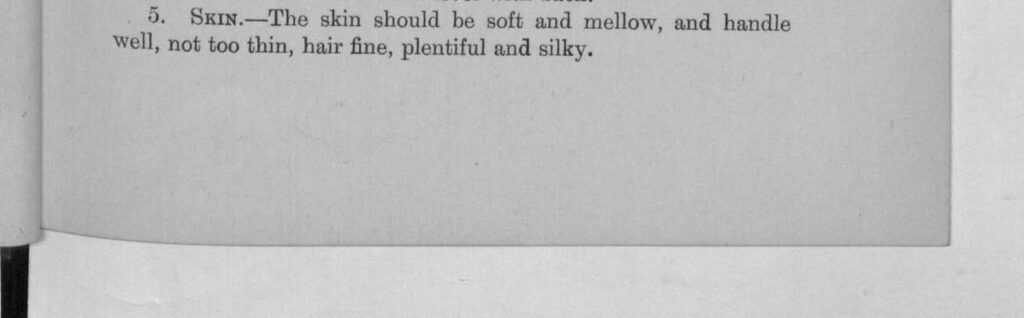
Breed Standards define breeds so that people know what unique traits the breed possess. Dexters were known to have extremely fine quality beef, it turns out that the original genetics Dexters process may actually help them to have finer quality beef because they have “skin that should be soft and mellow, and handle well, not too thin, hair fine, plentiful and silky”. Consider this quote from the first screen shot “This cow has a very soft supple skin with short sleek shiny, silky hair. She has a well developed gland system. Note the wrinkles in the skin. The softer the hide the closer the wrinkles are.” This well describes Dexters, they have both good overall butterfat and fine textured meat, and they are wearing the signs, if properly bred on their backs. Another good reason to not deviate away from the original Dexter breed standard.

Breed standard…Detailed English Dexter Breed standard that well defines Dexters unique traits. Read More »

Historical

May is Beef Month

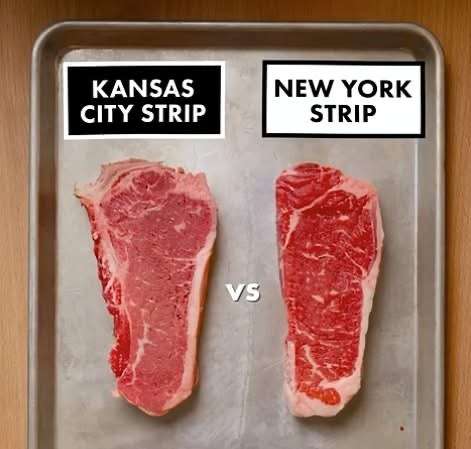
Here is a cut that is not so well known.

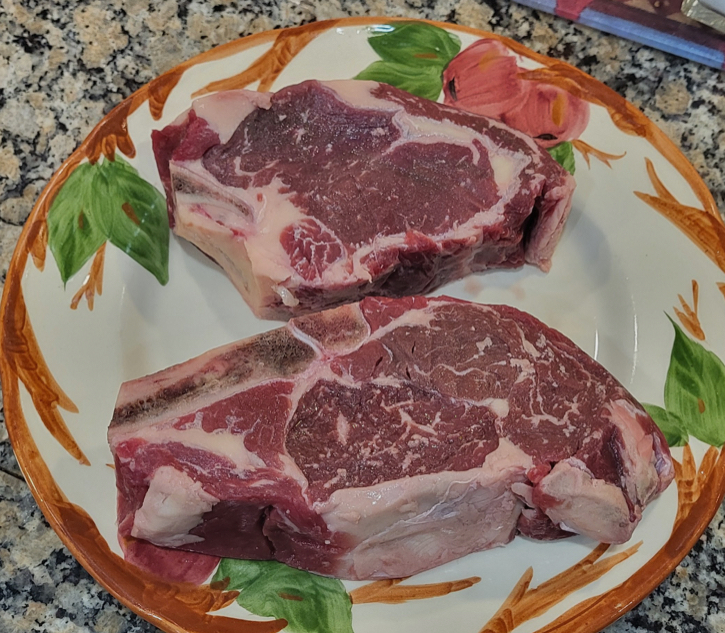
In the battle of Kansas City steak vs New York strip steak, they are in fact, the same cut. The Kansas City strip bone attached, New York does not. The New York strip typically has the tail section removed, the Kansas City does not. The cut originated in Kansas City and gained popularity when chefs in New York started calling it the New York strip.

Source Matthew Eads

May is Beef Month Read More »

Beef

Game Changer – Genetic Tenderness Testing

This morning I just received my package from Callipyge Genetics Lab in Selah, Washington. This is very exciting because it could be a game changer.

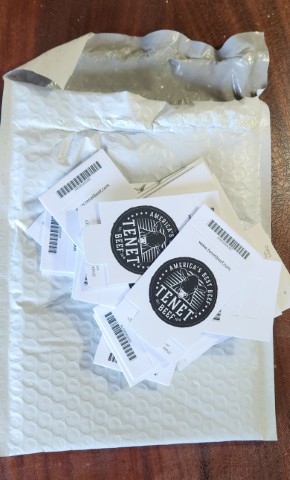
The package is from W.F. Hendrix, DBA (Doing Business As) Callipyge Genetics, LLC. The first thing I noticed is it cost $2.04 to send it to me in Calfornia, which is just south of Washington State. I ordered a set of 25 Tenet Certification Cards for $47.50, including postage, from their website April 22, 2025 and they were able to ship it May 9th. So, they have to be really busy.

If you recall, in last month’s Irish Dexter Cattlemen Tips & Tricks Guide, April 2025 Issue, Jeff Reusser, Royal Fare Farm submitted an article titled, “Who Knew Tenderness is Directly Correlated to Easy Keeper“. If you haven’t read the article, just click on the tittle. This article is about predicting exceptional beef tenderness with 100% accuracy. Now that’s exactly what I am looking for!

Our ranch started in 2009 by purchasing 3 Irish Dexters, a bull, a cow, and one male calf. Right away I knew what we would be doing with that calf. Much to our surprise, the day it was being slaughtered on our farm, the guy preparing the steer to be delivered to the butcher looked at our pasture and declared, “This is going to be great tasting beef” Boy was he right. Not only did it have an amazing taste, but it was tender too. Over the years I have learned the techniques to insure the best tasting grass fed, grass finished beef by carefully monitoring the grass they eat. But what good it it to have the best tasting beef when chewing on tack room leather? Both taste and tenderness are critical if you are going to provide a product folks really love. Testing for tenderness? Now that’s a game changer.

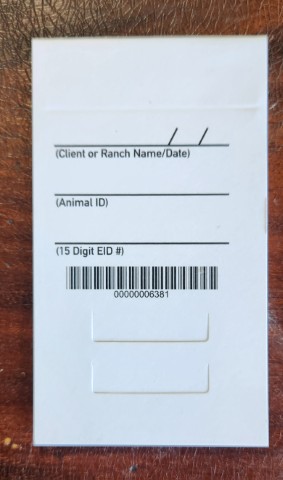
After a bit of tugging and pulling, I was able to open the package without cutting it. Sure enough, inside were twenty-five “Tenet Beef” cards. Each one labeled with their logo, bar coded, and included their website address, www.tenetbeef.com.

On the back of each card is space to write your Ranch Name and Date. The next line down is for the Animal ID. Then the third line is for a 15 digit EID number. Below this is another bar code, which is the same bar code on the front of the card. Every card has its own unique bar code.

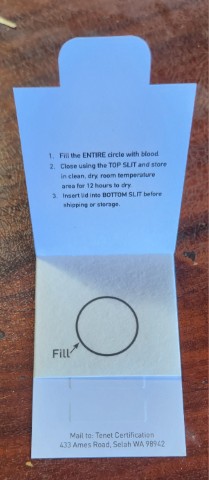
Opening the card, things get a little tricky. There is a list of three things to do and the first thing to do on the list is a globsmack.

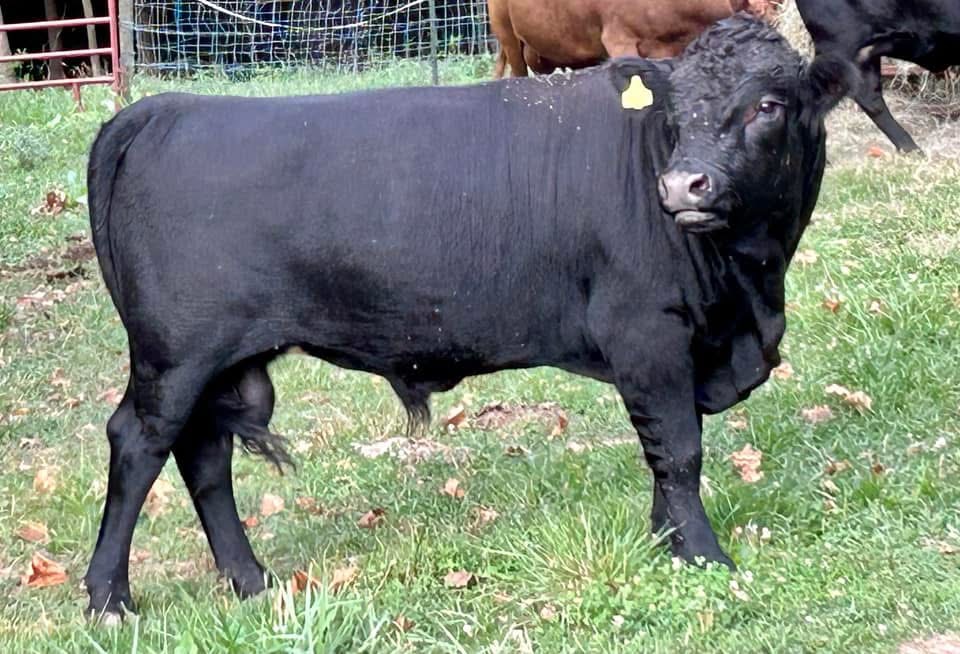
  1. Fill the ENTIRE circle with blood – Yup! That’s what it says. How am I suppose to do that? I got this bull. It’s got horns. It’s got WILD eyes. You want me to do WHAT? That’s not a small circle!

Stay tuned. There maybe more to come. Honey, were we serious about doing this testing thing?

Game Changer – Genetic Tenderness Testing Read More »

Beef

Why Size Matters


Written by Todd Hightower

The Cow Size Lie Nobody Wants to Talk About

For years, the cattle industry pushed one idea:

Bigger cows. More frame. More pounds.

And on paper, it made sense.

But out in the real world—where feed costs, drought, reproduction, and margins determine whether you stay in business—a different reality has been showing up.

Bigger Cows Eat More. That’s Not an Opinion.

A cow will consume roughly 2–2.5% of her body weight every day.

A 1,200 lb cow will eat around 24–30 pounds per day.
A 1,600 lb cow will eat around 32–40 pounds per day.

That’s 8–10 additional pounds per day.

Over the course of a year, that’s roughly 3,000 pounds more feed per cow, depending on conditions.

Across 100 cows, that’s over 300,000 additional pounds of forage, hay, or purchased feed.

It doesn’t matter if it’s grass, hay, cubes, or silage.

Bigger cows cost more to maintain. Every single day.

What That Actually Costs

That extra 3,000 pounds of feed isn’t just a number.

At current prices, that’s roughly $180–$225 more per cow per year in a hay-based system—and significantly more if you’re feeding supplement.

Across 100 cows, that’s $18,000–$22,000+ in additional cost just to maintain larger cows.

Before you ever sell a single calf.

But Feed Isn’t the Real Problem

Reproduction is.

The most valuable cow in any system is the one that breeds back on time and raises a calf every year.

The 90-Day Breeding Window Tells the Truth

In real-world conditions—whether you are grazing pasture or feeding hay and supplement—cows that maintain body condition breed back more consistently.

Field data and university research show that under limited or variable nutrition:

Moderate-sized cows often achieve 80–95% conception rates within a 90-day breeding season,
while larger-framed cows under the same conditions often fall closer to 65–85%.

Within the first 45 days, it is common to see:

55–70% of moderate cows bred early,
compared to 40–60% in larger cows when body condition is harder to maintain.

That spread may not look big on paper.

But across a herd, it is the difference between:

Cows that calve early, stay on schedule, and remain productive…

And cows that fall behind, slip later every year, or come up open.

That matters more than most people realize.

Run the Numbers

Out of 100 cows:

If 90 breed back, you have 90 calves.
If 75 breed back, you have 75 calves.

That’s 15 open cows.

In today’s market, good 500–600 lb calves are often bringing roughly $2,300–$2,900,
and heavier 600–700 lb calves can push $3,100 or more depending on quality and market conditions.

That’s $34,500–$46,500 in lost revenue from calves that were never born.

But that’s only part of the story.

What an Open Cow Really Costs

An open cow doesn’t just cost you the calf you didn’t get.

She still eats. She still requires care. She still takes up resources all year long.

In a typical cow-calf operation:

Feed alone will often run $600–$900 per cow per year, depending on forage, hay, and supplementation.

Add mineral, health costs, labor, and overhead, and that number climbs to roughly $700–$1,100 per cow annually.

Now put it together:

You lost a calf worth $2,300–$3,100.
And you still spent $700–$1,100 to keep that cow.

That means one open cow is not just a missed opportunity.

It is realistically costing you:

$3,000–$4,200 per head.

And most operations don’t stop to calculate it that way.

Timing Is Everything

Cows that breed early in the cycle calve earlier.

Earlier calves are typically 30–50 pounds heavier at weaning, more uniform, and more marketable.

Late-bred cows fall behind quickly and are often the first ones culled.

What Happens After Calving

Larger cows have higher maintenance requirements.

When conditions are less than ideal, they:

Lose body condition faster
Take longer to resume cycling
Struggle more to breed back on time

Reproduction is the first system to shut down when nutrition is short.

Meanwhile, the Cow That Fits the System

The cow that matches her environment:

Holds her condition
Cycles sooner
Breeds back within the window
Raises a calf every year
Does it on fewer resources
Stays productive longer

This Isn’t About Grass-Fed vs Grain-Fed

A bigger cow can work—if you are willing to feed her enough.

But every extra pound she carries comes with a cost.

And if she doesn’t turn that into:

A live calf
A timely rebreeding
And pounds that pay

Then size is not an advantage.

It is an expense.

Efficiency Is What Pays

Profit is not just measured in pounds per cow.

It is measured in:

Pounds per acre
Pounds per dollar invested
And cows that stay bred year after year

The Truth Most Operations Learn the Hard Way

A larger cow has to wean significantly more pounds just to offset her higher maintenance cost.

Most do not when you factor in real-world conditions.

So Here’s the Real Question

Are you building a herd that looks impressive…

Or one that fits your resources, stays bred, and pays you back every year?

Because when you break it all the way down, one open cow is not just a problem in your herd.

It is a $3,000–$4,200 mistake.

And most people don’t realize how many of those cows they’re carrying until the numbers force them to.

If this made you think about your own herd, share it with someone else who needs to see it.
And follow along—because this is just one of the cow lies most people never question.

Why Size Matters Read More »

Farm Management

Cattle Marketing Podcast – Reach Your Target Market and Boost Profits

Cattle Marketing Podcast - Reach Your Target Market and Boost Profits

A Deep Dive Podcast, brought to you by Irish Dexter Cattlemen, on topics of interest to all farmers and ranchers. Subscribe to the free, monthly Irish Dexter Cattlemen Tips & Tricks Guide to get early access.

Brought to You by These Breeders, Affiliates, & Sponsores

Cattle Marketing Podcast – Reach Your Target Market and Boost Profits Read More »

Podcasts

PRICE OF GOLD AND THE PRICE OF CATTLE

Here is a good video that gives you some food for thought. Interesting history on the price relationship. Are we valuing our Dexters herds like history has valued the cattle market?

Another thing to think about is we produce a dual purpose animal. There’s value in both the milk and the meat!! This video is really speaking only to the meet when you add the milk and it’s value you get a whole different perspective.

PRICE OF GOLD AND THE PRICE OF CATTLE Read More »

Selling

Introduction to Tenet

Introduction to Tenet Read More »

General

The Ribeye: Why This Cut Reigns Supreme

By David Payne

Selecting the finest cut of beef is a debate as old as butchery itself. From white-tablecloth steakhouses to backyard grills, opinions are plentiful and fiercely defended. Yet when judged by flavor, tenderness, and overall culinary performance, one cut consistently distinguishes itself from the rest: the ribeye.

⸻

Defining Excellence in Beef

To identify the best cut on a cow, one must first establish the criteria. A truly exceptional cut should offer:
• Pronounced, natural beef flavor
• A tender but substantial texture
• Reliable juiciness
• Adaptability across cooking methods

While many cuts excel in one or two of these categories, few succeed in all. The ribeye does.

⸻

The Anatomy of Flavor

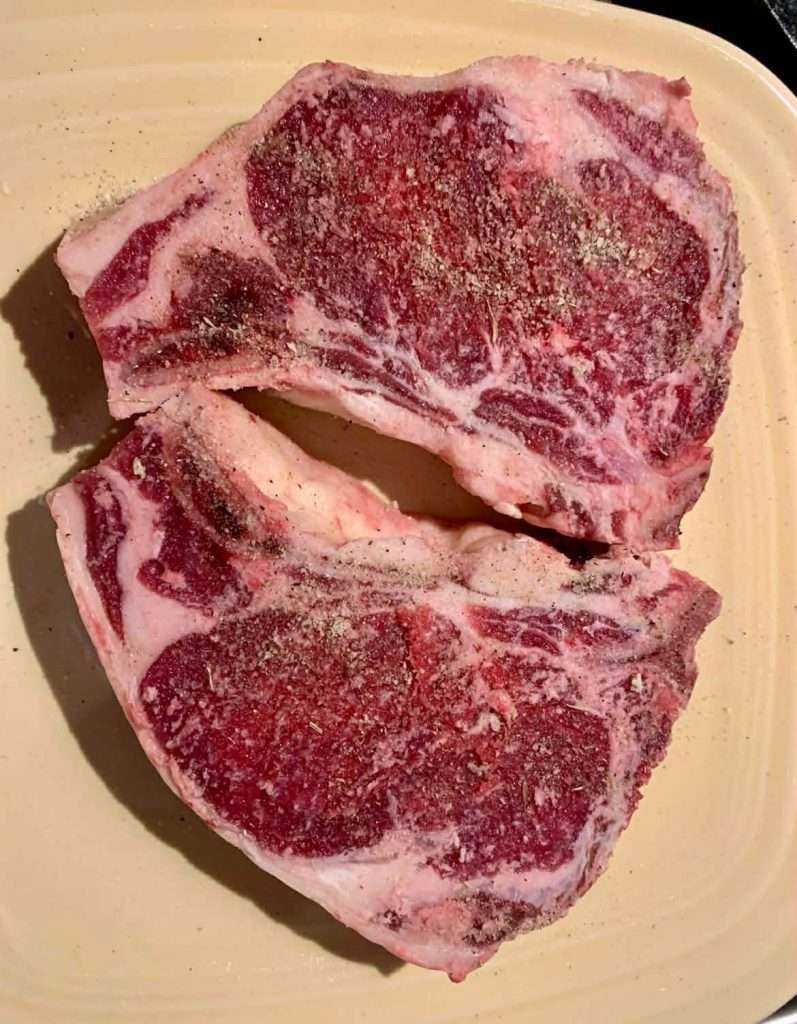
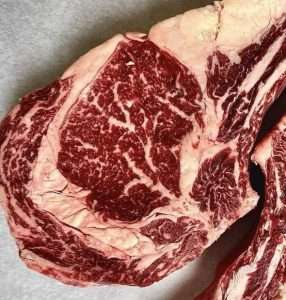
The ribeye is sourced from the rib section of the animal, an area characterized by minimal muscle exertion. This anatomical advantage allows for the development of extensive intramuscular fat, commonly referred to as marbling.

Marbling is widely regarded as the primary driver of flavor in beef. As the steak cooks, the fat slowly renders, permeating the muscle fibers and producing a depth of flavor that is both rich and unmistakably beef-forward.

Fine intramuscular marbling is the hallmark of a high-quality ribeye.

⸻

Tenderness with Substance

Unlike ultra-lean cuts such as filet mignon, which prioritize softness at the expense of flavor, the ribeye achieves a rare balance. It is tender enough to require minimal effort at the table, yet structured enough to provide a satisfying, hearty bite.

This balance makes the ribeye particularly appealing to diners who value both texture and intensity.

⸻

A Cut That Rewards Simplicity

Another defining virtue of the ribeye is its forgiving nature. The generous fat content acts as a natural safeguard during cooking, reducing the risk of dryness and allowing for a wide margin of error.

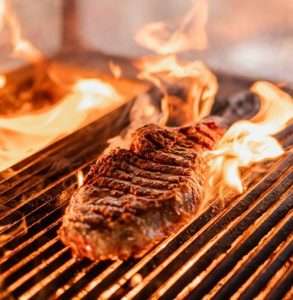
Whether prepared rare or medium, grilled over open flame or seared in cast iron, the ribeye maintains its succulence with minimal intervention. Salt, heat, and time are often all that is required.

High heat and simple seasoning allow the ribeye’s natural qualities to shine.

⸻

Bone-In or Boneless: Two Expressions of Excellence

The ribeye is available in both boneless and bone-in forms, each offering a distinct experience:
• Boneless ribeye provides ease of preparation and uniform cooking.
• Bone-in ribeye, including cowboy and tomahawk steaks, delivers enhanced flavor and visual impact.

Both versions exemplify the cut’s inherent strengths and remain staples of high-end steakhouses worldwide.

⸻

How It Compares to Other Premium Cuts

Other cuts deserve recognition for their individual merits:
• Filet mignon offers unmatched tenderness but limited flavor.
• New York strip delivers a firmer texture with less marbling.
• T-bone and porterhouse provide variety but require careful cooking to manage uneven thickness.
• Brisket, while transformative when slow-cooked, demands time and expertise.

Each excels in specific contexts, yet none match the ribeye’s consistency and immediate gratification.
⸻

Conclusion

The ribeye represents beef at its most complete: deeply flavorful, reliably tender, and remarkably versatile. It requires no elaborate preparation to impress, standing confidently on its own merits.
For those seeking the purest and most satisfying expression of beef, the ribeye remains—decisively—the finest cut on the cow.

The Ribeye: Why This Cut Reigns Supreme Read More »

Beef

Ask the butcher!

The Wranglers at Irish Dexter Cattlemen are pleased to announce that we have a butcher on our team now! The folks at PipeDreams Butchery, located near Memphis TN, will be writing articles, doing videos and more. They are familiar with Dexters, as they used own them, milk them and breed them.

They are active on our Facebook group, so if you have a question about processing and post it…don’t be surprised if they answer you. If you have things that you would covered from a butchers perspective, please let us know and we will try to get it covered for you. All contributions, will first appear in the free monthly newsletter and then be archived in the membership Gazzette.

We personally use them for all our processing and are very happy with our cuts, the feedback on our animals and extra services including sausages, ancestral beef, smoking and curing. Very excited to have them participating in our beef community!

Ask the butcher! Read More »

Beef