milk

Information on milk and dairy using Irish Dexter Cattle

Historically looking at the Dexter milk properties!

Many may not know that the Dexter at one time was known to have milking properties of equal merit as the Kerry, a known dairy breed, though they are a dual-purpose breed. Mr. R Tait Robertson was to of said ” The milking properties of both breeds may be said to be of about equal merit”. Who is R. Tait Robertson? He is the son of James Robertson, of whom bred or collected a large portion of the foundation Dexters sold to England and other places. He was an influential breeder. For an interesting photo reference of the amazing similarities of Dexter and Kerry cattle see Aicme Check (Dexter cow) and Greenah Florah 2nd (Kerry cow). I did not have to hunt far and wide to find examples that looked closely related. All I had to do is go to the 1901 Herd book and find the only available photos of an example Kerry and Dexter cow. And by the way note the classic white Dexter udder marking on the Kerry cow as this was a common Kerry trait feature too. Nose to nose as you can see in the photo comparison they do look quite alike.

Historically looking at the Dexter milk properties! Read More »

Historical

Dexters – Poor Man’s Cow to Luxury Cow By Danielle Lowther

Poor Man’s Cow to Luxury Cow

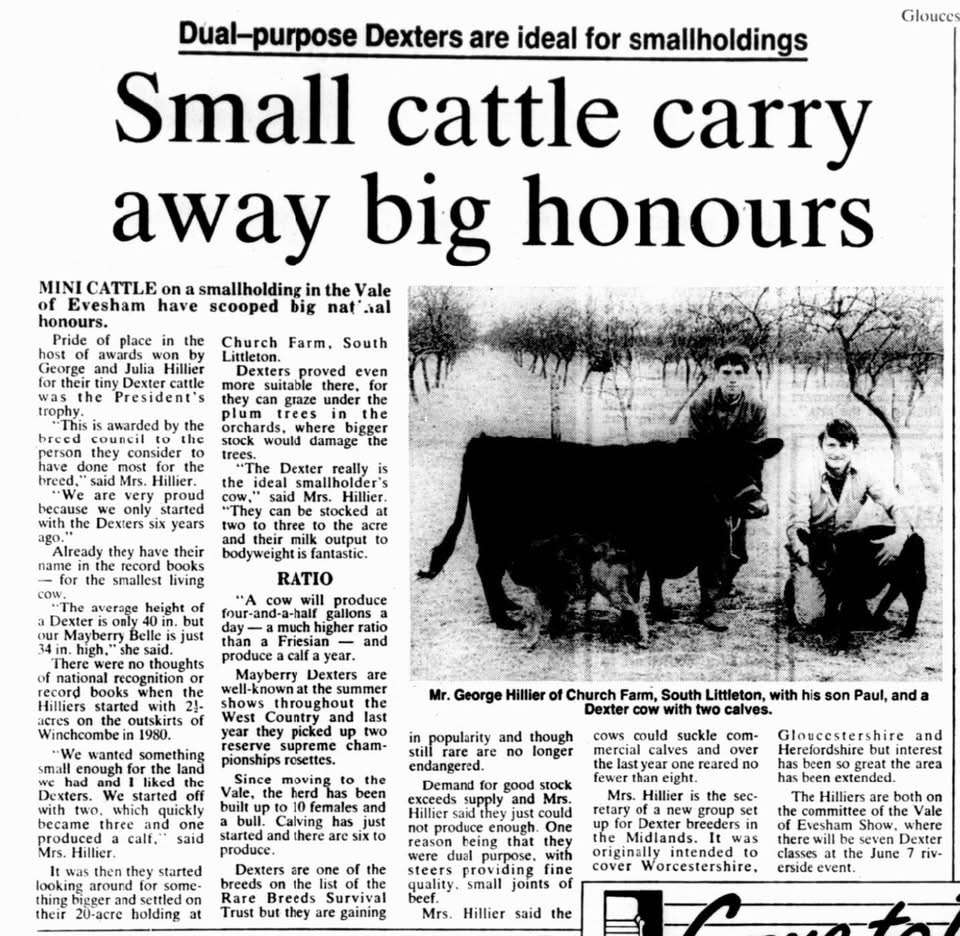
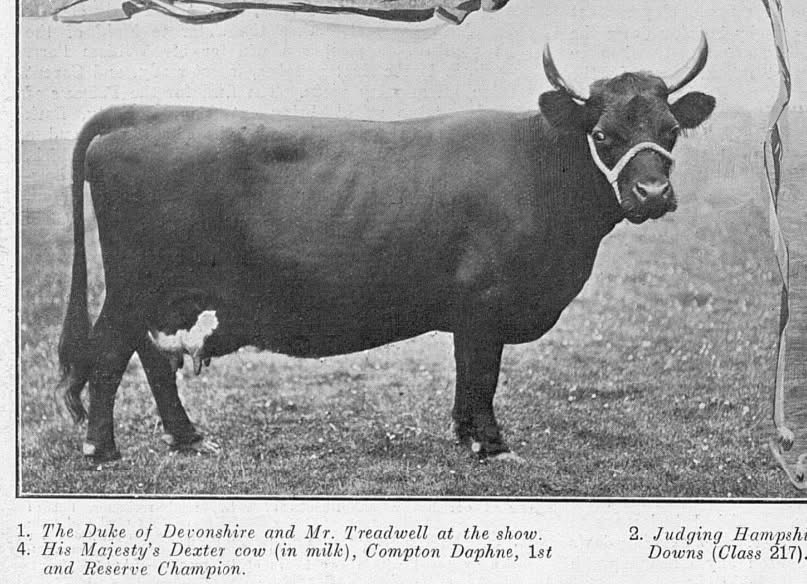
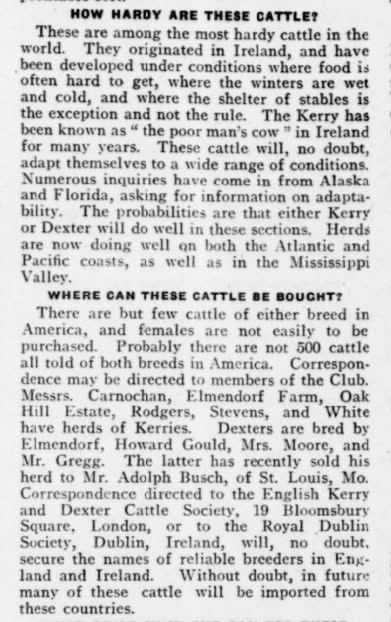
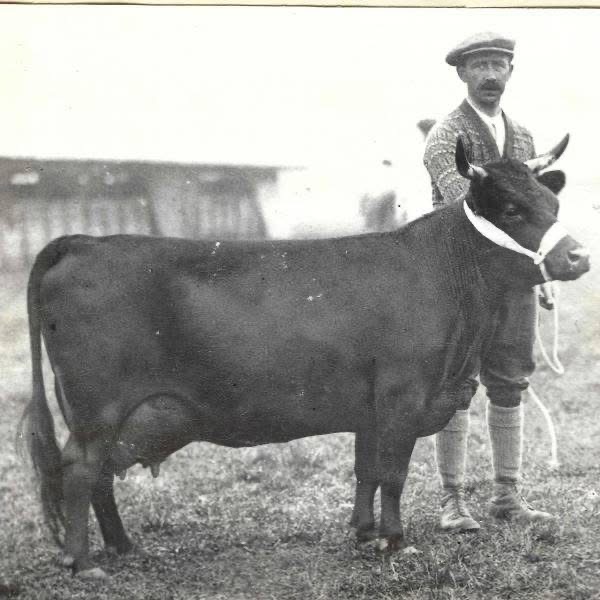
How did the Poor Man’s Cow become owned by the wealthy and famous. Dexters and Kerry Cattle became recognized for their unique hardy attributes, Kerry for milk and Dexter for milk and meat. Dexters were known to get by on less, produce rich milk and raise a healthy vigorous calf for their owner’s table. Dexters were bred to their breed specific traits transforming them from just any poor Irish cows to these 2 beautiful, registered Dexter cows we see in these two later photos.

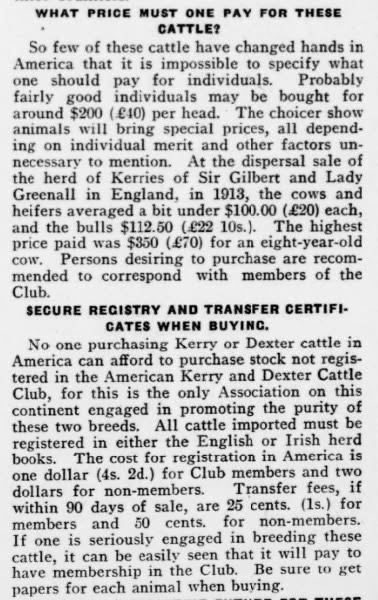
They were rare and they were at risk of being cross bred out of existence, but breeders in Ireland started selecting and registering Dexter cattle with breed defining traits to preserve and register them in a herd book. Once the promotion of Dexters began every wealthy aristocrat wanted one. All of a sudden, they were not the Poor Man’s cow but rather for a short spell until the numbers grew, cattle that only the wealthy could afford. Consider as this article states a $200 dollar Dexter cow from 1915. This is the equivalent of $6221.78. I checked multiple inflation calculators to verify that number as being correct. With the highest price the ad mentions at $350 in 1915, you would pay $10,936.81 today! Consider today we pay less for quality breeding stock. Rarity always drives the price up and just like with the rarity of gold it dictates the price.
Registered cows were important then and today. Registered Dexters will always hold a higher value than unregistered. Still with Dexters it took devoted breeders to breed Dexters according to the Dexter Standard to the highest quality like the 2 cows you see in the photographs. Not every Dexter cow was nearly as ideal as these two beauties. Compton Daphne, I speculate is a Chondro Carrier while Grinstead Watercress I speculate to be a non-carrier. Of course, we can never go back and test them so it’s just speculation. Both are extremely well bred and both fit the standard well.

So, as you can see Dexters are a dual-purpose breed that can be bred by multiple types of people regardless of fortune because they are a great pick for everyone. Whether you’re a small homesteader trying to save money with a thrifty headache free cow or someone who just wants to raise them as beautiful lawn mowers true Dexters are a great fit for these reasons and so many more!

30 Jan 1915 is the date of article written.
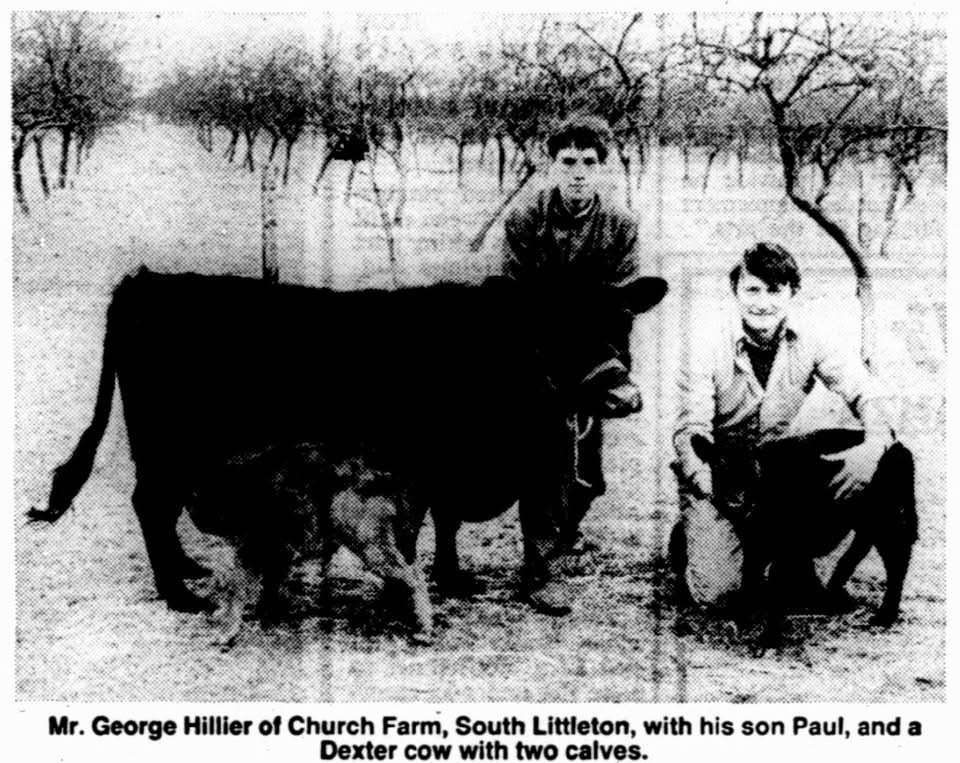
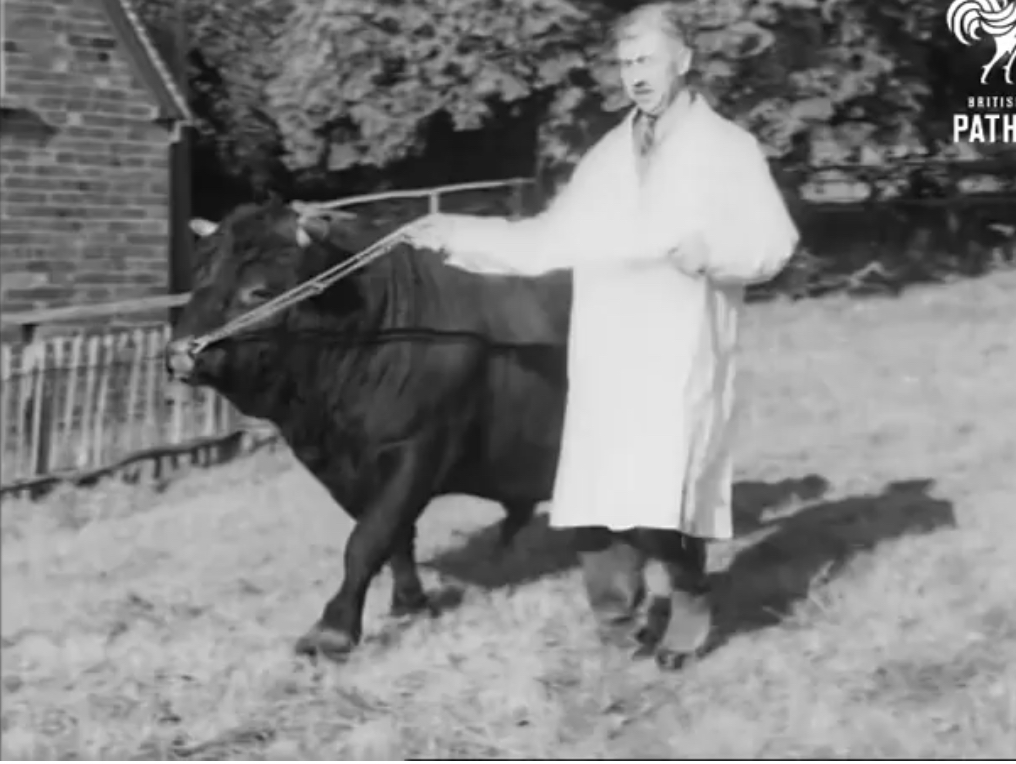
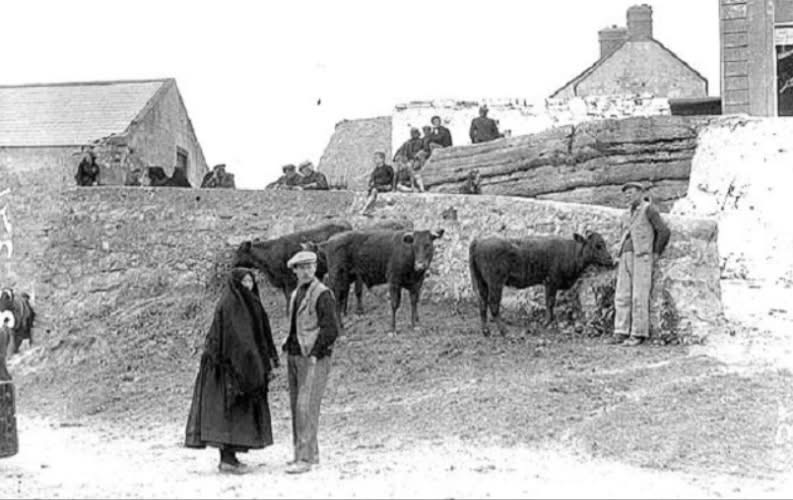
Photo of cattle in town are common type of Celtic cow that roamed Ireland.
Other two photos are of registered Dexters.

Dexters – Poor Man’s Cow to Luxury Cow By Danielle Lowther Read More »

Historical

Looking for Sustainability Podcast – Consider the Irish Dexter History

A Deep Dive Podcast, brought to you by Irish Dexter Cattlemen, on topics of interest to all farmers and ranchers. Subscribe to the free, monthly Irish Dexter Cattlemen Tips & Tricks Guide to get early access.

Brought to you by these Breeders, Affiliates, & Sponsors

Looking for Sustainability Podcast – Consider the Irish Dexter History Read More »

Podcasts

Choosing the right cow for your homestead

I really enjoyed this podcast about how to choose a milk cow for your homestead. While she is very pro Jersey, they do mention the Dexter and the principles for looking for the right cow for your farm, ranch or homestead are essentially the same.

Interestingly she does recommend the trained cow, she did not take the route, but explains the long game to get there. Which ever route you choose, the Dexter should definitely be considered. Less food, easy keepers, little to no metabolic issues have been my experience.

They talk about Angus Jersey being some of the best beef…someone needs to feed them some Dexter!

Listen up ….remember the Dexter is has been the right choice for many of us….we just need to spread the word!

Homesteading with a milk cow
American FarmSteadHers~ Your Homesteading & Gardening Podcast

Jenny asks the questions as someone interested in a future dairy cow, and Donna answers with her experience. We go over the very basics of looking for and keeping a family dairy cow on the homestead.americanfarmsteadhers.com americanfarmsteadconvention.com

Listen on Apple Podcasts: https://podcasts.apple.com/us/podcast/american-farmsteadhers-your-homesteading-gardening/id1615836366?i=1000596157232

Choosing the right cow for your homestead Read More »

Homesteading

Tips for milking cows By Deanna Clark from Simple Pulse

Photo from Deanna Clark, Lane’s End Iggy

There are over 270 million cows producing milk across the world with about 10 million in North America alone and now you own one or more of those milk cows, congratulations! I bet you spent lots of time considering age, breed, reproductive status and temperament before you got your precious new cow and now I’m here to offer you a general rundown of a basic milking procedure.

Everything starts with routine. Cows are very much creatures of habit and will do best with a set time schedule for milkings. A good routine starts well before its time to actually milk, especially for 1st time heifers. Begin by setting up your milking area and bringing the heifer or cow into the area at least once a day before she calves and feeding grain or brushing her. Once she does calve, it is important to stick to that routing, milking every 12 hours is the industry standard for time between milkings.

Cleanliness is next to Godliness. Making sure your udder is clean before attaching the milk machine is a must! Start with a warm damp rag or dairy towel and vigorously clean each teat and the udder around it to remove any manure or debris. The key here is to not be shy about really getting in there. This action is the first thing that will trigger a cows let down. Unlike some animals, cows seem to have a will of their own and if they don’t want to give you their milk, they wont! Only happy cows give milk is a true statement. You will notice her teats turn from small prunes to a plump shape as you are cleaning her off. Sometimes they even begin to stream milk on their own. This is the sign she has let down her milk.

After she is all clean it is time to apply the pre-dip. Iodine or chlorhexidine

are the two most common used. Both sanitizes the teats before the machine goes on. When you apply it, make sure to let it sit on for the recommend amount of time so it can do its work, don’t rush this step. Use a clean paper towel,1 per cow, to wipe off the disinfectant. Next you should milk out a small amount of milk from each teat into a container or strip cup. Pay special attention to its color, smell, and consistency; checking for any lumps or strings which can be a first sign of mastitis. If all looks good you are now you are ready to attach your claws/inflations. 

Milking with a good machine like the SimplePulseshould only take 6-10 min from start to finish. Any longer than this and you have a settings or pressure issue. Cows liked to be milked at around 60 pulses per minute of the pulsator. When you first get a machine from SimplePulsethe pulsator is set for goats which is slightly higher at 90 pulses. To adjust this down, turn the set screw on the back of the pulsator using a flat head screwdriver until you hear the clicks start to get further apart and it times to 60 pulses in 1 minute. 

When attaching the inflations to the udder align the entrance of the inflation with the teat opening and then depress the bottom claw button. This will suck the teat into the inflation shell to the proper depth and begin milking instantly. Repeat with the other 3 inflations. Continue allowing the machine to milk until you notice milk no longer flowing. At the point you think she is done milking, her udder should look noticeably deflated and you no longer see milk flowing into the claws, go ahead and pull down gently on each inflation in turn. This will open the milk canal and allow that last bit of milk to come out which is the highest in butterfat. Continue to apply slight downward traction until you don’t see a steady stream of milk anymore before turning the machine off. 

After milking, a cows teat canals stay open for around 30 minutes after so be sure to apply a good post-milking teat dip like iodine or if its below freezing, Winterset powder, to coat the teat ends and prevent bacteria from entering once you turn her out. 

Having a good routine, sanitation practice and procedure in place by following these simple steps will set you and your cows up for a successful milking journey.

Tips for milking cows By Deanna Clark from Simple Pulse Read More »

Milking & Dairy
Enable Notifications OK No thanks