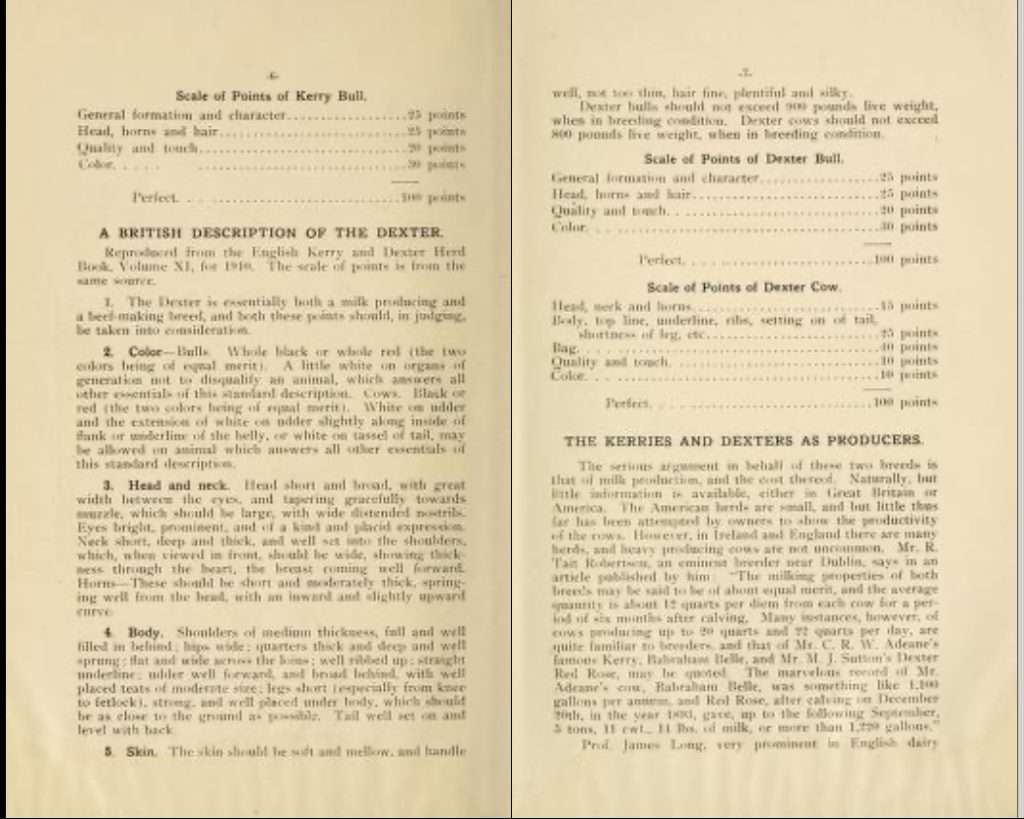
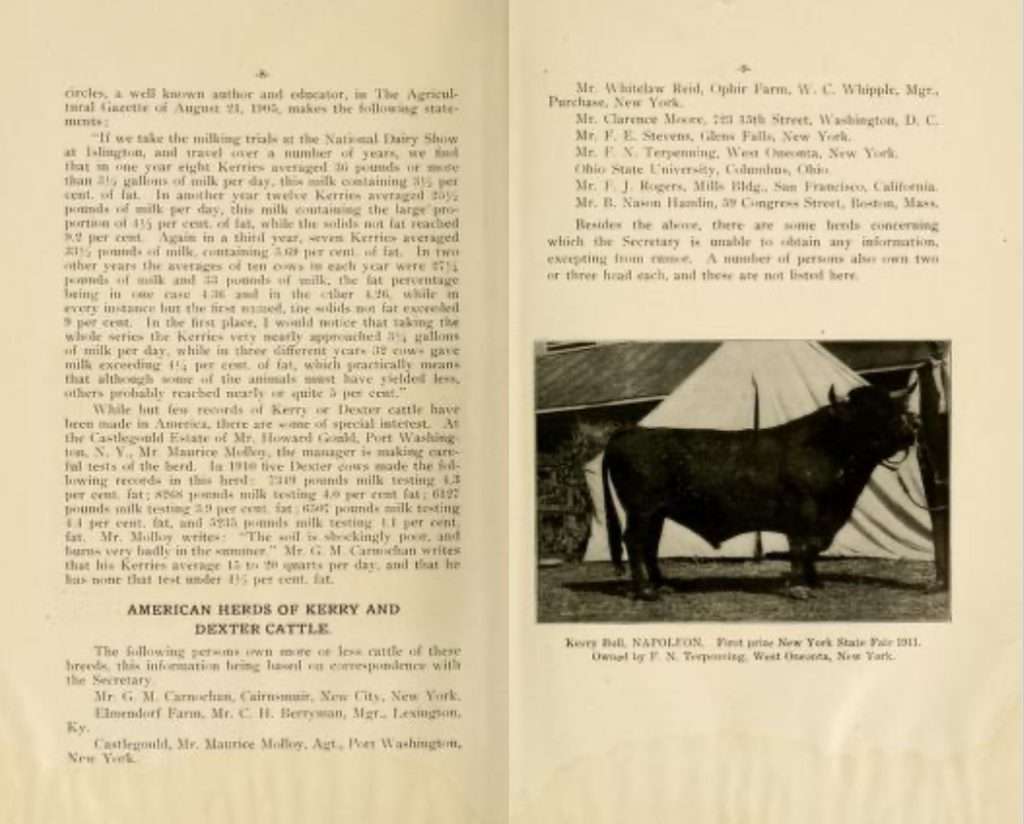
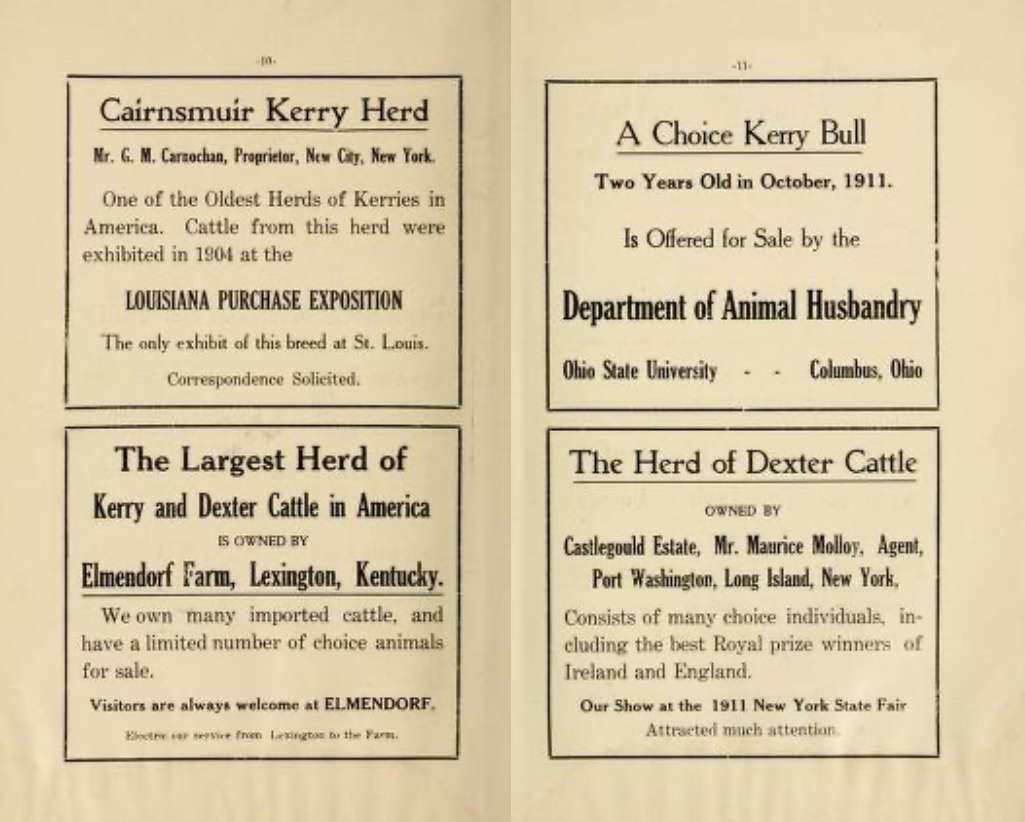
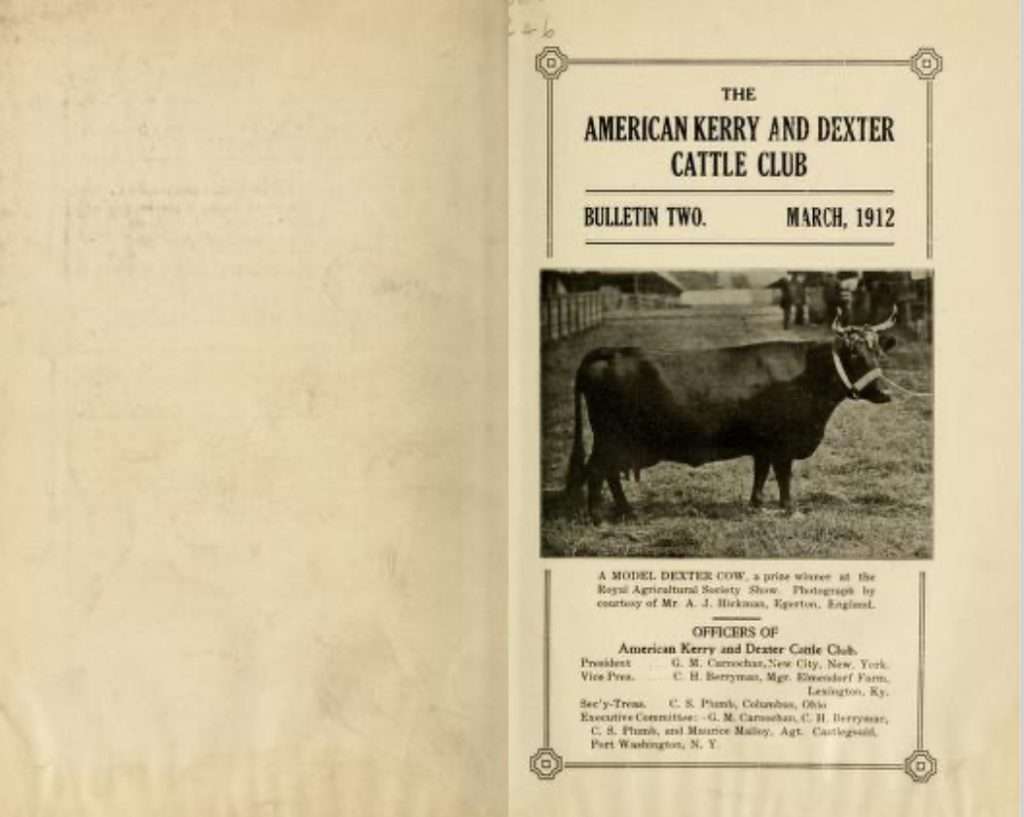
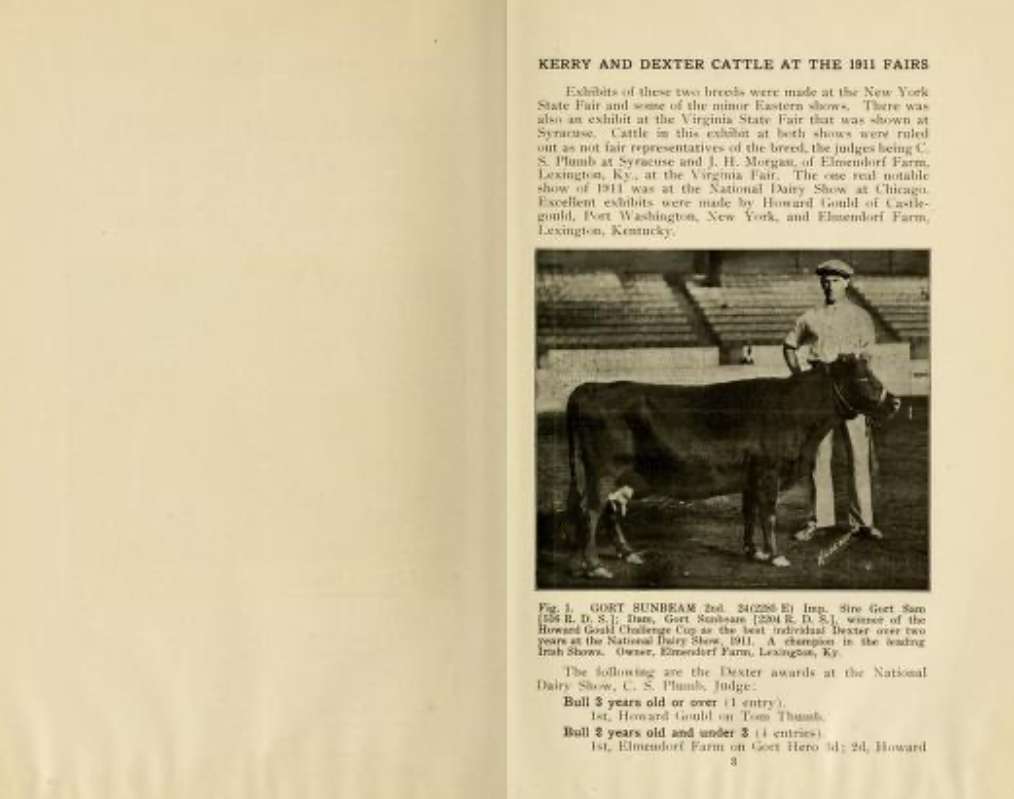
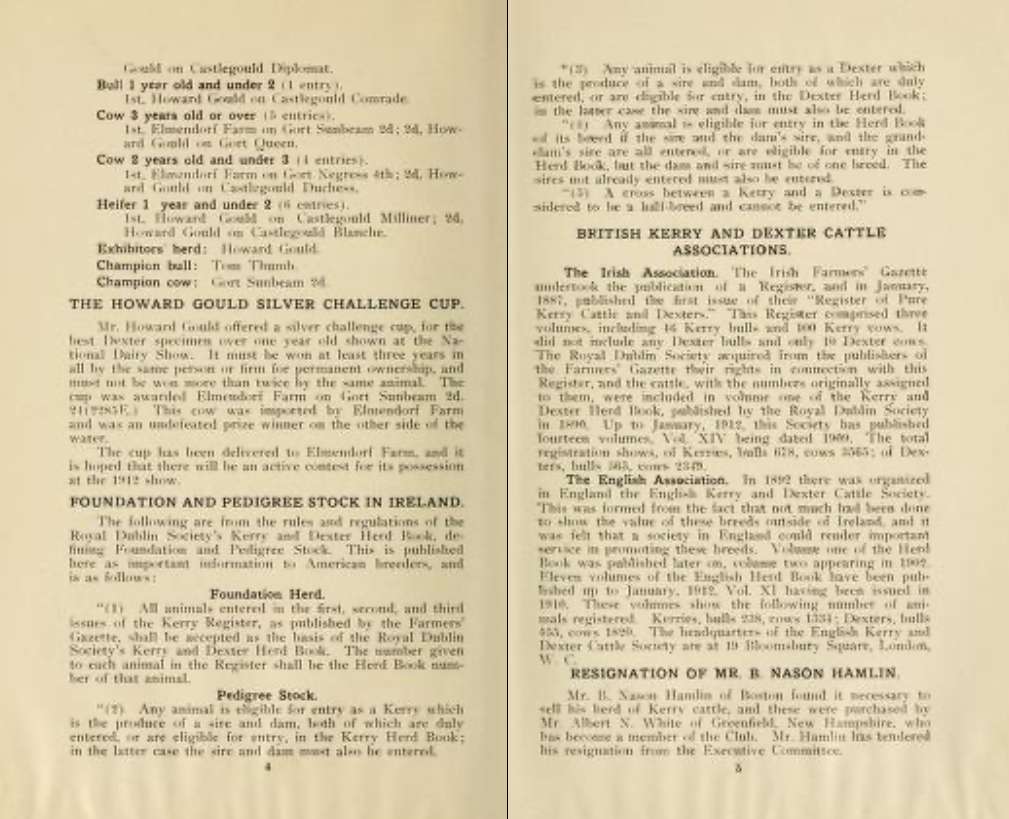
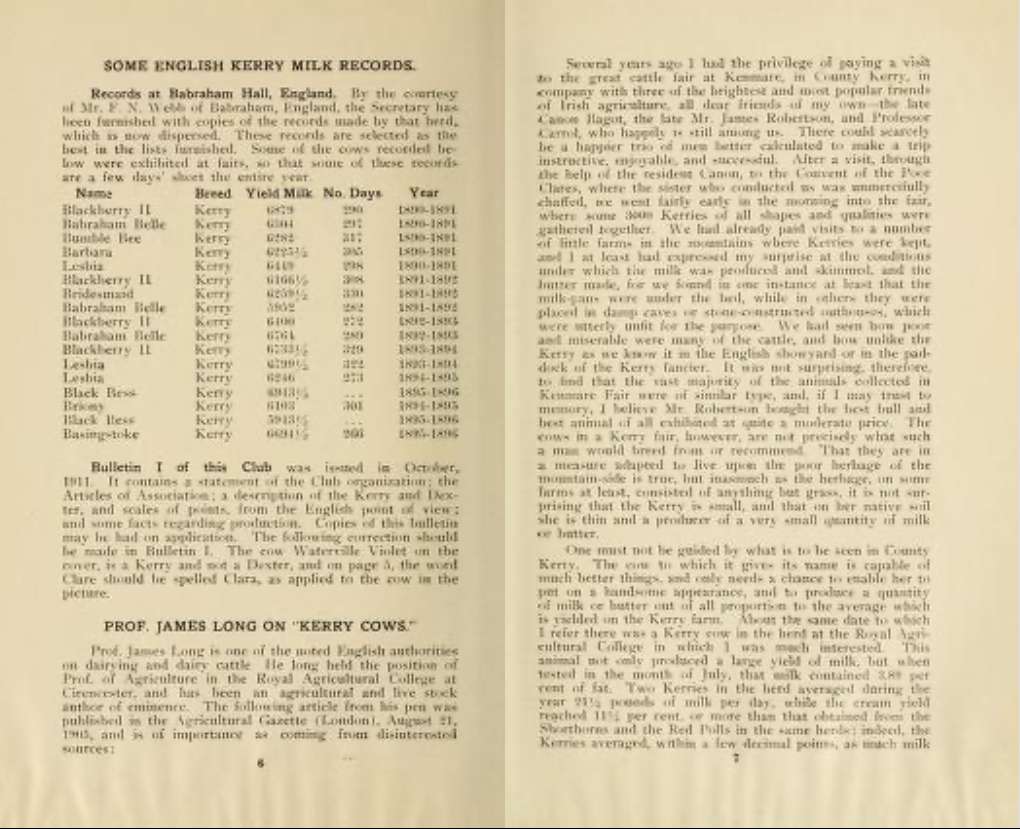
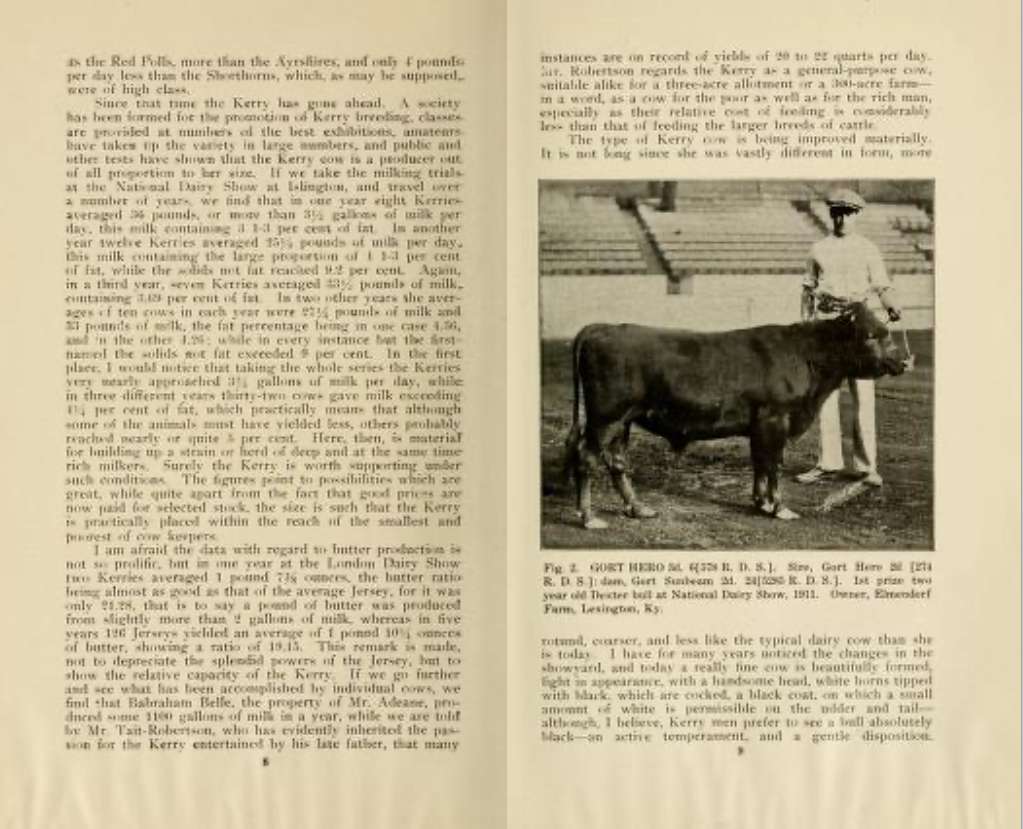
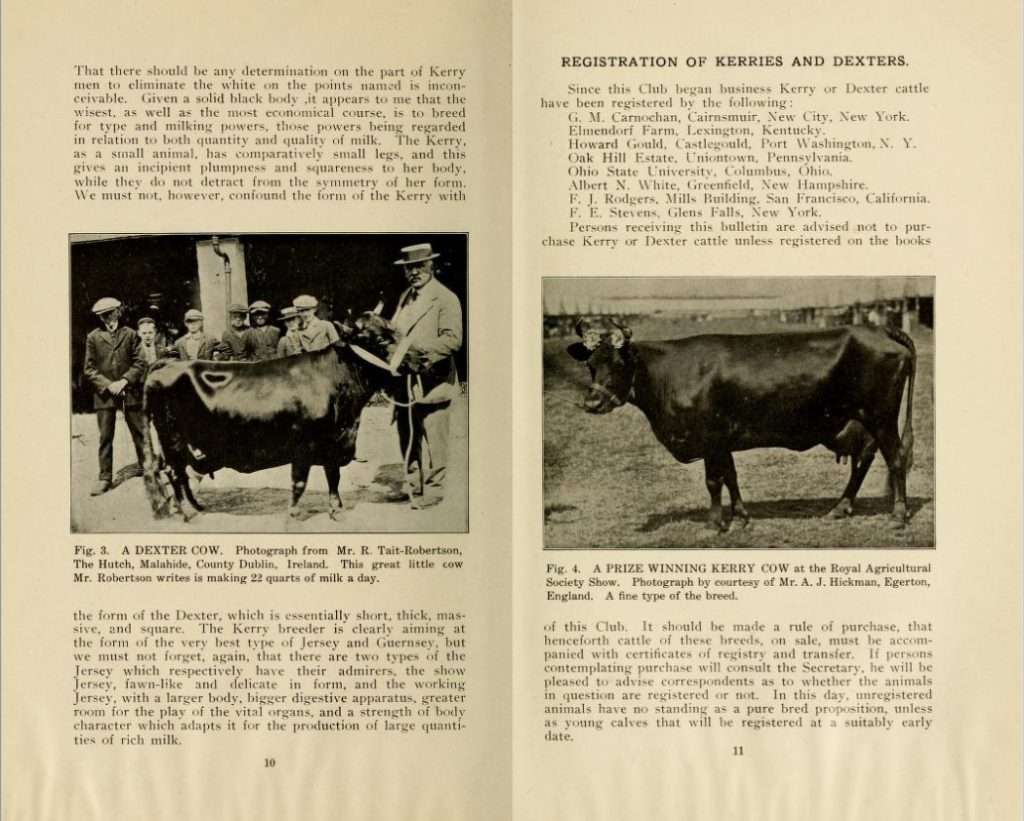
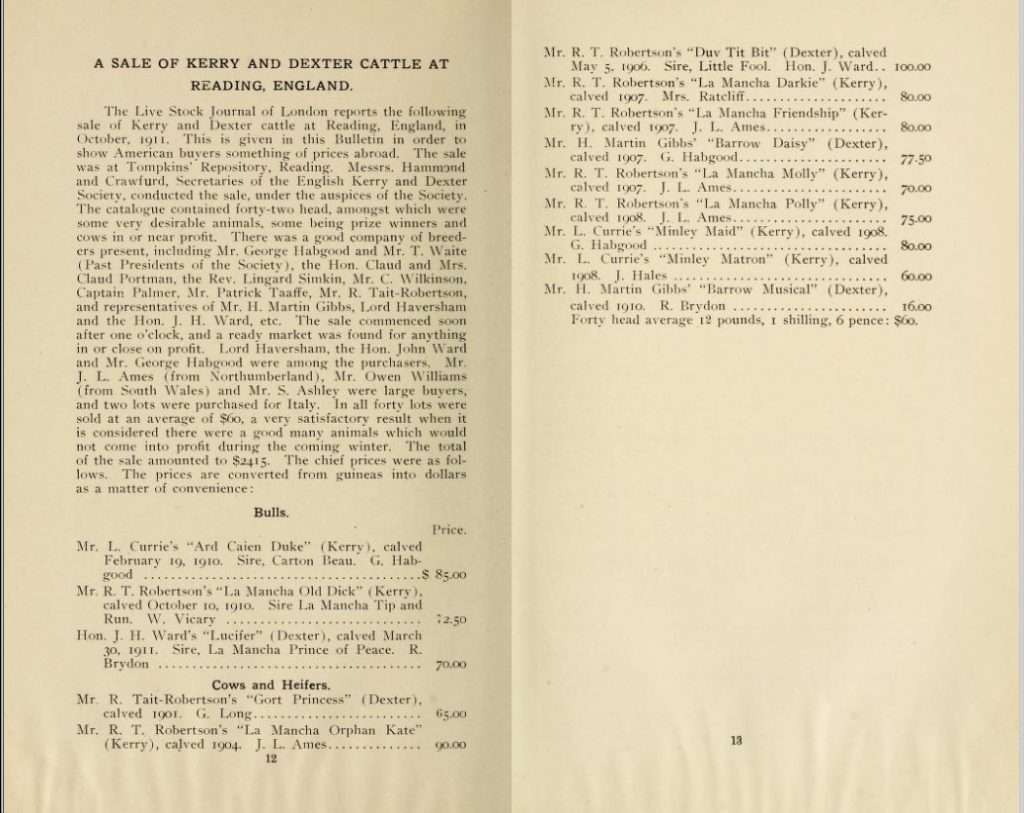
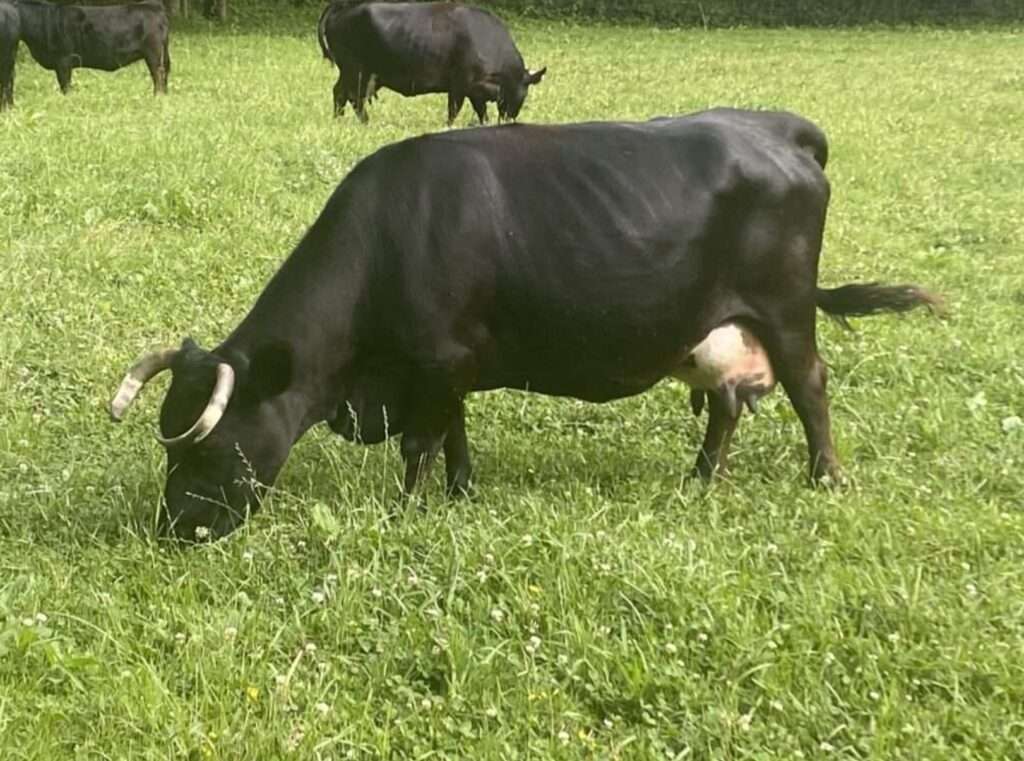
Many thanks to Judy Sponaugle of the Legacy Registry for providing the Irish Dexter Cattlemen with this valuable information. This is the first in a series of excerpts from The American Kerry and Dexter Cattle Club.
It is a great find for all you Dexter history buffs! Seeing some of the old advertisements and recognizing some of those herds was a thrill for me.
Here is the second installment in the series of The American Kerry and Dexter Cattle Club brought to us by Judy Sponaugle of Legacy. Hope your enjoying the series!
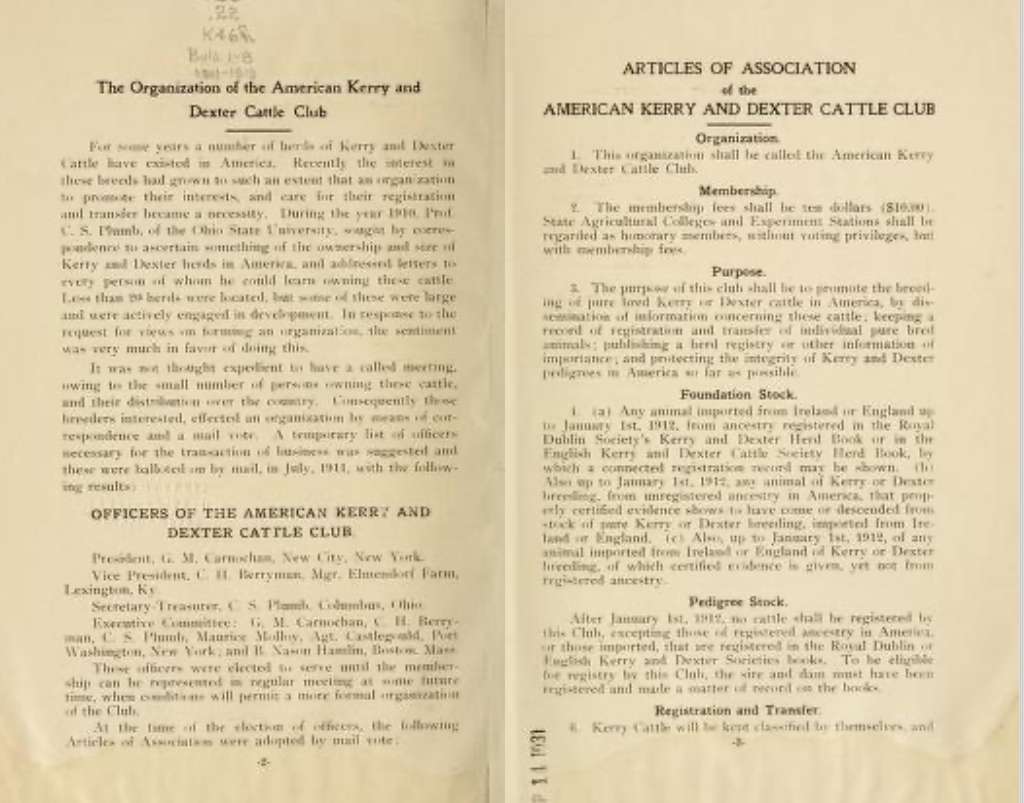
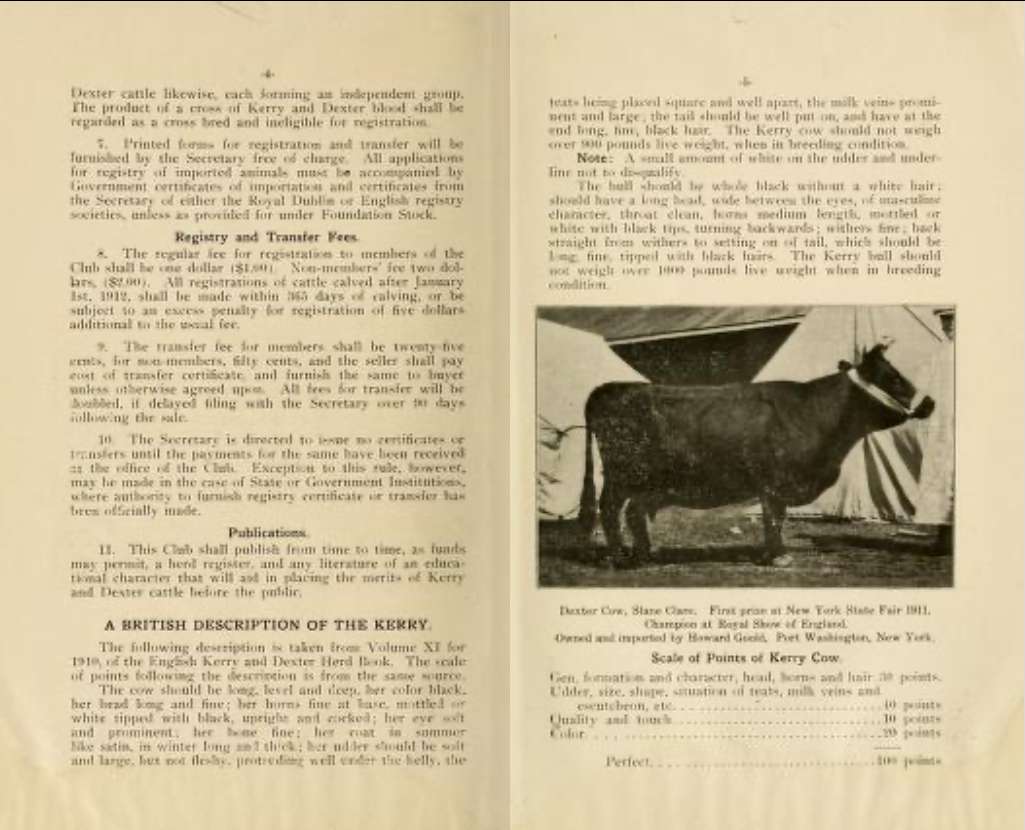
How much dairy should we put in to a Dual purpose Dexter cow. If you were to consult the English herd books they would say 40 percent for the “Bag” with the remaining percents being 15 for the “Head and neck”, 25 for the “Body, top line, under-line, ribs, setting of the tail, shortness of the leg, ect.”, 10 for “Quality and Touch” and 10 for “Colour”. So 40 points goes to the quality of the udder while 25 points gets divided up between the “Body, top line, under-line, ribs, setting of the tail, shortness of the leg, ect.”. It seems to me that in Dexters the focus today tends to fall primarily on mostly two aspects alone: shortness of leg and body type with general conformation coming in at the end. Even with 3 aspects it only accounts for 25 points for a Dexter. So there is a hyper focus on 25 % of a Dexter while the 40 percent in often neglected. The length of a cow’s leg and it’s depth are not the only traits that define a Dexter. Of course, we can’t forget the other traits that almost no one talks about, the “Head and neck”. You don’t get much meat off a head but it adds a distinct breed defining trait to a cattle type to set them apart.
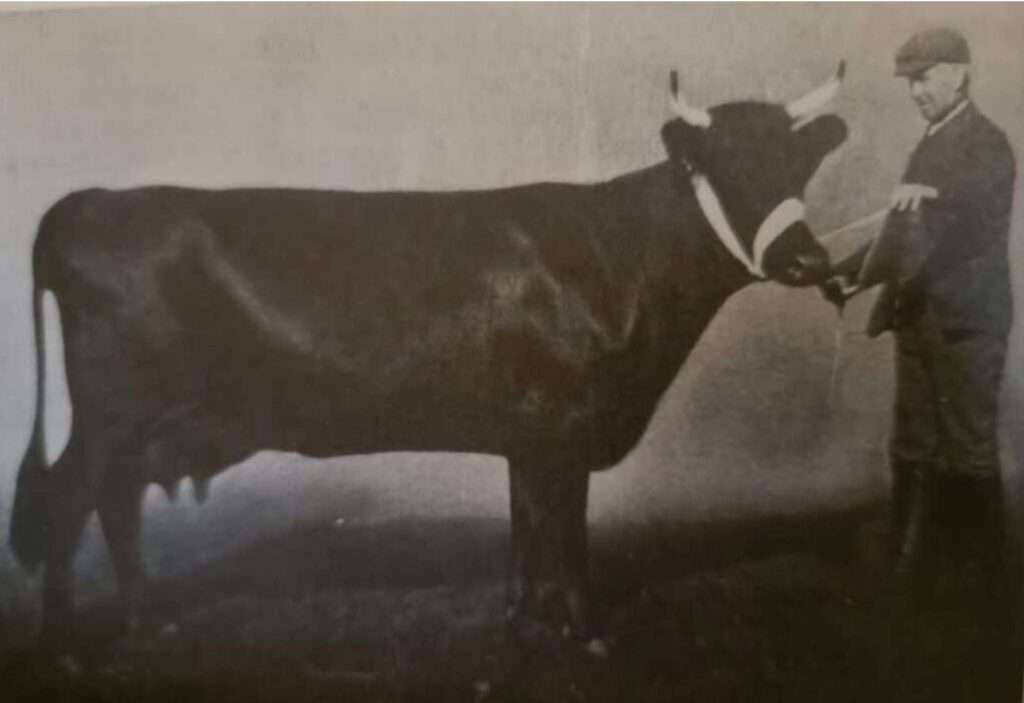
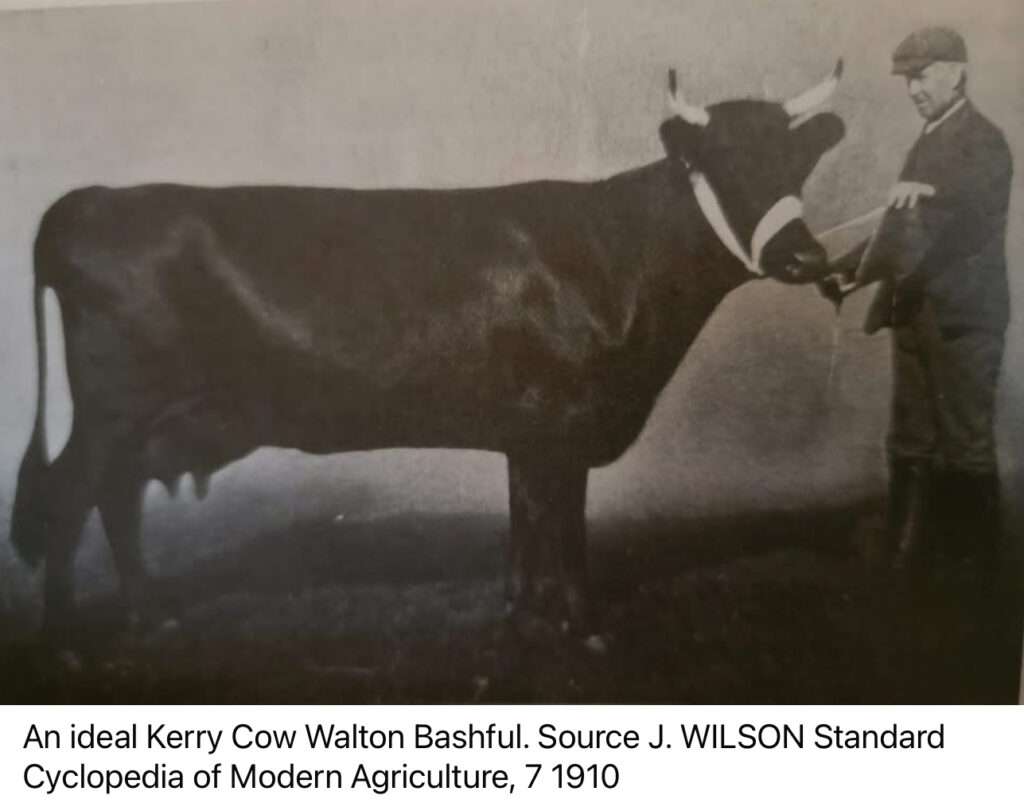
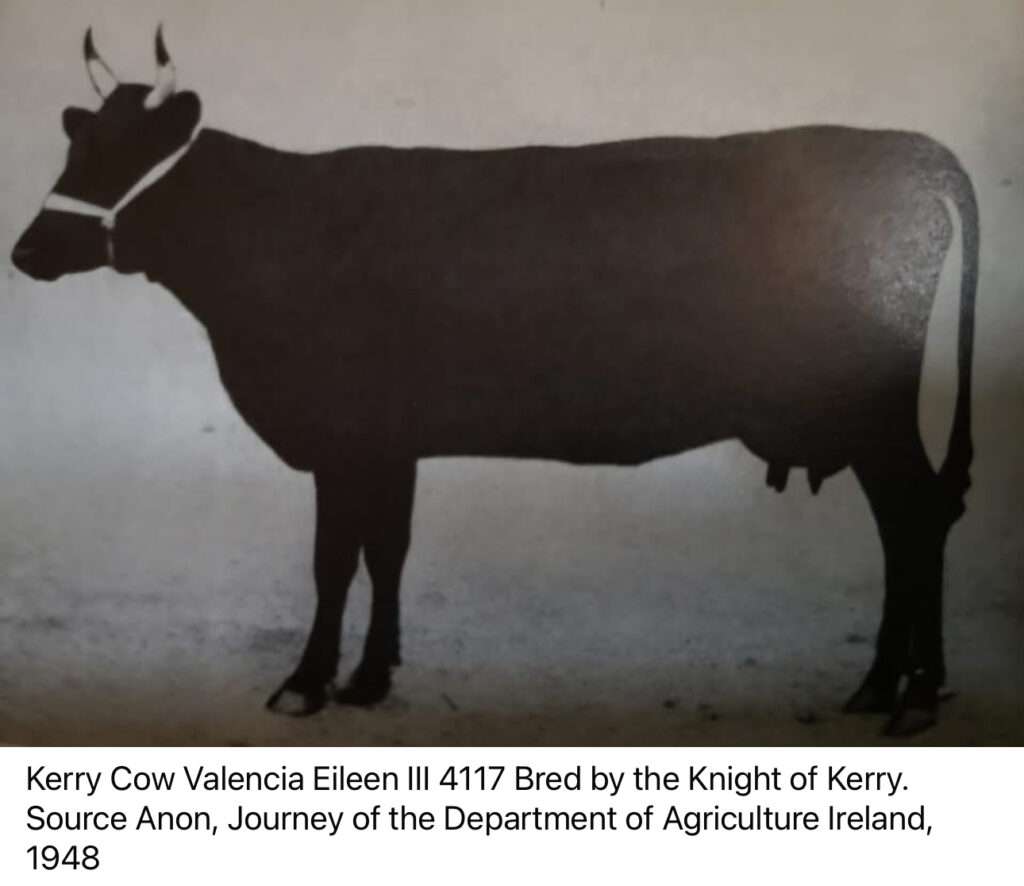
It’s interesting to note that Kerry cattle that became a distinct dairy breed separated from the dual-purpose Dexter also list 40 points for the udder. The only difference is that more details are mentioned about the bag, “Udder, size, situation of teats, milk veins and escutcheon”. Now before major concern sets in, consider that this point system is based on an ideal cow. There will always be cows in a breed that are not ideal, but the goal is to breed for the ideal cow. If you look at the 3 pictures of Kerry cattle, I will share you will see that Walton Bashful is listed as ideal and her udder is the best of the three cows shown. I’d say if an udder is ideal enough for a Kerry it can likewise be good enough for a Dexter that uses the same 40 percent system. Of course, there is no problem with having an even better udder than this cow does! The next Kerry is Valencia Eileen III. You will immediately see that she could improve on her forward attachment, but she was a Kerry all the same. The final cow is Ard Caeina Una. You will see she has some attachment issues, and you will tell that her udder is hanging lower by her hocks. The placement of her teats are too close and awkward but they were still put to use, as you will see by reading her milk record. Her yield 14,562 lbs with her butterfat at 4.33 percent. Still a valuable Kerry cow. With Dexters we need to seek generational improvement in dairy traits as Dexter’s udder points are just important as Kerry cattle, but we also need to remember that improvement is generational and culling cows with good production and butterfat won’t instantly fix a problem. It could lead us to a breed full of cows with very tight nonproductive udders just because new people think a tight looking udder is an aesthetically pleasing udder.
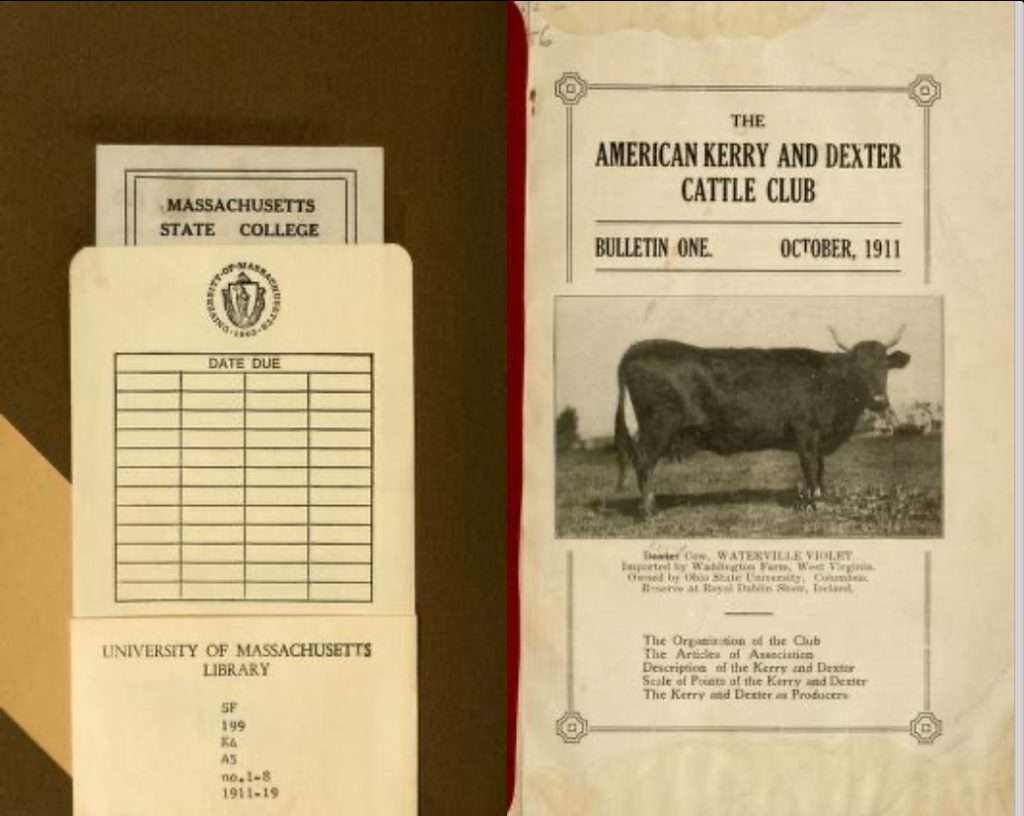
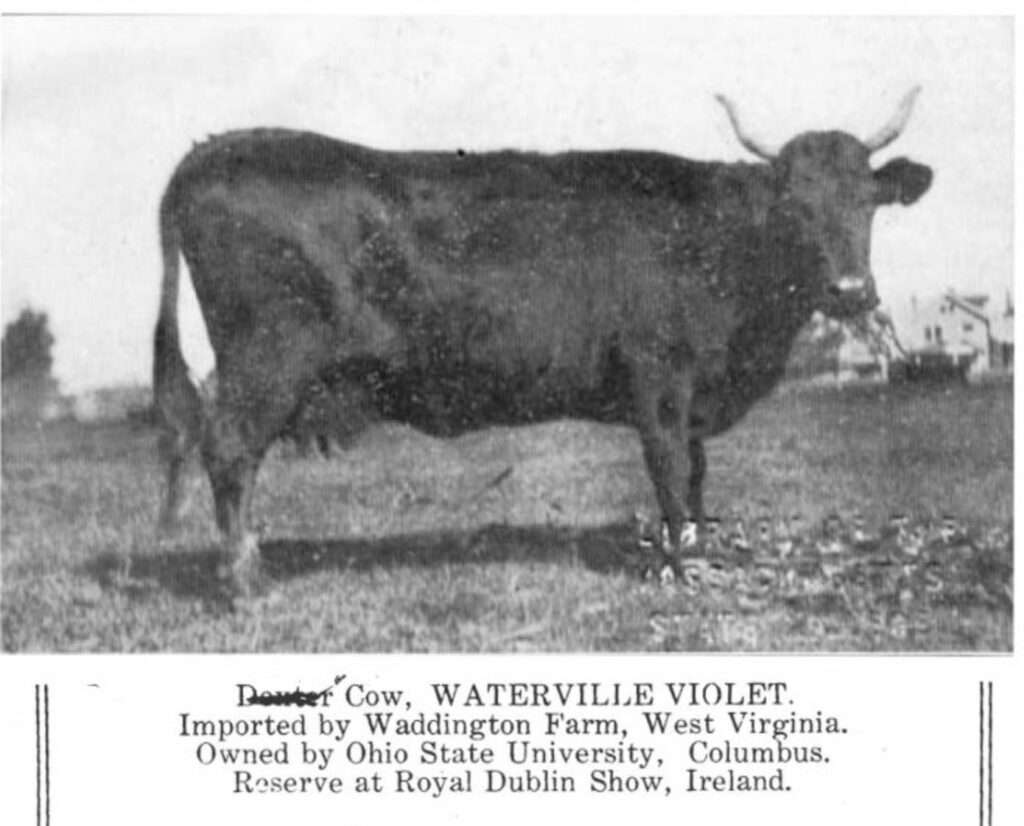
When you consider that people in the past were a bit confused about the difference between a Dexter (Dexter Kerry) and a Kerry you understand why it confuses people now. The fact that Dexters were called Dexter Kerry for many years after the two breeds were split from each other, continued to confuse people, thinking that Dexters were still no different than the Kerry breed. It’s interesting to note that in the Royal Dublin Society Kerry cattle were described as shorter than other cattle, so short that a full-grown cow was said to be the size of just a yearling (that was in 1890 when most breeds of cattle were smaller than they are now). As you can see Dexter cattle were not the only short ones as Kerry cattle have a long history of being smaller in stature too. If you have Dexters you can recognize that there is a strong similarity in the description of size among many of them. I have people come to my farm and confuse a full grown dehorned cow for a yearling of another breed. Once the two breeds were separated there immediately would have been a breeding divergence. Very detailed breed standards were already created that defined Dexters before 1911 at the time of the first printing of The American Kerry and Cattle Club Bulletin one. Following those standards for all the years prior would have helped pave the way for the breeds to be separated and defined as their own, but yet the confusion remained as can be seen in the below picture, because the breeds had so many similarities.
Waterville Violet The Kerry Cow
The cow in this photo above is from Bulletin One of The American Kerry and Dexter Cattle Club. It was printed in October 1911. This is the old name for the ADCA (American Dexter Cattle Association). The cow photographed is named Waterville Violet and in her description the title Dexter has been crossed out. Was this just a scribble that someone made at a later date randomly or was it something scratched out to add a correction after it was printed?
If you check the records in the ADCA you will find no Waterville Violet mentioned. If you look for a Kerry cow by the name of Waterville Violet you will turn up multiple citations of her as a Kerry cow. It looks like Violet was a Kerry heifer who calved in 1902 so we can get an idea that she was already quite mature by the time she was mentioned in the 1911 Bulletin. As much as things can be confusing it’s fair to say Dexter or not there are still purebred registered Dexters of today that look like Violet.
James E. Butler of Waterville: Judge and Breeder
James E. Butler owned the Waterville herd. Mr. Butler owned and bred both Kerry Cattle and Dexters, as many of the original breeders of Dexters did because in selection the black more dairy type became Kerry and the cattle a bit thicker, black and red, possessing dual purpose traits became Dexters. Butler was also one of the judges at shows for evaluating Dexters for the entry into the herdbooks. He had a long history in the area. James Butler would have been an excellent choice for a judge due to his first-hand knowledge of Kerry and the native cattle of the land. Waterville is known as Coirean in Gaelic or “Little Cauldron”. It is a village in Kerry. The ring of Kerry passes through this town. It’s good to know that Dexters and Kerry cattle were being selected and registered by men with first-hand knowledge like James E. Butler of Waterville. I would suppose they were far more confident in the difference between a Dexter and Kerry when they were making their evaluations. I hope this has shed a little more light into the past of Dexter and even Kerry cattle.
A Deep Dive Podcast, brought to you by Irish Dexter Cattlemen, on topics of interest to all farmers and ranchers. Subscribe to the free, monthly Irish Dexter Cattlemen Tips & Tricks Guide to get early access.
A Deep Dive Podcast, brought to you by Irish Dexter Cattlemen, on topics of interest to all farmers and ranchers. Subscribe to the free, monthly Irish Dexter Cattlemen Tips & Tricks Guide to get early access.