Designing a Dexter Cattle Operation for Extreme Winter Weather
An Educational Resource for New Dexter Owners
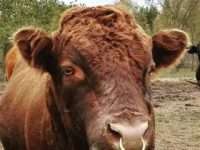
Dexter cattle have a well-earned reputation for being hardy, efficient, and capable of handling conditions that challenge many larger beef breeds. That reputation draws new owners in. It can also quietly set them up for trouble if it leads to the belief that winter preparedness is optional.
It is rarely the Dexter cattle that fail in severe cold.
It is systems.
And occasionally, knees, fingers, and judgment before the second cup of coffee.
This article is written as an educational resource for farm organizations, breed associations, and new Dexter owners who want to build operations that function reliably when winter conditions are at their worst. It blends research-based guidance with practical, on-the-ground experience, because winter does not care how things looked on paper in July.
Understanding Dexter Cattle and Cold Stress
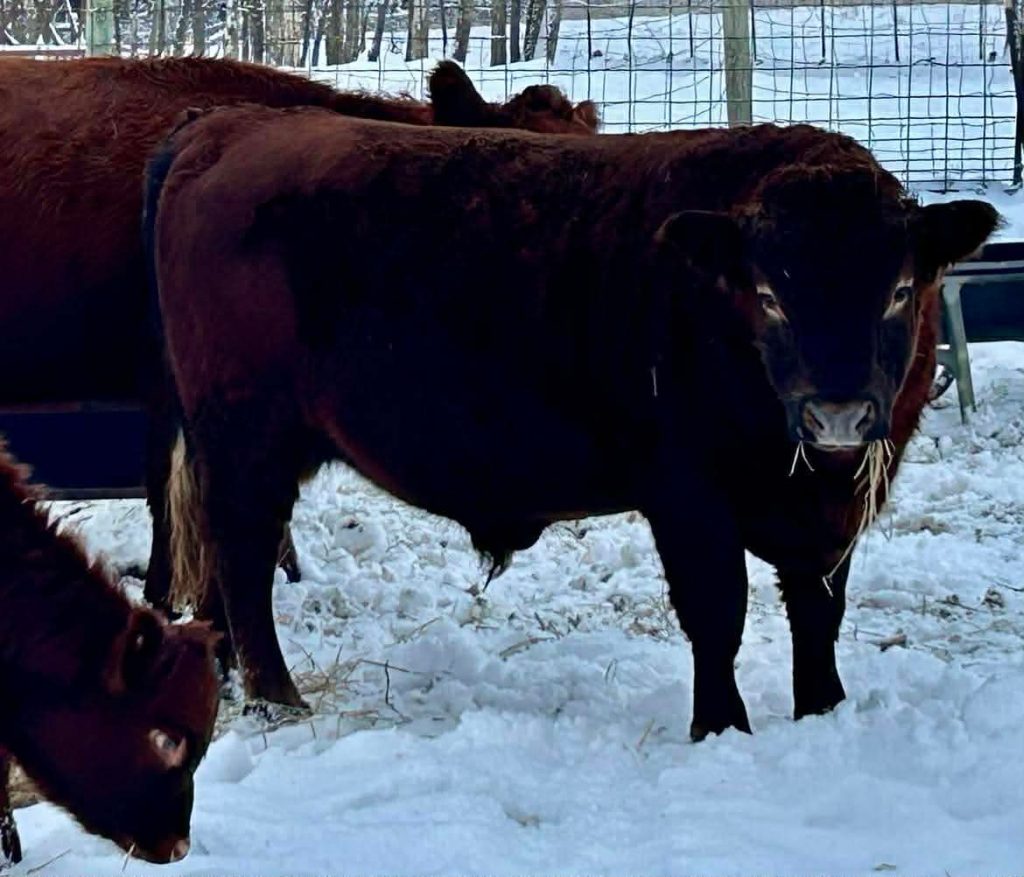
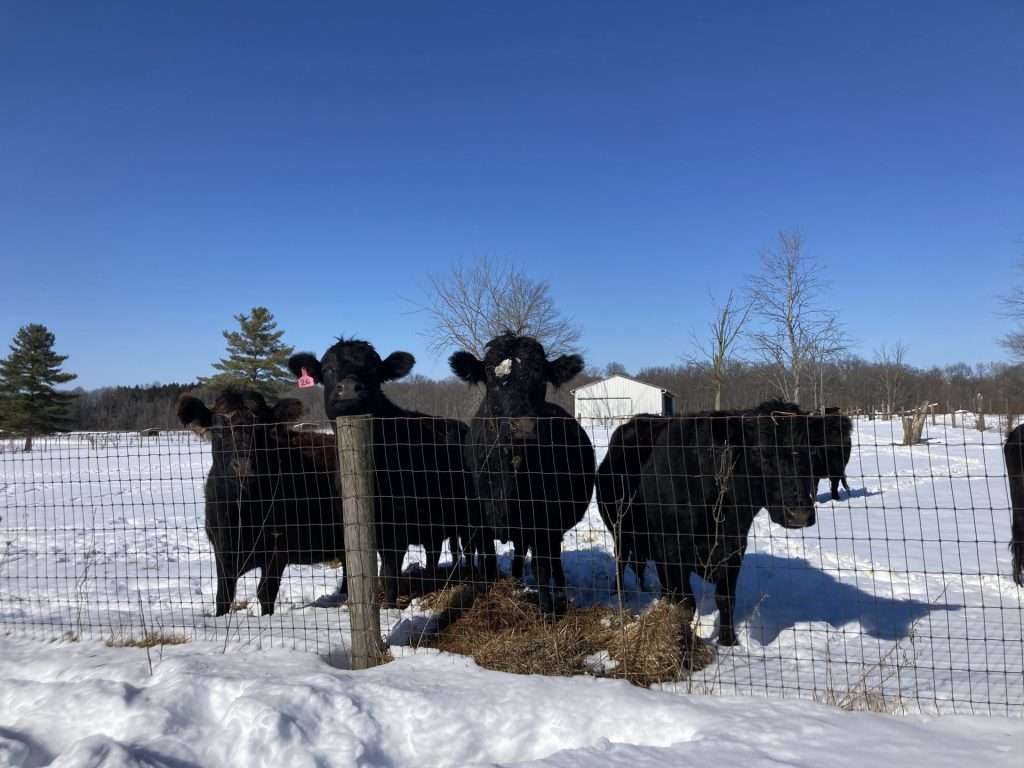
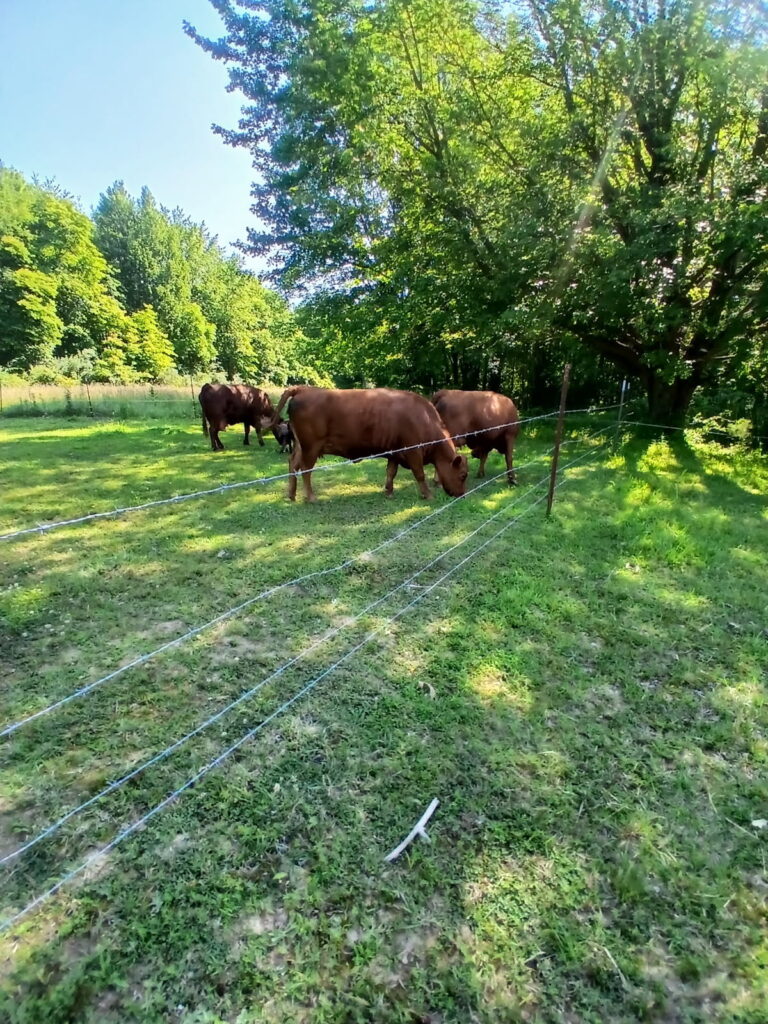
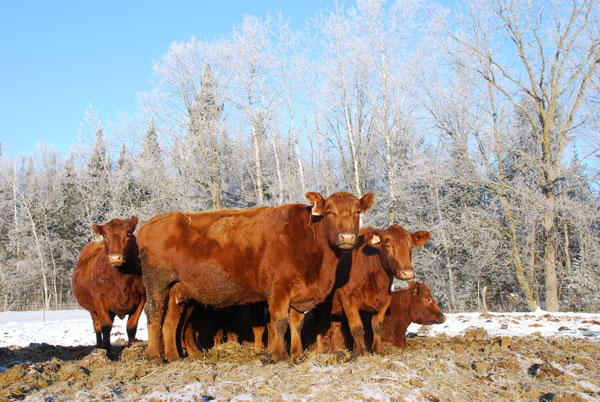
Dexter cattle tolerate cold well due to their dense winter coats, efficient metabolism, and generally lower maintenance requirements. Cold tolerance, however, is not immunity.
Research consistently shows that cattle experience cold stress when environmental conditions force them to burn additional energy to maintain normal body temperature. Wind, moisture, inadequate calories, poor body condition, and limited access to water all accelerate this process. Over time, cold stress can lead to weight loss, suppressed immunity, and reproductive impacts.
Dexters can handle winter.
Winter still has rules.
Preparedness Starts With Farm Design, Not the Forecast
The most difficult winter situations occur when chores become reactive instead of routine. A well-designed farm reduces emergency labor. A poorly designed one forces risky decisions during storms.
Preparedness begins with infrastructure choices made long before the first weather advisory.
Water Infrastructure: Design for Failure, Not Convenience
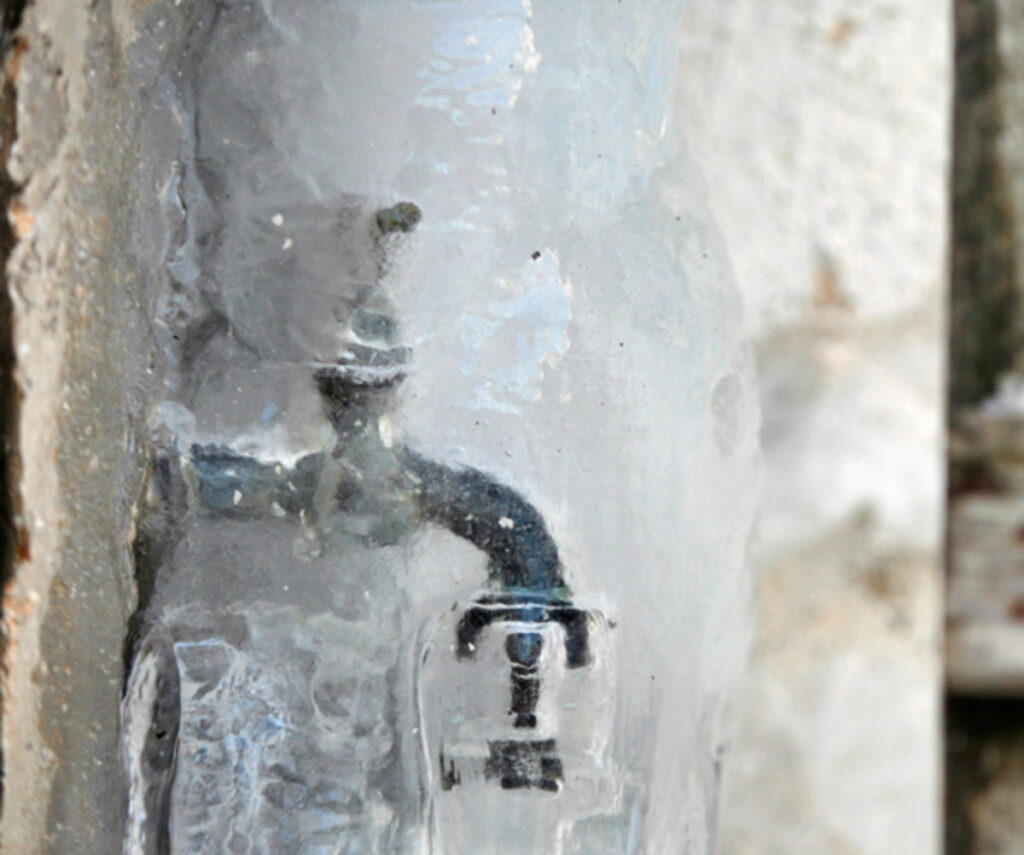
Water systems are the most common winter failure point on livestock farms.
Water lines do not fail politely, during daylight, or when conditions are mild.
Water lines
- Must be buried below local frost depth, not estimated depth
- Long runs to remote pastures increase freeze risk
- Fewer reliable water points outperform many marginal ones
Hydrants and valves
- Freeze-proof hydrants must be installed correctly with proper drainage
- Gravel beds must remain uncompacted
- Low areas prone to runoff and drifting snow should be avoided
Heated water troughs
- Use livestock-rated heaters only
- Protect wiring from moisture and rodents
- Always plan for power loss
Solar water systems can work well when designed properly, but winter realities must be considered. Battery capacity must account for short daylight hours, panels must shed snow, and output will be reduced during prolonged storms.
A water system that works flawlessly nine months of the year can still become a liability if it requires wrestling frozen hardware in the dark while livestock observe quietly and reconsider their respect for you.
Power Systems: Assume the Grid Will Fail
Winter storms routinely knock out power for days. Generators should be considered core farm safety equipment, not optional upgrades.
They are rarely purchased because everything is going well.
A generator should be capable of supporting:
- Well pumps
- Heated water troughs
- Essential barn lighting
- Minimal equipment needs
Fuel storage should cover multiple days of operation. Electrical layouts should prioritize critical systems and protect wiring and outlets from moisture, snow, and rodents.
Electric Fencing in Winter Conditions
Electric fencing behaves differently in cold weather.
- Grid-powered chargers are vulnerable to outages
- Frozen ground reduces grounding efficiency
- Snow and ice can short fence lines
Solar chargers provide valuable redundancy but must be sized for winter conditions and maintained during snow events.
Frozen ground has very little respect for even the most carefully installed grounding systems.
Redundancy matters more than strength.
Farm Layout and Human Safety
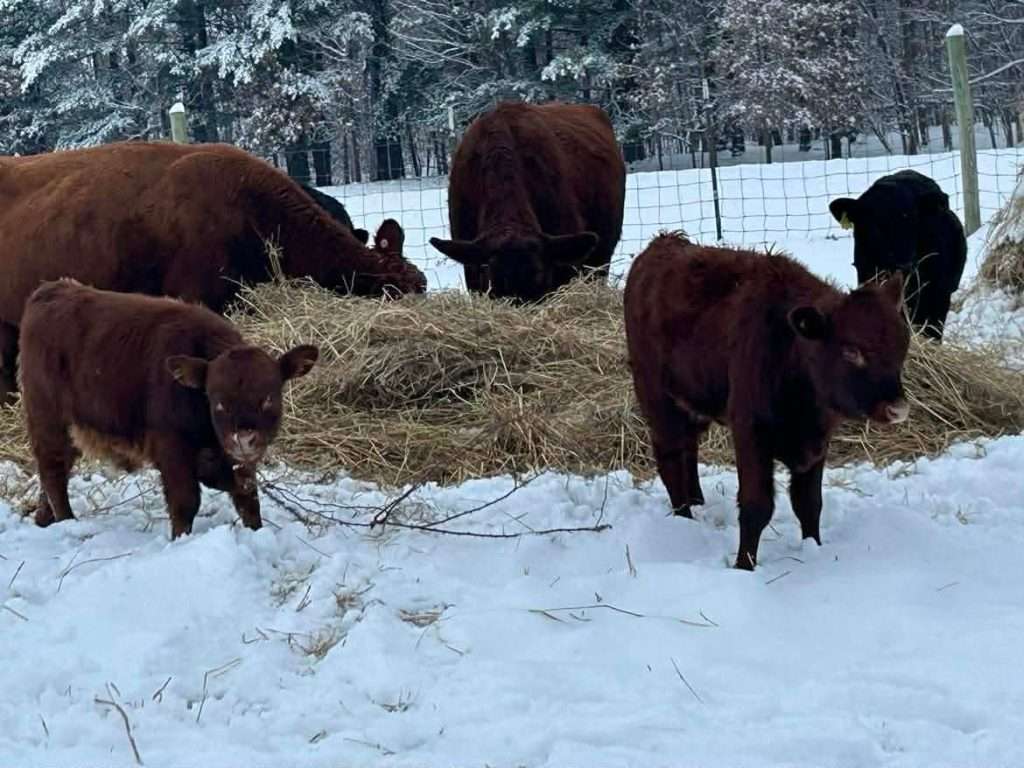
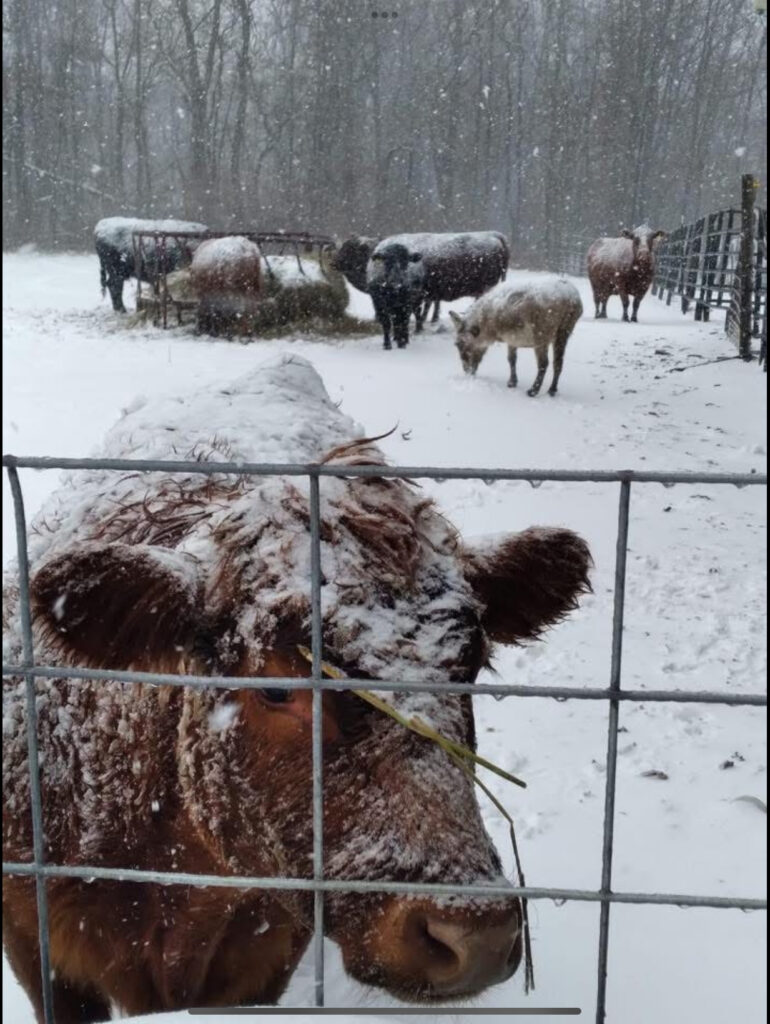
Dexter cattle generally move through snow with impressive confidence.
The person carrying feed across ice often does not, even when wearing boots marketed as “winter rated.”
A winter-ready farm layout:
- Places water, feed, and shelter within safe walking distance
- Avoids slopes and shaded areas that ice over
- Uses natural windbreaks around feeding and watering areas
- Does not rely on vehicles for daily care
Farm layouts designed on pleasant spring afternoons tend to reveal their weaknesses during January wind events.
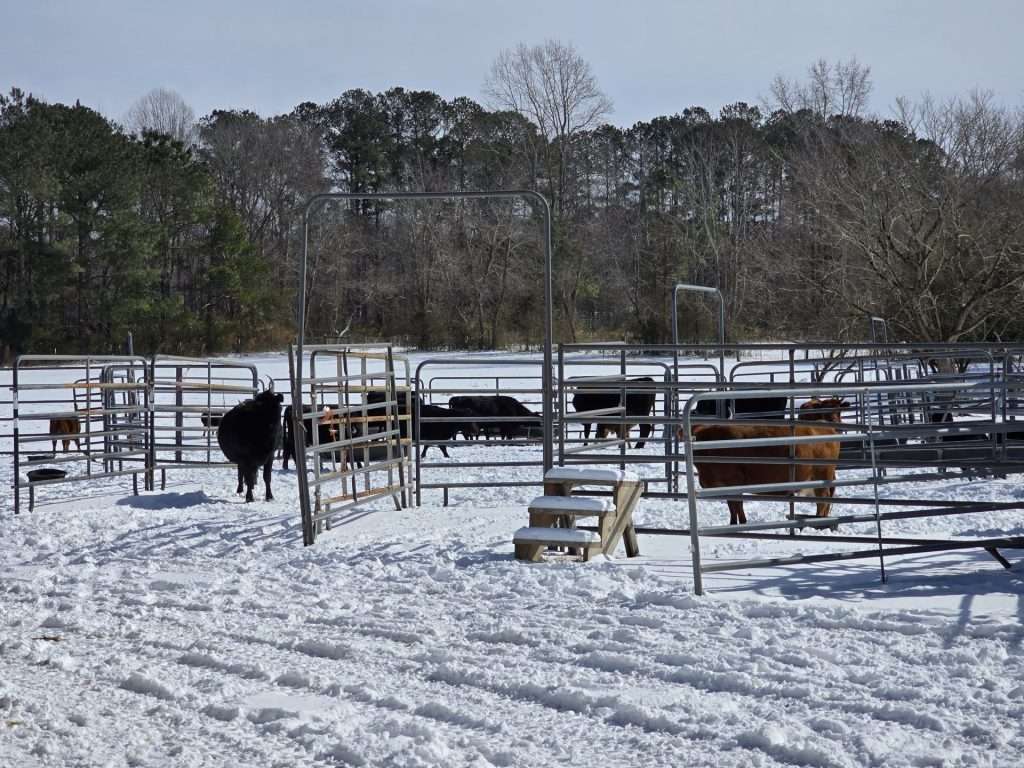
Feeding and Watering During Extreme Cold
Cold increases energy requirements. Research indicates cattle may require 7–10% more energy for each degree below their lower critical temperature, particularly when wind and moisture are present.
Preparedness includes:
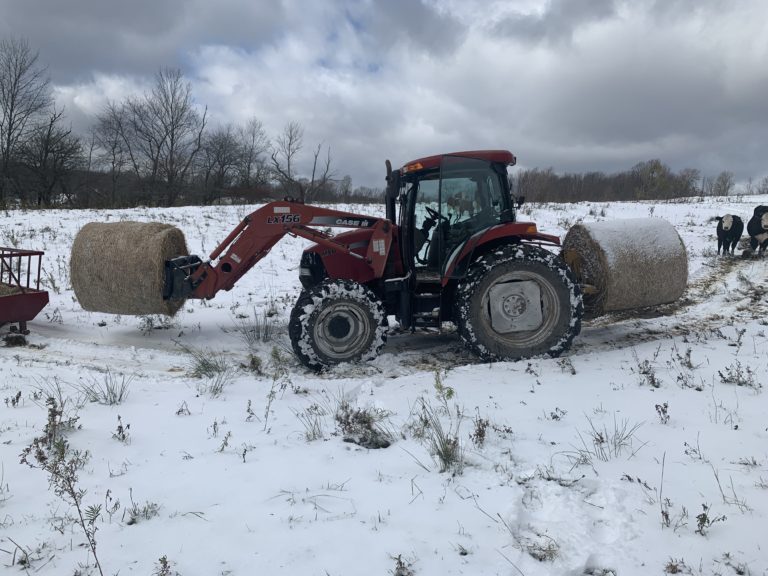
- Staging hay before storms
- Reserving higher-quality forage for calves, seniors, and thin animals
- Reducing unnecessary cattle movement that increases energy loss
Water intake must be monitored closely. Frozen or inaccessible water leads directly to reduced feed intake and increased cold stress.
Human Safety Is Herd Health
Human safety is often discussed last, despite being the single point of failure that immediately compromises animal care.
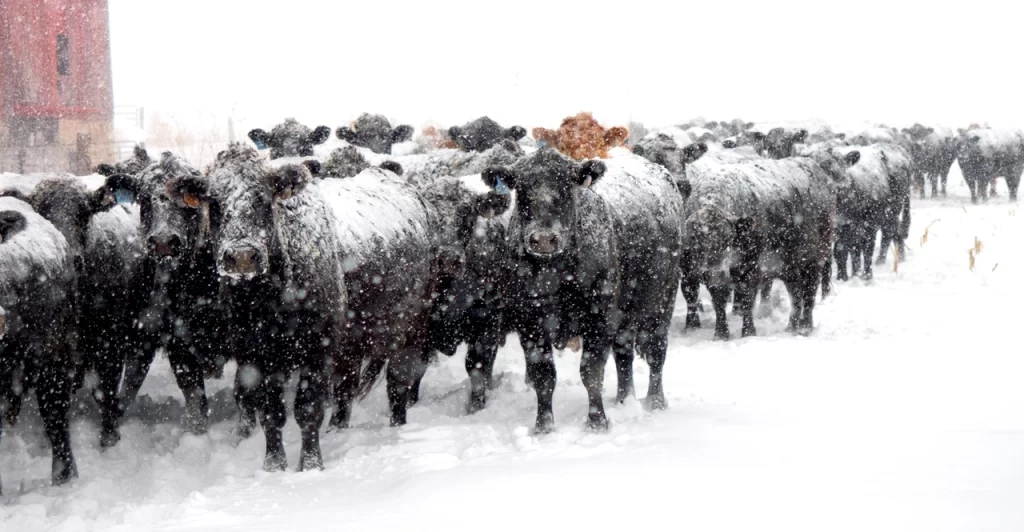
Dexter cattle may be perfectly comfortable standing in a snowstorm.
The person doing chores is the variable.
Most winter injuries occur due to slips near water sources, fatigue, rushing, or poor visibility. Clothing, lighting, rest, and task consolidation are safety requirements, not luxuries.
Knowing When to Pause
Preparedness includes restraint.
No routine chore improves outcomes when visibility is poor, footing is unsafe, and the operator is one misstep away from becoming the emergency. Calm, consistent care is safer and more effective than heroic effort.
Dexter Cattle Cold Stress Checklist (Quick Reference)
Before the Storm
- Body condition assessed (target BCS 5–6)
- Extra hay staged
- Backup water plan ready
- Generator tested and fueled
- Vulnerable animals identified
During the Storm
- Daily visual health checks
- Feed and water intake monitored
- Ice removed safely
- Shelter use observed
- Human fatigue managed
After the Storm
- Body condition reassessed
- Water systems inspected
- Fencing and shelters checked
- Lessons documented
Dexter cattle are resilient. Winter preparedness is not about proving toughness. It is about designing systems that still work when conditions degrade and the person doing the chores is already tired.
Final Perspective
Dexter cattle are resilient. Farms must be designed to match that resilience.
Extreme winter weather does not test commitment. It tests whether systems were built to function when conditions deteriorate. Preparedness is not bravado. It is making sure that when winter does what winter does, both cattle and caretakers come through it intact.
And preferably upright.
Michele DeVinney Schmoll is a Virginia farm owner at DeVine Farms Quality Dexters. She raises Irish Dexter Cattle and writes from firsthand experience, because farms don’t read instruction manuals. http://www.devinefarms.net/
Author’s Note
This article is written from a practical livestock-owner perspective, informed by university extension research and shaped by real-world experience managing animals during prolonged cold, power outages, and severe winter storms. The intent is not to present idealized systems, but to encourage farm designs and management decisions that reduce risk for both cattle and the people responsible for their care. Preparedness is most effective when it reflects what winter actually demands on the ground.
REFERENCE LITERATURE (CLICKABLE LINKS)
Cold stress basics, winter readiness, and management
1) University of Minnesota Extension — Preparing your cattle for severe winter weather
2) University of Nebraska–Lincoln (UNL) — Feeding Cows for Cold Weather (energy needs vs wind chill; lower critical temp)
3) Virginia Tech / Virginia Cooperative Extension (VCE) — The Cow-Calf Manager: Extra Energy Needed During Cold Weather (archived newsletter)
4) UNL BeefWatch — Winterizing your cowherd: Managing cows through cold stress
Calves and high-risk groups
5) Virginia Tech / VCE — The Cow-Calf Manager: Cold stress on calves (archived newsletter)
Emergency preparedness and disaster planning resources
6) UC Davis School of Veterinary Medicine — Emergency Preparedness and Response (hub)
7) UC Davis Emergency Preparedness & Response — Resources page (includes livestock disaster preparedness links) https://response.vetmed.ucdavis.edu/resources
Optional (useful supporting reading for farm org audiences)
8) West Virginia University Extension — Lingering effects of cold stress (weather + animal factors) https://extension.wvu.edu/agriculture/livestock/beef-cattle/lingering-effects-of-cold-stress
Designing a Dexter Cattle Operation for Extreme Winter Weather Read More »
Farm Management