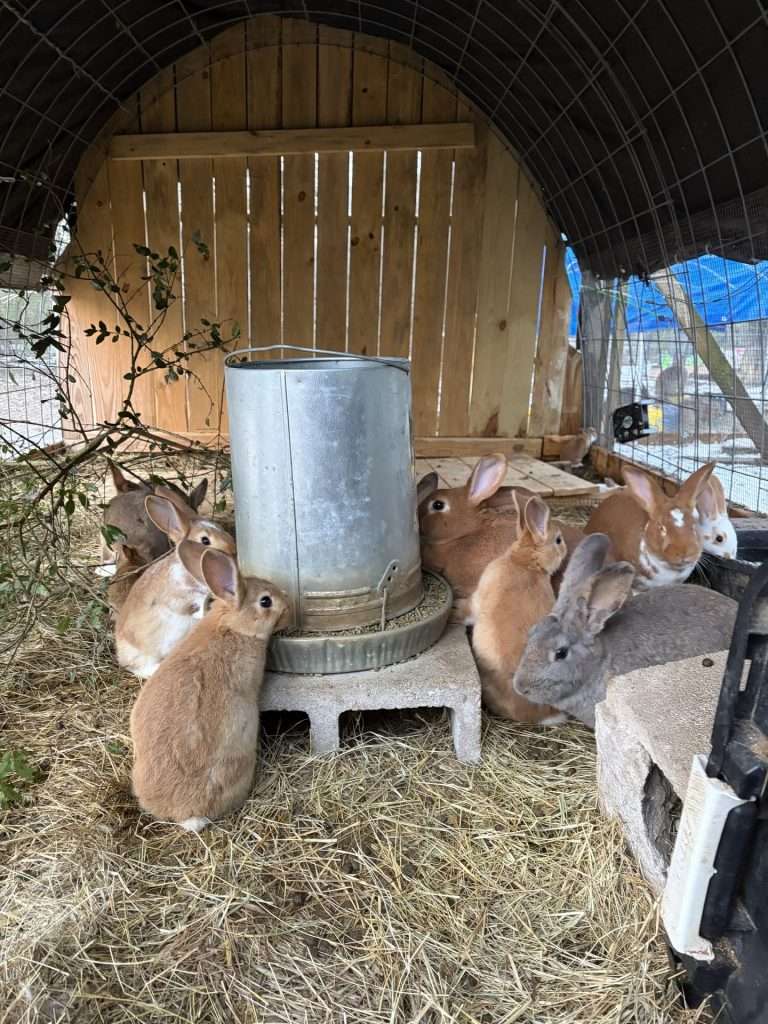
Rabbit Raising – Part 1: Keeping Them Alive

Before you buy rabbits, decide why you’re raising them. This one choice affects everything else.
Beginner Tip: Don’t buy rabbits first and figure out a plan later. Housing and purpose should come beforebreed.
Why Are You Raising Rabbits?
Pets / Show Sales
- Choose popular, marketable breeds (Rex do well)
- Breed for traits buyers want: color, coat, size, personality
- Breed to SOP
- Watch trends, but also look for gaps in your local market
**I do not enjoy selling pet rabbits but it is an option.
Beginner Tip: Spend time watching local listings and social media before breeding. What’s already selling tells you what people want.
Food
- Focus on fast-growing, efficient breeds (New Zealand, Californian)
- Breed for size and speed to market, not looks
Beginner Tip: Bigger and faster is usually better than “prettier” when raising meat rabbits.
Housing Options
Cages
- Require climate control
- Easier breeding control and litter monitoring
- Less natural, more predictable
Beginner Tip: Cage systems are often easier for first-time breeders because problems are easier to spot early.
Colony
- Rabbits regulate temperature by digging
- Little breeding control unless sexes are separated
- Must prevent escape
- Introduce rabbits at the same time to reduce fighting
Beginner Tip: Colony systems work best when planned ahead, retrofitting almost always causes headaches.
Hybrid
- Colony-style living with barriers to prevent digging out
- Requires weather monitoring, especially in summer
- Include an underground or partially buried area for cooling
Beginner Tip: Hybrid systems offer a good balance for beginners who want natural behavior with some control.
Shelter Setup
Primary Shelter
Where your breeders live.
Beginner Tip: If breeders are stressed, everything else goes downhill: prioritize this space.
Grow-Out Area
A separate space for young rabbits so breeders don’t get overcrowded.
Beginner Tip: Overcrowding is a fast way to create health problems.
Rabbit Tractor
A movable pen for grow-outs that provides lawn care.
Beginner Tip: Tractors are great for grow-outs, but not ideal for breeders long-term.
Substrate Choices
- Hay: Great for nesting, edible, but holds moisture and waste
- Wood Chips: Similar to hay, not edible
- Wood Pellets: Absorb liquid well, easy to clean, usually the most expensive
Beginner Tip: If something smells bad, it’s time to change it, even if the schedule says otherwise.
Food & Feeding Basics
- Free-feed quality rabbit pellets
- Supplement with grass or garden clippings when possible
- Keep food off the ground
Beginner Tip: Most feeding problems are actually feeder placement problems, not feed problems.
Common Beginner Concerns
Choosing Rabbits
- Decide on housing first
- Cage-raised rabbits may struggle outdoors in heat
- Colony-raised rabbits usually adapt better to cages, but may struggle mentally
Beginner Tip: Ask breeders how their rabbits were raised before buying.
Heat
- Underground hides work best
- Fans and frozen water bottles help
- Always provide plenty of water
Beginner Tip: Heat kills faster than cold, plan for summer first.
Cold
- Rarely a problem
- Keep rabbits dry and out of wind
Beginner Tip: Wet + cold is dangerous; dry + cold usually isn’t.
Losses
- Some losses are normal
- Disease and stress happen
Beginner Tip: Everyone loses rabbits at some point—don’t quit after the first setback.
Health Issues to Watch For
Coccidia
- Weight loss, dirty tails
- Treat quickly
- Many breeders select for resistance
Beginner Tip: Clean, dry pens dramatically reduce coccidia risk.
Weaning Enteritis
- Around 4 weeks old
- Often sudden and severe
Beginner Tip: Watch young rabbits closely during weaning, it’s the most vulnerable time.
GI Stasis
- Gut slowdown
- Remove pellets, offer grass hay
Beginner Tip: When in doubt, simplify the diet.
Pasteurella
- Spread by wild rabbits
- Often fatal
- Symptoms: heavy sneezing, nasal discharge, lethargy
Beginner Tip: Occasional sneezing is normal—constant sneezing with discharge is not.
Rabbit Raising – Part 1: Keeping Them Alive Read More »
Homesteading