history

The Colorado Line

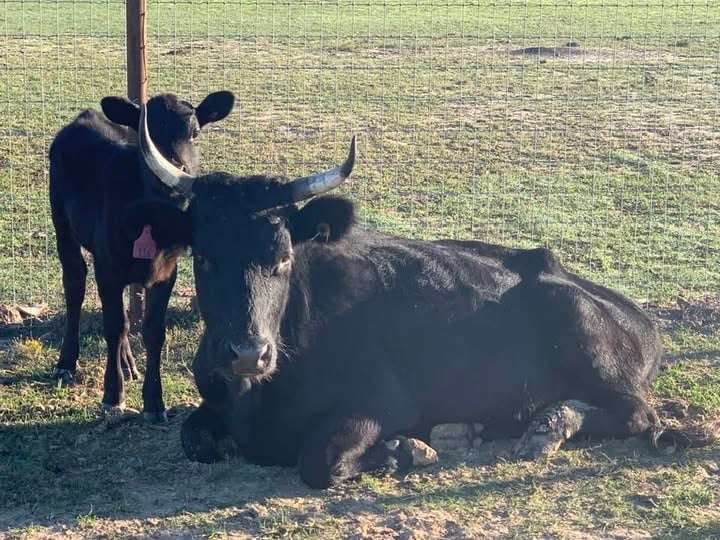
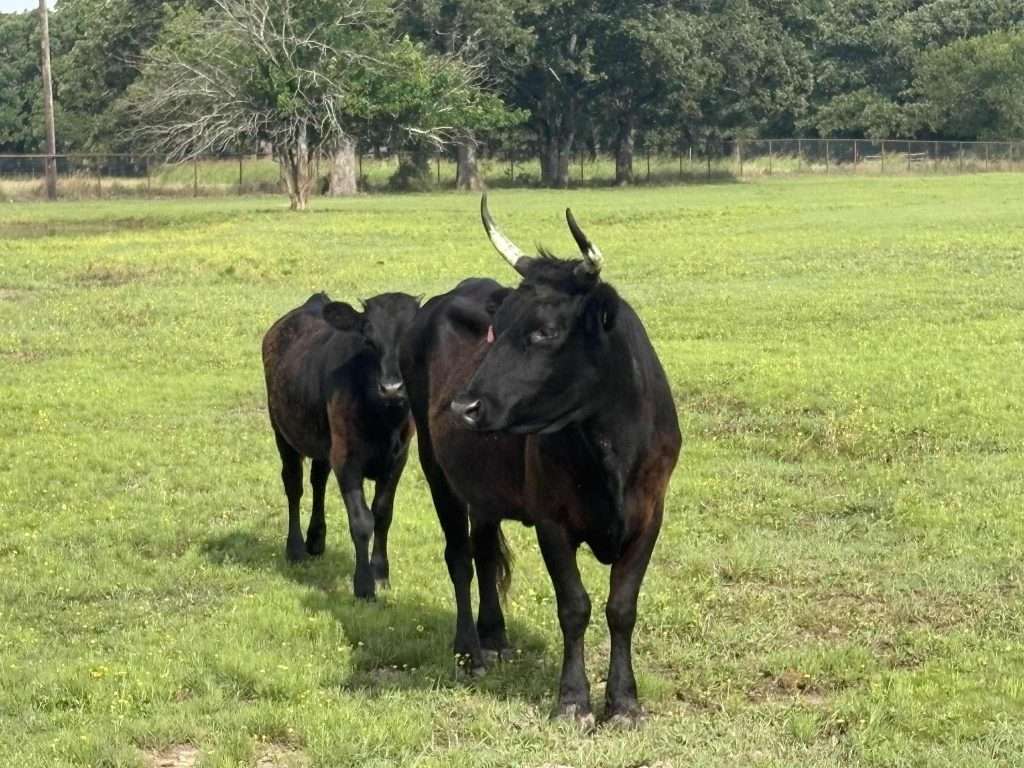
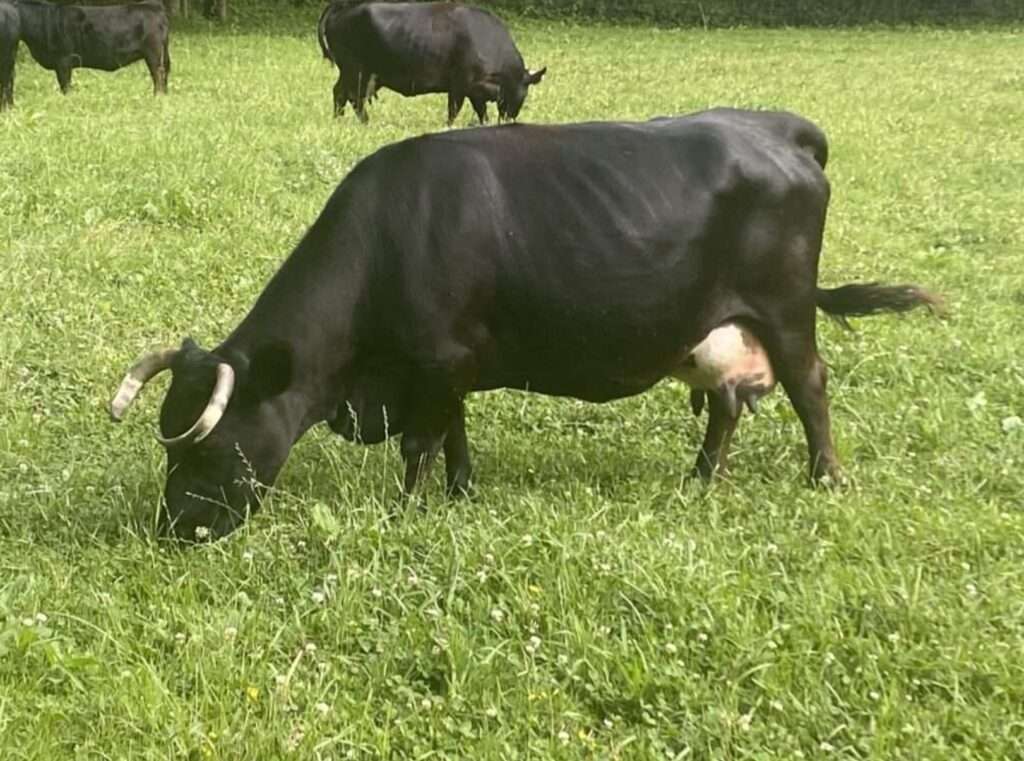
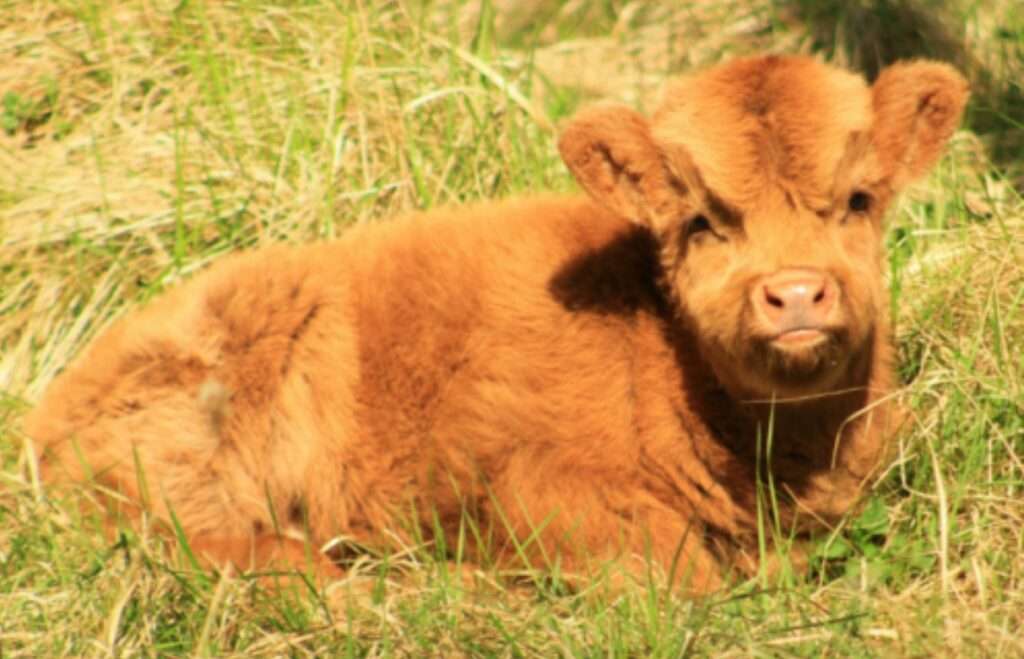
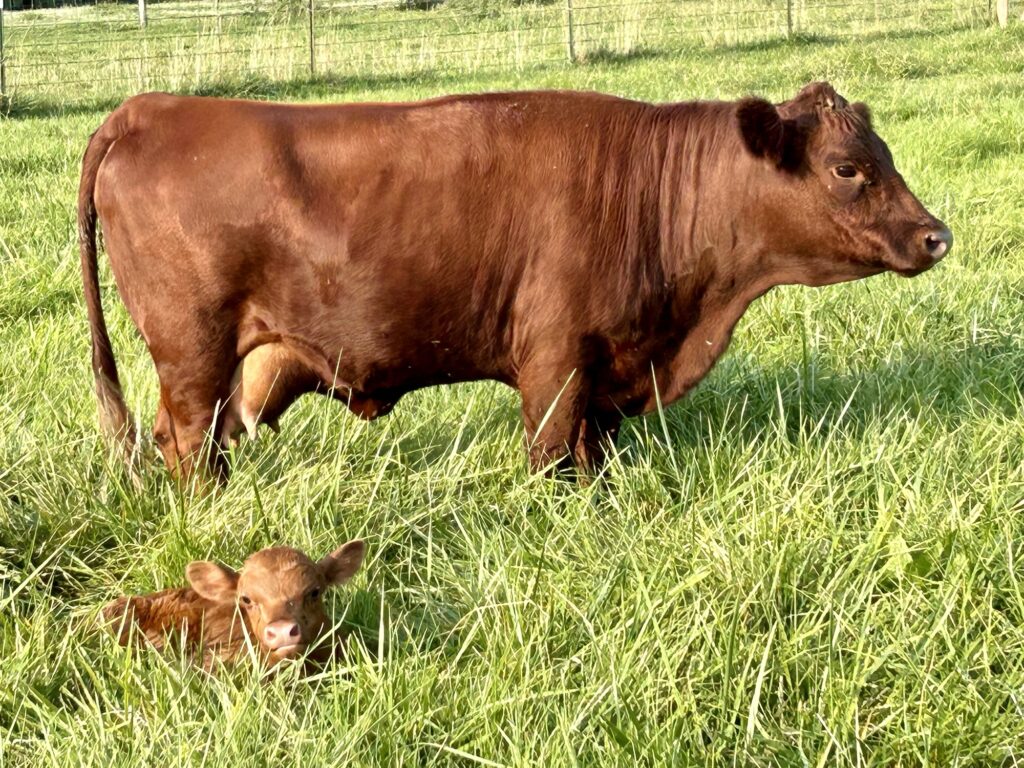
The mama is #116 Briarhook Juno Legacy # L03860LH-19HH and bull calf born September 29 with Fitz’s Golden Legacy Dillen. Dillen is our current sire, and he is the progeny of Colorado Chief and Chautauqua Demelza.

About the author…
Angie Gaines grew up in the Sandhill Piedmont of North Carolina. As a child she accompanied her grandpa to cattle auctions. They raised feeder stock in the wonderful sandy loam. Her mother and father raised registered Polled Hereford cattle and their favorite standing bull was called Jerry Justin Banner 3rd. Almost twenty years ago Angie decided to be part of the preservation of the Irish Dexter cattle loved in Ireland. When she shared a photo of her beginning herd her mother aged 78 exclaimed; “Wow, look at those horns”. Angie responded with “ Mama, if a cow wants to hurt you they don’t need horns to do it”. Angie now resides in Texas with her wonderful Irish Dexters and Curly Mustangs.

====================

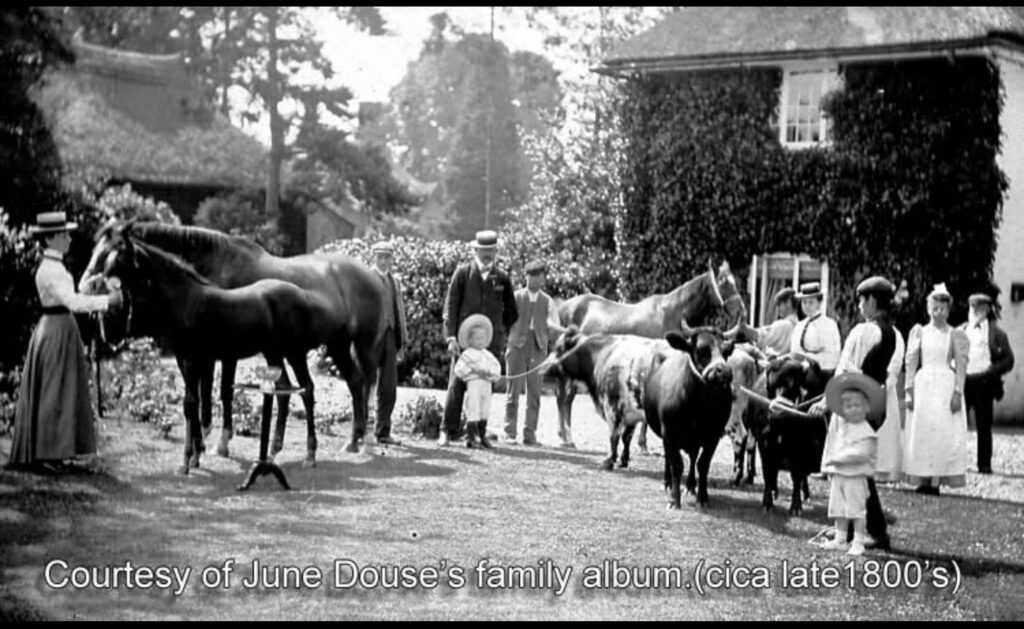
I gaze out my window on a rainy day and see three beautiful Black horned Irish Dexter cows, Juno, Flora and Faye grazing on the lush Spring grass in the Lone Star State. I wonder what it was like when their ancestors grazed just outside a little hamlet known as Argyle about 100 miles Northwest of Dallas, Texas of me. Their ancestors were the foundation for a line of Irish Dexter cattle that 50 years later would be known as the Legacy “Colorado” line and I am intrigued that these wonderful cows have made an interesting journey back to Texas.

“Mark and Marge (Davis) were living in Colorado when they first read about little cows known as Irish Dexters. Mark borrowed a trailer and traveled to Argyle, Texas to purchase his first cow and calf and a 14-month old heifer. ‘The cow was milking, but she was very wild”, he said with a chuckle. “A rancher friend of ours taught me to milk.” The couple later purchased a herd bull from Decorah, Iowa and in 1966, they and 5 cattle moved to Delaware. Mark Davis was a past President of the American Dexter Cattle Association.”  He was also the Delaware registered agent for PDCA incorporation until recently.

The oldest Colorado cow owned by Mark and Marge Davis listed in our wonderful resource the Legacy Irish Dexter Registry is Colorado Queen (circa 1967). She goes back to Lady Knight who was bred by Dr. Harvey Goettsche in Dallas, Texas and Edmonde LeRoux, Argyle, Texas. Dr. Goettsche, was a well-known dentist who enjoyed the ranching life as a hobby. His partner Edmond LeRoux, had a beautiful ranch in Argyle, Texas and was a retired American Airline pilot with an impressive history of helping U.S. troops fly to destinations including the Far East, Japan, Australia and more with the Military Airlift Command and American Airlines.  

Lady Knight has awesome ancestors who are beloved in our Irish Dexter community including Grinstead and Peerless. She is also the dam of the well-known bull Colorado Chief whose sire was an Irish Dexter bull Mark Davis went to Iowa to and brought back to Colorado. Marge Davis shared this in a phone conversation.  She shared the wonderful journey that has become the foundation for the Colorado herd.

Briarhook Juno

Since we have explored how Lady Knight and her heifer left Argyle, Texas and became the foundation of the wonderful Colorado herd, let’s go back and explore how the Irish Dexter cattle came to be found in Texas. Lady Knight was the progeny of a nice bull registered as Captain Fortune and bred by Otto C. Jensen. Captain Fortune’s ancestors were direct registered cattle from the Peerless herd.  “The foundation for the Peerless herd at Decorah, Iowa, was obtained by John Logsdon from the Elmendorf Farm, August A. Busch and James J. Hill, in 1919. Later, two bulls were obtained successively from Daniel Guggenheim, owner of Hempstead House herd. In 1944, when the Peerless herd had their first public sale, the herd numbered 150 head of cows and heifers! Peerless herd is the oldest Dexter herd in the United States. “ (Remember the Busch name as we continue this journey through history.) 

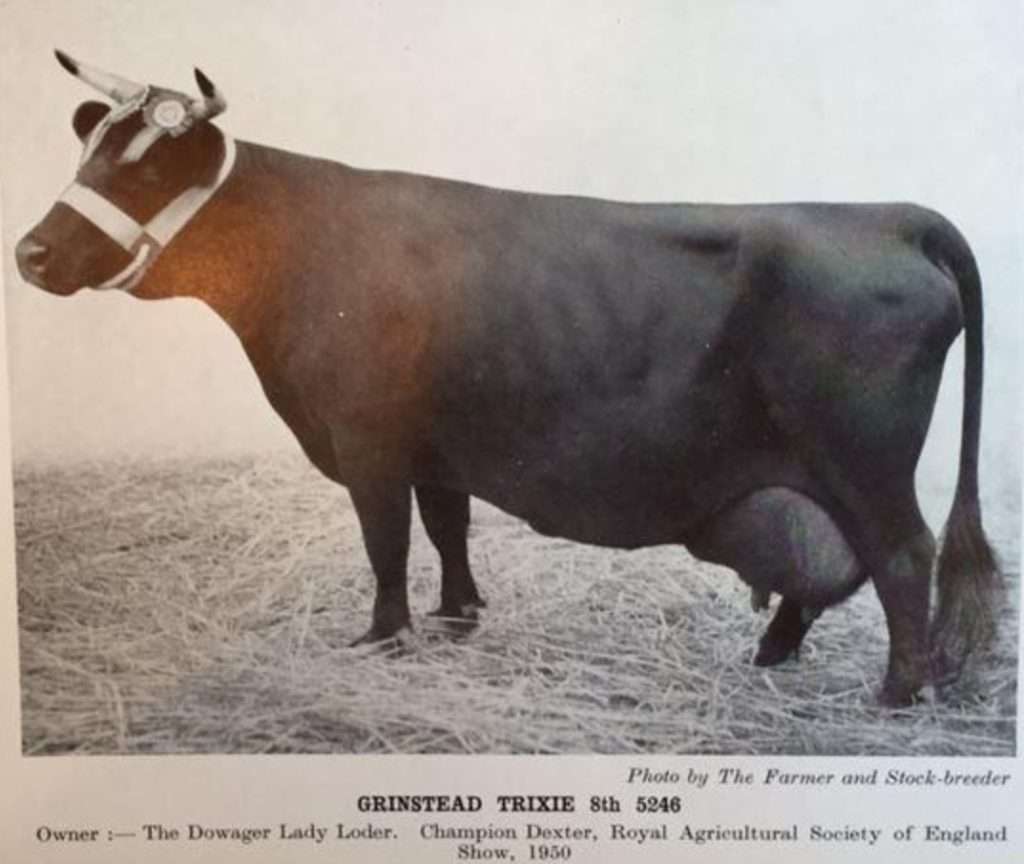
With the tireless work, Judy Sponaugle has put together a researchers dream, creating the Legacy Irish Dexter Registry. Within a few short strokes on my keyboard and a quality internet connection, I am able to see that Lady Knight’s dam was the beautiful Black Duchess who was born in 1958. Edward Lord bred her with Atlantic Cornelius as her sire and Framfield Roda 7th as her dam. Both of Lady Knight’s parents were registered in the Dexter Cattle Society (DCS) founded in the United Kingdom.  Both Atlantic and Framfield’s dams were the well-lovedGrinstead dams and going back till the beginning of the DCS (Dexter Cattle Society) conception circa 1892.

Back to the Lone Star state, we find a handsome Black Bull named Mark Anthony. His parents are Black Duchess and Atlantic Cornelius. His owner and breeder is a well know colorful character in the history of Texas, Clint Murchison. In my search, I have found little documentation about Irish Dexters, but it was well known that Mr. Murchison loved ranching. Ernestine Orrick Van Buren points out in her book  Clint: Clinton Williams Murchison: A Biography : “In the late 1930s Murchison began diversifying his investments. He acquired numerous life-insurance companies, banks, bus lines, publishing firms, heavy industrial building materials companies, and an assortment of companies serving such leisure activities as hunting, fishing, travel, and gardening. He was a cattleman throughout his life and acquired extensive ranches in Mexico and East Texas. He experimented in improving cattle strains and in developing superior grazing grasses.”

Yes, millionaires loved our Irish Dexters, too! Speaking of millionaires let’s go back and visit the Anheuser Busch family and their involvement in Irish Dexter cattle and Texas. I ran across a 1916 newspaper article from Waco, Texas where 14 Irish Dexters belonging to Anheuser Busch Dexter Cattle. The cattle was transported via train to show their exhibit known the Bevo during a “tick” quarantine.  The event appears to have hugely popular.  We do know from well-kept records that , “In 1914, August A. Busch of St. Louis, Missouri purchased Dextersfrom C.D. Gregg of St. Louis and established the Grant’s Farm Herd. Additional animals were purchased by August Busch in 1915 from Elmendorf Farm in Lexington, Kentucky. The Elmendorf Herd was dispersed in 1917.” Perhaps a few of these wonderful cows stayed in Texas.

The Colorado herd of Irish Dexter cattle that Mark and Marge Davis created has an amazing history and enjoyed passage with many friends they encountered along the way. I feel fortunate to be friends with those who continue this line of Irish Dexters including Judy Sponaugle (owner of the Legacy Registry and Preservation Project ), The Mendenhalls, Lori Goldman and several others. I am especially grateful to Pam Baker, for the opportunity to add  Juno, Flora and Faye in our herd and welcome them back to the Lone Star state where their ancestors once roamed. 

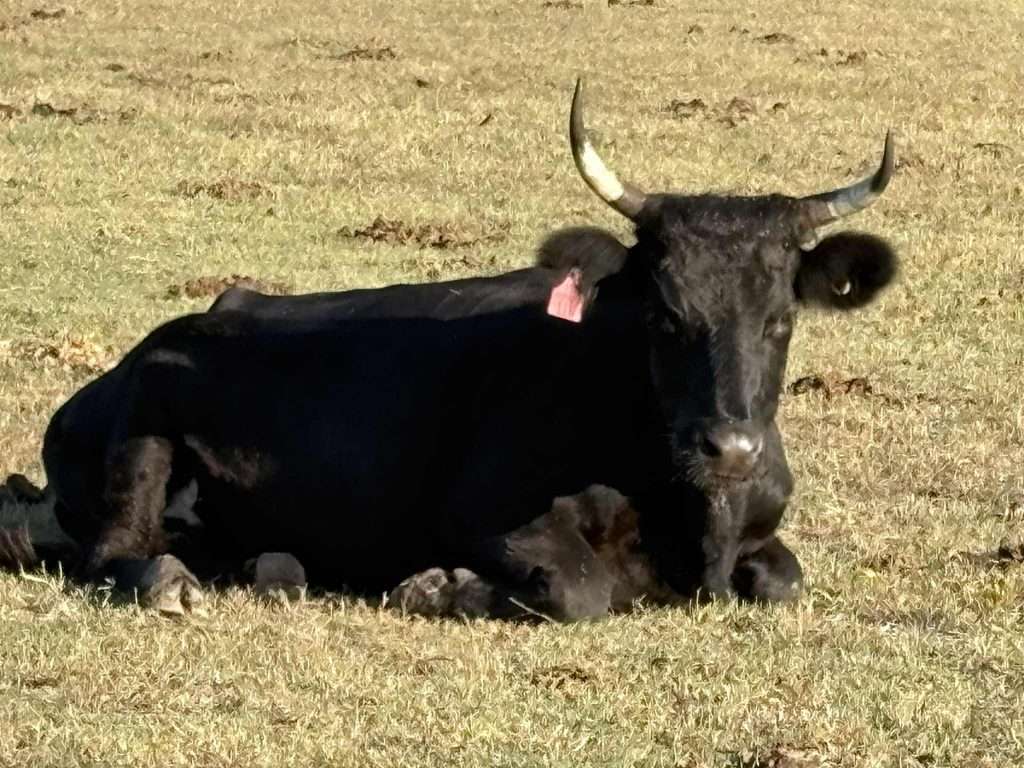
#125 Briarhook Flora Legacy L03859LH-20HH with heifer Fitz’s Golden Finlee, Legacy #L04703TH-23HH. Flora’s sire is Colorado Orpheus Legacy # L01683LH-13HH. Orpheus goes back to Lady Knight and Peerless Perfection II.

The Colorado Line Read More »

General

Dexters ARE Irish and Proud of It

Where ever they roam Dexters are Irish and Proud Of It!

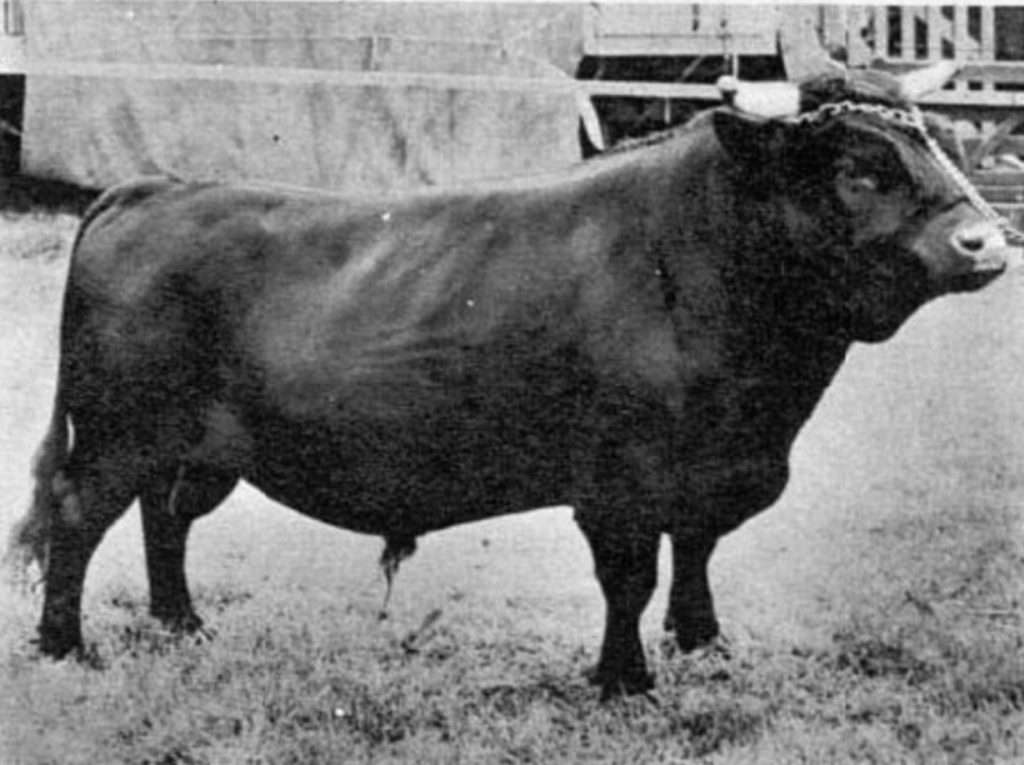
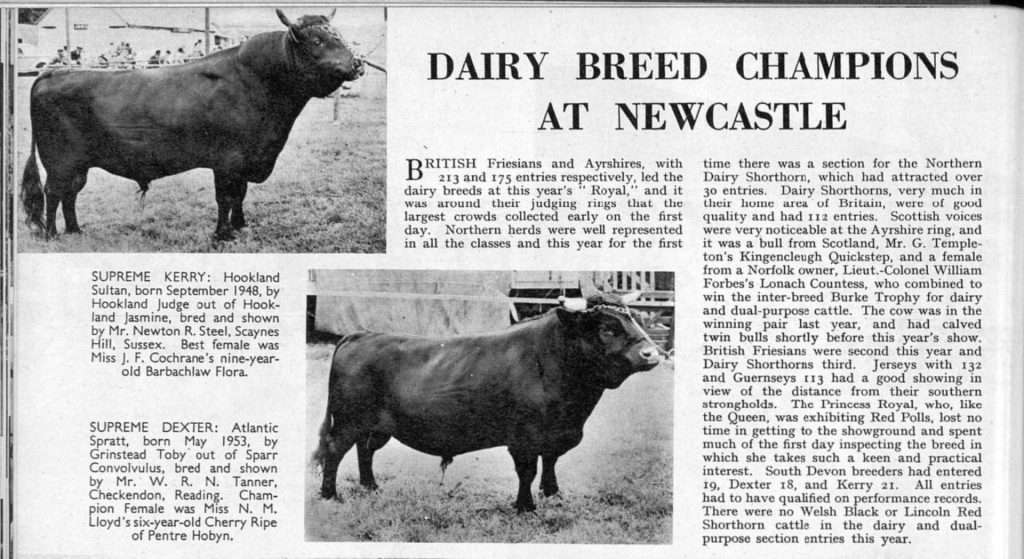
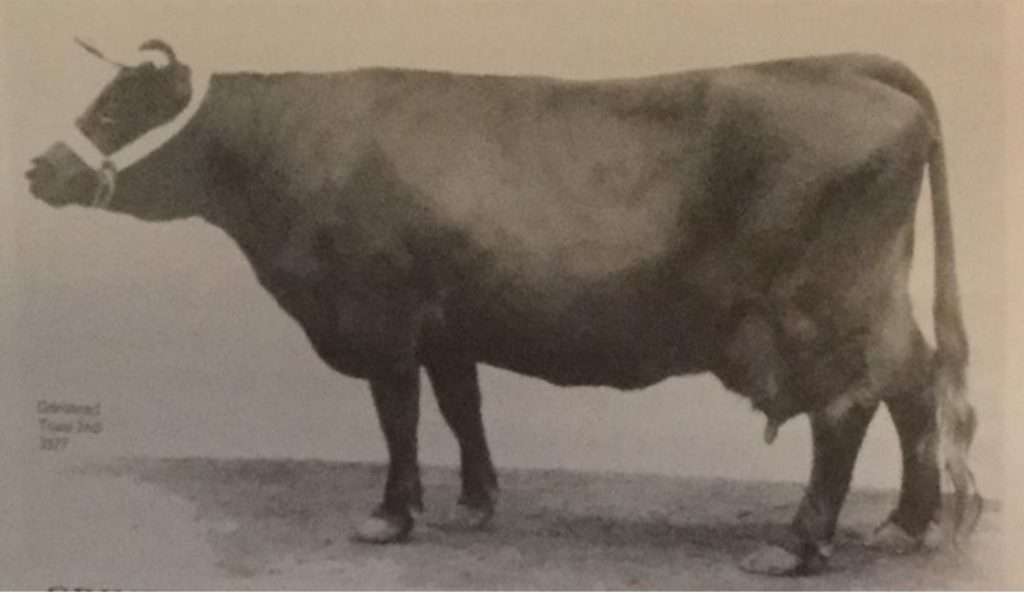
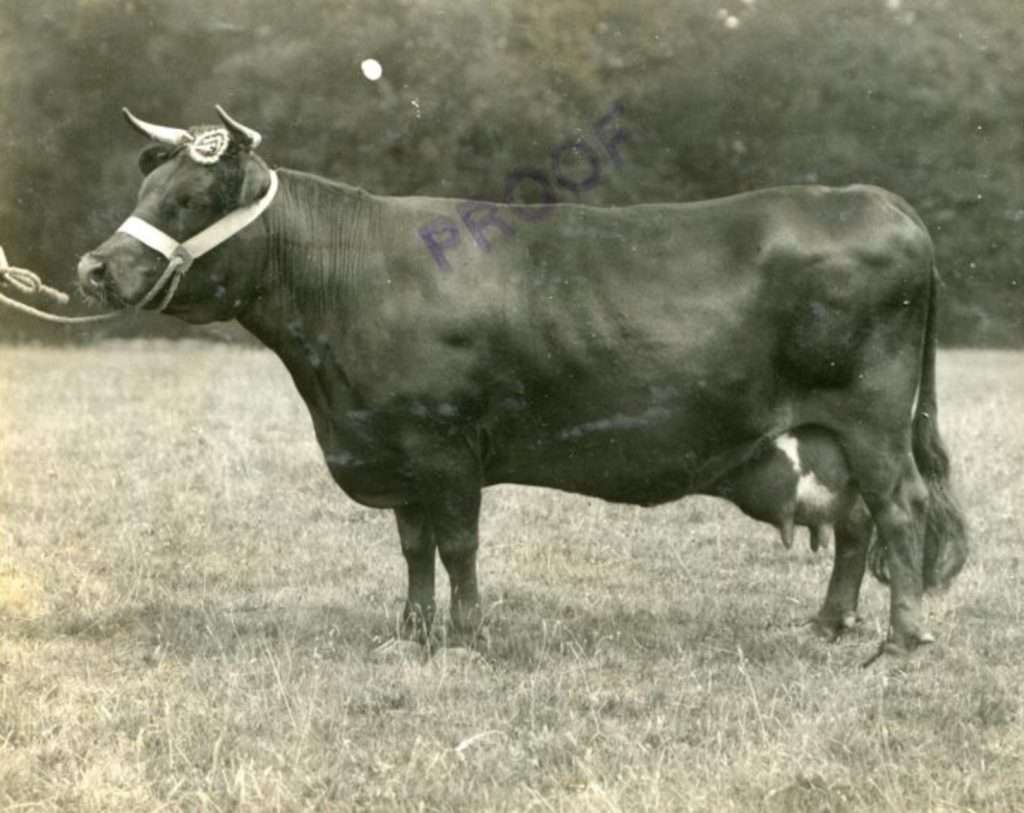
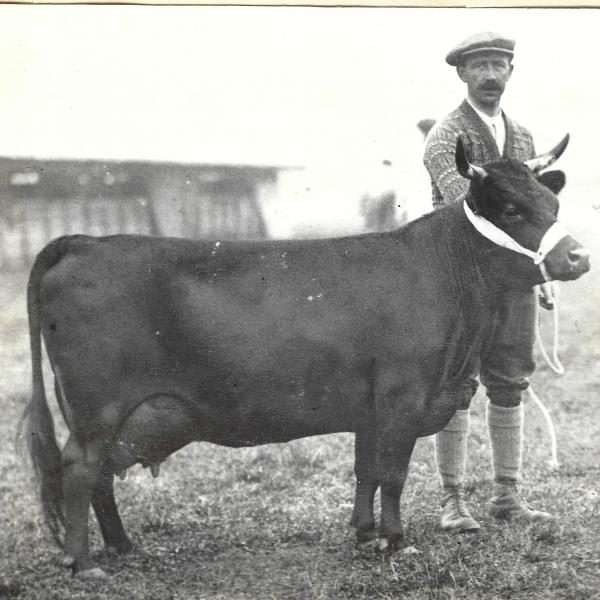
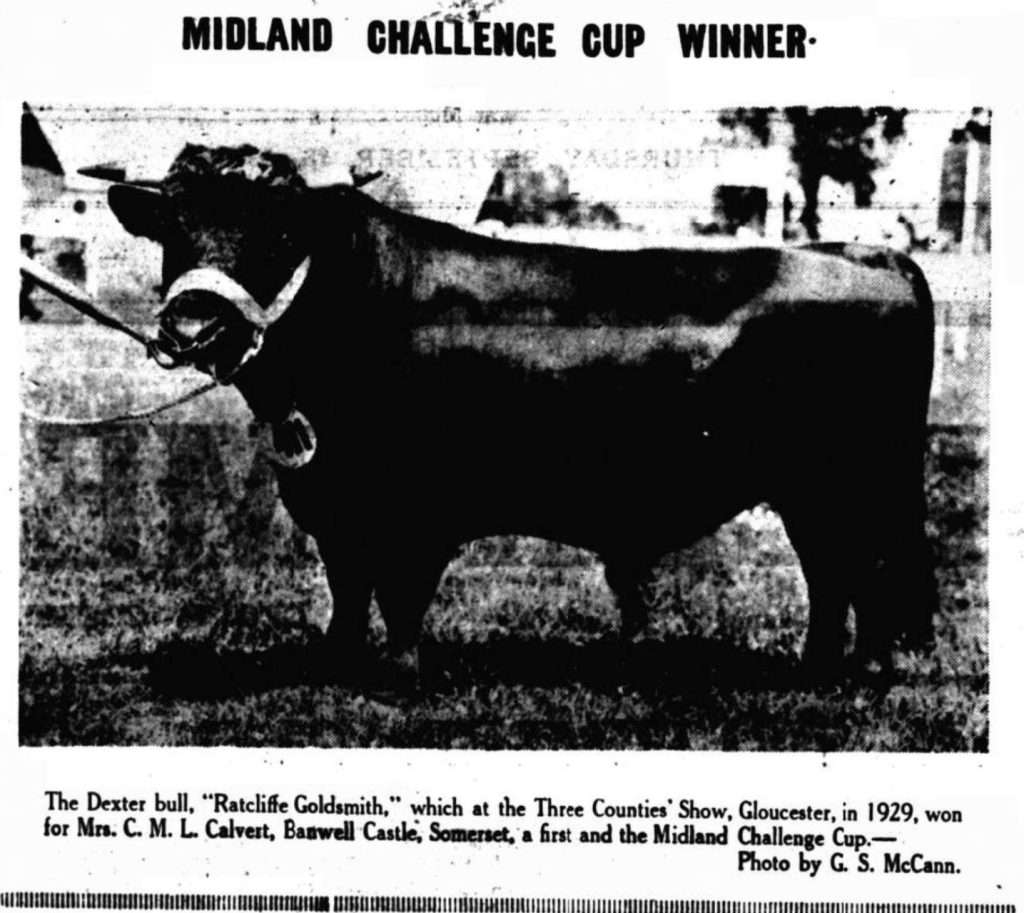
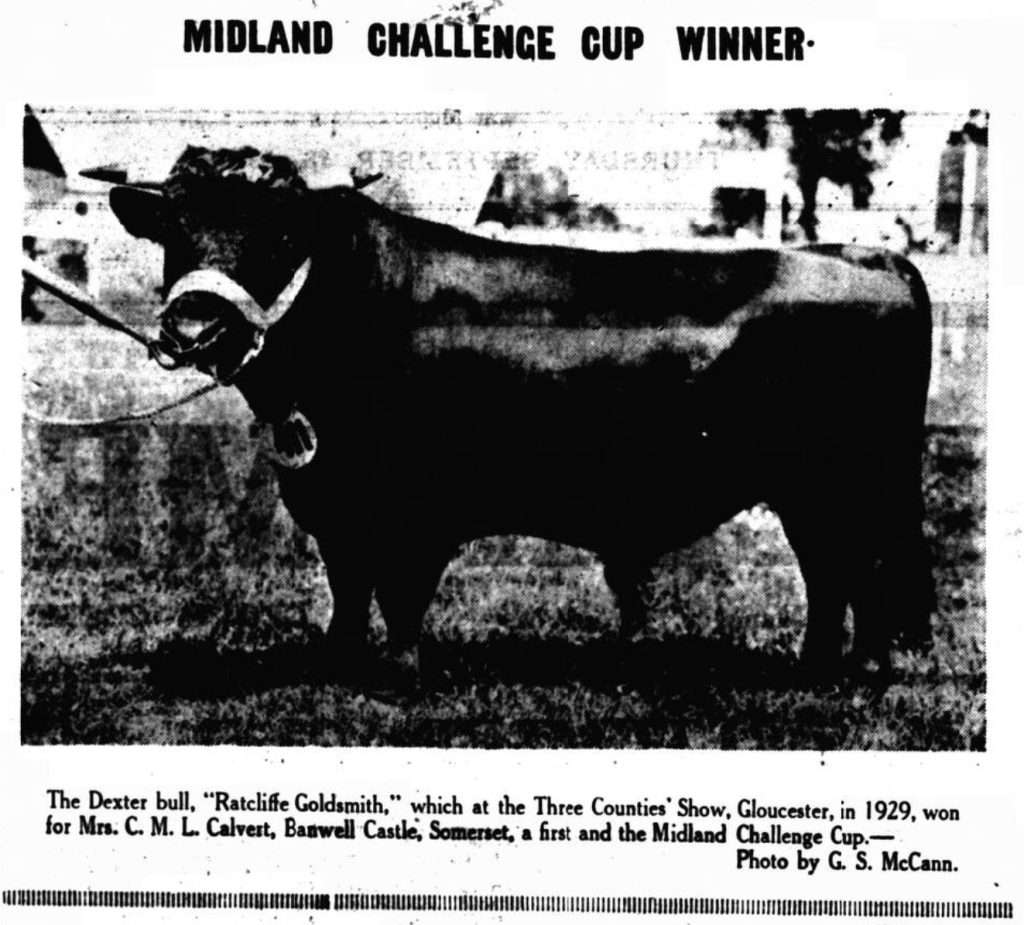
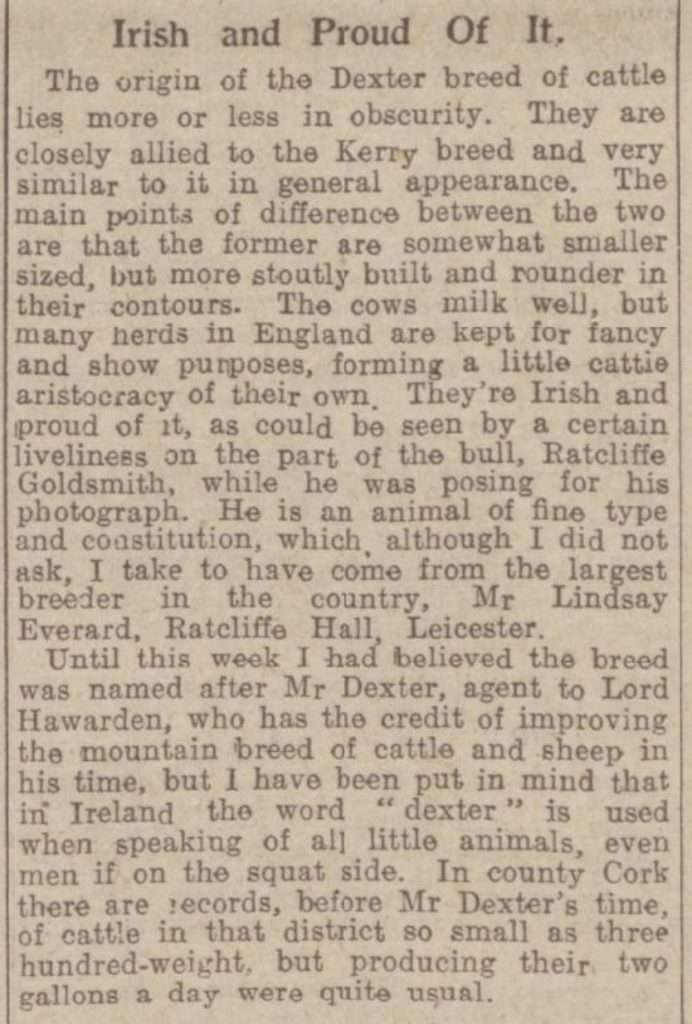
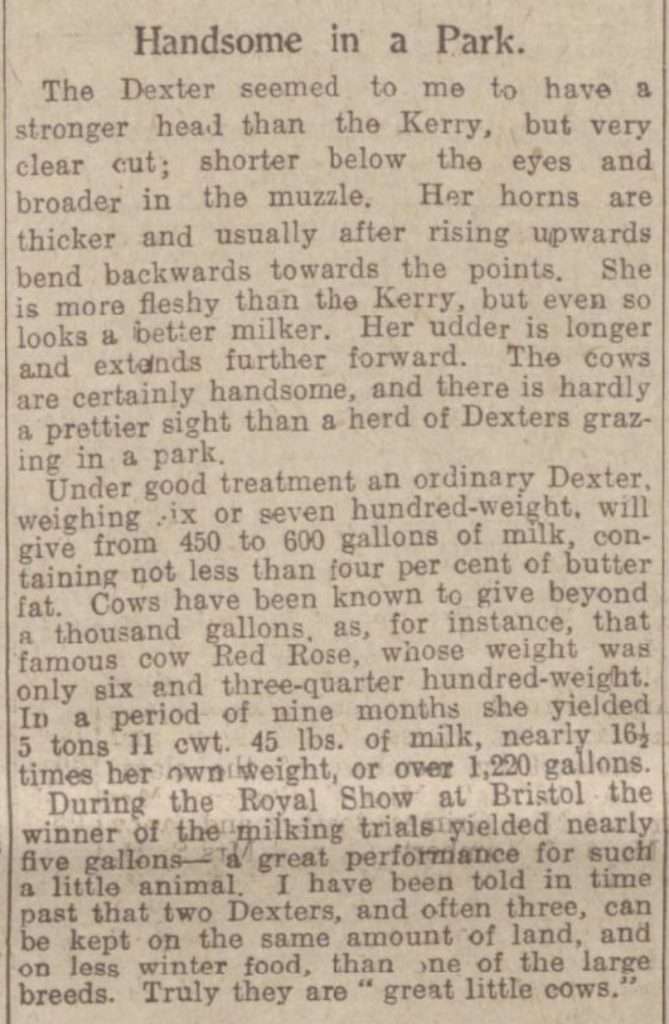
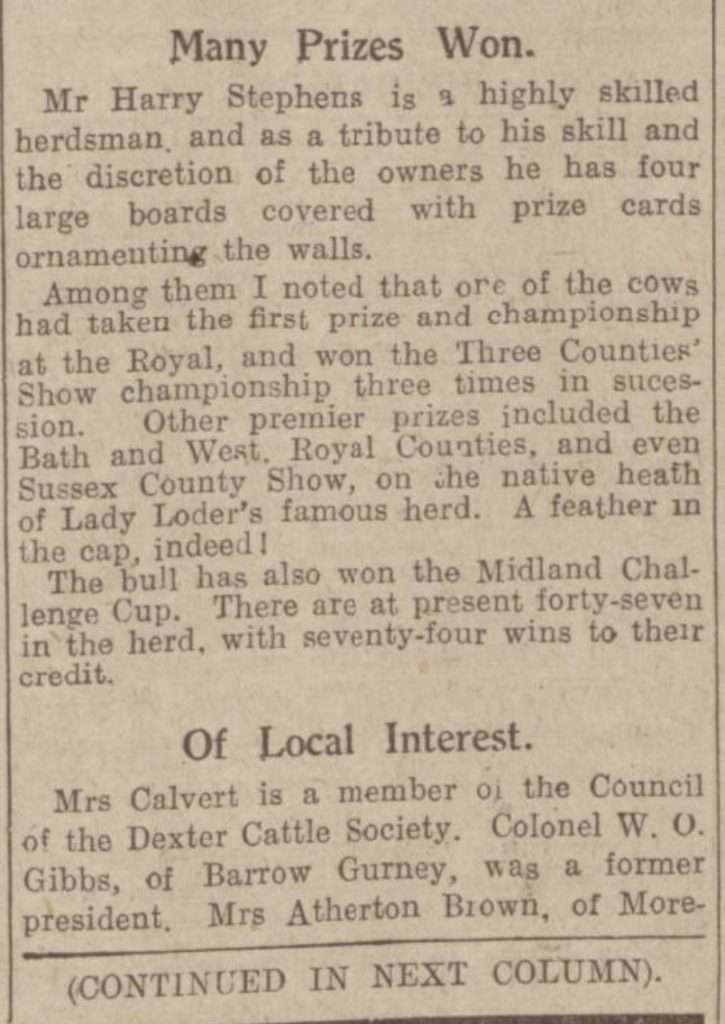
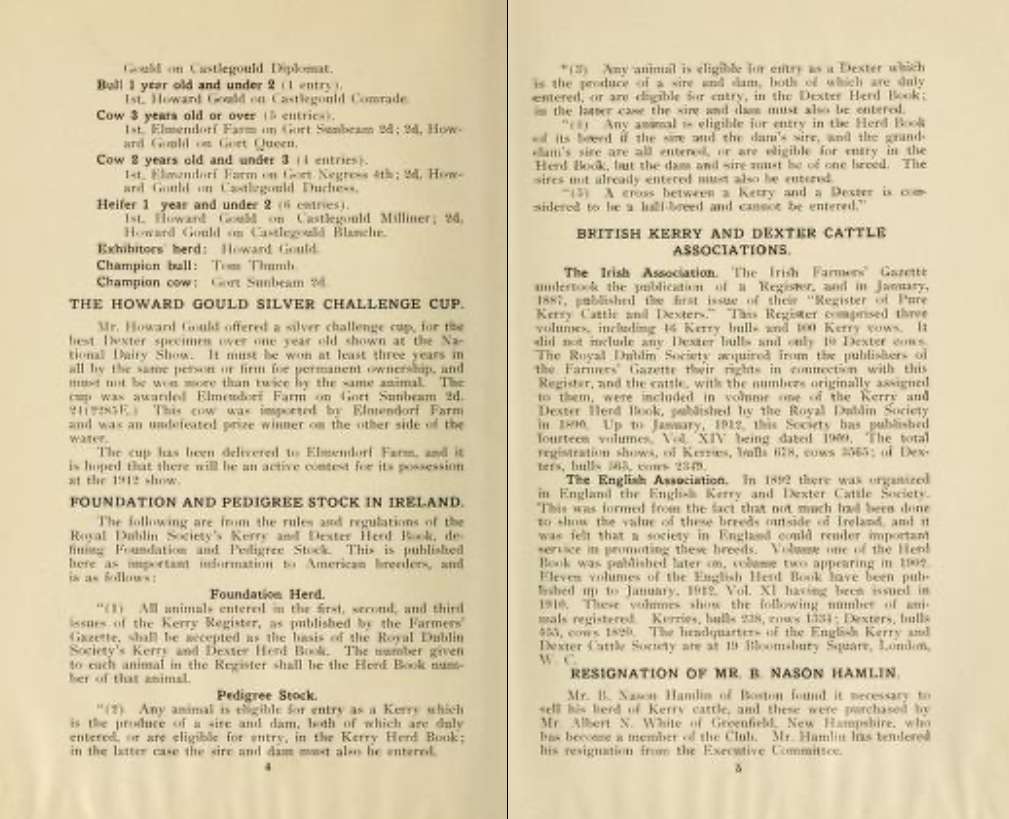
Dexters are well known as Irish Dexters even if many other points about them are debated. The above bull though registered with the Dexter Cattle Society is an Irish Dexter with a “fine type and constitution” as the article states. I checked, he certainly was owned and breed by Mr. W. Lindsay Everard of Ratcliffe. This article holds true to the fact that Dexters are known to be of a small type of cattle. That very small cattle were known to roam Ireland before “Mr. Dexter” was ever penned in History. In Kerry there was known to be some of the smallest type of cattle one can imagine, long before Dexters were ever established or organized into a true breed. So small of an animal that it is mentioned in this paragraph, but yet still producing 2 gallons of milk a day is a marvel indeed. The brown article was written on 14 Nov 1929, it’s from the Western Daily Press Bristol. The picture was taken from a later newspaper published in 1930. Though the Dexter was well known to produce ample milk and was “closely allied to the Kerry breed and very similar to it in general appearance.” The differences being that “Dexters are “more stoutly built and rounder in their contours”.

The Dexter has a “stronger head than the Kerry, but very clear cut, shorter below the eyes and broader at the muzzle”. The description of her horns are as follows ” Her horns are thicker and usually after rising upwards bend backwards towards the points”. It is interesting to note that she is even fleshier than the Kerry but was thought to look a better milker than the Kerry. Short cows with large udders seem to showcase the udder in a much more extreme way than a longer legged cow though the udder could be of the same size. The article really goes on to highlight the excellent milking attributes of a Dexter to great lengths. A point worth mentioning is that “there is hardly a prettier sight than a herd of Dexters grazing in a park”. I personally can’t help but look out at my hills and know this rings true to me today, just as much as it must have to the writer of this article in the past! Dexters truly are practical and beautiful when bred for all these amazing Historical traits!

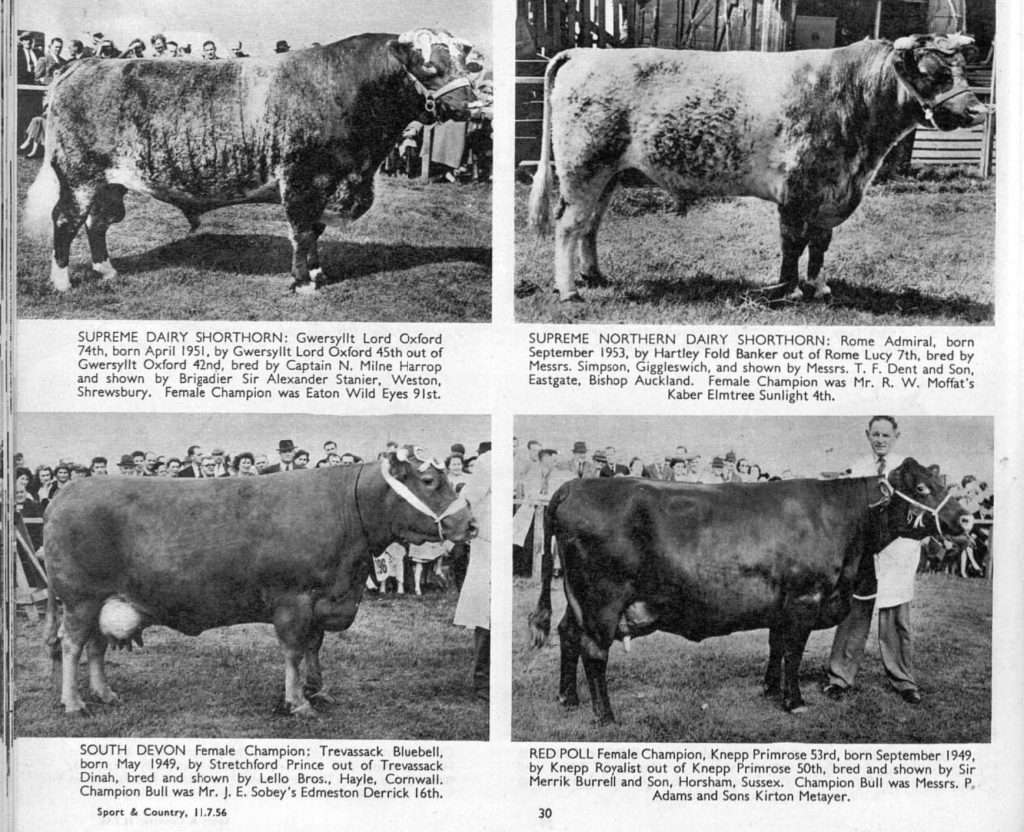
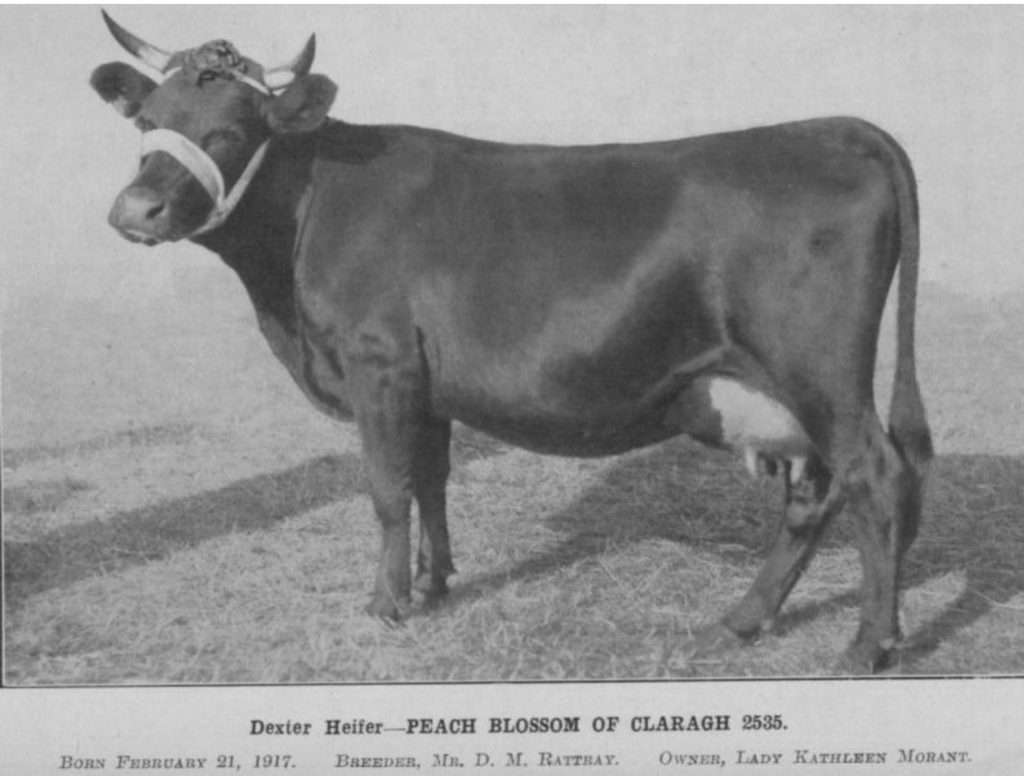
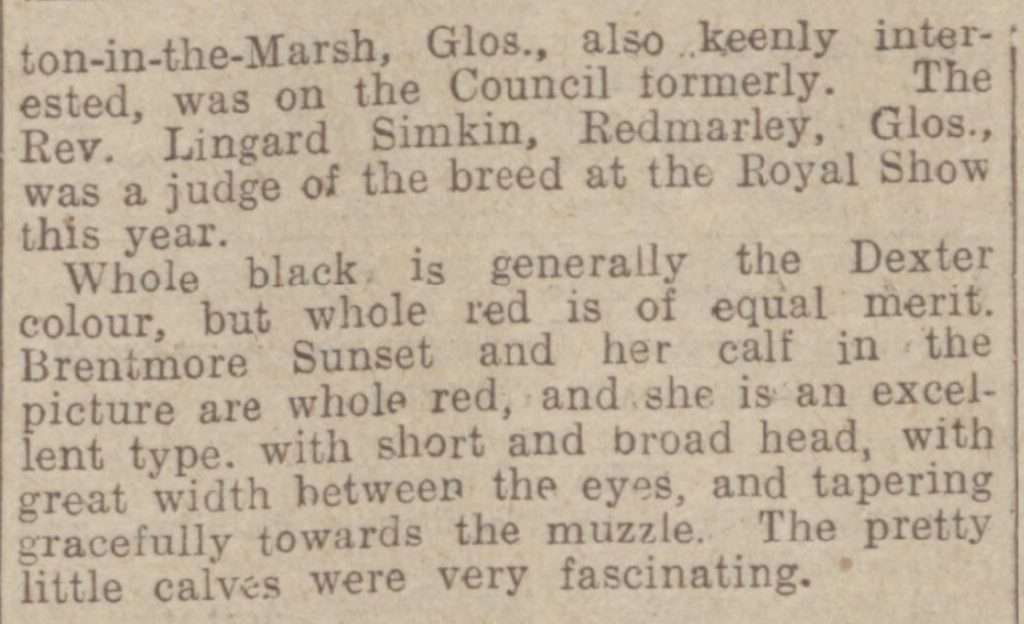
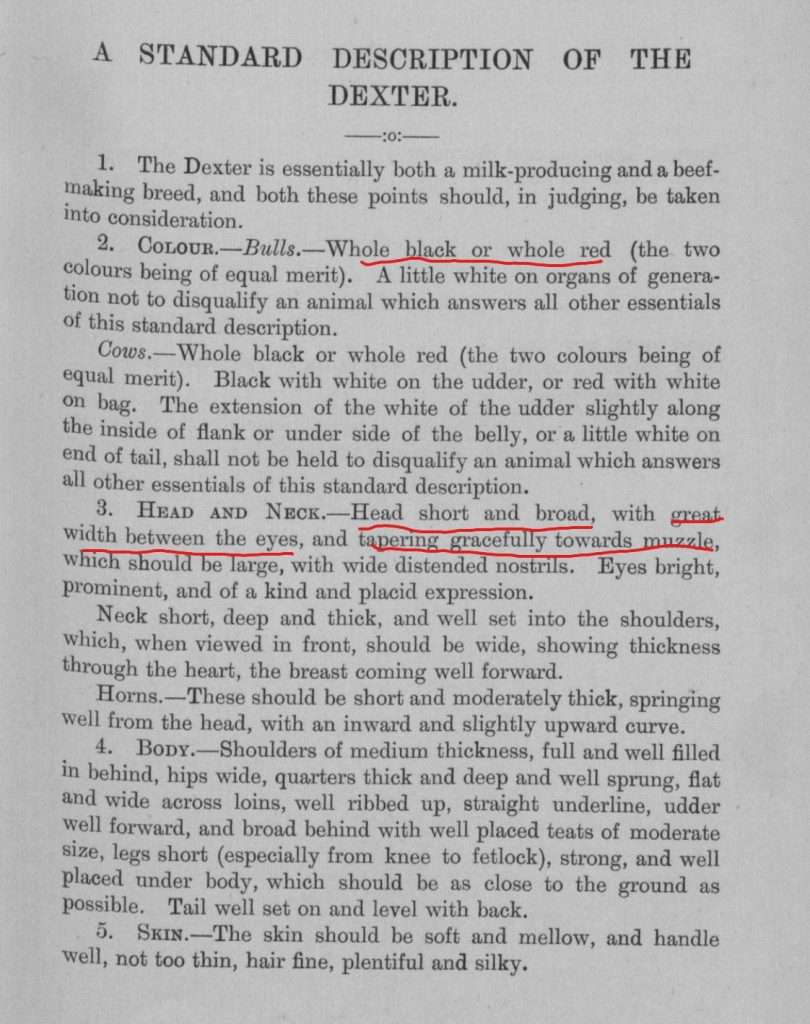
Breeders have long been concerned with breeding to “type” and a few points to mention in this last photo that align with the Standard Description of a Dexter is the color being “Whole black or whole red”. The “Head short and broad” with “great width between the eyes”, and “tapering gracefully twords the muzzle. Dexters definetley impress with their specific beautiful traits and charming ways which took hold of many a wealthy land owner who could aford to buy any exotic cattle they chose. In conclusion Dexters and their “pretty little calves are very fascinating”! They are Irish and Proud of it and those of us who breed them, have been taken by their Irish Charms.

Dexters ARE Irish and Proud of It Read More »

Historical
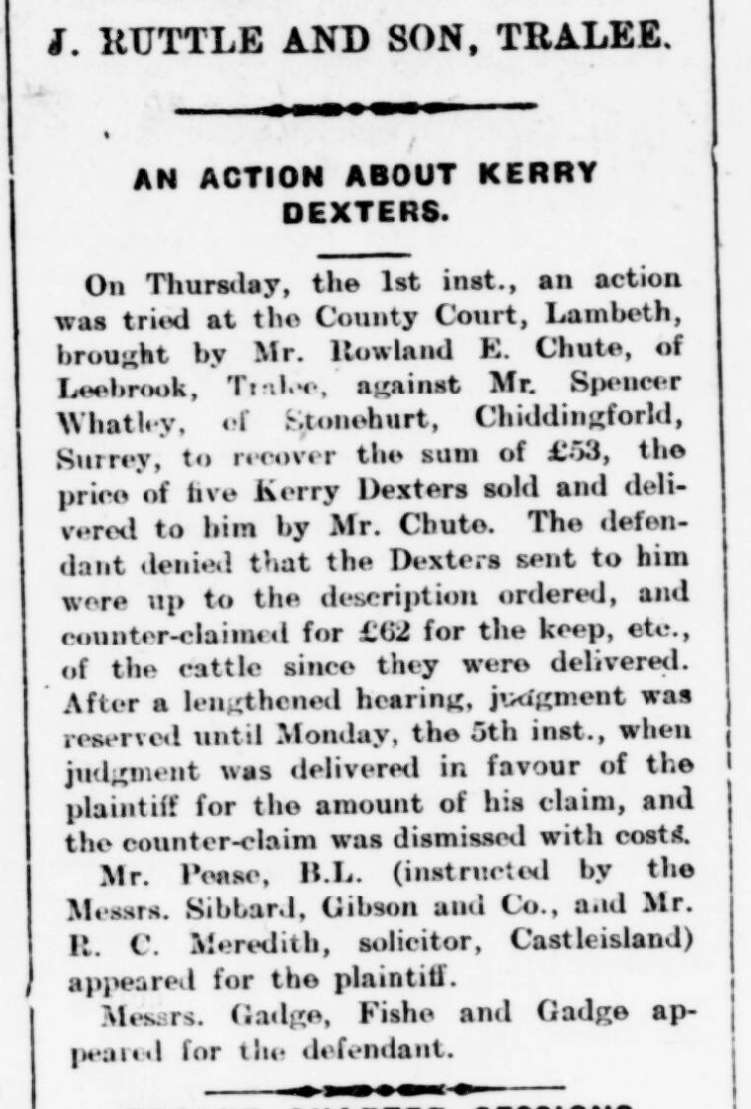
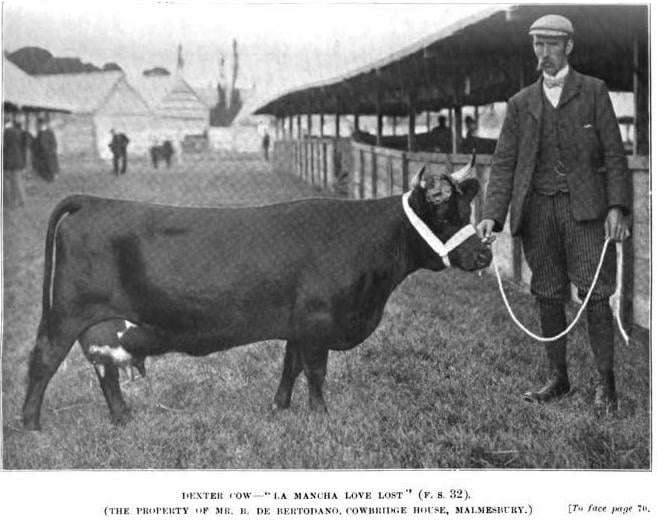
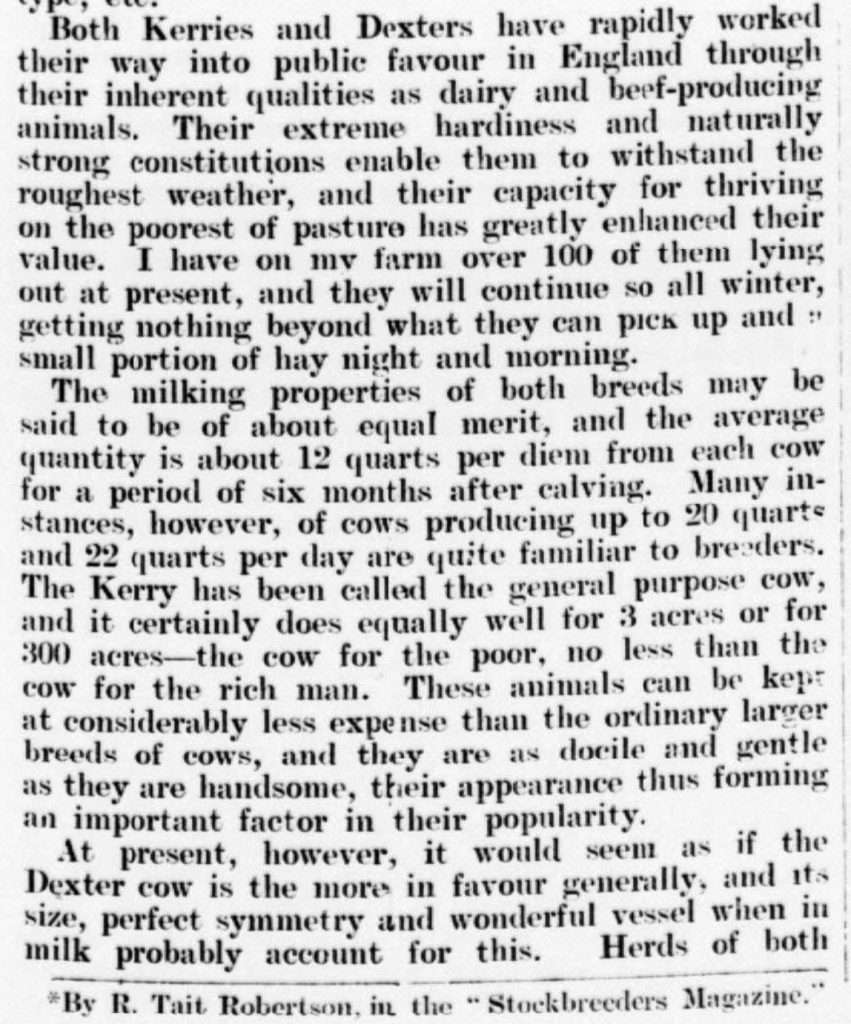
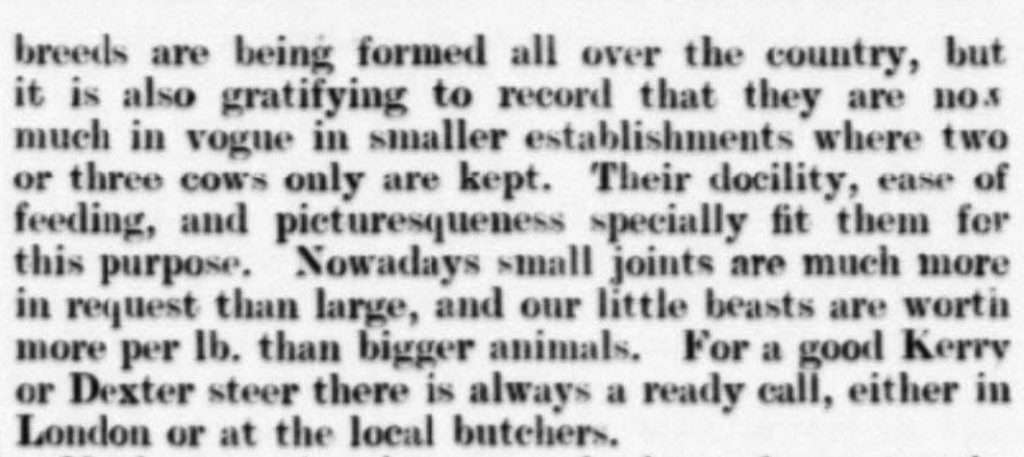
Lying out all winter long, Getting nothing more than what they can pick up and a small portion of hay Night and Morning.

Dexters have long been hailed as hardy and thrifty even adaptable to locations from Africa to snow laden areas. This article I am sharing was written by R. Tait Robertson; he was a famous and most influential Dexter breeder for his day. He was not just any armature Dexter owner, since he was a foundational breeder of Dexter cattle and a generational farmer. He explained that” I have on my farm over 100 of them (Dexters) lying out at present, and they will continue so all winter, getting nothing beyond what they can pick up and a small portion of hay night and morning”. What this means is that Original Dexters could get by on just a little, but of course they could thrive on even more. It was often said that when the Dexters of Ireland went to the manor lands of England they grew greater in size due to the surplus. Dexters can do well on just forage and hay alone with no grain needed. They can excel on the best rations and produce even more, but if times get tough, they can more than get by.

Who was R. Tait Robertson?

Mr. Roberston was a very influential breeder, breeding in Malahide, County Dublin, Ireland. His family later had Church Farm in Babraham, Cambridge. His Dexters were esteemed as quality and were very sought after by the English who wished to keep them. He is the son of James Robertson. They were not just multigenerational farmers but multi-generational Dexter farmers who helped shape Dexters in their early years by breeding and selection. Dexters as we know them then owed a great degree of tribute to this influential family. Mr. R. Tait Robertson was also a judge for Kerry and Dexter cattle. He judged them by the merit that this article speaks to. Someone may say that Dexters are a beef breed that can milk, but Mr. R Tait Robertson said they have “equal merit” to Kerry cattle. They were not transformed in England to a milking breed but rather selected and bred by breeders like the Robertsons for great dual-purpose traits and were heavy in exceptional dairy traits. When R. Tait Robertson speaks to their equal merit remember that he was a judge for both Kerry and Dexter cattle and those judges gave prizes and entered both Kerry and Dexter cattle into the foundation herd books for the Royal Dublin Society. Dexters are not, nor have they ever been a beef breed that can be milked, but rather a dual-purpose breed with equal merit in milking traits to an ancient breed of dairy cattle (Kerry cattle) that can excel at grass-based feeding.

Lamancha Dexter Herd

Mr. R. Tait Robertson was the owner and or collector of the cattle in the La Mancha Herd. He or his family may not have bred them all but rather selected some as foundational cattle for the Dexter breed. You will often see La Mancha Dexters registered to him, his father or Robertsons and sons. His Dexters traveled to many countries and those Dexters that could be found “Lying out all winter long, getting nothing more than what they can pick up and a small portion of hay Night and Morning” run in the veins of our Dexters today. This article I shared was written on 16 December 1899 and La Mancha Love Lost was born in 1897. She was qualified by inspection most likely by Mr. R. Tait Robertson and would have spent time in his field while this article was written. It’s nice to think of such a beautiful cow lying out in your pasture all winter long, getting nothing more than what she can pick up and a small portion of hay night and morning then still looking so beautiful! That’s the kind of Dexter I want.

Lying out all winter long, Getting nothing more than what they can pick up and a small portion of hay Night and Morning. Read More »

Historical
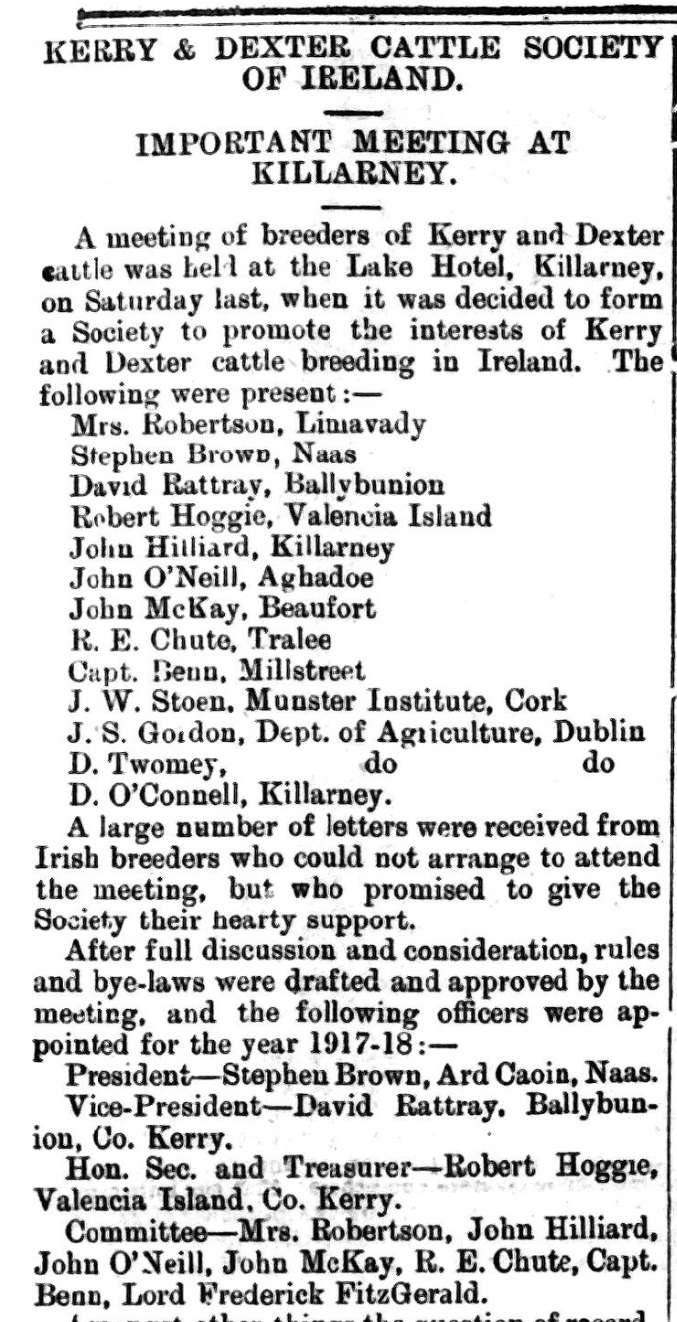
THINGS TO CONSIDER ABOUT YOUR HERD IDENTIFIER. A LITTLE BIT OF HISTORY!

By Judy Sponaugle of Legacy


 Another registry “innovation” finds the US herd a hodgepodge of mediocre and forgettable initialed herd names.   The US is the ONLY country in the world that has so little respect for Dexters they guarantee breeders basic anonymity by using initials of farm names as herd identifiers!  Goodness but it IS forgettable.

Here’s an example.   I was trying to convince a new breeder about to register a first calf NOT to use the initials encouraged by the US registries for it all but determines anonymity for their herd.  Truth be told. . . . there are only two initialed herds in the US I remember by initials, both because the owners were/are prominent in the breed.   So, . . .  I gave this person examples of wonderful and imaginative herd names, and then I looked at the state of Virginia ( where the owner lived) and picked out three herds with initials.   I know most herds and owners by heart through constant research. . .   and I looked at the initials and began the process of trying to remember the herds.  It was a struggle!  One of the herds I knew very well because my own bloodlines founded the herd and it was a perfect example of how even a constant researcher will NOT recognize herd initials.   Almost guaranteed anonymity and obscurity unless the person becomes a huge long-term breeder with a large herd.

Woodmagic was chosen by Beryl Rutherford because it was based on a favorite book from childhood, and all her Dexters were named after woodland creatures and birds.  Grinstead brings a smile to one’s face, with or without the beautiful photos of that herd and it’s dominance in pedigrees through the years.  Most English herds were named after the homes or estates or towns where they grazed.  It would be interesting to know the history of the choice of La Mancha for the Robertson family’s Dexter herd, but Round Chimneys leaves little to the imagination.  Parndon was a parish in Essex, England, and the origins of Ypsitty is still a mystery to me.   My least favorite herd name in the English records is Bryn-y-pin because it was difficult to type.   

American herd names prior to the 90’s were also imaginative and memorable.   Peerless certainly lived up to it’s identity, and every Missouri Dexter owner would immediately know the roots of “Shome”!  Shamrock immediately brings to mind the hallowed green leaf of Ireland, while Rainbow and Rainbow Hills are colorfully soothing to imagine.  Talisman is a herd name I always liked, and there is a Virginia herd that lives in literal “Paradise”.   The Lone Star and Cascade herds identify their geographic locations but also denote history, and Chautauqua identifies an area of NY where the herd is located.  ( Another typing challenge for me). 

Then we have SGF and SMD.    These herds are owned by long-time well known breeders.   Can you immediately identify these herds or do you have to stop and think as I did with a herd I knew as well as my own?   In England, or Australia, or even Canada, you would most likely know these herds as Spruce Grove or Silver Maple and the identifier would be far more memorable.

One registry started this and the other  continued this nonsense of encouraging owners to use initials and give US Dexter herds guaranteed  mundane, boring,  and unimaginative herd identifiers.   This is an “only in America” tradition that needs to fade into the obscurity IT deserves.   Please registrars. . . .   STOP . .. .  .suggesting to owners to use initials.  If you are fairly new to the breed. . . . . then CHANGE those initials to a memorable herd identifier and INSIST on it.  

IF. . . you are a new breeder and happen to read this page. . . . .  . . . . . . . . your Dexter breeding program deserves a unique identity.   I strongly urge you not to be led down the initialed path to anonymity.          

THINGS TO CONSIDER ABOUT YOUR HERD IDENTIFIER. A LITTLE BIT OF HISTORY! Read More »

Historical
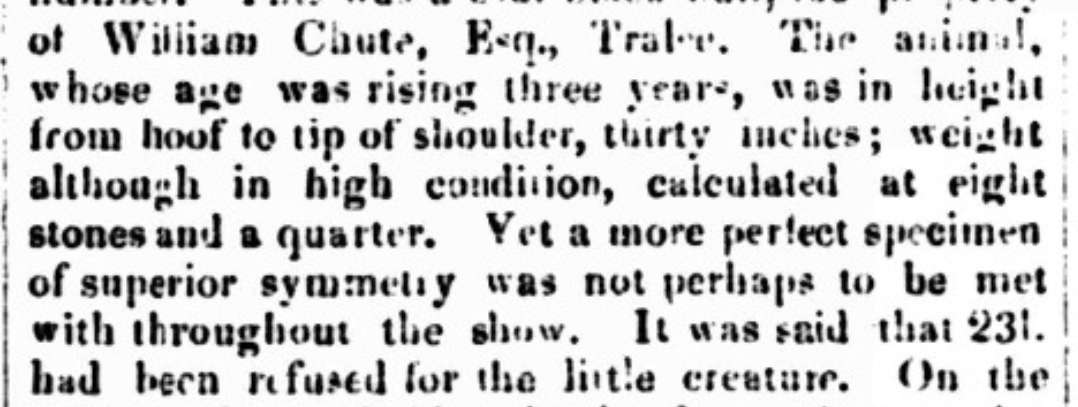
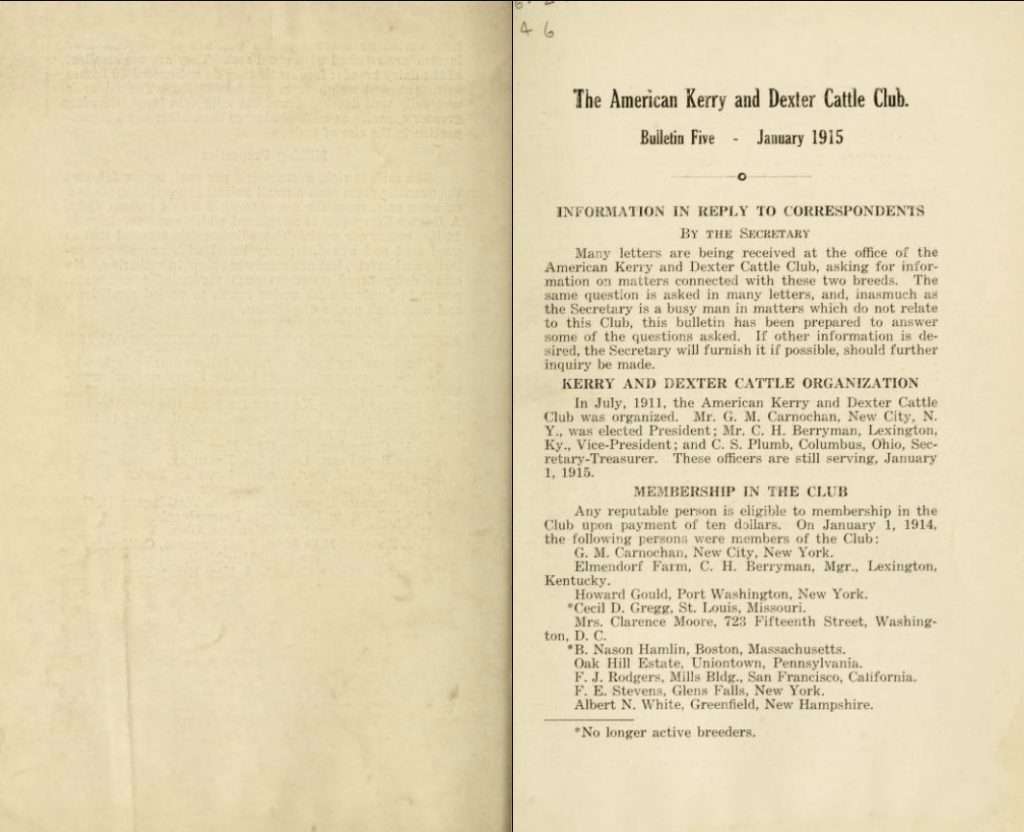
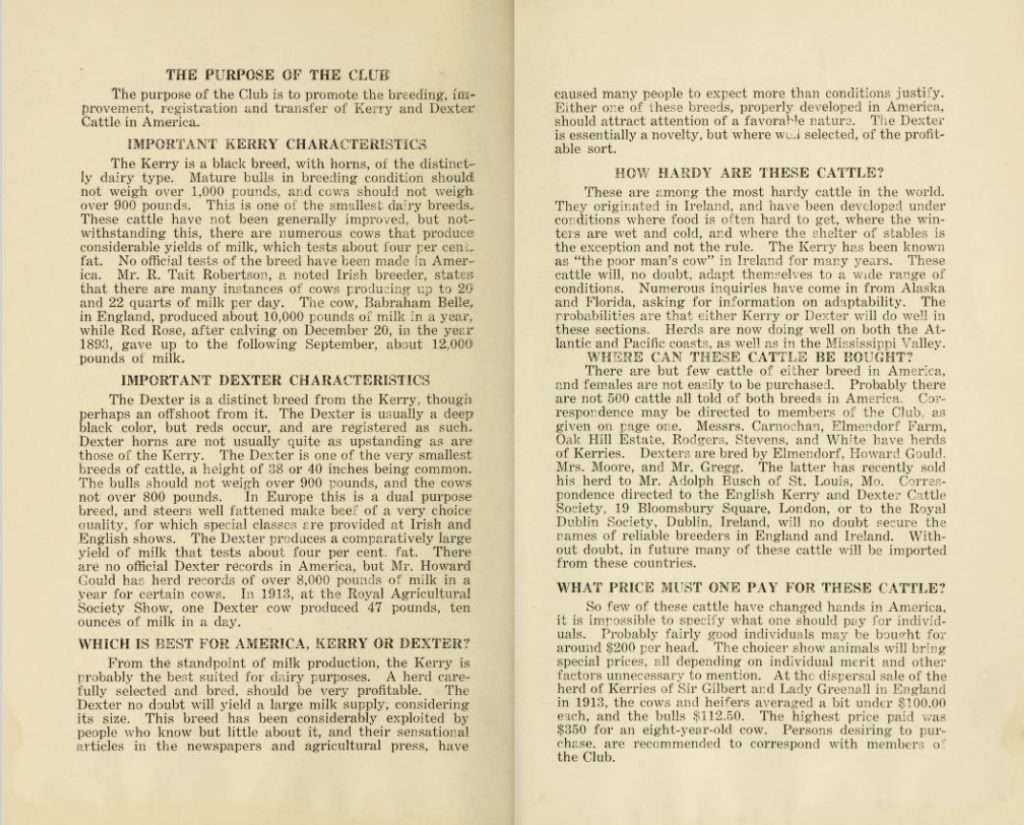
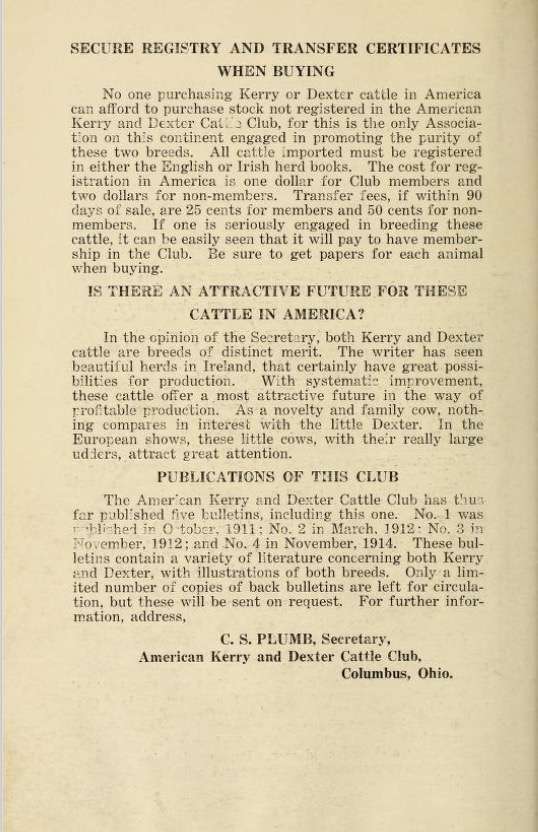
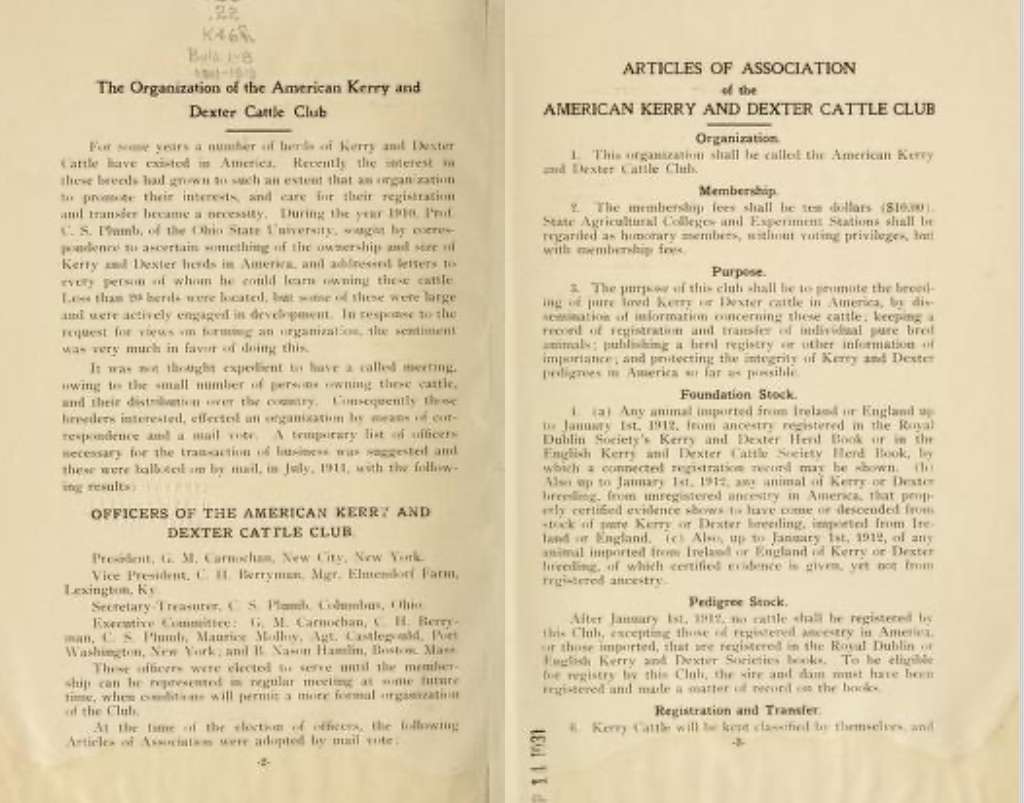
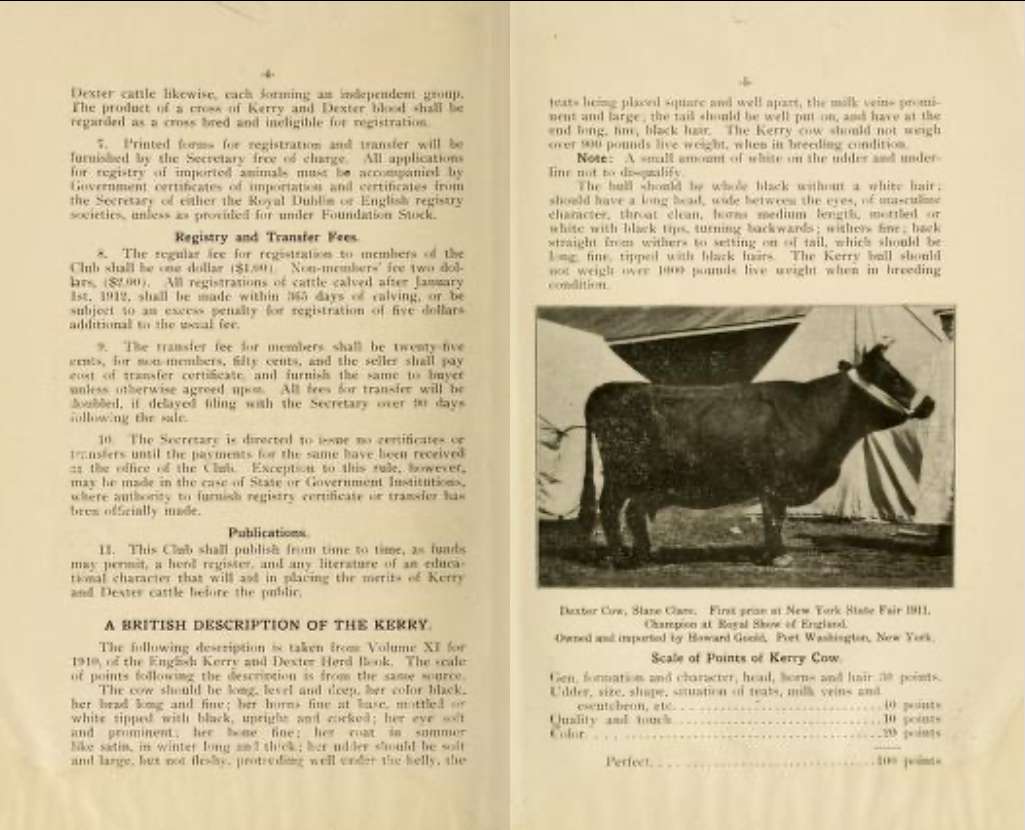
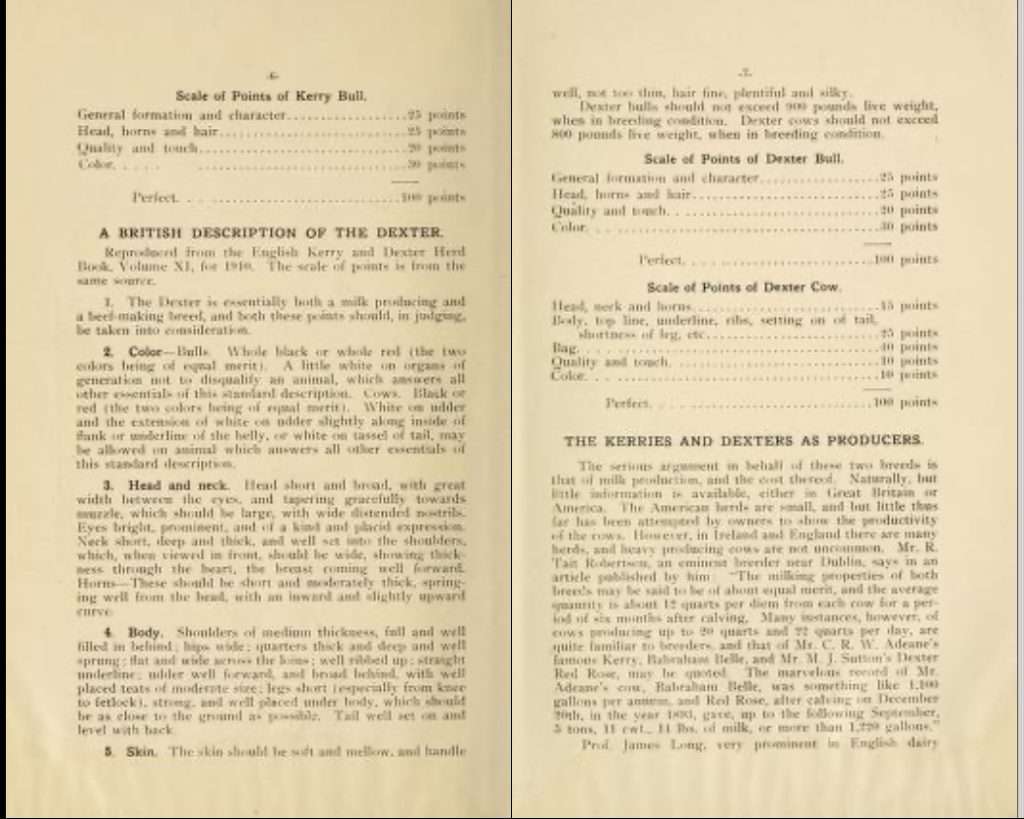
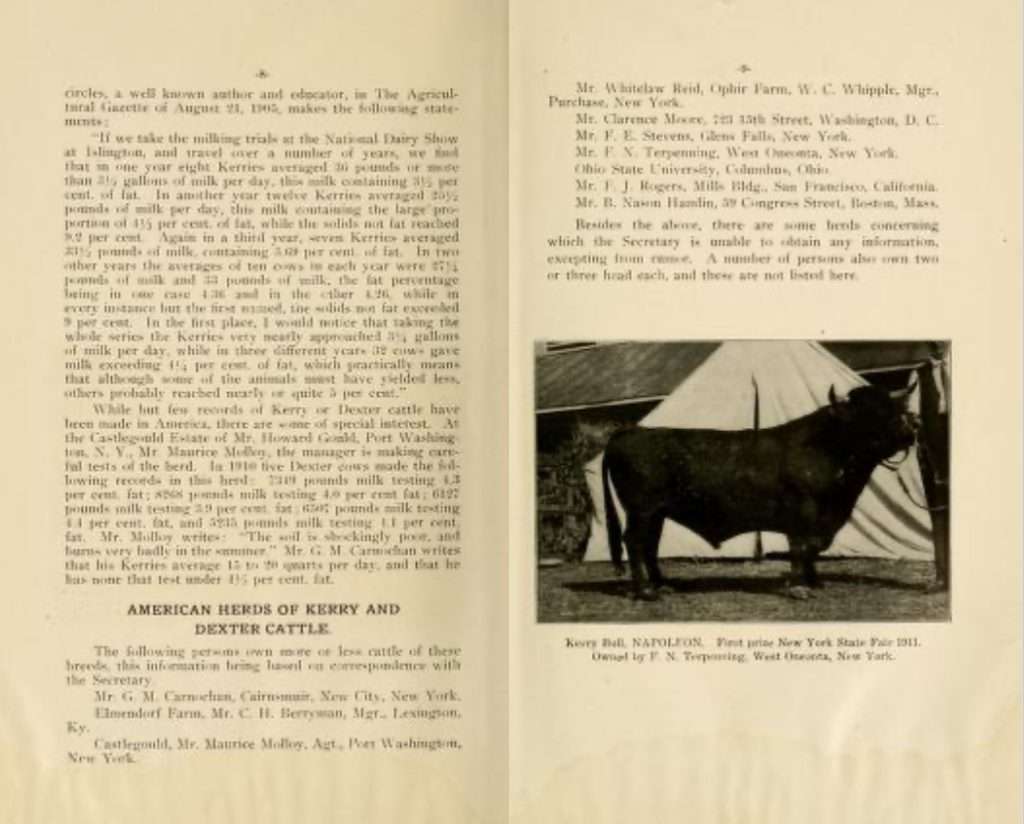
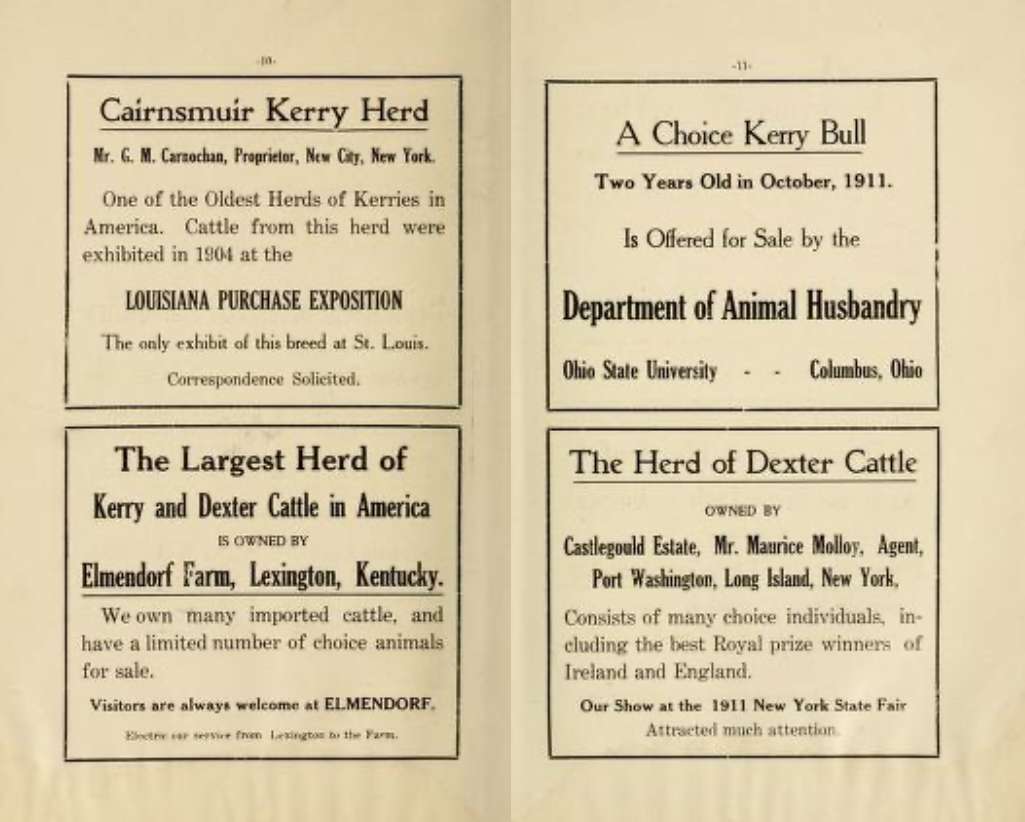
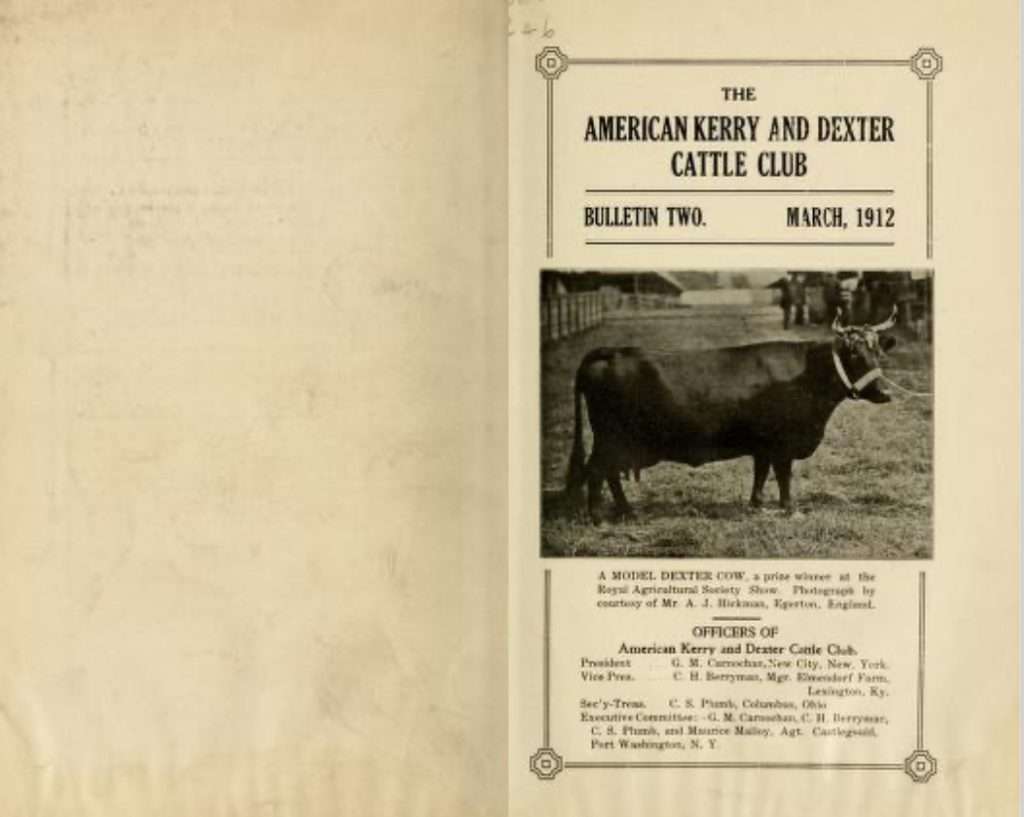
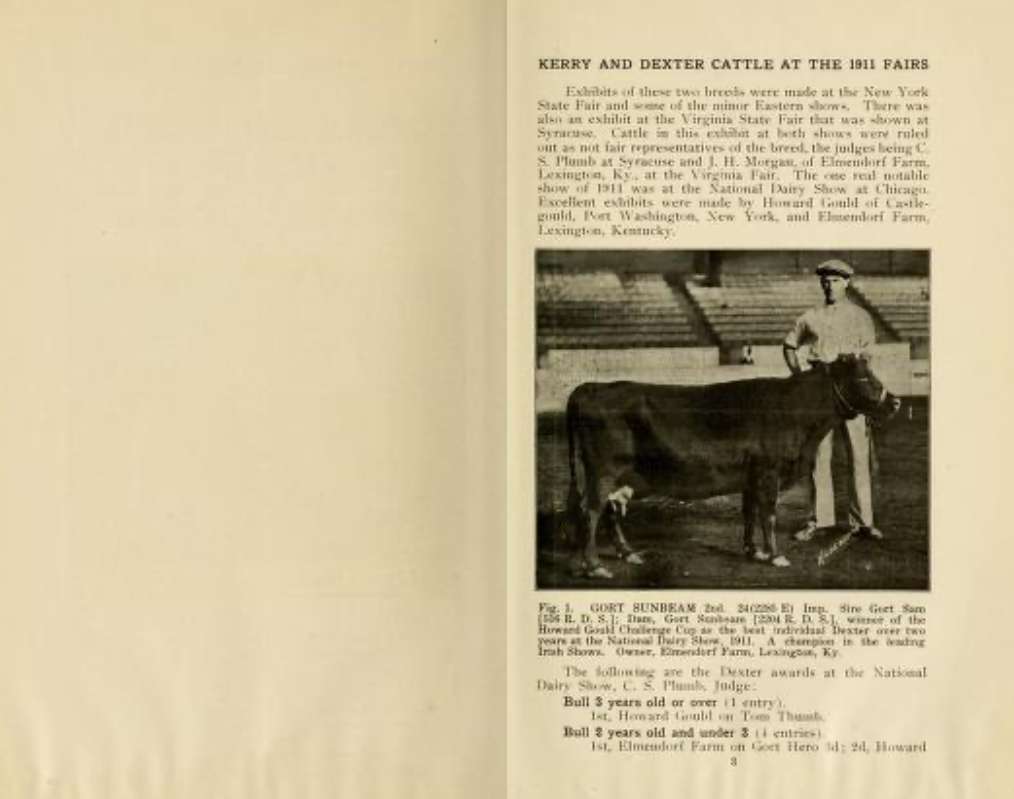
The American Kerry and Dexter Cattle Club ….series 1st Installment

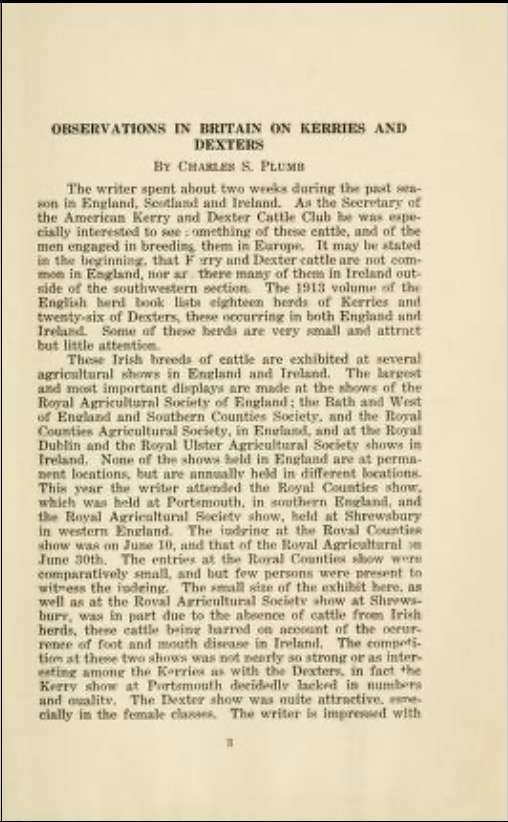
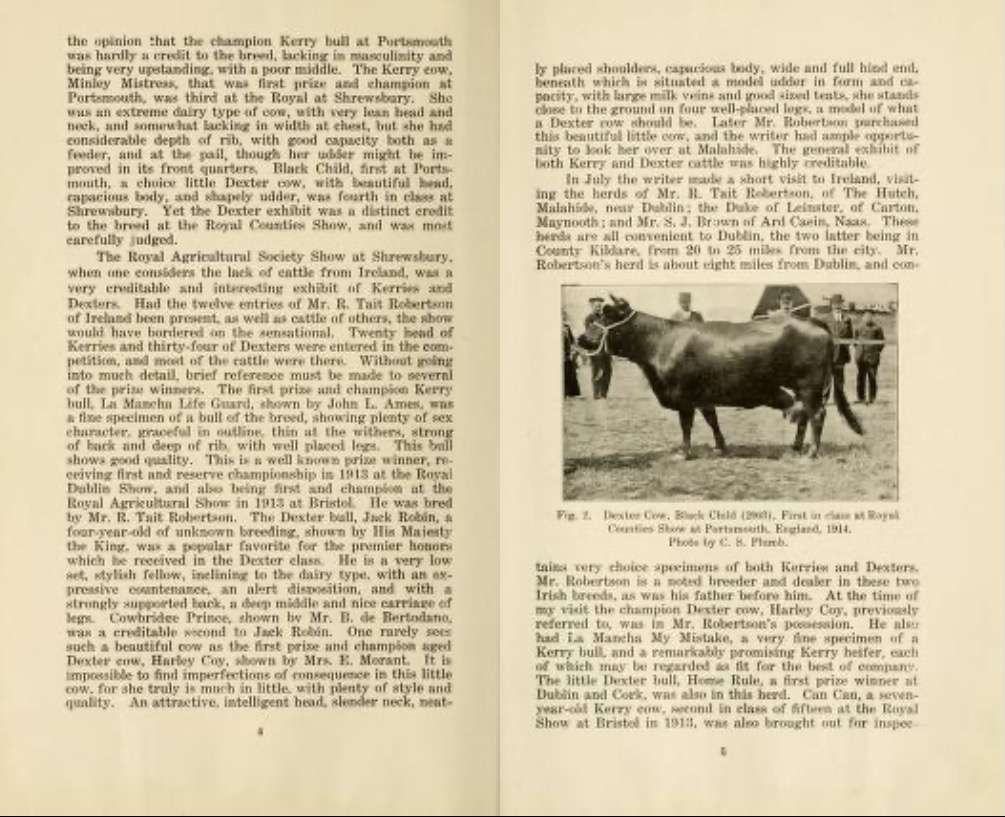
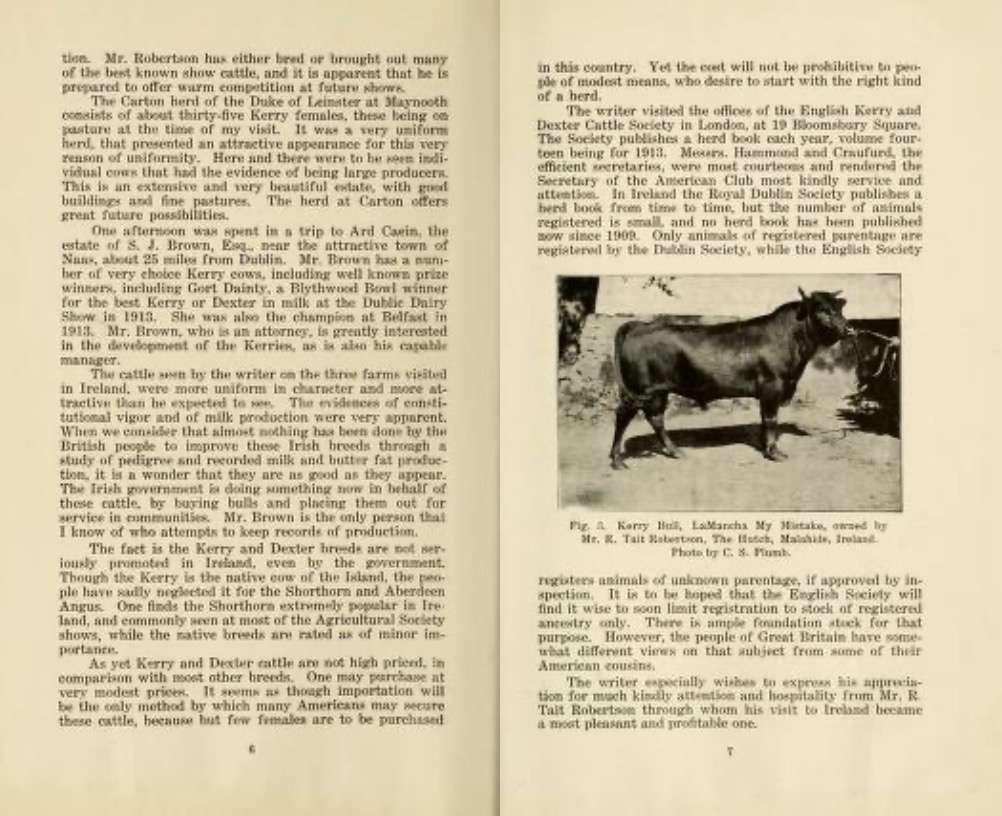
Many thanks to Judy Sponaugle of the Legacy Registry for providing the Irish Dexter Cattlemen with this valuable information. This is the first in a series of excerpts from The American Kerry and Dexter Cattle Club.

It is a great find for all you Dexter history buffs! Seeing some of the old advertisements and recognizing some of those herds was a thrill for me.

The American Kerry and Dexter Cattle Club ….series 1st Installment Read More »

Historical
The Dual Purpose Dexter And The Kerry History

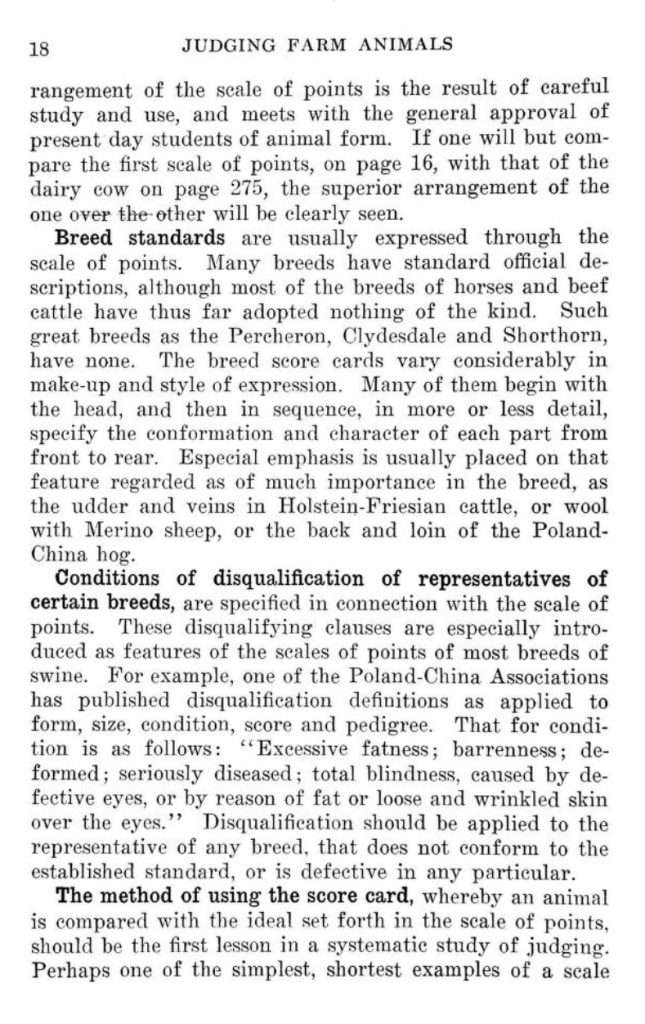
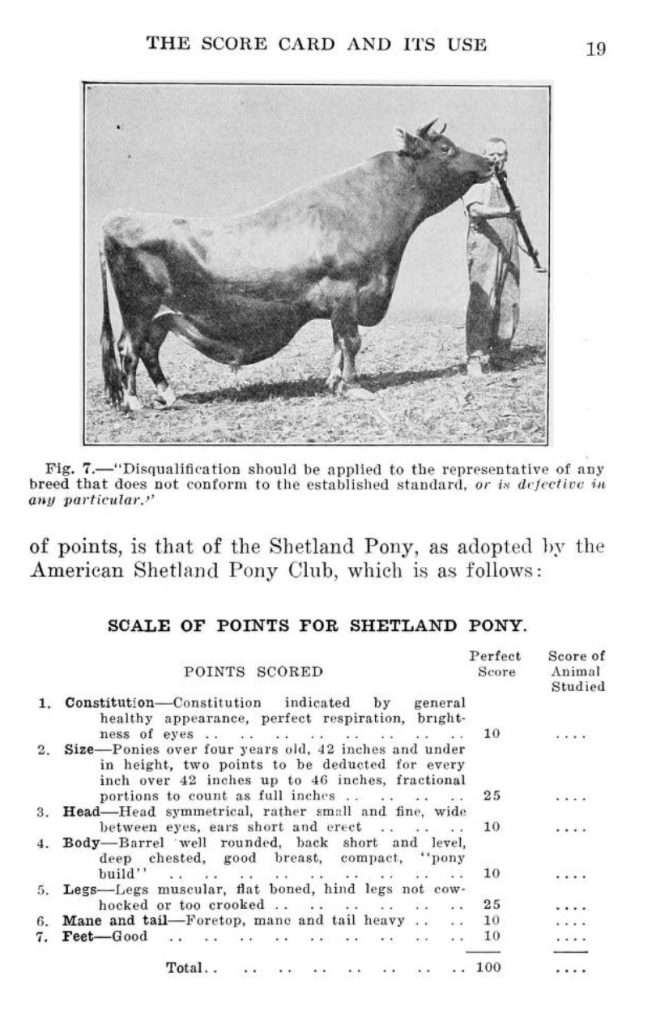
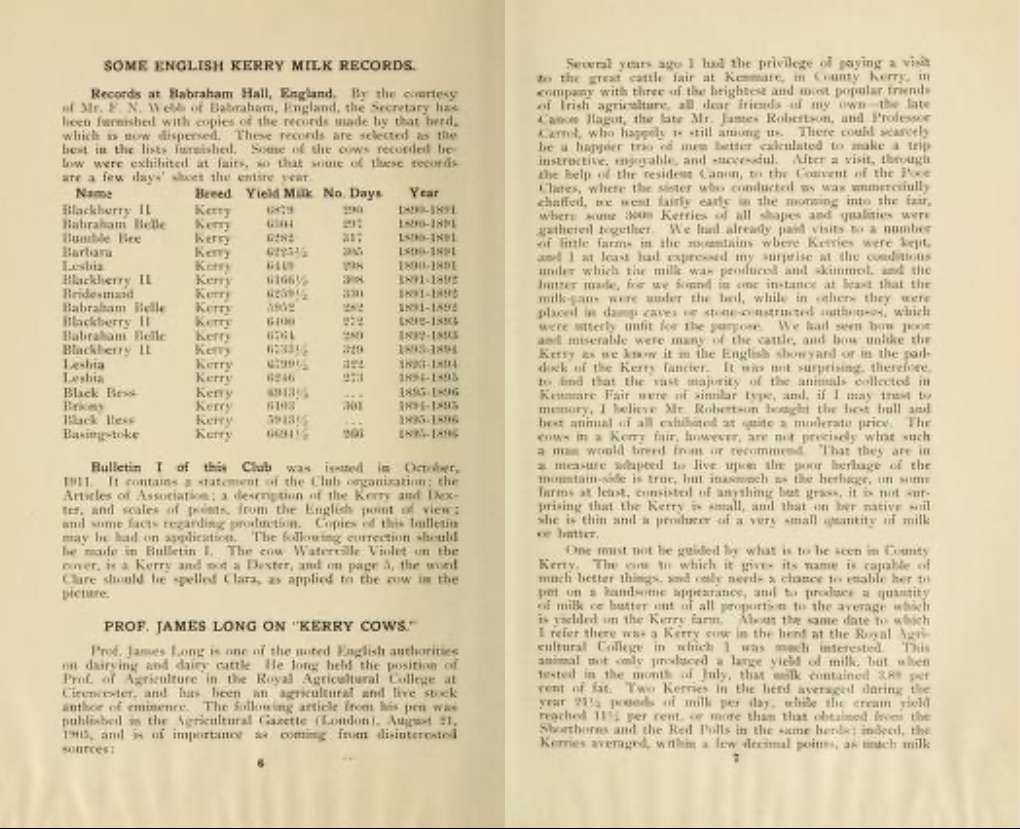
How much dairy should we put in to a Dual purpose Dexter cow. If you were to consult the English herd books they would say 40 percent for the “Bag” with the remaining percents being 15 for the “Head and neck”, 25 for the “Body, top line, under-line, ribs, setting of the tail, shortness of the leg, ect.”, 10 for “Quality and Touch” and 10 for “Colour”. So 40 points goes to the quality of the udder while 25 points gets divided up between the “Body, top line, under-line, ribs, setting of the tail, shortness of the leg, ect.”. It seems to me that in Dexters the focus today tends to fall primarily on mostly two aspects alone: shortness of leg and body type with general conformation coming in at the end. Even with 3 aspects it only accounts for 25 points for a Dexter. So there is a hyper focus on 25 % of a Dexter while the 40 percent in often neglected. The length of a cow’s leg and it’s depth are not the only traits that define a Dexter. Of course, we can’t forget the other traits that almost no one talks about, the “Head and neck”. You don’t get much meat off a head but it adds a distinct breed defining trait to a cattle type to set them apart.

It’s interesting to note that Kerry cattle that became a distinct dairy breed separated from the dual-purpose Dexter also list 40 points for the udder. The only difference is that more details are mentioned about the bag, “Udder, size, situation of teats, milk veins and escutcheon”.
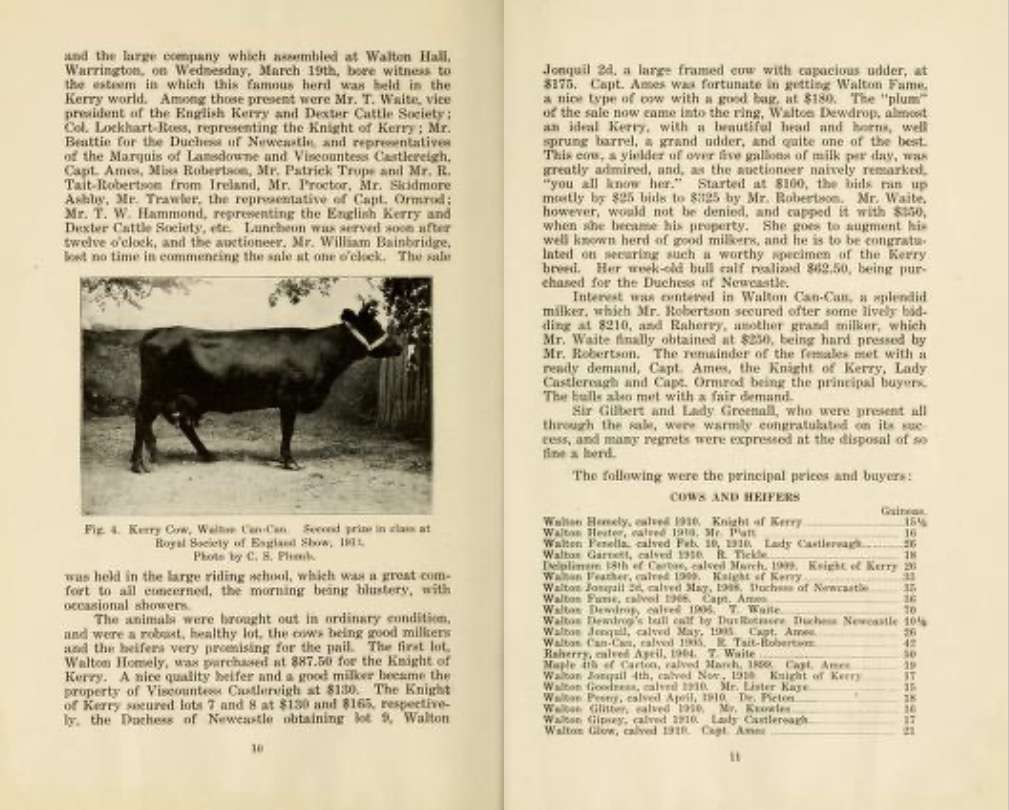
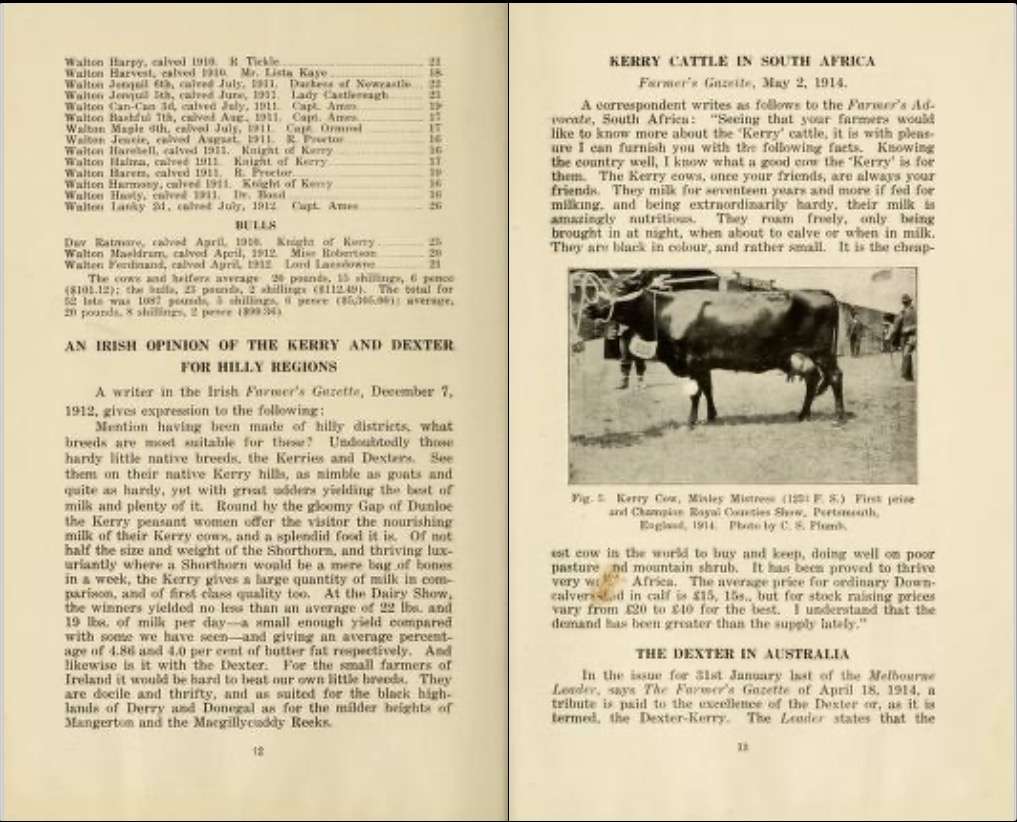
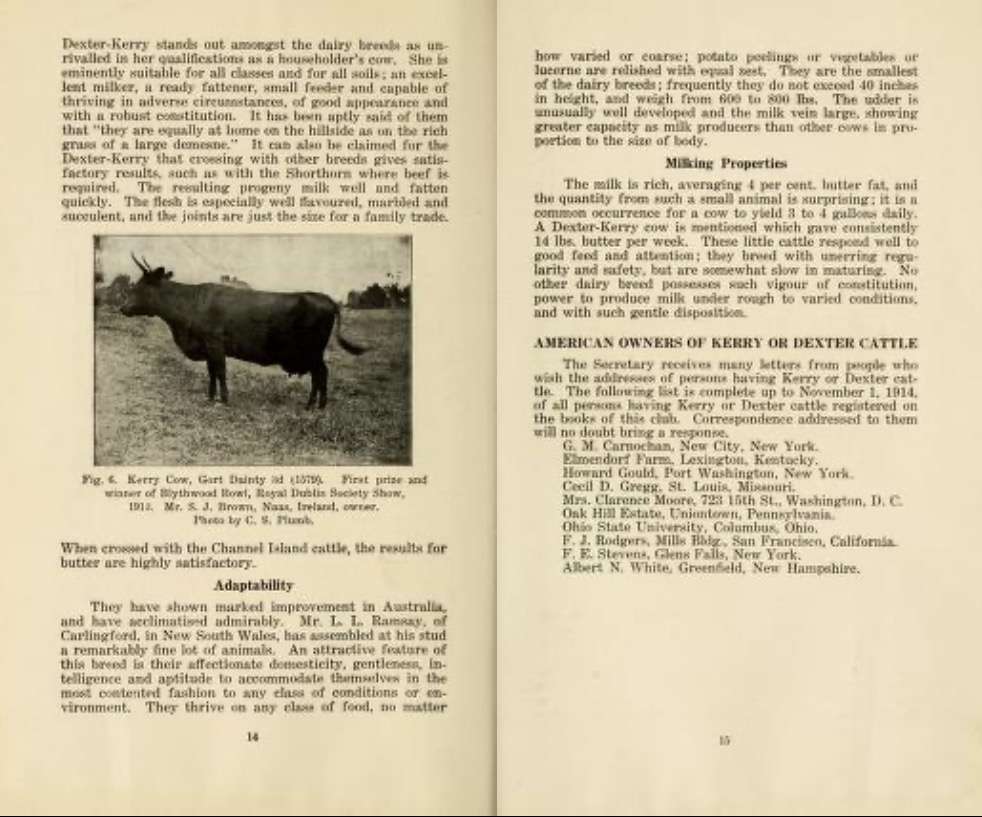
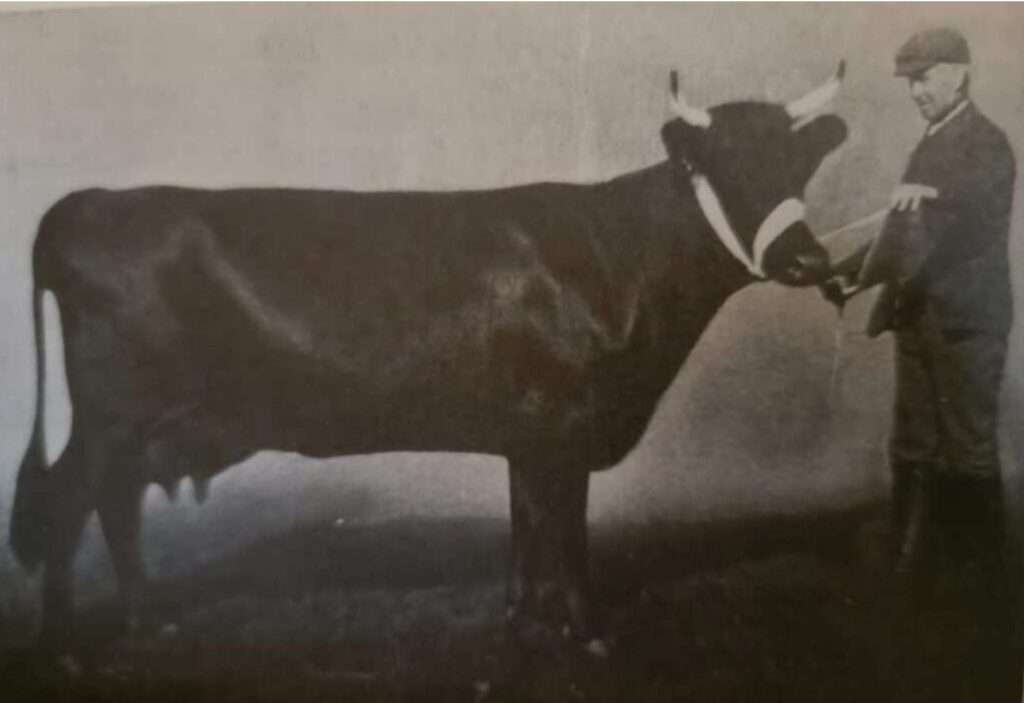
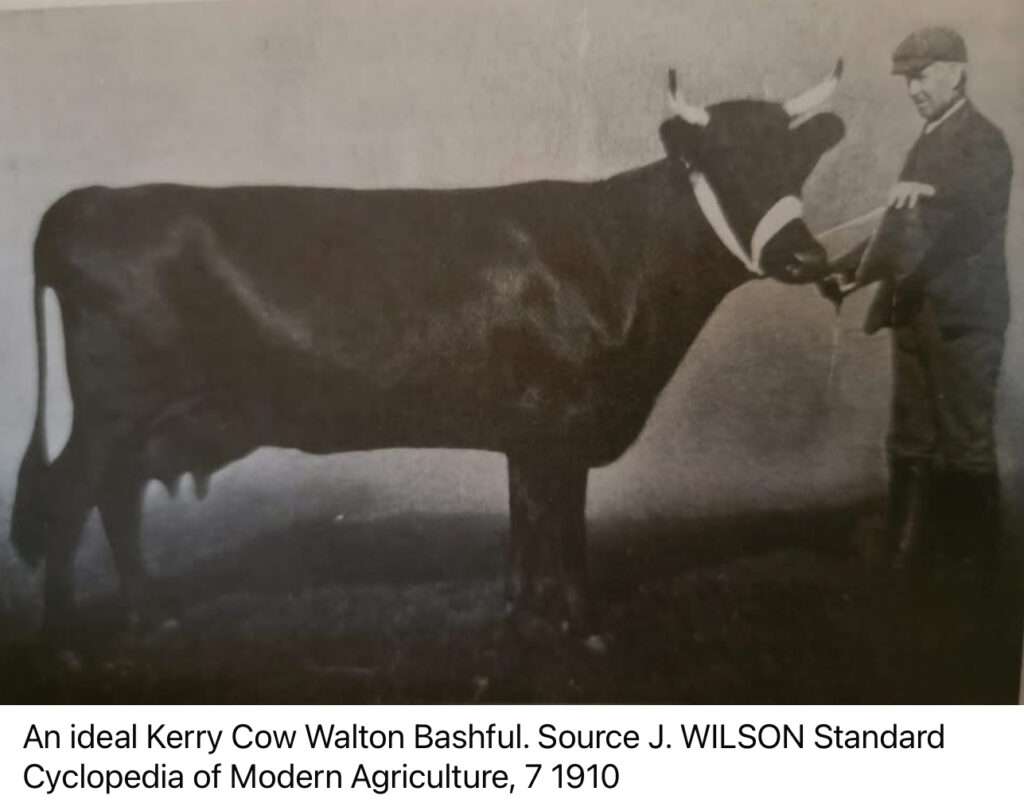
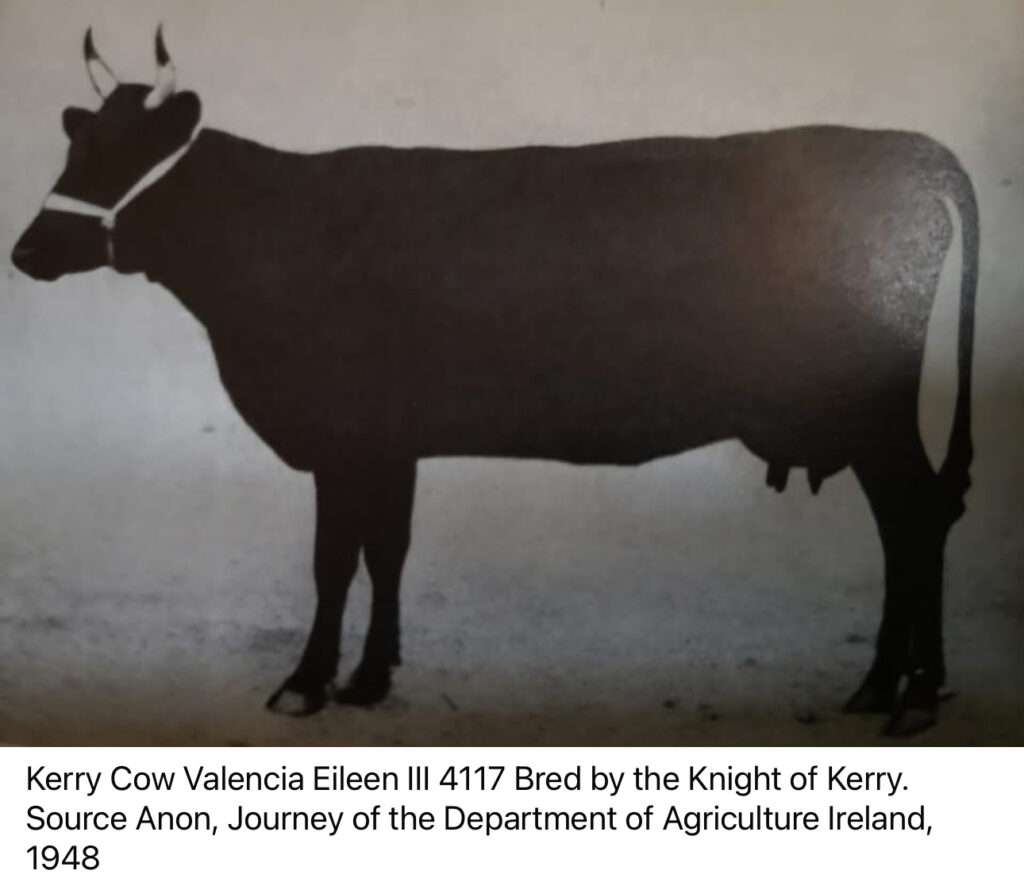
Now before major concern sets in, consider that this point system is based on an ideal cow. There will always be cows in a breed that are not ideal, but the goal is to breed for the ideal cow. If you look at the 3 pictures of Kerry cattle, I will share you will see that Walton Bashful is listed as ideal and her udder is the best of the three cows shown. I’d say if an udder is ideal enough for a Kerry it can likewise be good enough for a Dexter that uses the same 40 percent system. Of course, there is no problem with having an even better udder than this cow does! The next Kerry is Valencia Eileen III. You will immediately see that she could improve on her forward attachment, but she was a Kerry all the same. The final cow is Ard Caeina Una. You will see she has some attachment issues, and you will tell that her udder is hanging lower by her hocks. The placement of her teats are too close and awkward but they were still put to use, as you will see by reading her milk record. Her yield 14,562 lbs with her butterfat at 4.33 percent. Still a valuable Kerry cow. With Dexters we need to seek generational improvement in dairy traits as Dexter’s udder points are just important as Kerry cattle, but we also need to remember that improvement is generational and culling cows with good production and butterfat won’t instantly fix a problem. It could lead us to a breed full of cows with very tight nonproductive udders just because new people think a tight looking udder is an aesthetically pleasing udder.

The Dual Purpose Dexter And The Kerry History Read More »

Historical
For Many the Dexter breed may have a confusing Past.

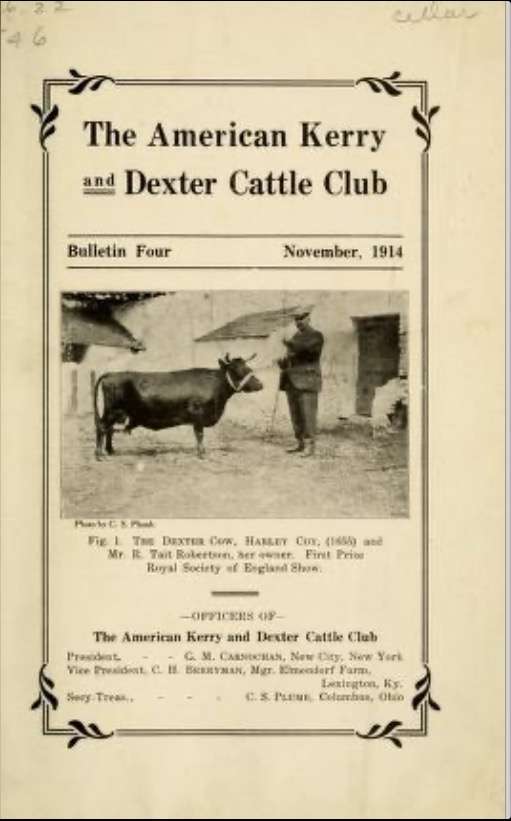
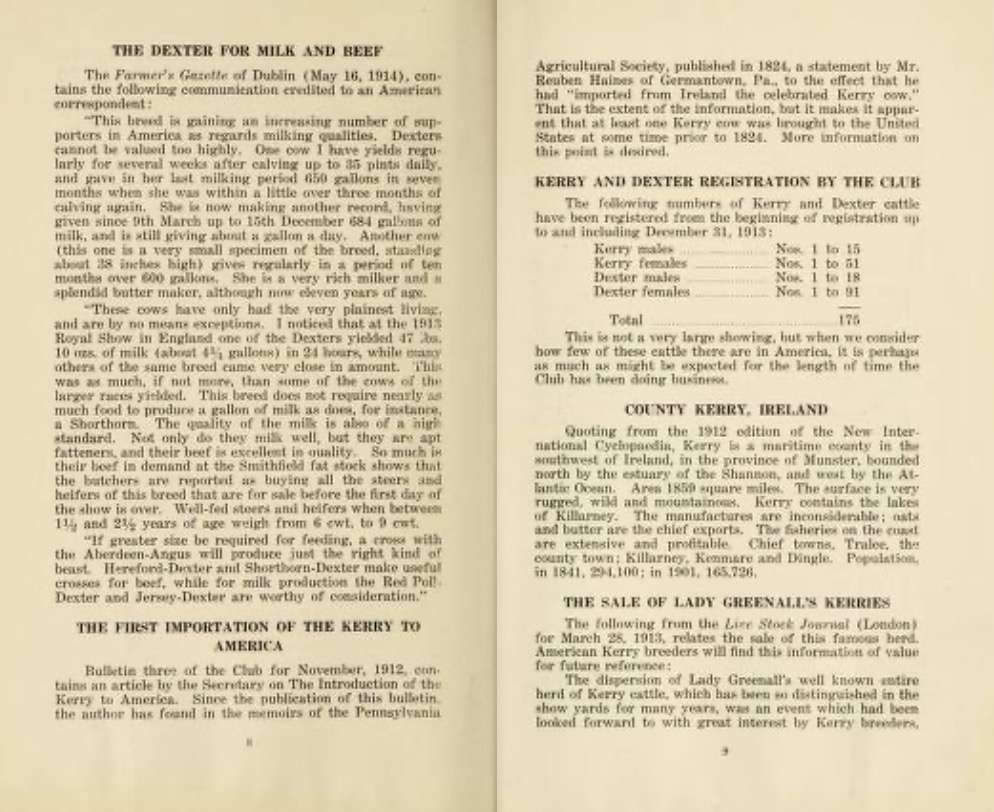
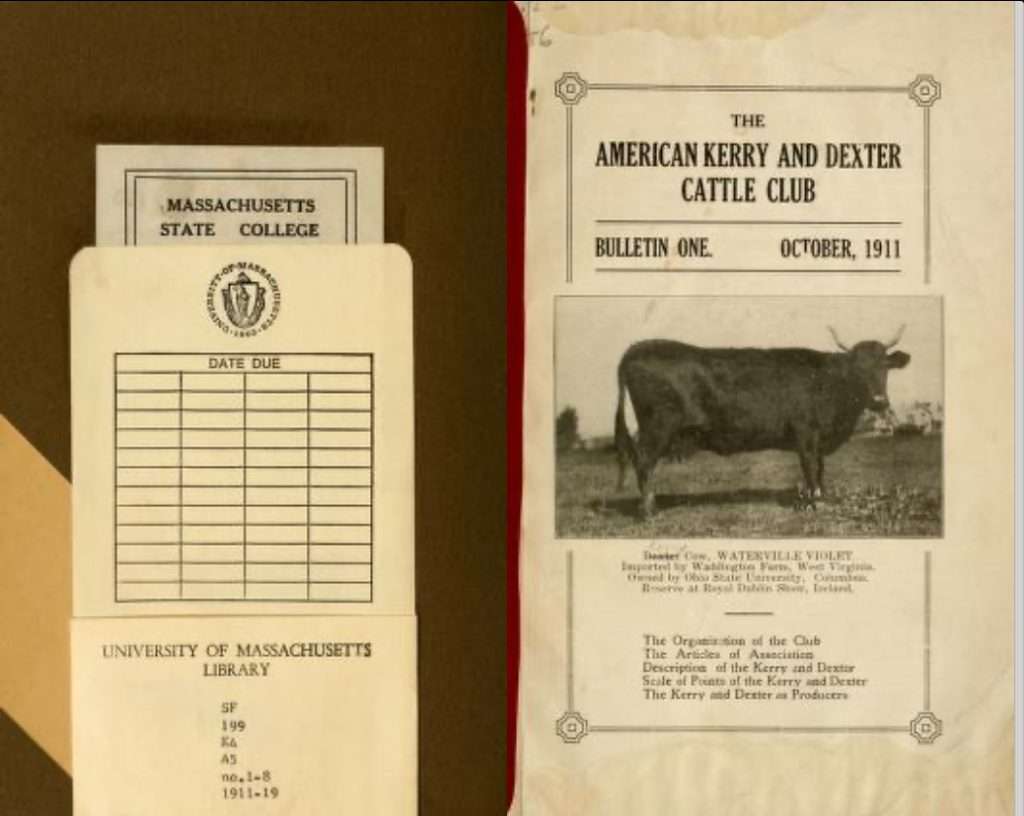
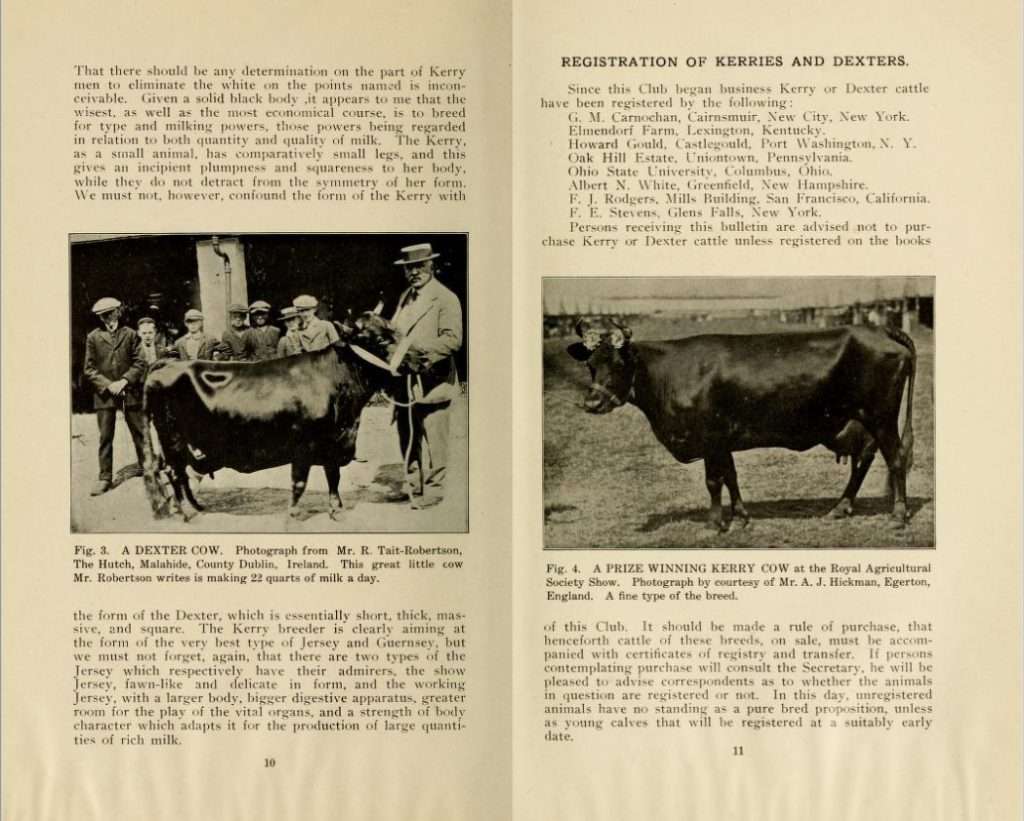
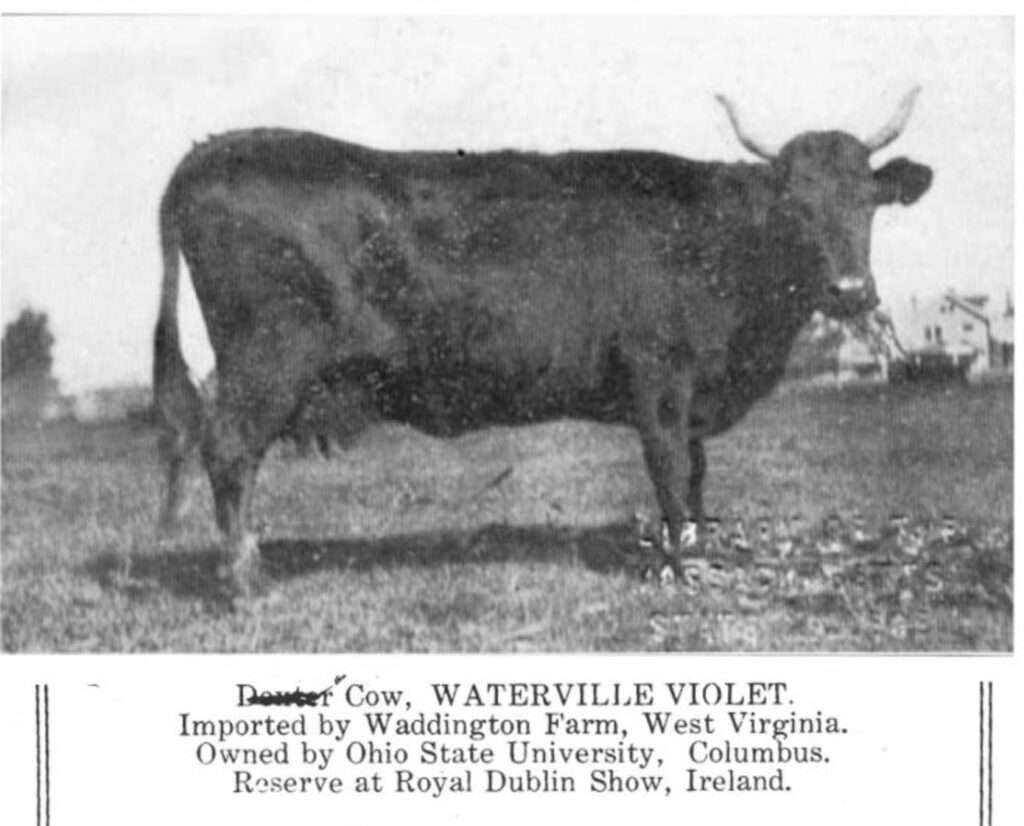
When you consider that people in the past were a bit confused about the difference between a Dexter (Dexter Kerry) and a Kerry you understand why it confuses people now. The fact that Dexters were called Dexter Kerry for many years after the two breeds were split from each other, continued to confuse people, thinking that Dexters were still no different than the Kerry breed. It’s interesting to note that in the Royal Dublin Society Kerry cattle were described as shorter than other cattle, so short that a full-grown cow was said to be the size of just a yearling (that was in 1890 when most breeds of cattle were smaller than they are now). As you can see Dexter cattle were not the only short ones as Kerry cattle have a long history of being smaller in stature too. If you have Dexters you can recognize that there is a strong similarity in the description of size among many of them. I have people come to my farm and confuse a full grown dehorned cow for a yearling of another breed. Once the two breeds were separated there immediately would have been a breeding divergence. Very detailed breed standards were already created that defined Dexters before 1911 at the time of the first printing of The American Kerry and Cattle Club Bulletin one. Following those standards for all the years prior would have helped pave the way for the breeds to be separated and defined as their own, but yet the confusion remained as can be seen in the below picture, because the breeds had so many similarities.

May be an image of text that says 'HE AMERICAN KERRY AND DEXTER CATTLE CLUB BULLETIN ONE. B, 1911 Donter Cow, WATERVILLE VIOLET. Imported by Waddington Farm, est Virginia. Owned by Ohio State University ty, Columbus. Reserve at Royal Dublin Show, Ireland. The Organization of the Club The Articles of Association Description of the Kerry and Dexter Scale Points of the Kerry and Dexter The Kerry and Dexter as Producers'

Waterville Violet The Kerry Cow

The cow in this photo above is from Bulletin One of The American Kerry and Dexter Cattle Club. It was printed in October 1911. This is the old name for the ADCA (American Dexter Cattle Association). The cow photographed is named Waterville Violet and in her description the title Dexter has been crossed out. Was this just a scribble that someone made at a later date randomly or was it something scratched out to add a correction after it was printed?

If you check the records in the ADCA you will find no Waterville Violet mentioned. If you look for a Kerry cow by the name of Waterville Violet you will turn up multiple citations of her as a Kerry cow. It looks like Violet was a Kerry heifer who calved in 1902 so we can get an idea that she was already quite mature by the time she was mentioned in the 1911 Bulletin. As much as things can be confusing it’s fair to say Dexter or not there are still purebred registered Dexters of today that look like Violet.

May be an image of text

James E. Butler of Waterville: Judge and Breeder

James E. Butler owned the Waterville herd. Mr. Butler owned and bred both Kerry Cattle and Dexters, as many of the original breeders of Dexters did because in selection the black more dairy type became Kerry and the cattle a bit thicker, black and red, possessing dual purpose traits became Dexters. Butler was also one of the judges at shows for evaluating Dexters for the entry into the herdbooks. He had a long history in the area. James Butler would have been an excellent choice for a judge due to his first-hand knowledge of Kerry and the native cattle of the land. Waterville is known as Coirean in Gaelic or “Little Cauldron”. It is a village in Kerry. The ring of Kerry passes through this town. It’s good to know that Dexters and Kerry cattle were being selected and registered by men with first-hand knowledge like James E. Butler of Waterville. I would suppose they were far more confident in the difference between a Dexter and Kerry when they were making their evaluations. I hope this has shed a little more light into the past of Dexter and even Kerry cattle.

For Many the Dexter breed may have a confusing Past. Read More »

Historical
SMALL CATTLE CARRY AWAY BIG HONORS

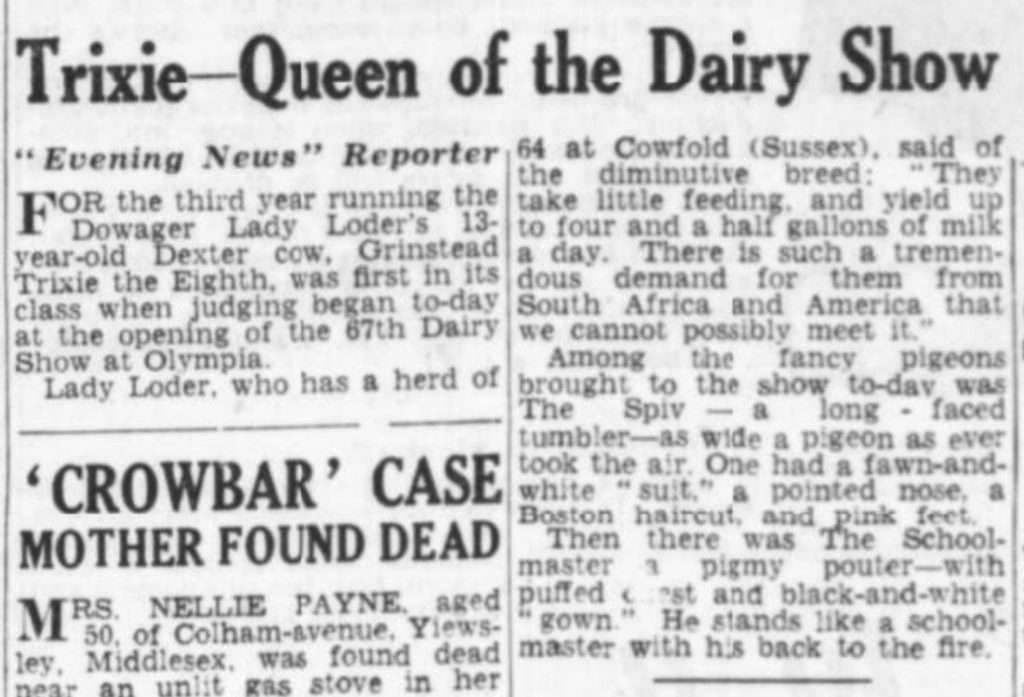
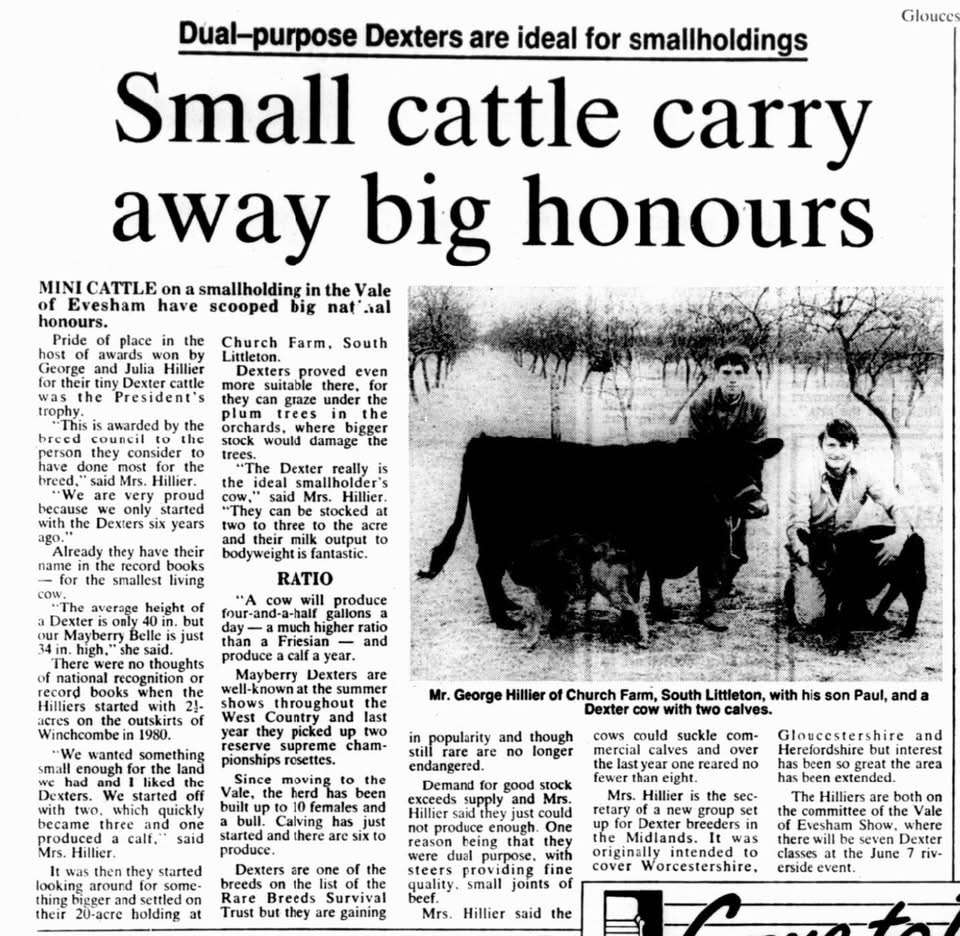
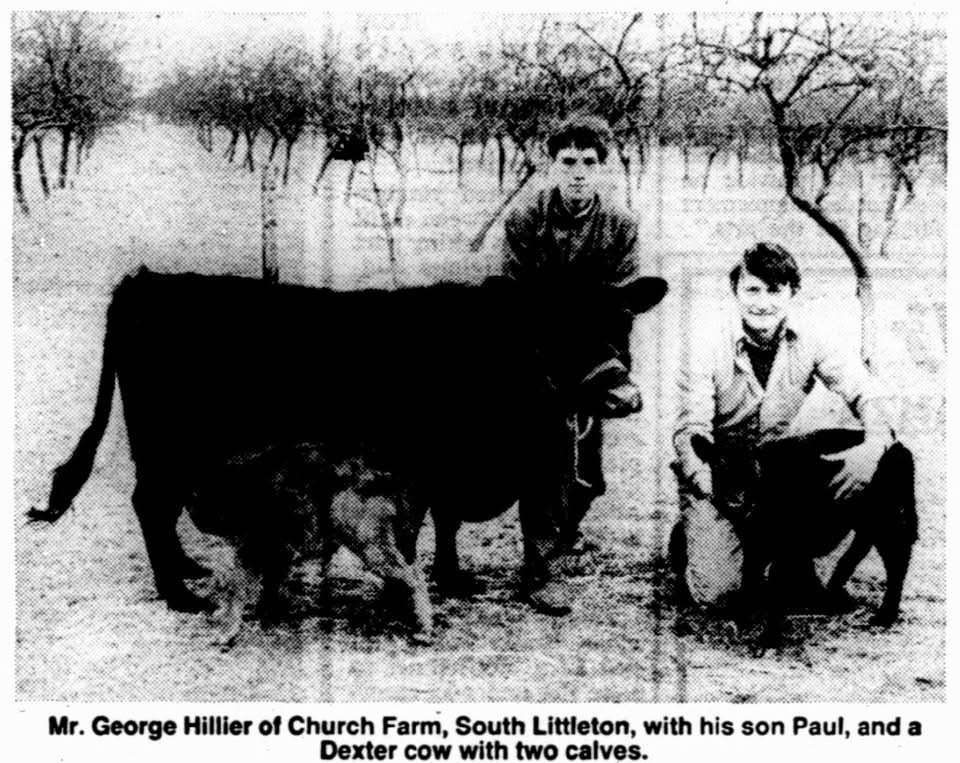
This article written in Gloucestershire on 27th March 1986 represents a long memorable chapter of the pages in History of Dexter cattle. The Dexter in this article is being noted as truly dual purposed, possessing fine quality small joints of beef, all the while being able to suckle two calves at once and raise 8 commercial calves in one year. This all seems an even more amazing feat when you consider one of the cows being spoke of was 34 inches. Thirty-four inches, how many Dexters today meet these amazing statistics? This article when I compared to other historical information sites a higher average milk production than some historical amounts in Dexters that I have seen at 4.5 gallons per day. This figure is not rare by any means but not necessarily a given rate with some Dexters producing a bit less.
Dexters are being stated as being small and valuable for grazing under plum trees so as not to damage the trees. At the time of this article, Dexters are listed on the Rare Breed Survival Trust, but are no longer being listed as endangered as they once were prior to the articles printing. When we consider today with so many pedigree Dexters in great numbers it is hard for many to believe that Dexetrs were once so rare. But yet how many rare Jems are left like the Dexters being mentioned from these days, just back in 1986? Perhaps the Dexter of 1986 is rarer than we think.

SMALL CATTLE CARRY AWAY BIG HONORS Read More »

Historical
History helps track changes in a herd over a period of years.

When people ask me why I think the history of Dexter Cattle is important this is just one great reason that I may give. If you see changes over years happening during the foundational years you can see how breeders were interpreting improvement during a time when people were focusing on breed selection to adhere to a standard that was the norm for the day. You can also see changes that happened over the years and genetics that were diminished in frequency or increased in frequency.
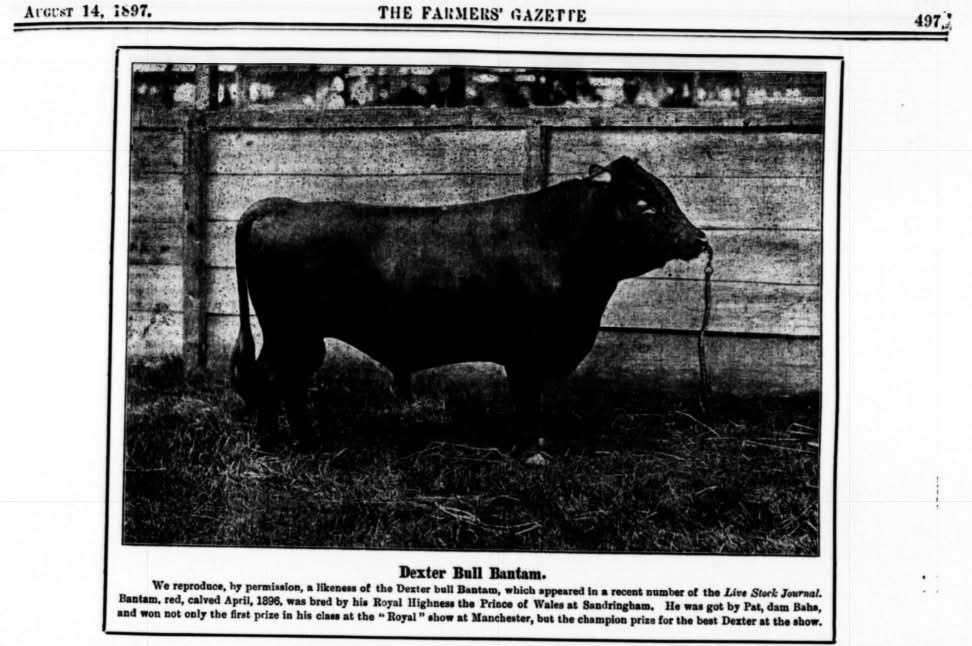
Dexter cattle, though many were black in the early days compared to today this bull Bantam in the top photo was red. During the foundational years it was much more common to find a red Dexter than it was in America prior to people intentionally selecting to increase or preserve red Dexters. Now today red is so common that if someone did not know the History of the breed, they may think it was the predominate color from the beginning.

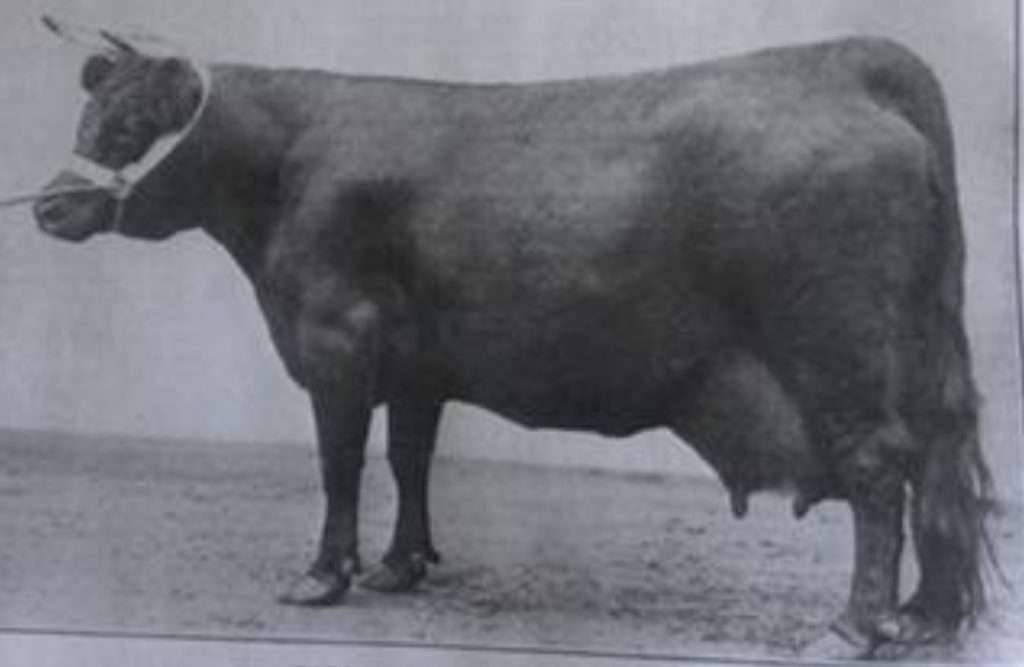
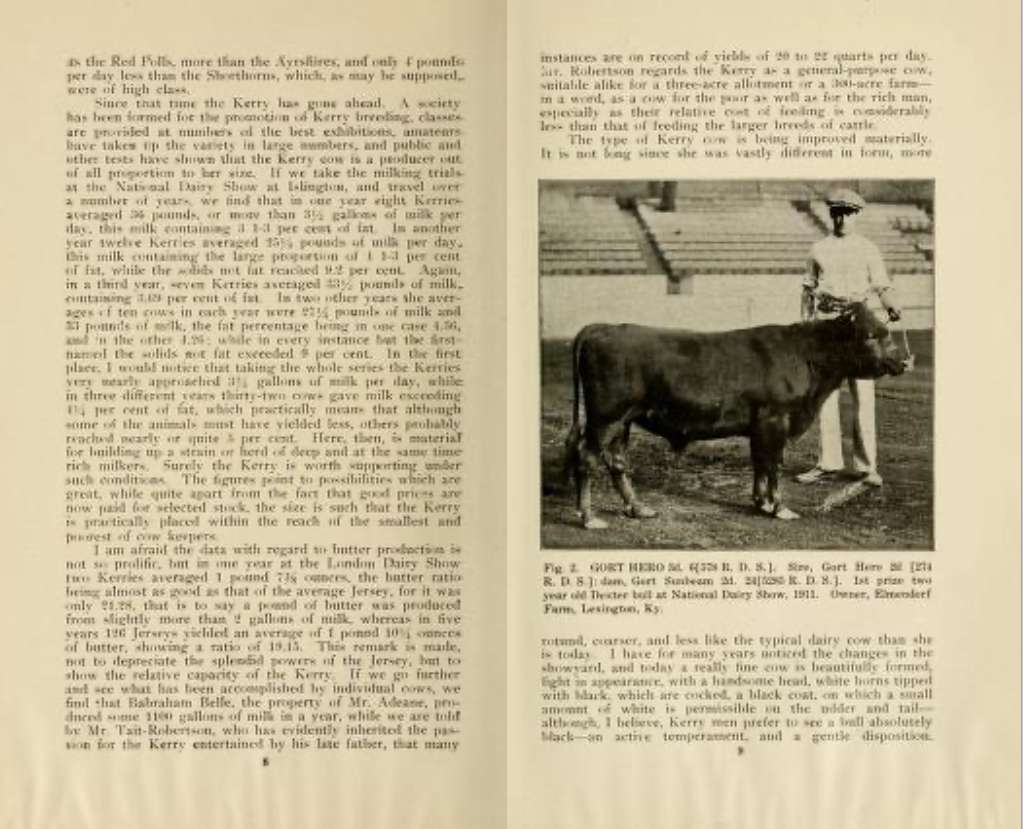
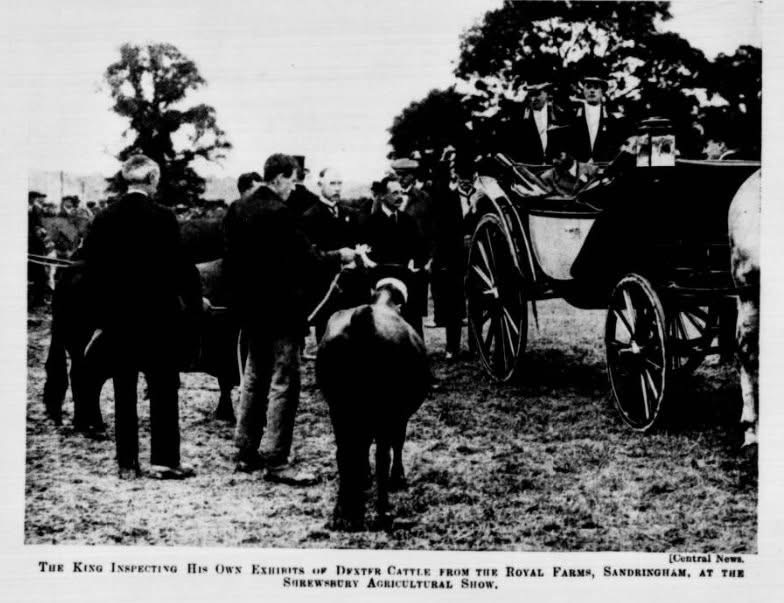
It’s an interesting point to note; this bull Bantam was bred by the Prince of Wales at Sandringham in 1896. Bantam is what a Champion prize Dexter looked like in 1897. This location is situated in Sandringham, Norfolk, England. Dexters had a very early start of popularity in England being bred by some very noteworthy people. In 1862 Sandringham Estate was under 8,000 acres were as today the acreage is closer to 20,000 acres. If you look at the second picture you will see that in 1914 Dexters were still being breed at Sandringham by the King. The first bull Bantam has a good broad form for a Dexter of his day but when you compare him to the form of the Dexter bull that the King had in the photograph in 1914 you will see he has a broad back end as well as his front. It would be really nice to see a clearer photo of the second bull but we can see enough to consider some of his conformation. Improvements with each generation are very important and should always be improved based upon the breed standard of a breed, because without a standard there is no direction for improvement. While improving on beef traits one must always remember to improve dairy traits equally too, so as not to diminish dairy traits in favor of beef. A beautiful beefy bull is of little value to a dual-purpose breed if he only throws daughters that lack quality dairy traits. When both traits are in harmony you get a great dual-purpose Dexter.

History helps track changes in a herd over a period of years. Read More »

Historical
Dexter Beef Podcast – Taste the Difference

A Deep Dive Podcast, brought to you by Irish Dexter Cattlemen, on topics of interest to all farmers and ranchers. Subscribe to the free, monthly Irish Dexter Cattlemen Tips & Tricks Guide to get early access.

Brought to you by these Breeders, Affiliates, & Sponsors

Crest Point Farms Online

Since 2024
6 ads

Stay’N Put Farm Online

Since 2024
6 ads

Ashrons Acres

Since 2024
0 ads

Stumpys Acres

Since 2024
1 ad

Maple Creek Dexters

Since 2024
0 ads

Pipe Dreams Farm Butchery

Since 2025
2 ads

Hayburner Acres

Since 2025
1 ad

Grandma's Dexter Farm

Since 2025
0 ads

DeVine Farms

Since 2025
0 ads

Dexter Beef Podcast – Taste the Difference Read More »

Podcasts

The Dexter Dwarf Podcast. How to Breed Responsibly

A Deep Dive Podcast, brought to you by Irish Dexter Cattlemen, on topics of interest to all farmers and ranchers. Subscribe to the free, monthly Irish Dexter Cattlemen Tips & Tricks Guide to get early access.

Brought to you by these Breeders, Affiliates, & Sponsors

Crest Point Farms Online

Since 2024
6 ads

Stay’N Put Farm Online

Since 2024
6 ads

Ashrons Acres

Since 2024
0 ads

Stumpys Acres

Since 2024
1 ad

Maple Creek Dexters

Since 2024
0 ads

Pipe Dreams Farm Butchery

Since 2025
2 ads

Hayburner Acres

Since 2025
1 ad

Grandma's Dexter Farm

Since 2025
0 ads

DeVine Farms

Since 2025
0 ads

The Dexter Dwarf Podcast. How to Breed Responsibly Read More »

Podcasts

Looking for Sustainability Podcast – Consider the Irish Dexter History

A Deep Dive Podcast, brought to you by Irish Dexter Cattlemen, on topics of interest to all farmers and ranchers. Subscribe to the free, monthly Irish Dexter Cattlemen Tips & Tricks Guide to get early access.

Brought to you by these Breeders, Affiliates, & Sponsors

Crest Point Farms Online

Since 2024
6 ads

Stay’N Put Farm Online

Since 2024
6 ads

Ashrons Acres

Since 2024
0 ads

Stumpys Acres

Since 2024
1 ad

Maple Creek Dexters

Since 2024
0 ads

Pipe Dreams Farm Butchery

Since 2025
2 ads

Hayburner Acres

Since 2025
1 ad

Grandma's Dexter Farm

Since 2025
0 ads

DeVine Farms

Since 2025
0 ads

Looking for Sustainability Podcast – Consider the Irish Dexter History Read More »

Podcasts

Mini Moo Magic: The Fascinating Story of Miniature Cows

Breeds like Miniature Highlands, Miniature Herefords, and Dexters didn’t just pop up overnight. Their histories are as varied as their appearances, with some, like the Dexter, dating back centuries, and others, like the Mini Hereford, emerging through decades of selective breeding. As land prices rise and the demand for sustainable, manageable livestock grows, miniature cattle have carved out a meaningful niche in the farming world.

Mini Moo Magic: The Fascinating Story of Miniature Cows Read More »

Homesteading

Chondrodysplasia

Article I

Fact or Fiction

This is the first of our articles on chondrodysplasia in Dexters. Also called chondro-carriers, shorties, or dwarfs. these terms refer to the same cattle, and will be interspersed throughout the article. Keep in mind, they all mean cattle who are carriers of the dwarf gene.

Per Miriam Webster chondro means cartilage & dysplasia is an abnormal growth or development.
It’s a personal decision to breed chondro carrier Dexters. Of course, it’s your decision what to breed on your farm. But, let’s sort out some of the facts on these endearing little cattle.
Some long time breeders have told me that they believe the dwarf Dexters played an instrumental part in the formation of the breed, as the non-chondro, longer legged Dexters got registered in with the Kerry cattle. They also believe that there are two body types in the dwarves. That will be discussed in a later article.
Just a few of the traits and statements that those who own and experience the pleasures of owning a dwarf believe.

  • “Chondros are the breed. If we lose them we lose the breed.”
  • “Maximum beef on minimum forage.”
  • Personalities are one of a kind
  • Great mothers
  • High milk production
  • Great for first time cattle owners
  • Of course, breed responsibly. Never breed two carriers together and you will never get a bulldog calf. (If you did, the chance is only 25%, but why risk it?)

Those that I see exaggerating & spreading the hate for chondro carriers are using human graphics from the internet and applying their own labels. I have found no professional veterinary opinion stating they should be eliminated. Of course, none of those who love them would want or allow them to suffer. Many Dexters I know of are living into their teens. How many commercial breeds do you see living that long?

Some dwarfs will get osteoarthritis later in life. So will some non-chondros. A lot depends on the bloodlines, the terrain they live on and the care they receive. This also applies to the longer legged non-chondros. Humans also tend to get osteoarthritis later in life. They also can get forms of dwarfism. We don’t eradicate them. It can be managed, IF it happens.

So, please…. educate yourself on this genetic mutation, before you make a judgement.

The following is a scientific explanation from UC Davis. We choose the BD1 test, when we get any calves from our carriers. The BD2 test is for a specific line from a specific bull.

Chondrodysplasia Read More »

General Herd Health
Enable Notifications OK No thanks