I really enjoyed listening to this Chute Side podcast with Dr. Ryan Rathmann on the definitions and nuances of line breeding vs. inbreeding. As a beef producer he favors cross breeding, but I got a lot of good take-aways for my registered/purebred Dexter breeding program. He talks about the benefits line breeding can add to your herd, such as uniformity in offspring. He also talks about challenges and down sides to line breeding, and how to avoid.
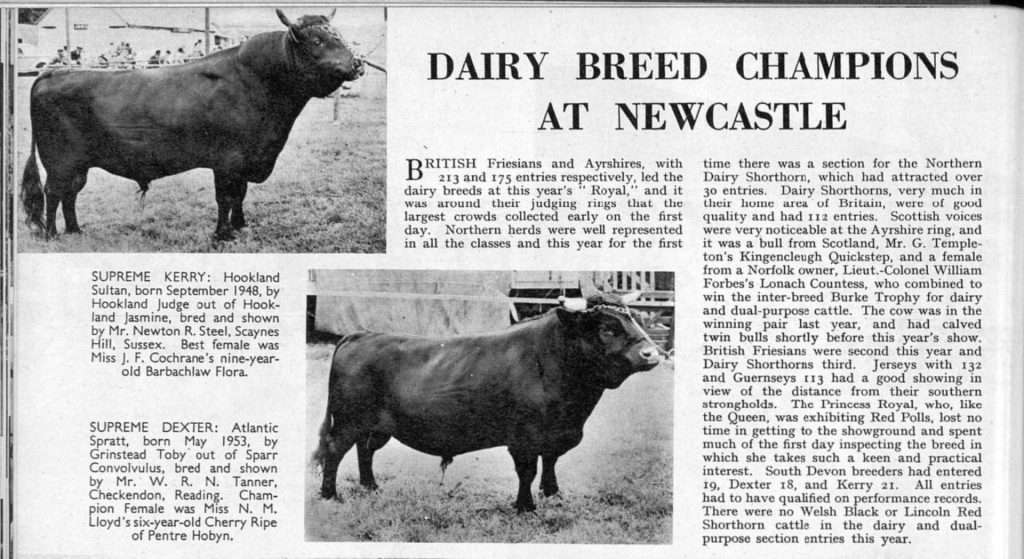
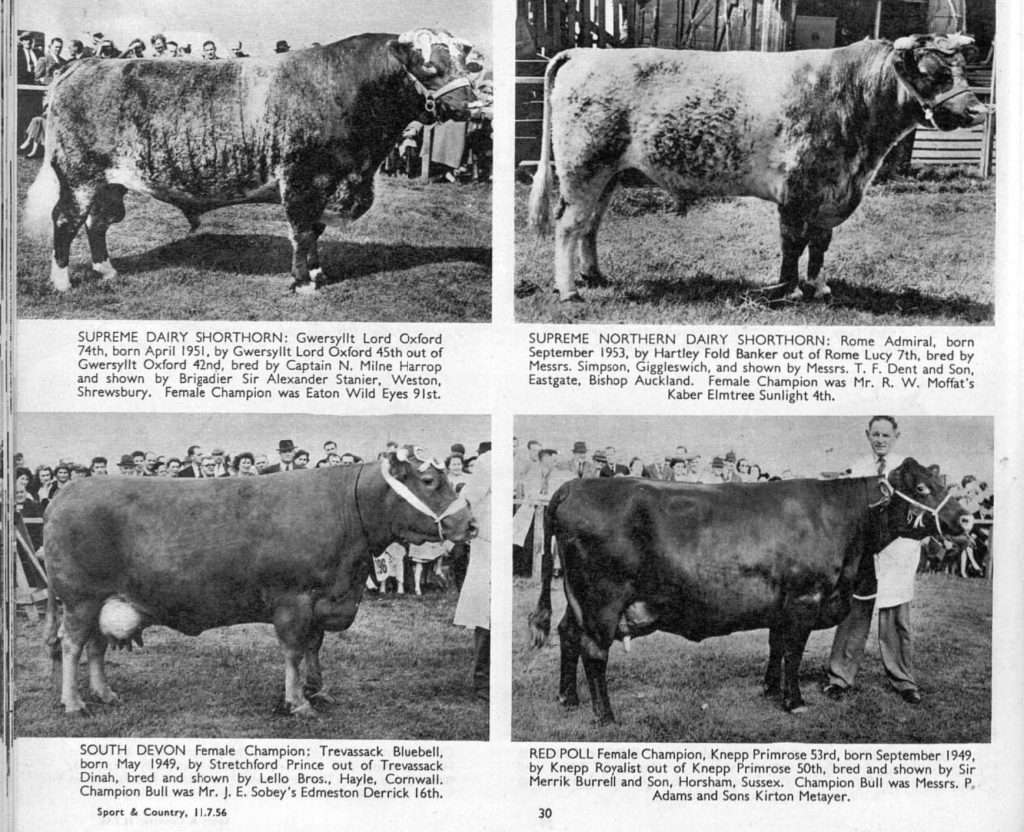
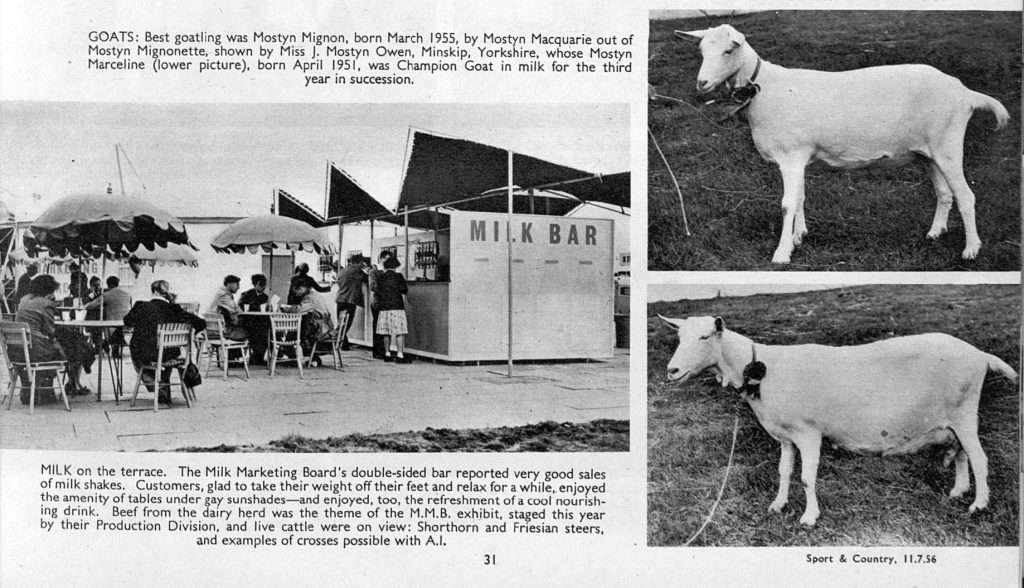
Atlantic Spratt was Shown with these Dairy/ Dual-purpose Breeds in 1956!
All Breeds entering the show had to have qualified performace records to compete.
Dexter Cattle put a High Emphasis on Dairy Traits
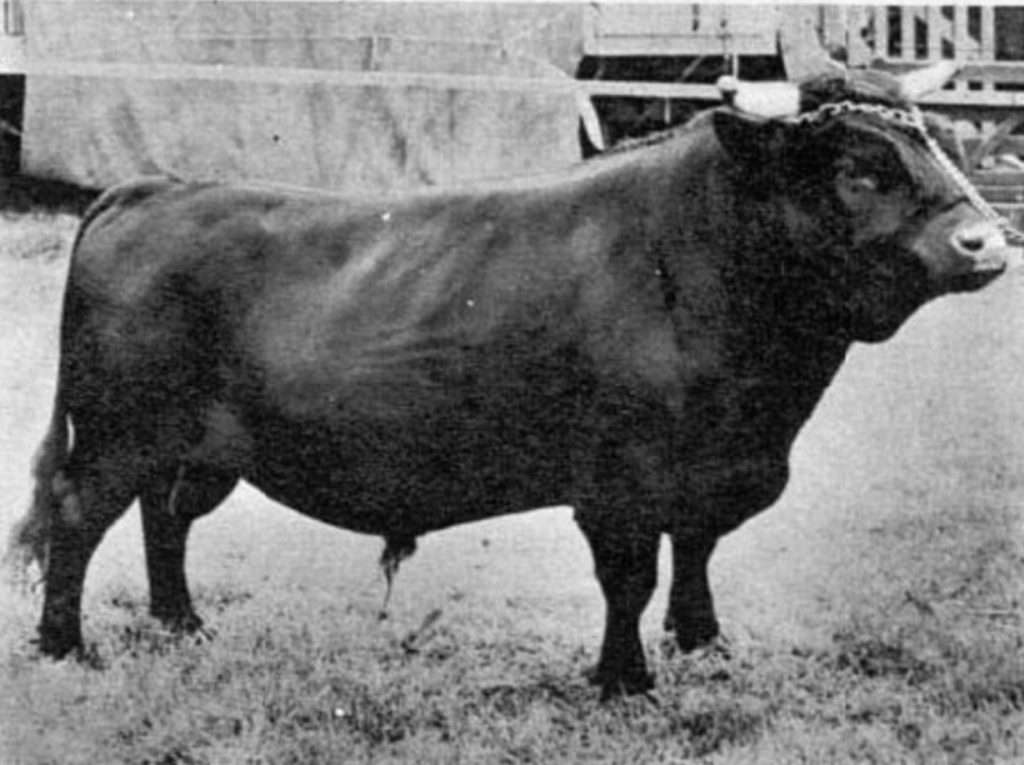
Dexter Cattle put a high emphasis on dairy traits and beef traits equally. Thoughtful breeders were honing these Irish cattle to excel in both capacities. One of the ways they were doing this, was by selecting bulls from dams with known milk records. Pedigree information is interesting to reflect on when you see repeated names in pedigrees and photos to document what genes might have been passed on from their ancestors. Looking at a bull alone will never tell you anything deeper about his genetics, than what you can evaluate with your eye. A nice-looking bull tells you nothing about what type of milk production his dam might of possessed. Thankfully with photos we can look back on bulls like Atlantic Spratt and see that he had a lot to offer besides just good looks. The fact that Spratt was presented at the show tells us that his dam was qualified by performance records, because it was a requirement to enter the show. Though none of the cows are perfect and much improvements can still be had in generations to come, evaluating them and their records goes to show that they were cows that could surely fill the pail.
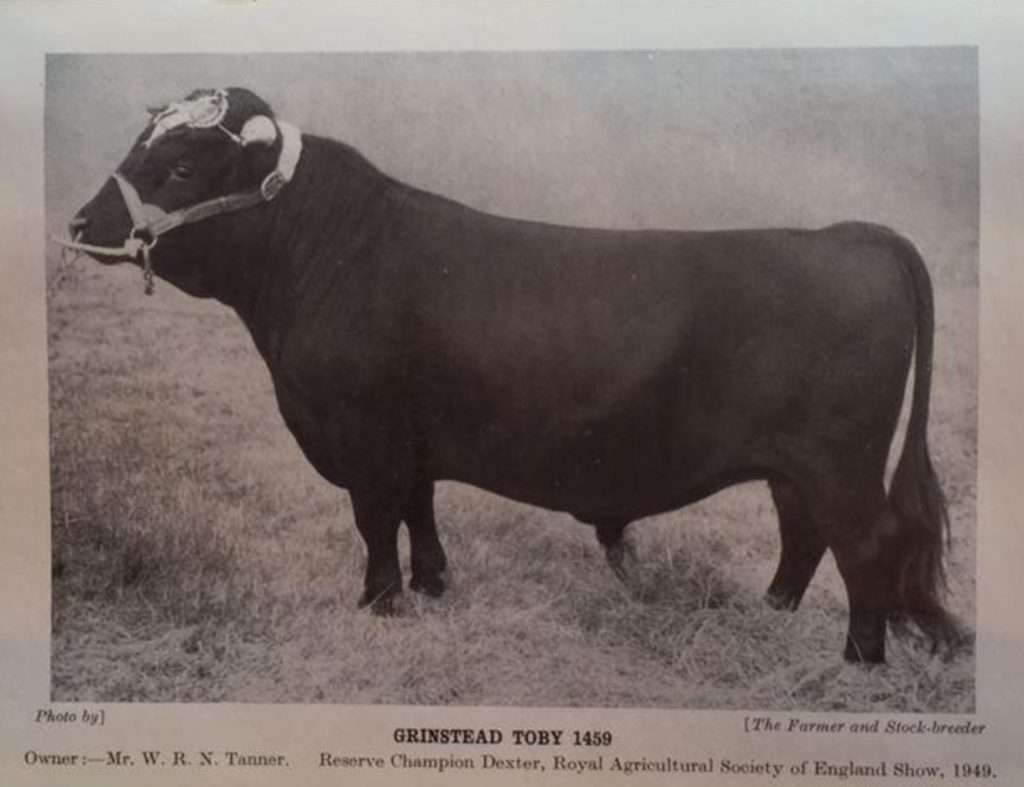
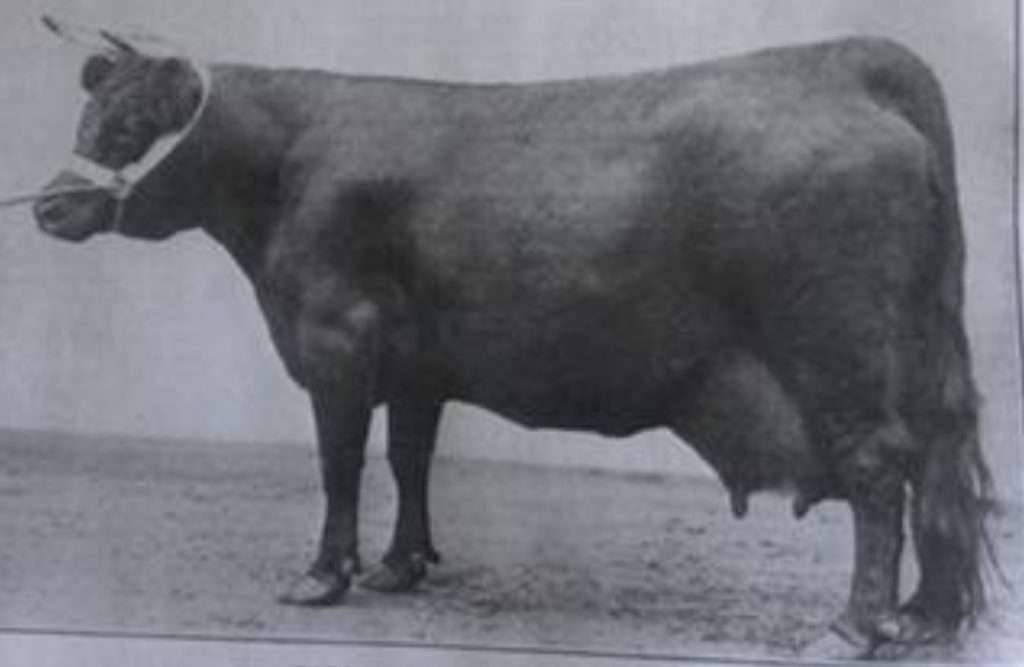
Grinstead Toby Sire of Atlantic Spratt
From this photo we can see where Atlantic Spratt got some of his good looks from. His sire was Grinstead Toby, a Reserve Champion Dexter, but to dig deeper I will investigate some of the females in Toby’s pedigree.
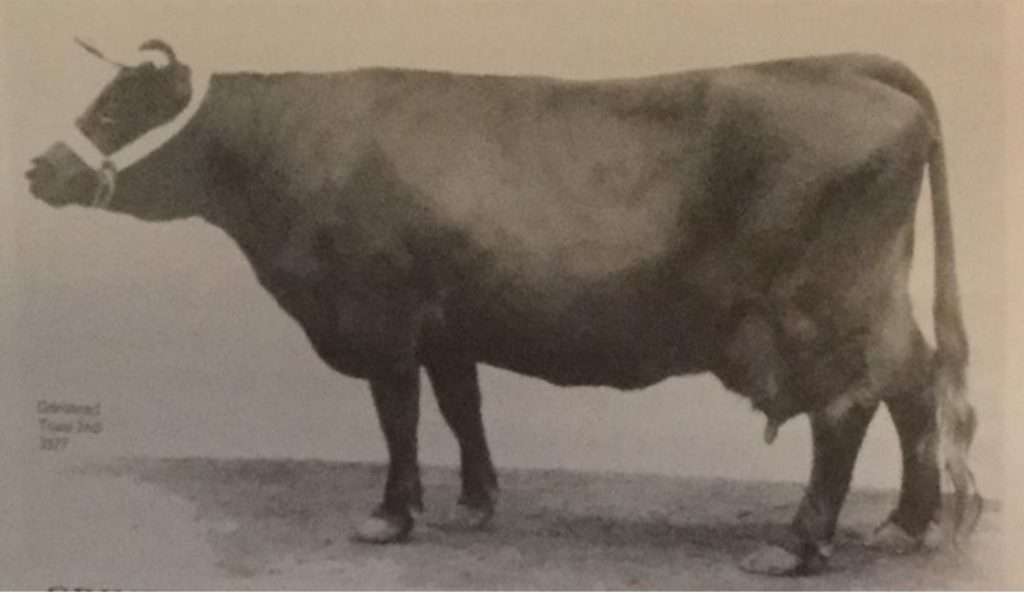
Grinstead Trixie the 8th From a Long Line of Doccumented Milkers
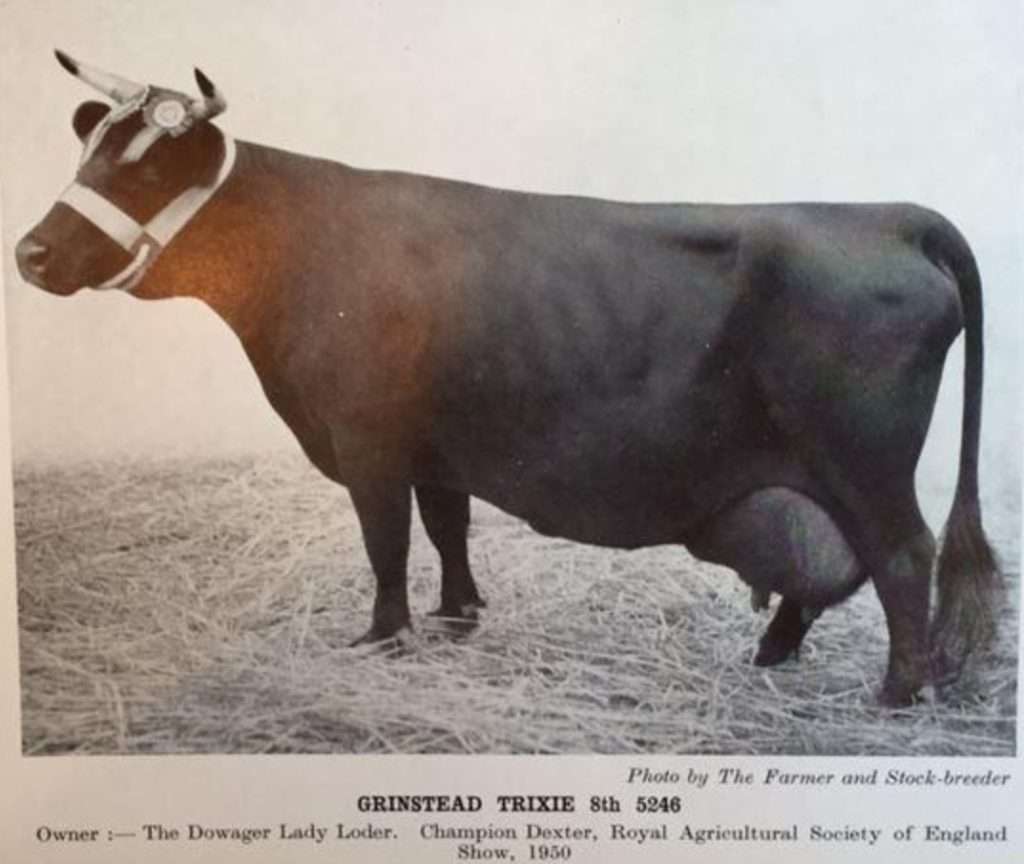
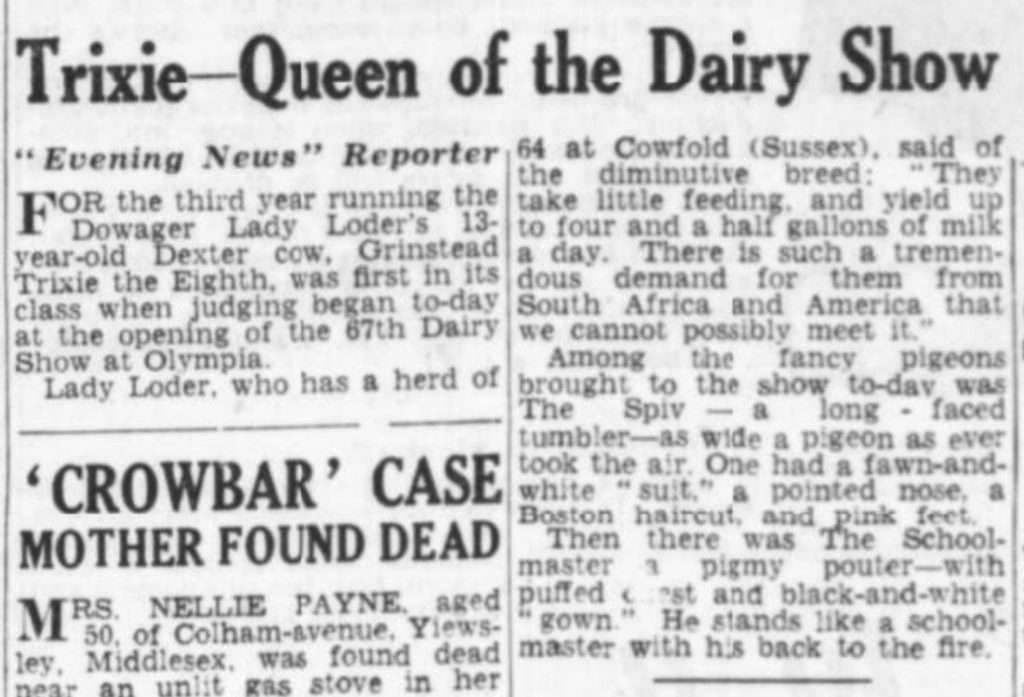
Grinstead Trixie 8th Queen of the Dairy Show
This is Grinstead Trixie the 8th. Lady Loder the breeder, was known for only selecting sires out of cows with proven milking records. Though this cow may seem like she has less than perfect attachment at 10 years old(the age in photo), she looks to have a good amount of volume. You will see in the article above, Trixie is “Queen of the Dairy Show” in October 1953 (then 13 years old and winning first prize for 3 running years). She was a top Dexter cow out of cows that were milking at 4 and a half gallons of milk a day. Lady Loder was known to cull hard and keep to a high standard. Trixie the 8th could have had improved udder attachment, but she definitely filled her part as a solid milk cow. Now I shall dig a bit further back in history to give the reader a greater understanding. Let us next consider Grinstead Trixie the second and likewise the original Trixie herself.
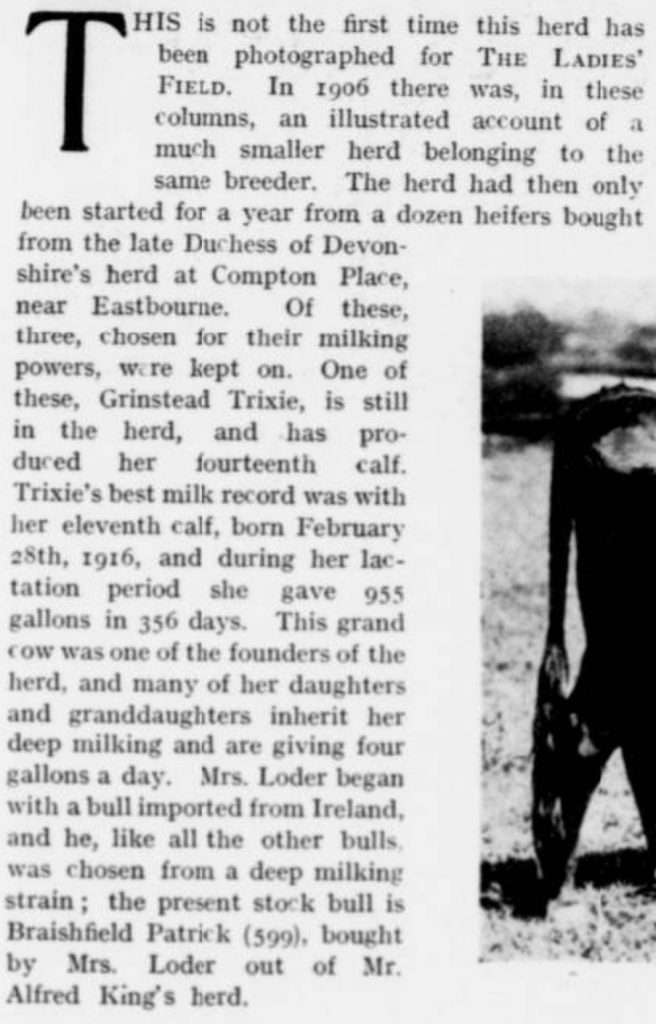
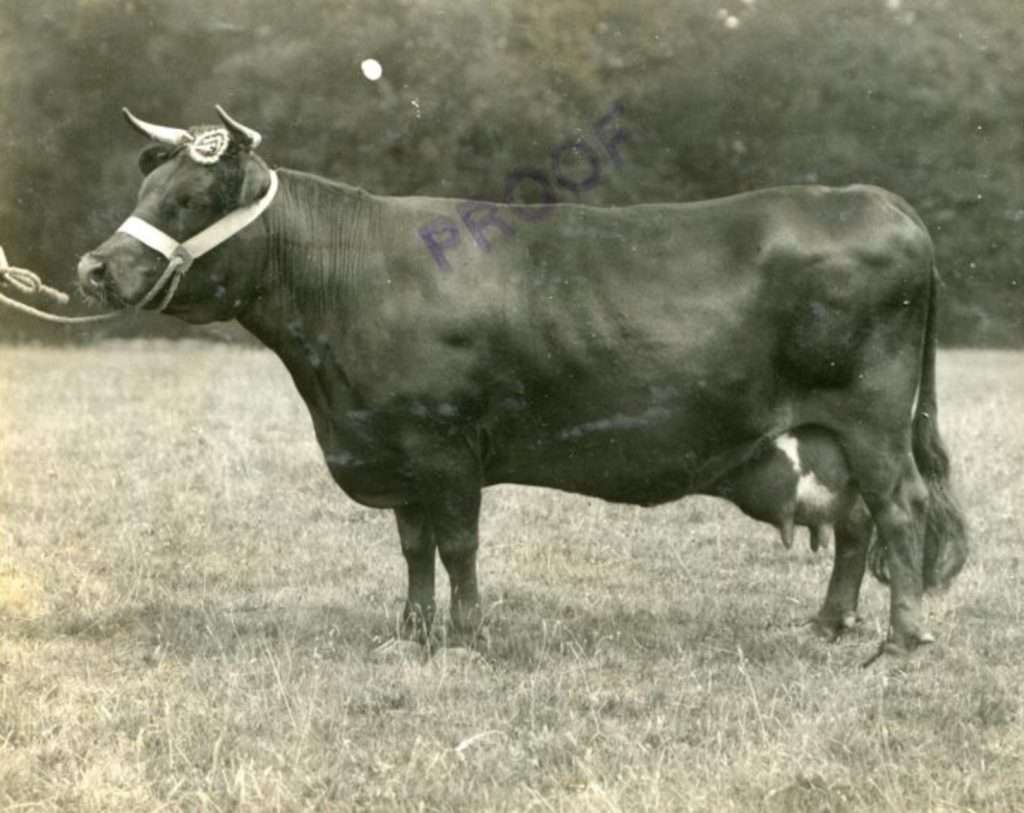
Grinstead Trixie the 2nd
The Original Trixie of 1904 Foundation to Grinstead Herd
Just to give a very interesting historical compass to the full impact of the Grinstead Trixie line, let us delve deep into history, back to November 1919 when the original Trixie was being written about. The original Trixie was one of an original 12 cows that were obtained by Lady Lodger. Of those original cows she only kept three, Trixie being one of three top cows. Those 3 cows were chosen for their milking powers. Trixie was born in 1904 and was a foundation cow for the Royal Dublin Society. By 1919 she had produced her 14th calf, proving to be productive and already fairly long lived. What an exceptional cow to start your herd from. This cow was the foundation of Lady Loders Grinstead herd and imprinted her name on the herd for generations to come. Lady Loder in other statements had complained about some of the low quality Dexters that were being sold. Lady Loder may not have started with the best stock, but she culled down to just three cows to build her herd from and only used proven bulls that possessed dairy traits worth passing on to their offspring. She had a focused eye that considered the breed standard when evaluating and considering her Dexters by. Her legacy is one worth being remembered and replicated, showing you do not need much to start out with, but rather have a quest for quality and be willing to cull to obtain it.
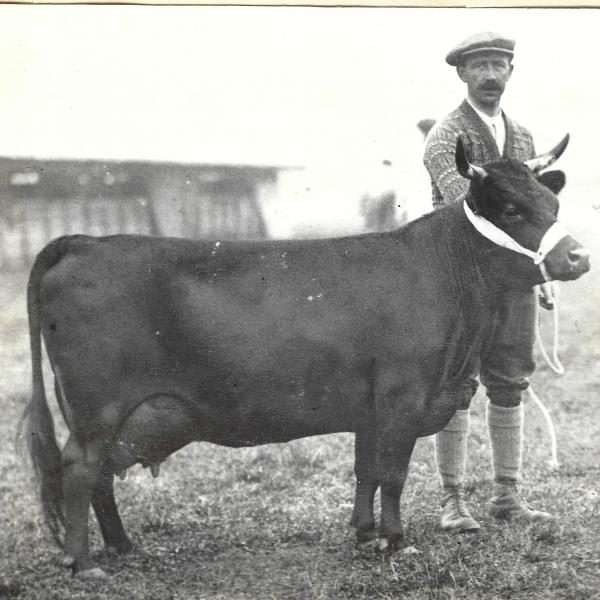
Murrell Peach Blossom: Another cow in Spratts line
Murrel Peach Blossom who was likewise related to Atlantic Spratt was a challenge cup winner.
Grinstead Hawk 5th: Another cow in Spratts line
Grinstead Hawk obtained a register of merit for milk production in 1940, won 1st in the milking trails and won the reserve Nutt challenge cup and many more competitions. Though her flat feet and titlted teat may jump out as not quite perfect, there is much to be appriciated in a cow with solid milk production.
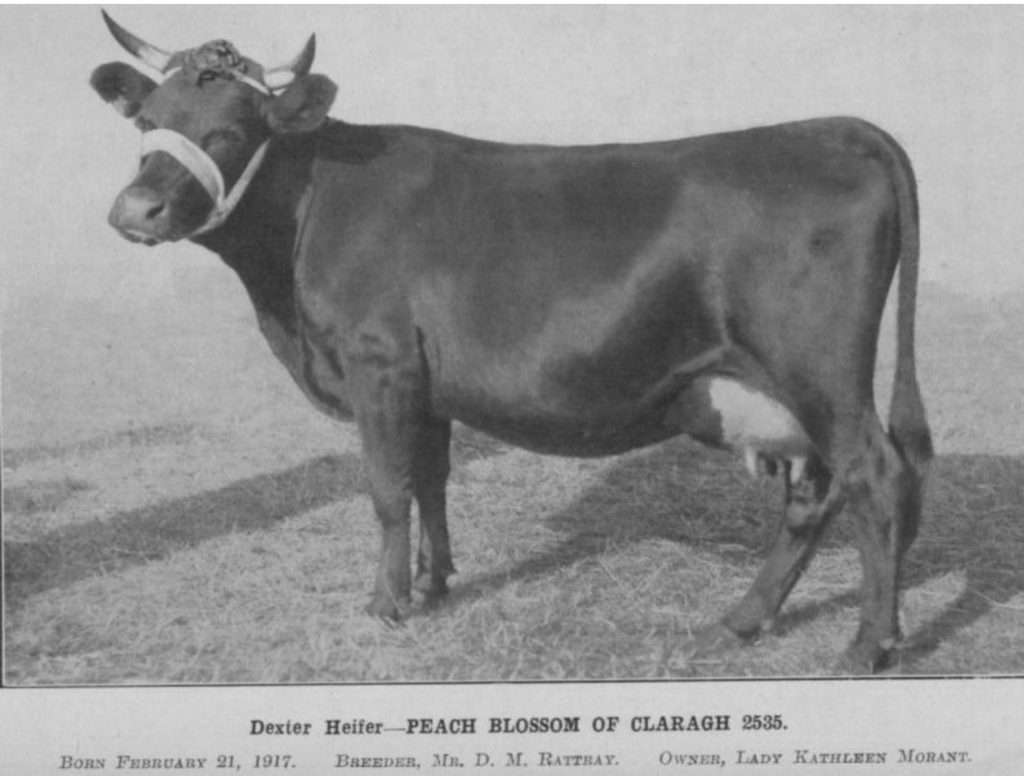
Peach Blossom of Claragh : A heifer in Spratts Line
Peach Blossom of Claragh won 2nd place for a cow in milk while competing against mature cows.
In conclusion to this article, I will leave you with this cow Grinstead Watercress, bred by Lady Loder though not directedly related to Spratt. This cow is graceful and well balanced a testament to her breeding. Some may say that she is not deep enough, but for a cow that I believe to be non chondro born in 1920 I’d say she is quite beautiful indeed. I hope this article inspires people, no matter the size of your herd or no matter how long you have been breeding that their is always room for improvement, no matter the current genetics in your herd. In order to truely preserve the wonderful Dexter traits of yesterday we must also be willing to impove our cattle of today.
After a small sampling from one herd, it appears that the Dexter breed does have this highly inheritable genetic marker. It appears that the marker is found in those cows with the most milk production. This makes total sense, as they refer to the genetic marker as found in most easy keeping cattle.
Unfortunately no bulls were part of the initial testing and semen is not able to be tested for this marker.
So, now that we know the marker is there for the Dexter breed and that it seems to be in cows with most milk…we need more folks to test. It has been suggested that it maybe easy to get a few drops at ear tagging time and a simple tail stick for the older ones.
If you would like more information on how to get your herd tested, please reach out to the Irish Dexter Cattlemen and we will help you get started. It requires only a few drops of blood on a Tenet card sampler. The card is then sent of for sequencing.
It takes 5 days to get to the lab and 10-30 days for the sequencing to happen after being received. They send your your results by email. Pretty simple procedure.
The thing that was most interesting was it was found in the cows with the most milk production. How cool would it be to be able to predict possibly milk production and beef tenderness? Duality!
In case, you need to brush up on this. Below is the podcast that started this adventure. This is NOT the Neogen testing that has been happening by a group of Dexter breeders.
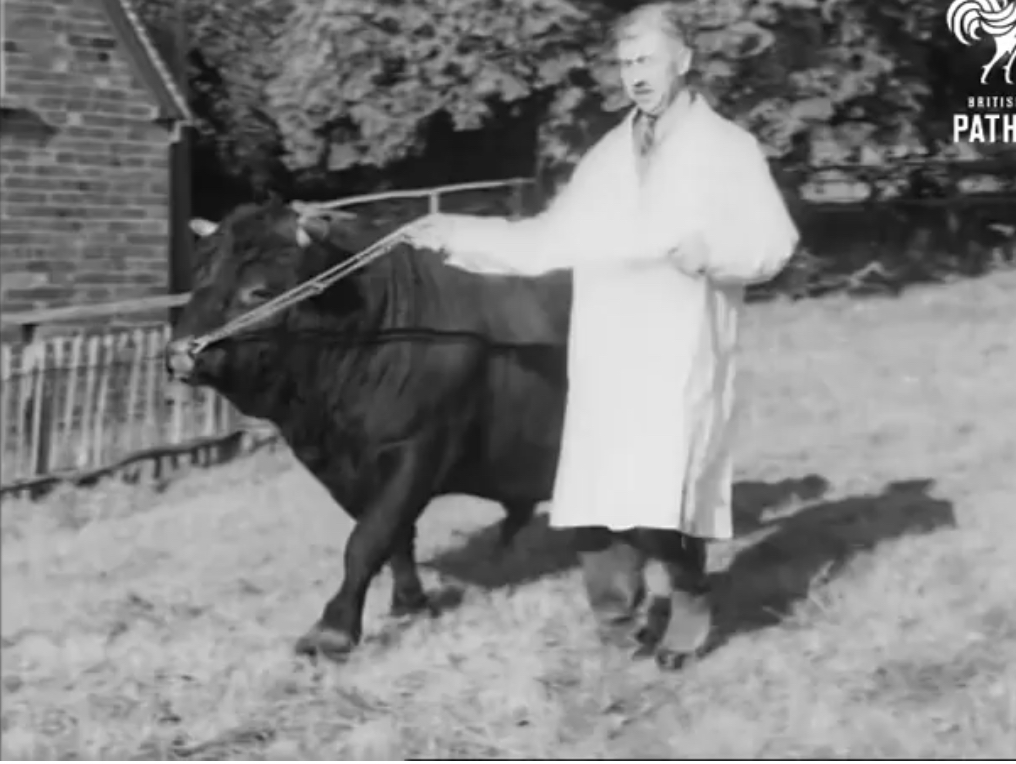
Enjoy this video from 1949 to see what a common herd of Dexters may have looked like at that time. It would be interesting to see what observations new people to the breed would take away from the video if they were to compare them to many Dexters now available for purchase.
A Deep Dive Podcast, brought to you by Irish Dexter Cattlemen, on topics of interest to all farmers and ranchers. Subscribe to the free, monthly Irish Dexter Cattlemen Tips & Tricks Guide to get early access.
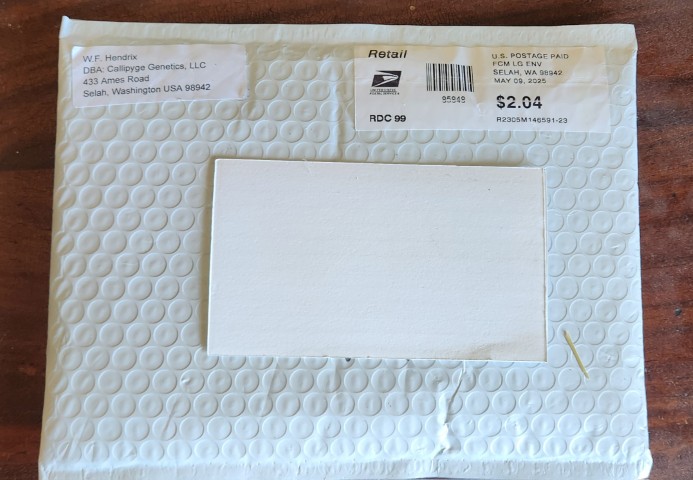
This morning I just received my package from Callipyge Genetics Lab in Selah, Washington. This is very exciting because it could be a game changer.
The package is from W.F. Hendrix, DBA (Doing Business As) Callipyge Genetics, LLC. The first thing I noticed is it cost $2.04 to send it to me in Calfornia, which is just south of Washington State. I ordered a set of 25 Tenet Certification Cards for $47.50, including postage, from their website April 22, 2025 and they were able to ship it May 9th. So, they have to be really busy.
If you recall, in last month’s Irish Dexter Cattlemen Tips & Tricks Guide, April 2025 Issue, Jeff Reusser, Royal Fare Farm submitted an article titled, “Who Knew Tenderness is Directly Correlated to Easy Keeper“. If you haven’t read the article, just click on the tittle. This article is about predicting exceptional beef tenderness with 100% accuracy. Now that’s exactly what I am looking for!
Our ranch started in 2009 by purchasing 3 Irish Dexters, a bull, a cow, and one male calf. Right away I knew what we would be doing with that calf. Much to our surprise, the day it was being slaughtered on our farm, the guy preparing the steer to be delivered to the butcher looked at our pasture and declared, “This is going to be great tasting beef” Boy was he right. Not only did it have an amazing taste, but it was tender too. Over the years I have learned the techniques to insure the best tasting grass fed, grass finished beef by carefully monitoring the grass they eat. But what good it it to have the best tasting beef when chewing on tack room leather? Both taste and tenderness are critical if you are going to provide a product folks really love. Testing for tenderness? Now that’s a game changer.
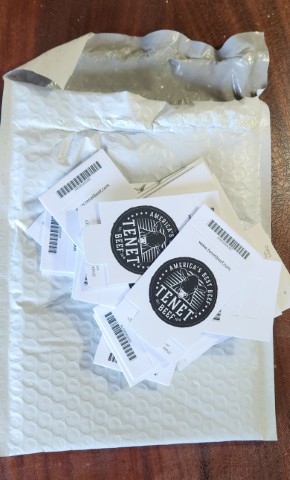
After a bit of tugging and pulling, I was able to open the package without cutting it. Sure enough, inside were twenty-five “Tenet Beef” cards. Each one labeled with their logo, bar coded, and included their website address, www.tenetbeef.com.
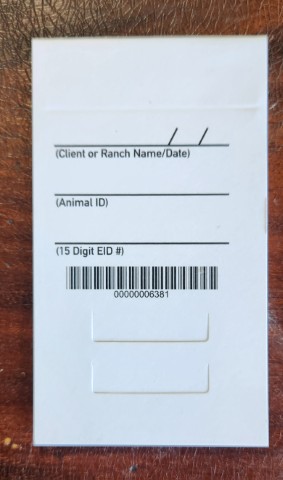
On the back of each card is space to write your Ranch Name and Date. The next line down is for the Animal ID. Then the third line is for a 15 digit EID number. Below this is another bar code, which is the same bar code on the front of the card. Every card has its own unique bar code.
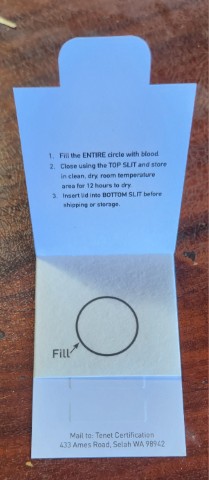
Opening the card, things get a little tricky. There is a list of three things to do and the first thing to do on the list is a globsmack.
Fill the ENTIRE circle with blood – Yup! That’s what it says. How am I suppose to do that? I got this bull. It’s got horns. It’s got WILD eyes. You want me to do WHAT? That’s not a small circle!
Stay tuned. There maybe more to come. Honey, were we serious about doing this testing thing?
A great podcast by Working Cows, interviewing Bart Carmichael and Pat Guptill of “Principled Land Managers.” Bart and Pat talk about the importance of vision and principles in farming. Practices are flexible can change based on the land, animals and resources available, but having solid principles can set you up for success no matter where you go and/or what you do.