food

May is Beef Month

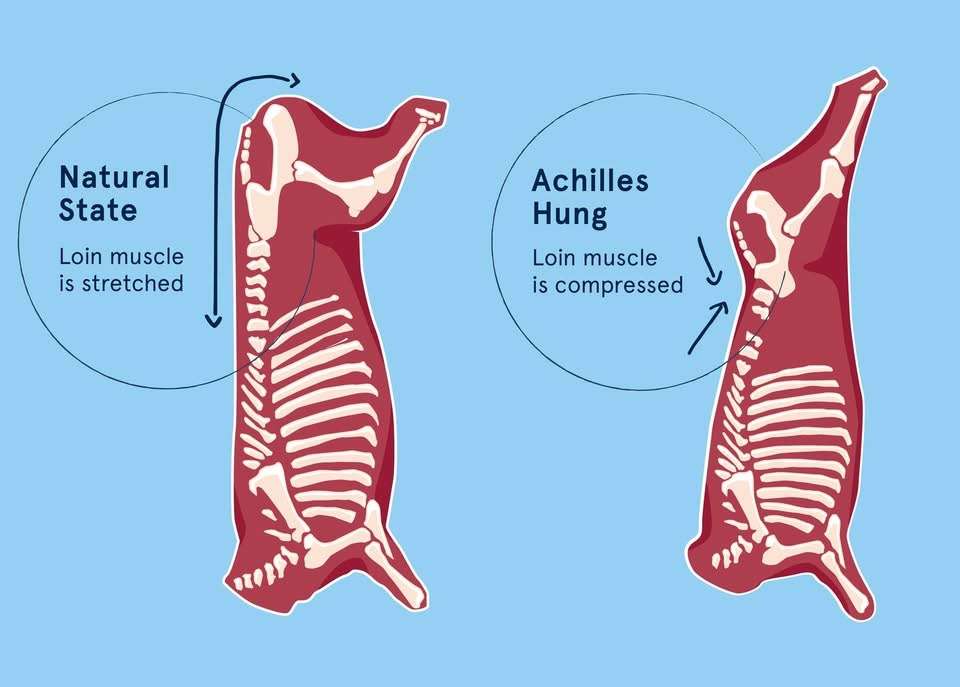
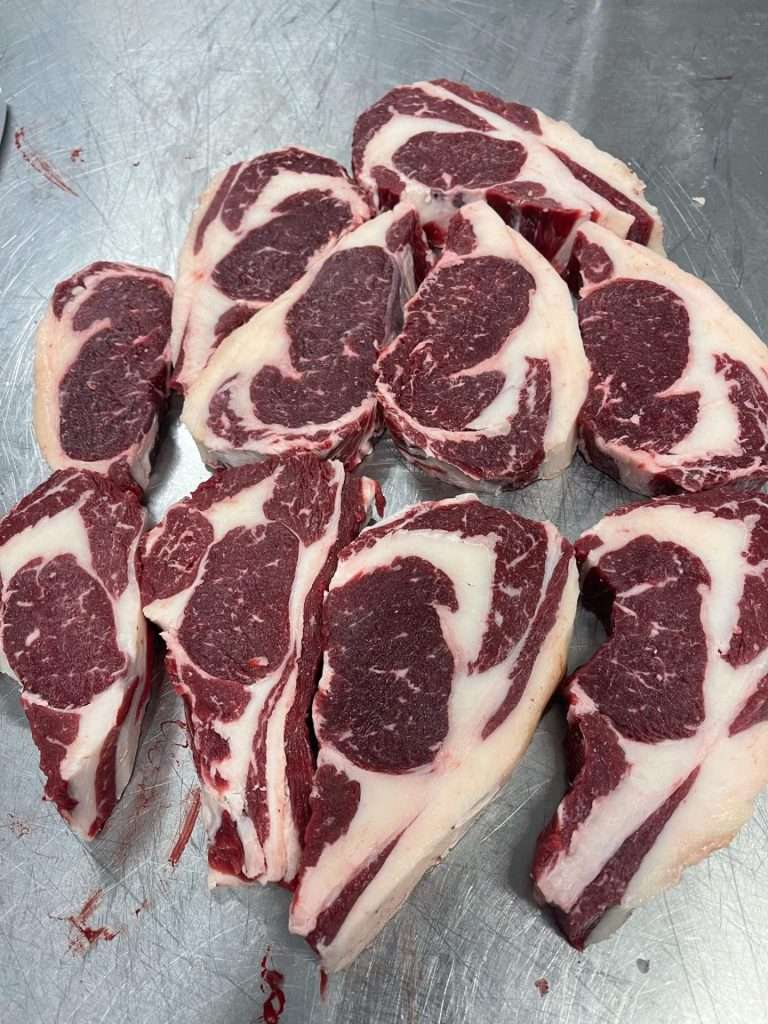
Here is a cut that is not so well known.

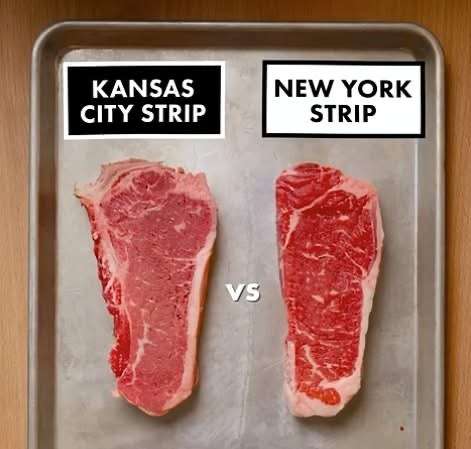
In the battle of Kansas City steak vs New York strip steak, they are in fact, the same cut. The Kansas City strip bone attached, New York does not. The New York strip typically has the tail section removed, the Kansas City does not. The cut originated in Kansas City and gained popularity when chefs in New York started calling it the New York strip.

Source Matthew Eads

May is Beef Month Read More »

Beef

Rabbit Raising – Part 1: Keeping Them Alive

Before you buy rabbits, decide why you’re raising them. This one choice affects everything else.

Beginner Tip: Don’t buy rabbits first and figure out a plan later. Housing and purpose should come beforebreed.

Why Are You Raising Rabbits?

Pets / Show Sales

  • Choose popular, marketable breeds (Rex do well)
  • Breed for traits buyers want: color, coat, size, personality
  • Breed to SOP
  • Watch trends, but also look for gaps in your local market

**I do not enjoy selling pet rabbits but it is an option. 

Beginner Tip: Spend time watching local listings and social media before breeding. What’s already selling tells you what people want.

Food

  • Focus on fast-growing, efficient breeds (New Zealand, Californian)
  • Breed for size and speed to market, not looks

Beginner Tip: Bigger and faster is usually better than “prettier” when raising meat rabbits.

Housing Options

Cages

  • Require climate control
  • Easier breeding control and litter monitoring
  • Less natural, more predictable

Beginner Tip: Cage systems are often easier for first-time breeders because problems are easier to spot early.

Colony

  • Rabbits regulate temperature by digging
  • Little breeding control unless sexes are separated
  • Must prevent escape
  • Introduce rabbits at the same time to reduce fighting

Beginner Tip: Colony systems work best when planned ahead, retrofitting almost always causes headaches.

Hybrid

  • Colony-style living with barriers to prevent digging out
  • Requires weather monitoring, especially in summer
  • Include an underground or partially buried area for cooling

Beginner Tip: Hybrid systems offer a good balance for beginners who want natural behavior with some control.

Shelter Setup

Primary Shelter
Where your breeders live.

Beginner Tip: If breeders are stressed, everything else goes downhill: prioritize this space.

Grow-Out Area
A separate space for young rabbits so breeders don’t get overcrowded.

Beginner Tip: Overcrowding is a fast way to create health problems.

Rabbit Tractor
A movable pen for grow-outs that provides lawn care.

Beginner Tip: Tractors are great for grow-outs, but not ideal for breeders long-term.

Substrate Choices

  • Hay: Great for nesting, edible, but holds moisture and waste
  • Wood Chips: Similar to hay, not edible
  • Wood Pellets: Absorb liquid well, easy to clean, usually the most expensive

Beginner Tip: If something smells bad, it’s time to change it, even if the schedule says otherwise.

Food & Feeding Basics

  • Free-feed quality rabbit pellets
  • Supplement with grass or garden clippings when possible
  • Keep food off the ground

Beginner Tip: Most feeding problems are actually feeder placement problems, not feed problems.

Common Beginner Concerns

Choosing Rabbits

  • Decide on housing first
  • Cage-raised rabbits may struggle outdoors in heat
  • Colony-raised rabbits usually adapt better to cages, but may struggle mentally

Beginner Tip: Ask breeders how their rabbits were raised before buying.

Heat

  • Underground hides work best
  • Fans and frozen water bottles help
  • Always provide plenty of water

Beginner Tip: Heat kills faster than cold, plan for summer first.

Cold

  • Rarely a problem
  • Keep rabbits dry and out of wind

Beginner Tip: Wet + cold is dangerous; dry + cold usually isn’t.

Losses

  • Some losses are normal
  • Disease and stress happen

Beginner Tip: Everyone loses rabbits at some point—don’t quit after the first setback.

Health Issues to Watch For

Coccidia

  • Weight loss, dirty tails
  • Treat quickly
  • Many breeders select for resistance

Beginner Tip: Clean, dry pens dramatically reduce coccidia risk.

Weaning Enteritis

  • Around 4 weeks old
  • Often sudden and severe

Beginner Tip: Watch young rabbits closely during weaning, it’s the most vulnerable time.

GI Stasis

  • Gut slowdown
  • Remove pellets, offer grass hay

Beginner Tip: When in doubt, simplify the diet.

Pasteurella

  • Spread by wild rabbits
  • Often fatal
  • Symptoms: heavy sneezing, nasal discharge, lethargy

Beginner Tip: Occasional sneezing is normal—constant sneezing with discharge is not.

Rabbit Raising – Part 1: Keeping Them Alive Read More »

Homesteading

Cutting up The Beef podcast

This podcast covers some of the questions we all have when starting out with cuts from our Dexters. The cuts will be the same…just different overall yields.
They have some interesting ideas for selling to your customer base.

Cutting up The Beef podcast Read More »

Beef

Why Rabbits Might Beat Chickens on a Small Homestead

When we started our homestead, we began with chickens. That feels like the natural order of things for most people. Later, we added rabbits. While it was a learning curve, now that we’ve figured out the best care and have our colonies settled, I can confidently make the case for rabbits over chickens.

Here’s why:

  • Cleaner – Rabbits are tidier and produce manure that’s garden-ready without composting.
  • Easier to Handle – They’re quiet, gentle, and simple to manage.
  • Simpler to Process – Butchering rabbits is less labor-intensive than chickens.
  • Excellent Mothers – Rabbits are attentive and reliable breeders.
  • Extraordinary compost – Rabbit waste is ready for use immediately and truly enriches soil. 
  • Highly Prolific – With just two does and a buck, you can raise over 200 lbs of organic meat in a year.
  • Delicious – In my opinion, rabbit meat tastes better than chicken!

I’ll admit, fresh eggs from chickens are nice but meat chickens don’t typically provide eggs. Rabbits, on the other hand, offer consistent meat production year-round.

We raise ours colony style, though many prefer cages. Both methods have advantages, and it’s all about finding what works for you. All in all, raising rabbits is a rewarding endeavor for any small homestead.


Rabbits vs. Chickens: Quick Comparison

FeatureRabbitsChickens
Space NeededMinimal (stackable hutches or colony space)Larger coop and run required
Noise LevelSilentClucking and crowing
ManureGarden-ready immediatelyRequires composting
Meat Yield200+ lbs/year (2 does + buck)Varies; meat birds only. no reproduction of meat crosses
EggsNoneYes (layers only)
ProcessingEasier, less messyMore labor-intensive
BreedingYear-round, very prolificSeasonal, less frequent. Meat crosses do not breed true.

Why Rabbits Might Beat Chickens on a Small Homestead Read More »

Homesteading

Need Help Pricing Your Dairy Products? By Sunstone Orchard & Rabbitry.

Knowing the value of your milk, can help you value the products you make from your milk. Here is one person’s breakdown.

There is a wide range of raw milk dairy prices across the board, but how do you know your prices make sense based off a gallon of milk?

Here is a simple breakdown on price setting costs!

Starting point:
Milk value $15/gallon = $7.50/half gallon = $3.75/quart = ~$0.94/cup.
This is your base price to compare against, you can enter any value and adjust accordingly.

Pricing based on your $15/gal milk:
• Butter: $20–$25/lb
• Buttermilk: $5–$6/qt
• Cream: $12–$15/pint
• Yogurt: $5–$6/qt
• Fresh Cheese: $15–$20/lb
• Aged Cheese: $50–$80/lb

  1. Butter
    • 1 gallon of milk = ~2 cups cream.
    • 2 cups cream → ~¾ lb butter + 1 cup buttermilk.
    • That means ~1 lb butter takes about 2.5–3 gallons of milk.
    • If 1 gallon milk = $15, then just the milk input for 1 lb butter = $37–$45.
    🧀Suggested price: $20–$25 per pound (raw, small-batch butter often runs $20–$30/lb at farmstands).
  2. Buttermilk
    • Byproduct of butter.
    • Costs are “covered” by the butter pricing, so you can sell it lower.
    🧀Suggested price: $5–$6 per quart.
  3. Cream
    • A gallon of milk gives ~1 pint of cream, varies with breed/feed/individual cow.
    • That pint of cream “costs” the $15 you could have gotten for selling the whole gallon.
    🧀Suggested price: $12–$15 per pint raw cream is a premium item and can be scarce.
  4. Yogurt
    • 1 gallon milk makes ~1 gallon yogurt.
    • Plus starter and incubation, but not much shrinkage.
    🧀Suggested price: $15–$18 per gallon, or $5–$6 per quart, slightly higher than milk since it’s value-added.
  5. Cheeses
    • Yields vary a lot:
    • Fresh cheeses, chevre, queso fresco, paneer: ~1 lb cheese per gallon milk.
    • Aged/harder cheeses: ~1 lb cheese per 10 gallons milk.
    🧀Suggested pricing:
    • Fresh cheese: $15–$20/lb.
    • Aged cheese: $50–$80/lb since the yield is tiny and aging takes space/labor.

As always, know your state regulations for dairy.
Know your farmer.
Shop local.
Barter when you can!

Need Help Pricing Your Dairy Products? By Sunstone Orchard & Rabbitry. Read More »

Milking

Raw Milk Summit in Tennessee

There was a Raw Milk Summit in Bon Aqua, TN. Several guest speakers included politicians, local producers and Dr. Ken Berry. This video is of the organizer Dawn Gorham of The Gorham Homestead.
She has an interesting story and message for people who are trying to sell their milk thru herd shares in Tennessee. You will need to check your State Laws, but has some great advice for everyone.

Raw Milk Summit in Tennessee Read More »

Milking

What Do I Need to do Before I Drop off my Meat for Processing?

In this podcast, we learn about things we need to consider before we even schedule our meat for processing. Interesting fact is the return on the Dexter is higher than what is stated here. We experience much closer yields to 70% and our carcasses are smaller…so the freezer space issue is not as significant with the larger breeds.

[data-source-id=”source-c0522901-6157-4e5e-9aa6-d3c2cfdf22e6″] .ose-embedpress-responsive{ width: 600px!important; height: 600px!important; max-height: 600px!important; } [data-source-id=”source-c0522901-6157-4e5e-9aa6-d3c2cfdf22e6″] iframe{ width: 600px!important; height: 600px!important; max-height: 600px!important; } [data-source-id=”source-c0522901-6157-4e5e-9aa6-d3c2cfdf22e6″] .embedpress-yt-subscribe iframe{ height: 100%!important; } [data-source-id=”source-c0522901-6157-4e5e-9aa6-d3c2cfdf22e6″] .ose-youtube > iframe{ height: 600px!important; width: 600px!important; } [data-source-id=”source-c0522901-6157-4e5e-9aa6-d3c2cfdf22e6″] .ose-youtube{ height: 600px!important; width: 600px!important; } [data-source-id=”source-c0522901-6157-4e5e-9aa6-d3c2cfdf22e6″] .ose-giphy img{ height: 600px!important; width: 600px!important; } [data-source-id=”source-c0522901-6157-4e5e-9aa6-d3c2cfdf22e6″] .ose-google-docs img{ height: 600px!important; width: 600px!important; } [data-source-id=”source-c0522901-6157-4e5e-9aa6-d3c2cfdf22e6″] .ose-embedpress-responsive.ose-google-photos{ height: 100% !important; max-height: 100% !important; } [data-source-id=”source-c0522901-6157-4e5e-9aa6-d3c2cfdf22e6″] .embera-embed-responsive-provider-gettyimages, [data-source-id=”source-c0522901-6157-4e5e-9aa6-d3c2cfdf22e6″] .embera-embed-responsive-provider-gettyimages iframe, [data-source-id=”source-c0522901-6157-4e5e-9aa6-d3c2cfdf22e6″] .getty{ width: 600px!important; height: 600px!important; max-height: 600px!important; max-width: 100%!important; }

What Do I Need to do Before I Drop off my Meat for Processing? Read More »

Beef PipeDreams

Preserving Irish Dexter Dairy and Beef

By Eliena Bodtke, Stay’N Put Farm

Since many of us are homesteaders or practice some kind of preserving, I thought I would take a moment to discuss an alternative to canning, pressure canning and dehydrating. 

 Are you scratching your head, thinking where is she going with this?

Consider freeze drying.  While the initial cost seems daunting, it really is an excellent way to preserve your Dexter milk, yogurts, cheeses, colostrum and beef for 25 YEARS!  Think about when you’re over loaded with one veggie or another during gardening season.  The veggies, herbs or eggs when they are abundant, can be frozen and put into the freeze dryer anytime.  We still can and pressure can, but this gives us a  whole new option.  

We purchased a medium Harvest Right about a year and half ago and have been amazed at all the things we can preserve….it is less time consuming and in our opinion, and better quality product in many cases.

Canning of dairy is frowned upon by the USDA and in some cases consider unsafe, although people do it.  Freeze drying on the other hand, processes the dairy at lower temperatures and therefore does not pasteurize it…so if raw is your goal, it is good alternative.  If you pasteurize, you still follow the same method.  We pour a quart of milk on each tray and let the machine do its thing.  We have done it both with cream in and cream out…the choice is yours.  We find it needs to be blended when reconstituted, or another favorite is dry in our coffee, just like coffee creamer!

If you’re into selling, freeze dried milk and other products can be a good source income.  Take a look at the price of powdered milk in the store!  It is not uncommon to see freeze dried milk for $30-40 a gallon.  Let’s clarify this.  One gallon of freezer dried milk reconstituted into one gallon of drinkable milk…almost quadruples in price.

And don’t forget your Dexter beef!  Consider this scenario….you have some cuts left from your last processing and you would really like to eat it before you get into the next one.  Well, freeze dry it and then you have preserved it for 25 years.  It makes great gifts, as it is so light to ship.

How do you use this freeze dried beef?  We like to pour some of our Dexter  bone broth over it.  Let it sit in refrigerator over night and then use it in the next day or so.  The beef will only absorb as much broth as it can.  It doesn’t get mushy, which can happen with veggies.  Cook with it like you usually do.

Hope this article helps you on your farm, ranch or homestead.  I just love this technology and thought I would share.

Preserving Irish Dexter Dairy and Beef Read More »

Beef Milking

LET’S TALK DEXTER WEIGHTS!

Calling all Beef Breeders!!! For anyone who likes a bit of Beef in their dual-purpose Dexters here’s something for you! Have you ever wondered what the Live weight, the Average daily weight gain of live weight, Weight of dressed Carcass, Percentage of carcass to gross live weight, Weight of loose fat and Weight of hide was on a Dexter Kerry or a Kerry and a Dexter Kerry cross was at the formation of the Royal Dublin Society in 1890? I wish all fields were complete as some are missing but it’s a good start. Well, here are some answers for you, so let’s see how these weights compare today. Comments are welcomed. By the way Tommy Titmouse was an Angus Dexter Kerry cross.

LET’S TALK DEXTER WEIGHTS! Read More »

Historical

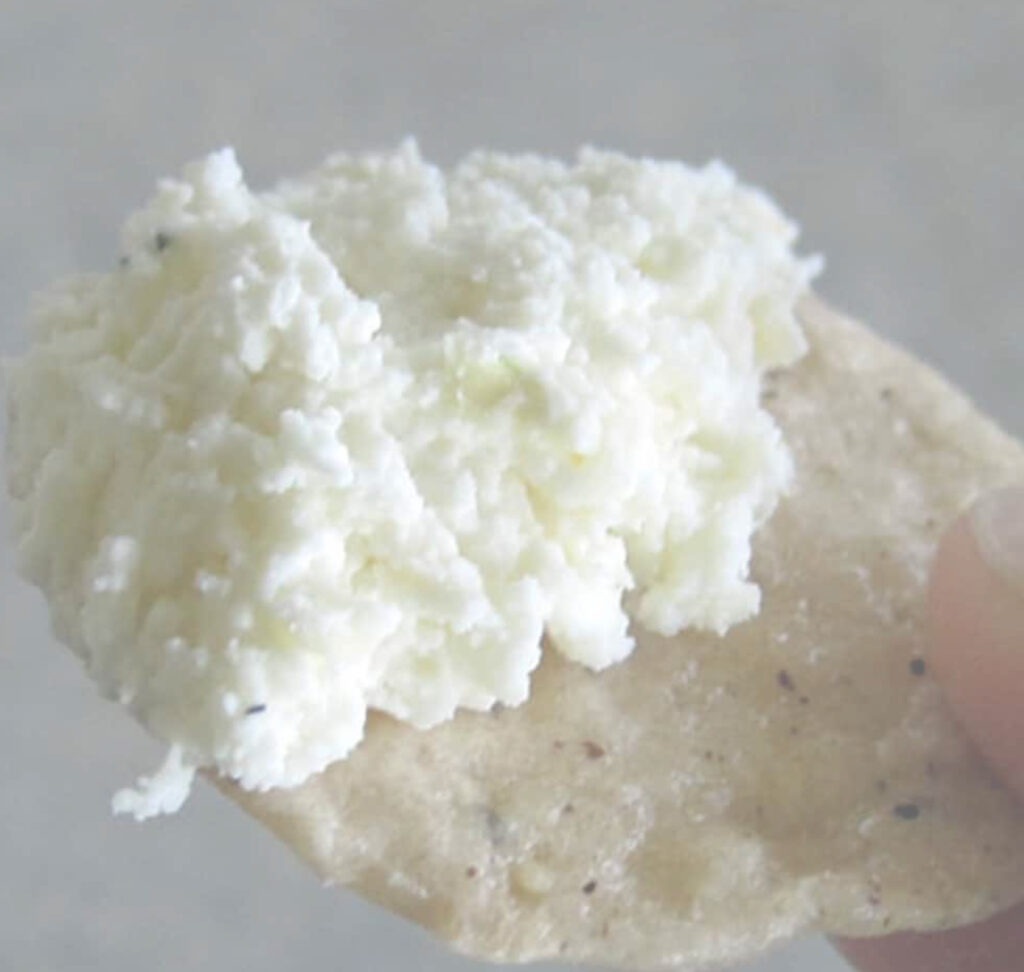
Feta dip from cows milk feta…easy and quick!

This was fabulous…while I made it with goats milk…I could have made it with Dexter milk, but I had it already made from goat.

Don’t skip the rinsing or it will be too salty

Sure to impress you with chips, pita, sourdough bread…….

I use a version of the recipe below to make feta as well….bon appetite!

https://www.americastestkitchen.com/articles/1273-whipped-feta-dip

https://cheesemaking.com/products/feta-cheese-making-recipe

Feta dip from cows milk feta…easy and quick! Read More »

Homesteading
Enable Notifications OK No thanks