feed

Animal feed

You DIDN’T get your liver back…maybe this is why?

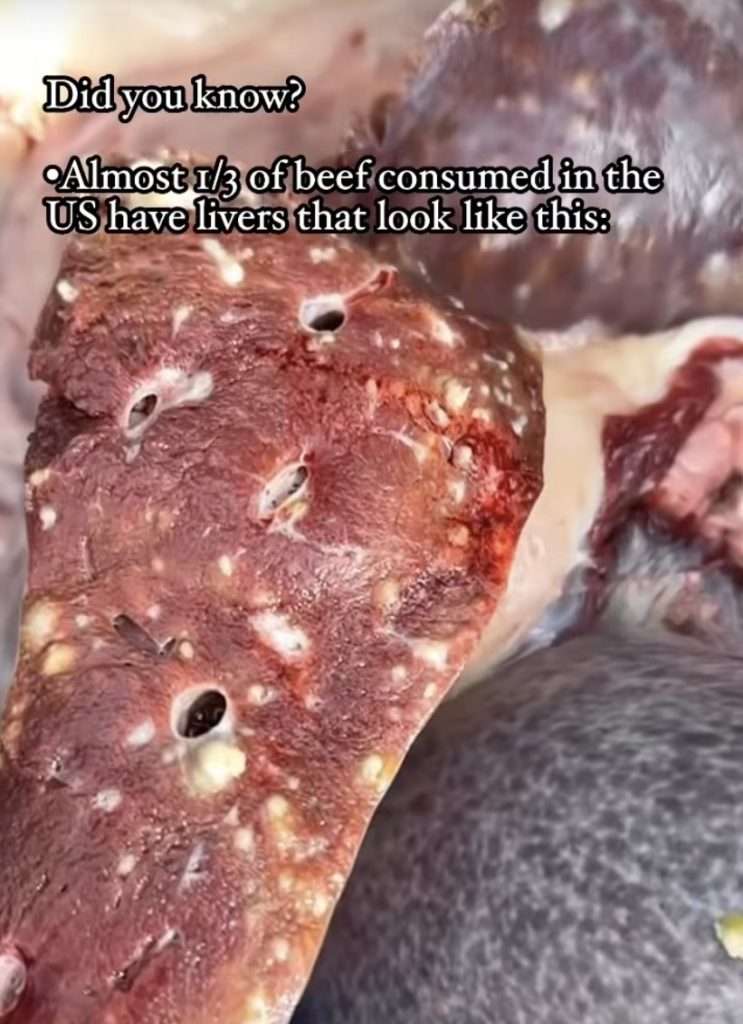
Recently someone complained about not getting their liver back for the processor. Turns out 1/3 of the beef liver may look like the one in this picture above.

This is from the folks at Backyard Butchery and a post from them on Facebook.

A few days ago I posted a video popping a gnarly liver abscess on a steer we processed.

I did not include much for context, mainly because I did not want to end up in a long drawn out grass-fed vs grain-fed debate. Also, because writing such a post requires a good amount of time, hence the now 4-day follow-up post.

So I will preface this post accordingly: as a business, we respect your decision to feed your animal however you choose. (As long as it’s getting fed, we do not care.) You’re the one eating it, after all!

However, what you saw in the previous video, and below, is 100% from an unbalanced diet of “hot feed” grains.

“Hot feeds” are easily digested, high-energy feeds, such as grains like wheat, corn, barley, & sorghum.

*It is important to note that alfalfa is also considered a “hot feed” & should be treated as such- seasonally, with bloat precautions. (I personally feed a lot of alfalfa hay, with zero concerns of liver abscesses.) Feeding alfalfa will increase heat due to those same high digestibility & energy content properties, but is otherwise considered non-problematic because it does not cause acidosis or gut issues the way that grains do.

In the first video I posted, the steer was heavy corn & sweet feed fed for an extended period of time.

In the video below, you see a different type of abscessed liver in a bull (from a feedlot) fed a ration of 50% corn & 50% alfalfa pellet. Both animals referenced with infected livers were young, under 3yrs of age. I can not tell you their breeding, as that information is unknown.

The USDA does NOT deem this meat inedible, only the liver itself. It can extend into the skirt steak & hanger steak areas, which, if affected, would also be thrown away, & the rest of the animal would be processed as normal.

In both cases, we showed our clients the liver, allowed them to contact their large animal vet, & make a decision for themselves. In both cases, vets were unconcerned for the safety of the meat & animals were processed accordingly.

Now, as someone who primarily processes meat for smaller producers & homesteaders, what came as a shock to me was just how commonplace infected livers are in other butcher shops, all over the country. So much so, that I posted the original video in a butcher group online asking the question “How often do you see liver abscesses in your area?”, & the responses I received back left me dumbfounded.

Comments from other whole animal butcher’s included, but not limited to:

-“Every day.”
-“Every Friday on kill day.”
-“When I was inspecting at a high speed facility it was very common to see in both fat cattle and cull cows.”
-“Usually in grain fed in volume and/or for an extended amount of time.”
-“I’ve seen it a lot on the slaughter floor in cattle on grain for 12 to 18 months. Offal condemned was very high.”
-“Get it heaps but never really that bad.”
-“Saw it 10+ times a day in abattoir, caused by grain feeding.”
-“Yes here and there unfortunately”
-“They call that too hot of feed meaning too much corn grain not enough roughage.”
*Pic in comments

This naturally led me to diving head first into a rabbit hole on the topic of liver abscesses & what little information I could find on what is ironically, a huge problem in the industry.

20-32% of beef processed has what we call in the industry, “avocado liver”. (Yes- it has a nickname among butchers.) What is SO disconcerting to me, personally, is how “normal” this is that nobody has even considered that maybe… it isn’t?

A further breakdown:

“According to Michigan State University Extension, liver abscesses are not a new issue, having been associated with cattle consuming primarily grain-based diets as early as the 1930s. But they remain a costly challenge.

Michigan State Extension Beef Specialist Jerad Jaborek noted that livers condemned at slaughter represent an annual loss to the U.S. beef industry of more than $60 million. And that does not take into account the approximately 5-15% ding to average daily gain, and 9.7% reduction in feed efficiency they also actuate.

Further costs are incurred at the harvest level, where carcass tissue around an infected site may need to be trimmed by hand, and a burst abscess can cause chain stoppage in a plant for an hour or more.
Liver abscesses are also on the rise. According to the National Beef Quality Audit 2018, the incidence of liver abscesses in finished animals had risen from 9.9% in 2010-11, to 19.3% in 2016-17. This piles more issues onto the plate of concerns about the issue, because feeding an antibiotic – most commonly tylosin phosphate – is currently the most effective strategy to control the problem.

But more liver abscesses means more prophylactic antibiotic use, at a time when regulatory bodies and consumer groups are calling on livestock producers to reduce their antibiotic use in food animals, not raise it.”

How they emerge on a scientific level:

“Liver abscesses are discrete circumscribed focal sites of bacterial infection within the liver parenchyma, generally due to bacterial translocation from the rumen through the portal circulation to the liver. The causative organism is almost always Fusobacterium necrophorum. Prevention of the causative rumenitis, by minimizing high grain rations, is generally effective as a herd health strategy. Treatment of individual animals is generally not pursued as clinical signs are usually absent; although affected animals do not gain weight as well as healthy cattle, liver abscesses are generally an incidental finding at slaughter.”

https://www.merckvetmanual.com/digestive-system/hepatic-disease-in-large-animals/liver-abscesses-in-cattle

For those of you seeking “evidence”:
Please scroll through the screenshots here directly from the USDA website, of a study done on the subject of liver abscesses and their cause, dated March 20, 2024.

“Most people associate liver abscesses in cattle with a high-energy diet. The theory is that when cattle are fed elevated grain levels, highly fermentable starch in the rumen is rapidly fermented by bacteria, causing a drop in rumen pH. This acidity causes damage to the rumen lining, allowing bacteria to travel into the blood, reaching the liver and other organs where they can cause infection. However, it is still unknown with accuracy the exact route that these bacteria take to cause infection or injury to the liver.

The study confirms that an acidotic diet, combined with bacterial inoculation in the rumen, can be used as a model to induce liver abscesses. However, further research is being conducted at USDA to determine the consistency of the model before it can be used to evaluate new interventions to prevent this complex infection.”

You DIDN’T get your liver back…maybe this is why? Read More »

Beef

Dexters No Bigger Than Dogs

Chute Hall- Demolished in 1957

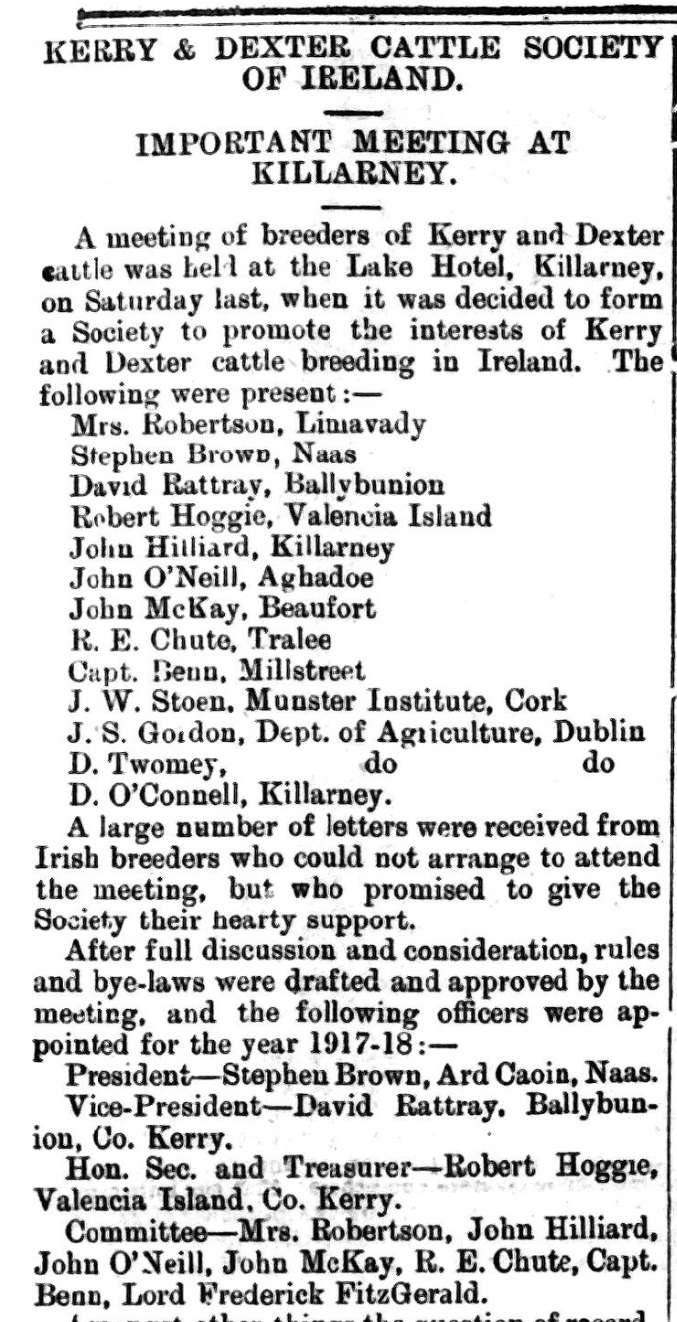
I usually like to start these articles with a picture of a Dexter cow from the past, that will be the focus for the historical adventure, as we travel back in time. But sadly, this time I have no beautiful and memorable cow to set the tone, as one could not be found for a lasting memory. Instead, I will show you a photo of Chute Hall. Chute house was thought to be built in the eighteenth century. In 1906 Chute Hall was documented to be owned by Rowland Chute. Rowland E. Chute owned it along with an additional house by the name of Leebrook House on the same estate. It remained in the family until 1930. Chute Hall was demolished in 1957 and no longer remains, but the memory of Leebrook House lives on in the Ballygarry House Hotel that has come to replace it. You could travel there for a nice stay in the beautiful hotel. Why is Leebrook significant? It was the herd name associated with Rowland E. Chute, who was a landed gentry in country Kerry. He was actually a judge for the Royal Dublin Society allowing Dexters to be entered into the herd books. The lack of history on his herd and the small bit of information that can be found is reveling to why the name of the Leebrook herd never took off.

Just How Hardy are Dexter Cattle?

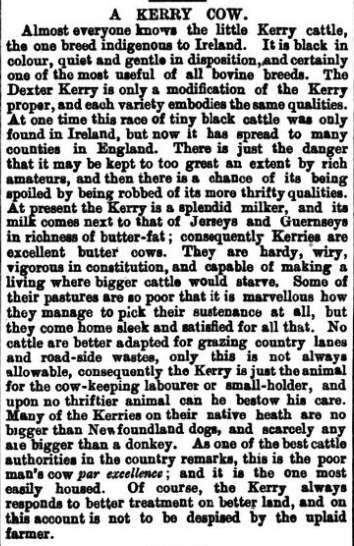
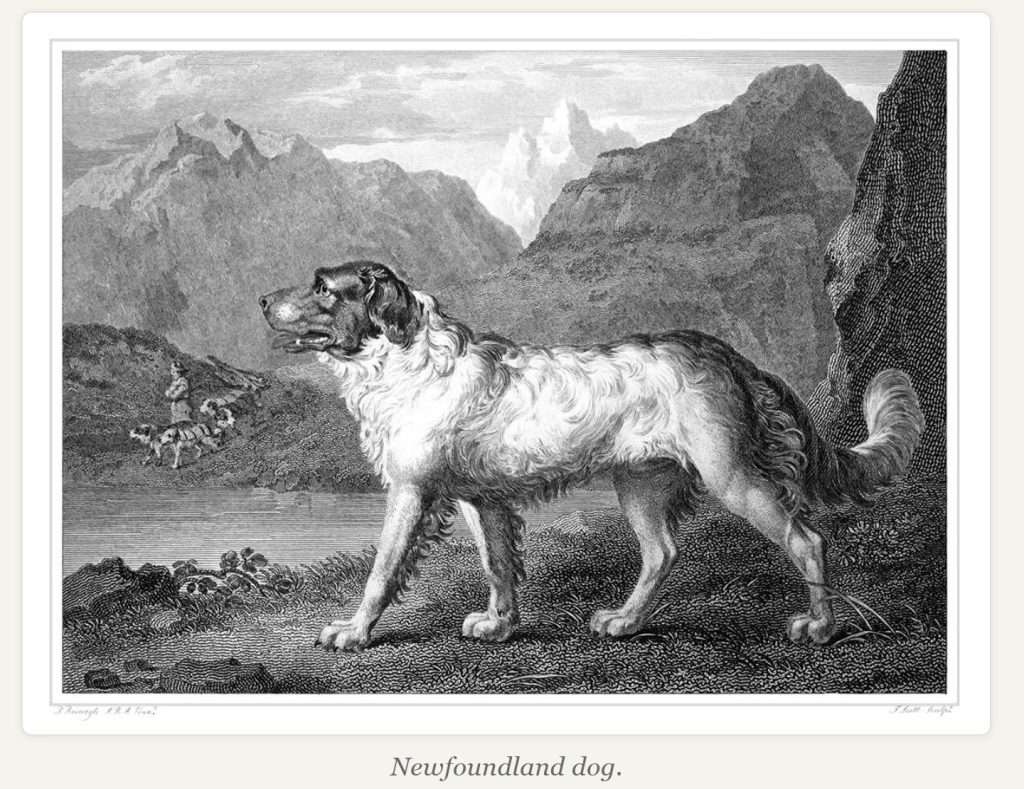
I speak a lot on the hardiness of the Dexter breed. Reminding people that they have been historically known to get by on less, endure hardship and stay productive where other cattle may not. As this above article states “They are hardy, wiry, vigorous in constitution, and capable of making a living where bigger cattle would starve. Some of their pastures are so poor that it is marvelous how they manage to pick their substance at all, but they come home sleek and satisfied for all that.” But, as responsible cattle breeders we must also balance this knowledge with the full responsibility that we must care for the nutritional needs of our animals. So that no new cattle owner may exploit the hardiness of the Dexter to such extremes of nutritionally depriving their hardy livestock, I wrote this article as a historical reminder of where this can go. Dexters in Ireland were naturally small for many reasons, some described as no bigger than a Newfoundland dog. Some of this is genetics while some may actually be due to a lack of proper nutrition in extreme situations. In England on the fertile land where they were pampered by English Aristocrats it was a known fact that the Dexters grew larger and fattened better. Some of this to the benefit of the Dexter, while some may have been a bit more pampered than they may really have needed. Balance over all is good for animals, providing adequate nutrition to be productive while letting them work for their food by grazing and giving them a proper environment to do so. A balance fosters good health while retaining their hardy genetics so that they may best serve their owners with reliable productivity.

What Lesson may we learn from Rowland Chute?

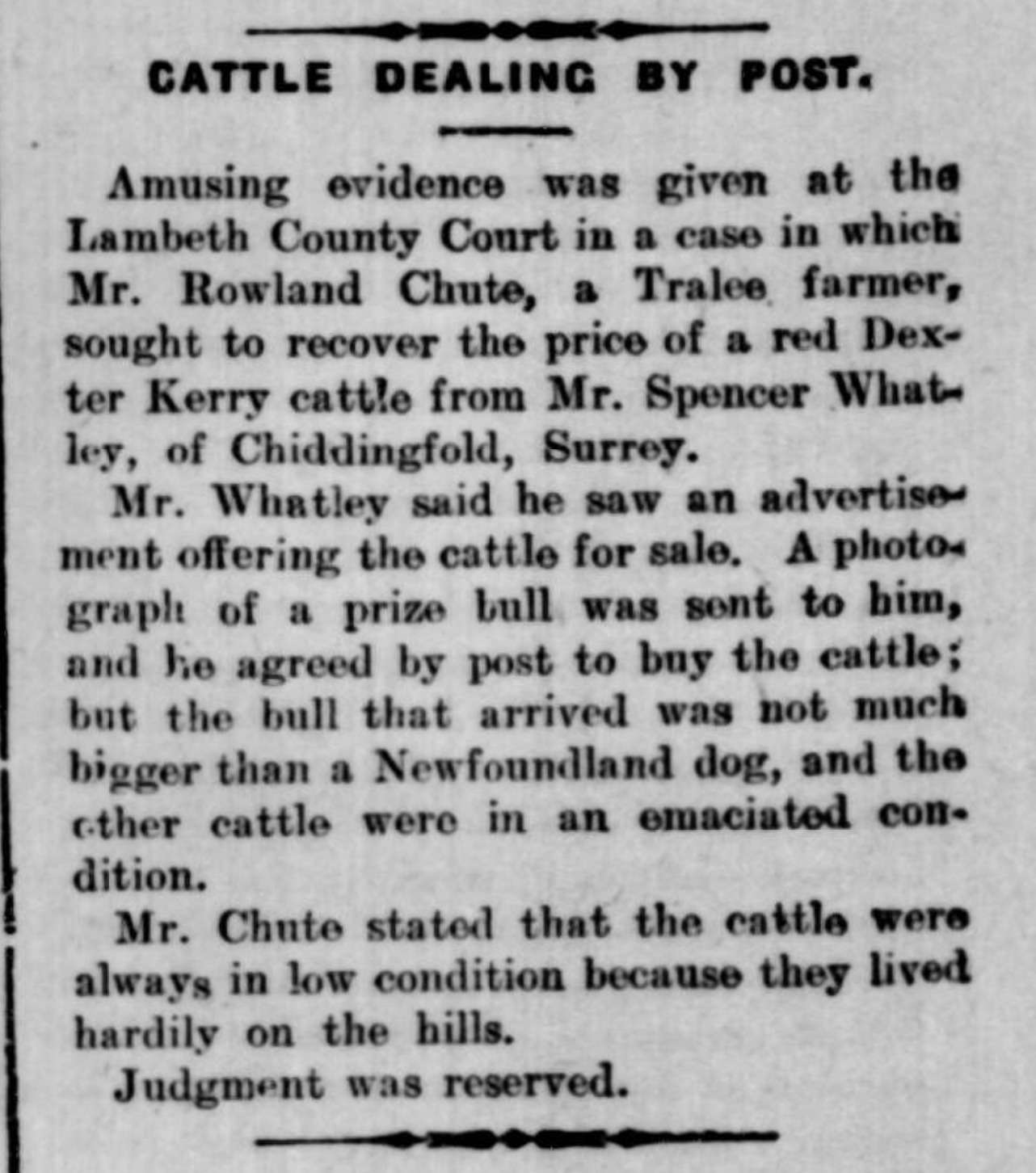
Here we will see the significance of Rowland Chute in my historical wanderings of Dexter cattle. Rowland Chute sent a photograph of a prize-winning bull (I wish had that photograph) to a prospective buyer, Mr. Spencer to help persuade him into buying his cattle. I tried to research and find information on what bull this could have been but turned up no results when looking for a Leebrook (Chute’s herd name) bull, so I must assume that the bull was of a different registered herd name. It sounds as though Chute may have sent a picture of a prize-winning bull and the buyer may have purchased stock thinking they would resemble the bull in the photograph. What the buyer received was in no wise up to his expectations but rather “not much bigger than a Newfoundland dog, and the other cattle were in an emaciated condition”. Chute’s response was “that the cattle were always in low condition because they lived hardily on the hills”.

A Vet Stated the Dexters were in a Disgraceful Condition

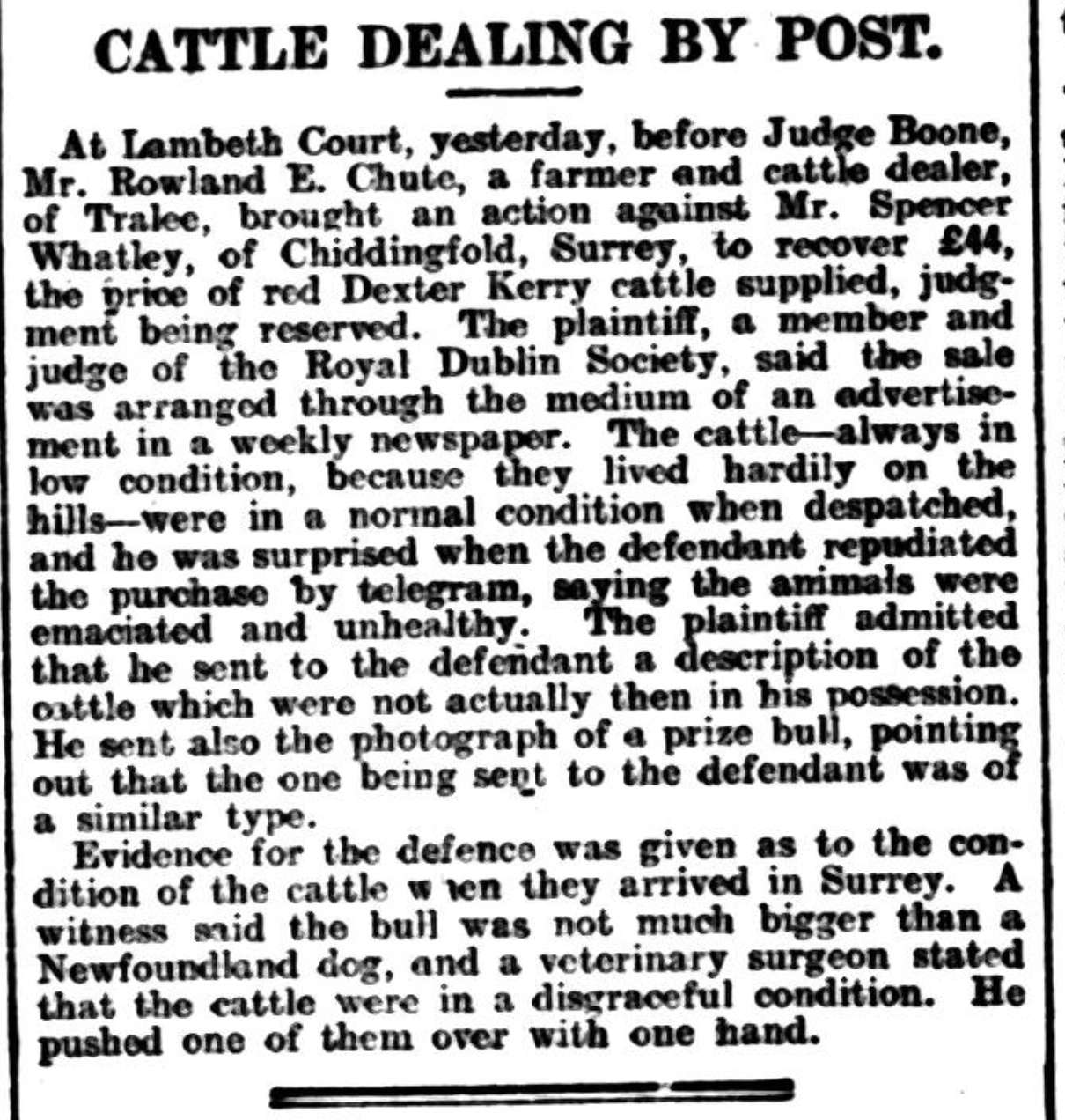
Chute claimed his Dexters were in “normal condition” because the cattle were “always in low condition, because they lived hardily on the hills”. Chute was surprised to hear the animals were emaciated and unhealthy but then admitted that he sent a description of cattle that were not actually in his possession. Instead, he sent a photograph of a prize bull! It does cause the mind to wonder where these animals may have been obtained from, just wondering the hills waiting to be snatched at the moment a perspective buyer was found. Witnesses definitely backed up the claim of the poor condition of the Dexters. Most importantly a veterinarian said that they were in disgraceful condition. Those are strong words; he did not just say they were in low condition but disgraceful! The bull was not much bigger than a Newfoundland dog. A male Newfoundland dog may weigh as much as 150 pounds and stand at 28inches tall. To consider the size of a Newfoundland dog see the story here where a Newfoundland Dog and a little Shetland Pony similar in size “have struck up an unlikely friendship”. https://www.chroniclelive.co.uk/news/north-east-news/newfoundland-dog-forms-unlikely-friendship-21682333

The Final Verdict for Rowland Chute

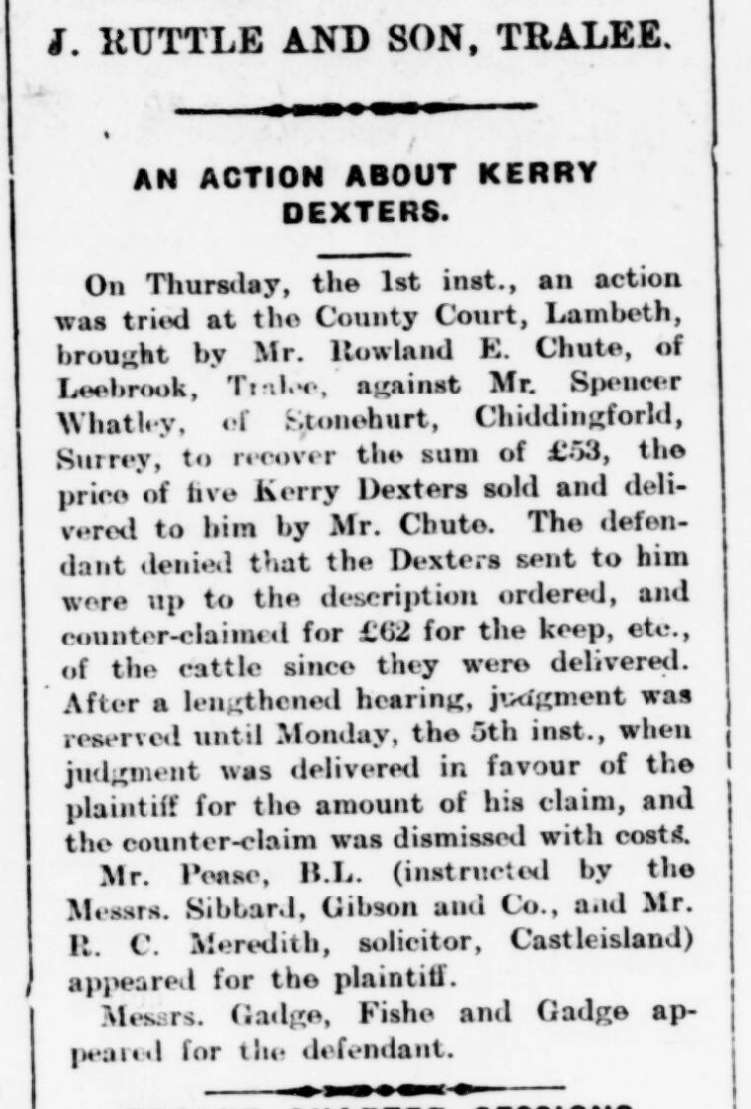
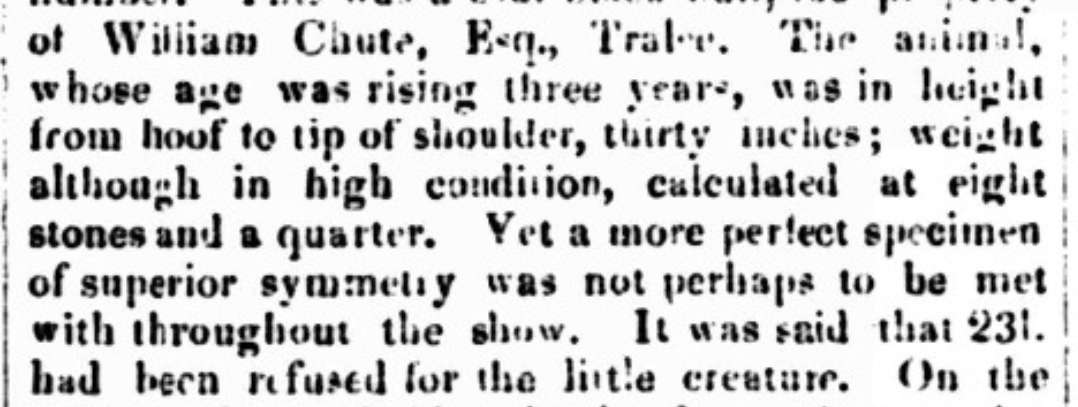
In this article Rowland Chute, the plaintiff was requesting £53 to recover the cost of the Kerry Dexters sold to Mr. Spencer Whatley. Mr. Watley countered that Chute should pay 62 £ for the keep of the unfit cattle upon their arrival since they were delivered. The County Court, Lambeth delivered in favor to Chute awarding him his claim of £53 and dismissing the counter claim from Mr. Watley. Mr. Rowland Chute was vindicated that day of his charges, but a further look into the Herd books shows that Rowland Chute had a very limited future with Dexters. When I searched for records, I found only 3 registered cows with the prefix Leebrook. Leebrook Cush, Leebrook Darkie and Leebrook Stella. All of these three cows were owned and bred by Rowland E. Chute and Qualified by inspection. If I were to guess they were possibly inspected by Mr. Chute himself since he was a judge for the Royal Dublin Society. None of these cows show any offspring that I can find. One cow’s date of birth is listed as 1898, the other listed as Dec 11, 1898 and the last Dec 20 1898. I later found Chute appointed an officer for the “Kerry and Dexter Cattle Society of Ireland” in 1917 written in the Kerry Evening Post. For a man who was so involved with Dexters, appointed a judge and an officer, he has a very small number of Dexters registered to his name and you can’t but wonder if his cattle that were once said to be “in a disgraceful condition” had something to do with why. If a breeder wants to stay long in breeding any form of life one must attend to its needs and we must never give hardiness as an excuse for a true form of neglect. I will not develop any conclusive opinion on Mr. Chute as there were some incredibly small Dexters in Ireland, as I said before partially due to genetics and diet. Chute was said to have had a bull that weighed 8 stones and a quarter (115.5 pounds). The 3-year-old bull measuring at 30 inches from hoof to tip of shoulder was said to be in high condition. The comment was made in reference to this bull, “Yet a more perfect specimen of superior symmetry was not perhaps to be met with throughout the show.” This bull I will wager was the prize bull that was previously mentioned. It is fair to say that most Dexter owners will want a Dexter to fatten out at a larger weight than 115 pounds, live weight and if properly taken care of you may nearly guarantee today, whatever type of Dexter you raise, they will by 3 years old.

Chute Apointed Committee Officer for The Kerry and Dexter Cattle Society

Perfect Specimen of a Dexter Bull weighing 115.5 pounds

My full intent in researching this information was to be thorough, but I also know that the history of Dexter cattle is extensive and recognize that even with every good effort I could possibly be missing information in my research to enlighten us on the situation of Rowland Chute. I will take no hard line in conclusion on the matter of Mr. Chute but rather leave it in the hands of the reader.

-Danielle of Bryn Mawr

Information may not be reproduced without giving credit to the author.

Dexters No Bigger Than Dogs Read More »

Historical

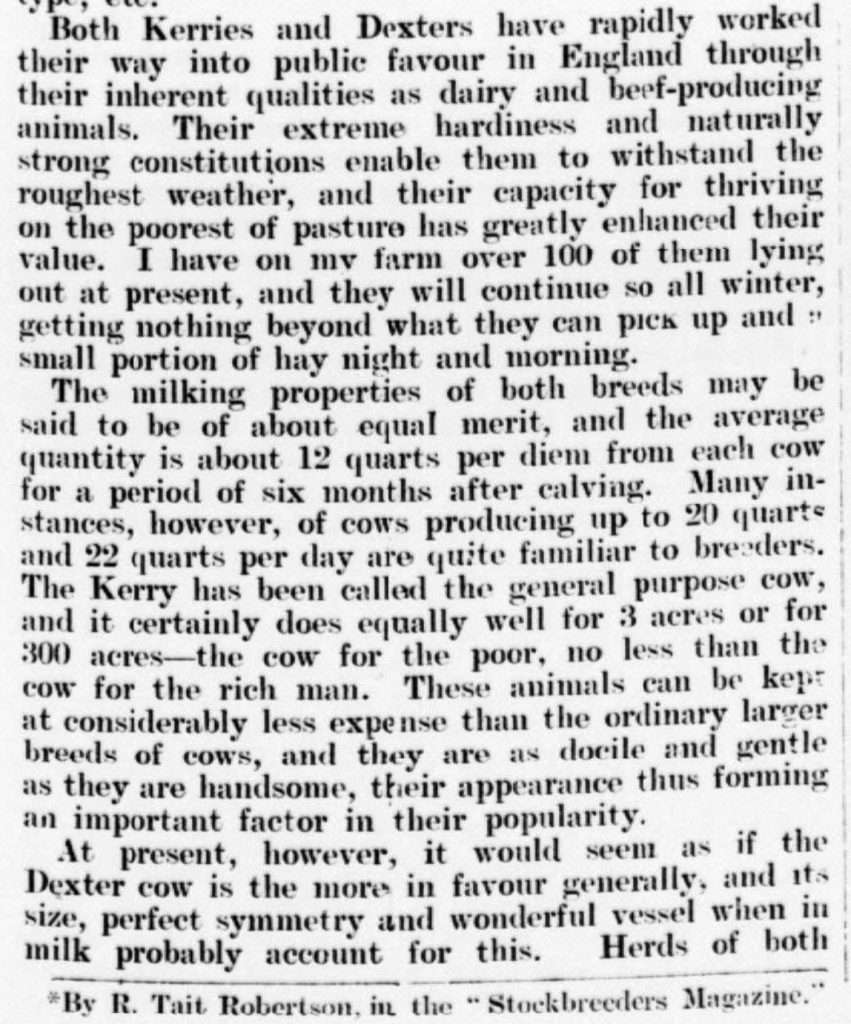
Lying out all winter long, Getting nothing more than what they can pick up and a small portion of hay Night and Morning.

Dexters have long been hailed as hardy and thrifty even adaptable to locations from Africa to snow laden areas. This article I am sharing was written by R. Tait Robertson; he was a famous and most influential Dexter breeder for his day. He was not just any armature Dexter owner, since he was a foundational breeder of Dexter cattle and a generational farmer. He explained that” I have on my farm over 100 of them (Dexters) lying out at present, and they will continue so all winter, getting nothing beyond what they can pick up and a small portion of hay night and morning”. What this means is that Original Dexters could get by on just a little, but of course they could thrive on even more. It was often said that when the Dexters of Ireland went to the manor lands of England they grew greater in size due to the surplus. Dexters can do well on just forage and hay alone with no grain needed. They can excel on the best rations and produce even more, but if times get tough, they can more than get by.

Who was R. Tait Robertson?

Mr. Roberston was a very influential breeder, breeding in Malahide, County Dublin, Ireland. His family later had Church Farm in Babraham, Cambridge. His Dexters were esteemed as quality and were very sought after by the English who wished to keep them. He is the son of James Robertson. They were not just multigenerational farmers but multi-generational Dexter farmers who helped shape Dexters in their early years by breeding and selection. Dexters as we know them then owed a great degree of tribute to this influential family. Mr. R. Tait Robertson was also a judge for Kerry and Dexter cattle. He judged them by the merit that this article speaks to. Someone may say that Dexters are a beef breed that can milk, but Mr. R Tait Robertson said they have “equal merit” to Kerry cattle. They were not transformed in England to a milking breed but rather selected and bred by breeders like the Robertsons for great dual-purpose traits and were heavy in exceptional dairy traits. When R. Tait Robertson speaks to their equal merit remember that he was a judge for both Kerry and Dexter cattle and those judges gave prizes and entered both Kerry and Dexter cattle into the foundation herd books for the Royal Dublin Society. Dexters are not, nor have they ever been a beef breed that can be milked, but rather a dual-purpose breed with equal merit in milking traits to an ancient breed of dairy cattle (Kerry cattle) that can excel at grass-based feeding.

Lamancha Dexter Herd

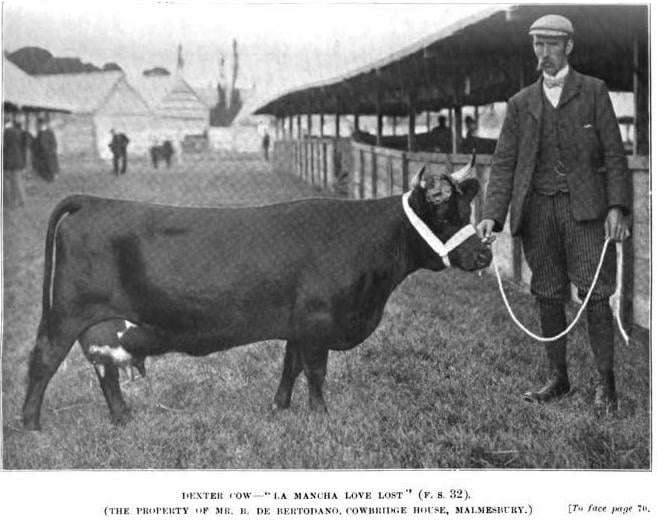
Mr. R. Tait Robertson was the owner and or collector of the cattle in the La Mancha Herd. He or his family may not have bred them all but rather selected some as foundational cattle for the Dexter breed. You will often see La Mancha Dexters registered to him, his father or Robertsons and sons. His Dexters traveled to many countries and those Dexters that could be found “Lying out all winter long, getting nothing more than what they can pick up and a small portion of hay Night and Morning” run in the veins of our Dexters today. This article I shared was written on 16 December 1899 and La Mancha Love Lost was born in 1897. She was qualified by inspection most likely by Mr. R. Tait Robertson and would have spent time in his field while this article was written. It’s nice to think of such a beautiful cow lying out in your pasture all winter long, getting nothing more than what she can pick up and a small portion of hay night and morning then still looking so beautiful! That’s the kind of Dexter I want.

Lying out all winter long, Getting nothing more than what they can pick up and a small portion of hay Night and Morning. Read More »

Historical

Different Winter Feeding Strategies

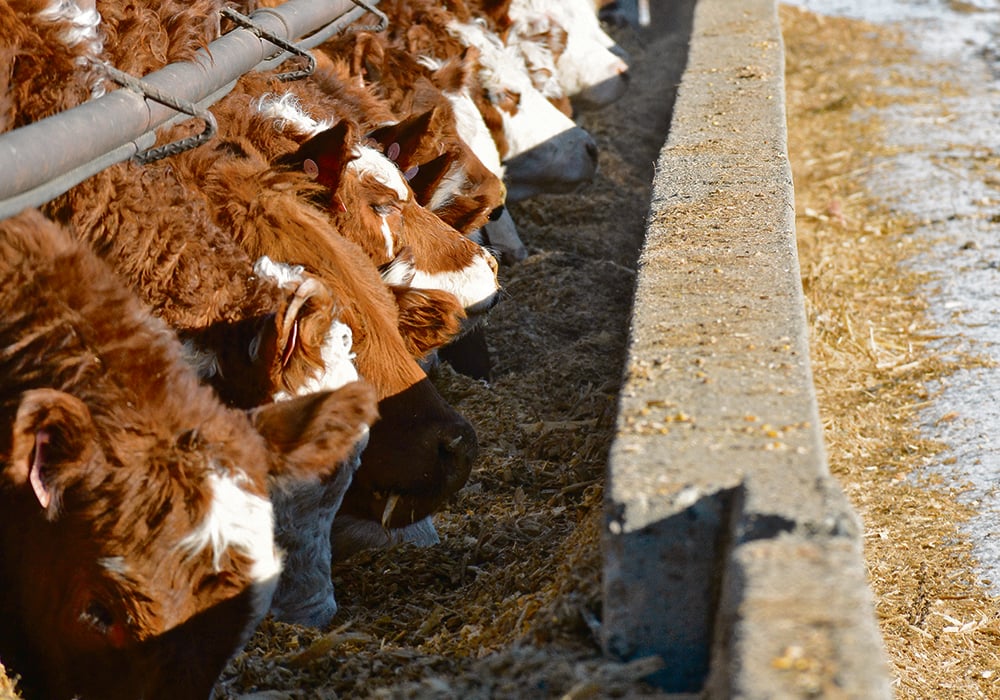
❄️”Winter-feeding is one of the largest costs for Canadian and US cow-calf producers. How this period is managed can make a big difference in both herd health and an operation’s bottom line.

From extended grazing systems to feeding stored forages, each method has its strengths and challenges. The right strategy depends on the operation, available resources and winter conditions.

Here’s a look at some common winter-feeding strategies, with the pros and cons of each.”

Read more: Different Winter Feeding Strategies

https://www.beefresearch.ca/blog/winter-feeding-strategy-pros-cons

Different Winter Feeding Strategies Read More »

Herd Health

Have You Considered Fodder To Feed Your Livestock?

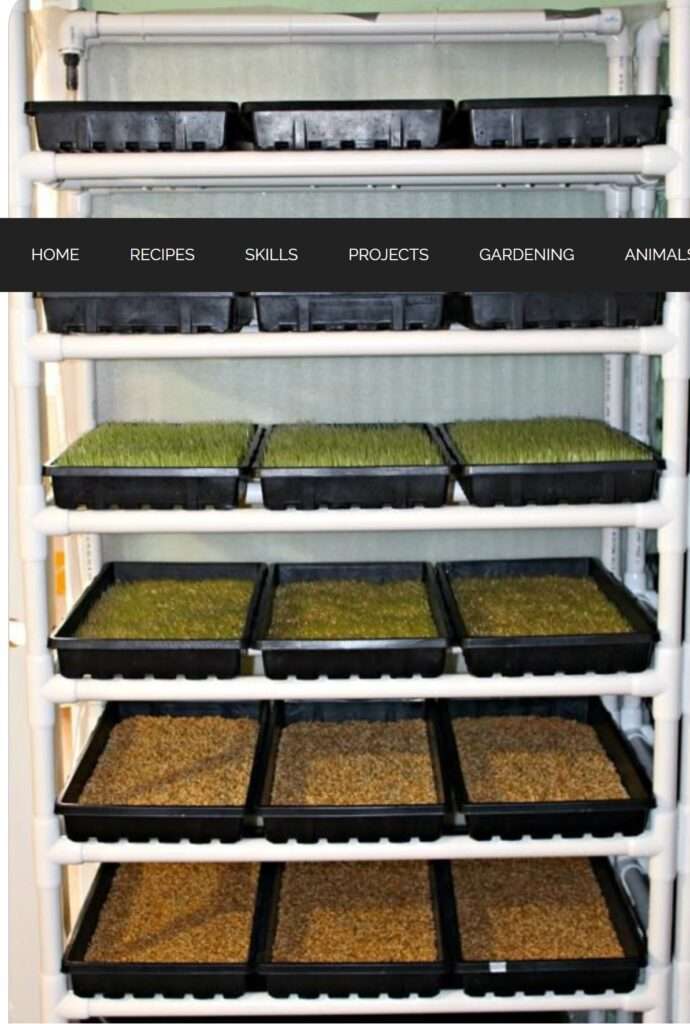
Sprouts (also known as “fodder” when used for animals) are economical to produce.  Typical cost of production is less than 6 cents per lb.  This includes seed, water, and electricity.  Although sprouts cannot replace 100% of an animal’s diet, they have been scientifically proven to increase the digestibility of other feeds in the gut.  That means your hay or grain will become more valuable to the animals you feed.

Have You Considered Fodder To Feed Your Livestock? Read More »

Homesteading

Nutrition and milking by Juliette Albrecht

Juliette is one of the principles behind The Science of Owing Dairy Cattle Facebook group and has opened a consultant group Happy Cow Consulting. https://www.happycowconsulting.org/

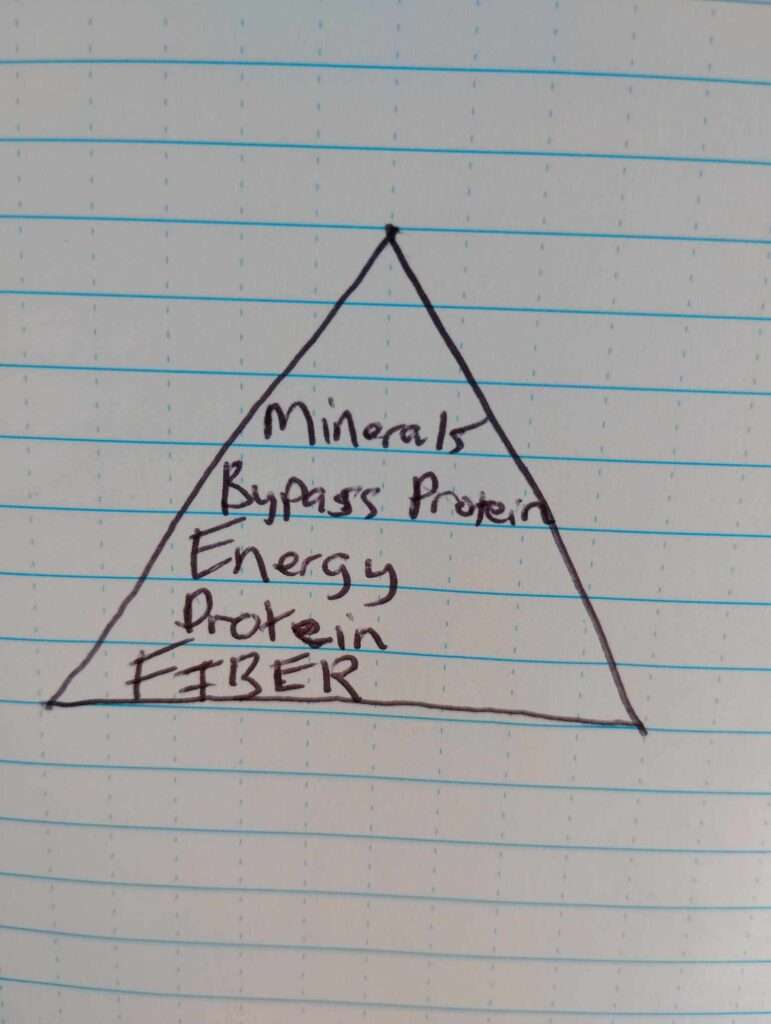
Think of a lactating cow’s nutritional demands as a pyramid. The very base consists of fiber, which is the rumen mat. This is grass, or grassy hay. Next is the protein derived from the fiber. Some, like alfalfa, are high in NDF (non detergent fiber) which although great for a protein kick, burns up fast and offers little in the way of actual fiber. Use alfalfa sparingly, and in my opinion, not at all during the first 30 days of her lactation. Not all grass is created equal. Acid Detergent Fiber (ADF) is high in cellulose and lignin, offering little use for a dairy cow. Knowing what your fiber is can help you adjust the following components. Energy follows that, which is usually corn. Energy is a MUST for a healthy cow. Bypass protein is normally dried distillers (which also filters into the energy class), soybean meal, cottonseed meal etc. Black Oil Sunflower Seeds offer fat and protein. Minerals top the pyramid. Dry Matter Intake (DMI) is where all the water is squeezed out of the feed. This is what remains. A Jersey should be getting around 40 lbs a day, larger breeds such as Swiss and Holstein 50 plus. Fiber is the bulk of that diet, but it cannot be fed alone. The rest of this combination fuels a healthy cow. With that in mind, tomorrow’s post will be explaining the lactation curve, and how feed demands change throughout days in milk. Feel free to ask questions.

Nutrition and milking by Juliette Albrecht Read More »

Milking