Dexters No Bigger Than Dogs
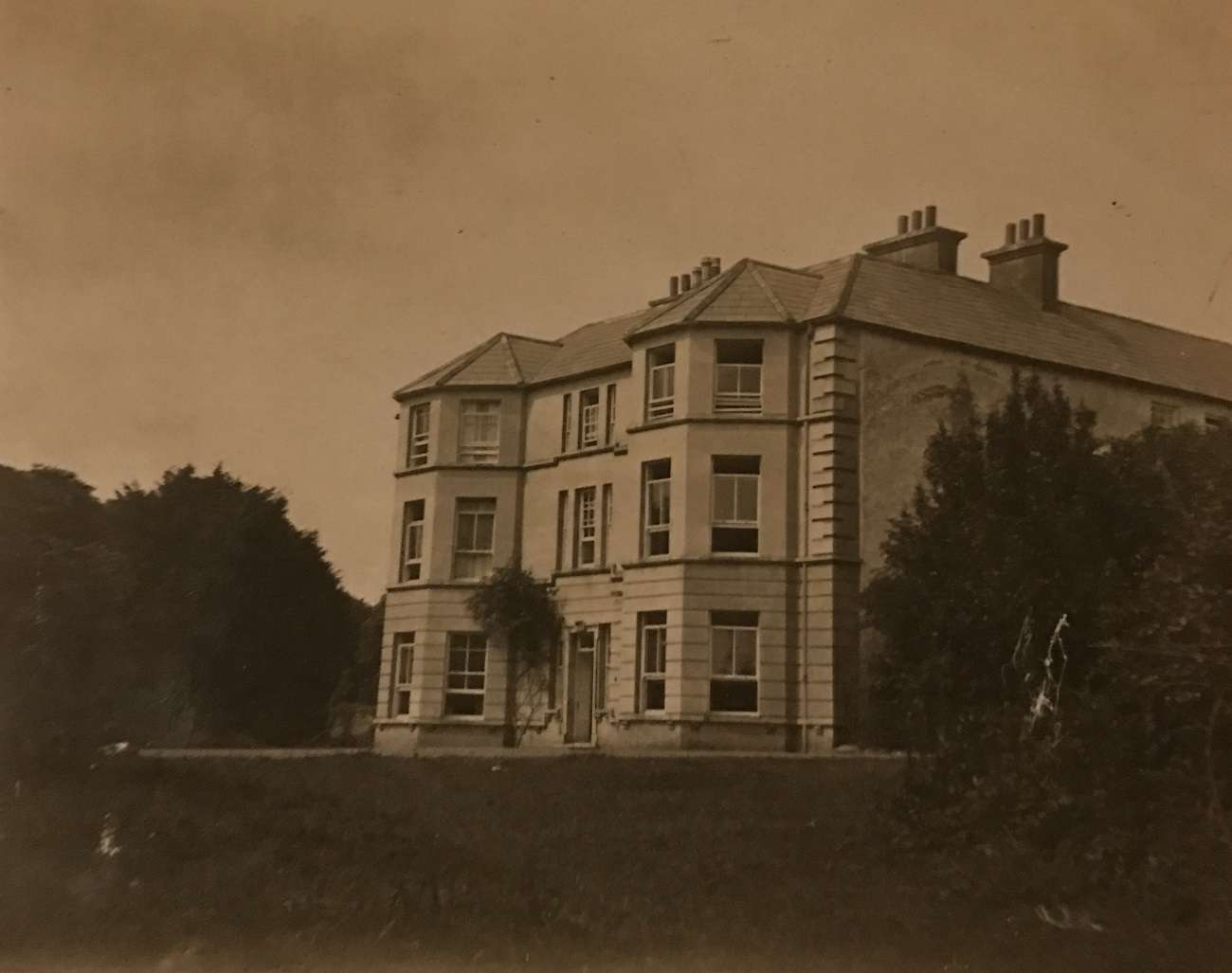
Chute Hall- Demolished in 1957
I usually like to start these articles with a picture of a Dexter cow from the past, that will be the focus for the historical adventure, as we travel back in time. But sadly, this time I have no beautiful and memorable cow to set the tone, as one could not be found for a lasting memory. Instead, I will show you a photo of Chute Hall. Chute house was thought to be built in the eighteenth century. In 1906 Chute Hall was documented to be owned by Rowland Chute. Rowland E. Chute owned it along with an additional house by the name of Leebrook House on the same estate. It remained in the family until 1930. Chute Hall was demolished in 1957 and no longer remains, but the memory of Leebrook House lives on in the Ballygarry House Hotel that has come to replace it. You could travel there for a nice stay in the beautiful hotel. Why is Leebrook significant? It was the herd name associated with Rowland E. Chute, who was a landed gentry in country Kerry. He was actually a judge for the Royal Dublin Society allowing Dexters to be entered into the herd books. The lack of history on his herd and the small bit of information that can be found is reveling to why the name of the Leebrook herd never took off.
Just How Hardy are Dexter Cattle?
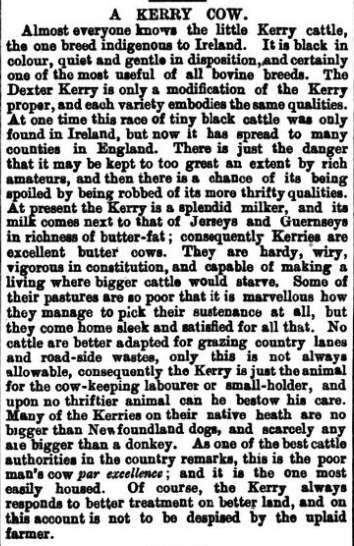
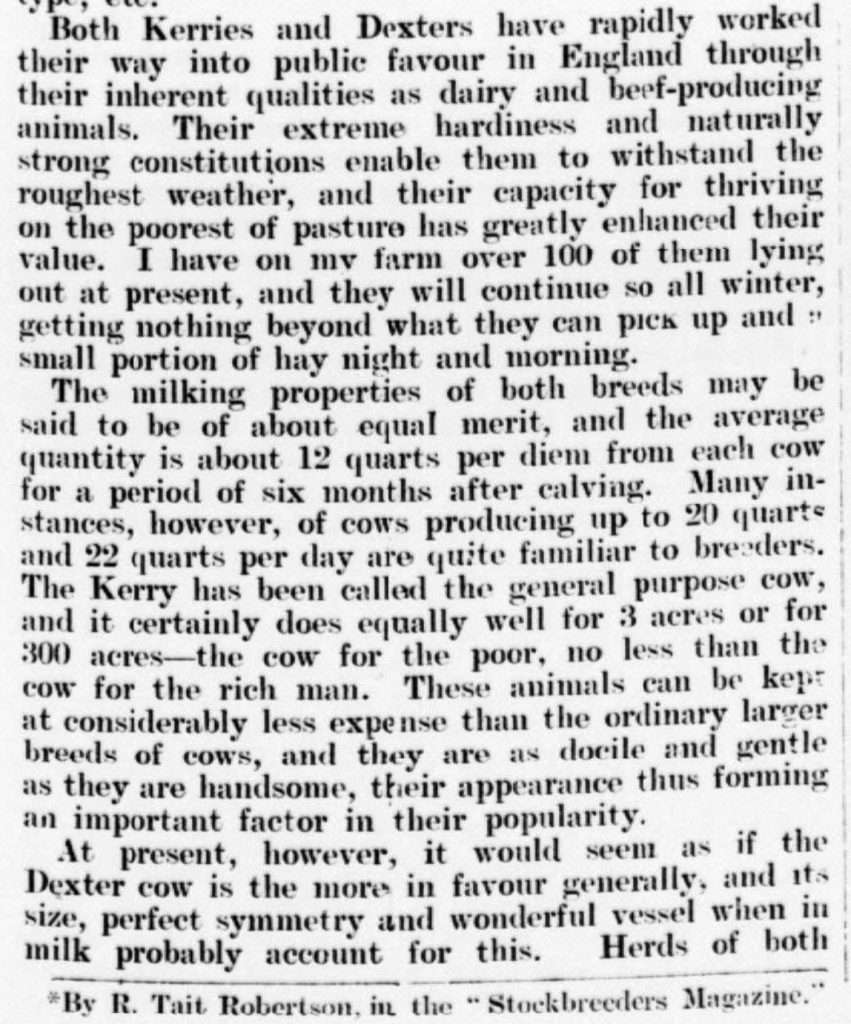
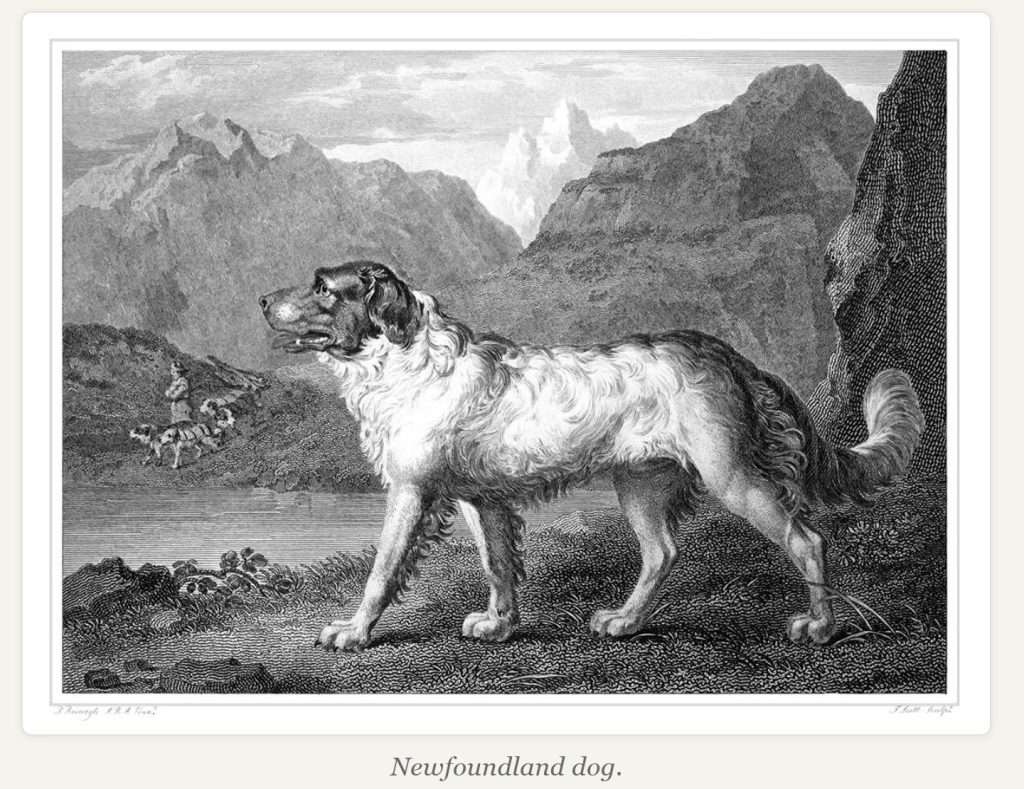
I speak a lot on the hardiness of the Dexter breed. Reminding people that they have been historically known to get by on less, endure hardship and stay productive where other cattle may not. As this above article states “They are hardy, wiry, vigorous in constitution, and capable of making a living where bigger cattle would starve. Some of their pastures are so poor that it is marvelous how they manage to pick their substance at all, but they come home sleek and satisfied for all that.” But, as responsible cattle breeders we must also balance this knowledge with the full responsibility that we must care for the nutritional needs of our animals. So that no new cattle owner may exploit the hardiness of the Dexter to such extremes of nutritionally depriving their hardy livestock, I wrote this article as a historical reminder of where this can go. Dexters in Ireland were naturally small for many reasons, some described as no bigger than a Newfoundland dog. Some of this is genetics while some may actually be due to a lack of proper nutrition in extreme situations. In England on the fertile land where they were pampered by English Aristocrats it was a known fact that the Dexters grew larger and fattened better. Some of this to the benefit of the Dexter, while some may have been a bit more pampered than they may really have needed. Balance over all is good for animals, providing adequate nutrition to be productive while letting them work for their food by grazing and giving them a proper environment to do so. A balance fosters good health while retaining their hardy genetics so that they may best serve their owners with reliable productivity.
What Lesson may we learn from Rowland Chute?
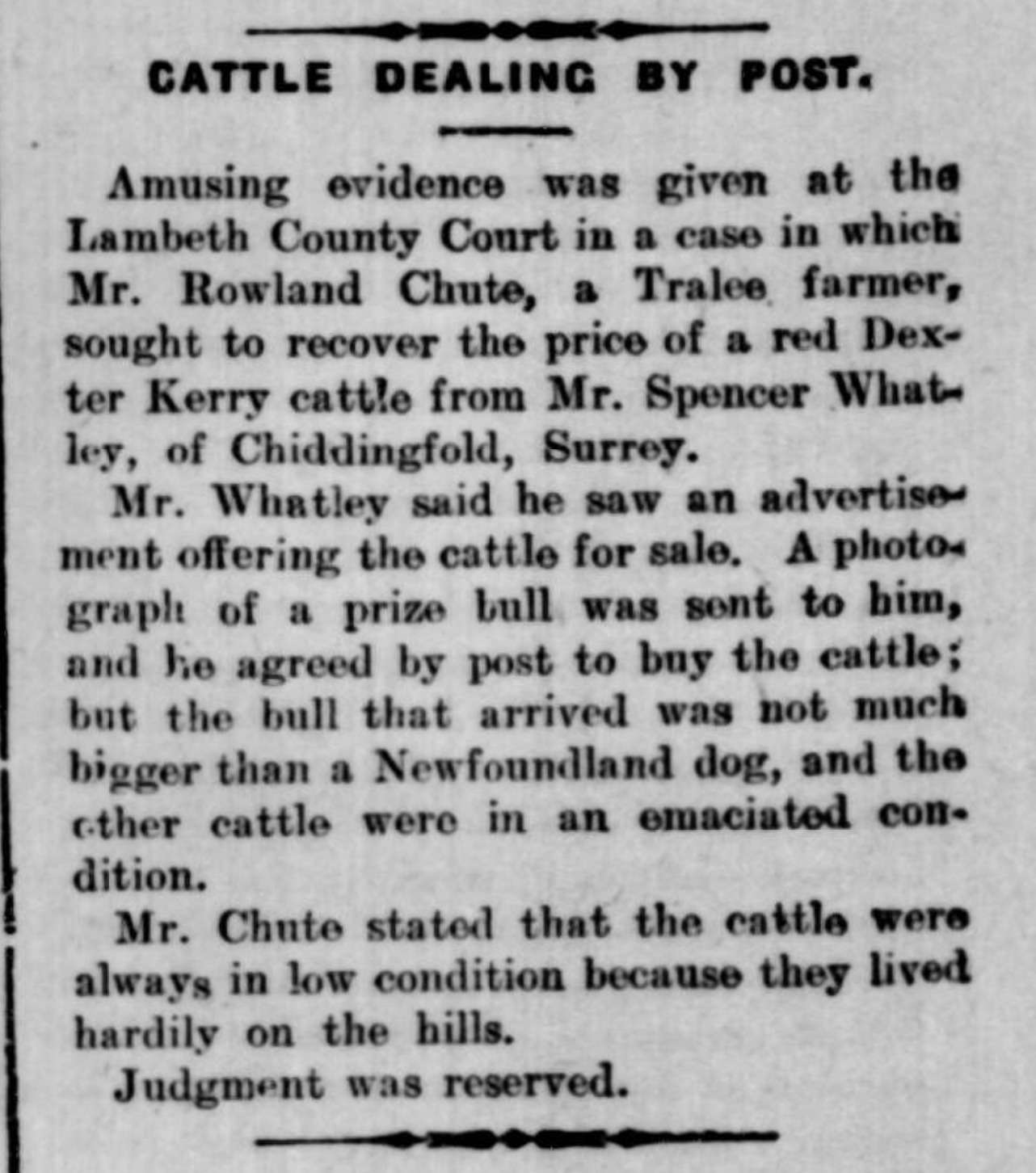
Here we will see the significance of Rowland Chute in my historical wanderings of Dexter cattle. Rowland Chute sent a photograph of a prize-winning bull (I wish had that photograph) to a prospective buyer, Mr. Spencer to help persuade him into buying his cattle. I tried to research and find information on what bull this could have been but turned up no results when looking for a Leebrook (Chute’s herd name) bull, so I must assume that the bull was of a different registered herd name. It sounds as though Chute may have sent a picture of a prize-winning bull and the buyer may have purchased stock thinking they would resemble the bull in the photograph. What the buyer received was in no wise up to his expectations but rather “not much bigger than a Newfoundland dog, and the other cattle were in an emaciated condition”. Chute’s response was “that the cattle were always in low condition because they lived hardily on the hills”.
A Vet Stated the Dexters were in a Disgraceful Condition
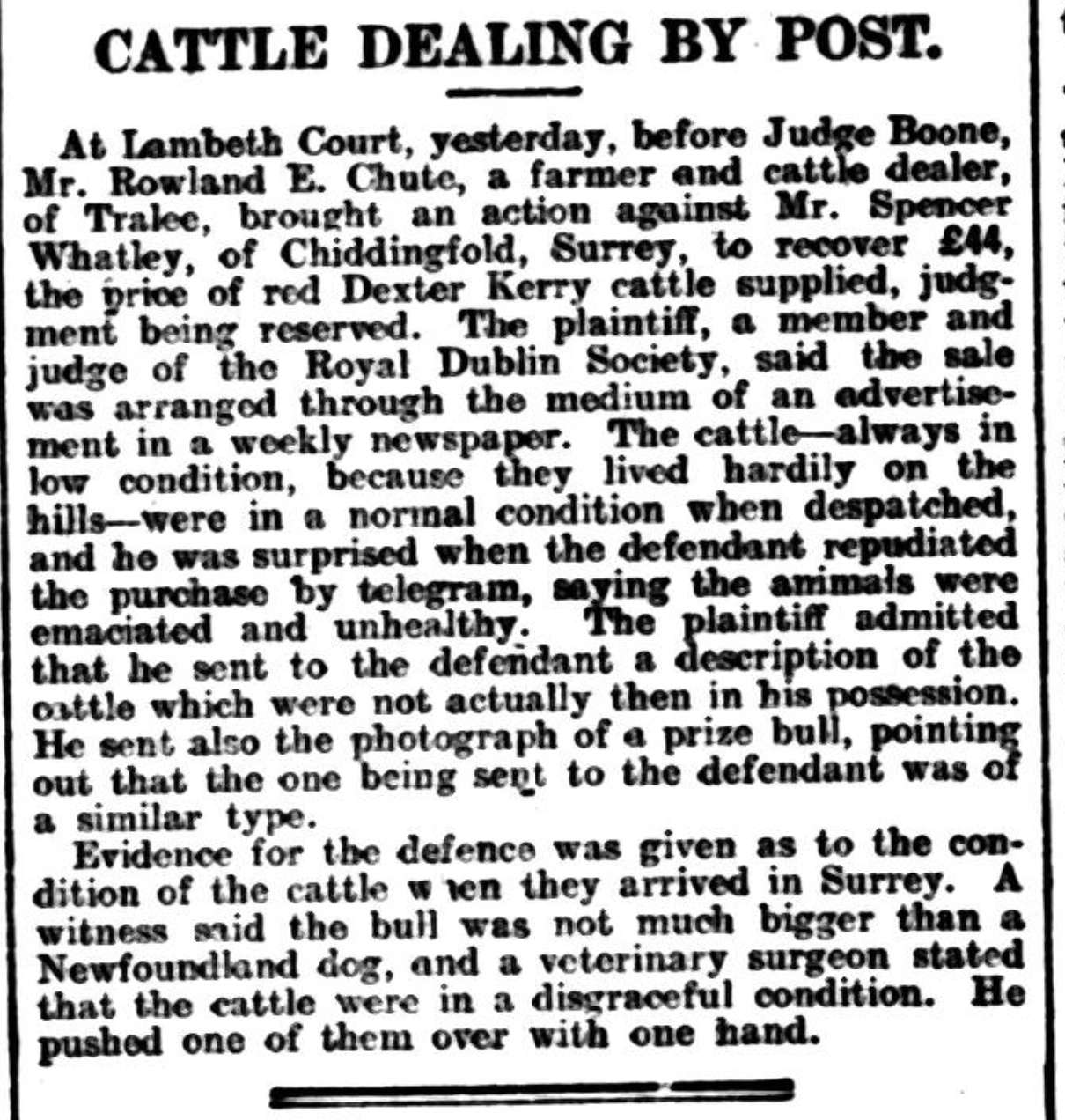
Chute claimed his Dexters were in “normal condition” because the cattle were “always in low condition, because they lived hardily on the hills”. Chute was surprised to hear the animals were emaciated and unhealthy but then admitted that he sent a description of cattle that were not actually in his possession. Instead, he sent a photograph of a prize bull! It does cause the mind to wonder where these animals may have been obtained from, just wondering the hills waiting to be snatched at the moment a perspective buyer was found. Witnesses definitely backed up the claim of the poor condition of the Dexters. Most importantly a veterinarian said that they were in disgraceful condition. Those are strong words; he did not just say they were in low condition but disgraceful! The bull was not much bigger than a Newfoundland dog. A male Newfoundland dog may weigh as much as 150 pounds and stand at 28inches tall. To consider the size of a Newfoundland dog see the story here where a Newfoundland Dog and a little Shetland Pony similar in size “have struck up an unlikely friendship”. https://www.chroniclelive.co.uk/news/north-east-news/newfoundland-dog-forms-unlikely-friendship-21682333
The Final Verdict for Rowland Chute
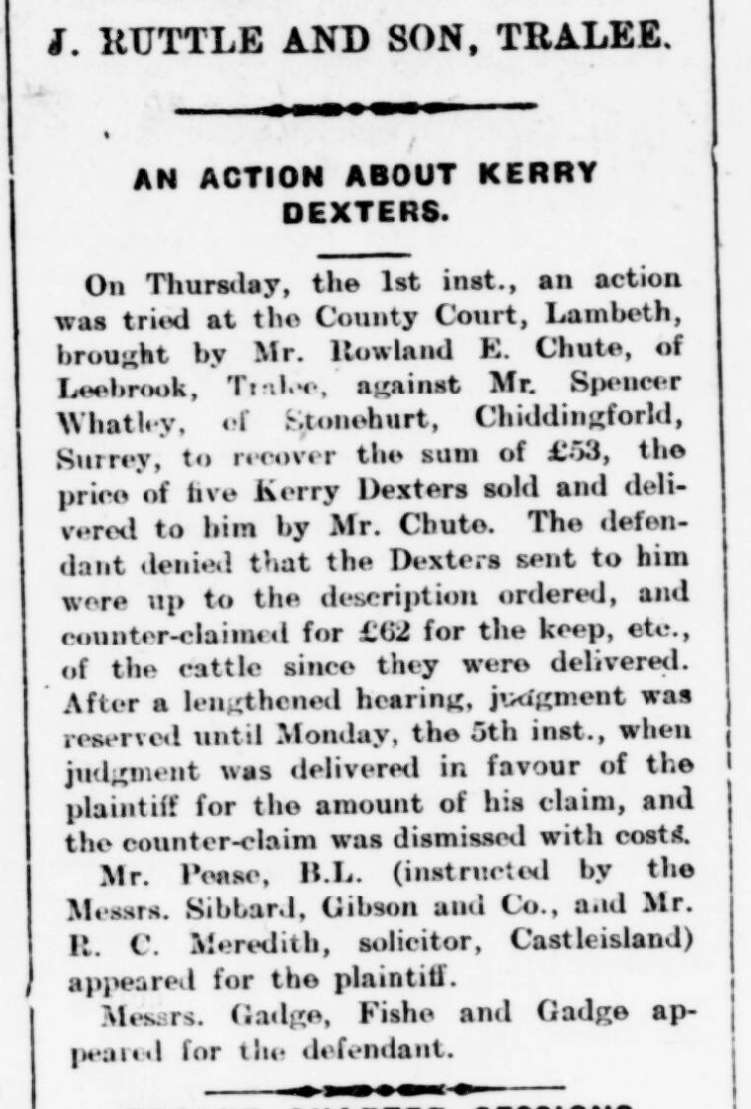
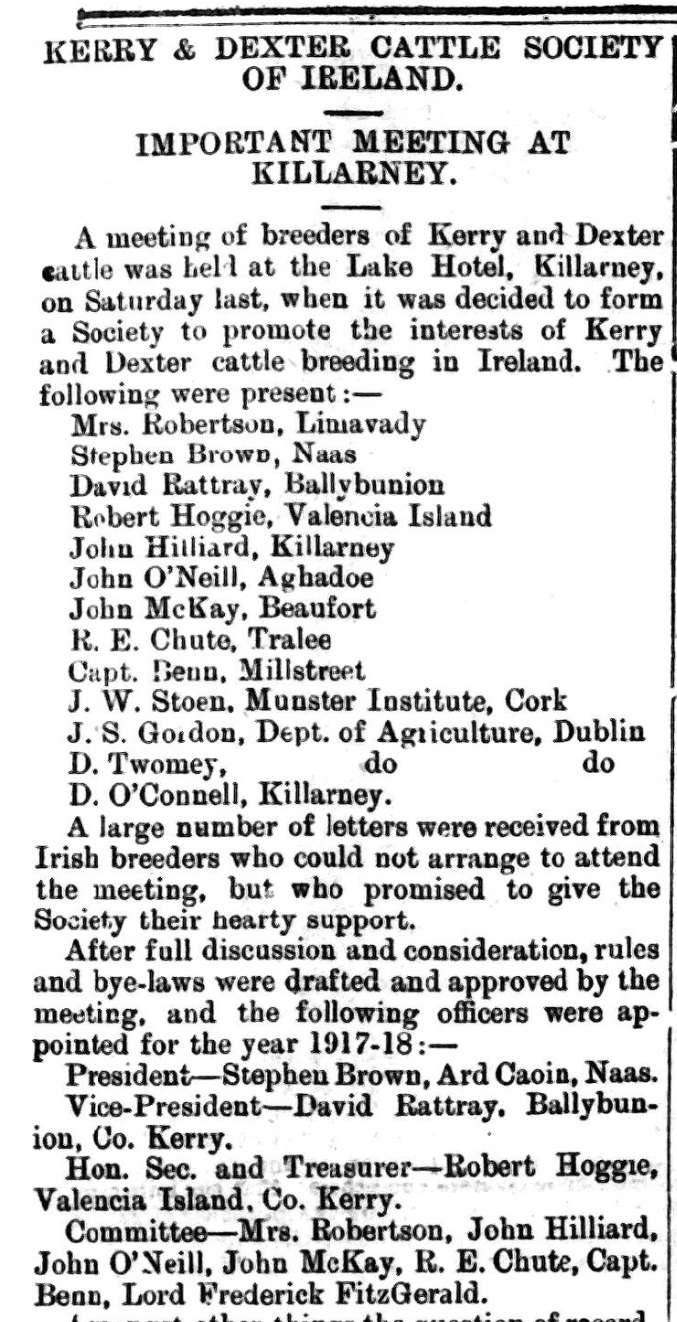
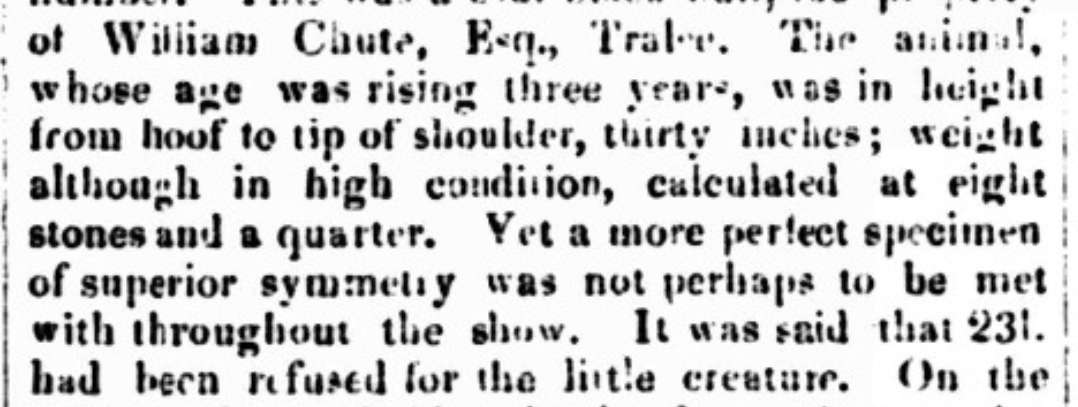
In this article Rowland Chute, the plaintiff was requesting £53 to recover the cost of the Kerry Dexters sold to Mr. Spencer Whatley. Mr. Watley countered that Chute should pay 62 £ for the keep of the unfit cattle upon their arrival since they were delivered. The County Court, Lambeth delivered in favor to Chute awarding him his claim of £53 and dismissing the counter claim from Mr. Watley. Mr. Rowland Chute was vindicated that day of his charges, but a further look into the Herd books shows that Rowland Chute had a very limited future with Dexters. When I searched for records, I found only 3 registered cows with the prefix Leebrook. Leebrook Cush, Leebrook Darkie and Leebrook Stella. All of these three cows were owned and bred by Rowland E. Chute and Qualified by inspection. If I were to guess they were possibly inspected by Mr. Chute himself since he was a judge for the Royal Dublin Society. None of these cows show any offspring that I can find. One cow’s date of birth is listed as 1898, the other listed as Dec 11, 1898 and the last Dec 20 1898. I later found Chute appointed an officer for the “Kerry and Dexter Cattle Society of Ireland” in 1917 written in the Kerry Evening Post. For a man who was so involved with Dexters, appointed a judge and an officer, he has a very small number of Dexters registered to his name and you can’t but wonder if his cattle that were once said to be “in a disgraceful condition” had something to do with why. If a breeder wants to stay long in breeding any form of life one must attend to its needs and we must never give hardiness as an excuse for a true form of neglect. I will not develop any conclusive opinion on Mr. Chute as there were some incredibly small Dexters in Ireland, as I said before partially due to genetics and diet. Chute was said to have had a bull that weighed 8 stones and a quarter (115.5 pounds). The 3-year-old bull measuring at 30 inches from hoof to tip of shoulder was said to be in high condition. The comment was made in reference to this bull, “Yet a more perfect specimen of superior symmetry was not perhaps to be met with throughout the show.” This bull I will wager was the prize bull that was previously mentioned. It is fair to say that most Dexter owners will want a Dexter to fatten out at a larger weight than 115 pounds, live weight and if properly taken care of you may nearly guarantee today, whatever type of Dexter you raise, they will by 3 years old.
Chute Apointed Committee Officer for The Kerry and Dexter Cattle Society
Perfect Specimen of a Dexter Bull weighing 115.5 pounds
My full intent in researching this information was to be thorough, but I also know that the history of Dexter cattle is extensive and recognize that even with every good effort I could possibly be missing information in my research to enlighten us on the situation of Rowland Chute. I will take no hard line in conclusion on the matter of Mr. Chute but rather leave it in the hands of the reader.
-Danielle of Bryn Mawr
Information may not be reproduced without giving credit to the author.
Dexters No Bigger Than Dogs Read More »
Historical