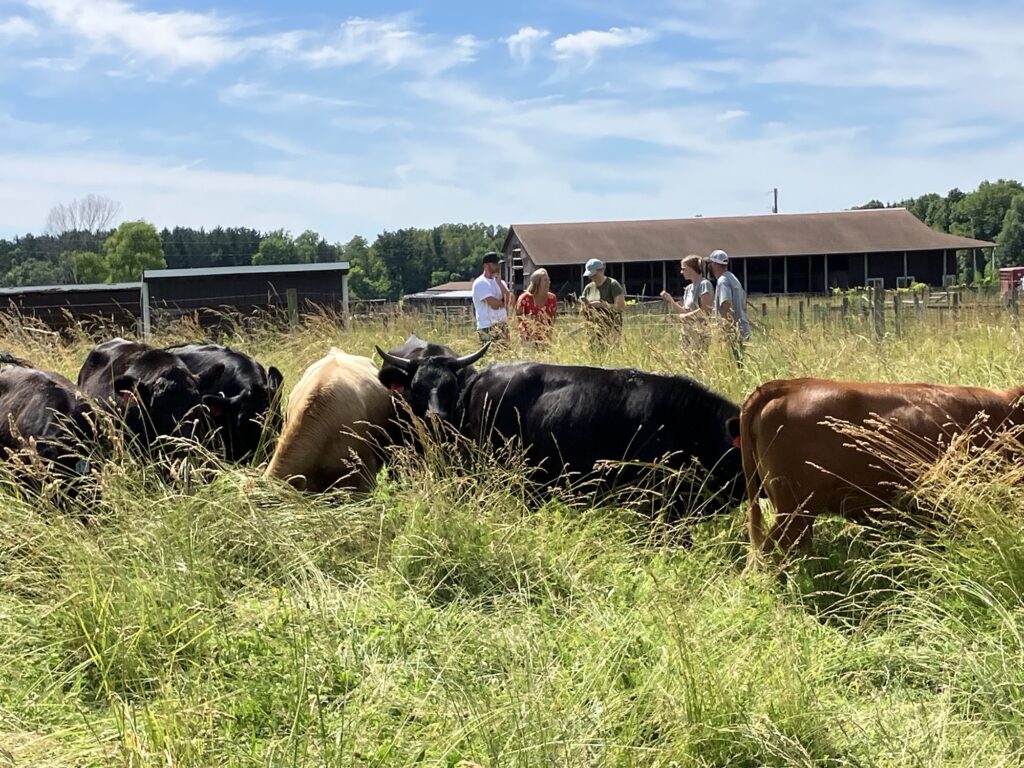
The question that starts rolling around in all our brains the moment the weather turns and we see the fresh green forage poking through the soil is, when can I start grazing my cattle? This is an important question and one that requires some observation. Turning the cows out too soon could have significant impact on the length and quality of forage growth during the entire grazing season. The hay is usually dwindling at this point and everyone is eager to start grazing. But, please pause and read this short article for advice and have a great grazing season!
The article below has some simple, cost-effective solutions to managing mud on your farm or ranch. there are also a few more in-depth, long term solutions if you have the time and resources to complete them.
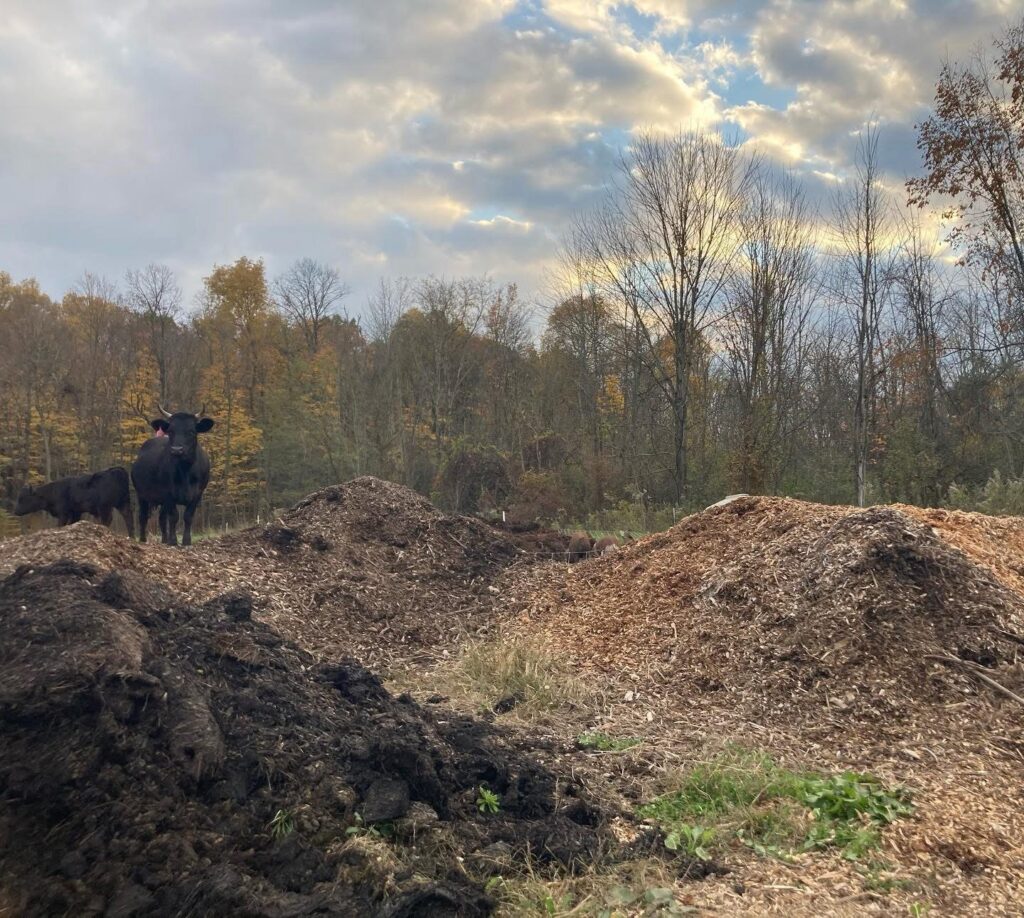
We have used wood chips in high traffic areas of our farm with good results. And, we get free wood chip drops from local arborists, so it is very cheap. The added benefit is that the manure and wood chips make great future compost for the garden.
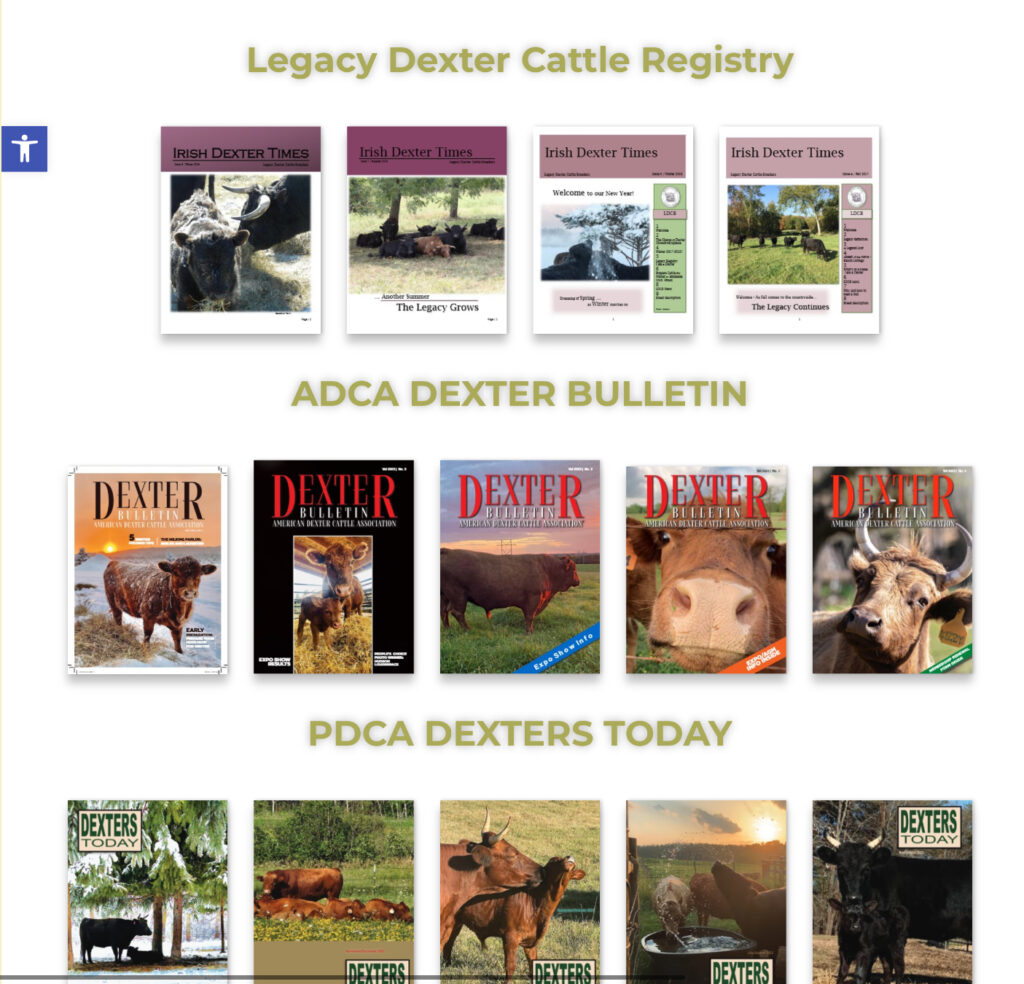
If you looking for more information on our wonderful breed, scroll down past the digital magazines to the flipboard section. There are several of the Dexter Registry Magazines that have been converted into easy to view flipboards. So much history at your fingertips in one place, the IDC Gazette.
Three years after I started my Dexter journey, it was mid October, 2019 and my farming world felt as though it was collapsing around me. After weeks of fighting an unknown illness and exhausting every option available, I was forced to make the devastating decision to put down my first cow. I was heartbroken. And just when I thought I had reached the lowest point imaginable, things took an even darker turn.
Only weeks earlier, Maggie—one of my most beloved milk cows—and I had quietly celebrated an extraordinary milestone: one full year in milk. For a Dexter cow, this was no small achievement. Most Dexter lactations last eight to nine months at best, but Maggie loved being a milk cow. By intentionally delaying her breeding to move her from a fall to a spring calving schedule, she was able to continue milking far longer than expected.
That high didn’t last.
Branna before she got sick. She was such a sweet little cow.
Just one week later, Branna—one of my first fresheners—fell ill. I rushed her to the veterinarian at the very first hint that something was wrong, but despite every effort, she spiraled downhill with terrifying speed. After three on-farm veterinary visits, countless treatments, and test after test, I was left with the most painful decision a farmer can face. Two weeks after her first symptoms appeared, I remained by her side, heart aching, as we made the compassionate choice to let her go humanly. My husband loaded her body into our trailer and together we made the long journey to OSU vet school to have a necropsy done.
Exactly one week after Branna became sick, Maggie followed. The vet confirmed Maggie was pregnant and said, “Maybe we can help her survive long enough to calve.” But she was still five months away from her due date, and given her rapid rate of decline, that hope felt impossibly distant.
Both cows health deteriorated with terrifying speed. My head was spinning. The veterinarian had no clear answers and no way to stop whatever was happening. He believed Maggie’s illness was unrelated to Branna’s, but after a second physical exam—conducted one week after the first—he unofficially diagnosed Maggie with BLV (Bovine Leukemia Virus), a disease considered incurable and ultimately fatal. That diagnosis was based solely on physical examination; no blood test had yet been performed. And because Maggie was running a high fever, which is of course not impossible but it’s not typically associated with BLV, I questioned it. I had the vet pull blood and send it off for testing.
Maggie continued to decline at an alarming rate. A cow once described by my veterinarian as “really fat” became a shell of her former self. For ten long weeks, she hid in the woods, barely eating and shivered non stop running a persistent high fever. Twice a day, every day, I hauled food and water to her, desperate for her to take even a few bites. Some days she did. Many days she didn’t. Often, I simply sat beside her and cried.
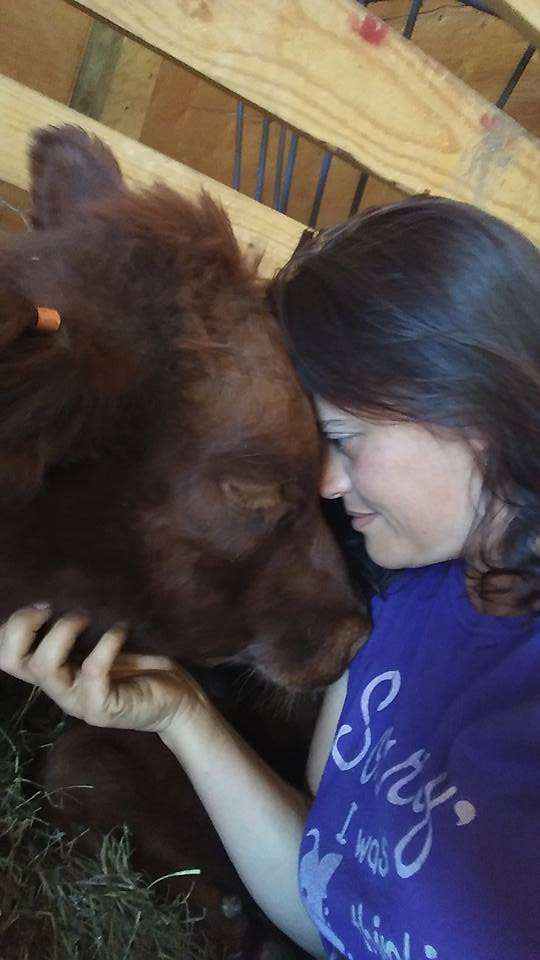
I was utterly shattered. To say I was broken feels like an understatement. My animals mean everything to me, and suddenly I was watching not one, but two cows slip away while I stood helpless to stop it. I’m not someone who cries easily—certainly not in front of others—but this season reduced me to sobbing in my husband’s arms more times than I can count. I couldn’t bear the thought of losing them both in the same month.
There were two moments during those ten weeks when we made the painful decision that it might be time to let her go—made all the harder by the fact that she was pregnant. One of those days fell on my daughter’s birthday. The other was a Saturday night. Both times, Maggie survived the weekend, and then—something would change in her disposition so I postponed the call to the vet, clinging to whatever hope I could find.
Over time she’d rally just enough to make us pause. Two small steps forward, one giant step back. Her improvement was so slow it was almost imperceptible, leaving me wondering if it was real progress or simply my heart refusing to give up. She had lost more than 300 pounds and was so weak that she stumbled with every step. At one point, she even dropped to her knees, and I thought to myself, This is it—she won’t get up again. But Maggie is a fighter.
Eventually, Branna’s necropsy results came back. She had suffered from a massive infection affecting every organ in her body—including her heart. The necropsy took a month and cost me nearly $900 and they never could tell us how she got so sick. All tests for communicable diseases were negative. The vet was now certain Maggie had not been battling the same illness. Still, we had no explanation for what had caused either cow to become sick.
Then, ten weeks to the day after Maggie’s first symptoms appeared, her fever finally broke. That morning I walked into the living room and looked out toward the pasture, convinced I was still dreaming. There, in the open, stood Maggie—no longer hidden in the woods, but calmly eating from the hay bale. My legs gave out. I dropped to my knees and sobbed, overwhelmed by the sight of her standing there, triumphant—her battle finally won. It was the first milestone that brought tears of joy—and it wouldn’t be the last. Her recovery was slow, but steady. Each week, she grew a little stronger. Naturally, I assumed she had miscarried, yet at that moment, I was simply grateful she was alive. For the first time in weeks, I allowed myself to believe that the worst might finally be behind us.
The veterinarian later retracted the BLV diagnosis, and subsequent testing confirmed Maggie was negative. He admitted these were two of the strangest cases he’d seen in a very long time. We may never know what truly happened.
Then, a few months later, as I stood loving on Maggie, I saw it—distinct kicks in her belly. She was still pregnant! Or was it just wishful thinking?
My husband doubted it. After all, Maggie had stood at death’s door more than once. But I was so sure of what I had seen. Even so, I couldn’t help but wonder what condition that calf might be in after ten weeks of illness, high fever, and near starvation.
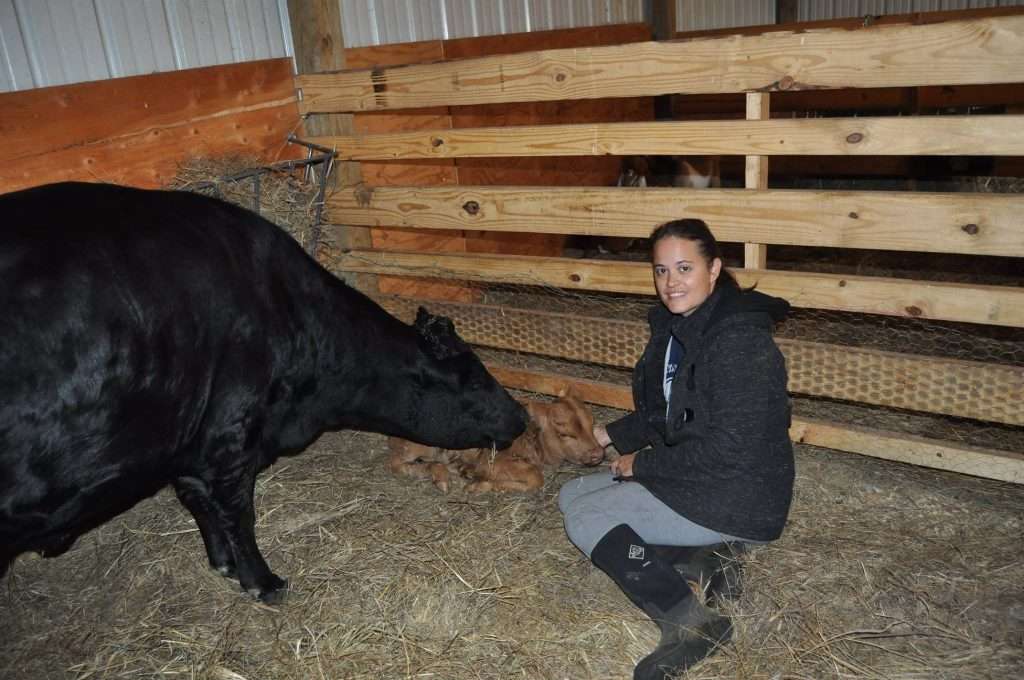
On Sunday, March 31st, at 7 p.m., Maggie didn’t come up with the rest of the herd for feeding. Worried, I went searching. I found her deep in the woods, standing over a very wet little red bull calf. Maggie—and her little miracle. I stood there as the sun set, tears streaming down my face, watching them together. When darkness crept in, I congratulated her, told her how much I loved her, and quietly walked away. I looked at my husband, smiled, and said, “Mags is back.”
For five long months, I cried more than I thought possible, prayed without ceasing, lost countless hours of sleep, and ridden an emotional roller coaster I wouldn’t wish on anyone. But through it all, God never forsook me, and He heard my prayers.
After everything Maggie had endured, this strong, healthy little bull calf was nothing short of a miracle. He deserved a name that reflected the gift he truly was. We chose Theodore—which means “Gift of God.”
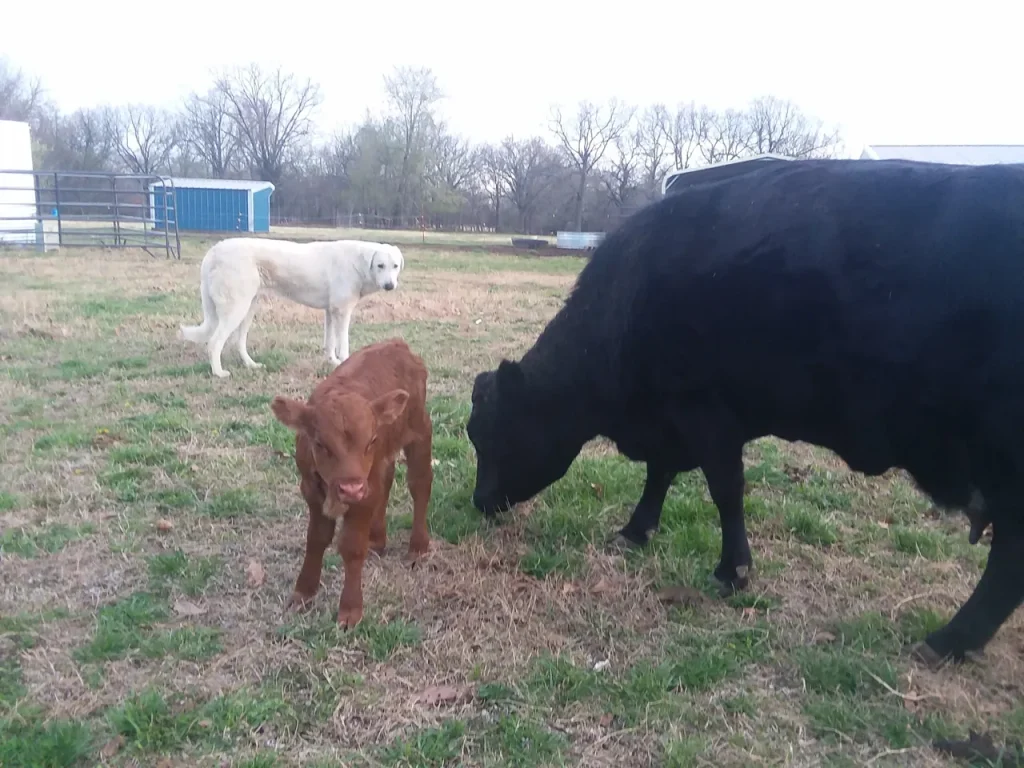
P.S. As you can see in the photo, Maggie had fully regained the condition she lost. She is a survivor. Thank you, Jesus, for making Dexter cattle so remarkably hardy.
About the Author:
Kimberly Jepsen is the heart behind MooShine Ridge in Vinita, Oklahoma, where she and her husband, Kevin, have been raising dual-purpose Dexter cows since 2015. Their little farm store is a labor of love, offering Dexter beef, raw milk, and artisan cheeses made from their own cows. Kimberly has a deep passion for the Dexter breed and loves nothing more than sharing what she’s learned over the years—whether it’s guiding fellow farmers, helping newcomers discover the joys of small-scale farming, or simply introducing people to the rich, creamy flavors of her handcrafted cheeses. For her, farming isn’t just a business—it’s a way to nurture animals, the land, and the community she cares about. https://mooshineridge.com/
Another registry “innovation” finds the US herd a hodgepodge of mediocre and forgettable initialed herd names. The US is the ONLY country in the world that has so little respect for Dexters they guarantee breeders basic anonymity by using initials of farm names as herd identifiers! Goodness but it IS forgettable.
Here’s an example. I was trying to convince a new breeder about to register a first calf NOT to use the initials encouraged by the US registries for it all but determines anonymity for their herd. Truth be told. . . . there are only two initialed herds in the US I remember by initials, both because the owners were/are prominent in the breed. So, . . . I gave this person examples of wonderful and imaginative herd names, and then I looked at the state of Virginia ( where the owner lived) and picked out three herds with initials. I know most herds and owners by heart through constant research. . . and I looked at the initials and began the process of trying to remember the herds. It was a struggle! One of the herds I knew very well because my own bloodlines founded the herd and it was a perfect example of how even a constant researcher will NOT recognize herd initials. Almost guaranteed anonymity and obscurity unless the person becomes a huge long-term breeder with a large herd.
Woodmagic was chosen by Beryl Rutherford because it was based on a favorite book from childhood, and all her Dexters were named after woodland creatures and birds. Grinstead brings a smile to one’s face, with or without the beautiful photos of that herd and it’s dominance in pedigrees through the years. Most English herds were named after the homes or estates or towns where they grazed. It would be interesting to know the history of the choice of La Mancha for the Robertson family’s Dexter herd, but Round Chimneys leaves little to the imagination. Parndon was a parish in Essex, England, and the origins of Ypsitty is still a mystery to me. My least favorite herd name in the English records is Bryn-y-pin because it was difficult to type.
American herd names prior to the 90’s were also imaginative and memorable. Peerless certainly lived up to it’s identity, and every Missouri Dexter owner would immediately know the roots of “Shome”! Shamrock immediately brings to mind the hallowed green leaf of Ireland, while Rainbow and Rainbow Hills are colorfully soothing to imagine. Talisman is a herd name I always liked, and there is a Virginia herd that lives in literal “Paradise”. The Lone Star and Cascade herds identify their geographic locations but also denote history, and Chautauqua identifies an area of NY where the herd is located. ( Another typing challenge for me).
Then we have SGF and SMD. These herds are owned by long-time well known breeders. Can you immediately identify these herds or do you have to stop and think as I did with a herd I knew as well as my own? In England, or Australia, or even Canada, you would most likely know these herds as Spruce Grove or Silver Maple and the identifier would be far more memorable.
One registry started this and the other continued this nonsense of encouraging owners to use initials and give US Dexter herds guaranteed mundane, boring, and unimaginative herd identifiers. This is an “only in America” tradition that needs to fade into the obscurity IT deserves. Please registrars. . . . STOP . .. . .suggesting to owners to use initials. If you are fairly new to the breed. . . . . then CHANGE those initials to a memorable herd identifier and INSIST on it.
IF. . . you are a new breeder and happen to read this page. . . . . . . . . . . . . your Dexter breeding program deserves a unique identity. I strongly urge you not to be led down the initialed path to anonymity.
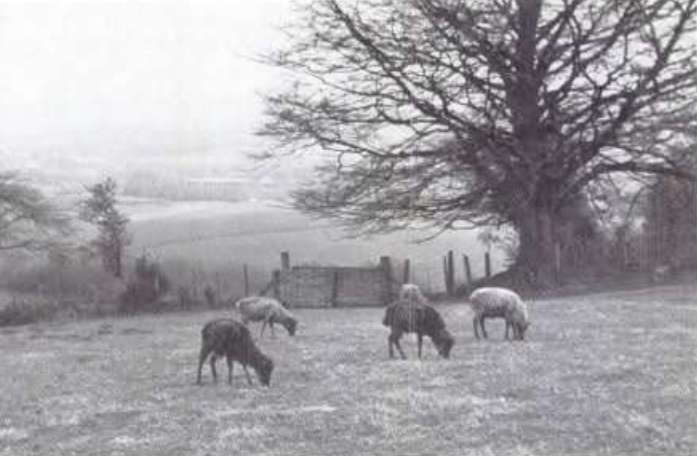
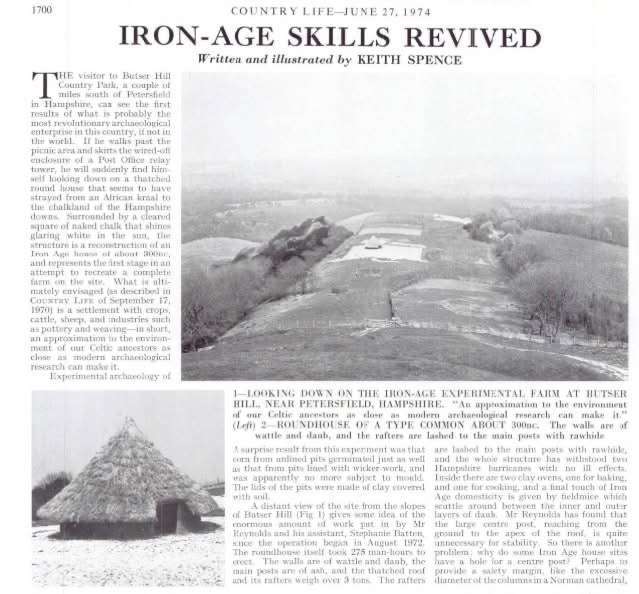
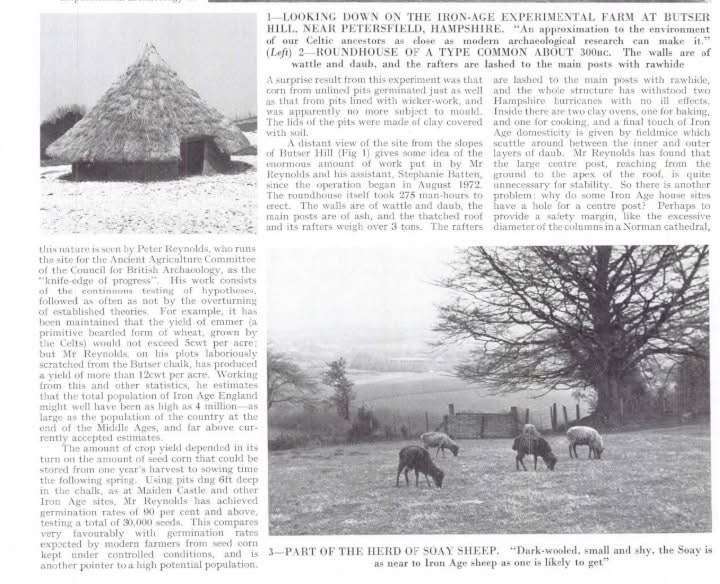
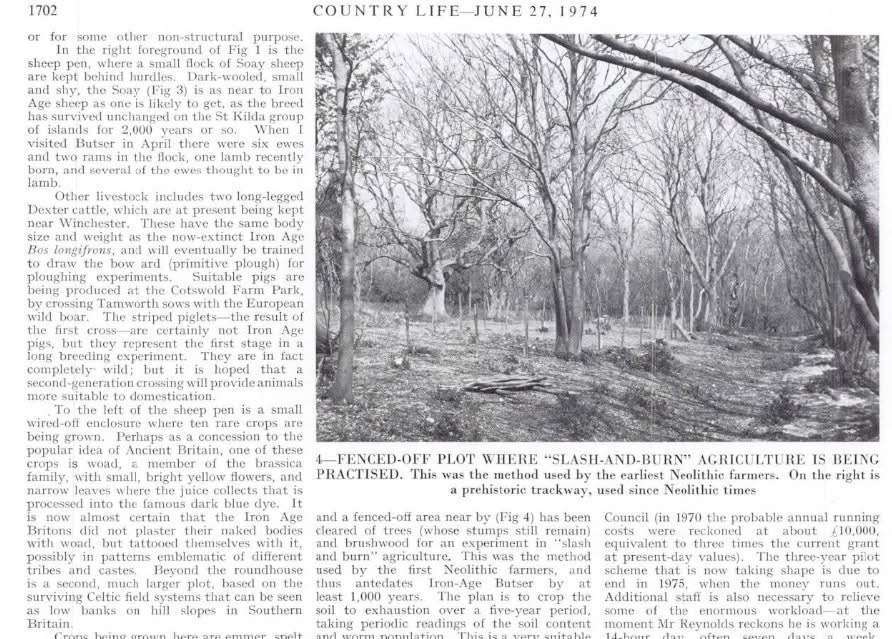
Two long legged Dexters were kept at an Iron Age site to replicate a farm in 300 B.C. The attempt was to recreate what some of our Celtic ancestors would have experienced in their environment as close to what archaeological evidence in 1974 could validate. A round wattle and daub building was constructed with a thatched roof on site, and it withstood two Hampshire hurricanes with no ill effect. A man named Peter Reynolds was testing hypotheses to establish or to refute established theories during his era. He researched to establish accurate theories on the livestock and crops that would have been grown at that time. He wanted to establish facts and create a representation of the time as accurately as he could. The dark wooled small breed of Soay sheep were kept, as it is commonly believed they are as close as possible to the Iron age sheep genetically, because they remained isolated on St. Kilda for thousands of years. Then there are the two long legged Dexter cattle being kept that are believed to be the same body size and weight as the extinct Bos longifrons. This seems to be what was considered the best match for the time. When researching the subject, I found that McKenny Hughes says “that Bos longifrons was a very small animal; probably not larger than a Kerry cow.” It was likewise believed that the color of the British and Celtic Bos longifrons was black but with a shorter horn shape than is seen in Kerry and Dexter cattle. With those considerations it is understandable that long legged Dexters that have often been called Dexters of the Kerry type would have been used as the best choice for the day. Newspaper article: Country Life 27 June 1974
I found this DIY feeder when I was looking for inexpensive options for my sheep. As Dexters are smaller, I could see this working great for them as well. It would also work well if you have mixed species together in the pasture.
When you are considering trying something new it is always helpful to have the wisdom of others who have tried and failed or succeeded. We’ve done a little winter bale grazing with our Dexter herd, and the effects on the pasture are dramatic and obvious (a swath of lush green and clover through a mostly browning pasture). Here is a great farmer led study on the benefits of bale grazing that I have found compelling. Have you or would you try bale grazing?
Here is a testimonial from someone who paid to get access to the Irish Dexter Cattlemen Gazette!
Yes. This is a big need. I believe there are a lot of people like us out there but the world is so commercialized that breeds like dexters don’t have as much information to learn from. This is gonna be a great tool for us and I’m sure it will help us grow more into what we’re wanting to accomplish on our farm in the future. Carrie Ann Bowers