Announcing My Farm Dashboard
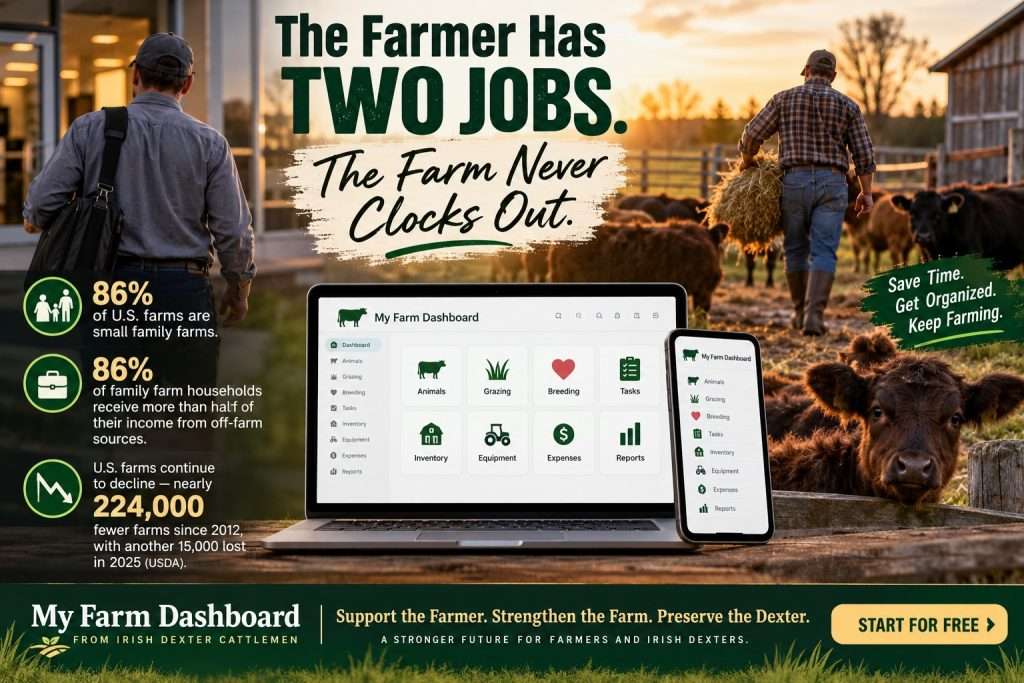
THE FARMER HAS TWO JOBS. THE FARM NEVER CLOCKS OUT.
For many American farmers today, farming isn’t their full-time job.
It’s their second full-time job.
They get up early to feed livestock and handle chores. Then they leave the farm and go to work to earn the income that helps support their family—and often helps support the farm itself.
At the end of the workday, they come home.
But the farm doesn’t clock out.
• Animals still need feeding.
• Fences still need fixing.
• Pastures still need managing.
• Equipment still needs maintenance.
• Farm records still need updating.
• Breeding decisions still need making.
• Hay, feed and supplies still need buying.
And tomorrow morning, it starts all over again.
This isn’t just our impression. USDA data shows how widespread the problem is.
According to the USDA:
• 86% of U.S. farms are small family farms.
• 86% of family farm households receive more than half of their household income from off-farm sources.
• For several categories of small farms, at least 90% of households depend on off-farm income for the majority of their household income.
In other words, the farmer working an outside job while trying to keep the farm going isn’t the exception.
That farmer represents a huge part of American agriculture.
And those farms are disappearing.
America is losing farms.
The USDA’s 2022 Census of Agriculture counted 1,900,487 farms—208,816 fewer farms than just ten years earlier.
That’s nearly a 10% decline in one decade.
The decline has continued.
• 2024: America lost another 14,950 farms.
• 2025: America lost another 15,000 farms.
By 2025, USDA estimated that only 1,865,000 farms remained in the United States.
And the pressure isn’t being felt equally.
USDA data shows that small and mid-sized farms have been declining while the number of farms generating $1 million or more in annual revenue has increased.
That should concern everyone who cares about small farms.
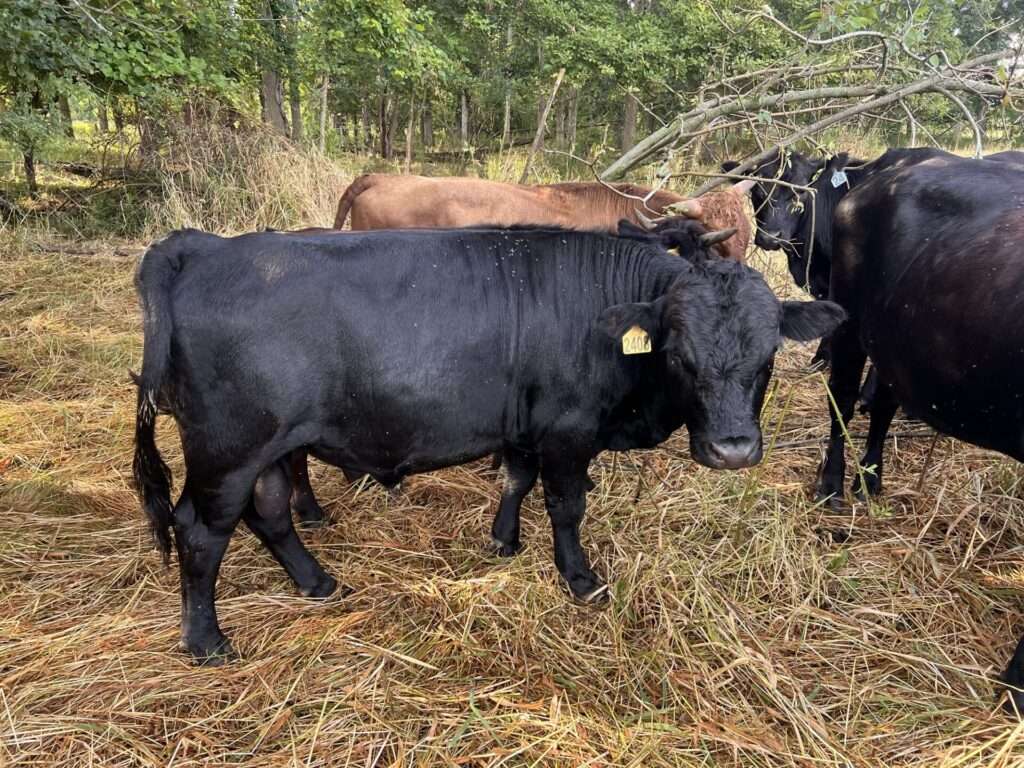
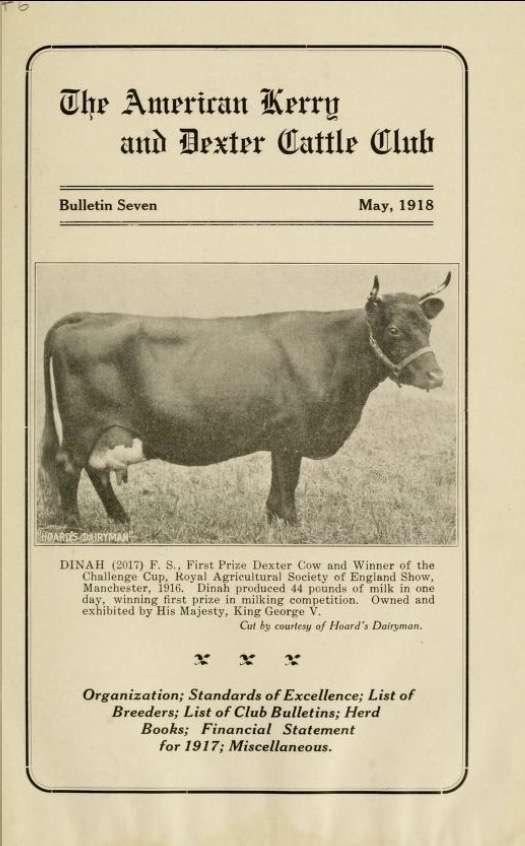
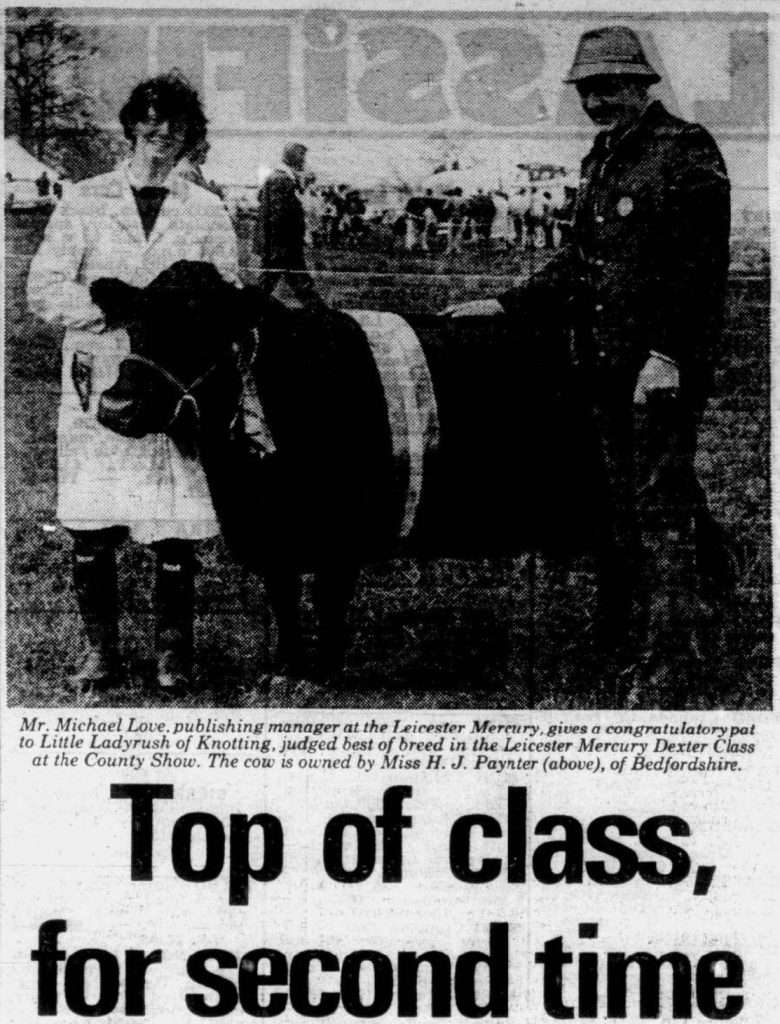
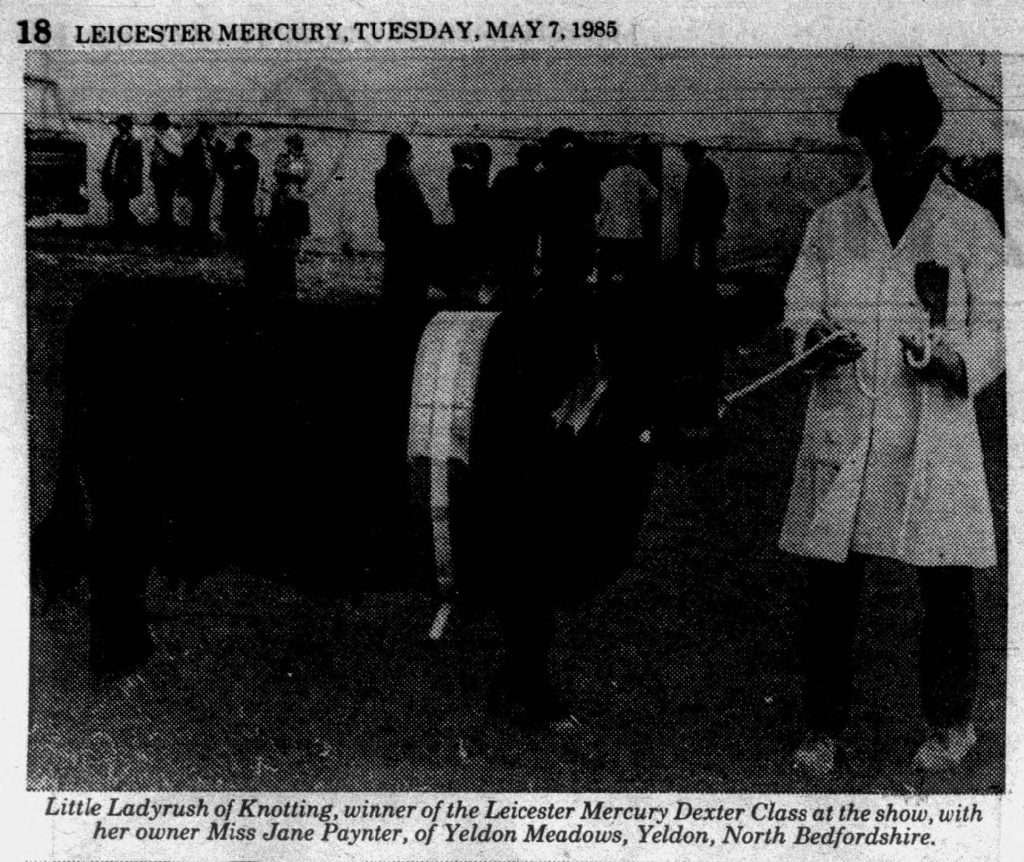
Some of those disappearing farms raise Irish Dexter cattle.
Irish Dexter Cattlemen wants to help change that.
Our mission isn’t simply to promote Irish Dexter cattle.
Our goal is to promote Irish Dexters by supporting the farmers who raise them.
Because preserving and expanding the breed requires something even more fundamental:
We need farmers who can afford—in money AND time—to keep raising them.
That’s Why We’re Building My Farm Dashboard.
The problem facing many small farmers isn’t a lack of willingness to work.
They already work incredibly hard.
The problem is TIME.
When you’re balancing an outside career, family and farm, there are only so many hours available.
Eventually, the urgent jobs take priority.
The other jobs get pushed to:
• Tomorrow
• Next weekend
• Next month
• Or sometimes never
Records fall behind.
Maintenance gets postponed.
Pasture planning becomes less precise.
Expenses aren’t carefully tracked.
Breeding information gets scattered.
Inventory gets checked only when something is almost gone.
And valuable information about the farm often exists in notebooks, spreadsheets, receipts, calendars, phones—and the farmer’s memory.
My Farm Dashboard is being designed to change that.
ONE PLACE TO HELP MANAGE YOUR FARM
My Farm Dashboard is being developed as a practical farm operating system—one place to organize the information you need to manage your farm.
The objective is simple:
Give the farmer better information while requiring LESS of the farmer’s time.
FIVE WAYS MY FARM DASHBOARD CAN HELP
• 1. Spend less time trying to remember everything.
Keep important information about your animals and farm organized in one place instead of relying on notebooks, spreadsheets, scraps of paper, calendars and memory.
• 2. Know what needs your attention.
You shouldn’t come home from an eight-hour workday and spend another hour figuring out what needs to be done.
The goal is for My Farm Dashboard to help identify what needs attention and when.
• 3. Catch problems before they become expensive.
Running out of hay or feed, missing an important breeding date, overlooking maintenance or forgetting a farm task can cost both time and money.
Better records help you see problems coming.
• 4. Make every available farm hour count.
If you only have two hours after work before dark, those two hours are valuable.
Spend them farming—not searching through records or trying to remember what you forgot.
• 5. Turn farm records into farm intelligence.
Animals affect grazing.
Grazing affects forage.
Forage affects feed requirements.
Feed affects costs.
Breeding decisions affect next year’s herd.
Weather affects almost everything.
My Farm Dashboard is being designed to eventually connect those pieces so your records don’t simply tell you what happened.
They can help you decide what to do next.
WHY IS MY FARM DASHBOARD DIFFERENT?
There are already programs that:
• Keep livestock records
• Manage grazing
• Track expenses
• Maintain calendars
• Track equipment
• Manage inventory
• Record breeding information
But a farmer shouldn’t need five or six different programs to understand one farm.
A farm is one interconnected system.
My Farm Dashboard is being built around that idea.
Instead of another piece of software for the farmer to manage, our goal is to create a system that increasingly helps the farmer manage the farm.
THREE REASONS TO START USING THE FREE VERSION TODAY
• 1. YOUR TIME MAY BE YOUR FARM’S SCARCEST RESOURCE.
For the farmer working an outside job, saving time can be every bit as important as saving money.
Start organizing your farm information so less time is spent managing information and more time is spent doing the work that matters.
• 2. THE RECORDS YOU ENTER TODAY BECOME THE INTELLIGENCE YOU CAN USE TOMORROW.
Farm history has value.
Over time, your records can reveal patterns involving:
• Animals
• Breeding
• Grazing
• Feed
• Inventory
• Equipment
• Costs
• Productivity
The sooner you begin building that history, the sooner it can start working for you.
• 3. WE WANT YOU TO KEEP FARMING.
This is ultimately what My Farm Dashboard is about.
Irish Dexter Cattlemen wants more people raising Irish Dexters—not fewer.
We want small farms to succeed.
We want today’s Dexter farmers to be able to continue farming even when another job is paying the household bills.
And we want the next generation to look at raising cattle and say:
“I can do this.”
YOU ALREADY WORK HARD ENOUGH.
Technology shouldn’t give you another job.
It should give you some of your time back.
Start using the FREE My Farm Dashboard.
• Put your farm information in one place.
• Start building your farm history.
• Use the free tools available today.
• Add additional capabilities as your farm needs them.
Because preserving the Irish Dexter isn’t only about preserving genetics.
It’s about preserving the farms—and supporting the farmers—who keep those genetics alive.
SUPPORT THE FARMER.
STRENGTHEN THE FARM.
PRESERVE THE DEXTER.
Announcing My Farm Dashboard Read More »
General