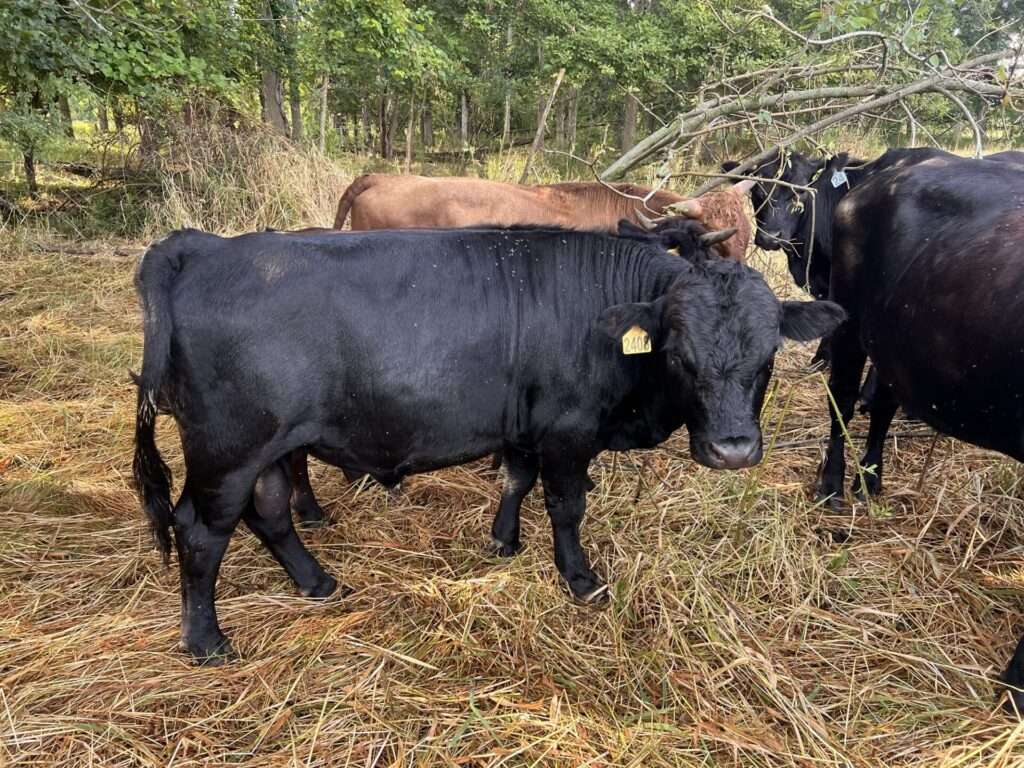
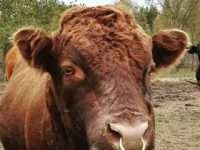
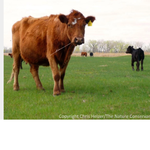
Have you noticed how some cows in a herd are the first to shed their winter coats for a glossy summer coat? While others look lacklustre and dull, shedding their winter hair out slowly.
What if I told you the cow who sheds her coat early is one to hold on to! Studies show mama cows that shed their coats early raise heavier calves than those who shed their coat later. This small increase in production can have a big effect on your bottom line, especially in larger herds.
This fascinating podcast discusses the ins and outs of hair shedding and what it means for your herd and management.
Protecting Your Livestock from Predators—Both Wild and Human
The Homestead Security Team: Four Legs, Two Legs, and a Few Feathers
Protecting Your Livestock from Predators—Both Wild and Human
If you’ve ever been jolted awake at 2:00 a.m. by what sounds like the opening scene of an action movie, only to discover your livestock guardian dogs were holding a neighborhood meeting with a coyote… congratulations. You’re officially a homesteader.
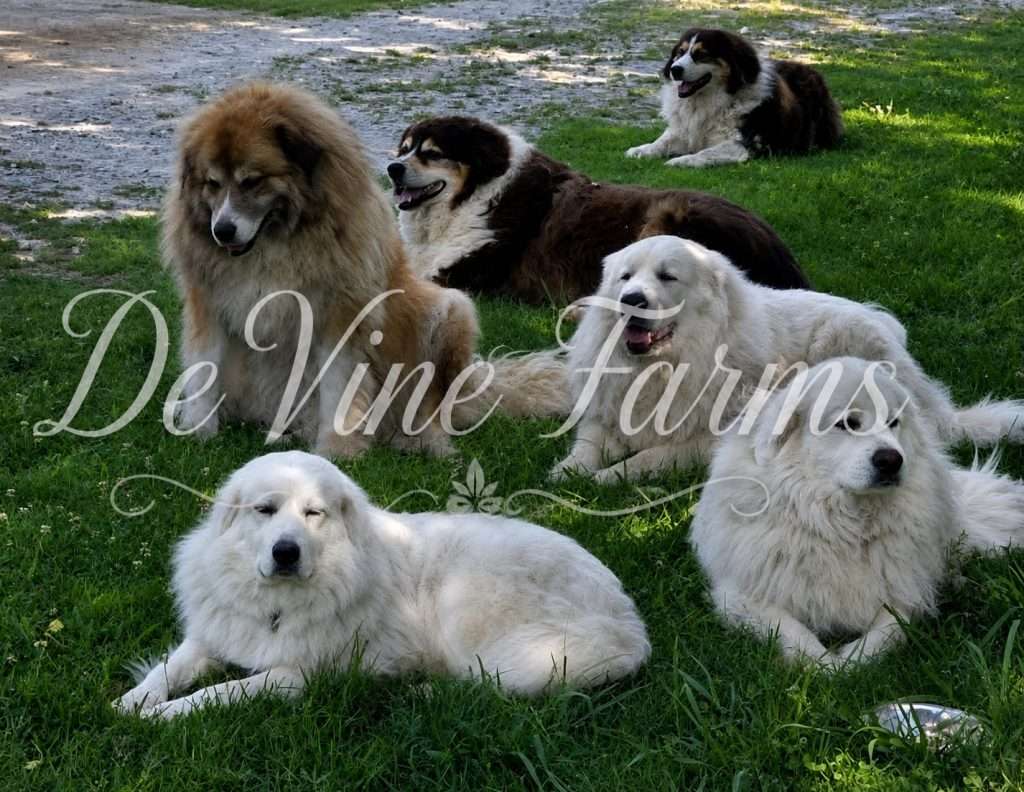
Around our farm, we don’t just have guardian dogs—we have ten of them, made up of Karakachan, Great Pyrenees, and Maremma breeds.
Yes…ten.
People ask, “Isn’t that a lot of dogs?”
Our answer is usually, “Compared to what? Ten dogs are a whole lot cheaper than replacing livestock.”
Besides, they’re a lot easier to feed than explaining to your spouse why a cougar walked off with your prize Dexter cow—or why something cleaned out the brooder full of meat chickens overnight.
Guardian animals are one of the best investments a homesteader can make. Whether you’re protecting chickens, sheep, goats, Dexter cattle, miniature horses, or simply trying to sleep through the night, the goal is the same—convince every predator to eat somewhere else.
And let’s be honest…
Not every predator has four legs.
At DeVine Farms, our guardian dogs protect Dexter cattle, poultry, and other livestock every single day, so we’ve learned a few lessons—sometimes the easy way, sometimes the hard way.
Our Favorite Guardian? The Livestock Guardian Dog
We’re admittedly biased.
Our guardian dogs don’t just protect livestock—they believe they own the farm. They’re convinced every pasture, every fence line, every squirrel, and occasionally the UPS driver falls under their jurisdiction.
They patrol the property like furry security guards who work the night shift, never call in sick, and are paid entirely in dog food, brushing sessions, and belly scratches.
They’re independent thinkers. Sometimes that means they’re barking at something you can’t see.
Don’t worry.
Five minutes later you’ll grab a flashlight and discover they were right…again.
If you’ve never trusted a dog over your own eyesight, own a livestock guardian dog for a while. They’ll humble you.
We rely on a mix of Karakachan, Great Pyrenees, and Maremma dogs. Each breed brings something different to the job, and one thing that surprises visitors is that you can stand right in the middle of the herd while the dogs are working. They don’t see you as an outsider—they see you as part of what they’re protecting.
Thinking About Getting a Guardian Dog?
Here’s the best advice I can give:
Don’t just buy the dog—learn how to raise the dog.
One of the best resources we’ve found is Jackie Church’s Livestock Guardian Dog Training Manual from Windance Farms.
Jackie has spent decades raising, training, and rehabilitating working livestock guardian dogs. Several people we’ve recommended her manual to have gone on to raise confident, dependable guardian dogs because they started with realistic expectations and proper training.
If you’re considering adding a livestock guardian dog to your farm, this book is worth reading before your puppy ever comes home.
The best security systems usually have more than one employee.
And not all of them have fur.
Llamas
Llamas are naturally alert and protective. A single gelded llama can make an excellent guardian for sheep or goats and won’t hesitate to confront a coyote that wanders into the pasture.
Like any livestock, llamas need regular handling. A well-socialized llama is much easier to work with than one that’s been left to grow up wild. And yes…they really do spit. Usually, it’s reserved for another llama they’re trying to put in its place, but if you annoy one enough, don’t be surprised if you become the target.
Standard Donkeys
Standard-sized donkeys have earned their reputation honestly. They dislike canine predators and have no problem chasing, biting, or kicking coyotes and stray dogs that get too close.
They’re also useful working animals. Many homesteaders use standard donkeys to pull carts, making them a practical addition to the farm long after their security shift is over.
Standard Mules
Many standard mules make outstanding guardians. They’re intelligent, observant, and have enough size and attitude that most predators decide there are easier meals somewhere else.
Unlike donkeys, mules can also be ridden much like horses, making them one of the most versatile animals on the farm. They’re known for their intelligence, excellent memory, sure-footedness, and common sense. As mule owners like to say, “A mule isn’t stubborn—it simply likes to think things through before deciding whether your idea is a good one.”
One of my favorite examples is Jack, a standard mule from New Mexico. There’s a famous photo of Jack carrying a cougar by the teeth after deciding it had overstayed its welcome.
Let’s just say…the cougar lost that argument.
Geese
Geese have been serving as farm alarm systems for centuries, and they’ve earned their reputation. They have excellent eyesight, are naturally suspicious of anything out of the ordinary, and aren’t shy about letting everyone know when someone—or something—doesn’t belong.
Think of them as the neighborhood watch committee with feathers.
The mail carrier.
The UPS driver.
Your neighbor.
A squirrel.
You…wearing a different hat.
Everyone gets interrogated.
Loudly.
While they may not stop a determined predator, they’ll certainly make sure everyone on the farm knows it’s there.
At DeVine Farms, we’ve chosen guinea fowl instead, but many homesteaders swear by geese as one of the best natural alarm systems around.
Guinea Fowl
If geese are Neighborhood Watch…
Guinea fowl are social media.
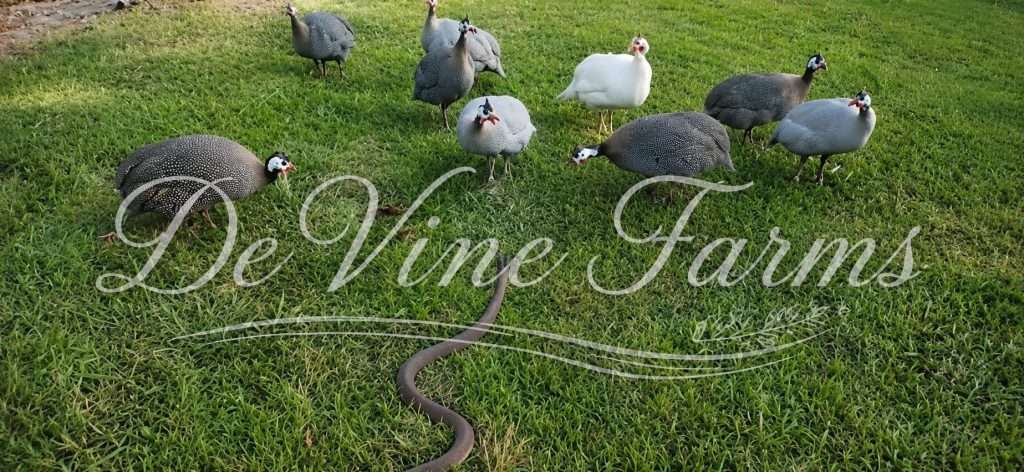
Around our farm, we simply call them “The Goonies.”
They announce EVERYTHING.
A hawk flies over?
Emergency meeting.
The neighbor’s dog walks by?
Sound the alarm.
A butterfly lands on the fence?
Clearly suspicious.
Half the time you’ll run outside expecting a bear and discover one guinea is upset because another guinea looked at him funny.
When they’re not sounding the alarm, you’ll often find them standing on the roof trying their best to convince everyone they’re actually weather vanes.
Ridiculous?
Absolutely.
Useful?
Also, absolutely.
As an added bonus, they’re excellent tick patrol.
Technology Is a Great Farmhand
Motion-activated lights are one of the simplest and most effective ways to discourage unwanted visitors. Whether you choose solar-powered, battery-operated, or hardwired electric motion-sensor lights, illuminating a driveway, barn, chicken coop, or equipment shed often encourages both animal and human predators to move on to an easier target.
Guardian animals are wonderful.
But they don’t send text messages.
Today’s cameras do.
Motion-activated lights, Wi-Fi cameras, game cameras, and smartphone alerts let you keep an eye on gates, barns, equipment sheds, chicken coops, and driveways from almost anywhere.
We’ve had excellent luck using Blink cameras. They run on two AA lithium batteries that often last close to two years. In open conditions, we’ve been able to place cameras nearly 1,000 feet from the sync module, although buildings, trees, and terrain all affect range. The latest models also provide excellent image quality.
One of our favorite tricks is using a TP-Link Powerline Adapter. If your barn or outbuilding shares the same electrical service as your home, these adapters use your existing electrical wiring to extend your internet connection. It’s almost like adding another Wi-Fi access point without digging trenches or running expensive cable. That makes installing cameras around barns, sheds, and gates much easier.
It’s a simple, affordable solution that’s worked remarkably well on our farm.
Layer Your Security
No two farms are exactly alike. The right combination of guardian animals and technology depends on your livestock, your property, your budget, and the predators in your area. Whether you start with one guardian dog and a motion light or build a complete security system over time, every layer you add makes your homestead a little safer.
The best farms don’t depend on one guardian.
They depend on many.
The guardian dog hears it first.
The Dexters start bellowing.
The Goonies announce it to three counties.
The motion lights come on.
The cameras start recording.
Your phone buzzes.
And somewhere in the middle of all that, you’re standing on the porch in your chore boots and an old Hard Rock Cafe T-shirt, wondering if it’s a coyote, a cougar…or just one of the dogs arguing with an opossum.
Welcome to homesteading.
Protecting a homestead isn’t about living in fear. It’s about protecting the animals you’ve worked so hard to raise, safeguarding your investment, and preserving the lifestyle you’ve chosen. A good security plan combines guardian animals, common sense, and a little technology to help you sleep a little easier at night.
A Deep Dive Podcast, brought to you by Irish Dexter Cattlemen, on topics of interest to all farmers and ranchers. Subscribe to the free, monthly Irish Dexter Cattlemen Tips & Tricks Guide to get early access.
Brought to You by These Breeders, Affiliates, & Sponsors
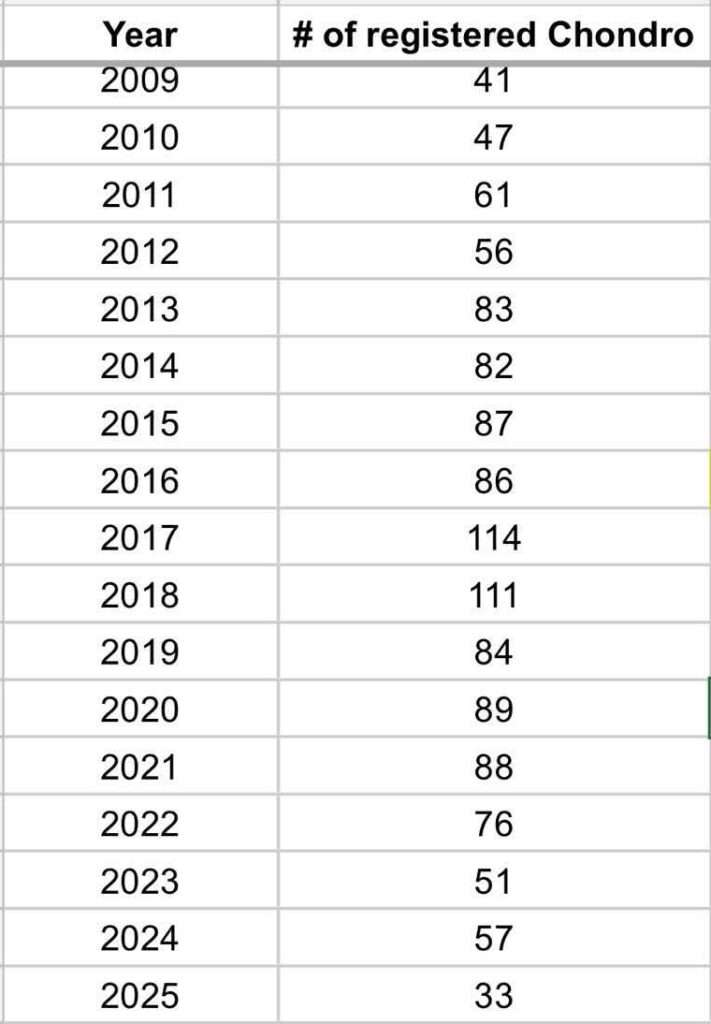
An update to the last post, started by Matt McCollum about the decline of the foundation of our breed, the dwarf. In case you missed it, it was titled…
Are short leg(Chondro+) registered Dexters in decline? And should we be asking why before it’s too late?
It took a bit to gather all the information and get it all in one spreadsheet, so that we could identify all the duplicates and triplicates. As many people register with one, two or even three registries.
Results are not a shock. Dwarf is definitely on a decline and it happened steeply after someone started a breeder group Facebook page and decided to publish a lot of unproven and untrue things about the dwarf, carrier or chondroplasia postive dexters. All three terms are used interchangeably. You will note the most were registered in 2017 and his group started in July of 2016.
These results are only the tested and registered animals. There are sure to be many that have not been tested or not registered as testing for the gene is not compulsory.
Much of the rhetoric, that has been posted about the dwarf is hearsay and can be traced back to one rather opinionated person. Please do yourself a favor, visit a farm with these wee creatures and understand why so many of us adore them. Less inputs, more milk, more beef and usually the favorites of the herds.
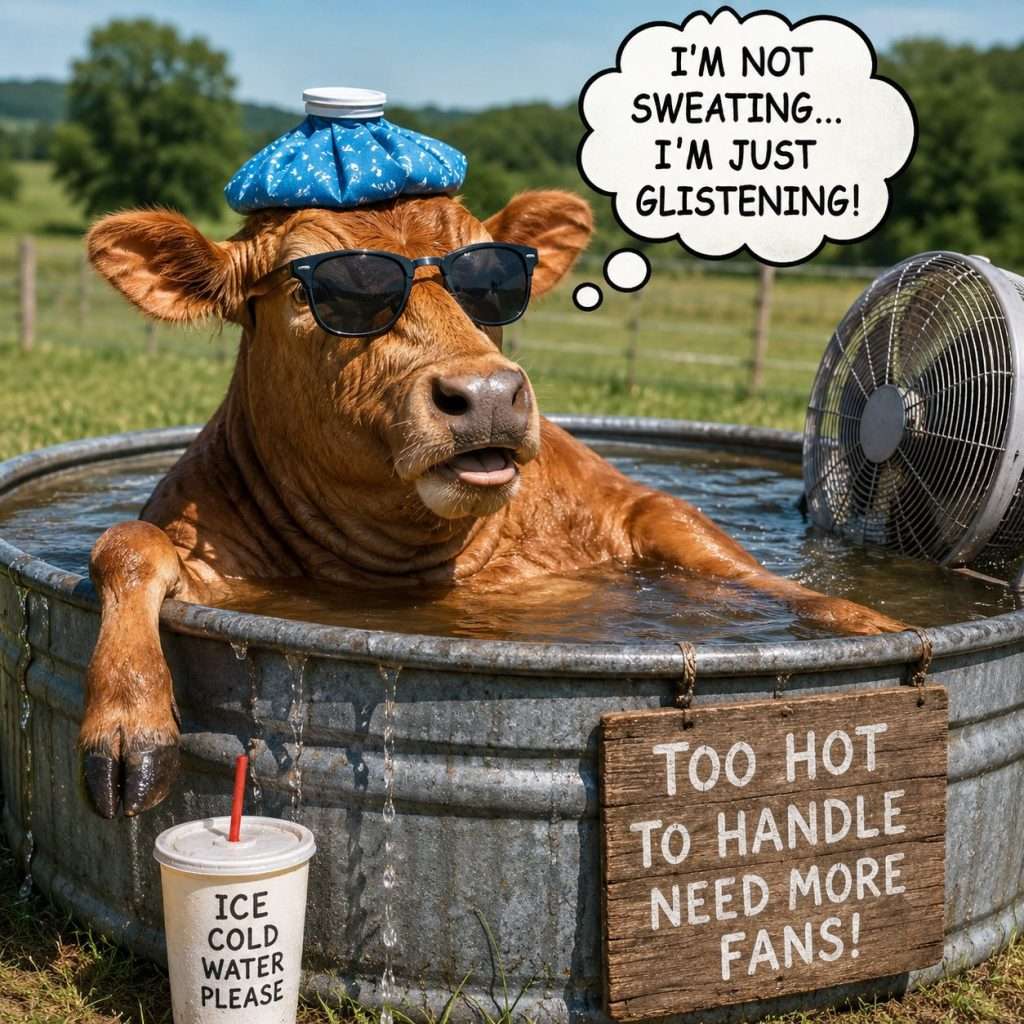
When temperatures climb, cattle don’t simply become uncomfortable. Heat stress is a serious physiological challenge that affects feed intake, milk production, fertility, immune function, and overall performance. In severe cases, it can even become life threatening.
Think of a cow as a large furnace wrapped in a hide. Every bite of forage she digests produces heat. On a cool day, that heat helps keep her warm. On a hot, humid day, however, it becomes excess heat that must be released. When a cow can no longer dissipate heat as quickly as she produces it, her body temperature begins to rise and heat stress sets in.
Humidity plays a major role. A hot, dry day is often easier for cattle to tolerate than a slightly cooler but very humid day because moisture in the air reduces the effectiveness of evaporation, making it much harder for the body to cool itself.
Recognizing the Signs of Heat Stress
Before discussing prevention and treatment, it’s important to recognize when a cow is becoming overheated.
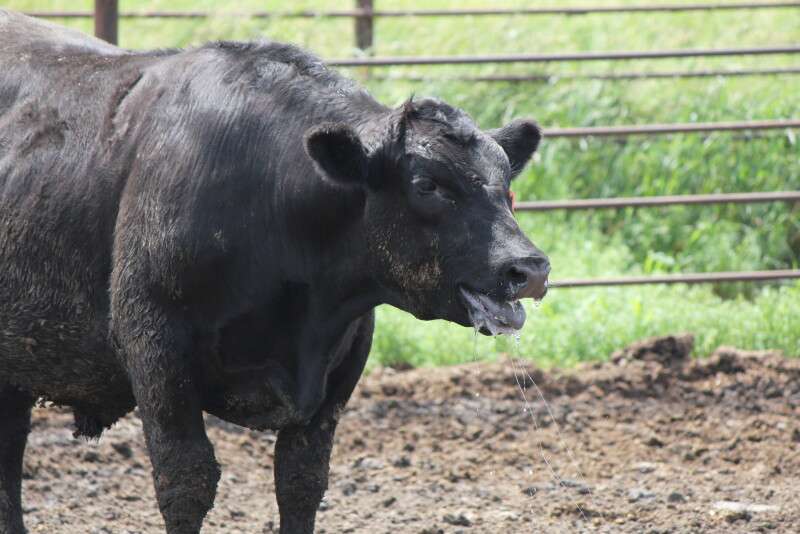
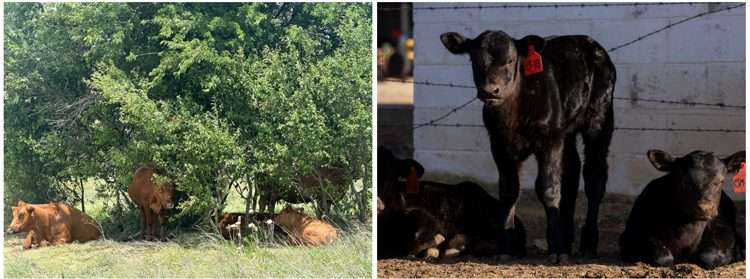
Cattle will naturally seek shade or stand in ponds and streams to cool themselves. If those options aren’t available, they often bunch together in response to stress and begin breathing rapidly. Excessive drooling, reduced grazing, and a decreased interest in grain are common early signs.
As heat stress progresses, milk production drops, resulting in slower weight gains for nursing calves. Fertility also suffers. Poor conception rates become more common, particularly during the early stages of pregnancy. Elevated cortisol levels caused by heat stress can increase the risk of early embryonic loss, especially during the first 45 days of gestation.
Cattle may become lethargic and, in more severe cases, begin open mouth breathing or panting like a dog. Heat stress also suppresses the immune system, making animals more susceptible to disease. If left untreated, severely overheated cattle may stagger, collapse, and ultimately die.
The First Line of Defense: Shade and Water
Shade is one of the simplest and most effective ways to reduce heat stress. Trees, shade structures, and covered loafing areas can significantly lower body temperatures. Adding misting stations can make an even greater difference.
Clean, fresh water is equally critical. During periods of extreme heat, a lactating cow may consume more than 20 gallons of water each day. Water should always be clean and readily accessible to encourage intake.
It’s also important to have adequate watering space. If cattle must crowd around a single water source, dominant animals may prevent more timid cattle from drinking enough. Adding additional tanks during periods of extreme heat can help ensure every animal has access. We keep several empty protein tubs around specifically for hot weather. They’re lightweight, easy to dump, clean, and refill as needed.
Misting Stations and Cooling Systems
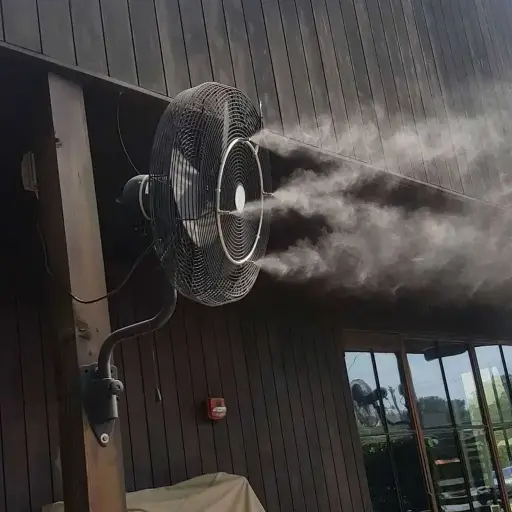
One of the most effective management tools is a misting sprinkler station combined with good airflow. Several years ago, we installed a 40-by-60-foot carport and mounted a couple of misting fans underneath it that run during the hottest part of the day. Although our cows have access to a pond where they enjoy wading, they also spend a great deal of time under the misting station.
The mist lowers the air temperature several degrees while lightly dampening their coat. Combined with the airflow from the fans, evaporation removes body heat much like perspiration cools human skin. When I am out working on the farm during the heat of the day I too hang out under the misting fanst to cool off. It’s much cooler there than anywhere else on the farm.
Practical Heat Stress Prevention
Whenever possible, avoid working cattle during the hottest part of the day. If cattle must be gathered or moved, early morning is the safest time. If you feed grain or other supplemental feeds, consider feeding later in the evening. Digestion generates heat, and feeding late allows the greatest amount of fermentation to occur overnight when temperatures are cooler.
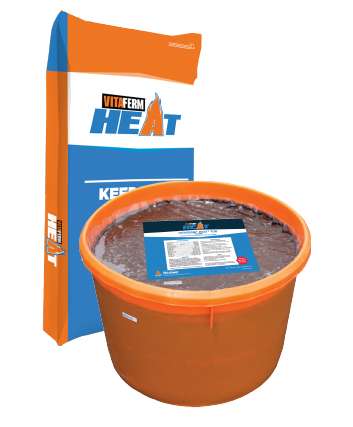
Nutritional Support: Vitafirm Heat Stress Tubs
A few years ago, we started buying Vitaferm Heat Stress Tubs during the summer, and our cows will never go another Oklahoma summer without them. These tubs contain essential oils that act as natural vasodilators, helping support healthy blood flow so cattle can dissipate body heat more efficiently. They also provide minerals, electrolytes, and vitamins that help replenish nutrients lost during periods of heat stress.
HEAT comes in tubs and as a loose mineral. While nutritional supplements aren’t a replacement for shade and water, they can be another valuable tool in an overall heat stress management program.
Genetics: The Often Overlooked Prevention Tool
Some cattle simply handle heat better than others. Fortunately for Dexter breeders, our cattle generally have an advantage over larger breeds. Their smaller body size produces less metabolic heat, making them naturally more heat tolerant. Even so, there is still considerable variation between individual animals. Some cattle continue grazing, breeding, and maintaining body condition throughout the hottest months, while others struggle. Many people believe black cattle suffer more in the heat than red or lighter-colored cattle. While darker hair certainly absorbs more solar radiation, our experience suggests there is much more to heat tolerance than color alone.
We have black, red, and dun Dexters, and I’ve had several red and dun cattle struggle far more than my black Dexters. The common denominator wasn’t color it was their hair coat. Some of my black cattle slick off early in the spring, developing the short, shiny, seal like coat Dexters are known for. They handle Oklahoma summers exceptionally well. Others, regardless of color, hold onto a longer, thicker coat much later into the season and have a much harder time staying cool. Hair coat length and density are extremely important. A well bred Dexter should have a short, sleek coat. Animals with excessively heavy coats often experience greater heat stress.
As difficult as it can be to part with good cattle, we simply can’t justify keeping animals that consistently struggle through our hot summers. Besides being unfair to the animal, it also costs us money through reduced fertility, lower production, and increased management. Selecting replacements from cows that consistently maintain body condition, breed back promptly, produce well, and remain comfortable during hot weather will gradually improve your herd’s natural heat tolerance.
When choosing replacement heifers, look for daughters from cows that:
Breed back consistently, even during the heat of summer.
Maintain milk production through hot weather.
Show minimal panting and heat avoidance.
Hold body condition despite prolonged heat.
Over time, these selection decisions create a herd that is naturally better adapted to your local climate.
When to Take Emergency Action
Immediate intervention is necessary if cattle are:
Open-mouth panting continuously.
Unable to rise or walk comfortably.
Staggering or appearing disoriented.
Crowding tightly around water while showing severe respiratory distress.
Move affected animals into shade immediately, increase airflow with fans if available, and gently wet their bodies with cool (not ice-cold) water while contacting your veterinarian. I prefer using a garden hose to slowly soak the animal, avoiding the face. Once the panting begins to subside, I brush excess water out of the undercoat so it doesn’t become trapped against the skin, which can actually reduce cooling.
The Bottom Line
Successful heat stress management comes down to three key areas:
Environmental cooling through shade, abundant clean water, and misting stations with good airflow.
Nutritional support by feeding later in the day and providing products such as Vitaferm Heat Stress Tubs to help support hydration, circulation, and mineral balance.
Genetic selection by breeding cattle that consistently perform well in hot, humid conditions and culling those that do not.
Good heat management isn’t about relying on a single product or piece of equipment. It’s about helping cattle maintain their natural ability to regulate body temperature. When shade, water, cooling systems, proper nutrition, and heat tolerant genetics all work together, cattle remain healthier, more productive, and better able to thrive through even the toughest days of summer.
Now I’d love to hear from you. What do you do to keep your cattle cool during the hot summer months? Do you rely on shade trees, ponds, misting systems, fans, nutritional supplements, or another management practice? Share your tips and experiences in the comments. We can all learn from one another.
About the Author:
Kimberly Jepsen is the heart behind MooShine Ridge in Vinita, Oklahoma, where she and her husband, Kevin, have been raising dual-purpose Dexter cows since 2015. Their little farm store is a labor of love, offering Dexter beef, raw milk, and artisan cheeses made from their own cows. Kimberly has a deep passion for the Dexter breed and loves nothing more than sharing what she’s learned over the years whether it’s guiding fellow farmers, helping newcomers discover the joys of small-scale farming, or simply introducing people to the rich, creamy flavors of her handcrafted cheeses. For her, farming isn’t just a business, it’s a way to nurture animals, the land, and the community she cares about. https://mooshineridge.com/
Sweet Caroline was out. Walking free through acres and acres of fields freshly sewn or just sprouted crops. It wasn’t that I couldn’t see her, as I could. The area is flat and wide open. Of course, when you are trying to pen a heifer, that doesn’t help at all.
I felt helpless. My truck was still attached to my trailer. My first thought was to take car and follow her in an effort to push her to a farm near by who happened to have a corral. I was offered to borrow a car of the owner of the farm so that we wouldn’t lose her by taking time to remove the trailer from the truck.
Myself and the sister-in-law of the person who was buying Sweet Caroline jumped in the car and attempted to follow her. It wasn’t hard. She was easily seen. It became more of a game of finding a fence and a corral to get push her towards it. Following the country roads and keeping an eye on Sweet Caroline, we found ourselves near a farm that was fenced and cattle in the pasture. We pulled into the farm and knocked on the door.
A very nice gentleman answered and after explaining the situation, he volunteered to assist. He knew of the local farmers, who had corrals, cattle, and who did not. The idea was to put a halter on her, if possible, and then walk her to a fenced area. If she wouldn’t take a halter, and she is not haltered trained, the plan was to push her to the fenced area.
Great plan, right? Sounds easy, right? It wasn’t. Did I mention it was over 90 and humid? Not ideal conditions for Sweet Caroline or me.
Sweet Caroline was proving to be a lot smarter than I originally gave her credit. We could get close to her, pet her, but she would not take a halter. She learned, quickly, that we were pushing her so she took the approach of walking towards us, and then going in the direction where we previously came. I know you are laughing. I was not.
She followed us to a small farm. The house appeared abandoned as was the cattle barn. Unfortunately there was not an area that was fenced. The cattle ban was wide open. More like a lean to than a barn. A large one at that. She walked into the barn. I suppose it was shade. Spirits were lifted but there was no where to contain her.
Our volunteer farmer had called in a favor and another farmer joined us with his 4 wheeler. I had more hope. We had her against the wall when I started to walk towards the car. I wanted to get the trailer.
I didn’t get 50 yards, when the inevitable happened. She ran right towards the farmers and the sister-in-law and back into the fields. She wasn’t charging them and certainly wasn’t trying to hurt them, but she sure wasn’t worried if they got in the way.
Then an error was committed. As I went back to get the truck and trailer, they followed her. And pushed her. 4 wheeler was right next to her. Following. She kept walking until she came upon a large wooded area. She disappeared in the thick woods and brush. While the effort was valiant, the only thing that was retrieved in the woods that day were scratches and ticks. My iWatch showed that I walked 12 miles that day. At that point, I felt I had no choice. Exhausted and growing dark, I went home. I got home at 1:30AM.
Facebook was active. People were looking. People were talking and spreading the word. The Sheriff had been notified and a report filed. In that little town, Sweet Caroline was somewhat of a celebrity. It was Thursday. I waited for a call. It never came.
On Friday, I was becoming desperate to doing something. Anything. On a whim, I called the County Animal Shelter. A lady answered. I mentioned I lost a heifer. She immediately knew who I was and said it was all over Facebook. Many were anxiously awaiting an update.
I asked for options. She said that there was a drone operator in Illinois who runs a business looking for lost animals. A drone? Would he help with a cow? I called. He answered. My luck was about to change.
Next week, Part 3. Sweet Caroline has been found. How in the heck am I going to catch her? Call in the cowboys.
A little bit about the author. I own and operate a small farm called “Our Yellowstone LLC” in Illinois. I couldn’t do it alone, but will keep my wife’s name out of it to protect her innocence.
Are you a fan of the new lab grown milk and milk products? If not, here is a list of brands of milk that may contain lab grown milk, that a friend provided. I guess it’s time to read the labels ore closely. Or stick to milk from our Dexters!
Bored Cow: Maker of fluid animal-free dairy milk in various flavors (Original, Chocolate, Strawberry, Vanilla).
Brave Robot: A prominent pioneer in animal-free pint ice creams and frozen desserts.
Strive FREEMILK: A line of protein-enriched milks and nutritional beverages utilizing molecularly identical whey.
Modern Kitchen: A brand specializing in animal-free cream cheese and spreads.
The New Milk: A retail fluid milk line launched in collaborative partnerships with heritage dairy processors like Gad Dairies.
Graeter’s (Perfect Day Collaboration): A legacy ice cream brand that introduced a dedicated “Perfect Indulgence” line featuring lab-grown whey.
Nick’s Ice Cream: A popular light-ice-cream brand that utilizes animal-free dairy bases for several of its varieties.
Orgain Better Whey: A precision-fermented whey protein isolate powder developed under the Nestlé portfolio.
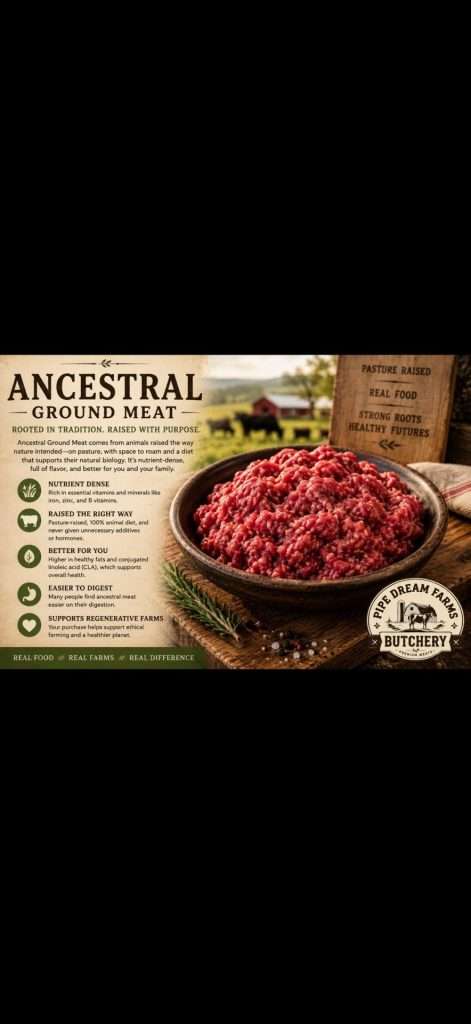
Ancestral ground beef is a simple way to enjoy more of what nature provides. By blending premium ground beef with nutrient-rich organs like beef liver and heart, you get the great taste of ground beef with an extra boost of essential vitamins and minerals. Organ meats are among the most nutrient-dense foods available. They naturally provide vitamin A, B vitamins, iron, zinc, copper, and other nutrients that support energy, immune function, and overall wellness. Because the organs are blended in at a balanced ratio, most people enjoy all the nutritional benefits without noticing a strong organ meat flavor. At Pipe Dream Farms Butchery, we believe in honoring the whole animal by making the most of every cut. Our ancestral ground beef reflects that commitment, offering a wholesome, minimally processed product that’s both delicious and nutritious. Whether you’re making burgers, tacos, meatballs, chili, or spaghetti, ancestral ground beef is an easy way to add more nutrient-dense food to your family’s meals—without changing the recipes you already love. Eat the way generations before us did: simple, nourishing, and full of flavor.
I use my instant pot to make ricotta. A little vinegar and it is one of the easiest cheeses I make. We really liked this with any fresh herbs and of course garlic!