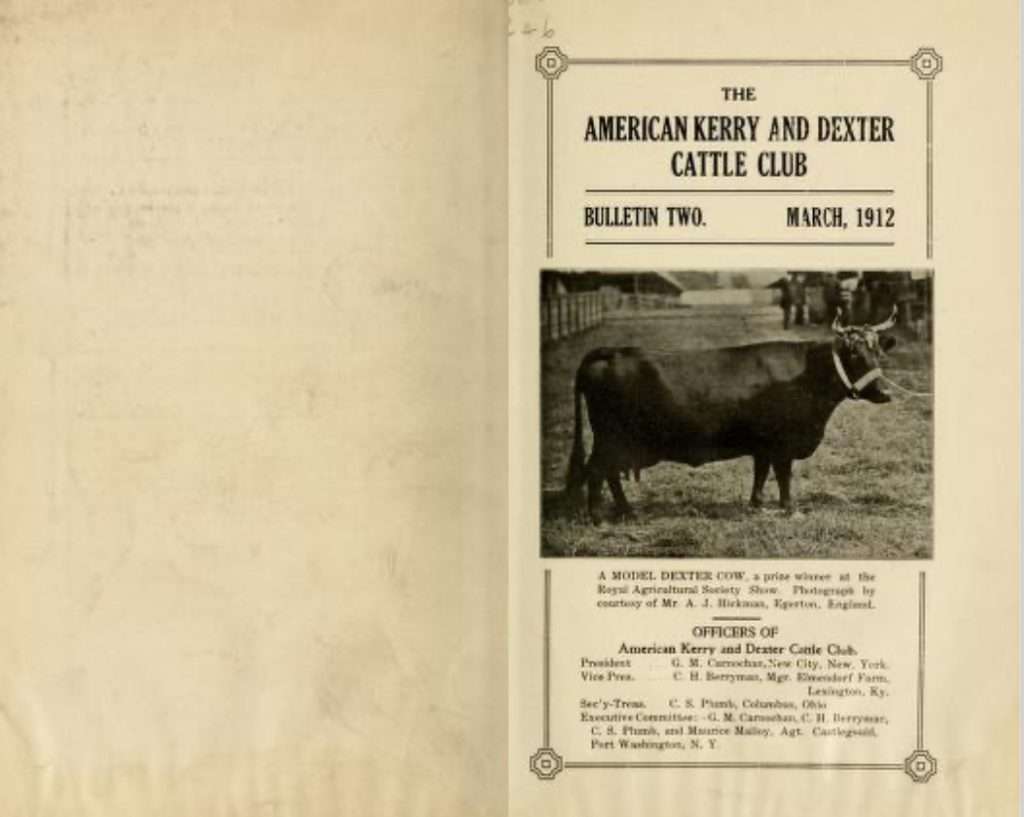
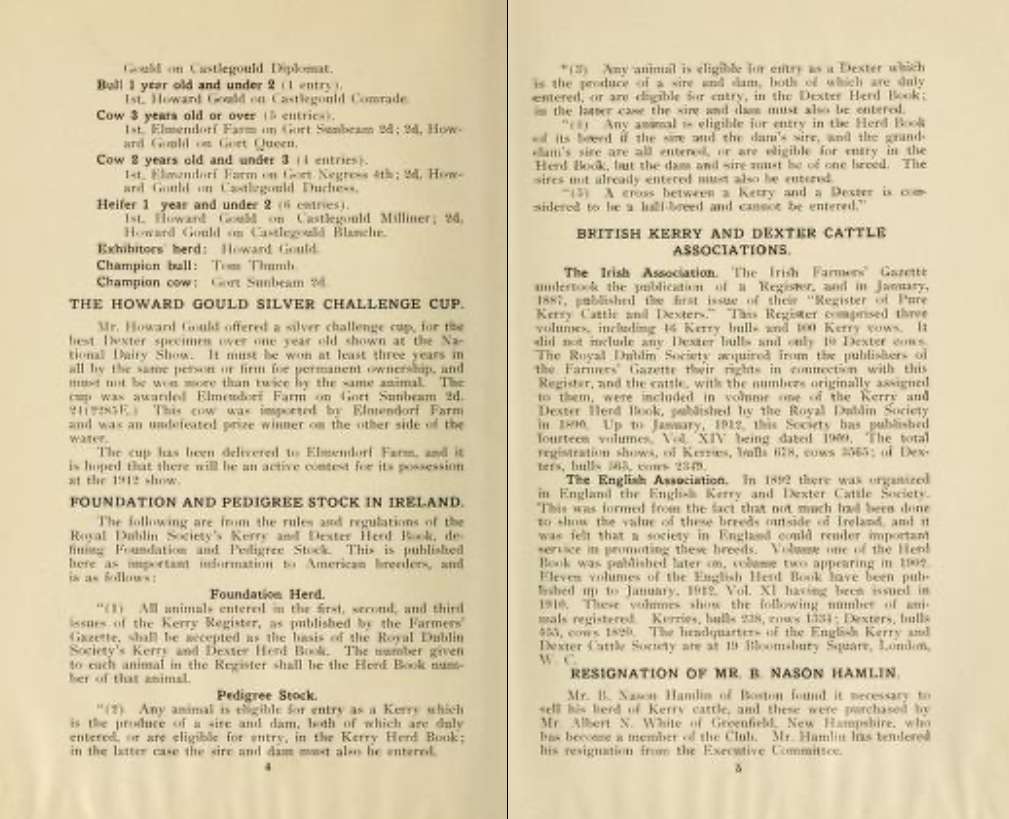
Here is the second installment in the series of The American Kerry and Dexter Cattle Club brought to us by Judy Sponaugle of Legacy. Hope your enjoying the series!
How much dairy should we put in to a Dual purpose Dexter cow. If you were to consult the English herd books they would say 40 percent for the “Bag” with the remaining percents being 15 for the “Head and neck”, 25 for the “Body, top line, under-line, ribs, setting of the tail, shortness of the leg, ect.”, 10 for “Quality and Touch” and 10 for “Colour”. So 40 points goes to the quality of the udder while 25 points gets divided up between the “Body, top line, under-line, ribs, setting of the tail, shortness of the leg, ect.”. It seems to me that in Dexters the focus today tends to fall primarily on mostly two aspects alone: shortness of leg and body type with general conformation coming in at the end. Even with 3 aspects it only accounts for 25 points for a Dexter. So there is a hyper focus on 25 % of a Dexter while the 40 percent in often neglected. The length of a cow’s leg and it’s depth are not the only traits that define a Dexter. Of course, we can’t forget the other traits that almost no one talks about, the “Head and neck”. You don’t get much meat off a head but it adds a distinct breed defining trait to a cattle type to set them apart.
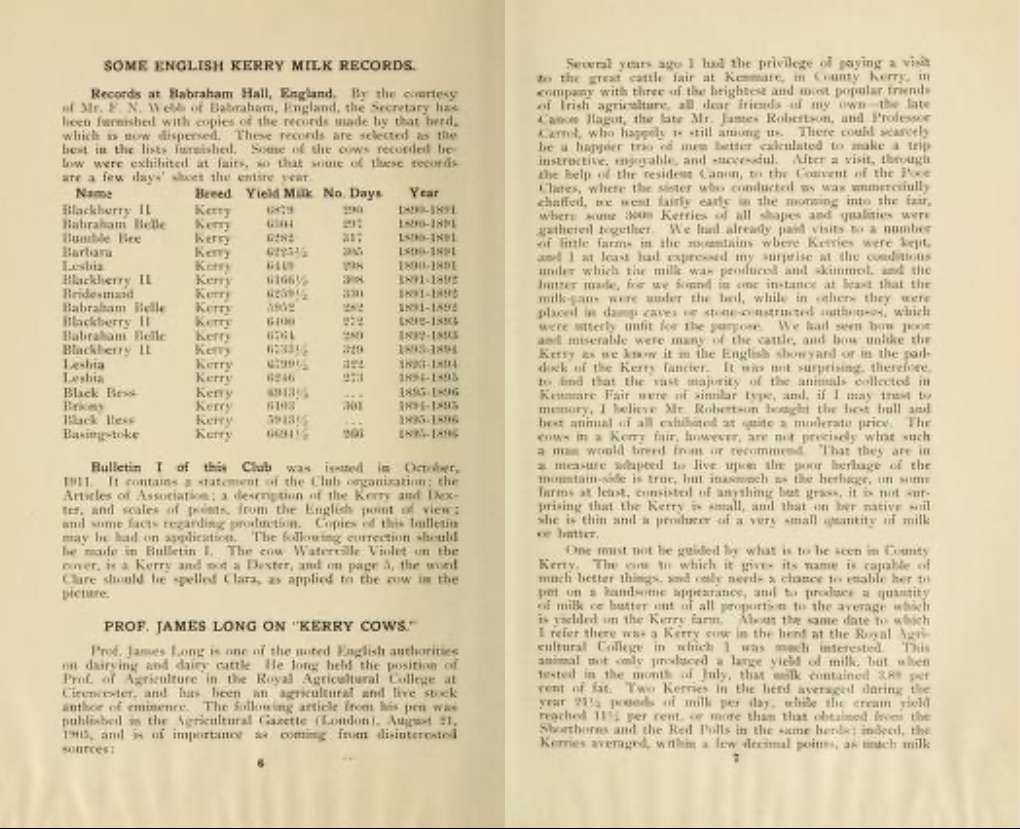
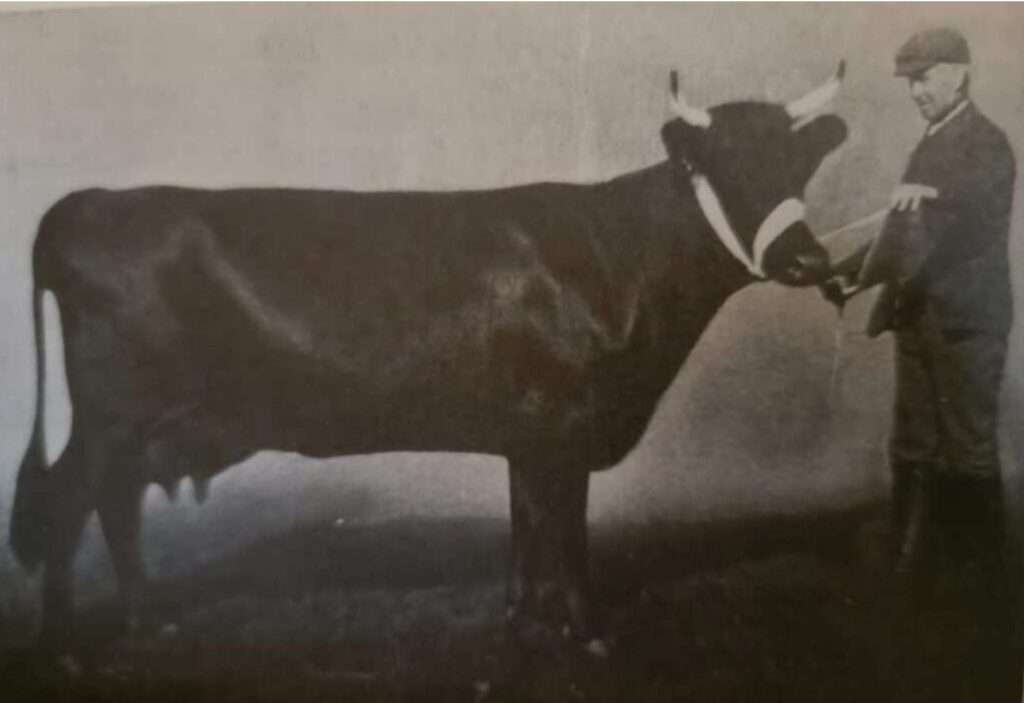
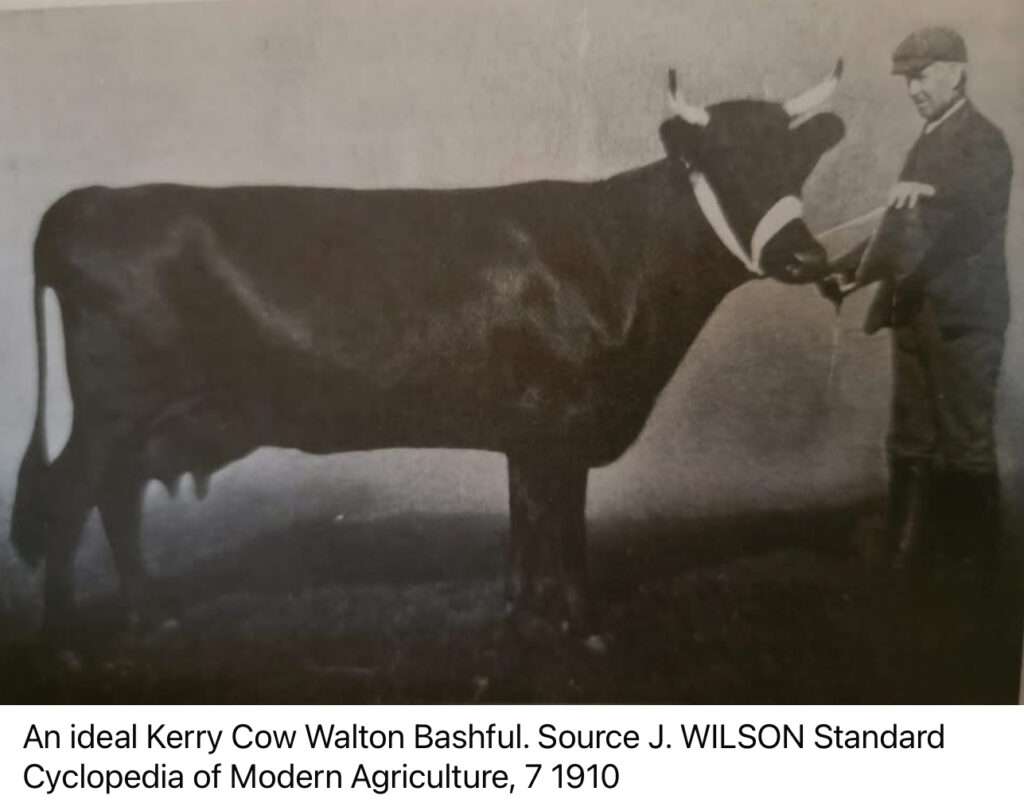
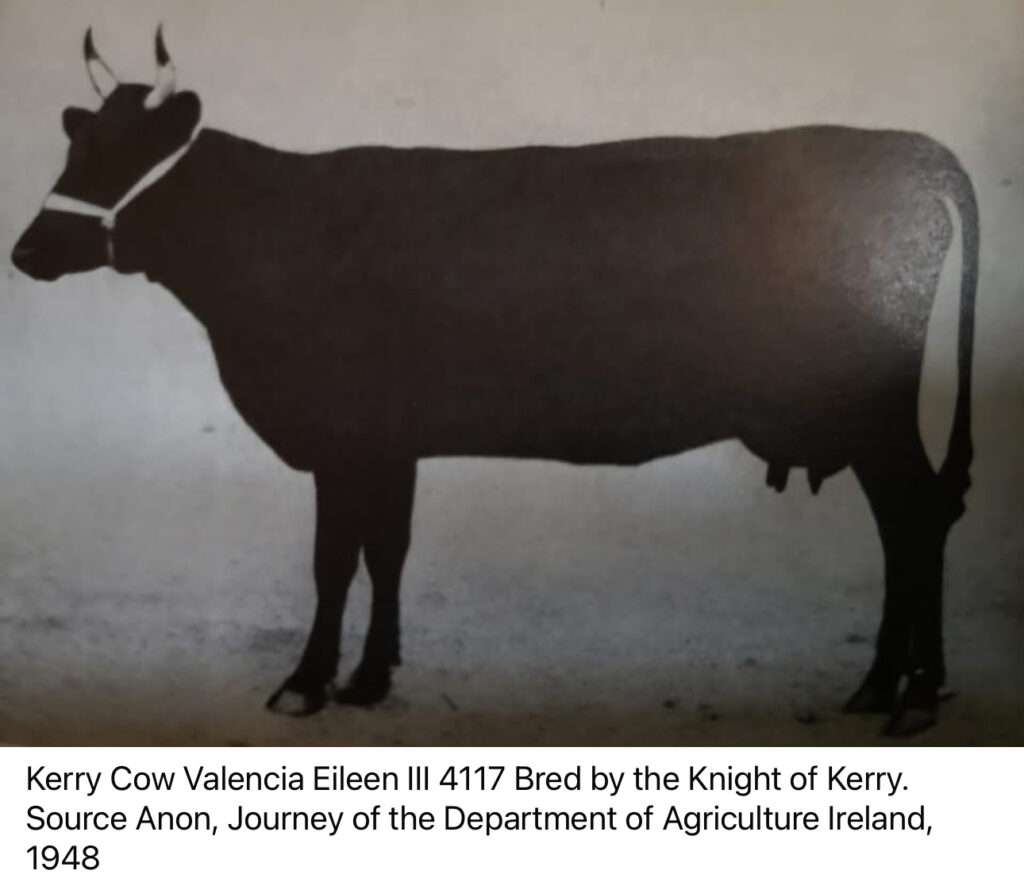
It’s interesting to note that Kerry cattle that became a distinct dairy breed separated from the dual-purpose Dexter also list 40 points for the udder. The only difference is that more details are mentioned about the bag, “Udder, size, situation of teats, milk veins and escutcheon”. Now before major concern sets in, consider that this point system is based on an ideal cow. There will always be cows in a breed that are not ideal, but the goal is to breed for the ideal cow. If you look at the 3 pictures of Kerry cattle, I will share you will see that Walton Bashful is listed as ideal and her udder is the best of the three cows shown. I’d say if an udder is ideal enough for a Kerry it can likewise be good enough for a Dexter that uses the same 40 percent system. Of course, there is no problem with having an even better udder than this cow does! The next Kerry is Valencia Eileen III. You will immediately see that she could improve on her forward attachment, but she was a Kerry all the same. The final cow is Ard Caeina Una. You will see she has some attachment issues, and you will tell that her udder is hanging lower by her hocks. The placement of her teats are too close and awkward but they were still put to use, as you will see by reading her milk record. Her yield 14,562 lbs with her butterfat at 4.33 percent. Still a valuable Kerry cow. With Dexters we need to seek generational improvement in dairy traits as Dexter’s udder points are just important as Kerry cattle, but we also need to remember that improvement is generational and culling cows with good production and butterfat won’t instantly fix a problem. It could lead us to a breed full of cows with very tight nonproductive udders just because new people think a tight looking udder is an aesthetically pleasing udder.
Legacy Dexter Cattle Registry seeks to preserve Irish Dexter bloodlines from the English upgrade/appendix registry. Support Legacy Irish Dexters by registering your Irish Dexters.
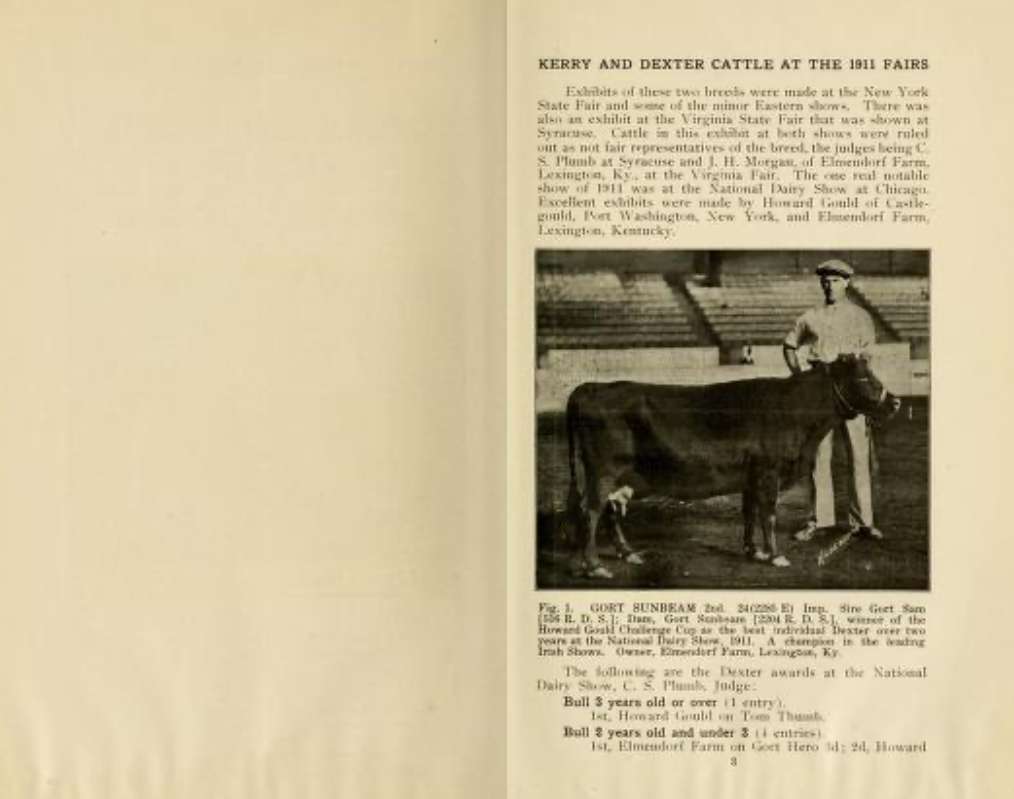
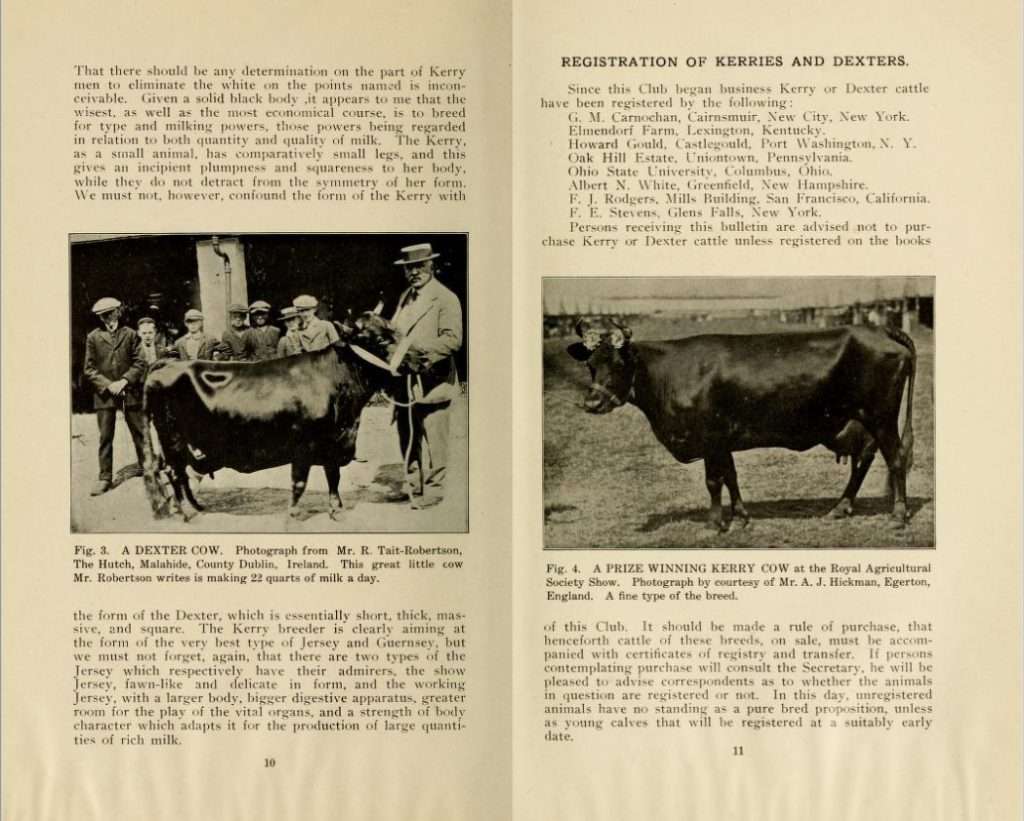
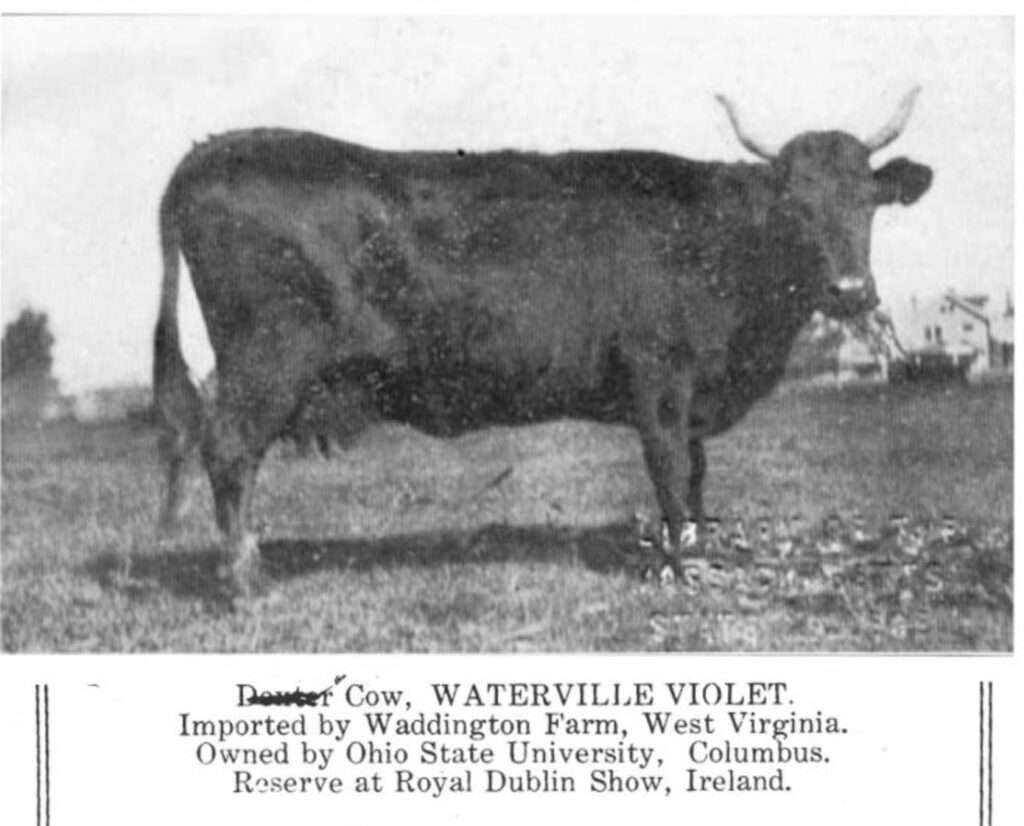
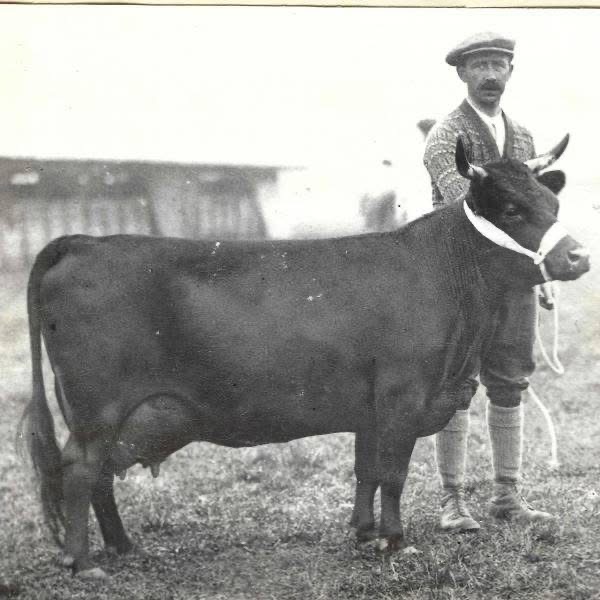
When you consider that people in the past were a bit confused about the difference between a Dexter (Dexter Kerry) and a Kerry you understand why it confuses people now. The fact that Dexters were called Dexter Kerry for many years after the two breeds were split from each other, continued to confuse people, thinking that Dexters were still no different than the Kerry breed. It’s interesting to note that in the Royal Dublin Society Kerry cattle were described as shorter than other cattle, so short that a full-grown cow was said to be the size of just a yearling (that was in 1890 when most breeds of cattle were smaller than they are now). As you can see Dexter cattle were not the only short ones as Kerry cattle have a long history of being smaller in stature too. If you have Dexters you can recognize that there is a strong similarity in the description of size among many of them. I have people come to my farm and confuse a full grown dehorned cow for a yearling of another breed. Once the two breeds were separated there immediately would have been a breeding divergence. Very detailed breed standards were already created that defined Dexters before 1911 at the time of the first printing of The American Kerry and Cattle Club Bulletin one. Following those standards for all the years prior would have helped pave the way for the breeds to be separated and defined as their own, but yet the confusion remained as can be seen in the below picture, because the breeds had so many similarities.
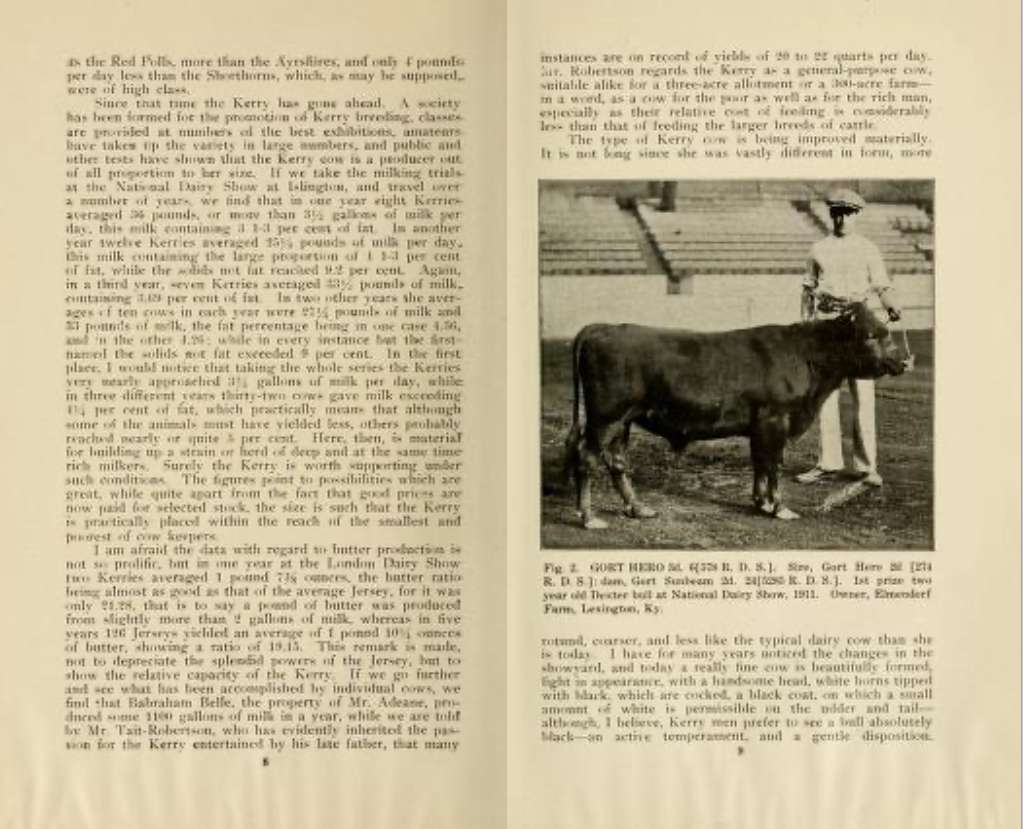
Waterville Violet The Kerry Cow
The cow in this photo above is from Bulletin One of The American Kerry and Dexter Cattle Club. It was printed in October 1911. This is the old name for the ADCA (American Dexter Cattle Association). The cow photographed is named Waterville Violet and in her description the title Dexter has been crossed out. Was this just a scribble that someone made at a later date randomly or was it something scratched out to add a correction after it was printed?
If you check the records in the ADCA you will find no Waterville Violet mentioned. If you look for a Kerry cow by the name of Waterville Violet you will turn up multiple citations of her as a Kerry cow. It looks like Violet was a Kerry heifer who calved in 1902 so we can get an idea that she was already quite mature by the time she was mentioned in the 1911 Bulletin. As much as things can be confusing it’s fair to say Dexter or not there are still purebred registered Dexters of today that look like Violet.
James E. Butler of Waterville: Judge and Breeder
James E. Butler owned the Waterville herd. Mr. Butler owned and bred both Kerry Cattle and Dexters, as many of the original breeders of Dexters did because in selection the black more dairy type became Kerry and the cattle a bit thicker, black and red, possessing dual purpose traits became Dexters. Butler was also one of the judges at shows for evaluating Dexters for the entry into the herdbooks. He had a long history in the area. James Butler would have been an excellent choice for a judge due to his first-hand knowledge of Kerry and the native cattle of the land. Waterville is known as Coirean in Gaelic or “Little Cauldron”. It is a village in Kerry. The ring of Kerry passes through this town. It’s good to know that Dexters and Kerry cattle were being selected and registered by men with first-hand knowledge like James E. Butler of Waterville. I would suppose they were far more confident in the difference between a Dexter and Kerry when they were making their evaluations. I hope this has shed a little more light into the past of Dexter and even Kerry cattle.
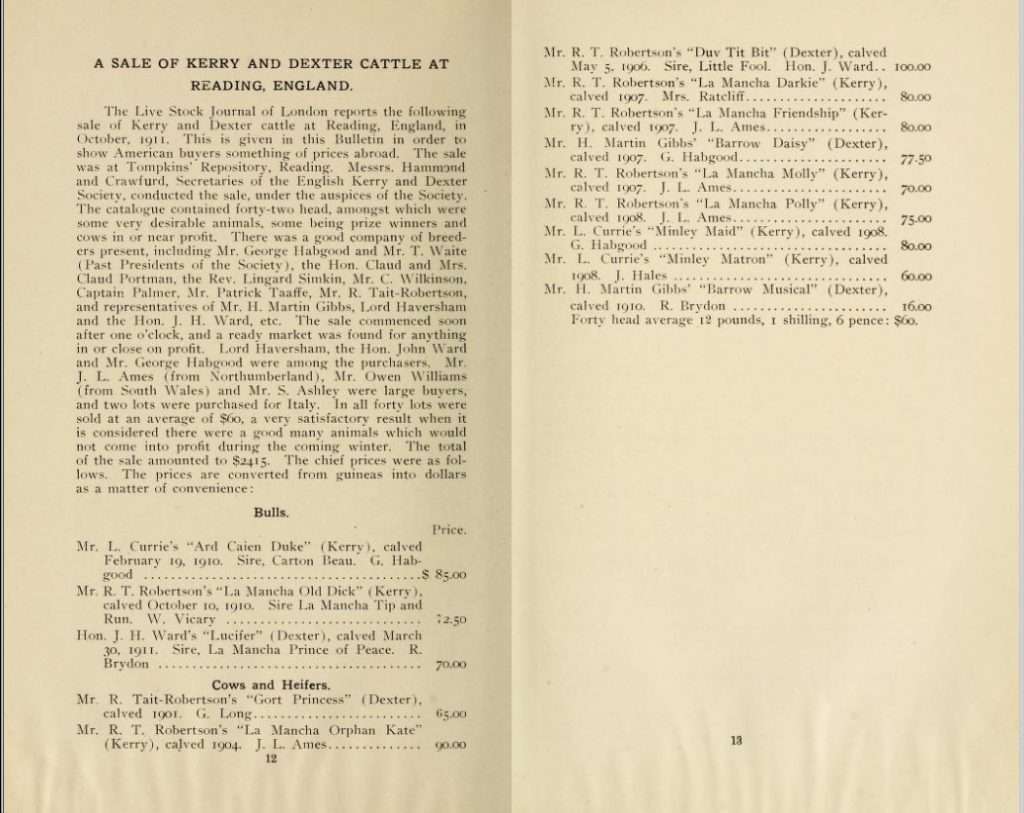
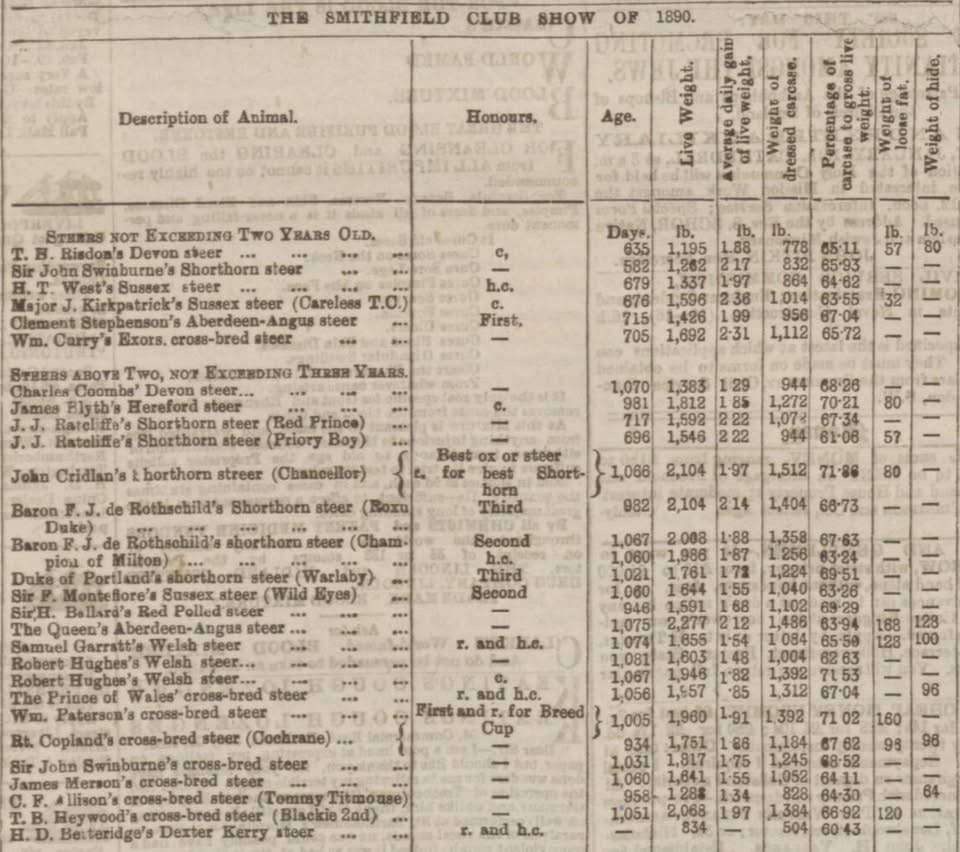
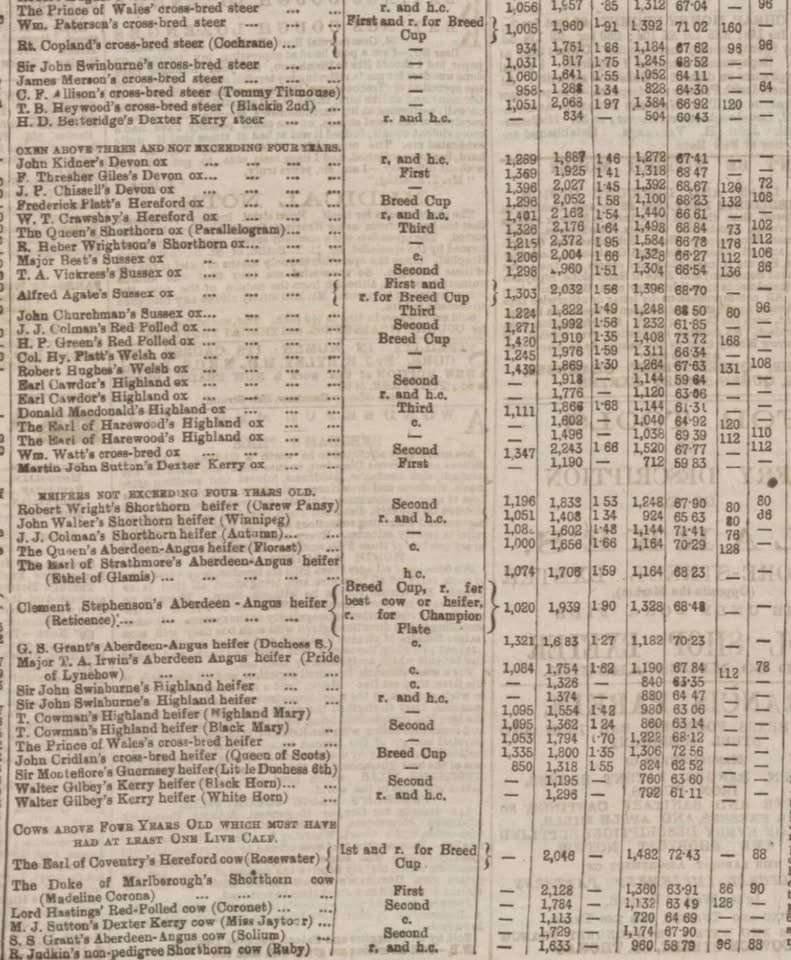
Calling all Beef Breeders!!! For anyone who likes a bit of Beef in their dual-purpose Dexters here’s something for you! Have you ever wondered what the Live weight, the Average daily weight gain of live weight, Weight of dressed Carcass, Percentage of carcass to gross live weight, Weight of loose fat and Weight of hide was on a Dexter Kerry or a Kerry and a Dexter Kerry cross was at the formation of the Royal Dublin Society in 1890? I wish all fields were complete as some are missing but it’s a good start. Well, here are some answers for you, so let’s see how these weights compare today. Comments are welcomed. By the way Tommy Titmouse was an Angus Dexter Kerry cross.
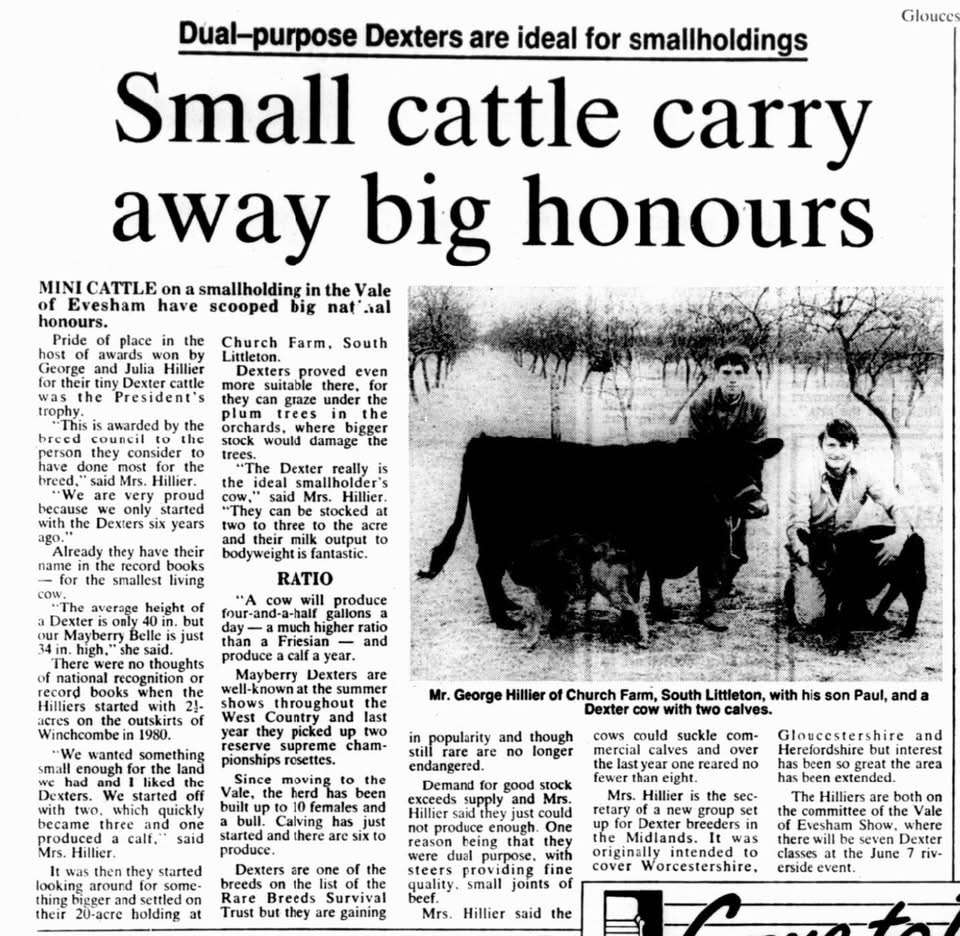
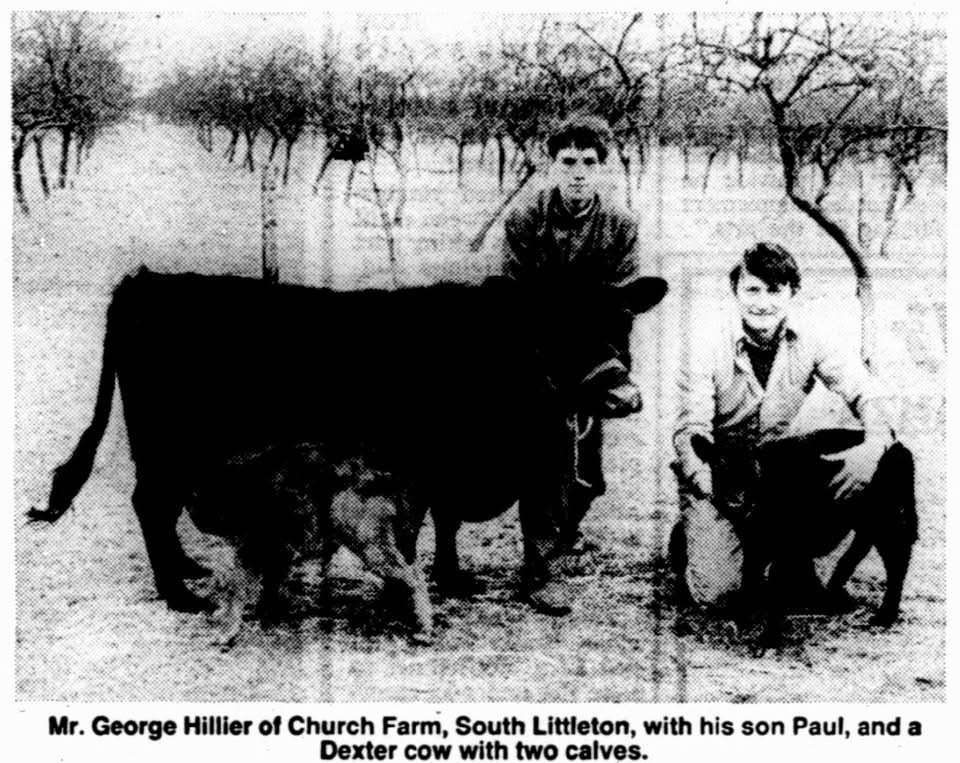
This article written in Gloucestershire on 27th March 1986 represents a long memorable chapter of the pages in History of Dexter cattle. The Dexter in this article is being noted as truly dual purposed, possessing fine quality small joints of beef, all the while being able to suckle two calves at once and raise 8 commercial calves in one year. This all seems an even more amazing feat when you consider one of the cows being spoke of was 34 inches. Thirty-four inches, how many Dexters today meet these amazing statistics? This article when I compared to other historical information sites a higher average milk production than some historical amounts in Dexters that I have seen at 4.5 gallons per day. This figure is not rare by any means but not necessarily a given rate with some Dexters producing a bit less. Dexters are being stated as being small and valuable for grazing under plum trees so as not to damage the trees. At the time of this article, Dexters are listed on the Rare Breed Survival Trust, but are no longer being listed as endangered as they once were prior to the articles printing. When we consider today with so many pedigree Dexters in great numbers it is hard for many to believe that Dexetrs were once so rare. But yet how many rare Jems are left like the Dexters being mentioned from these days, just back in 1986? Perhaps the Dexter of 1986 is rarer than we think.
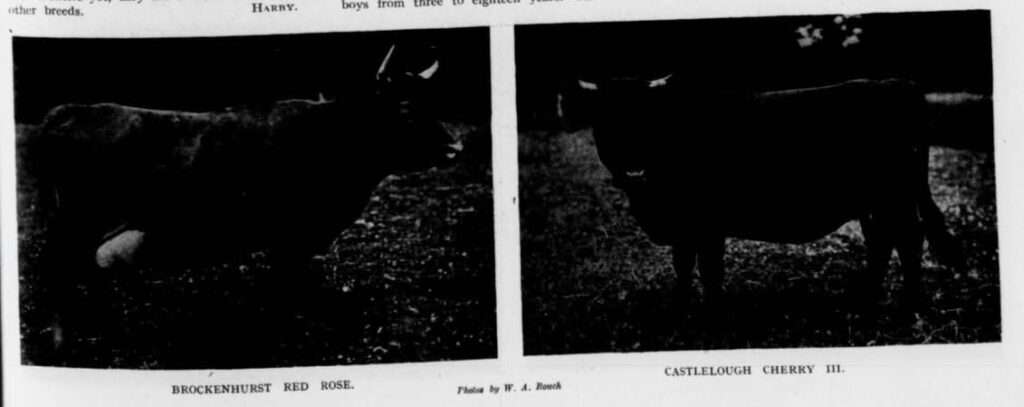
Did you know the look of a Dexter’s head was important to breeders and that there was what was considered a “Dexter Head”?
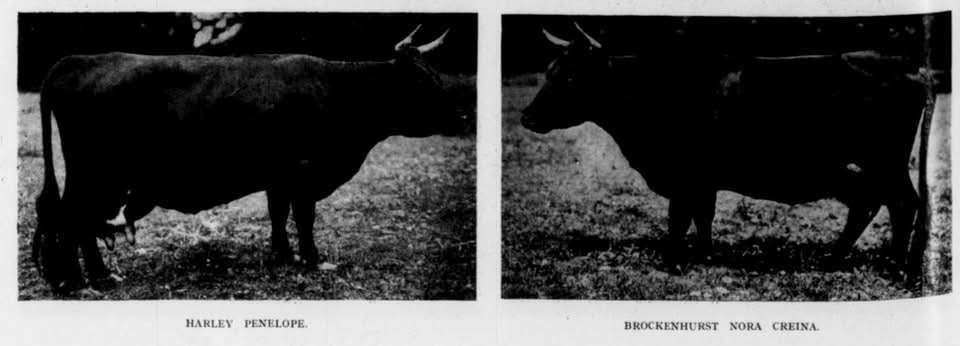
“Harley Penelope is good to carry in one’s eye as a type of a good Dexter cow. She has the quality and character, a sweet small Dexter head and carries her horns well.”
“I lost my heart to Red Rose, a very beautiful cow, she has the Dexter head to perfection”
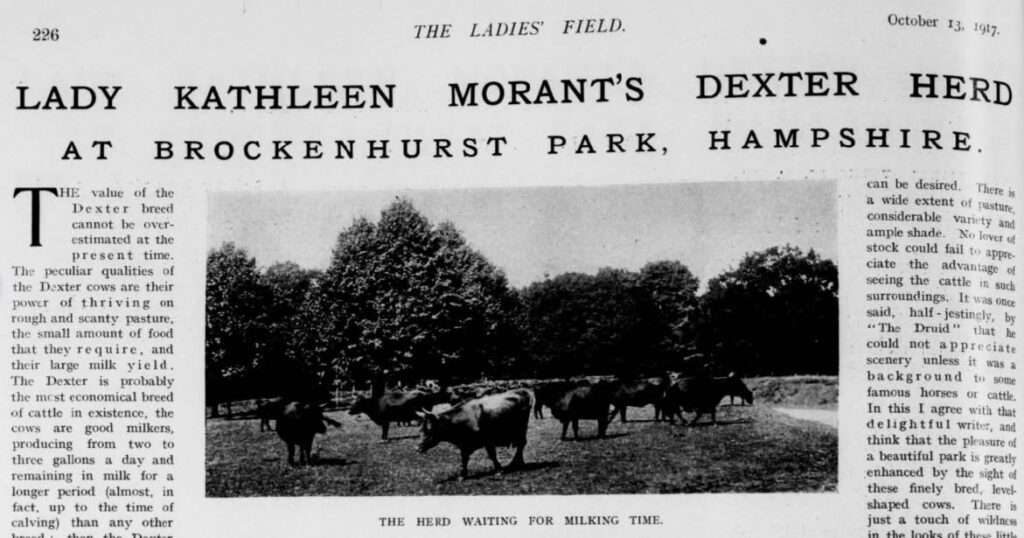
Did you know that Dexters were known to give a good milk yield for their size and excelled on lower quality pasture?
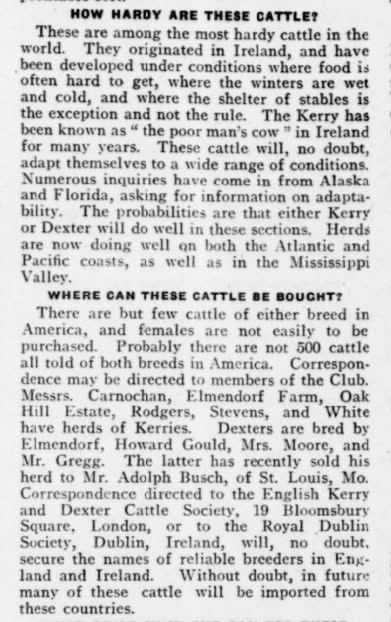
“Naturally in these times, when the economy of feeding stock is of importance, the hardiness of a Dexter, the large milk given by them on a small quantity of food, and their ability to thrive on poor pastures make them particularly attractive”
Did you know that breeders put a lot of emphasis of breeding to “pedigree and type” not just pedigree or type alone? That people wanted to keep their diets similar so that they could retain their original attributes including size and hardiness.
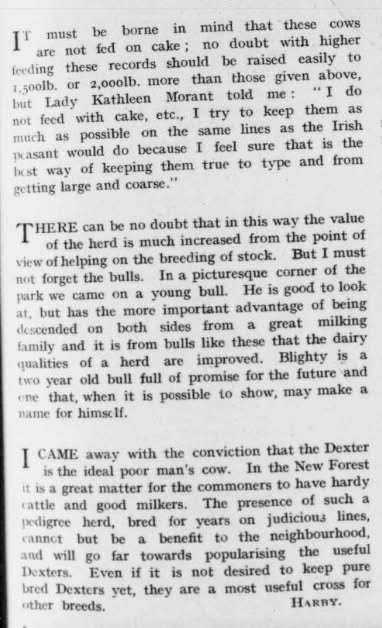
“It must be born in mind that these cows are not fed on cake: no doubt on higher feeding these records should be raised to 1500lb or 2,000 lb more than those given above, but Lady Kathleen Morant told me: I do not feed with cake ect., I try to keep them as much as possible on the same lines as the Irish peasant would do because I feel that is the best way of keeping them true to type and from getting them large and coarse.”
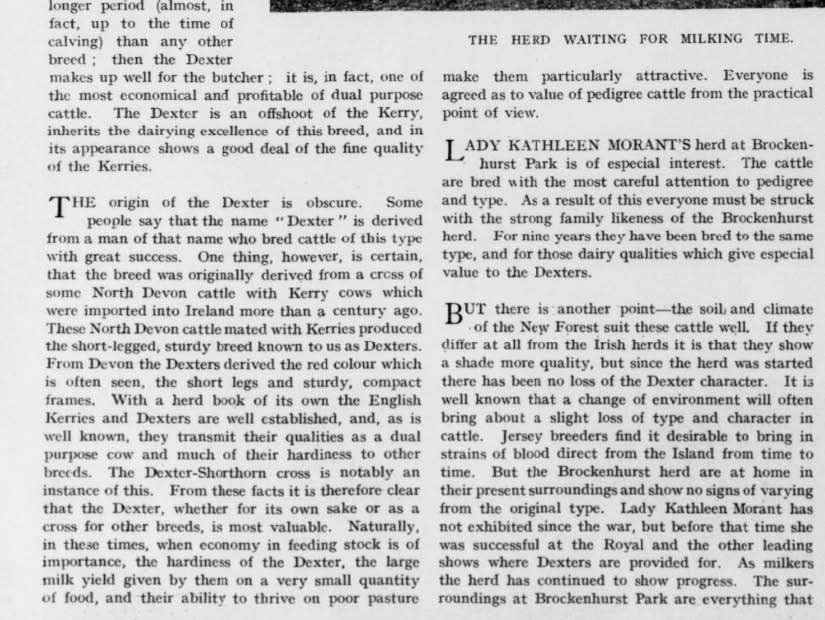
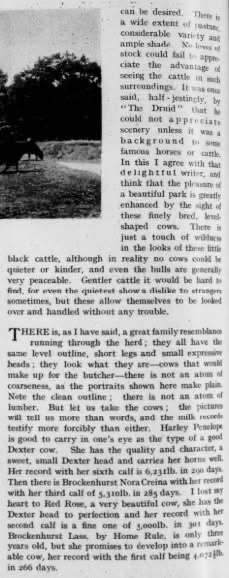
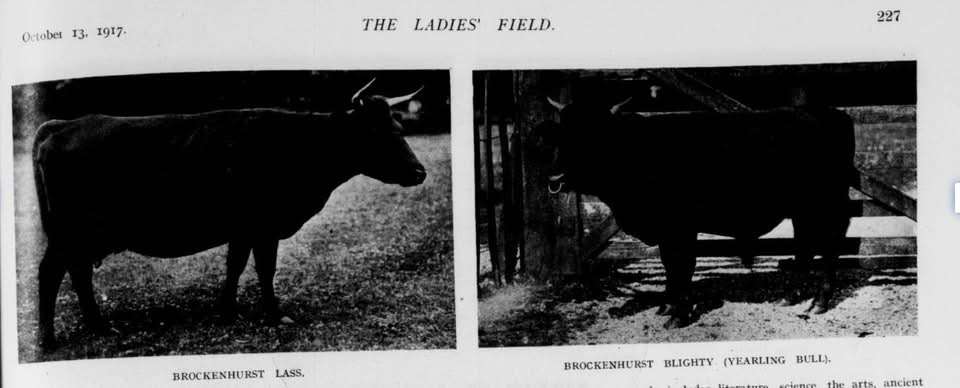
All these thoughts can be found in this newspaper clipping from 1917, in reference to Kathleen Morant’s Dexter herd along with pictures that describe even more than the words written in black and white can relate.
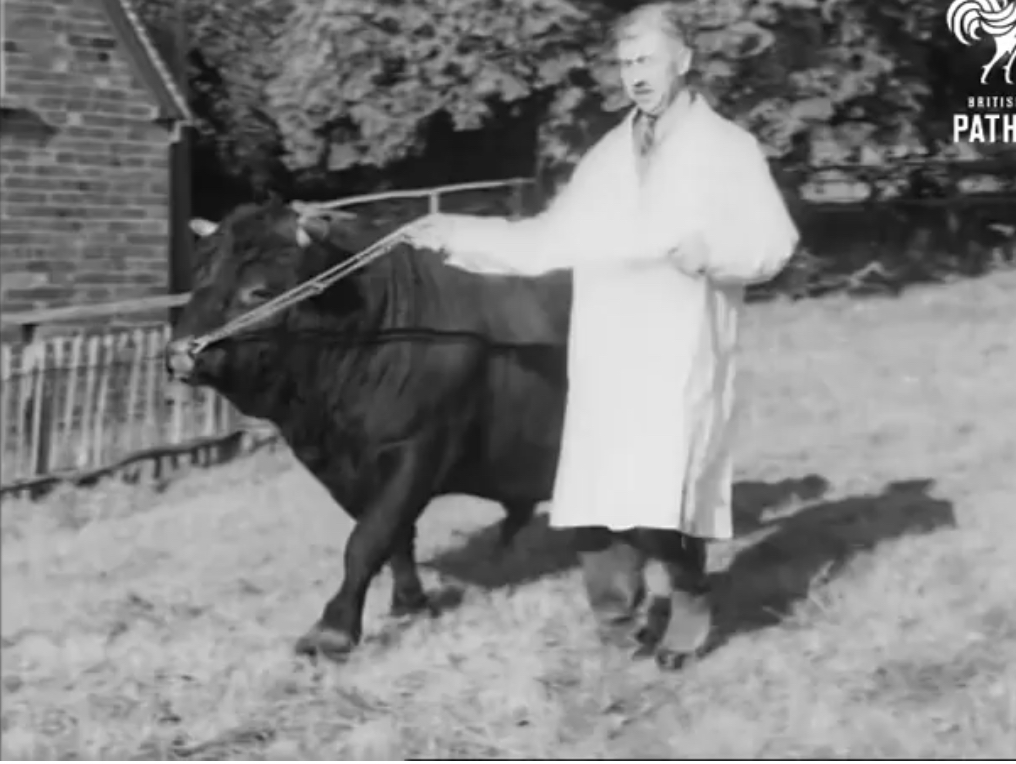
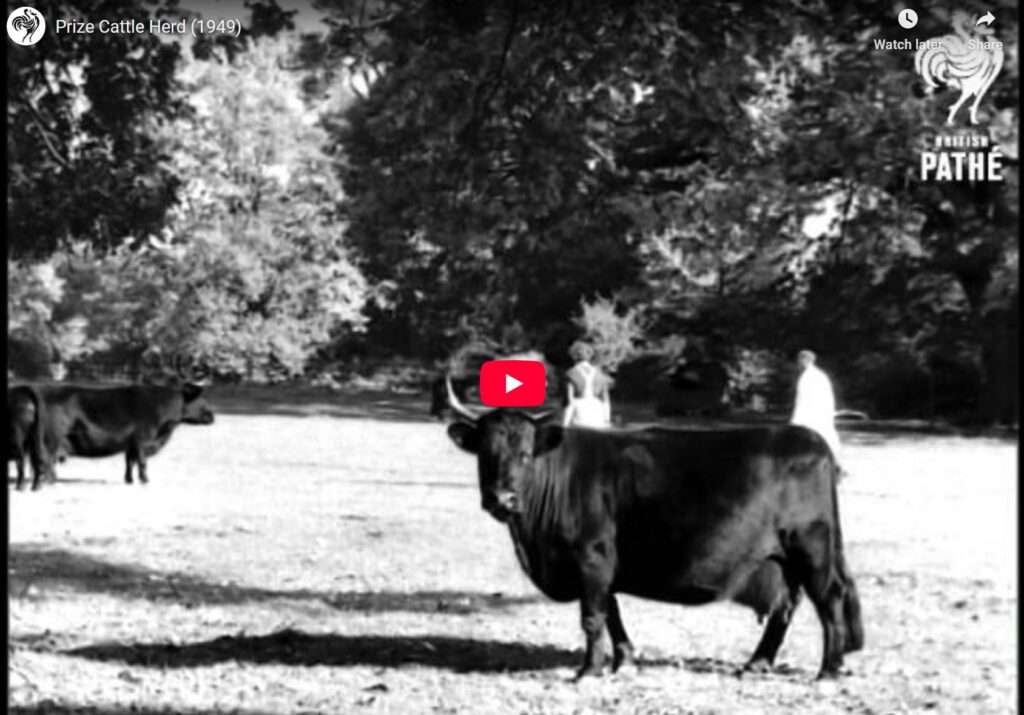
Enjoy this video from 1949 to see what a common herd of Dexters may have looked like at that time. It would be interesting to see what observations new people to the breed would take away from the video if they were to compare them to many Dexters now available for purchase.
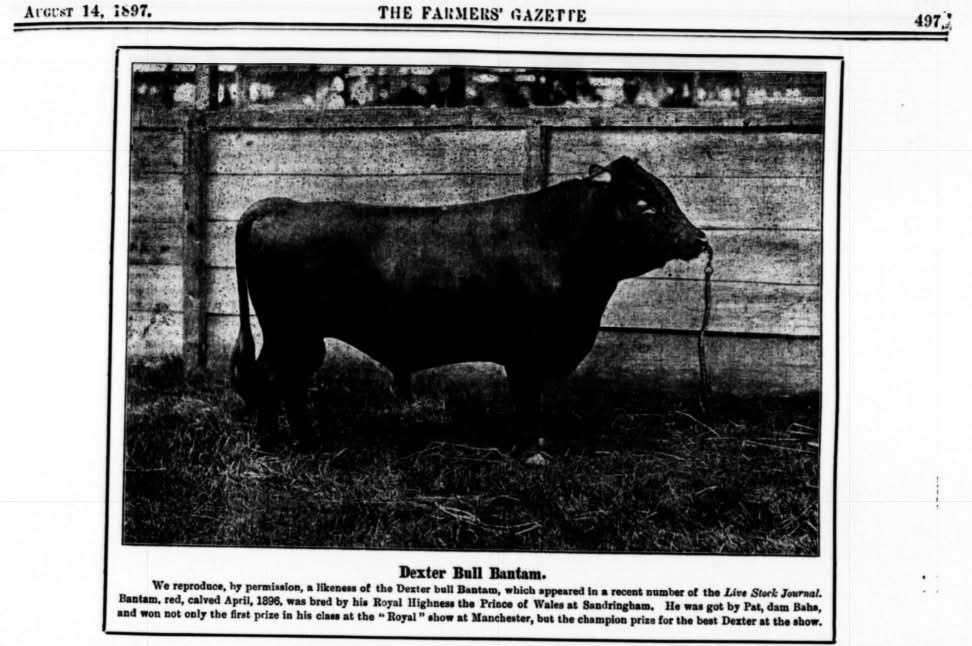
When people ask me why I think the history of Dexter Cattle is important this is just one great reason that I may give. If you see changes over years happening during the foundational years you can see how breeders were interpreting improvement during a time when people were focusing on breed selection to adhere to a standard that was the norm for the day. You can also see changes that happened over the years and genetics that were diminished in frequency or increased in frequency. Dexter cattle, though many were black in the early days compared to today this bull Bantam in the top photo was red. During the foundational years it was much more common to find a red Dexter than it was in America prior to people intentionally selecting to increase or preserve red Dexters. Now today red is so common that if someone did not know the History of the breed, they may think it was the predominate color from the beginning.
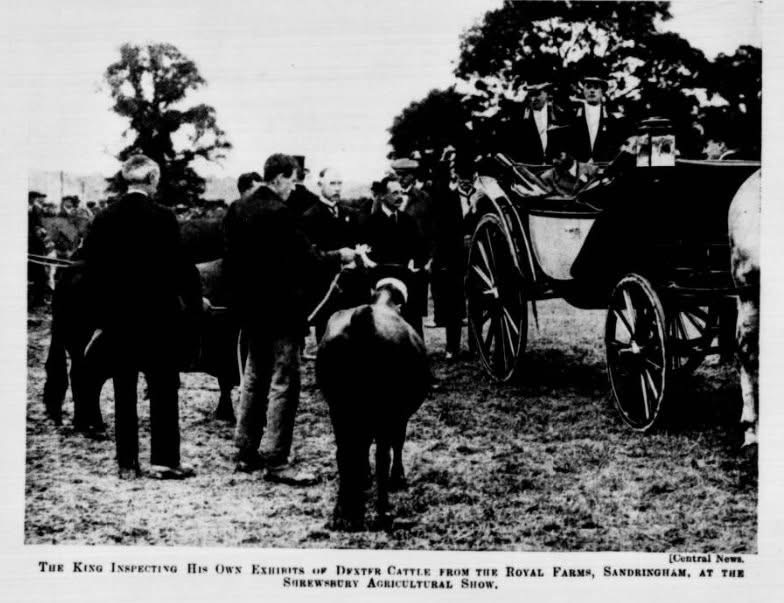
It’s an interesting point to note; this bull Bantam was bred by the Prince of Wales at Sandringham in 1896. Bantam is what a Champion prize Dexter looked like in 1897. This location is situated in Sandringham, Norfolk, England. Dexters had a very early start of popularity in England being bred by some very noteworthy people. In 1862 Sandringham Estate was under 8,000 acres were as today the acreage is closer to 20,000 acres. If you look at the second picture you will see that in 1914 Dexters were still being breed at Sandringham by the King. The first bull Bantam has a good broad form for a Dexter of his day but when you compare him to the form of the Dexter bull that the King had in the photograph in 1914 you will see he has a broad back end as well as his front. It would be really nice to see a clearer photo of the second bull but we can see enough to consider some of his conformation. Improvements with each generation are very important and should always be improved based upon the breed standard of a breed, because without a standard there is no direction for improvement. While improving on beef traits one must always remember to improve dairy traits equally too, so as not to diminish dairy traits in favor of beef. A beautiful beefy bull is of little value to a dual-purpose breed if he only throws daughters that lack quality dairy traits. When both traits are in harmony you get a great dual-purpose Dexter.
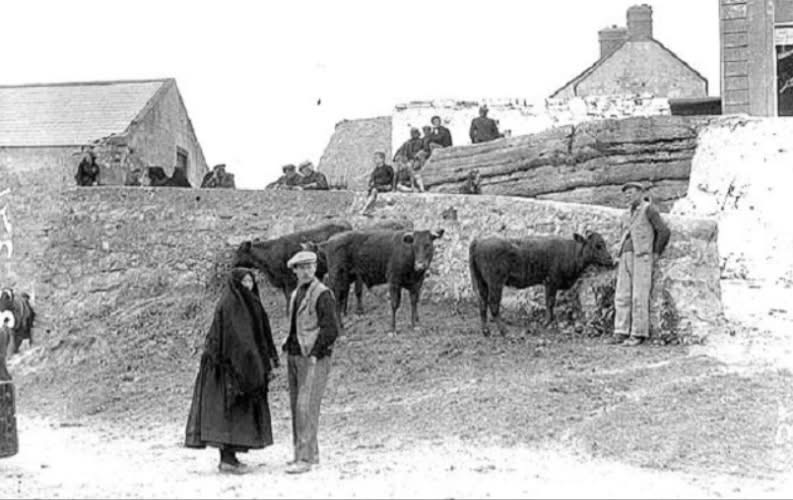
How did the Poor Man’s Cow become owned by the wealthy and famous. Dexters and Kerry Cattle became recognized for their unique hardy attributes, Kerry for milk and Dexter for milk and meat. Dexters were known to get by on less, produce rich milk and raise a healthy vigorous calf for their owner’s table. Dexters were bred to their breed specific traits transforming them from just any poor Irish cows to these 2 beautiful, registered Dexter cows we see in these two later photos.
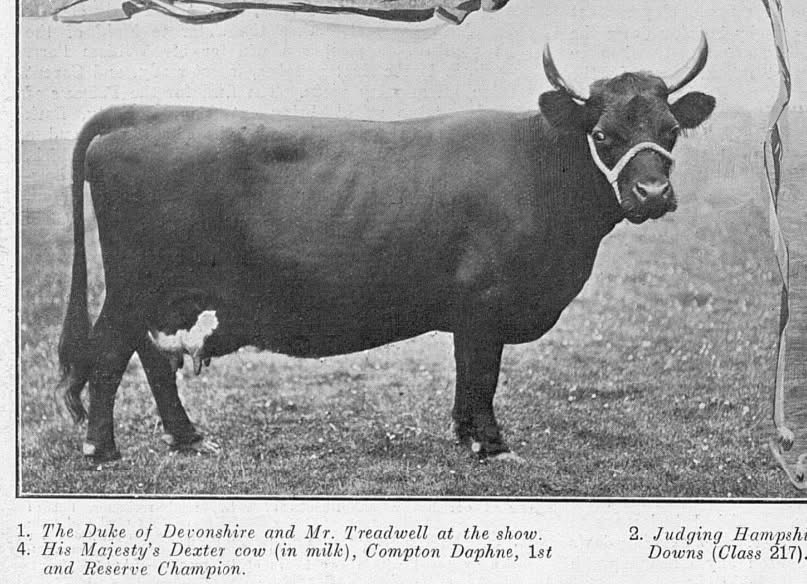
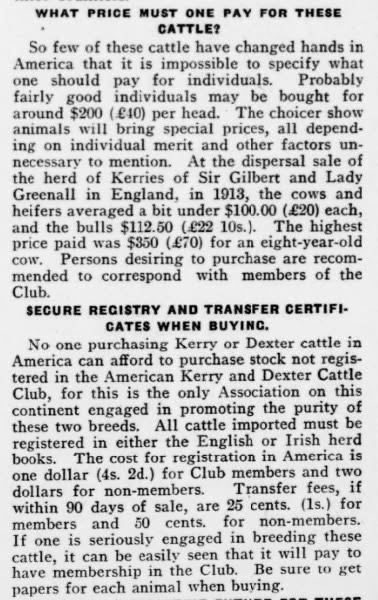
They were rare and they were at risk of being cross bred out of existence, but breeders in Ireland started selecting and registering Dexter cattle with breed defining traits to preserve and register them in a herd book. Once the promotion of Dexters began every wealthy aristocrat wanted one. All of a sudden, they were not the Poor Man’s cow but rather for a short spell until the numbers grew, cattle that only the wealthy could afford. Consider as this article states a $200 dollar Dexter cow from 1915. This is the equivalent of $6221.78. I checked multiple inflation calculators to verify that number as being correct. With the highest price the ad mentions at $350 in 1915, you would pay $10,936.81 today! Consider today we pay less for quality breeding stock. Rarity always drives the price up and just like with the rarity of gold it dictates the price. Registered cows were important then and today. Registered Dexters will always hold a higher value than unregistered. Still with Dexters it took devoted breeders to breed Dexters according to the Dexter Standard to the highest quality like the 2 cows you see in the photographs. Not every Dexter cow was nearly as ideal as these two beauties. Compton Daphne, I speculate is a Chondro Carrier while Grinstead Watercress I speculate to be a non-carrier. Of course, we can never go back and test them so it’s just speculation. Both are extremely well bred and both fit the standard well.
So, as you can see Dexters are a dual-purpose breed that can be bred by multiple types of people regardless of fortune because they are a great pick for everyone. Whether you’re a small homesteader trying to save money with a thrifty headache free cow or someone who just wants to raise them as beautiful lawn mowers true Dexters are a great fit for these reasons and so many more!
30 Jan 1915 is the date of article written. Photo of cattle in town are common type of Celtic cow that roamed Ireland. Other two photos are of registered Dexters.
Do you have an amazing photo of a heritage breed animal? Share your best shot and help The Livestock Conservancy grow its photo library to support vital conservation messaging!
You could win a signed copy of “Practical Color Genetics for Livestock Breeders.”
Contest Rules:
To enter, send your high-resolution photo (300 dpi +) to lo****@******************cy.org by July 31.
By entering, you grant The Livestock Conservancy full royalty-free, perpetual and nonexclusive rights to use, display, edit, publish or archive the image in whole or in part online or in print.
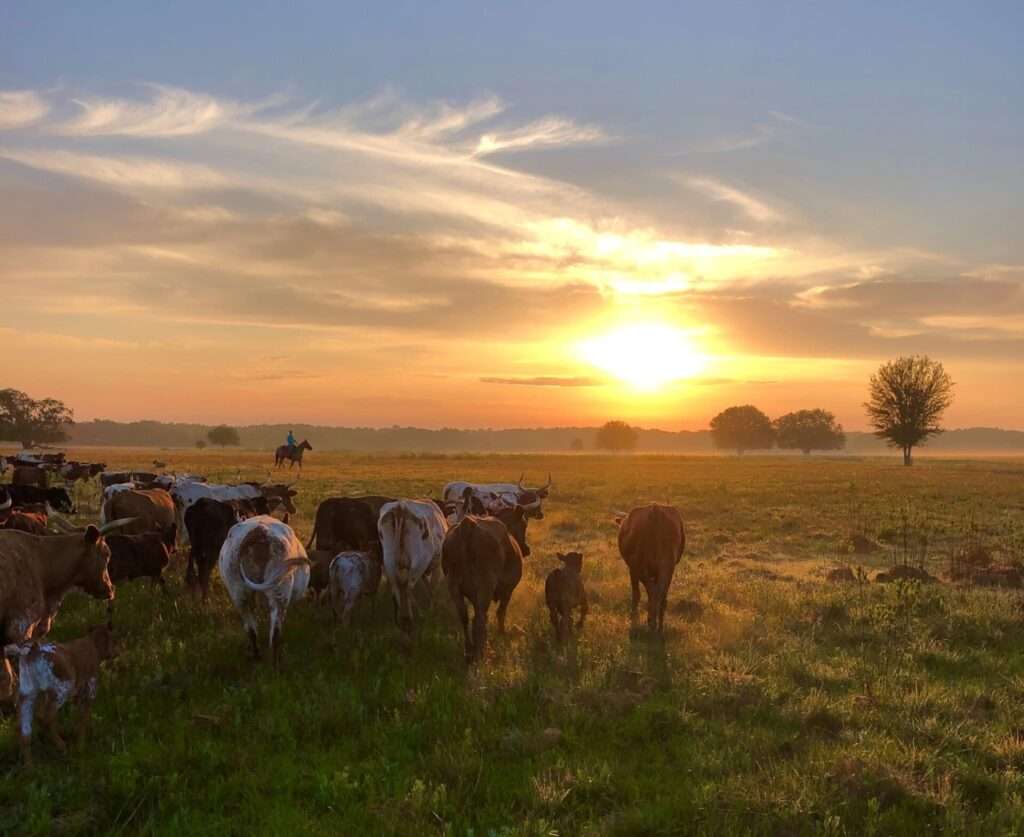
(This photo is Florida Cracker cattle; credit Steve Howell Jr.)
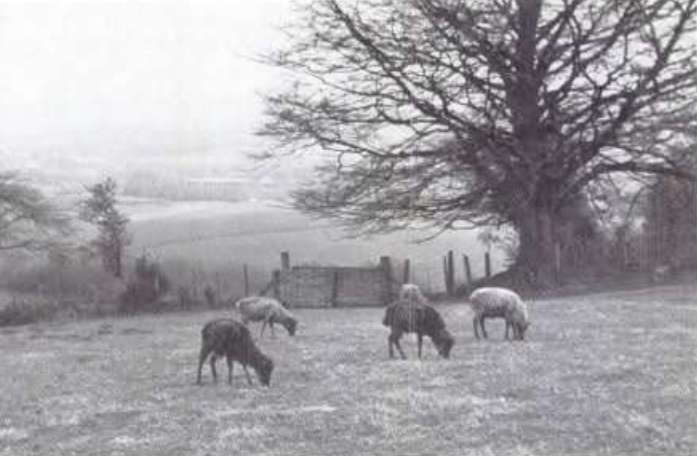
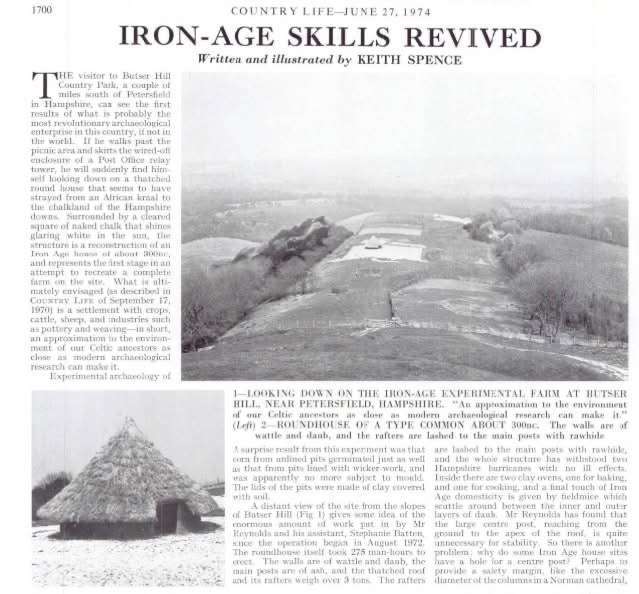
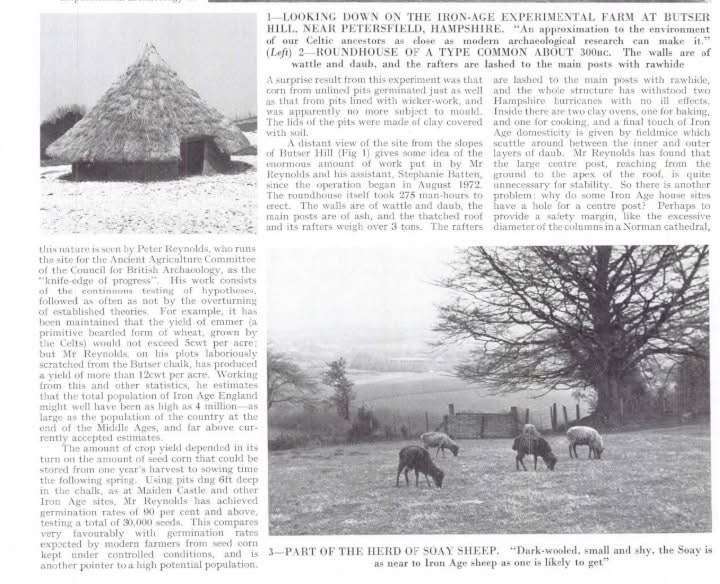
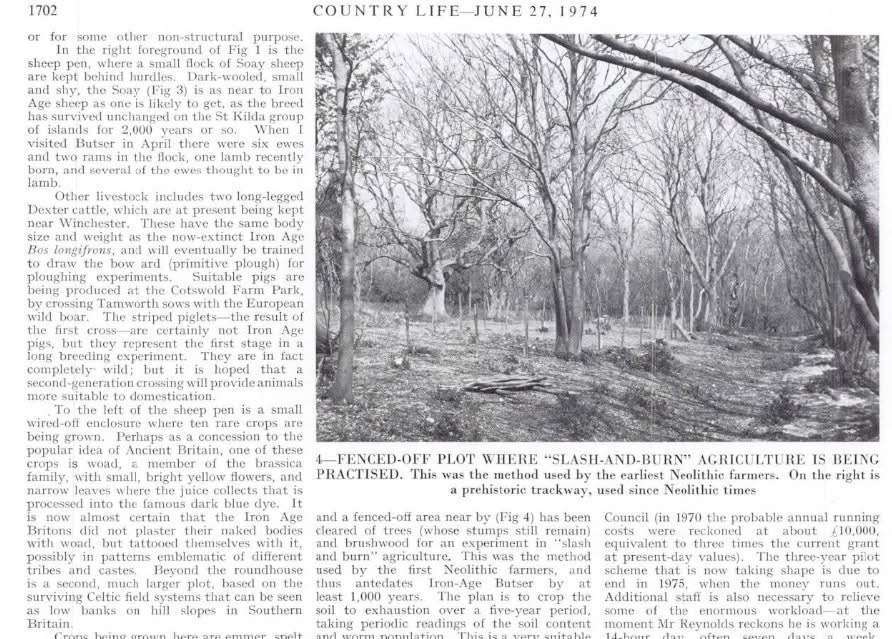
Two long legged Dexters were kept at an Iron Age site to replicate a farm in 300 B.C. The attempt was to recreate what some of our Celtic ancestors would have experienced in their environment as close to what archaeological evidence in 1974 could validate. A round wattle and daub building was constructed with a thatched roof on site, and it withstood two Hampshire hurricanes with no ill effect. A man named Peter Reynolds was testing hypotheses to establish or to refute established theories during his era. He researched to establish accurate theories on the livestock and crops that would have been grown at that time. He wanted to establish facts and create a representation of the time as accurately as he could. The dark wooled small breed of Soay sheep were kept, as it is commonly believed they are as close as possible to the Iron age sheep genetically, because they remained isolated on St. Kilda for thousands of years. Then there are the two long legged Dexter cattle being kept that are believed to be the same body size and weight as the extinct Bos longifrons. This seems to be what was considered the best match for the time. When researching the subject, I found that McKenny Hughes says “that Bos longifrons was a very small animal; probably not larger than a Kerry cow.” It was likewise believed that the color of the British and Celtic Bos longifrons was black but with a shorter horn shape than is seen in Kerry and Dexter cattle. With those considerations it is understandable that long legged Dexters that have often been called Dexters of the Kerry type would have been used as the best choice for the day. Newspaper article: Country Life 27 June 1974
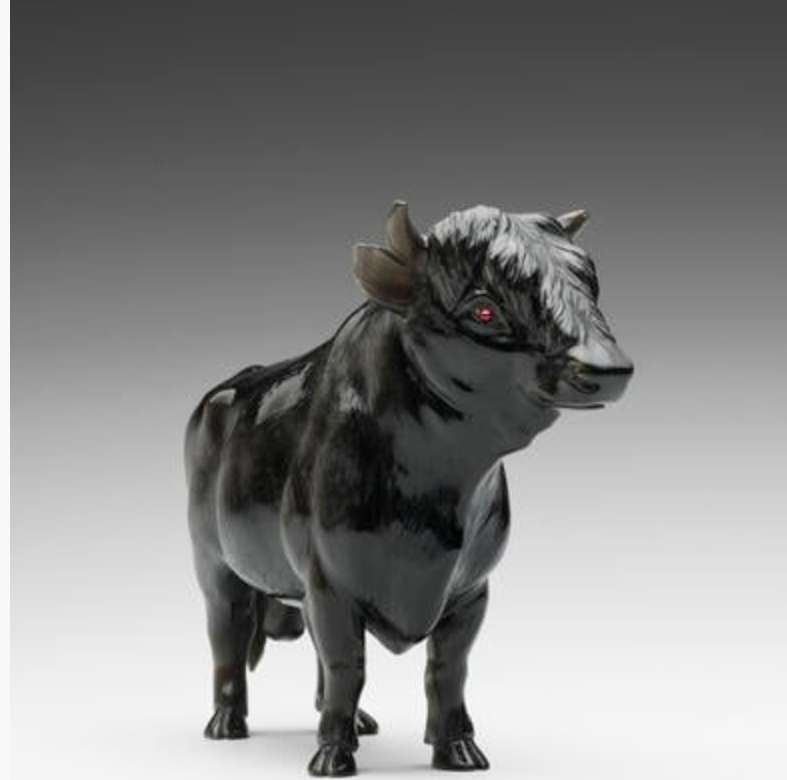
A portrait model of a shorthorn Dexter bull in obsidian set with cabochon ruby eyes. Among the breeds of cattle kept by King Edward VII at Sandringham were pedigree shorthorns, red polls, Jerseys and Irish Dexters.
Many people ask me, “why Dexter’s?”. I believe it’s no accident that they have survived so long and won a special place in many hearts and minds worldwide, including mine. Dexter’s have always been a small breed which have not been miniaturised, and I believe have special characteristics to offer the people who keep them. Here, briefly is their story..
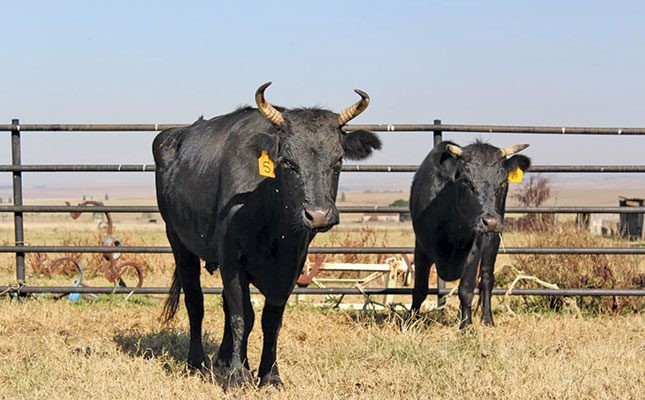
The relocation of a feral herd of 16 Dexters that lived in the Addo Elephant National Park’s Wilderness area has caught the attention of scientists after the South African Dexter Cattle Breeders’ Society became aware of the herd roaming in the park a few years ago. The society initiated the relocation of the animals to Bronkhorstspruit in Gauteng.