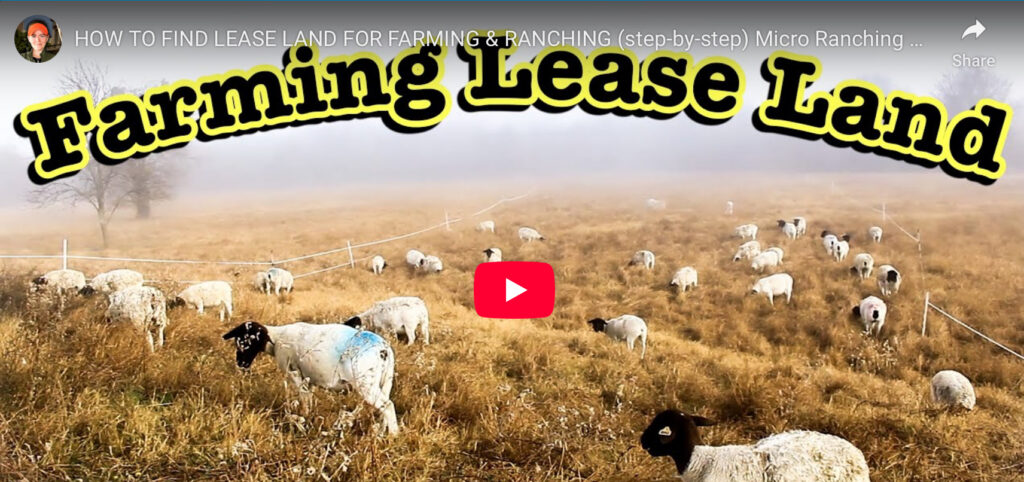
Jared from Strong Roots Farm has created a great video on everything you need to raise cattle. He puts a lot of emphasis on low-stress management, and for good reason! Stress can really impact your bottom line. It affects the health of your cattle, as well as the taste and texture of beef.
As breeders of dual purpose cattle, it can be hard to find all-encompassing management information. Over the years I have pieced together info and practices from beef and dairy offerings. This is a solid article about managing a small beef herd in the spring, and offers some helpful insight. Is it catered to Dexter cattle specifically? No. It was also written several years ago and the beef market has exploded since then! What differences have you seen in your own management practices of a dual purpose breed, compared to the info that is widely available?
The question that starts rolling around in all our brains the moment the weather turns and we see the fresh green forage poking through the soil is, when can I start grazing my cattle? This is an important question and one that requires some observation. Turning the cows out too soon could have significant impact on the length and quality of forage growth during the entire grazing season. The hay is usually dwindling at this point and everyone is eager to start grazing. But, please pause and read this short article for advice and have a great grazing season!
The article below has some simple, cost-effective solutions to managing mud on your farm or ranch. there are also a few more in-depth, long term solutions if you have the time and resources to complete them.
We have used wood chips in high traffic areas of our farm with good results. And, we get free wood chip drops from local arborists, so it is very cheap. The added benefit is that the manure and wood chips make great future compost for the garden.
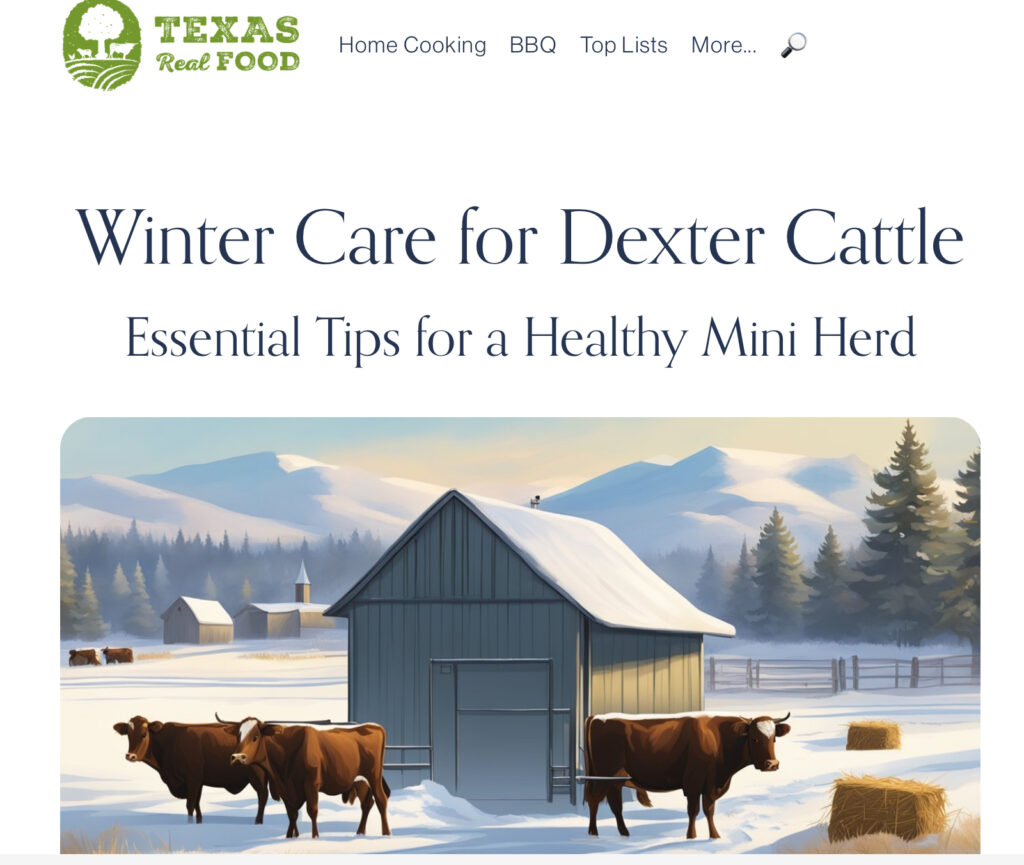
Dexter cattle have a well-earned reputation for being hardy, efficient, and capable of handling conditions that challenge many larger beef breeds. That reputation draws new owners in. It can also quietly set them up for trouble if it leads to the belief that winter preparedness is optional.
It is rarely the Dexter cattle that fail in severe cold. It is systems.
And occasionally, knees, fingers, and judgment before the second cup of coffee.
This article is written as an educational resource for farm organizations, breed associations, and new Dexter owners who want to build operations that function reliably when winter conditions are at their worst. It blends research-based guidance with practical, on-the-ground experience, because winter does not care how things looked on paper in July.
Understanding Dexter Cattle and Cold Stress
Dexter cattle tolerate cold well due to their dense winter coats, efficient metabolism, and generally lower maintenance requirements. Cold tolerance, however, is not immunity.
Research consistently shows that cattle experience cold stress when environmental conditions force them to burn additional energy to maintain normal body temperature. Wind, moisture, inadequate calories, poor body condition, and limited access to water all accelerate this process. Over time, cold stress can lead to weight loss, suppressed immunity, and reproductive impacts.
Dexters can handle winter. Winter still has rules.
Preparedness Starts With Farm Design, Not the Forecast
The most difficult winter situations occur when chores become reactive instead of routine. A well-designed farm reduces emergency labor. A poorly designed one forces risky decisions during storms.
Preparedness begins with infrastructure choices made long before the first weather advisory.
Water Infrastructure: Design for Failure, Not Convenience
Water systems are the most common winter failure point on livestock farms.
Water lines do not fail politely, during daylight, or when conditions are mild.
Water lines
Must be buried below local frost depth, not estimated depth
Long runs to remote pastures increase freeze risk
Fewer reliable water points outperform many marginal ones
Hydrants and valves
Freeze-proof hydrants must be installed correctly with proper drainage
Gravel beds must remain uncompacted
Low areas prone to runoff and drifting snow should be avoided
Heated water troughs
Use livestock-rated heaters only
Protect wiring from moisture and rodents
Always plan for power loss
Solar water systems can work well when designed properly, but winter realities must be considered. Battery capacity must account for short daylight hours, panels must shed snow, and output will be reduced during prolonged storms.
A water system that works flawlessly nine months of the year can still become a liability if it requires wrestling frozen hardware in the dark while livestock observe quietly and reconsider their respect for you.
Power Systems: Assume the Grid Will Fail
Winter storms routinely knock out power for days. Generators should be considered core farm safety equipment, not optional upgrades.
They are rarely purchased because everything is going well.
A generator should be capable of supporting:
Well pumps
Heated water troughs
Essential barn lighting
Minimal equipment needs
Fuel storage should cover multiple days of operation. Electrical layouts should prioritize critical systems and protect wiring and outlets from moisture, snow, and rodents.
Electric Fencing in Winter Conditions
Electric fencing behaves differently in cold weather.
Grid-powered chargers are vulnerable to outages
Frozen ground reduces grounding efficiency
Snow and ice can short fence lines
Solar chargers provide valuable redundancy but must be sized for winter conditions and maintained during snow events.
Frozen ground has very little respect for even the most carefully installed grounding systems.
Redundancy matters more than strength.
Farm Layout and Human Safety
Dexter cattle generally move through snow with impressive confidence. The person carrying feed across ice often does not, even when wearing boots marketed as “winter rated.”
A winter-ready farm layout:
Places water, feed, and shelter within safe walking distance
Avoids slopes and shaded areas that ice over
Uses natural windbreaks around feeding and watering areas
Does not rely on vehicles for daily care
Farm layouts designed on pleasant spring afternoons tend to reveal their weaknesses during January wind events.
Feeding and Watering During Extreme Cold
Cold increases energy requirements. Research indicates cattle may require 7–10% more energy for each degree below their lower critical temperature, particularly when wind and moisture are present.
Preparedness includes:
Staging hay before storms
Reserving higher-quality forage for calves, seniors, and thin animals
Reducing unnecessary cattle movement that increases energy loss
Water intake must be monitored closely. Frozen or inaccessible water leads directly to reduced feed intake and increased cold stress.
Human Safety Is Herd Health
Human safety is often discussed last, despite being the single point of failure that immediately compromises animal care.
Dexter cattle may be perfectly comfortable standing in a snowstorm. The person doing chores is the variable.
Most winter injuries occur due to slips near water sources, fatigue, rushing, or poor visibility. Clothing, lighting, rest, and task consolidation are safety requirements, not luxuries.
Knowing When to Pause
Preparedness includes restraint.
No routine chore improves outcomes when visibility is poor, footing is unsafe, and the operator is one misstep away from becoming the emergency. Calm, consistent care is safer and more effective than heroic effort.
Dexter cattle are resilient. Winter preparedness is not about proving toughness. It is about designing systems that still work when conditions degrade and the person doing the chores is already tired.
Final Perspective
Dexter cattle are resilient. Farms must be designed to match that resilience.
Extreme winter weather does not test commitment. It tests whether systems were built to function when conditions deteriorate. Preparedness is not bravado. It is making sure that when winter does what winter does, both cattle and caretakers come through it intact.
And preferably upright.
Michele DeVinney Schmoll is a Virginia farm owner at DeVine Farms Quality Dexters. She raises Irish Dexter Cattle and writes from firsthand experience, because farms don’t read instruction manuals. http://www.devinefarms.net/
Author’s Note
This article is written from a practical livestock-owner perspective, informed by university extension research and shaped by real-world experience managing animals during prolonged cold, power outages, and severe winter storms. The intent is not to present idealized systems, but to encourage farm designs and management decisions that reduce risk for both cattle and the people responsible for their care. Preparedness is most effective when it reflects what winter actually demands on the ground.
REFERENCE LITERATURE (CLICKABLE LINKS)
Cold stress basics, winter readiness, and management
1) University of Minnesota Extension — Preparing your cattle for severe winter weather
Do you have the Homesteading/Hobby farming down, and now you’re wondering what’s next? Is making 100% of a living on the farm a dream? Joel Salatin talks about the essentials, an ingredient list if you will, for transitioning from weekend farming to full-time farming.
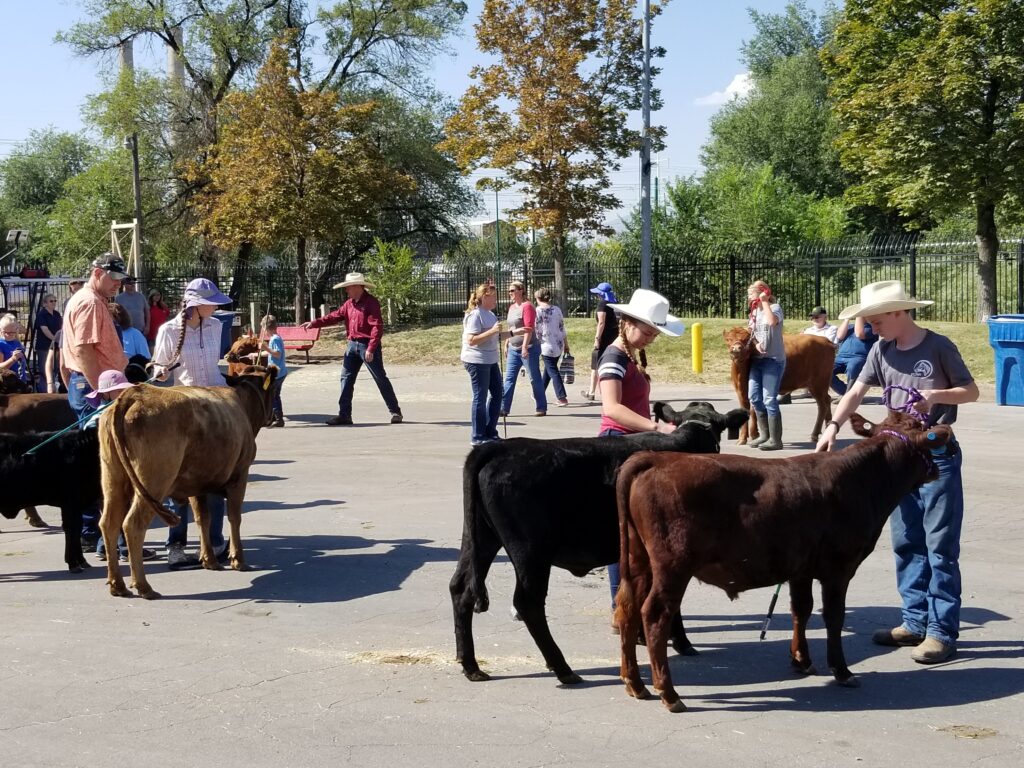
What an idyllic picture kids and animals paint. County fairs are full of animals, including cattle, being lead around the show ring by their young owners.
The homestead dream, complete with family milk cow, gives off major romantic vibes. But what does it actually take for children and cattle to interact safely on the farm or homestead?
Here are a few tips and suggestions from our family farm:
Because children are low to the ground, and their movements tend to be quick, cattle can view them as predators. Talk to kids about how important it is to move slowly/deliberately and to behave calmly and quietly when they’re around cows (especially a cow that is not familiar to them).
When introducing kids to a new cow, be sure the cow is safely restrained. I like to tie our cows on a halter with a slip knot. Kids can approach from the side or front of the cow (not the back), and talk to the cow.
Cows in a herd will groom each other, and mother cows will also bond with their calves by grooming them. A great way for kids to get to know and bond with a cow is to spend time brushing them. Our cows prefer to be brushed on the neck, shoulders and along the back.
If you have children and are purchasing a cow for the first time, it is helpful to look for a cow that has been handled/shown by children and is familiar with them.
And my final tip is to be confident! Fear teaches us to expect the worst. Set yourself up for success by following these tips, and be confident when you and your kids interact with cattle. If you find yourself becoming fearful, remove yourself from the situation, and try again another time.
I hope these tips and suggestions help you build a strong bond with between your cattle, yourself and your children!
If I had a dollar for every time I said, “I’ll remember that later” I’d be a millionaire. But, the times I actually do remember are really rare! If you’re like me, and you need a little help creating better permanent records here is a great podcast to listen to:
I really enjoyed listening to this Chute Side podcast with Dr. Ryan Rathmann on the definitions and nuances of line breeding vs. inbreeding. As a beef producer he favors cross breeding, but I got a lot of good take-aways for my registered/purebred Dexter breeding program. He talks about the benefits line breeding can add to your herd, such as uniformity in offspring. He also talks about challenges and down sides to line breeding, and how to avoid.
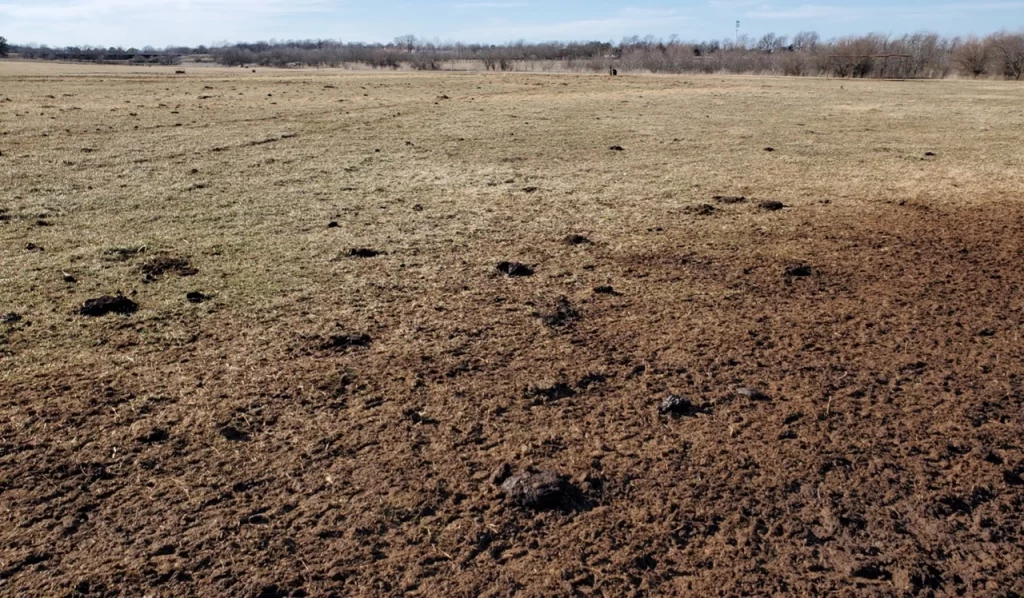
If you raise livestock, chances are you’ve dealt with mud. Every year is different, some more challenging than others when it comes to managing livestock and mud. Here is a great DIY video on building a heavy use pad for feeding or high-traffic areas on your farm or homestead.
Three cows—technically two cows and one heifer—were supposed to be prepped for AI. Schedules were coordinated, semen was purchased (expensive, carefully chosen semen), and optimism was high.
And then… cows happened.
Instead, last night I caught the naughty Jersey heifer giving the Dexter bull a complimentary ride like it was part of a rewards program. No reservation required. Turns out there was the tiniest gap in the fence behind the round pen. The bull, being the logical problem-solver that he is, decided: If my head fits, clearly the rest of me will too. After politely bending the fence to accommodate his shoulders, hips, and audacity, he strutted through like Mr. Joe Cool himself, like he’d planned it all along.
Victorious. Smug. Unbothered.
I saw the whole thing play out with my own two eyes and am convinced that exact thought rolled through his lizard brain.
What followed was a full-blown cattle rodeo.
There I was, holding a gate open, desperately trying to call the heifer into a safe area while simultaneously holding one arm out like a traffic cop to keep the rest of the cows from joining in on the shenanigans. Bless my cows—they listened. This time. Meanwhile, my husband is trying to literally cock block the bull, which is (apparently) far easier to describe in writing than to accomplish in real life.
Round and round the three of them went.
The heifer, absolutely enchanted by the attention, had no intention of listening to me. Foolish wishful thinking on my part, but I had to try. When it became clear she was not coming willingly, I decided to grab a halter and a bucket of treats.
I turned my back and took exactly three steps.
That’s when my husband yelled, “HE GOT IN!”
I won’t lie—I saw red.
This heifer is a full-blood Jersey. I bought special, sexed mini Jersey semen just for her. Two hundred and fifty dollars a straw. In one instant, my carefully laid plans and dreams of a mini were dashed.
Words were said. Loudly. Words I won’t repeat here, but let’s just say I fully earned that shirt that reads, “I’m sorry for what I said while we were working cattle.” The general theme of my rant was questioning why he didn’t put a hand on her lady parts to block the bull.
Listen- if we had traded places, I absolutely would have dove in.
After tempers cooled, my husband informed me that this was clearly a coordinated effort. The heifer and bull had paid off the steer—promising him first choice at the clover.
The steer stepped on my husband’s foot and, in fluent bovinese, declared, “NOW!”—clearly on cue.
The heifer spun. The bull landed. The package was delivered. Mission accomplished and the steer casually stepped off his foot like nothing had happened.
I am not exaggerating when I say it happened in seconds.
Yes, I could give her a lute shot in a few weeks and try again. But my AI tech is coming in less than two weeks, and I hate asking him to come out for just one cow. So… it is what it is. At this point, I’m hoping for a bull calf we can beef. A small victory, but I’ll take it.
And honestly? This is farm life.
You can plan meticulously. You can invest in genetics, schedules, and systems. But animals don’t read calendars, respect budgets, or care about our best intentions. They remind us—sometimes loudly and inconveniently—that we are working with life, not controlling it.
Some days you get exactly what you planned for. Other days, you get a story you’ll be telling for years.
And if nothing else, this one gave us a good laugh, a lesson in humility, and a reminder that the best laid plans often turn into the best memories.
Plus… it helps that they’re so dang cute.
About the Author:
Kimberly Jepsen is the heart behind MooShine Ridge in Vinita, Oklahoma, where she and her husband, Kevin, have been raising dual-purpose Dexter cows since 2015. Their little farm store is a labor of love, offering Dexter beef, raw milk, and artisan cheeses made from their own cows. Kimberly has a deep passion for the Dexter breed and loves nothing more than sharing what she’s learned over the years—whether it’s guiding fellow farmers, helping newcomers discover the joys of small-scale farming, or simply introducing people to the rich, creamy flavors of her handcrafted cheeses. For her, farming isn’t just a business—it’s a way to nurture animals, the land, and the community she cares about. https://mooshineridge.com/
The hard, but important conversations around family succession on the farm.
With the price of land and start-up costs at an all time high, it is more difficult than ever to get into farming. In this podcast, Elaine Froese, and her guest, Walt Moore, talk about the key aspects of keeping a farm in the family. They provide such a needed conversation around finances, dreams, and communication so that the farm is around for generations to come.
There is a certain peace that settles over a pasture when mature cows are part of the herd. It’s not loud or dramatic, but it is unmistakable. These cows move with confidence, graze without hurry, and respond to the rhythms of the day as if they were written into them long ago. They offer calmness not only to themselves, but to everyone around them.
Mature cows are tried and true. They have lived long enough to show you exactly who they are. Their structure is finished, their udders are known qualities, and their temperaments are no longer a mystery. A mature cow that has already proven herself through her progeny is not a gamble; she is a shortcut. She brings calmness and steadiness into the pasture. She knows the routine of motherhood. They know the value of good grass and warm sun, of shade on a hot afternoon and shelter when the weather turns. There is no wondering what they might become—only an appreciation for what they already are. In a world full of uncertainty, there is deep comfort in that kind of reliability.
Heifer calves, for all their promise, come with risk. They are still growing, still changing, still figuring out how to be cows. An udder has yet to develop. You don’t know how easily they’ll calve, how attentive they’ll be as mothers, or how they’ll handle the pressures of the herd. Sometimes they surprise you in the best way. Other times, they teach you hard lessons. That uncertainty is simply part of the heifer game.
A mature cow removes much of that guesswork. She has calved before. You know whether she raises a strong, healthy calf. You know if she breeds back reliably. You know if she stands quietly or brings unnecessary drama into the herd. What you see is what you get, and that clarity is invaluable. Especially for breeders who are building toward a specific vision.
Beyond their predictability, mature cows bring something harder to quantify but just as important: steadiness. Younger animals often take their cues from older cows, and when experienced matrons are present, the whole herd seems to breathe easier. They lead calmly to water, stand patiently at feeding time, and respond to change without panic. Their quiet confidence sets the tone.
There is also wisdom in choosing animals that have already proven their longevity. A cow that is still productive at ten, twelve, or fifteen years old is telling you a story—one of soundness, fertility, and adaptability. Those traits don’t happen by accident. They are built over time, shaped by good genetics and good management, and they are worth preserving.
For anyone focused on quality rather than quantity, mature cows are a powerful investment. They allow you to move forward with intention instead of hope. They let you build a herd based on evidence, not assumptions. And they reward you with consistency, both in temperament and in production.
In the end, mature cows remind us that not everything valuable is new. Sometimes the greatest strength comes from experience, patience, and having weathered a few seasons. When you welcome these cows into your herd, you’re not just buying an animal—you’re choosing calm, confidence, and the assurance of knowing exactly what you’re getting. When money and space allow for another addition to your farm, watch for herd dispersals. And when you find them, cherish those old ladies. There is a special satisfaction in knowing you made a good choice investing in a cow who has quietly proven herself over a lifetime.
About the Author:
Kimberly Jepsen is the heart behind MooShine Ridge in Vinita, Oklahoma, where she and her husband, Kevin, have been raising dual-purpose Dexter cows since 2015. Their little farm store is a labor of love, offering Dexter beef, raw milk, and artisan cheeses made from their own cows. Kimberly has a deep passion for the Dexter breed and loves nothing more than sharing what she’s learned over the years—whether it’s guiding fellow farmers, helping newcomers discover the joys of small-scale farming, or simply introducing people to the rich, creamy flavors of her handcrafted cheeses. For her, farming isn’t just a business—it’s a way to nurture animals, the land, and the community she cares about. https://mooshineridge.com/https://mooshineridge.com/
There have been more times than I care to admit where I did something dumb while working our Dexter cattle. In those situations I am always grateful we have chosen to raise Dexters. Even if I sustain an injury, it is much less severe than if I had been handling a full size cow.
Having the proper handling equipment, and having a “no crazy cows” policy on our farm has helped us avoid a lot of injuries. Here is a great article on cattle related injuries to farmers. Being informed and informed and aware goes a long way to keeping safe!
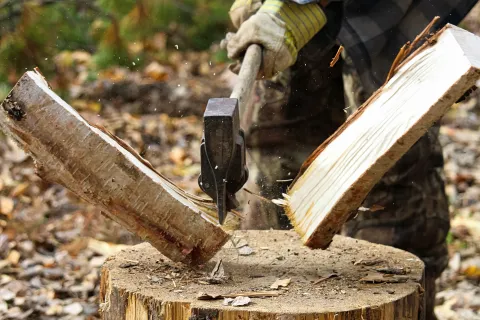
There are some chores and activities that are more effective in the winter months. Like, for instance, the soil’s freezing and thawing causing seeds to be drawn in, and seeding to be more productive. Some farm tasks are just more enjoyable in the chilly winter air (who wants to split wood in the summer heat?). Dormant invasive plants can be cut back and pulled out (hopefully before the soil freezes). The article below does a great job of providing some farm tasks to keep you warm and working in the winter months. What farm chores are exclusively done on your farm in the winter?
Here is a great video from Greg Judy about the benefits of grazing cattle through snow. He includes tips on keeping water from freezing, looking out for parasite issues, and keeping your operation profitable.
This podcast sent me into a few fits of laughter with the speaker’s dry humor. Obviously this experienced vet has been around, and has seen a few things. And while Dexter cattle (including the bulls) tend to be smaller and easier to handle, I highly recommend implementing the recommendations in this podcast. Not only will it make handling your animals easier, it will set you up for a more successful relationship with your vet and your neighbors.
The temptation is there, to graze fall pastures too short in hopes of prolonging feeding hay. But, grazing fall pasture too short before the dormant season can actually affect plant health and growth next spring.
Preparing cattle to travel to their new home can be overwhelming. Reliable transportation, health papers, disease testing – here’s what you need to know before shipping livestock across state lines.
It is that time of year when we are weaning and castrating our bull calves. This article from University of Tennessee talks about the various methods and ages at which to castrate.
Ross at 4 monthsRoss at 3 yearsLerwick at a yearLerwick at 5 years
Someone recently asked about selecting a bull calf with traditional Dexter characteristics. Many breeders more experienced than me have covered this topic, but having bred Dexters for quite a few years now (and made plenty of mistakes) I am adding my two cents to the topic.
Selecting a bull calf starts before they are even born – by deciding your breeding goals, doing your research, and by collecting as much information as you can about the parents and as far back in their pedigree as you are able.
Decide on breeding goals: We selected Dexters for specific reasons, and those influence our breeding goals. We want cattle with good temperaments, easy to work with. We want low maintenance cattle; great foragers, good mothers, easy calvers, fertile, producing great beef and milk on low inputs. We also want cattle that people can look at and say, that is a Dexter!
Research and information gathering: I read numerous breed standards for the Dexter, I looked at lots of historical photos of Dexters, I studied conformation photos, and I have visited many Dexter farms.
Collecting information on parents: I keep records on our cattle; calving dates (the first cows to calve in your herd are generally the healthiest and most fertile), birth weights, weaning or butcher weights, general health, hoof trimming/care, calving issues, mastitis/udder issues etc. Then, I wait for my best cows to have bull calves. If I’m buying a bull, I am looking for this information from the seller.
Once I have a bull calf on the ground, I am going to be evaluating him from day 1, until his last day on earth. I am looking for him to meet my breeding goals, and the Dexter breed standard. These are the questions I am asking: Is he short and beefy? Is he proportionate? Does he have a nice wide Dexter face with placid eyes? Does he have a shiny coat? Is he curious about humans and his surroundings? I continue asking these questions throughout his life, and then at 10-12 months I’m starting to look for signs of sexual maturity. Is he very bullish looking? Is he getting a thick neck and thick curly hair on his neck and head? Does he have a deep bellow? Are his testicles football shaped, and do they hang evenly? Are his teats evenly spaced and sized? And again when he reaches 3 years of age (this is generally when they have reached their full height), is he in the average range for height and weight? What are his calves like, do I like their birth weight? Were there any calving issues, dystocia, etc? Are the calves vigorous and up nursing quickly? Are the calves growing well? And again when his heifer calves have their first calf, do I like their udder and teat conformation? Are they easy to milk? Do they have good mothering instincts?
If at any time during his life he (or his offspring) stops meeting my goals, I am going to look to replace him with either another bull from my herd who I feel is an improvement (maybe even one of his sons), or an outside bull.
If there is one thing that has helped me most in selecting future herd sires, I think it would be looking at photos of bulls that embody the purebred Dexter (Hint: Try to go as far back in time as you can to get a complete picture).
In an ideal world we would be able to find or breed a great herd sire. But open cows are a financial drain, especially if it is a family milk cow! So, sometimes we have to make do with what is available. In that case, pick the best bull with the info available to you, with a plan to beef the offspring. If you get something extra special out of your bull (hey, we can all win the genetic lottery sometimes), use that calf to replace your bull.
I’ve included photos of two bulls at various ages that we have raised from birth to herd sires in our Dexter breeding program. Feel free to share feedback, I have not reached perfection yet 😄 I hope my experience and photos are helpful.
Save money by using your cattle to graze remaining forage on hay fields. There are numerous benefits, including cost savings, fertilization, and soil/plant nutrient storage.
“Slow is fast”, this is the phrase my dad says at least once or twice every time we work cattle. There are some things you just can’t rush, and cattle are one of them. While we have found our Dexters are easy to move and work with, here are some tips to become more proficient in handling cattle.
It’s hay season, which is always a hectic time of year in our area. You may not be ready to think about hay or winter, but you can usually get the best deals buying it right out of the field – and now is the time to do that!
Here is an article on tips for hay buying and making, with details on each animal’s nutritional needs.
How systems-based research can help inform our farming practices, from creating more regenerative systems to helping with water retention in drought affected areas:
As livestock farmers a large percent of our work goes into pasture and forage management. Invasive, non-local weeds can be a big pain, and some are even damaging to our animals (poisonous) and local forage. This article addresses simple, natural solutions to weed control on the farm. We have always had the most success by balancing the nutrients in the soil, and adding grazing animals at the right time.
The Question is often asked “When is the best time to halter train your calves?”. We put a halter on a calf for our milk cows calves within the first week of life. This gives them time to establish a nursing routine, so the halter won’t risk being an interference in the first few days of life. You can easily pick up a newborn calf and take them to the barn to separate for the morning’s milking but that lasts for a short time. The sooner you get a calf to learn to lead the better off you will be as they only get stronger. If they learn from day one that you are boss, it’s a great start. For us the most preferred time for calving is when there is no grass growing and we are feeding hay. You can have a calf and its mother in a small pasture where the calf learns on a small scale to be caught, lead and released again. Then by the time the grass is green the calf has a better idea of what to expect and has gained more trust in people. You can use a small pasture during the growing season too, but then your feeding hay when they could be eating grass. We also teach our calves to be pushed at a young age. Often times the oldest calf that has been trained the longest will be the leader but temperament also has a play in the matter. If you start in small pastures you can round up the calves and they will all walk together to a location you want them to go to. If one doesn’t get into it’s mini herd, you can clip it’s halter and get it to walk. Training calves to do multiple things at a young age really saves you a lot of headaches later on when they are much larger. I halter train older calves too out of cows we don’t milk. They can be trained just as well in the end but it takes more effort than just integrating it into your everyday routine.
Pricing a Dexter in 2025 is nuanced and regionally dependent. Join David of DK Cattle Co as he talks pricing and the many details that can influence costs in today’s market.
Are cows that eat willow better for the planet? A Queens University research project aims to find out if Willow can make farming more carbon neutral.
One aspect of Agroforestry uses trees as forage for livestock, and is gaining in popularity. Willow contain anti-parasitic compounds, they can be a great buffer around water sources, and have other great benefit to livestock and pasture. Do you graze Willow trees, or would you give it a try?
A great podcast by Working Cows, interviewing Bart Carmichael and Pat Guptill of “Principled Land Managers.” Bart and Pat talk about the importance of vision and principles in farming. Practices are flexible can change based on the land, animals and resources available, but having solid principles can set you up for success no matter where you go and/or what you do.
Keeping records is an important aspect of running a successful livestock business. It is even more imperative if you are raising pedigreed and registered animals. But, how do you know what details will be helpful and what details will just add more work to your already full plate? This article is a practical guide to the who, what, why and how of record keeping. And remember, “it’s practically impossible to manage what you do not measure.”
Let’s join Pete at Just A Few Acres Farm as he talks about the decision to start grazing his Dexters in the spring, as well as other spring chores on the farm.
I found this DIY feeder when I was looking for inexpensive options for my sheep. As Dexters are smaller, I could see this working great for them as well. It would also work well if you have mixed species together in the pasture.
When you are considering trying something new it is always helpful to have the wisdom of others who have tried and failed or succeeded. We’ve done a little winter bale grazing with our Dexter herd, and the effects on the pasture are dramatic and obvious (a swath of lush green and clover through a mostly browning pasture). Here is a great farmer led study on the benefits of bale grazing that I have found compelling. Have you or would you try bale grazing?
The article below has great tips on keeping helpful information about your livestock. Learn to run your farm, ranch or homestead more efficiently by keeping track various numbers year to year. Measure production in your breeding stock, milk cattle, and beef cattle.
Written by Shelley Hatfield/Whippoorwill Pines Farm
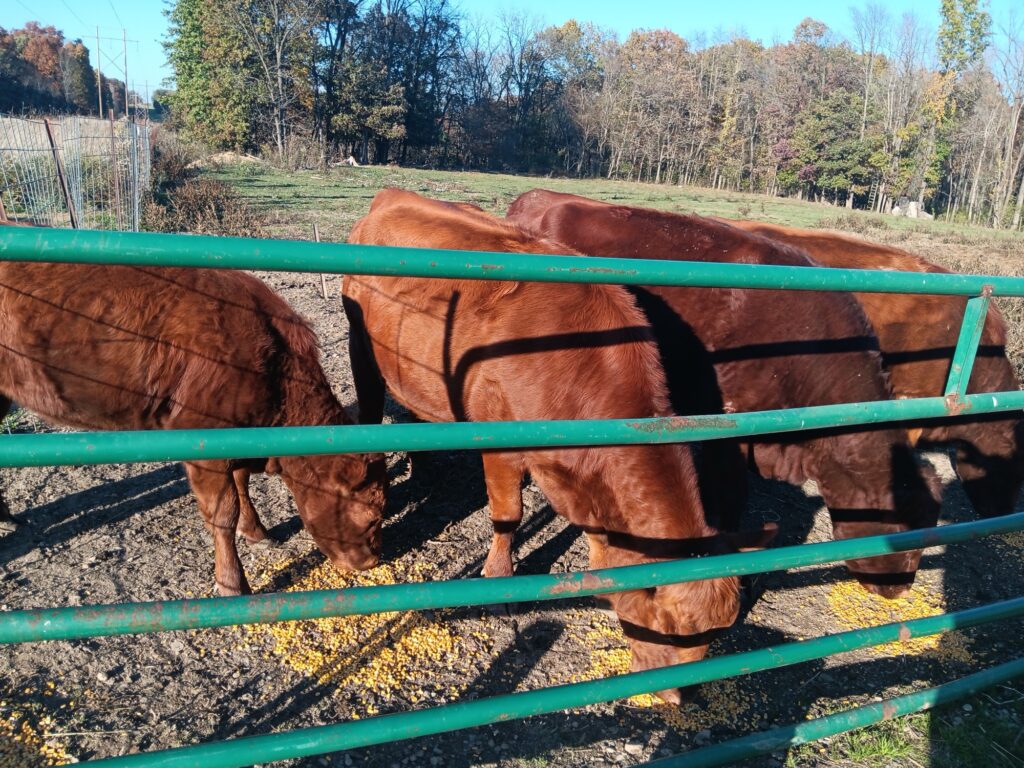
I’m going to talk about 6 things needed to help your cows get through the winter. I’m sure that there are more than 6 things but these are what I think are most important. The first thing that you need is fresh water!! Where you are in the United States will determine how hard this will be over the winter. Some places are warm enough that they just have to make sure it stays full. But in some places it almost freezes before you get back to the house. But fresh water is so important in the health of your cows. It has been said that cows need 1 to 2 gallons of water per 100pd of body weight. I know some think that maybe they can lick the snow or lick the ice. But licking the ice would take so much time to get what they need. It would also take up body energy that they need to keep warm. Cows that don’t have enough water supply can get dehydrated and are susceptible to colic and other issues. It is just best to keep fresh water out to them daily.
Not having water can hinder so many areas in a cow. Whether in summer or winter, water is so important to the health of your cow. People usually think about water problems for the summer time, but making sure they have water is also very important for winter. It affects their digestive system. It keeps their body temp regulated. It affects milk production. Water or lack of it can affect the overall health of your herd.
There are a couple of different tank heaters that you can use. One is a floating one that has a cage around it. I used those for several years, but ran into problems with them. My cows would get bored and chew on the cord as it hung over the tank. I used a pvc pipe to try to help. It worked as long as they left it alone. There is also a tank heater that goes in the drain hole at the bottom. This is the one that I’m using now. I can run the cord out the bottom and around so they can’t reach it. I will warn you that tank heaters can run up your electricity. But unless you have waterers run to your pastures, it is tank heaters or break the ice!! I’ve tried all the tricks that people have come up with and I haven’t found any that work for me.
Whatever method you decide, tank heaters or breaking ice all day, lets just make sure that we are keeping fresh water to our herds this winter!!
There is this thing that happens when you have Dexter cattle and really any kind of cows. It’s called cow math. The cows just keep multiplying and it’s all your fault.
In my Dexter journey this happens 2 ways. I got my fist Dexter cow, she had her yearling steer by her side and was pregnant. I thought cool, 3 for the price of one. Who doesn’t love a sale?
The new calf was born, another steer (not at birth but after a bit (was removed)). I know I’d have 3, but I didn’t know how much I would love being a milkmaid. I loved milking, processing the milk, and making all the fabulous dairy products. When the calf was weaned, my avocation as a milkmaid did too. No more dairy goodies and now I knew what real dairy was and I couldn’t bear to buy the junk stores have and call dairy.
I bought a second Dexter Milk Cow, with a steer by her side so I could milk year round with Spring and Fall calves. Now there were 5 cows. One steer went to freezer came and I was down to 4. Good for me. But then the new heifer calf was born and we were back up to 5.
Here I became foolish and bought a 3rd Dexter milkcow for emotional reasons. ( I did not need a 3rd Dexter Milk cow) She did not come with a calf at her side hooray. So, we were up to 6, I sold the heifer calf and we were down to 5. The new cow had a heifer calf and we were back up to 6.
It’s all my fault. I bred the cows, bought the cows. I will sell the new heifer calf and be back down to 5 but I have 2 calves due this Spring, but I will send another steer to freezer camp next month so I will stay at 6 until the 2025 Fall calf will make it 7 unless I sell 1 or both Spring calves.
Cow Math is real. So you will have to consider how you want to manage your herd size.
Whit Ashe of Circle A Ranch in Savannah, Tennessee , has been our cowboy, AI tech and friend for over ten years now. Our nick names for him, include Man With The Golden Arm, Mr. One And Done and My Favorite Cowboy to name a few. But, wouldn’t you use those names to describe a perfect heifer record and he only had to come back twice for redos in 10 years. We recommend him for anyone in the area. But after several conversations, it appears that much of our success as team, is not just his technique.
Minerals
For both Circle A Ranch and our little homestead, Stay’N Put Farm, it started with the management program. We both use Vitaferm Concept aid minerals. Whit recommended these right from the beginning, including when we were doing live cover on and off. It is set out free choice for them to utilize at their pleasure. With the success rate like ours, proper nutrients to help them take with one attempt has to be one of the key components . Seeing others succeed when switching to it, seems to us to be part of one of the keys to success. But this is just one of components to this success.
Timing
Timing is very crucial as well. Each Dexter will have its own cycle. Ours are between 18 and 21 days. Signs of coming into heat differ from cow to cow. Some of the signs we look for are loose poops, change in behavior…extra sweet or standoffish behaviors. You will often times see the cows standing close to each other, one appears to be more affectionate than the others. These for us are the start of of the heat cycle and duly noted.
Next we watch for jumping or restless behavior. This could include a nursing calf, jumping on mom or behaving weirdly with mom. If you’re milking, you may see an appreciable drop in milk, we do.
This is when your observation skills are most important. Cows will jump cows. Cows will jump bulls. This behavior is referred to as bulling. If you only have one cow in your herd and no other Dexter or bovine friend, this can be troublesome.
It can help you know that a cow is in heat, but it can’t tell you whether it is in a standing heat.
Telephone conversations and texts happen with Whit Ashe when we see behavior changes, poops getting loose or a milk drop and then we keep in close contact until we are sure that we are in standing heat.
Standing heat
Standing heat is when the cow stands for anyone to mount her. It is at this point you should be ready. We try to AI within the next 12 hours…and close to the 12 hour mark.
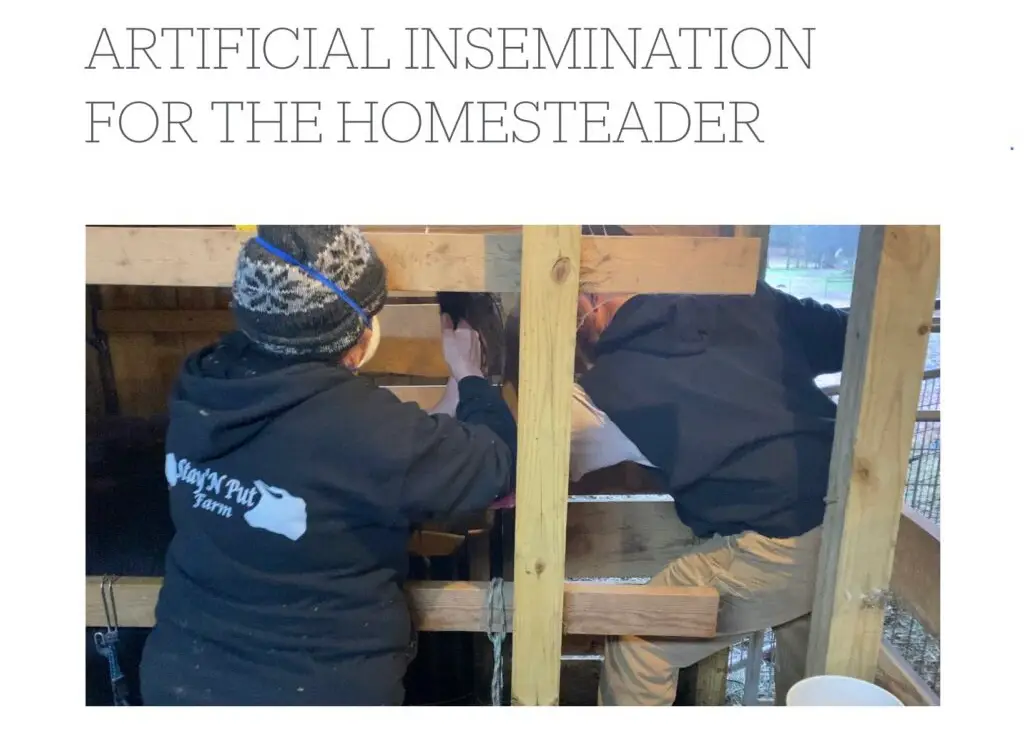
When your tech arrives, you should have your cow either in the barn or in the milking stanchion or shoot. You will need to have your straw selected that you want to use. The tech will warm the insertion device, by placing close to their body…down their shirt. The straw will be warmed in a special straw warmer. Once it is thawed, the device will let you know and the fun begins. The attached video will show you what it typically looks like.
Whit Ashe has only had to make two trips back in 10 years, and I would have to say one was probably the semen , which is rare to have a problem with it and the other was my timing. We chased it…knowing it would probably result in a bull, but we were unsuccessful. As of the time writing this article we have only received two bulls by AI, and that was from another AI tech, Weston Williams. Whit Ashe has a perfect heifer record here, very hard to believe, but true.
Good afternoon, I’m sitting down to write up an article for the Irish Dexter Cattleman website. I’m going to write this one up myself but I will include a few articles that you can go check out for yourself. I don’t feel that I have any experience with this production yet as I’m just starting it myself.
I have been reading and watching so many different farms that have been using this as their practice and it is amazing what happens. I’m talking about regenerative grazing.
There is a place in Greenfield, IN called Tyner Pond Farm. I was reading one of their articles this past spring and they had just pulled their cows off in March of this year. They had wintered all winter on their pastures!! They finally were feeding hay bales in March. Their location is in Indiana which is about 2+ hours from me, but it is about directly across from me. So, the temperatures are close to being the same. When I saw pictures, they had green grass still in March of 2024. I find that amazing!!That is something that I want to strive for.
Another place to find information about this practice is Greg Judy at Green Pastures Farm. There are several videos that you can find on YouTube about how he does this practice.
There is also Joel Salatin, Polyface Farm, who practices these methods.

I’m still getting my perimeter fences all put in, hopefully they will all be put in by next spring. Once you have your perimeter fences put in, you will separate those into small paddocks. You will move your cattle every day through those paddocks. As you watch Greg Judy, he has water lines run out to each paddock. And most other people do, too. That will be a down the road option for me.
This practice is a lot of work, but I believe that it will be well worth my time!! Moving the cattle helps keep the microbes in the ground going. It also helps to keep you from overgrazing your pastures, which is what I’m doing now. Over grazing lets so many weeds in that it isn’t funny!! This regenerative grazing also cuts down on the weeds.
Another reason that I just learned this week is when you get your pastures going, you make sure your grass cocktail is good. If you have a good cocktail of grasses that will keep the fly problem down!!! Greg Judy has a Youtube video out that shows his cattle out on pasture with hardly, if any, flies on the cows. It was amazing to watch!!! The cows were sleek and shining with hardly any flies. He talks about it with the guy who oversees it. It is amazing!!!
I hope to come and write another article in about 3 years or so and tell you how it is going. I know that it will be hard work, but it will be so beneficial in the end!!
Check out these farms to learn more information. I believe this is so important for our pastures. We need to preserve them as much as we can.
Heat stress has a major impact on female reproduction. Science and experience have taught us that cattle do not respond well reproductively to heat. Stress from increases in body temperatures have been demonstrated to impact all major reproductive hormones that drive the conception bus in our herd.https://www.agproud.com/articles/55165-heat-stress-and-its-impact-on-bull-fertility