Economic and Social Benefits of Pastured Beef
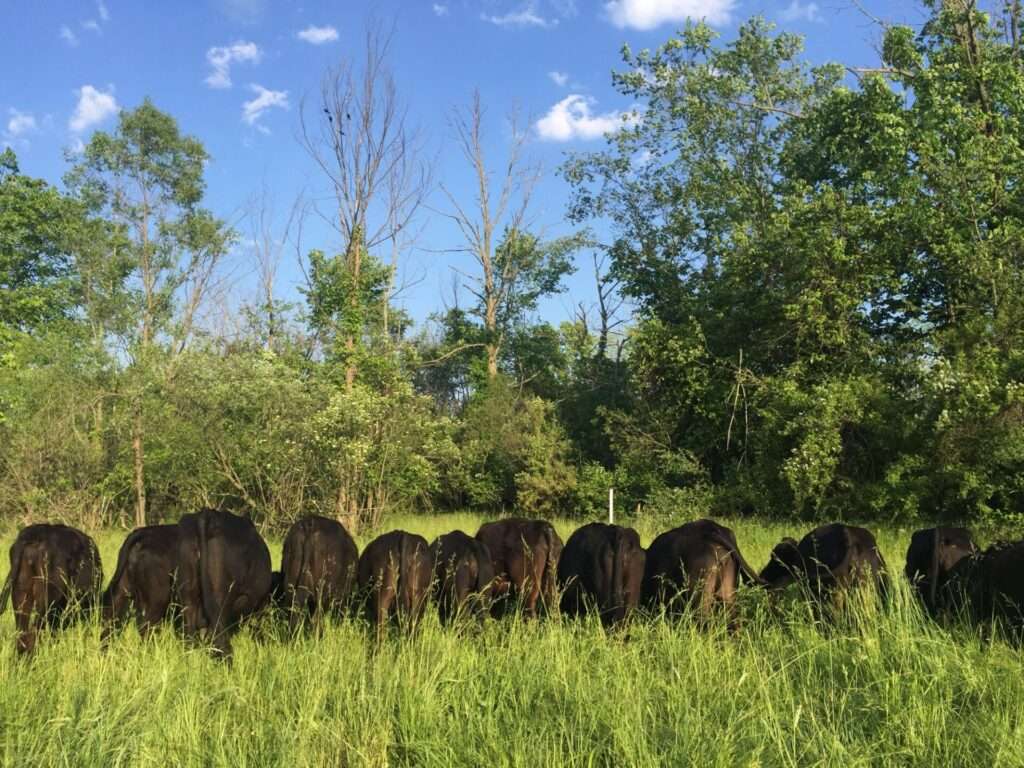
Whether supporting or producing beef raised on pasture, there are many benefits! Let’s look at some of those benefits:
Economic and Social Benefits of Pastured Beef Read More »
BeefWhether supporting or producing beef raised on pasture, there are many benefits! Let’s look at some of those benefits:
Economic and Social Benefits of Pastured Beef Read More »
BeefBy David Payne
Selecting the finest cut of beef is a debate as old as butchery itself. From white-tablecloth steakhouses to backyard grills, opinions are plentiful and fiercely defended. Yet when judged by flavor, tenderness, and overall culinary performance, one cut consistently distinguishes itself from the rest: the ribeye.
⸻
Defining Excellence in Beef
To identify the best cut on a cow, one must first establish the criteria. A truly exceptional cut should offer:
• Pronounced, natural beef flavor
• A tender but substantial texture
• Reliable juiciness
• Adaptability across cooking methods
While many cuts excel in one or two of these categories, few succeed in all. The ribeye does.
⸻
The Anatomy of Flavor
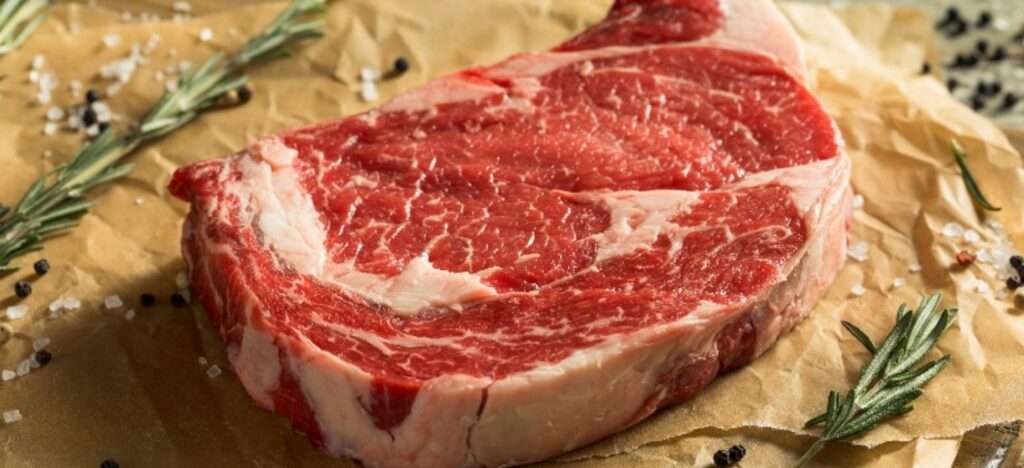
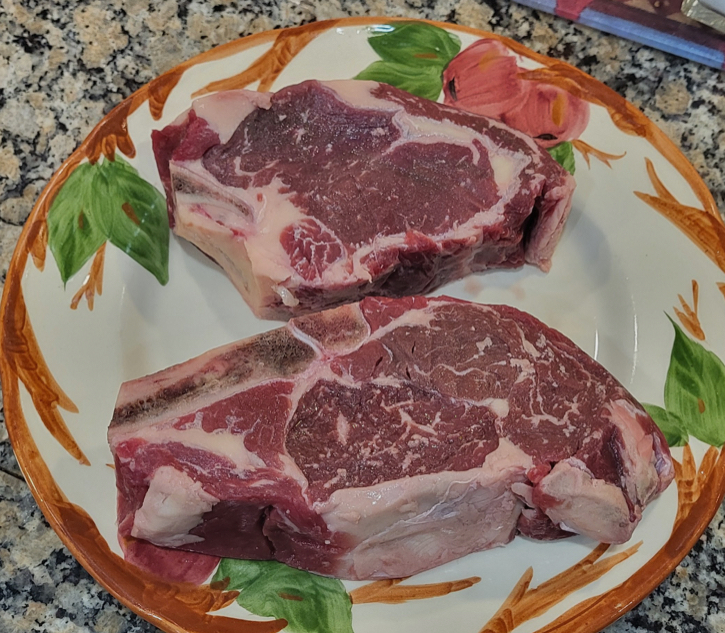
The ribeye is sourced from the rib section of the animal, an area characterized by minimal muscle exertion. This anatomical advantage allows for the development of extensive intramuscular fat, commonly referred to as marbling.
Marbling is widely regarded as the primary driver of flavor in beef. As the steak cooks, the fat slowly renders, permeating the muscle fibers and producing a depth of flavor that is both rich and unmistakably beef-forward.

⸻
Tenderness with Substance
Unlike ultra-lean cuts such as filet mignon, which prioritize softness at the expense of flavor, the ribeye achieves a rare balance. It is tender enough to require minimal effort at the table, yet structured enough to provide a satisfying, hearty bite.
This balance makes the ribeye particularly appealing to diners who value both texture and intensity.
⸻
A Cut That Rewards Simplicity
Another defining virtue of the ribeye is its forgiving nature. The generous fat content acts as a natural safeguard during cooking, reducing the risk of dryness and allowing for a wide margin of error.
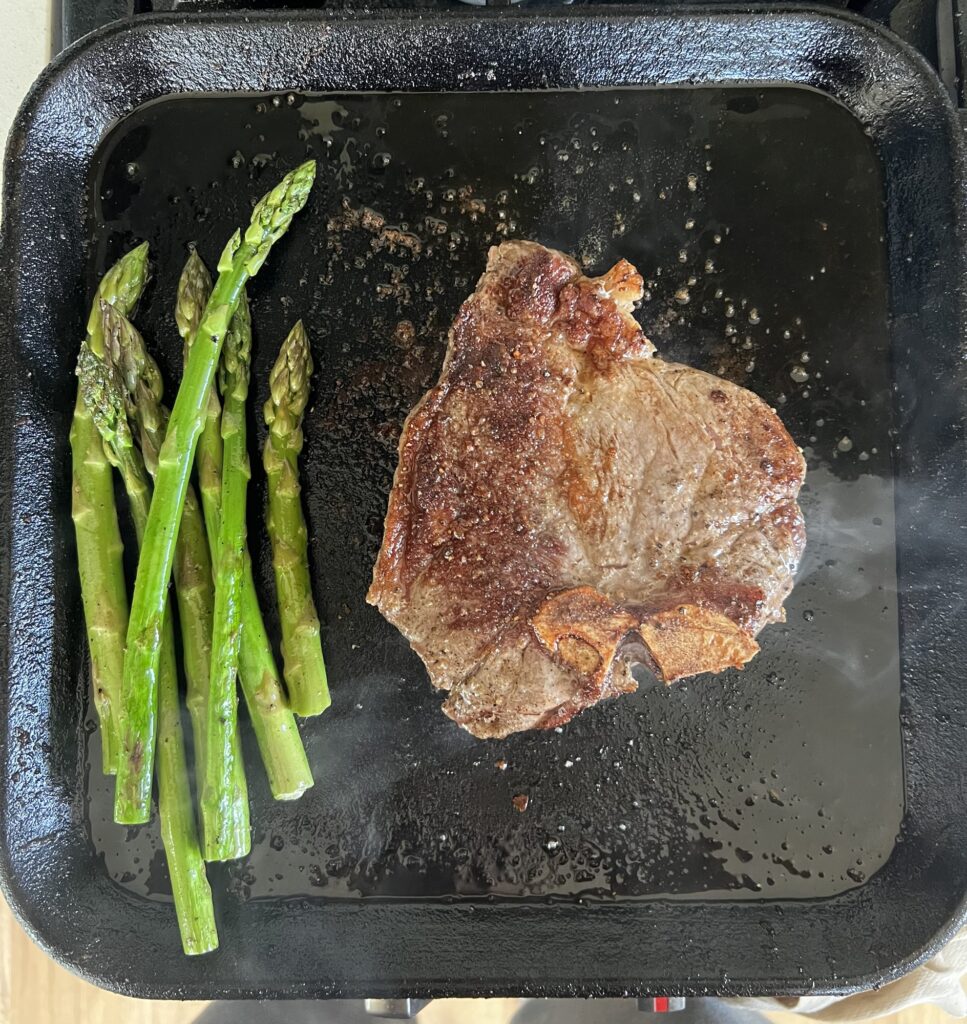
Whether prepared rare or medium, grilled over open flame or seared in cast iron, the ribeye maintains its succulence with minimal intervention. Salt, heat, and time are often all that is required.

⸻
Bone-In or Boneless: Two Expressions of Excellence
The ribeye is available in both boneless and bone-in forms, each offering a distinct experience:
• Boneless ribeye provides ease of preparation and uniform cooking.
• Bone-in ribeye, including cowboy and tomahawk steaks, delivers enhanced flavor and visual impact.
Both versions exemplify the cut’s inherent strengths and remain staples of high-end steakhouses worldwide.
⸻
How It Compares to Other Premium Cuts
Other cuts deserve recognition for their individual merits:
• Filet mignon offers unmatched tenderness but limited flavor.
• New York strip delivers a firmer texture with less marbling.
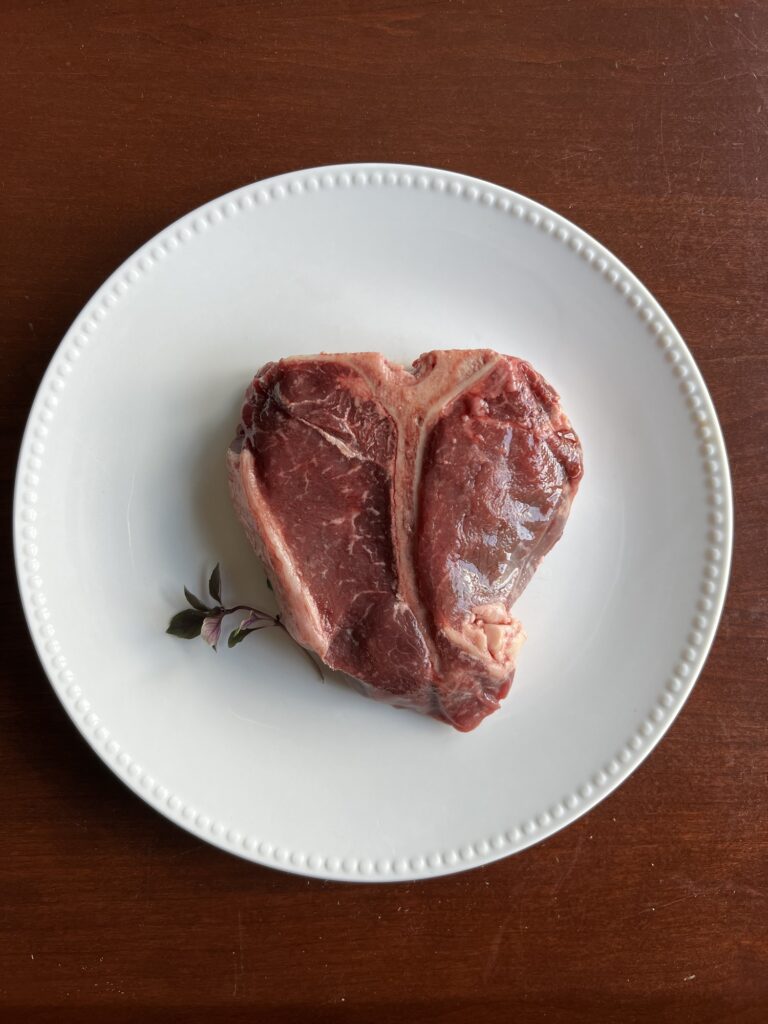
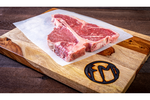
• T-bone and porterhouse provide variety but require careful cooking to manage uneven thickness.
• Brisket, while transformative when slow-cooked, demands time and expertise.
Each excels in specific contexts, yet none match the ribeye’s consistency and immediate gratification.
⸻
Conclusion
The ribeye represents beef at its most complete: deeply flavorful, reliably tender, and remarkably versatile. It requires no elaborate preparation to impress, standing confidently on its own merits.
For those seeking the purest and most satisfying expression of beef, the ribeye remains—decisively—the finest cut on the cow.
The Ribeye: Why This Cut Reigns Supreme Read More »
BeefThe Wranglers at Irish Dexter Cattlemen are pleased to announce that we have a butcher on our team now! The folks at PipeDreams Butchery, located near Memphis TN, will be writing articles, doing videos and more. They are familiar with Dexters, as they used own them, milk them and breed them.
They are active on our Facebook group, so if you have a question about processing and post it…don’t be surprised if they answer you. If you have things that you would covered from a butchers perspective, please let us know and we will try to get it covered for you. All contributions, will first appear in the free monthly newsletter and then be archived in the membership Gazzette.
We personally use them for all our processing and are very happy with our cuts, the feedback on our animals and extra services including sausages, ancestral beef, smoking and curing. Very excited to have them participating in our beef community!
Mobile butchering, also called on-farm butchering definitely has its share of challenges. But, there are a few who are making it work, and excelling in this field! Farmers and producers are looking for options that minimize stress to the animal and cut out long transportation times to a butcher shop. Have you used a mobile butcher unit? Would you be willing to pay for a more costly service if it brought the benefits of an on-farm butchering?

St. Patricks Day is coming up, and what better way to celebrate the day than with some home cooked, Dexter corned beef! The link below is to a recipe I’ve been using for several years with great success. Corning is a traditional way of curing beef meat. It does take time, so you want to give yourself 5-7 days. This recipe does not use curing (also called pink) salt so it is nitrate free. You can add beets if you’d like the traditional color, or leave them out for just as tasty (though less colorful) corned beef.
https://www.growforagecookferment.com/how-to-make-corned-beef/
Corned Beef Recipe Read More »
BeefWe’ve been raising our own beef for years. Before that, we raised rabbit and chicken, and hunted deer to fill our freezer. It’s been so long since we had to purchase meat from the store, I forget how lucky we are. Especially now that we raise Dexter cattle.
I’m always pleasantly surprised when we get feedback from our beef customers. I take for granted that we get to eat beef this flavorful and tender on a regular basis. My all time favorite message from a new customer is this: “Your beef is fantastic. It tastes the way I remember beef tasting in my childhood.” Delicious beef, reminiscent of a slower time.
A new customer just a few weeks ago texted, “beef is awesome! Color and texture is amazing.” This is really a confirmation of our goal to improve tenderness. The flavor has always been top notch, and we’ve been refining tenderness and marbling with success! Being grass-fed only, this has taken a longer road to accomplish, but what satisfaction!
Another customer recently wrote, “Thank you!!! It’s literally the ONLY meat I trust eating myself or feeding my kids!!!” We are so grateful to be trusted in this way! Our little Dexter cows really make this possible, with their great foraging skills, and ability to convert that forage into flavorful, tender, and nutritious meat for our community.
Have you tried Dexter beef? If not, you really don’t know what you’re missing. But, don’t just take my word for it! Find a Dexter beef producer in your area. We can help with that. Head over to the Irish Dexter Cattlemen Marketplace to look for beef in your area. Keep checking back as we add more producers from across the US.
Here is a really good podcast about what you and your customers should expect when getting a cow processed . It can be intimidating to buy beef in bulk for the first time. Share with your customers to help them fully utilize a whole or half cow, which is a big (and worthwhile) investment.
Please keep in mind that these numbers are for a standard breed cow. The numbers for the Dexter will be less, but the return will be a higher ratio. Dexter ratios are closer to 60-65% with less inputs, easier on pastures and a whole lot of personality!
Eat Your Way Through a Cow, Episode 1 Read More »
Beef
There are different reasons to dry-age steak, learn what they are and our method of dry-aging steak.
How Dry-Aging Meat Works Read More »
Beef
Grass Fed beef is higher in beta carotene, vitamin E, conjugated linoleic acid (CLA) and omega 3 fatty acids
Health Benefits of Grass-Fed Beef Read More »
Beef
Dexter beef is a breed of cattle that is known for its quality and taste. It is commonly known in foodie circles that Dexter beef is some of the tastiest around and really good to eat.
The Quality Of Dexter Beef Read More »
Beef Selling”With the rise of farm-to-table eating and artisanal meats many diners are seeking out flavorful beef from non-commercial cattle breeds. One such breed gaining popularity is Dexter beef a tender, succulent meat from small, hardy cows native to Ireland.”
https://redtablemeats.com/fresh-meat/beef/what-is-dexter-beef
What is Dexter Beef? Read More »
BeefThis podcast covers some of the questions we all have when starting out with cuts from our Dexters. The cuts will be the same…just different overall yields.
They have some interesting ideas for selling to your customer base.
Cutting up The Beef podcast Read More »
BeefThis is an interesting article on how people are returning to the old ways and using more and more of their processed beef. Healthier alternatives are growing in your pastures!
https://www.theatlantic.com/health/archive/2025/08/cowmaxxing-wellness-cow-tallow/683826
How much of your Dexter do you use? Read More »
Beef
Mike Baker describes features of market readiness for both finished and unfinished beef and dairy crosses.
Determining the Market Readiness of Beef Cattle Read More »
Beef Herd Health
Learn how to have 1/2 a cow butchered for your family to get the right cuts
Half a beef, What cuts to request Read More »
Beef SellingIn this podcast, we learn about things we need to consider before we even schedule our meat for processing. Interesting fact is the return on the Dexter is higher than what is stated here. We experience much closer yields to 70% and our carcasses are smaller…so the freezer space issue is not as significant with the larger breeds.
What Do I Need to do Before I Drop off my Meat for Processing? Read More »
Beef PipeDreamsBy Eliena Bodtke, Stay’N Put Farm
Since many of us are homesteaders or practice some kind of preserving, I thought I would take a moment to discuss an alternative to canning, pressure canning and dehydrating.
Are you scratching your head, thinking where is she going with this?
Consider freeze drying. While the initial cost seems daunting, it really is an excellent way to preserve your Dexter milk, yogurts, cheeses, colostrum and beef for 25 YEARS! Think about when you’re over loaded with one veggie or another during gardening season. The veggies, herbs or eggs when they are abundant, can be frozen and put into the freeze dryer anytime. We still can and pressure can, but this gives us a whole new option.
We purchased a medium Harvest Right about a year and half ago and have been amazed at all the things we can preserve….it is less time consuming and in our opinion, and better quality product in many cases.
Canning of dairy is frowned upon by the USDA and in some cases consider unsafe, although people do it. Freeze drying on the other hand, processes the dairy at lower temperatures and therefore does not pasteurize it…so if raw is your goal, it is good alternative. If you pasteurize, you still follow the same method. We pour a quart of milk on each tray and let the machine do its thing. We have done it both with cream in and cream out…the choice is yours. We find it needs to be blended when reconstituted, or another favorite is dry in our coffee, just like coffee creamer!
If you’re into selling, freeze dried milk and other products can be a good source income. Take a look at the price of powdered milk in the store! It is not uncommon to see freeze dried milk for $30-40 a gallon. Let’s clarify this. One gallon of freezer dried milk reconstituted into one gallon of drinkable milk…almost quadruples in price.
And don’t forget your Dexter beef! Consider this scenario….you have some cuts left from your last processing and you would really like to eat it before you get into the next one. Well, freeze dry it and then you have preserved it for 25 years. It makes great gifts, as it is so light to ship.
How do you use this freeze dried beef? We like to pour some of our Dexter bone broth over it. Let it sit in refrigerator over night and then use it in the next day or so. The beef will only absorb as much broth as it can. It doesn’t get mushy, which can happen with veggies. Cook with it like you usually do.
Hope this article helps you on your farm, ranch or homestead. I just love this technology and thought I would share.
Preserving Irish Dexter Dairy and Beef Read More »
Beef Milking & Dairy
Today the farm arguably represents America’s premier non-industrial food production oasis.
The Polyface Story Read More »
BeefA discussion on salting your steak. Enhanced crust is just one of the tips.
Why you should salt your steak. Read More »
BeefEven if you feed a little grain…it is way better than what is in store and being passed off as grass fed. Check out this video from a well known doctor.
Grass Fed Beef Biggest Scam? Read More »
BeefTried and true ground beef recipe. Quick and easy! Whip up this cheesy, crowd-pleasing beef enchilada recipe in just about an hour, and bring authentic Tex-Mex flavor straight to your dinner table!

An easy recipe for ground Dexter beef Read More »
BeefDexters may only rank 5 in this dual-purpose breed list, but when you consider their size, they come out as number one for the small farm. Practical and versatile in being great for beef and milk. Often times people consider Dexters mini cattle, but the whole breed is naturally small with some individuals being extra small. It is interesting to note that Dexters make the list even though they are small in size and no one can discredit them for their diminutive size as though they are nothing more than a toy breed as they hold their own with the big boys.
Click the link below to read the article
Dexters are a TOP-RANKING DUAL-PURPOSE BREED Read More »
BeefNeed a quick week night meal? Check out this tasty beef stroganoff. And it can be made with one dish, so less dishes to do after dinner!
Beef Stroganoff Recipe Read More »
BeefWith all the talk about marbling and beef tenderness, here is something to consider…marbling does not equal tenderness…taste yes…tenderness no. And selecting for easy keepers can be a great step selecting the best beef from your herd.
The busyness of summer is blending into the rush of back to school. On the farm or homestead there is plenty to do too, and there isn’t a lot of time to think about dinner. Try these quick, easy beef shish kabobs, perfect for a quick meal. Plus, they can be cooked on the grill so they won’t heat up the kitchen.
There are as many ways to finish beef as there are farming setups. If you prefer the taste and ease of grain finished beef, here are some great tips for grain finishing your beef steers on the farm and reaching that choice taste and tenderness.
Grain Finishing Beef Read More »
BeefGrass finishing isn’t as easy as sticking some steers out on grass until they’re fat and ready for processing. For really good flavor and tenderness you need a steady rate of gain. For a steady rate of gain you need quality forage – especially leading to finishing. Every beef farmer who finishes on grass is a grass farmer first. Need some tips on finishing your Dexter on grass?
Finishing Beef on Grass Read More »
Beef“The statement “you are what you eat” is actually a biologically correct concept akin to bioaccumulation, in which the nutrients at the bottom of a food chain carry through organism after organism, increasing in concentration as they reach the top of the chain…”
Better Beef Starts in the Soil Read More »
BeefThere are plenty more recognizable and branded breeds for beef, but are they the best? I would argue they are not. Am I wrong? Maybe you should taste for yourself…
Beef That Will Blow Your Mind Read More »
BeefMaybe up until now you haven’t thought too much about what the animals you eat today were fed yesterday. That’s pretty common for most folks, but there really is a difference between grass-fed beef and the rest.
You may have heard the terms “grass-fed” or “open range” and “grain-fed,” not knowing the real difference between them.
Once you understand the vital differences between grass-fed beef and grain-fed beef, you’ll have a better understanding of why this distinction is so important.
6 Grass-Fed Beef Nutrition Benefits that May Surprise You Read More »
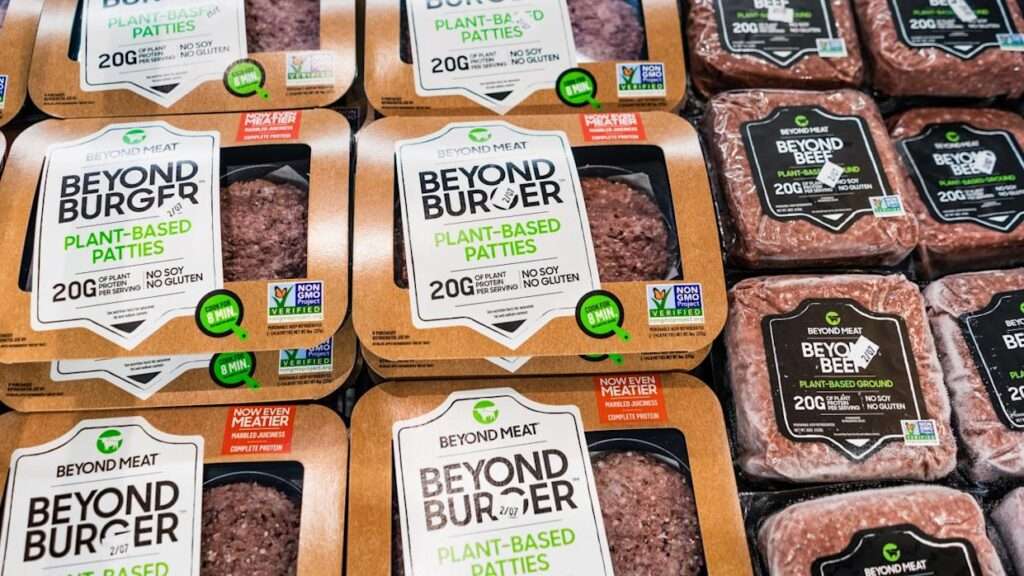
BeefWhen Beyond Meat (NASDAQ: BYND) went public, there was a broad belief that people wanted meatless meat. It was healthier than meat. It was better for the environment. Beef cattle give off huge amounts of methane. McDonald’s even partnered with Beyond Meat to create a McPlant sandwich.
Beyond Meat Better than Dexter Beef? Read More »
BeefWe’ve all seen the push to remove red meat, and especially beef, from our diets. But, is that actually the answer and are the alternatives any better? This article below talks about some of the nuances of beef production and the alternatives like impossible burger.
I love the question the last paragraph asks, “So, what would the world look like based on your food choices?”
Thoughts on Regenerative Beef Read More »
Beef
Beef producers can realize major price premiums for grass-fed, pasture-raised, or local meat.
5 Tips For Finishing Cattle on Grass Read More »
BeefMy favorite thing about summer – easy meals on the grill. This steak with herbed butter is delicious! Especially when made with Dexter beef.
https://iowagirleats.com/perfect-grilled-steak-with-herb-butter/
Perfect Grilled Steak Read More »
Beef
I had never tasted Dexter meat previously, so I was very keen to sink my teeth into a nice steak. The first thing I noticed was the flavor. It reminded me of what beef used to taste like when I started as a butcher, 50 years ago.
https://butchermagazine.com/dexter-beef/https://butchermagazine.com/dexter-beef/
Submitted by Pam B
Dexter Beef – The Taste Test Read More »
BeefThis morning I just received my package from Callipyge Genetics Lab in Selah, Washington. This is very exciting because it could be a game changer.

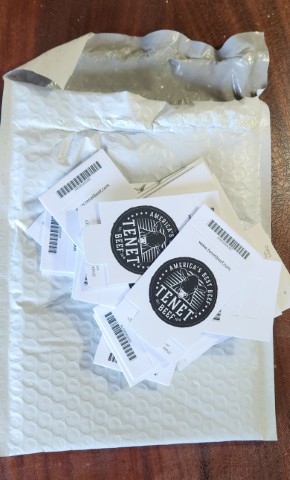
The package is from W.F. Hendrix, DBA (Doing Business As) Callipyge Genetics, LLC. The first thing I noticed is it cost $2.04 to send it to me in Calfornia, which is just south of Washington State. I ordered a set of 25 Tenet Certification Cards for $47.50, including postage, from their website April 22, 2025 and they were able to ship it May 9th. So, they have to be really busy.
If you recall, in last month’s Irish Dexter Cattlemen Tips & Tricks Guide, April 2025 Issue, Jeff Reusser, Royal Fare Farm submitted an article titled, “Who Knew Tenderness is Directly Correlated to Easy Keeper“. If you haven’t read the article, just click on the tittle. This article is about predicting exceptional beef tenderness with 100% accuracy. Now that’s exactly what I am looking for!
Our ranch started in 2009 by purchasing 3 Irish Dexters, a bull, a cow, and one male calf. Right away I knew what we would be doing with that calf. Much to our surprise, the day it was being slaughtered on our farm, the guy preparing the steer to be delivered to the butcher looked at our pasture and declared, “This is going to be great tasting beef” Boy was he right. Not only did it have an amazing taste, but it was tender too. Over the years I have learned the techniques to insure the best tasting grass fed, grass finished beef by carefully monitoring the grass they eat. But what good it it to have the best tasting beef when chewing on tack room leather? Both taste and tenderness are critical if you are going to provide a product folks really love. Testing for tenderness? Now that’s a game changer.
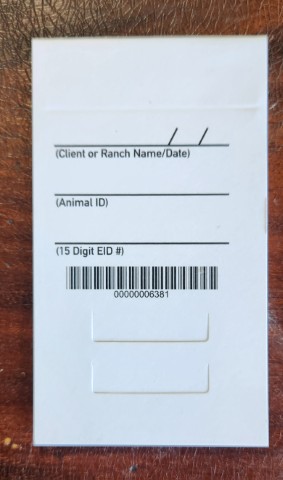
After a bit of tugging and pulling, I was able to open the package without cutting it. Sure enough, inside were twenty-five “Tenet Beef” cards. Each one labeled with their logo, bar coded, and included their website address, www.tenetbeef.com.

On the back of each card is space to write your Ranch Name and Date. The next line down is for the Animal ID. Then the third line is for a 15 digit EID number. Below this is another bar code, which is the same bar code on the front of the card. Every card has its own unique bar code.

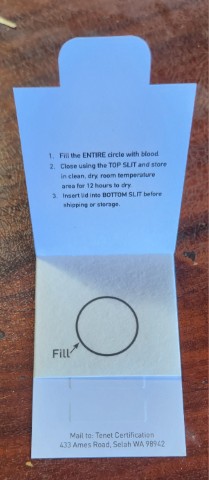
Opening the card, things get a little tricky. There is a list of three things to do and the first thing to do on the list is a globsmack.

Stay tuned. There maybe more to come. Honey, were we serious about doing this testing thing?
Game Changer – Genetic Tenderness Testing Read More »
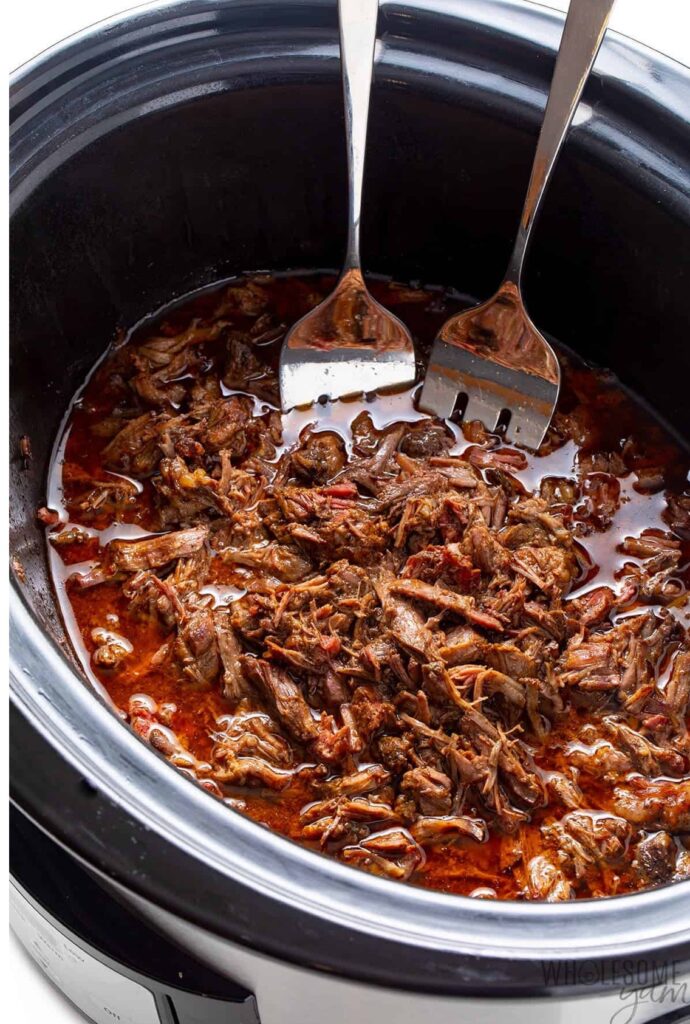
BeefThe weather is getting warmer, you’re busy outside and need something easy for dinner. Throw a Dexter chuck roast in the slow cooker and dinner is served! Make a bowl, a burrito or tacos – you can’t go wrong!
https://www.wholesomeyum.com/recipes/copycat-chipotle-barbacoa-slow-cooker-low-carb-paleo/
Learn how Meadow Green Farm runs a profitable beef business, including direct to consumer sales:
Keys to a successful beef business Read More »
Beef
Dry-aging is a key factor in creating high flavor profiles in your beef.
Dry-Aging – Why It’s Important Read More »
Beef
Renown chefs like Gordon Ramsay and Jamie Oilver, indicate they’ve found something better…and just like diamonds… it comes in small packages. Introducing Dexter cattle.
https://www.thenorthcoastranch.com/blog/4-reasons-our-grass-fed-beef-tastes-uncommonly-delicious
Why Dexter Cattle? Read More »
BeefBy Shelley Hatfield/Whippoorwill Pines Farm
Spring is a beautiful time of the year!! All the new babies, flowers popping their heads up showing off their colors, everyone itching to get their hands in the dirt!! But that also brings some problems if you have cows. Here are a few things that I have found that make spring not so great.
First thing, with the crazy swings in the weather temps, you need to watch your cows for pneumonia. This is a hard thing to notice but if you keep watch you can start learning the signs. One of the signs is lower head, their sides are “thumping” (meaning catching their breath), not alot of energy. I had a steer go down and die the next day. He had eaten the night before and looked fine. But he was gone the next morning. I asked the vet if I was doing something wrong. She told me that it really doesn’t matter, it’s the big swings in the weather. They have shelter, water and food.
Keeping watch is one thing, but there is also a vaccine that you can give them once or twice a year to help with that. It is a BRD vaccine. Check with your vet to see if that is something that you want to give your cattle.
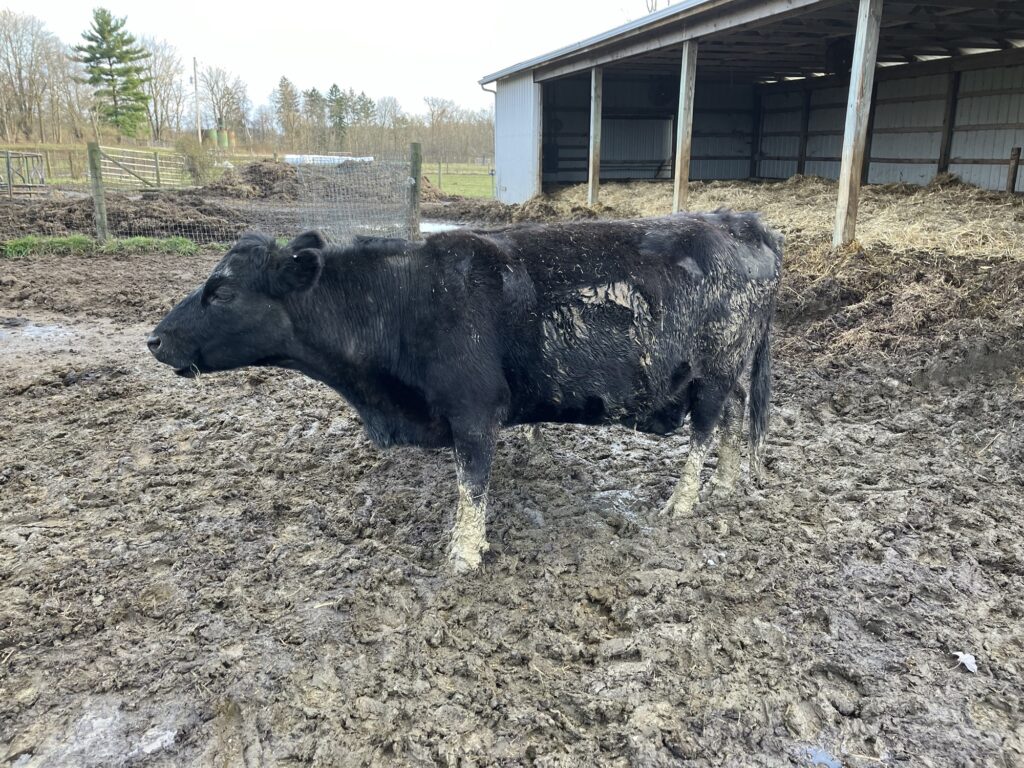
We have talked about the mud before, but we will mention it again. Make sure that your cattle don’t have to stand in the mud all the time. That is something that can keep them from staying warm in the spring weather. Make sure that they have a dry place to lay down.
I’m not an expert, but I have learned some things along the way. Some of those things I have learned the hard way….lol These are just some things that I have learned on this journey of raising cattle.
Welcome to Spring: Read More »
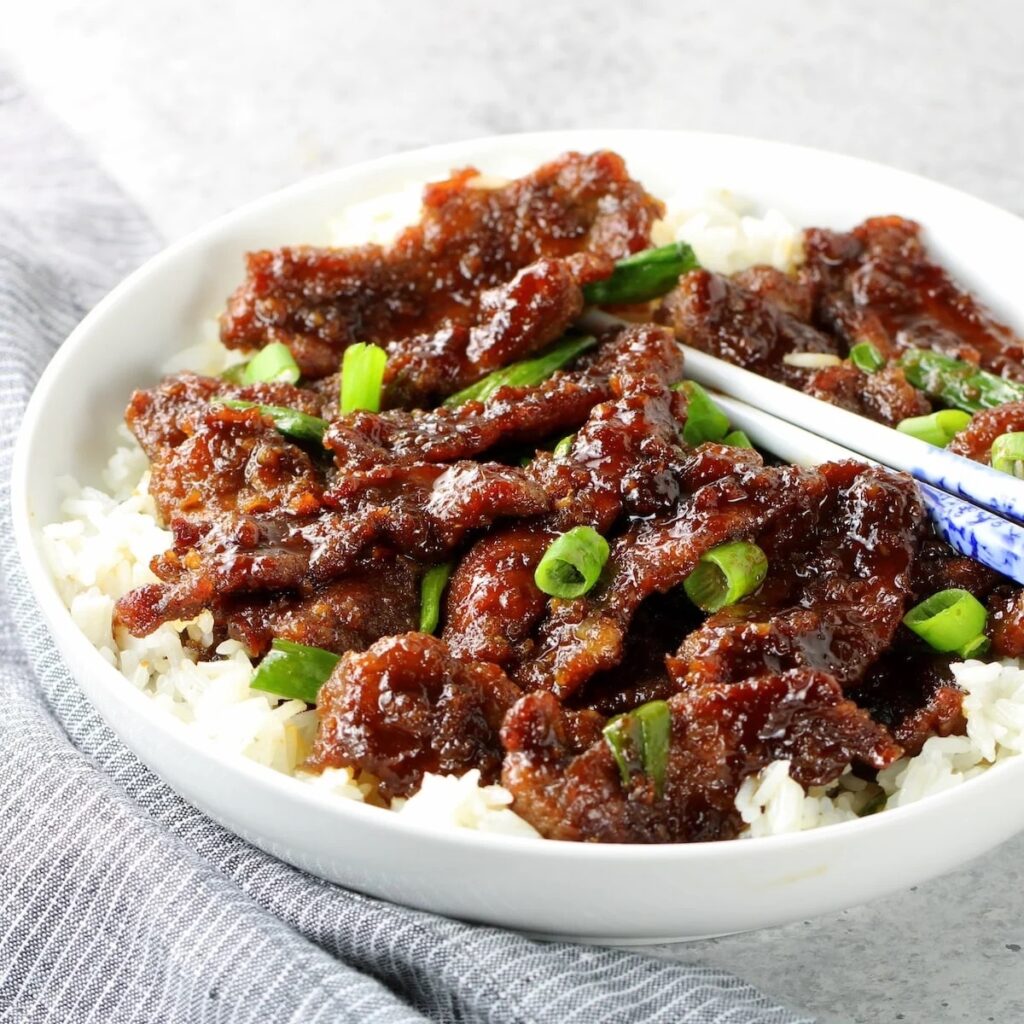
BeefTry this quick (30 minute) and easy beef recipe for dinner tonight:
Mongolian Beef Recipe Read More »
BeefThis video was created by Thornbridge Smallholding in England, and is a great intro to butchering a Dexter cow.
Dexter beef butchery Read More »
BeefBelow is a great article for those getting in to beef production on a small scale. Thinking through resources, knowledge, budget, production, marketing, as well as talent and interest level. There is a great quote from the last point: “You are much more likely to be successful if you are interested in and passionate about what you are doing.”
https://www.extension.iastate.edu/smallfarms/top-ten-considerations-small-scale-beef-production
Small-scale beef production Read More »
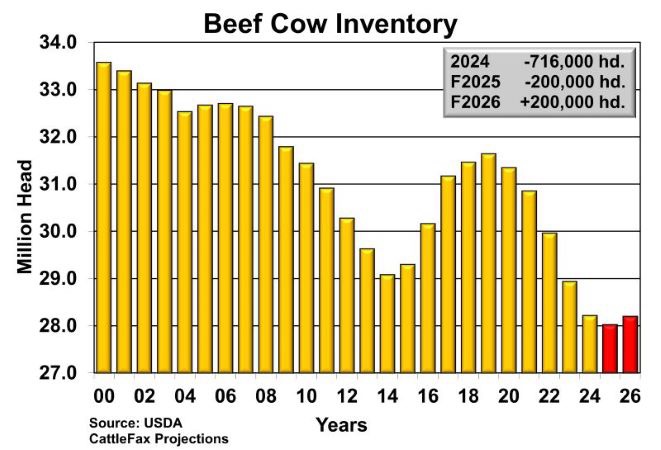
BeefWith the US National beef inventory down, and demand for beef remaining steady/increasing slightly, I think we can expect to see continued increase in beef prices through 2025. That is good news for those of us raising beef and selling direct to consumers.
In our own personal Dexter beef sales we have seen a shift from smaller purchases in years 2020-2023, to half and whole beef purchases over the past year and a half.
It is certainly more economical for beef buyers to purchase in bulk and save money. It can be better for farmers/ranchers too, cutting down on time required to inventory and manage smaller orders.
However you sell your beef, here are trends to look for:
Beef Trends in 2025 Read More »
BeefEver wonder if you’re missing out on some great cuts because they’re not as common, or you don’t know how to prepare and cook them? Check out this video and you might learn about a steak cut you haven’t heard of, or gain a new tip on cooking and prepping a tried and true favorite.
Favorite Steak Cuts Read More »
Beef
Dexters are a perfect size for beef home butchery. Here is a great primer on home butchering, complete with a list of tools and helpful suggestions.
https://www.artofmanliness.com/living/food-drink/a-primer-on-butchering-at-home/
Butchering at Home Read More »
BeefBy Shelley Hatfield/Whippoorwill Pines Farm

Part #4 of this series is MUD, ugh!!! I’m thinking that most of us have dealt with mud at one point or another. Some of us deal with mud more than others. Right now we are dealing with a lot of mud around my place. You have to really watch foot rot and thrush when you are dealing with mud. Also you have to make sure they aren’t standing in mud because that makes it hard for them to stay warm. Even if it is only their legs that are caked in mud. If you don’t have much room for them to move around, you might want to add gravel and/or wood chips to help with the mud. Another way to help them stay off mud is to do rotational grazing in the winter. This lessens the chances that your pastures will turn to mud. The cows will be moving all the time and won’t be staying in one area. I hope these little articles are helping you all!! Happy Winter!!
Keeping Cows in the Winter Part #4 Read More »
Beef
I kinda want to go back to the beginning. We are getting several new Dexter owners and several people asking questions. So I will post some articles on getting started. These articles aren’t necessarily directed to Dexter cattle in particular, but the basics are the same.
First of all, you do need to decide what you are wanting to do with your Dexters. Since they are a dual purpose breed, you need to decide the most important thing you are wanting out of these cattle. I’m not saying this has to be forever, but you do need to decide what your main goal is for raising these cattle. Then you can go from there later on. Secondly, you need to decide what your property will hold. This is VERY important. In this you need to decide which direction your farm is going, grass fed, mostly grass fed with some grain, or grain fed. It may seem overwhelming at first, but just take one thing at a time. You can change your mind as you go and see what works for your farm and what doesn’t. Don’t get overwhelmed!!
Next a good water source will be needed. Either by running lines, running hoses, putting in automatic waterers. Cows need a good grass source and good clean water. Some people let their cows use their ponds. That is fine as long as the pond doesn’t have a run off. Cows can also damage a pond by pushing in the dirt as they stand in it and filling it back up. Unless you have a deep pond.
Another thing that I have found to be very important is to have ample equipment for holding them. You need a good chute. It doesn’t always have to be a fancy set up. If you can afford one that is great, but you need a good head chute. You can make an alley way to it with panels or fencing. A good head chute is vital to being able to inspect or service your cattle.
A good mentor is very very helpful!!! Find someone who has raised cattle, particularly Dexters and learn everything you can from them. Our website will be very helpful in that area. You can find other Dexter owners. We also have lots of information that is helpful, in several different areas.
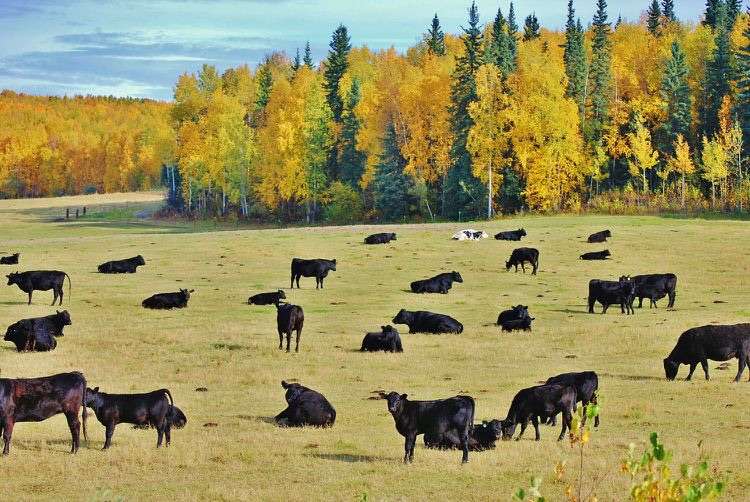
Reducing the need for feed means fewer methane emissions, which is attractive to companies like McDonald’s
McDonald’s and Syngenta Team Up. Read More »
Beef
Hybrid products that combine actual meat with veggies or pea protein could become a thing
Hybird Meat May Gain Ground! Read More »
Beef
Keeping Cows in the Winter Part #2
I’m going to write about the second part of this series of keeping cows in the winter. The first one was about making sure they have adequate water. I’m going to talk about shelter in the winter. This will once again depend on where you are in this great United States. We have such diverse weather conditions.
I think that this could end up being a great debate, but I’m not wanting that. I know some people think that the cows need a 5 Star barn and others think a few trees are plenty. I’m just going to do a basic all around article on what the cows should have. Then you can go from there and do what you feel is necessary.
Starting with the milder states, you still should have at least a covering for them to get out of the sun in the summer and wind in the winter. If you live in the colder states you will at least need a wind block. It is also good for you to have at least a 3 sided building. It doesn’t have to be fancy. It just needs to be something that they can get in out of the wind and rain/snow. Now if you have had cows very long you will know that they will just stand outside in the weather. They have grown coats for the weather that you have in your area.
You will notice cows standing out in the winter weather and have their backs covered in snow. That is a good sign. That means that they are well insulated!! Dexters in particular were created to weather more difficult situations.
Each person knows what they want for their herd. This is just some basic advice on what to have. Happy Winter!!!

Keeping Cows in the Winter Part #2 – By Shelley HatField Of Whippoorwill Pines Farm Read More »
Beef
Bone broth elevates dishes with rich flavor and nutritional value
https://miniature-cattle.com/documents/bone-broth-collagen_mercola.pdf
Bone Broth: Nature’s Collagen Supplement Submitted By Donna Grace Read More »
Beef Homesteading
Resources you need to successfully start your own food or farm business.
Partnerships for Your Food or Farm Business Read More »
Beef Farm Management Milking & Dairy Selling
Bone broth elevates dishes with rich flavor and nutritional value – Submitted by Donna Grace
https://www.primaledgehealth.com/the-ultimate-guide-to-bone-broth
The Ultimate Guide to Bone Broth Read More »
Beef Homesteading
The earth’s sixth mass extinction is happening right now
Endangered Animals Read More »
Beef
Do you need lots of acres to raise beef cattle? The answer is absolutely not! But you will need to be a little more prepared than farms who have several acres. You will need to have sturdier fences for one thing. Farms with several hundred acres have room for the cows to roam so they aren’t as likely to get out. I’m not saying they don’t ever get out on large farms but it is not as often. Smaller farms, the cows don’t have the room to roam. You need to make sure that your outer perimeter fencing is strong and tight. That can be barbed wire, woven wire, or the combination of both. This will keep you and your neighbors in good standing….lol
Land is the second thing that I want to talk about. With Dexters it doesn’t take as much as with “full sized” cows. It is 1.5-2 acres per TWO cow/calf pair of Dexters. But that doesn’t mean that you can stick them on any ole grass and they will grow well. You have to maintain your pastures. That is what I’m in the process of doing myself. I’m working to get my pastures into regenerative grazing. Which will help with how well my pastures stay.
Thirdly, you will need hay, which is something that all cattle farmers need usually. Unless you are in some states that you can grow it year round. But you need to make sure that you have good healthy hay. That is important for the health of your cows. You don’t want them to get sick.
One last thing, keeping your animal healthy is an overall, big or little farm, thing you need to do. I think as a small farm it is easier to keep a watch on things than a big farm. You have a more intimate relationship with your Dexters when you don’t have 100s to keep an eye on.
I am a small farm with not alot of acres, that is why I chose the Dexters at first. But as time as went on, they are so much more that good for small farms. But that is for another time.
So in conclusion, you don’t need acres and acres of land to raise beef cattle. You just need to make sure what you have is the best that it can be.
Do you need lots of acres to raise beef cattle? By Shelley Hatfield- WP Farm Read More »
Beef
This is the season for selling out at the farmers market!
SELLING OUT at the Farmers Market! Read More »
Beef Selling
In this episode I want to talk about the process of selling (what I refer to as) custom freezer beef/pork/lamb etc.
https://www.grazecart.com/blog/how-to-sell-freezer-beef-on-demand
How To Sell 1/4 Beef On Demand, Read More »
Beef Selling
Good afternoon, I’m sitting down to write up an article for the Irish Dexter Cattleman website. I’m going to write this one up myself but I will include a few articles that you can go check out for yourself. I don’t feel that I have any experience with this production yet as I’m just starting it myself.
I have been reading and watching so many different farms that have been using this as their practice and it is amazing what happens. I’m talking about regenerative grazing.
There is a place in Greenfield, IN called Tyner Pond Farm. I was reading one of their articles this past spring and they had just pulled their cows off in March of this year. They had wintered all winter on their pastures!! They finally were feeding hay bales in March. Their location is in Indiana which is about 2+ hours from me, but it is about directly across from me. So, the temperatures are close to being the same. When I saw pictures, they had green grass still in March of 2024. I find that amazing!! That is something that I want to strive for.

Another place to find information about this practice is Greg Judy at Green Pastures Farm. There are several videos that you can find on YouTube about how he does this practice.

There is also Joel Salatin, Polyface Farm, who practices these methods.

I’m still getting my perimeter fences all put in, hopefully they will all be put in by next spring. Once you have your perimeter fences put in, you will separate those into small paddocks. You will move your cattle every day through those paddocks. As you watch Greg Judy, he has water lines run out to each paddock. And most other people do, too. That will be a down the road option for me.
This practice is a lot of work, but I believe that it will be well worth my time!! Moving the cattle helps keep the microbes in the ground going. It also helps to keep you from overgrazing your pastures, which is what I’m doing now. Over grazing lets so many weeds in that it isn’t funny!! This regenerative grazing also cuts down on the weeds.
Another reason that I just learned this week is when you get your pastures going, you make sure your grass cocktail is good. If you have a good cocktail of grasses that will keep the fly problem down!!! Greg Judy has a Youtube video out that shows his cattle out on pasture with hardly, if any, flies on the cows. It was amazing to watch!!! The cows were sleek and shining with hardly any flies. He talks about it with the guy who oversees it. It is amazing!!!
I hope to come and write another article in about 3 years or so and tell you how it is going. I know that it will be hard work, but it will be so beneficial in the end!!
Check out these farms to learn more information. I believe this is so important for our pastures. We need to preserve them as much as we can.
Shelley Hatfield
An article for the Irish Dexter Cattleman website Read More »
Beef Farm Management
The loss of upward momentum is the result of two negative headlines affecting US beef exports to China.
Setbacks in US beef exports Read More »
Beef
Valerie Tate shares management solutions, including planting warm-season annual forages such as pearl millet and sorghum-sudangrass
Filling the summer forage gap Read More »
Beef
The Randall Line back, Galloway and Dexter chewed up nearly as many first place votes as any of the other breeds tasted.

Renown chefs like Gordon Ramsay and Jamie Oilver, indicate they’ve found something better…and just like diamonds… it comes in small packages. Introducing Dexter cattle.
Why Dexter Cattle? Read More »
Beef
Cattle-based beef is still chosen in the marketplace about three times more often than plant-based protein alternatives
Give up meat? Not so fast Read More »
BeefGrowing Business Award – This award has been designed to provide support and guidance
Helen Reeve, Dexter Beef Read More »
Beef
The early Dexters adapted to the challenging conditions of open, mountainous Irish countryside and developed the hardy animals that are valued today.
Livestock Conservancy Dexters Read More »
Beef Historical
Dexter beef is a breed of cattle that is known for its quality and taste. It is commonly known in foodie circles that Dexter beef is some of the tastiest around and really good to eat.
The Quality of Dexter Beef Read More »
Beef
The native home of the Dexter is in the southern part of Ireland where they were bred by small holders and roamed about mountainous districts.
Breeds of Livestock Read More »
Beef
Dexter cattle are generally docile creatures and if they’re around people a lot, they’re easy to halter-train. Kids enjoy walking them like a dog.
Raising Dexter Cattle Read More »
Beef
We Want to Help Consumers Connect with America’s Cattle Producers.https://usabeef.org
One of the most nutrient rich foods you can eat Read More »
Beef
Early one morning during the second week of February, as I unrolled a bale of hay, I heard the weak little bawl of a newborn calf. There, in the edge of the woods, stood the tiniest red calf I’d ever seen, seemingly crying for its mother.https://www.farmprogress.com/commentary/shaky-the-calf-may-be-small-but-he-s-mighty?NL=WFP-01&Issue=WFP-01_20220603_WFP-01_122&sfvc4enews=42&cl=article_7_3&utm_rid=CPG02000008134788&utm_campaign=68130&utm_medium=email&elq2=2725fa8635c2476e960c5618cf55b174&sp_eh=fa4c5a9f6558e8315d03961b48ed51c472abd90080ea57a89515bab2aa8a9023fa4c5a9f6558e8315d03961b48ed51c472abd90080ea57a89515bab2aa8a9023&sp_eh=fa4c5a9f6558e8315d03961b48ed51c472abd90080ea57a89515bab2aa8a9023
Shaky the calf may be small, but he’s mighty Read More »
BeefDexter Cattle are a small breed of cattle which originate in Ireland, its the smallest of all European breeds. In recent years its been making a revival on Irish beef farms as the quality of its meat stands alone. In this video we go to the farm of Mike Frazier who rears cattle, slaughters and sells this beef which is now so sought after
Beef Farming in Ireland — Dexter Cattle Read More »
Beef
Ultimately producing meat that is richer in nutrients and omega-3 fatty acids (the good fats).
Regenerative Beef: The Healthier Choice Read More »
Beef
Higher prices have been a boon for cow/calf have not come without a rise in inp
GRASS FED BEEF: COUNTING THE COSTS Read More »
Beef
Valerie Tate shares management solutions, including planting warm-season annual forages such as pearl millet and sorghum-sudangrass
Filling the summer forage gap Read More »
Beef
The loss of upward momentum is the result of two negative headlines affecting US beef exports to China.
Setbacks in US beef exports Read More »
Beef
The early Dexters adapted to the challenging conditions of open, mountainous Irish countryside and developed the hardy animals that are valued today.
Livestock Conservancy Dexters Read More »
Beef Historical