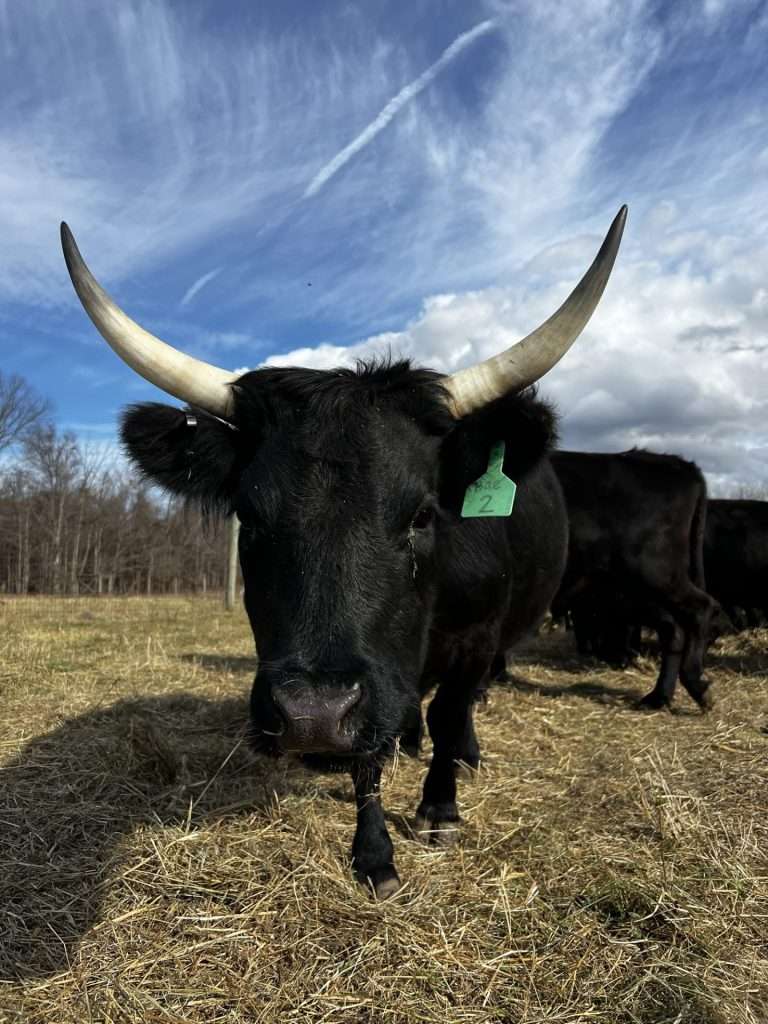
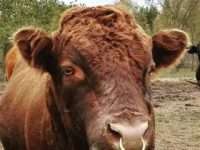
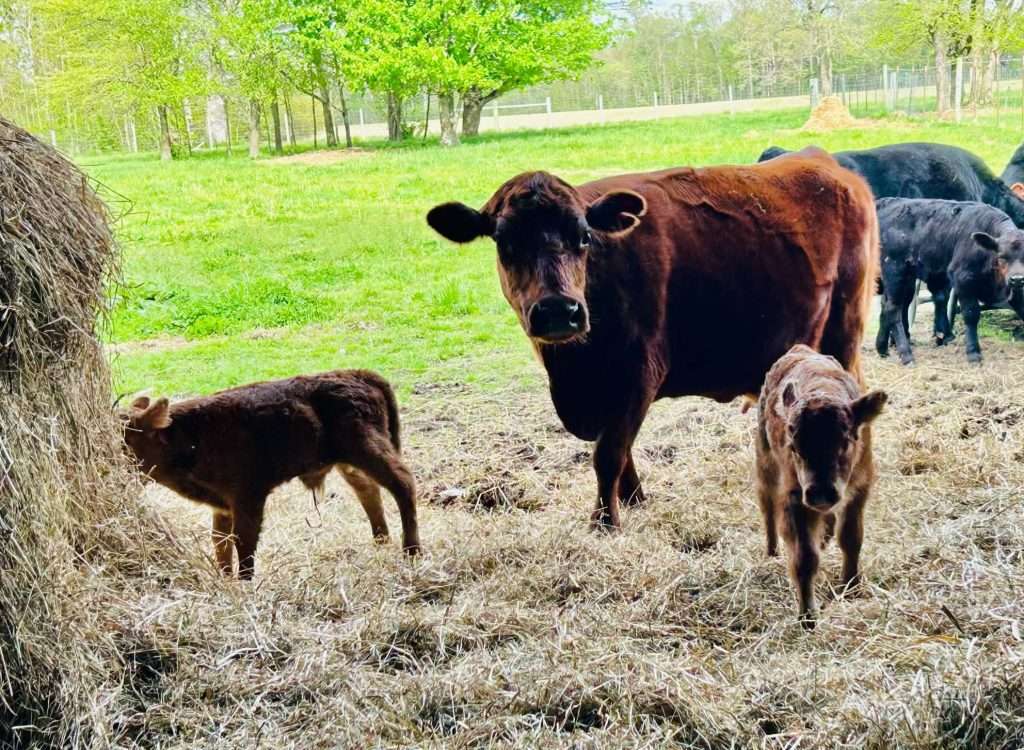
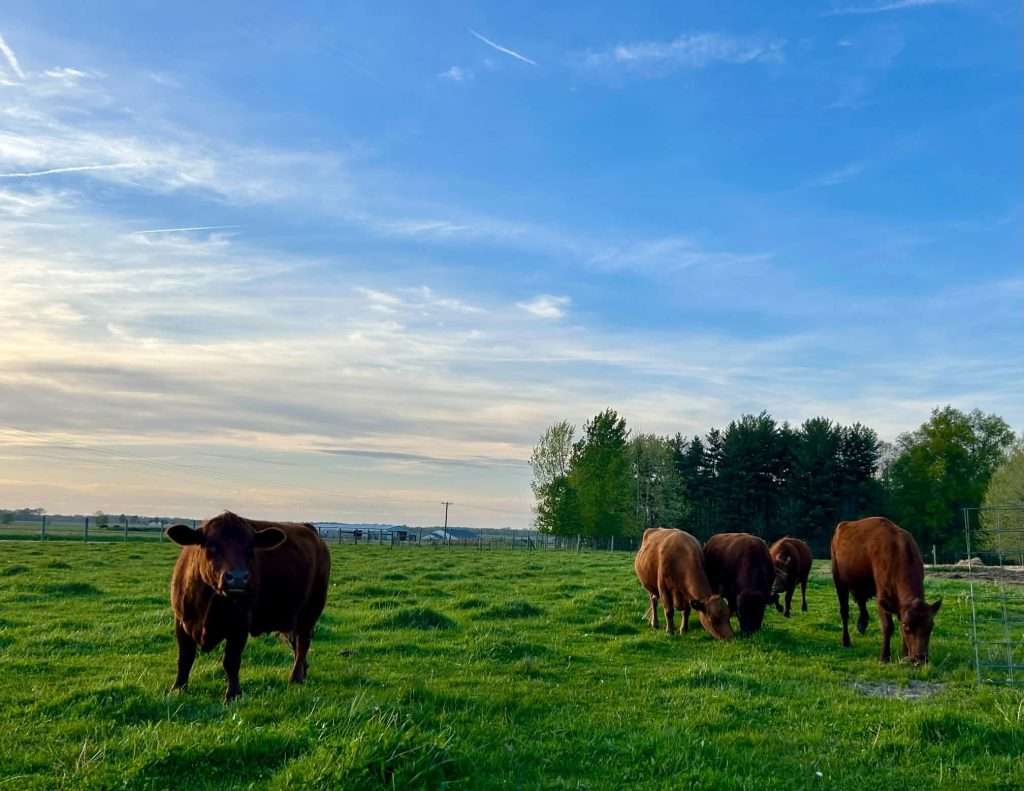
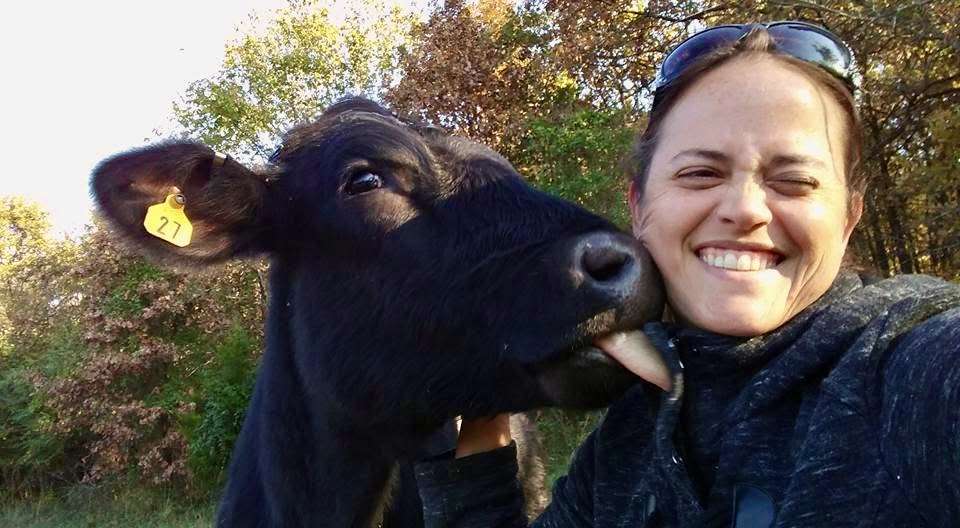
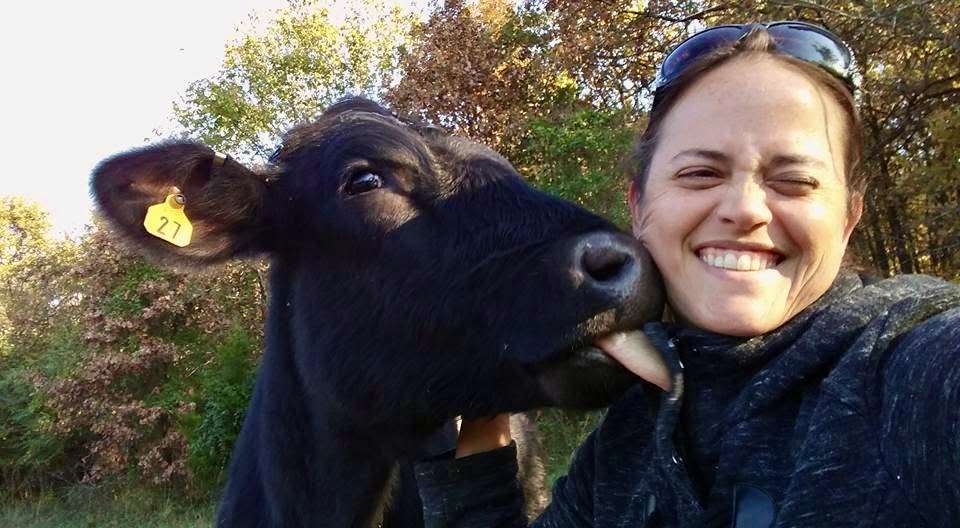
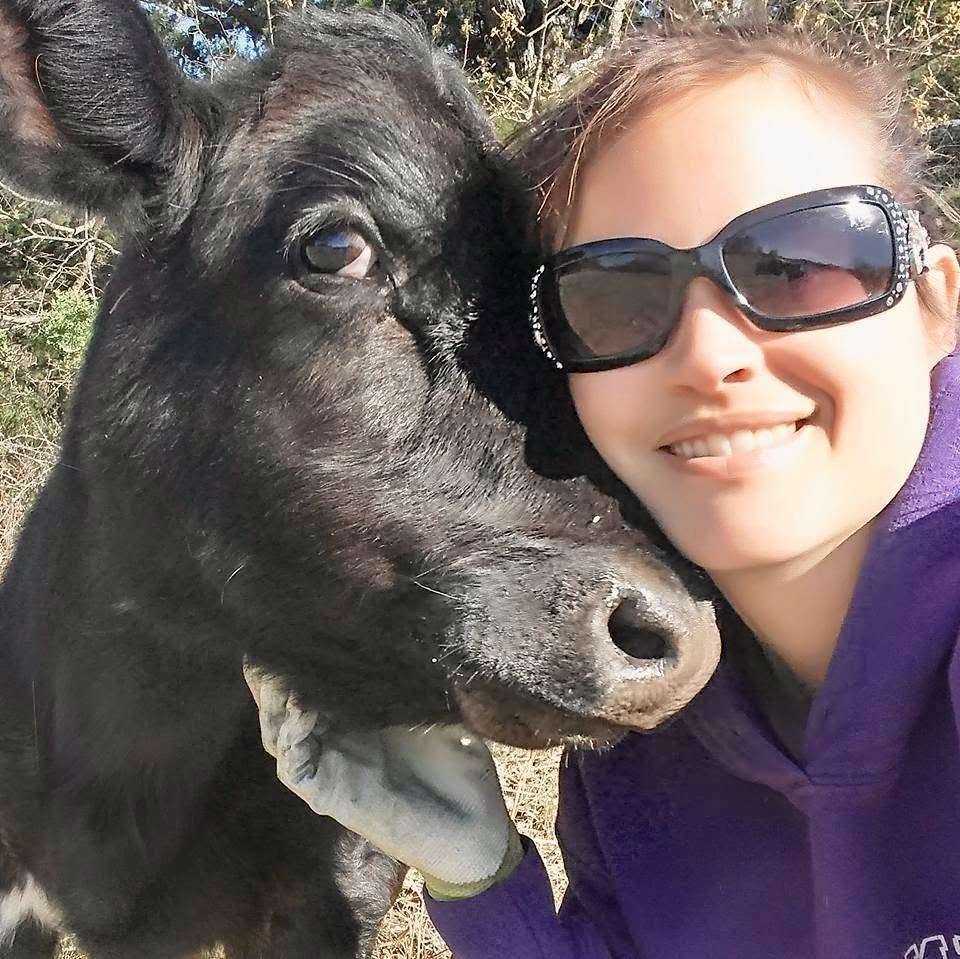
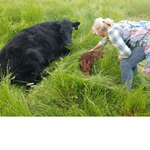
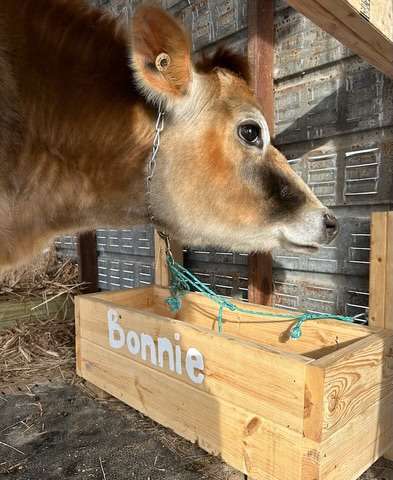
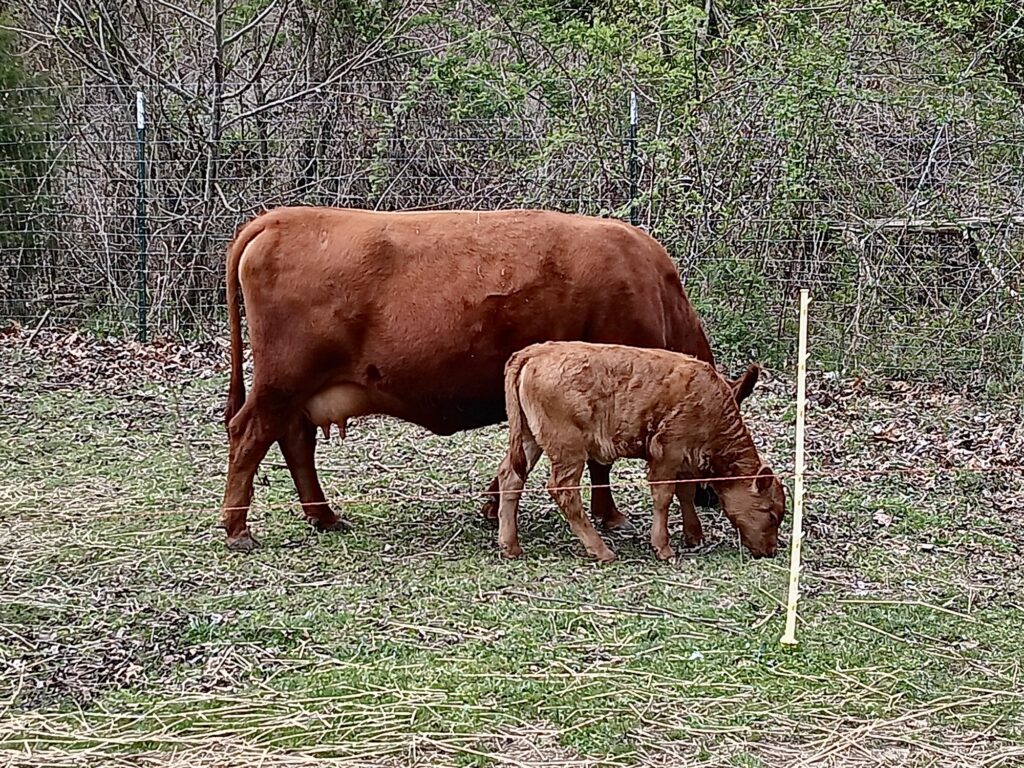
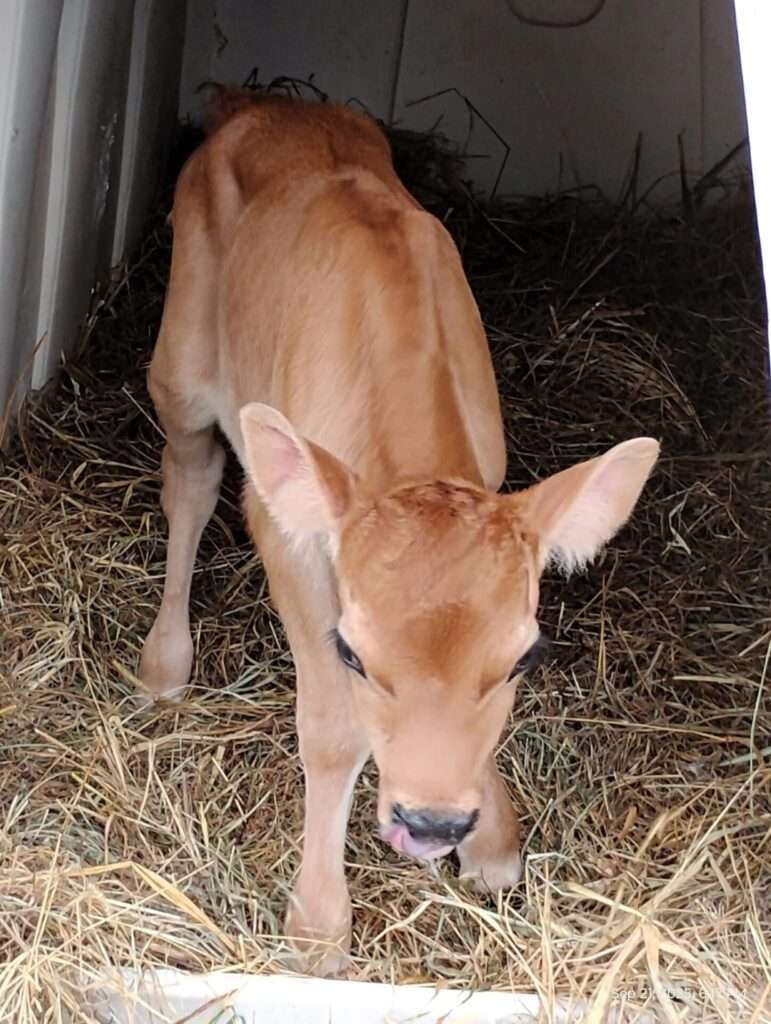
For several years now my family has kept a mixed herd of horned, dehorned and naturally polled Dexter cattle. We rotationally graze, and our cattle have plenty of space to move around. They have gentle personalities, so their horns have not been an issue for us. Horns can also be unique markers with their varying shapes, identifying individual animals in the herd. Whether you are pro horns, against them, or still weighing your options, this is a short article to help shed some light on the pros and cons…
There is an enormous amount of knowledge in the farming and ranching community. Much of it doesn’t come from a textbook. It comes from years of raising cattle, fixing fences, improving pastures, treating sick animals, milking cows, repairing equipment, surviving droughts, making mistakes—and figuring out what works.
Have a cow doing something you have never seen before?
Trying to decide how to subdivide a pasture?
Wondering how somebody else handles rotational grazing?
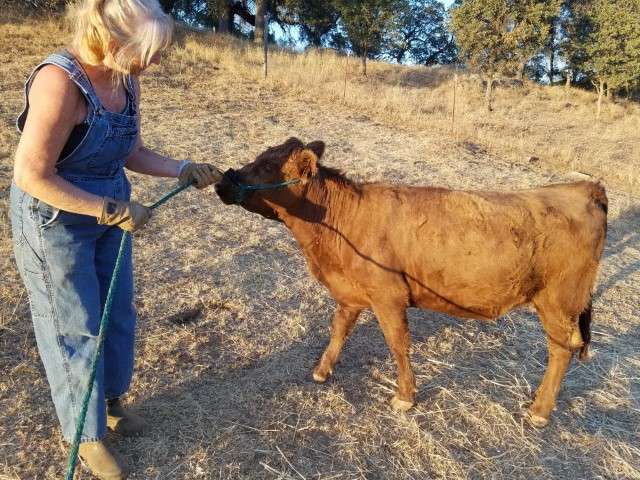
Need ideas for halter training a calf?
Considering milking a Dexter for the first time?
Trying to improve your fencing, reduce feed costs, market your beef, or figure out how to sell an animal?
Ask the community.
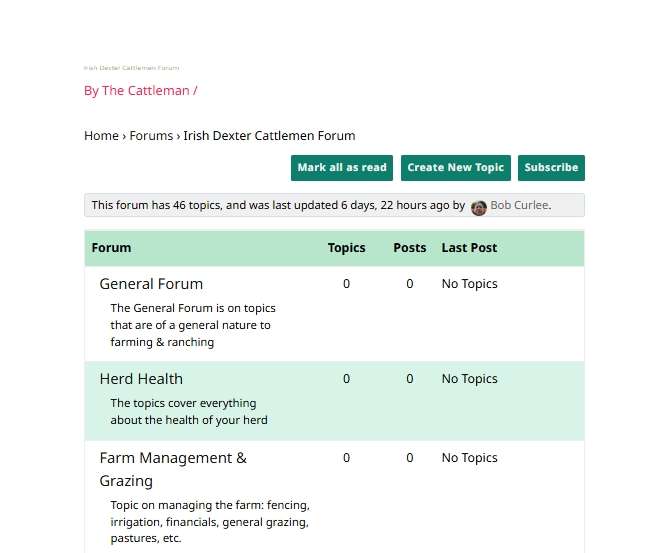
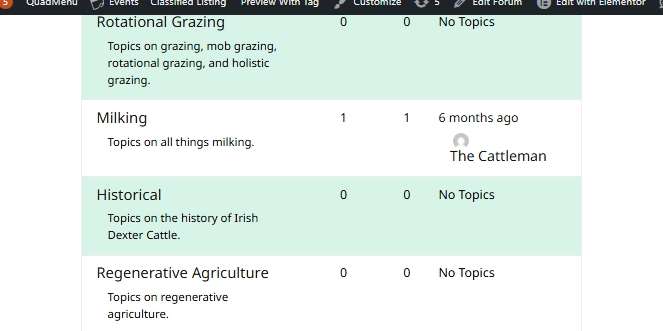
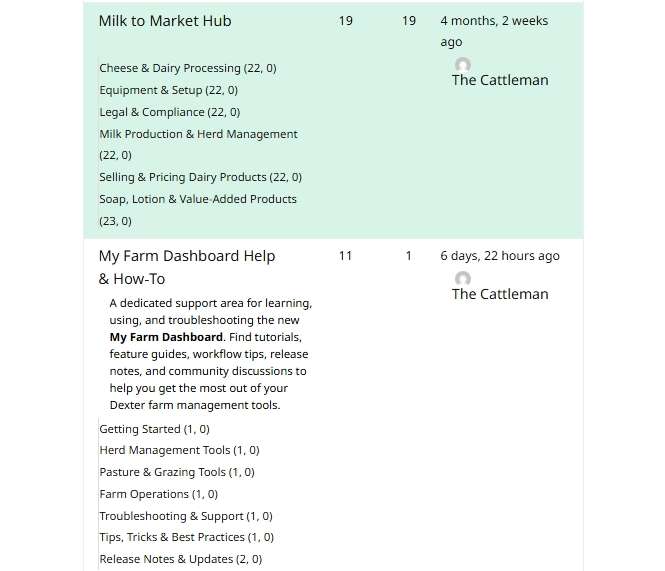
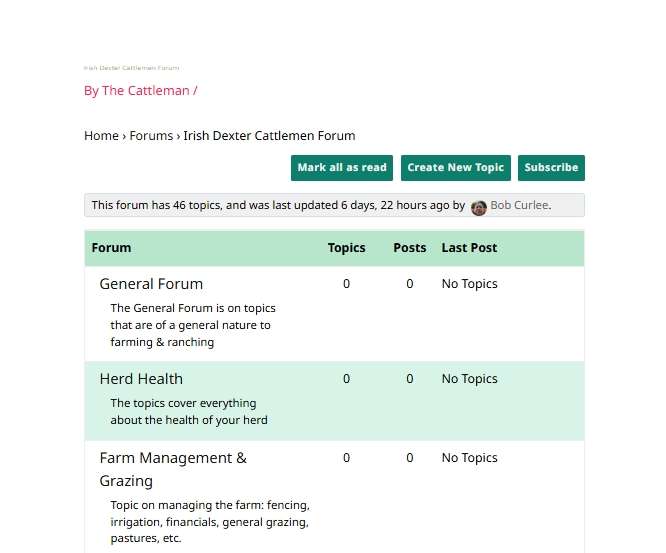
The Forums include discussions covering subjects such as Irish Dexter cattle, herd health, farm management, grazing, rotational grazing, milking and dairy, regenerative agriculture, homesteading, selling and branding, technology, and other everyday farming and ranching topics.
And don’t feel that you have to be an expert to participate.
Questions from people just getting started can be every bit as important as answers from people who have been farming for 30 years.
FARMERS LEARN FROM FARMERS
Agriculture has always depended upon people sharing knowledge.
A neighbor showed another neighbor how to repair something. A breeder explained what worked with a difficult calving. Someone discovered a better grazing method and showed another farmer. Experienced cattlemen helped younger cattlemen avoid mistakes they had already made.
The Internet allows us to expand that neighborhood.
Someone raising Dexters in California may discover a pasture-management technique from a farmer in Missouri. A new homesteader in Tennessee might receive advice from an experienced dairy farmer in Wisconsin. A breeder dealing with an unusual problem may discover that someone hundreds of miles away has already dealt with exactly the same thing.
That exchange of practical experience can be incredibly valuable.
DON'T JUST SEARCH FOR INFORMATION—START A CONVERSATION
The Internet contains an almost unlimited amount of information, but sometimes what you really need isn’t another article.
You need to be able to say:
“Here’s my situation. What would you do?”
That’s where the Forums are different.
You can describe your circumstances, ask follow-up questions, compare different approaches, and learn how other farmers have handled similar situations.
And sometimes there isn’t one correct answer.
Different climates, soils, herd sizes, facilities, budgets, and management philosophies can produce very different solutions. A good discussion lets everyone see those different approaches and decide what makes sense for their own operation.
YOUR EXPERIENCE MATTERS TOO
The Forums aren’t only a place to get answers.
They’re also a place to give them.
Something that seems routine to you may be exactly what another farmer is struggling to learn.
Maybe you have discovered an inexpensive fencing solution. Maybe you’ve developed a good system for working cattle alone. Perhaps you’ve learned something about grazing, milking, breeding, marketing beef, handling calves, or maintaining equipment.
Share it.
A five-minute post describing something that worked on your farm could save another farmer hours of work, hundreds of dollars, or an avoidable mistake.
That is how a community becomes valuable.
PART OF SOMETHING MUCH BIGGER
The Forums are also an important part of what we are building at IrishDexterCattlemen.com.
Our goal isn’t simply to build another cattle website.
We are developing an interconnected collection of resources designed to help farmers and ranchers learn, manage, produce, market, sell, and improve their operations.
The Tips & Tricks Guide brings useful information to you each month.
The Farmer’s Gazette builds a searchable library of articles, podcasts, videos, guides, publications, and other agricultural knowledge.
The Marketplace helps farmers market animals, farm products, equipment, and services and connect directly with buyers.
Our Dashboards and farm-management tools are being developed to help farmers organize and use the information generated by their own farms.
And the Forums connect the people behind all of it.
That connection is important.
Technology can organize information. Software can calculate numbers. A database can store records. Artificial intelligence can help analyze information.
But farmers have something those systems don’t have:
Experience.
The Forums provide a place where that experience can be shared.
BUILDING A FARMING KNOWLEDGE COMMUNITY
Over time, thousands of individual conversations can become something much more valuable—a growing body of practical agricultural knowledge created by the people actually doing the work.
That fits directly into the larger mission of Irish Dexter Cattlemen:
A Deep Dive Podcast, brought to you by Irish Dexter Cattlemen, on topics of interest to all farmers and ranchers. Subscribe to the free, monthly Irish Dexter Cattlemen Tips & Tricks Guide to get early access.
Brought to You by These Breeders, Affiliates, & Sponsors
The one that makes you question your sanity, double-check every gate, and wonder if they’re secretly plotting against you. For us, that steer was Sir Loin. He wasn’t mean. He wasn’t aggressive. He was just creatively naughty. If there was trouble to be found, he’d find it. If there wasn’t any trouble, he’d invent some.
Somehow, he learned that the little chains hanging from the barn fans actually did something. More than once I’d walk into the barn wondering why it felt like a wind tunnel in the middle of January, only to find every fan happily spinning while Sir Loin stood nearby chewing his cud with the innocent expression of a five year old caught with cookie crumbs on his face. “Who, me?”
Then there were the lights. On. Off. On again. Off. I’m still not convinced he wasn’t doing it simply because he knew it drove me crazy. Sir Loin had an uncanny ability to figure out exactly what would get under my skin. He’d walk over to something sitting perfectly where it belonged, give it a deliberate shove with his nose, and knock it onto the ground. Then he’d immediately look at me, not at the object, at me waiting to see what I’d do. I’d roll my eyes, let out a dramatic sigh, walk over, and put it back where it belonged. The moment I turned my back over it went again. Then he’d just stand there with his ears perked forward, staring at me as if he were waiting for the next round of our little game. I’m convinced he wasn’t trying to be destructive. He simply found my exasperation entertaining. Like a small child learning from cause and effect. That steer was equal parts lovable and rotten at the same time.
He also had an uncanny talent for finding things he absolutely should not eat. Plastic bags were apparently a delicacy. Leave one unattended for thirty seconds and suddenly you’d hear that unmistakable crinkling sound, followed by me sprinting across the barn yelling, “Sir Loin! Drop it!” He never dropped it. He simply chewed faster. I swear he only wanted it because he wasn’t supposed to have it.
He loved banana peels. That bovine could smell a banana from three counties away. The second someone started peeling one, he’d appear out of nowhere like he’d been summoned by magic. He’d stretch his nose as far as physics would allow and stare at you with those big brown eyes until you surrendered the peel. Then, with that ridiculous go-go-gadget tongue, he’d slurp it up and savor every bite. Mission accomplished.
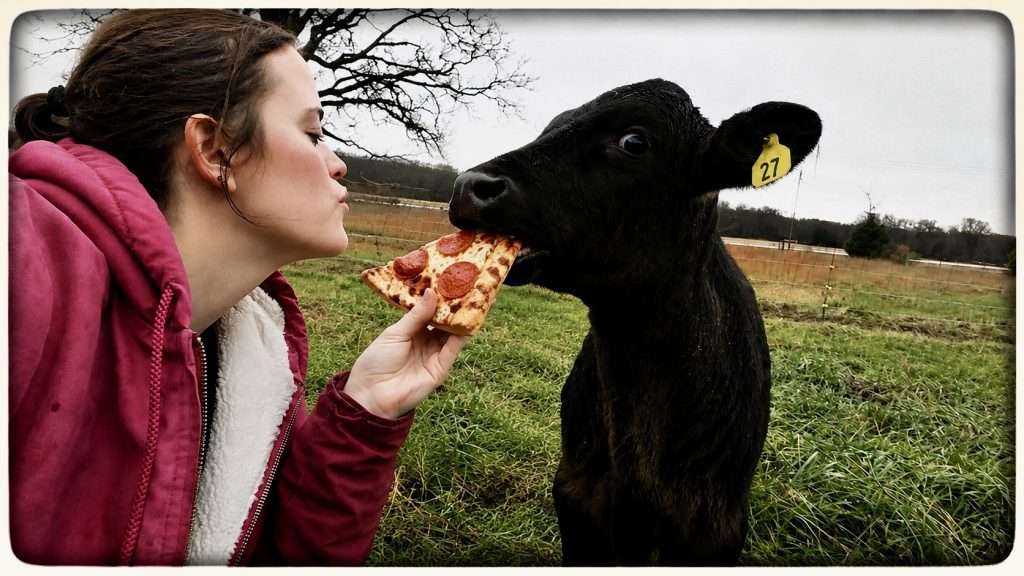
While he loved banana’s, pizza was his true love. Once a month, on a Friday our homeschool group met at Pizza Hut for the all you can eat buffet. The kids all knew Sir Loin and had heard plenty of stories about his garbage disposal approach to eating, so they happily saved their pizza crusts for their favorite steer.
I’d collect everyone’s leftovers in one of those giant plastic cheese ball tubs, the kind big enough to feed a small army, and by the end of lunch, it would be filled to the brim with pizza crusts and uneaten pizza slices. Back at the farm, Sir Loin knew exactly what that tub meant. I’d set it down, grab my phone, and record him happily devouring his pizza feast while the rest of the Dexter herd stood nearby watching him like he’d completely lost his mind. Most cattle get excited over fresh hay or a bucket of grain. Sir Loin? He’d choose cold Pizza Hut crusts every single time. Those videos never failed to make people laugh.
Despite all the headaches and his endless antics, everyone loved Sir Loin. He made even the most ordinary chores memorable. You never knew what you’d find when you walked into the barn. Fans running? Lights on? Feed buckets knocked over? Missing lunch? If Sir Loin was around, anything was possible. Looking back, I don’t think he was trying to make life difficult. I think he honestly believed the farm existed solely for his entertainment. And judging by all the stories he left us with he might have been right.
About the Author
Kimberly Jepsen is the heart behind MooShine Ridge in Vinita, Oklahoma, where she and her husband, Kevin, have been raising dual-purpose Dexter cows since 2015. Their little farm store is a labor of love, offering Dexter beef, raw milk, and artisan cheeses made from their own cows. Kimberly has a deep passion for the Dexter breed and loves nothing more than sharing what she’s learned over the years whether it’s guiding fellow farmers, helping newcomers discover the joys of small-scale farming, or simply introducing people to the rich, creamy flavors of her handcrafted cheeses. For her, farming isn’t just a business, it’s a way to nurture animals, the land, and the community she cares about. https://mooshineridge.com/
It was Sunday. It was hot. Phillip, the drone operator, Jostan and Blake, the cowboys, and I agreed to meet that afternoon at the last known location of Sweet Caroline.
Phillip and I arrived first and the drone was sent up. Sweet Caroline could not be found. Keeping in mind that the drone searches for heat signatures and does better in the evening, we were not discouraged. That said, I would have loved to have seen her.
Jostan and Blake arrived early afternoon. They weren’t much for small talk. After discussing where she was last seen and the layout of the land, they boarded their 4 wheeler and went looking for her. I saw each of them get off the 4 wheeler more than once and go walking into the woods next to the field. After searching for about an hour, they came back to announce that she is not there. This can’t be happening.
Jostan and Blake agreed to come back in the evening if we found her. Admittedly, I was a little taken aback, but never was I not going to give up hope. Philip and I went to eat. Refreshed we returned to the last sighting.
The drone went up. Nothing. Philip would not stop. He would fly the drone, land it, change the battery, take a small break, and send it back up.
Late into the evening, Phillip said to me that he is going to fly over the pasture where there were other cattle. He flew over and looked at each cow. “Scott, come here. This cow looks black but has what appears to be mud on her legs.”
I walked over to him, and Phillip showed me the screen. There she was. “That is her. I would recognize Sweet Caroline anywhere.”
We had found her. Sweet Caroline had managed on her own to find a way into the pasture to be with other cattle. She most likely crawled under the fence near a small creek. That is the same area where I had tried to walk her in to the gate.
I called the cowboys. We had found her. Jostan and Blake committed to coming the following day.
It was Monday. It was hotter than it was Sunday. From my hotel, I called the landowner. I explained that Sweet Caroline was on his property, with his cattle. The farmer was nice and respectful, but asked for proof. He was hesitant to allow anyone try to get her. I told him the cowboys were coming.
I met Jostan and Blake at the gate of the pasture where Sweet Caroline was seen the night before. It was a large pasture. Jostan wanted to take his 4 wheeler. The farmer would not allow it until we had proof she was there. Jostan and Blake took off on foot. Hot and trudging over small hills, steep embankments and through woods, they found her. They sent me a video. I confirmed to the farmer that it was her. He agreed it was not his cow. She wouldn’t leave the herd.
Jostan and Blake came back to the trailer and indicated that they may have to tranquilize her. They explained the risks. When one of the risks is death, it makes you pause. They hoped it wouldn’t come to that, but wanted my permission.
The farmer had left. Jostan looked at me. I said, “What do you think?” Jostan said, and I will never forget it, “I am going to go get your cow.” He and Blake got the tranquilizer gun, got on the 4 wheeler and left.
Approximately 20 minutes later, I got a phone call. It was Jostan. “She is right in front of me. What do you want to do?”
“What do you mean?”
“You have to give me permission to use the tranquilizer gun. I need you to say it.”
“Is there risks?”
“Yes, but I have done it many times and have never had a problem.”
“Do it.”
I heard the shot. I waited. Nothing. 10 minutes. 15 minutes. 20 minutes. I hear a 4 wheeler. 25 minutes. I got a call.
“Bring the trailer now. Drive to other side of the pasture. She is waking up.”
I drove. I got there and they had her tied but she didn’t want to be. I backed the trailer up and the three of us got her into the trailer. It wasn’t easy, but we got her.
“Now that is some real cowboy crap!” I yelled. I hugged them both. Sweet Caroline was in the trailer.
They drove their 4 wheeler and I drove my truck and trailer back to their truck. I asked what I owed and paid the bill. I thanked then for a job well done.
The farmer came back and asked if we got her. I told her she was in the trailer. He jumped on the trailer and looked in.
“She looks like an Angus.”
“I want to pay you for your time and trouble.”
“Absolutely not. I don’t want it. I am glad you got her.” He started to walk away. He turned back around and asked, “Can I asked what you paid them?” I told him. He shook his head and then said, “Tell me something. Hotel, drone, cowboys. This has cost you a lot of money. Didn’t it cost you much more than the calf is worth?”
I looked him in the eye, and with a tear falling down my cheek, I said, “Not even close.” The farmer smiled. Nodded once and walked away.
Sweet Caroline was going home.
A little bit about the author. I own and operate a small farm called “Our Yellowstone LLC” in Illinois. I couldn’t do it alone, but will keep my wife’s name out of it to protect her innocence.
There are plenty of opinions on raw milk…consider listening to this doctor, who has chosen raw milk for her and her family. I find her perspective on Listeria particularly fascinating.
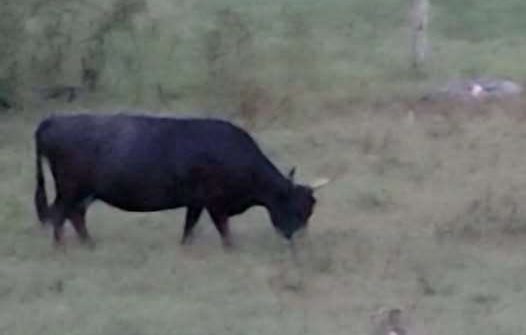
Photo of one of our cows at Bryn Mawr just recently taken, but soon to fade into the mist of time, just like all the Dexters before her.
An Outstanding Description of the Dexter
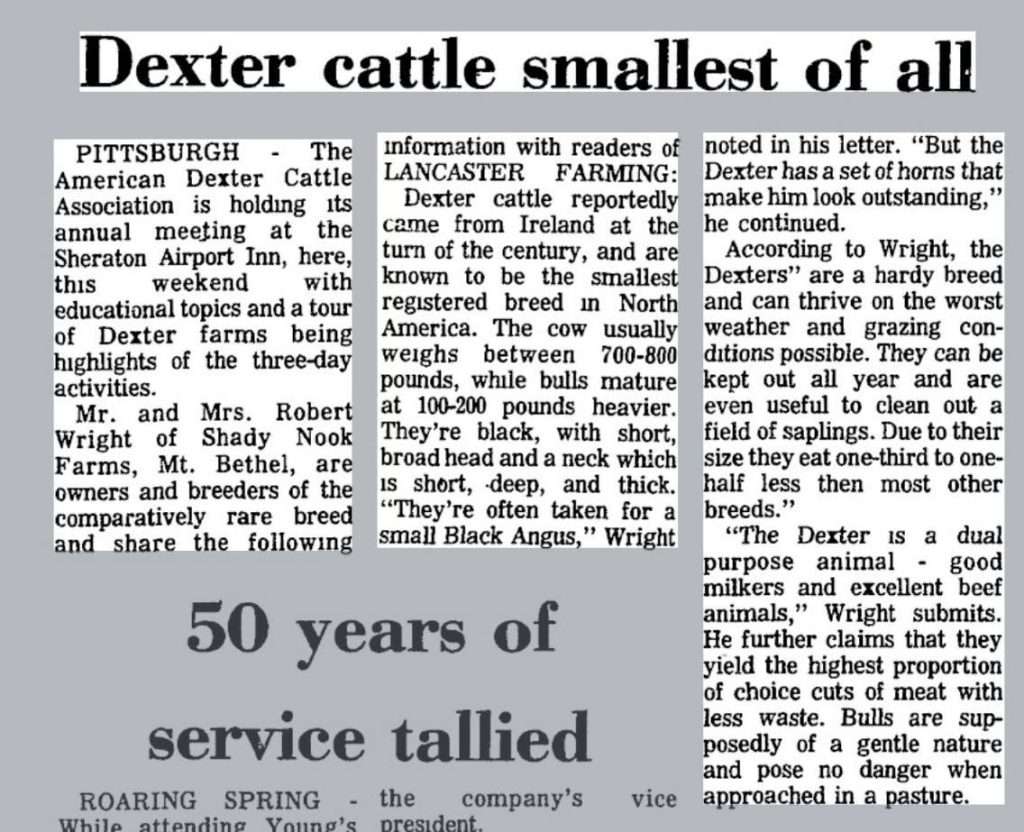
In America and all across the globe, it was much more common for Dexters to be black. So much so, that at one point people even forgot that they were once another color and when asked they may not even have known that the original breed standard allowed for red Dexters to be registered. It was common knowledge that they had horns. This article is 1976 states a fairly common view of what Dexters were before the widespread introduction of polled genetics into the breed. They may have been black like angus and small in size but their horns strikingly set them apart. It was a significant breed identifier that let you know they were not just little angus. As the article states “the Dexter has a set of horns that make them look outstanding”.
Of course, the size of the Dexter is a breed identifier, but it alone has not been the sole identifier. Today as many small breeds and cross breeds are being developed it becomes more common to see “mini” cattle where the cows are between 700-800 pounds and the bulls are up to a thousand. Size alone is not enough to set Dexters apart as a breed regardless of height or weight. Besides just physical attributes there are practical attributes that this article quickly highlights, that showcases Dexters as a unique small breed. They are not just for eye appeal or for cute pasture ornaments, but rather work well for the true purpose of a dual-purpose breed supplying both milk and beef. Another significant and often reported Dexter identifier is that they will survive on low quality pasture, living outdoors year-round and browse well for cattle. They have very docile bulls, and this is one of the very reasons new cattle owners become attracted to the breed. This trait is so important for the future preservation of the breed as it attracts so many people to cattle in general, due to the ease of handling. This is something we should never loose from the Dexter breed by improper breeding by using bulls with bad temperaments or cross breeding in breeds with bad temperaments spoiling the breed. How ruined could the Dexter be, if the breed became synonymous with poorly behaved and mean-spirited bulls?
What a beautiful description Mr. and Mrs. Robert Wright of Shady Nook farms has supplied for us 50 years later long after their Dexters have expired. Strange coincidence that the article mentions 50 years for a different remembrance as I look back and read this article 50 years later. When looking them up I found nothing under their names but I did find some Dexters registered to the Farm name Shady Nook, that had to be theirs due to the time of registration. Five Dexters only ever registered under the name of Shady Nook and only one of which ever went on to have registered offspring. A bull named Shady Nook’s Dubar born in 1976 , who sired two registered calves. This is all too common of a story in Dexters, new breeders, small operation, few cattle registered and then Dexters lost to the history of time. It causes one to consider that not only must we hold onto breed identifying traits, but also the very Dexters that bore those traits by putting them in the hands of people who will keep them breeding. Breed them strong and breed them long. Long live the true Irish Dexter!
Article taken from Lancaster Farming, 17 July 1976.
Thank you for reading and considering, Danielle of Bryn Mawr.
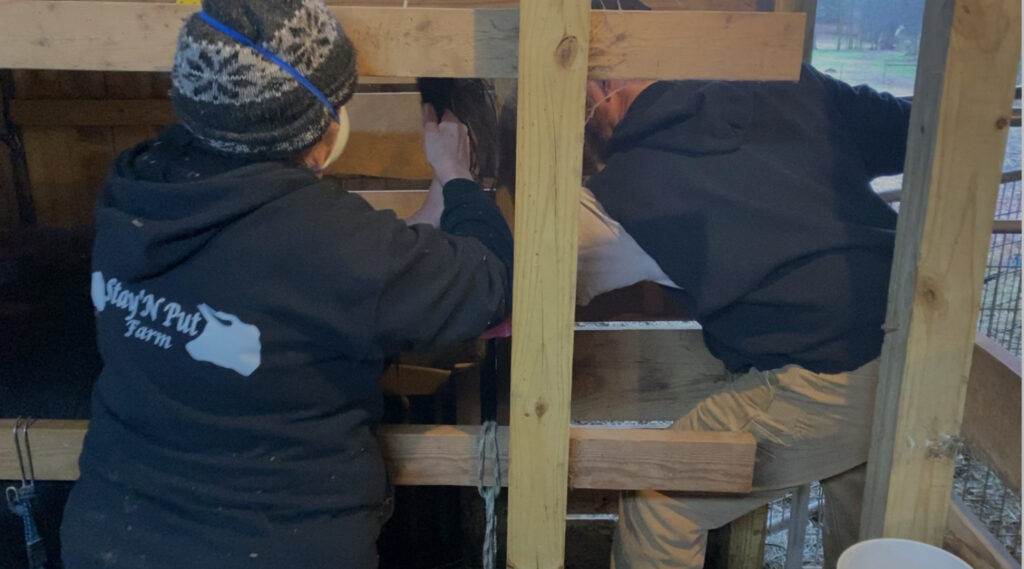
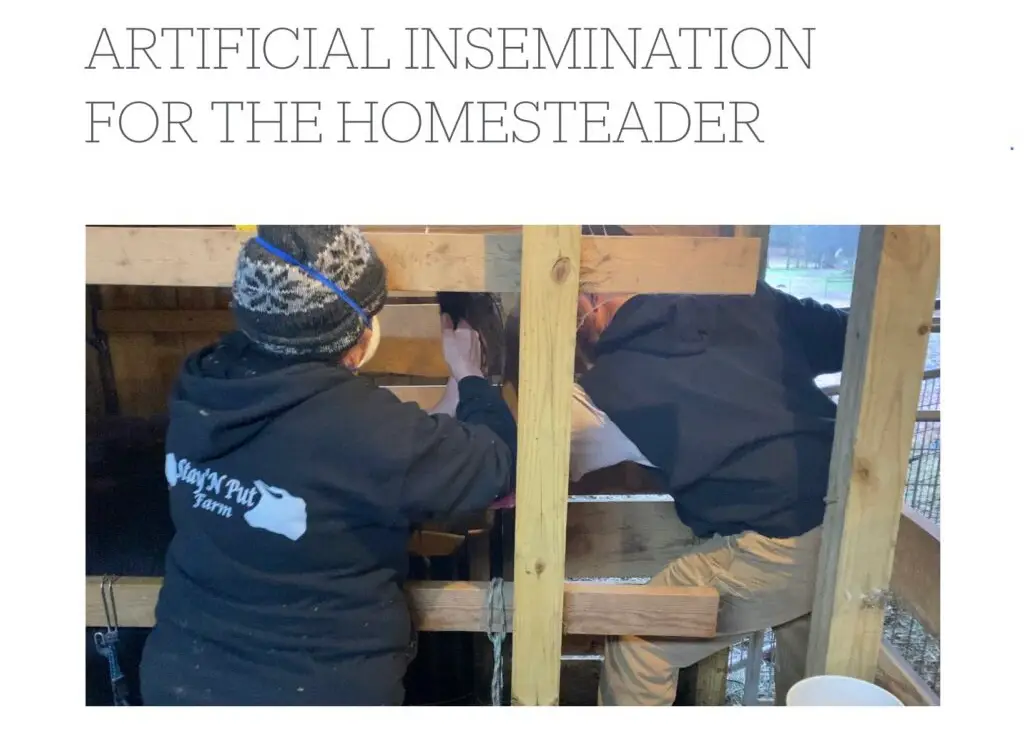
Whit Ashe of Circle A Ranch in Savannah, Tennessee , has been our cowboy, AI tech and friend for over ten years now. Our nick names for him, include Man With The Golden Arm, Mr. One And Done and My Favorite Cowboy to name a few. But, wouldn’t you use those names to describe a perfect heifer record and he only had to come back twice for redos in 10 years. We recommend him for anyone in the area. But after several conversations, it appears that much of our success as team, is not just his technique.
Minerals
For both Circle A Ranch and our little homestead, Stay’N Put Farm, it started with the management program. We both use Vitaferm Concept aid minerals. Whit recommended these right from the beginning, including when we were doing live cover on and off. It is set out free choice for them to utilize at their pleasure. With the success rate like ours, proper nutrients to help them take with one attempt has to be one of the key components . Seeing others succeed when switching to it, seems to us to be part of one of the keys to success. But this is just one of components to this success.
Timing
Timing is very crucial as well. Each Dexter will have its own cycle. Ours are between 18 and 21 days. Signs of coming into heat differ from cow to cow. Some of the signs we look for are loose poops, change in behavior…extra sweet or standoffish behaviors. You will often times see the cows standing close to each other, one appears to be more affectionate than the others. These for us are the start of of the heat cycle and duly noted.
Next we watch for jumping or restless behavior. This could include a nursing calf, jumping on mom or behaving weirdly with mom. If you’re milking, you may see an appreciable drop in milk, we do.
This is when your observation skills are most important. Cows will jump cows. Cows will jump bulls. This behavior is referred to as bulling. If you only have one cow in your herd and no other Dexter or bovine friend, this can be troublesome.
It can help you know that a cow is in heat, but it can’t tell you whether it is in a standing heat.
Telephone conversations and texts happen with Whit Ashe when we see behavior changes, poops getting loose or a milk drop and then we keep in close contact until we are sure that we are in standing heat.
Standing heat
Standing heat is when the cow stands for anyone to mount her. It is at this point you should be ready. We try to AI within the next 12 hours…and close to the 12 hour mark.
When your tech arrives, you should have your cow either in the barn or in the milking stanchion or shoot. You will need to have your straw selected that you want to use. The tech will warm the insertion device, by placing close to their body…down their shirt. The straw will be warmed in a special straw warmer. Once it is thawed, the device will let you know and the fun begins. The attached video will show you what it typically looks like.
Whit Ashe has only had to make two trips back in 10 years, and I would have to say one was probably the semen , which is rare to have a problem with it and the other was my timing. We chased it…knowing it would probably result in a bull, but we were unsuccessful. As of the time writing this article we have only received two bulls by AI, and that was from another AI tech, Weston Williams. Whit Ashe has a perfect heifer record here, very hard to believe, but true.
⭐ Isolating from the rest of the herd. This is not always the first sign however. I’ve seen more than one cow deliver a calf surrounded by her herd mates.
⭐ Pacing, appearing uneasy, looking at her sides.
⭐ Tail raising occasionally.
Active labor begins…
⭐ Clear, thin vaginal discharge.
⭐ Discharge changes to blood tinged.
⭐ Active contractions become evident, characterized by a rise and fall of her sides. Tail stays up.
⭐ She may continue to get up, lay down, and pace.
⭐ Water breaks.
⭐ In a normal presentation front feet become visible. Head rests on top of them. You should see the nose within 4 to 6 inches of the tips of the hooves.
⭐ Contractions should remain heavy at this point. You want to see progress.
⭐ Delivery of calf.
⭐ Expulsion of placenta.
What are the signs of calving dystocia?
⭐ Soles up (backwards).
⭐ Front feet presenting, no nose evident (head back).
⭐ Heavy labor, no feet, only tail (breech).
⭐ One foot presenting only (leg back to any varying degree).
⭐ Active labor, no water bag evident (uterine torsion).
There are more “bad scenarios” but I’ll stop with the more common issues.
Labor is not a one size fits all. Again, what you’re looking for is progress. Watch for rapid breathing, heavy salivation etc.
Older cows are more predisposed to pre calving milk fever. Check body temp if she has heavy vaginal discharge, dull dark eyes, and is appearing weak. Normal body temp is 101.9 to 102.1, although in warmer weather it can go higher. Milk fever presents as a temp around 100.3 or lower. In this case I go directly to IV calcium. Remember that calcium deficiency to a large degree fuels contractions.
Check for a twin if the calf is smaller than normal.
Hot weather, assisted births, or milk fever inevitably lead into a cow that fails to expel placenta completely. It may LOOK like she’s cleaned, but residual is left behind. This results in metritis and often, subsequent ketosis.
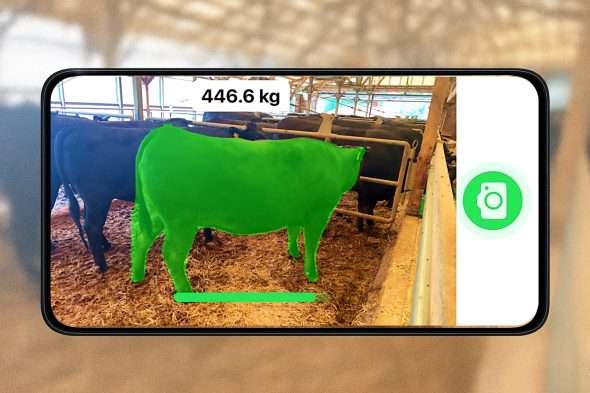
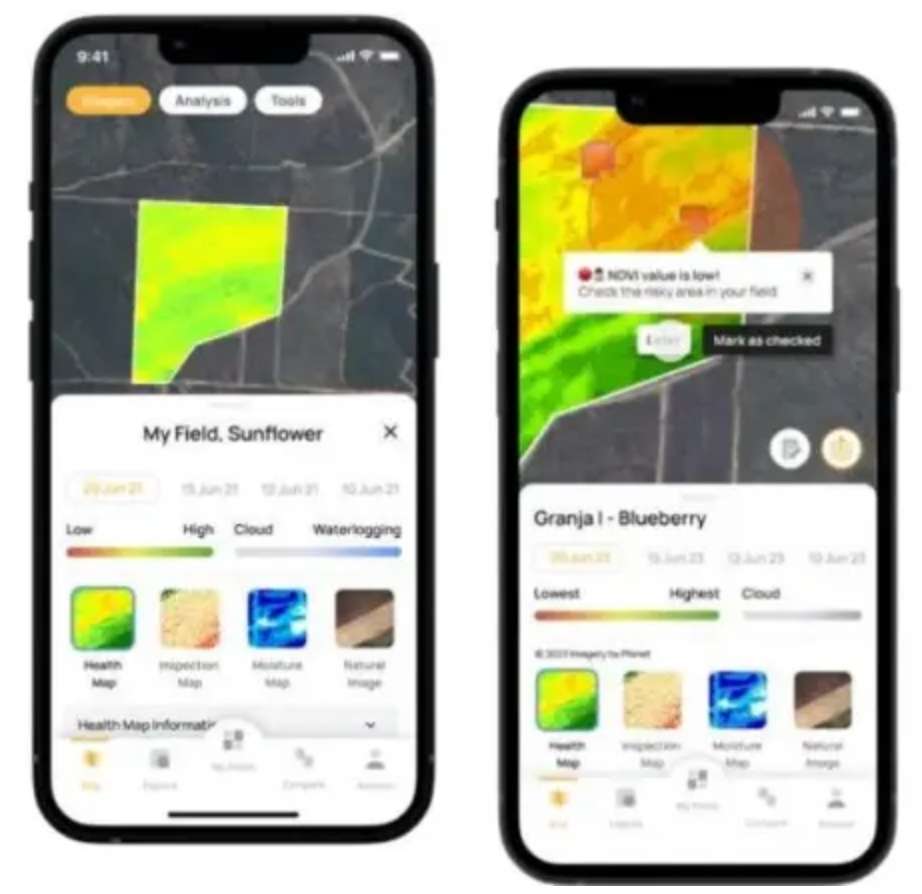
Farm management apps have changed how farming is done today. These tools help you make smart choices for better farming. Features like weather updates, task schedules, and inventory checks make work simpler. These apps also give live updates and tips to improve farming. They help you work better and farm in a way that helps the planet.