
August 2026
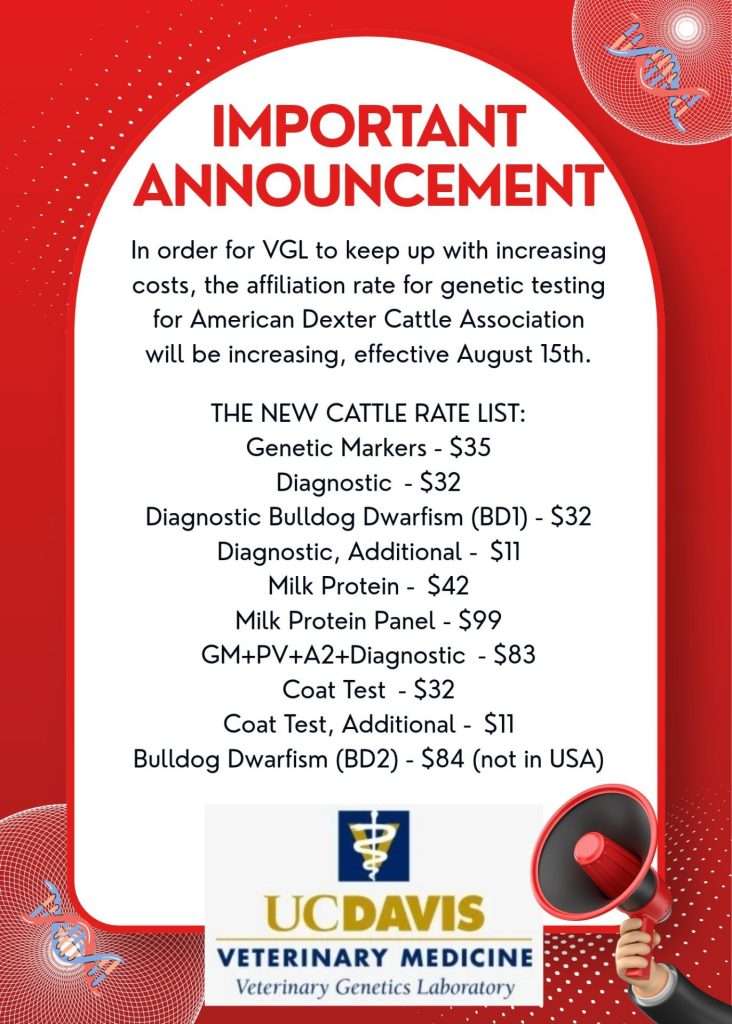
Dexter Genetic Testing Price Increase
UC Davis Veterinary Genetics Laboratory has announced they have increased prices for affiliates. The change went into effect August 15th, 2026. This price increase does not affect non-affiliate pricing. Checking the affiliate breed association box still provides some savings.
Dexter Genetic Testing Price Increase Read More »
General
Tools for Mental Resilience
“Agriculture is far more than a job.” It can take its toll, both physically and mentally.
The article below provides practical tools on caring for ourselves, and building resilience. It can be hard to remember how stretched thin the busy season makes us. Prioritizing our mental and physical health may be the difference between burn out and farming success.
Tools for Mental Resilience Read More »
Farm Management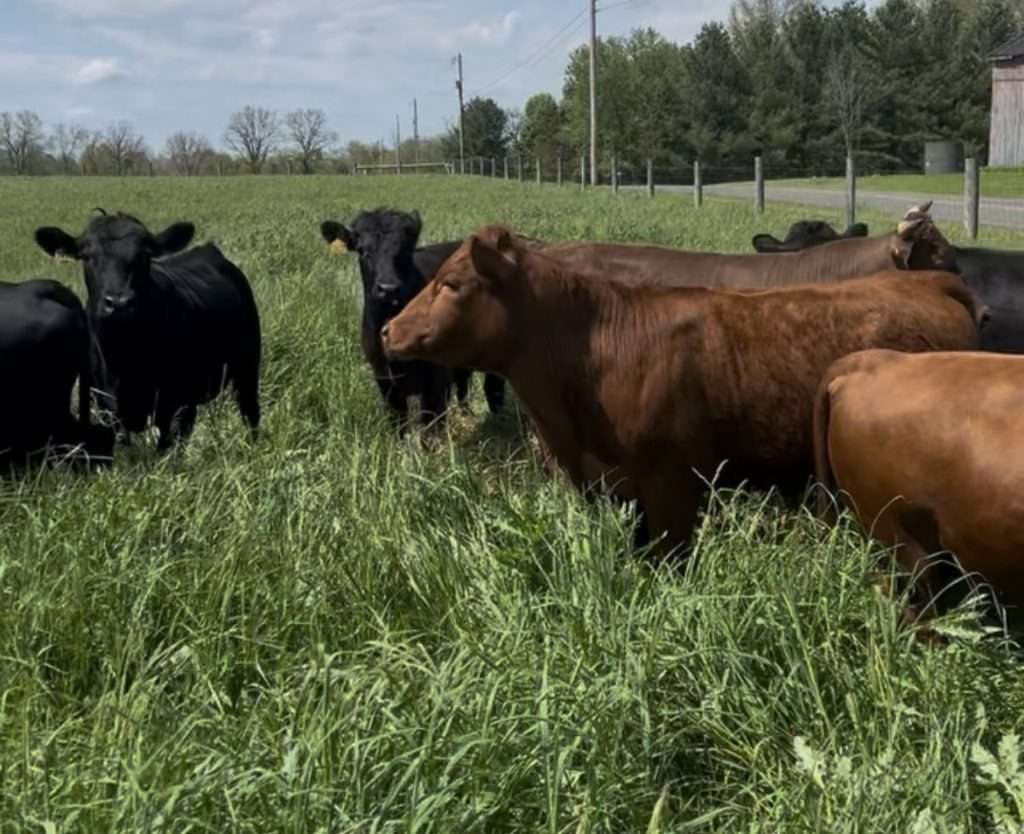
Can smaller cows bring bigger profits?
While there is so much to love about Dexter cattle, they aren’t the only small cattle breed out there. With the beef industry looking to push a larger carcass, is a smaller cow worth a producers consideration?
Can smaller cows bring bigger profits? Read More »
General
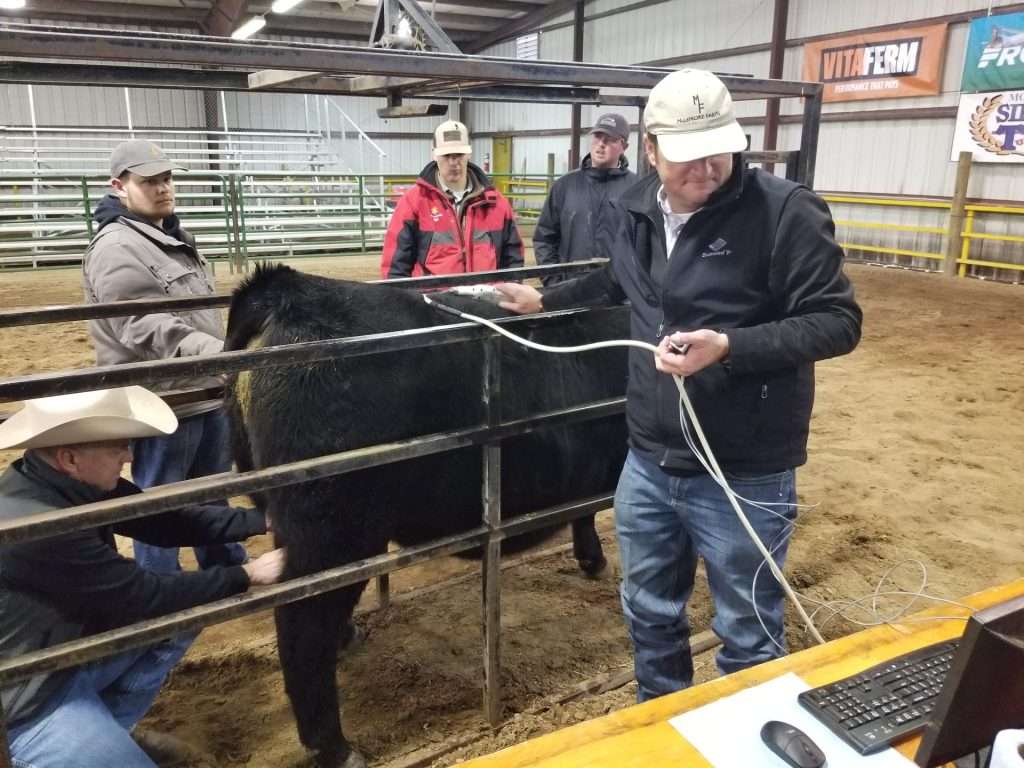


Tools for Measuring Production
Grass-fed beef producers need to carefully track both production costs and cattle performance to determine whether their operations are truly profitable. With the number of variables between operations, this can be quite a challenge! Rising cattle prices can increase revenue, but higher feed, land, processing, and other input costs can quickly reduce margins.
The Grass Fed Beef Decision Calculator, linked in the article below is an interactive spreadsheet developed by the Pasture Project. It allows producers to model different types of operations—including cow-calf, stocker, finishing, and direct-market businesses—and see how changes in cattle prices, feed costs, weight gain, processing costs, and selling prices affect profitability. Small changes in costs or animal performance can have a significant impact on profit. Having tools to measure production and profit are a huge asset when making overall management decisions for our cattle operation.
Tools for Measuring Production Read More »
Farm Management
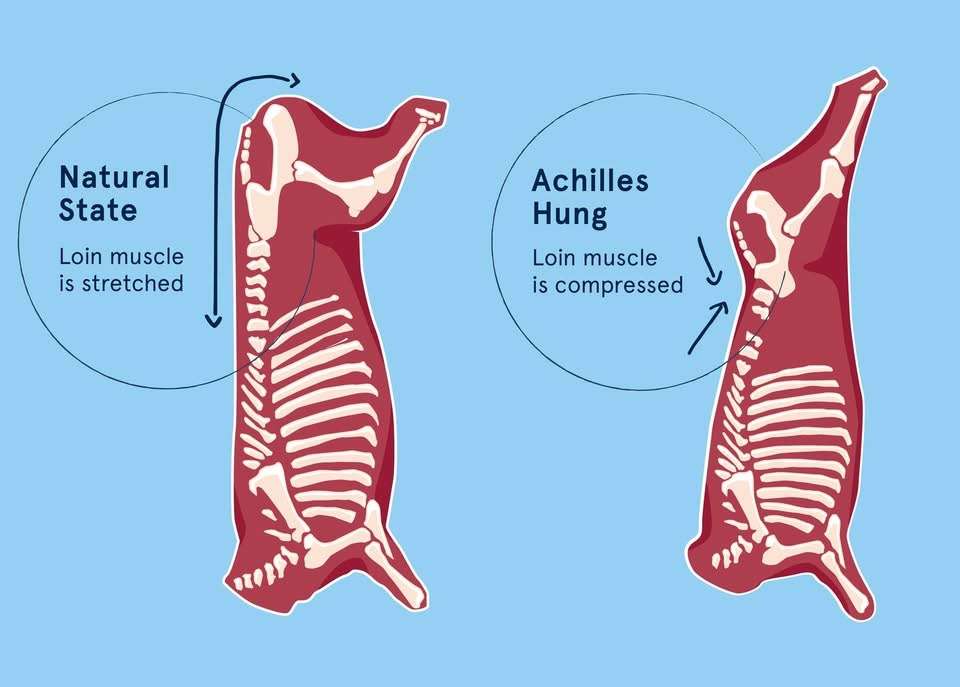
How your beef hangs matters
Did you know the way beef is hung during processing can influence eating quality?
Bass Strait Beef uses a Natural State Hanging Method, allowing the carcase to hang like it would stand in the paddock.
This process helps gently stretch the muscles to contribute to improved tenderness in premium cuts like rump and porterhouse. Just one of the many ways we do things differently to deliver you the best beef! 🥩
How your beef hangs matters Read More »
Beef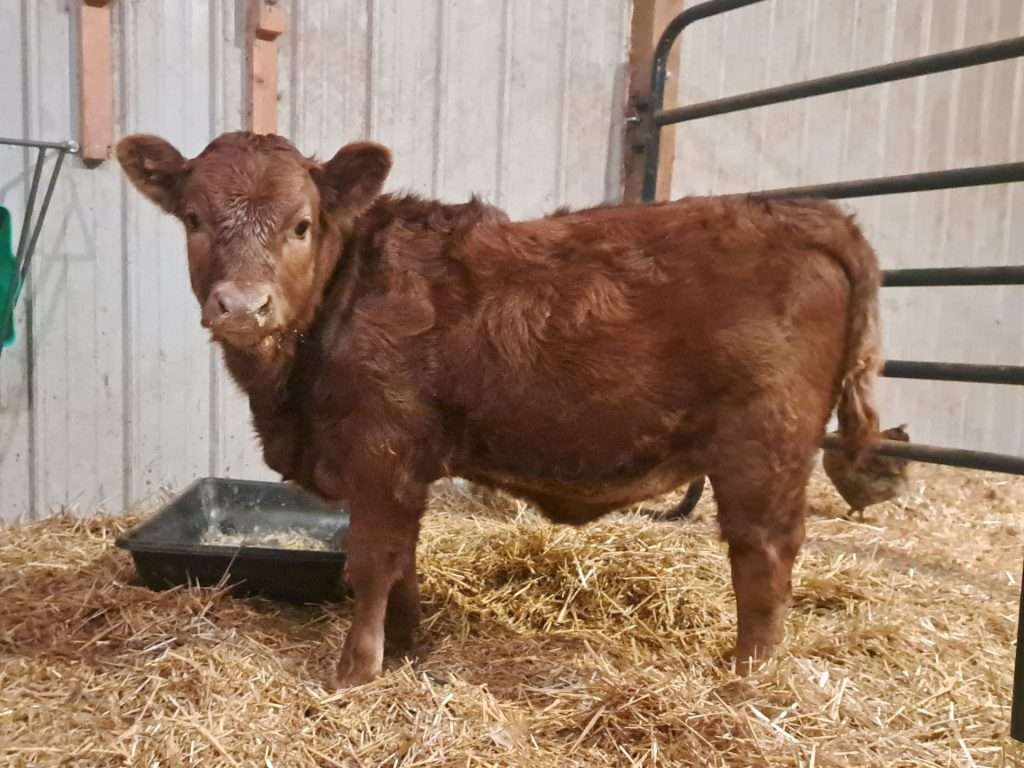
Rose Veal The Best Beef You’re Probably Afraid to Try
Loved deeply. Raised naturally. Honored completely.
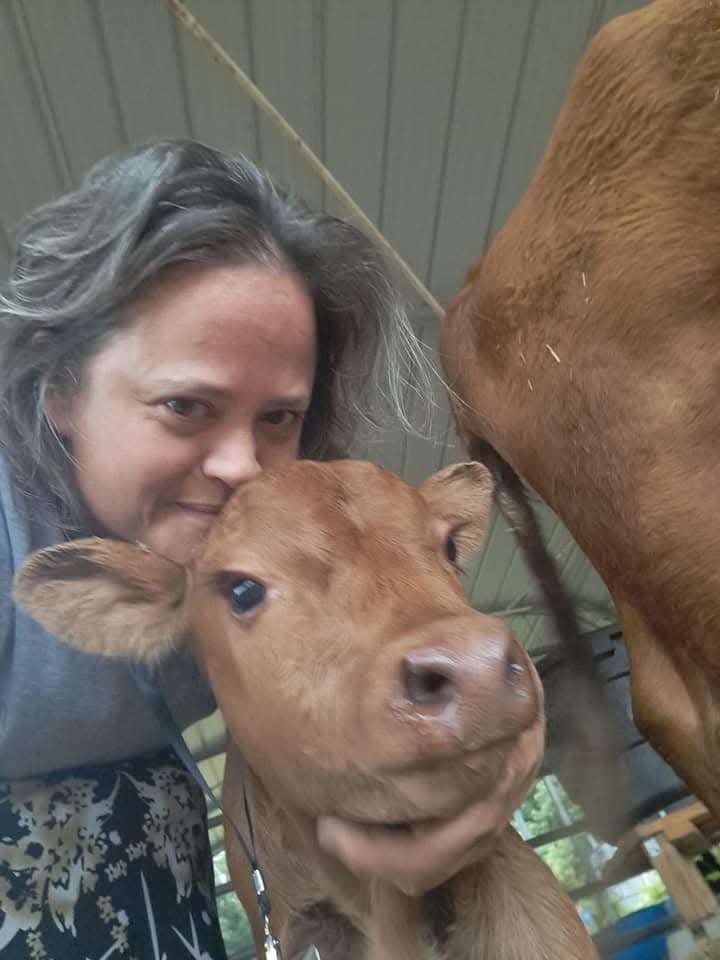
Have you ever tried rose veal? Until last year, I hadn’t either. Like a lot of people, the word veal immediately brought to mind images of calves confined in tiny crates. I wanted nothing to do with it. But after raising my own cattle and learning what rose veal actually is, my perspective completely changed. In fact, it’s the best beef I’ve ever eaten.
Rose veal isn’t the pale white veal most people think of. These calves are raised naturally, with room to run, graze, play, and nurse from their mothers. The meat develops a beautiful rosy color because the calves are active and eating a natural diet. They’re not confined or intentionally kept anemic to produce white meat.
The first calf we processed for rose veal was one of our five month old heifers. She was born with a spinal deformity that made her unsuitable for breeding. Our veterinarian believes it was likely caused by a viral illness during pregnancy and said it’s probably something we’ll never encounter again. As she grew, the deformity became more pronounced. The lump on her spine grew, and her back twisted from her shoulder blades all the way to the tip of her tail, causing her to walk at an angle. While she was able to get around, albeit a little unsteady on her feet, she thrived and enjoyed life alongside her brothers and sisters.
Five months of sunshine, pasture, and a mother’s milk. A life Shorter, but not lesser.
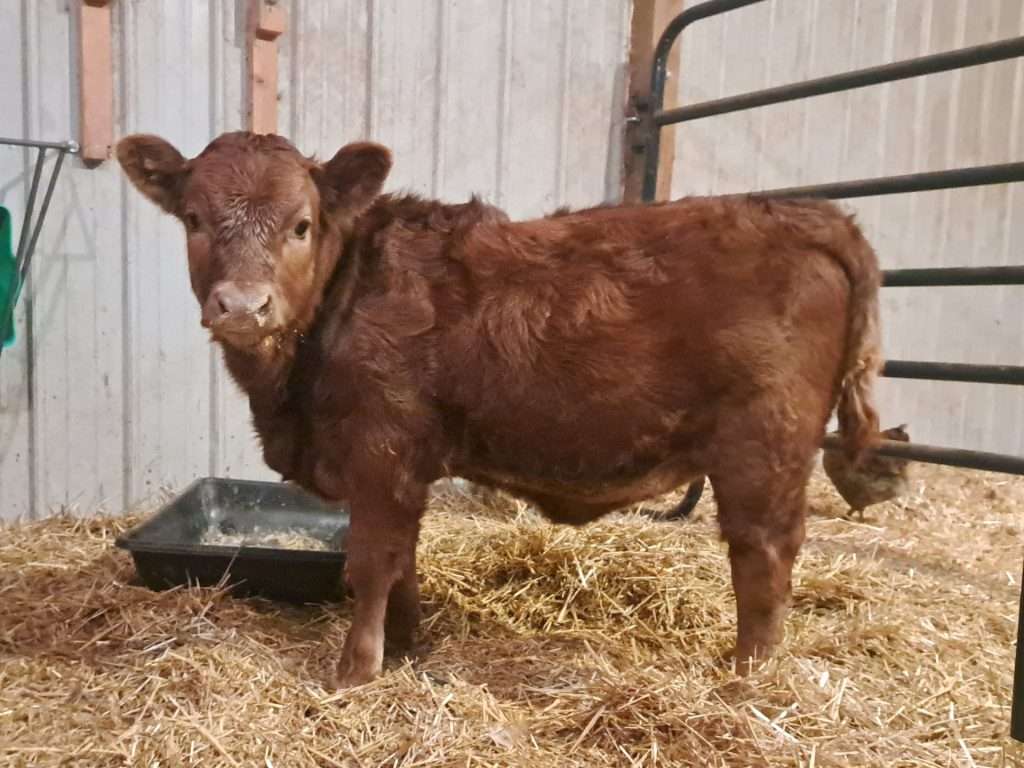
She was a cute little booger, too. But if you look straight up from her elbow and shift your eye slightly to the right, you’ll notice that little tuft of hair sticking up. That’s because she had a rather large lump along her spine. Now look at the beginning of her tail switch—the slight kink there is another clue. Her spine was twisted from the base of her neck all the way to the tip of her tail.
As she got older, we became increasingly concerned about what would happen once she started cycling. If a larger bovine mounted her during a heat cycle, there was a very real risk of a catastrophic spinal injury. It simply wasn’t a chance we were willing to take. When we took her to the processor, she was still nursing her mom while also grazing alongside the rest of the herd. She spent every day out on pasture doing exactly what calves are supposed to do. Her life was no different than any other calf on our farm, it was simply shorter.
Although she was happy and thriving, we knew the risks her spinal deformity would pose as she matured. Making the decision to process her early wasn’t easy, but we believed it was the kindest choice for her. The alternative would have been paying our veterinarian to come euthanize her and then burying her on the farm, which would have cost us around $150. In the end, not only did we save money, but we also gave value and purpose to an animal whose life otherwise would have ended without feeding anyone.
Her full story deserves its own post, and I’ll share that another day.
The next thing we had to consider was the cost. Most butchers charge a fairly large kill fee and offal fee on top of processing charges based on hanging weight. What many people don’t realize is that processors often have flat-rate pricing for goats and sheep, which are frequently about the same size as a young Dexter calf. One butcher I called charges $120 to process goats and sheep of any age or size. Fortunately, my processor gave me an even better deal. I paid just $90 to have her processed. She was 163 days old, weighed 274 pounds live, and had a hanging weight of 166 pounds.
In the end, we brought home just over 100 pounds of beef to stock our freezer. When all was said and done, our total cost came out to approximately 90 cents per pound of beef. It was a decision that not only made sense financially, but one that gave her life continued purpose. A decision well made.
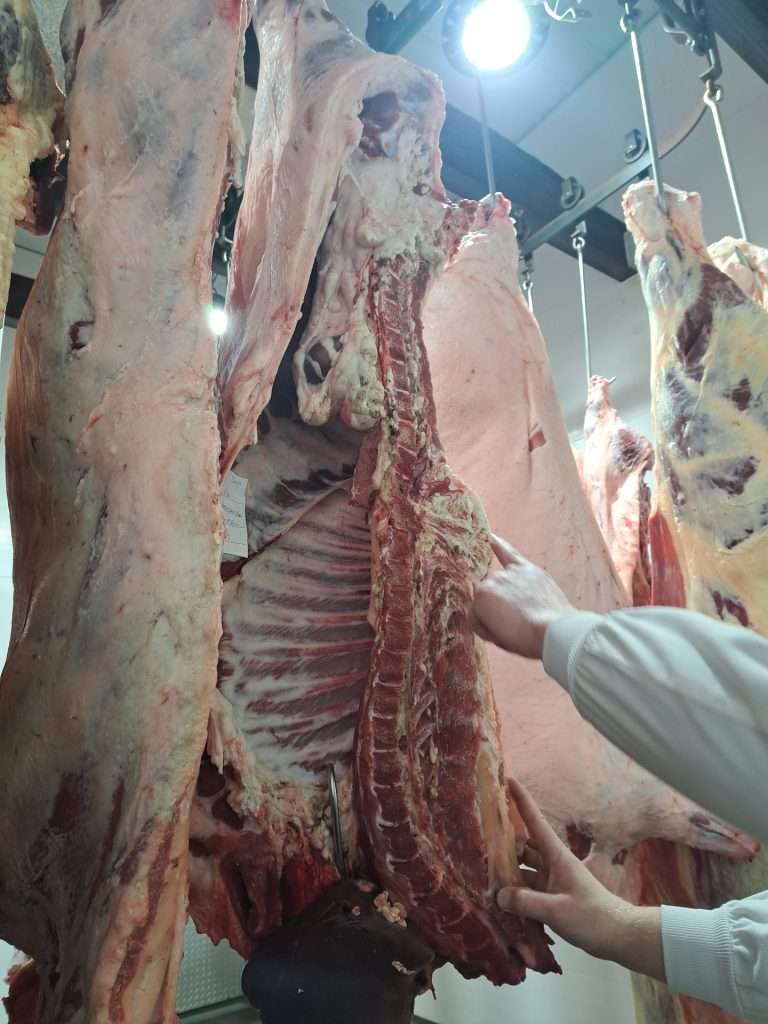
The butcher is pointing out the lump on her back. It turned out to be a mass of bone fragments and fat. You can see how the deformity had pushed and twisted her spine inward.
While we didn’t get a ton of beef back, we got far more than I expected. We chose all the usual cuts but had them cut a little thicker. The steaks were cut two inches thick and were the perfect size for one person. The roasts were about two pounds each. Every single cut was spectacular. The steaks were so tender we could literally cut them with our forks. The roasts were nearly as tender. The ground beef tasted just like what we’re used to from our two-year-old steers. The only noticeable difference was that it was slightly lighter in color than our typical Dexter beef.
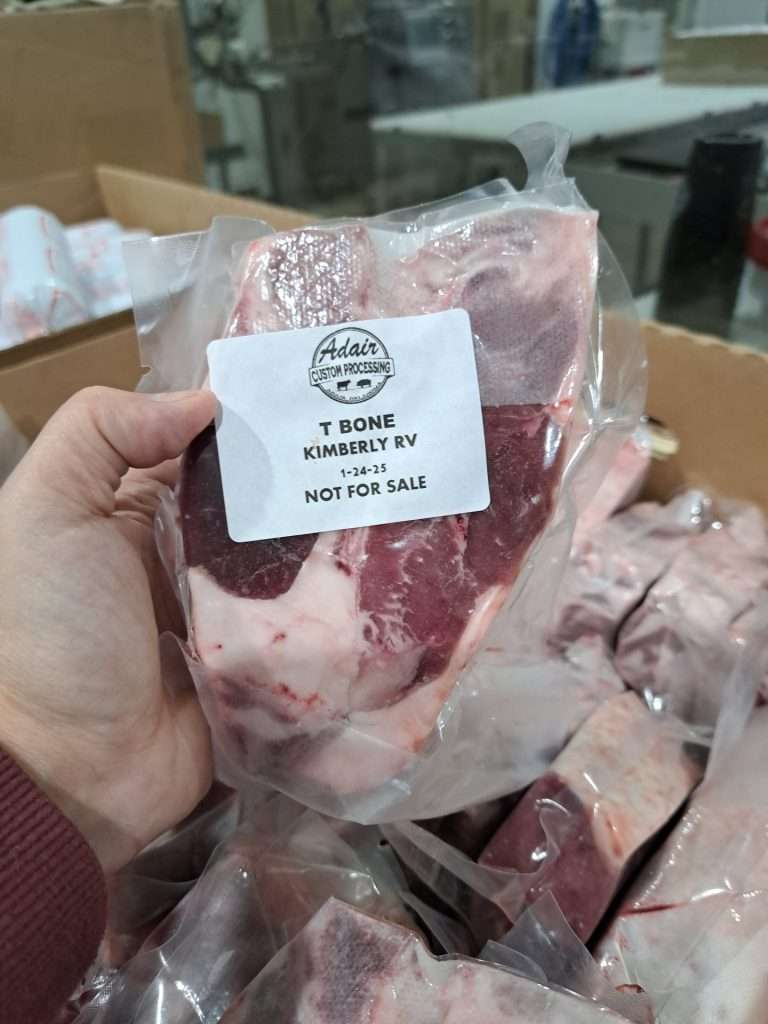
One of the cuts I brought home was a round steak. Normally, I grind round steak into hamburger because it’s simply too chewy for me. Many people mechanically tenderize it for chicken fried steak, but even then I usually find it tough. This steak was different. It wasn’t mechanically tenderized at all. I cooked it just like I would any other steak, fully expecting it to be chewy. Instead, it was incredibly tender with a rich, beefy flavor unlike anything I’d ever had. It completely changed my opinion of what beef can taste like.
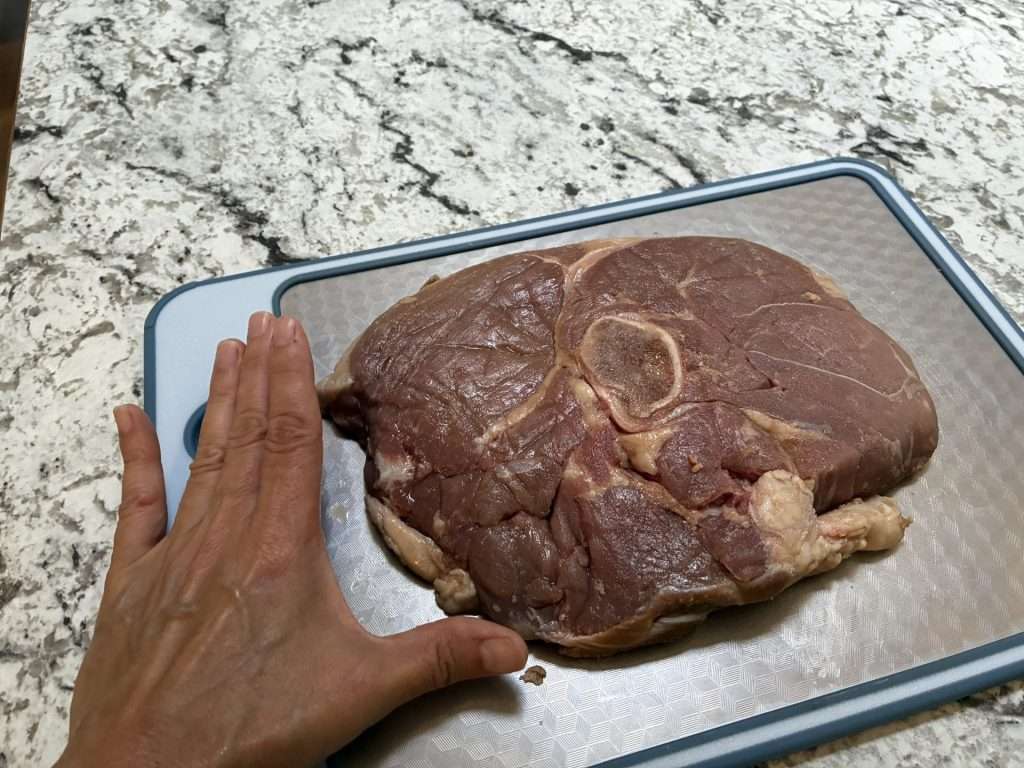
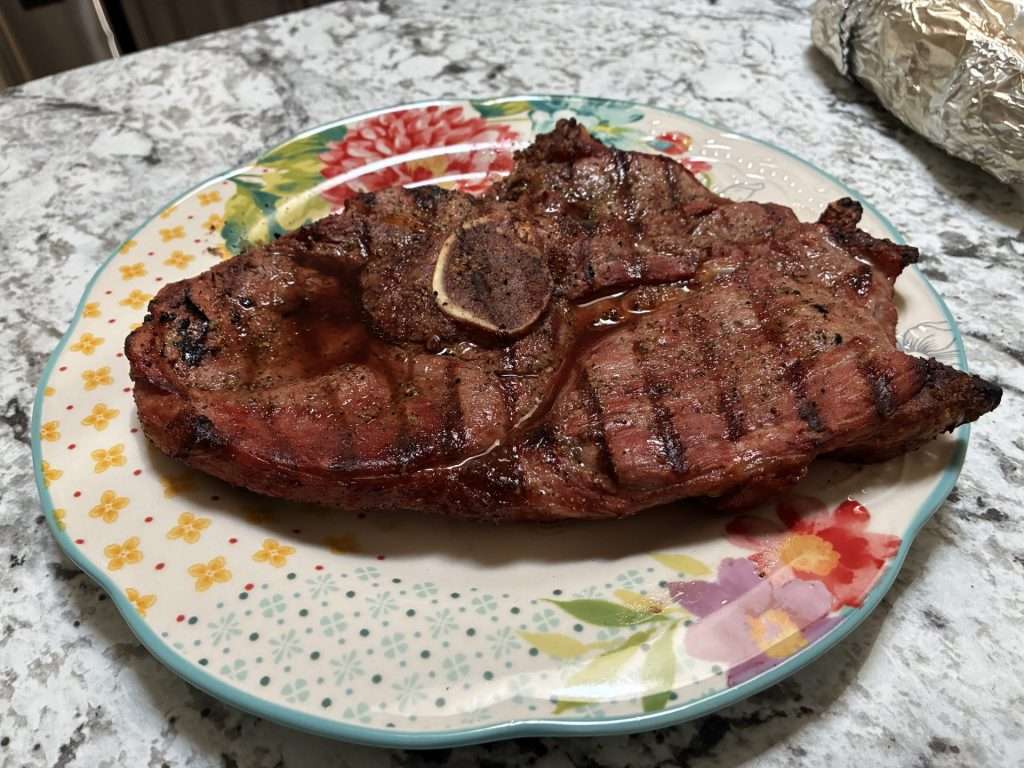
In fact, the entire experience had me secretly hoping our cows would have more bull calves than heifers so we could justify setting aside one or two for rose veal. If the day ever comes that we scale back our herd and only raise beef for ourselves, I may very well only raise rose veal. The only difference is that I’d probably wait until the calves were closer to eight months old for a higher yield.
Behind every cut of meat is an animal. The most respectful thing we can do is make sure that animal had a good life.
I understand why people struggle with the idea of eating a younger animal. It’s an emotional hurdle, and I don’t fault anyone for feeling that way. But I also think there’s value in understanding how that animal was actually raised instead of judging it by outdated assumptions. On our farm, every bovine is cared for the same way, whether it’s processed at five months, two years, or twelve years old. They all have access to fresh pasture, clean water, shade, and the opportunity to simply be cattle. Their quality of life isn’t determined by how old they are when their story ends. Rose veal isn’t about cruelty. It’s about producing exceptional beef from calves that lived good lives on pasture with their mothers.
If you’ve written off veal because of what you’ve heard in the past, it may be worth taking another look. Modern pasture raised rose veal is a completely different product. And if my experience is any indication, you just might discover the best beef you’ve ever tasted.
About the Author
Kimberly Jepsen is the heart behind MooShine Ridge in Vinita, Oklahoma, where she and her husband, Kevin, have been raising dual-purpose Dexter cows since 2015. Their little farm store is a labor of love, offering Dexter beef, raw milk, and artisan cheeses made from their own cows. Kimberly has a deep passion for the Dexter breed and loves nothing more than sharing what she’s learned over the years whether it’s guiding fellow farmers, helping newcomers discover the joys of small-scale farming, or simply introducing people to the rich, creamy flavors of her handcrafted cheeses. For her, farming isn’t just a business, it’s a way to nurture animals, the land, and the community she cares about. https://mooshineridge.com/
Rose Veal The Best Beef You’re Probably Afraid to Try Read More »
Beef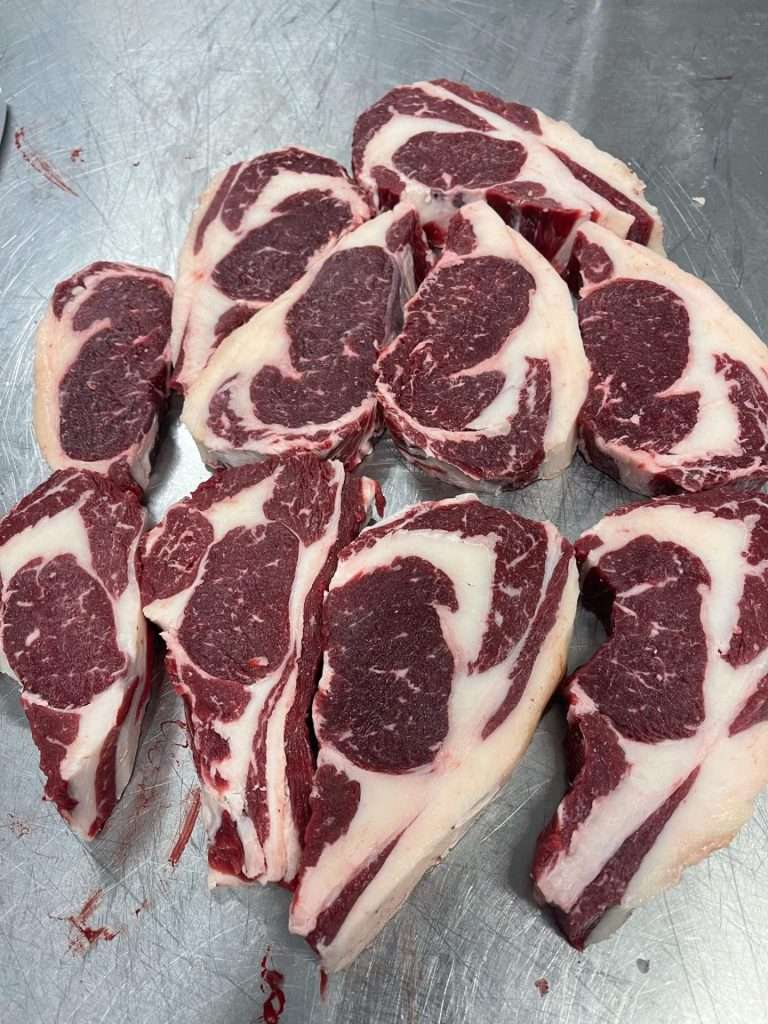
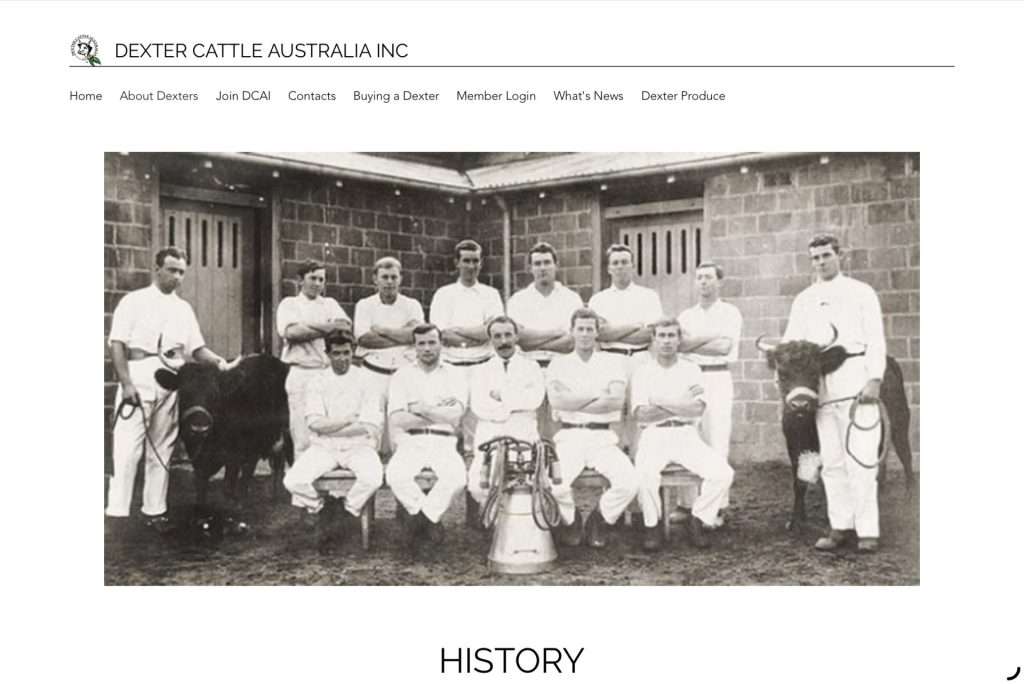
The history of Dexters in Australia
For you history buffs…how our Dexters came to be in Australia.
The history of Dexters in Australia Read More »
Historical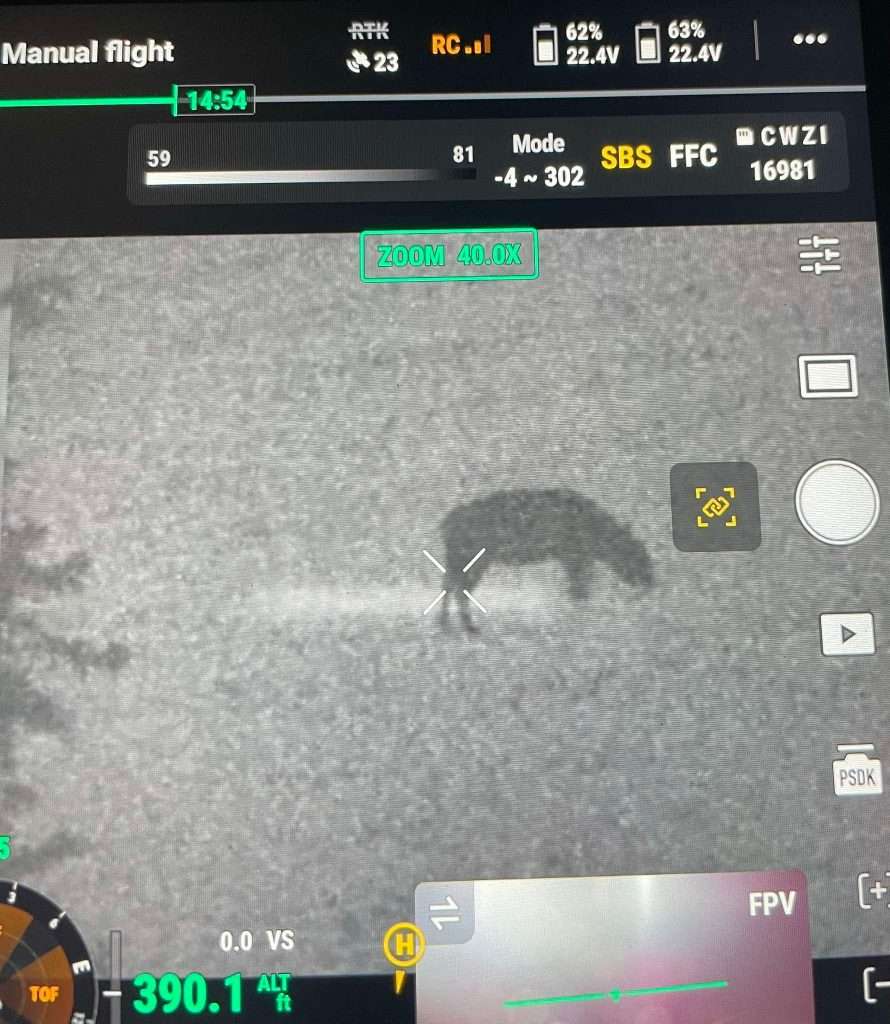
DEXTER CATTLE – JOY, LAUGHTER, AND HEARTBREAK – SWEET CAROLINE (Part 3)
I needed help and was unafraid to admit it. I was at home and 6 hours away from Sweet Caroline. Taking the animal shelter’s advice, I called “Eye In The Sky Thermal Drone Pet Rescue”.
Philip answered on the second ring. I explained the situation, and the first words out of his mouth were, “I can go tonight.” I lost it. Fear, anxiety, exhaustion hit me all at once. I couldn’t speak for a good 30 seconds. Philip indicated that this is what he does. He asked that I send him a google pin with Sweet Caroline’s last location. He will contact the Sheriff’s department to let them know that a drone will be in the sky. I was flabbergasted but had hope.
I asked Philip is he thought he would find her. He responded, “I am 100% sure I will find her.”
“How can you be so confident?” I asked.
“It is a black cow! I am used to looking for much smaller animals. She will standout.” He was right.
That night, at approximately 8:30 PM, I received a text. I received a photo of Sweet Caroline standing in a corn field. I couldn’t believe it. I called Philip. He said he found her near the woods where she was last seen. She looked healthy and was eating. I couldn’t have been happier. I made plans to meet Philip the next day in Iowa in hopes of bringing Sweet Caroline home.
The plan was to meet with Philip, fly the drone, see Sweet Caroline and walk her to the trailer and then bring her home. That was the plan. Sweet Caroline had other ideas.
Truck and trailer in tow I was Iowa bound. Through my ever growing list of Iowa contacts, I learned the name of the farmer who’s pasture abutted the woods in which we believed Sweet Caroline had taken residence. I gave him a call while in route. He indicated that he did indeed own the pasture and confirmed that there were several head of cattle in it. The pasture was large, had several acres of woods and water. The farmer told me that there was a spring in the woods where Sweet Caroline was at so she had water. He was going to walk his pasture to see if he could see Sweet Caroline.
About 4 hours in to my trip, the farmer called to advise that he did indeed see Sweet Caroline. She literally walked right up to him! She was next to a fence that separated the 2 properties. She was about 10 yards away from a little gate. The farmer and his son tried to get her to go into the gate on this land, but Sweet Caroline was reluctant and wouldn’t go in. They were able to pet her. Not great news, but not the worst news either.
I met with Philip. Philip was going to put the drone up, and once Sweet Caroline was found, I was going to try to get her into the pasture with the other cattle. There were 2 gates. The little one the farmer mentioned and a main gate located along a road over a mile away.
The drone was up. Amazing things these drones. Flying over head and giving crystal clear images of the things below. Growing dark, Sweet Caroline emerged from the woods and went into the corn field. We were located about 1/2 a mile away and I began the walk towards her.
Sweet Caroline, was… well…Sweet Caroline. I walked towards her with a bucket of grain and she walked right up to me. She allowed me to pet her and I allowed her some grain. She looked healthy and good. I had brought a halter.
I have had more people ask why didn’t I just halter her? Piece of cake! First off, she had never had a halter on in her young life. Second off, she wasn’t about to start with a halter in that corn field in Iowa either. With that not going to work, I went with plan B.
We were about 300 yards to the small gate. The challenge with that was the small gate was located on a rather steep incline. To get to that gate, we had to walk through very thick brush and thickets. The fence was barbed wire. Sweet Caroline has never been around barbed wire. There was a large tree stump 3 feet in front of the gate. I walked between the stump and the barb wire fence. The other side of the stump was very thick briars and impassable. I immediately figured out the problem.
Sweet Caroline stopped at the stump. She would not go by the barbed wire. We were 3 feet away from the open gate. She eventually walked back to the corn field. I called her. She came back and stopped by the stump. And walked back to the corn field. We repeated that same sequence 3 times. She was wanting to follow. She wanted with the other cattle. She would not go past that stump.
I walked back to Philip. It was dark. I sent a text message to my Dexter cattle mentor and explained the situation. Through her contacts and Facebook followers, she was able to find someone in Illinois, close to Iowa, who might be able to help. She sent me the information.
I called. They would come the next day, Sunday, after church. Time to bring in the cowboys.
A little bit about the author. I own and operate a small farm called “Our Yellowstone LLC” in Illinois. I couldn’t do it alone, but will keep my wife’s name out of it to protect her innocence.
)
DEXTER CATTLE – JOY, LAUGHTER, AND HEARTBREAK – SWEET CAROLINE (Part 3) Read More »
Homesteading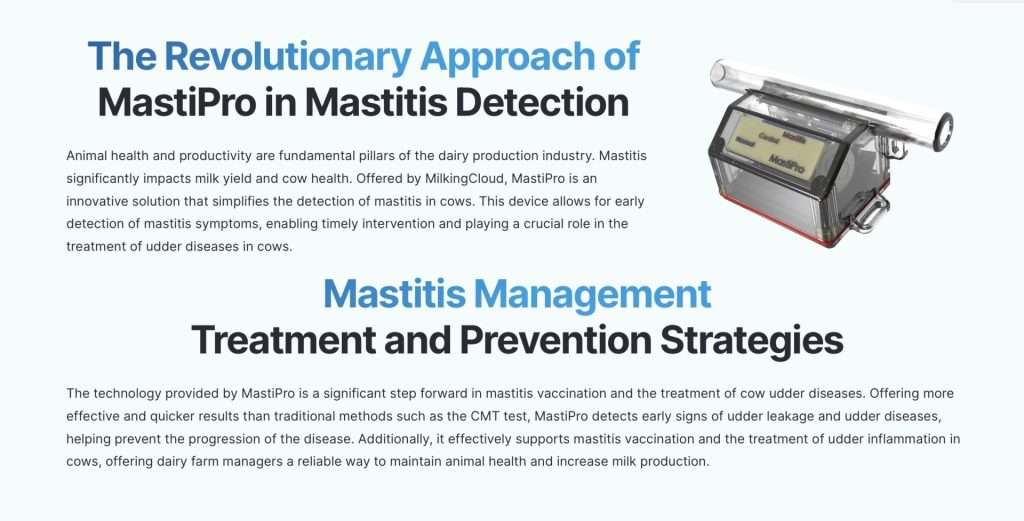
New Mastitis detection equipment
MastiPro is an automatic mastitis detection device compatible with milking machines. Thanks to the intelligent system, it detects early stages of mastitis based on increased Na and Cl ions in the milk. There is no need for expensive laboratory methods such as somatic cell counting. It provides information with colored indicator lights on the device and voice notifications via the MilkingCloud App.
https://www.milkingcloud.com/devices/automated-mastitis-test-mastipro
New Mastitis detection equipment Read More »
Technology
How raw dairy can possibly positively affect your weight
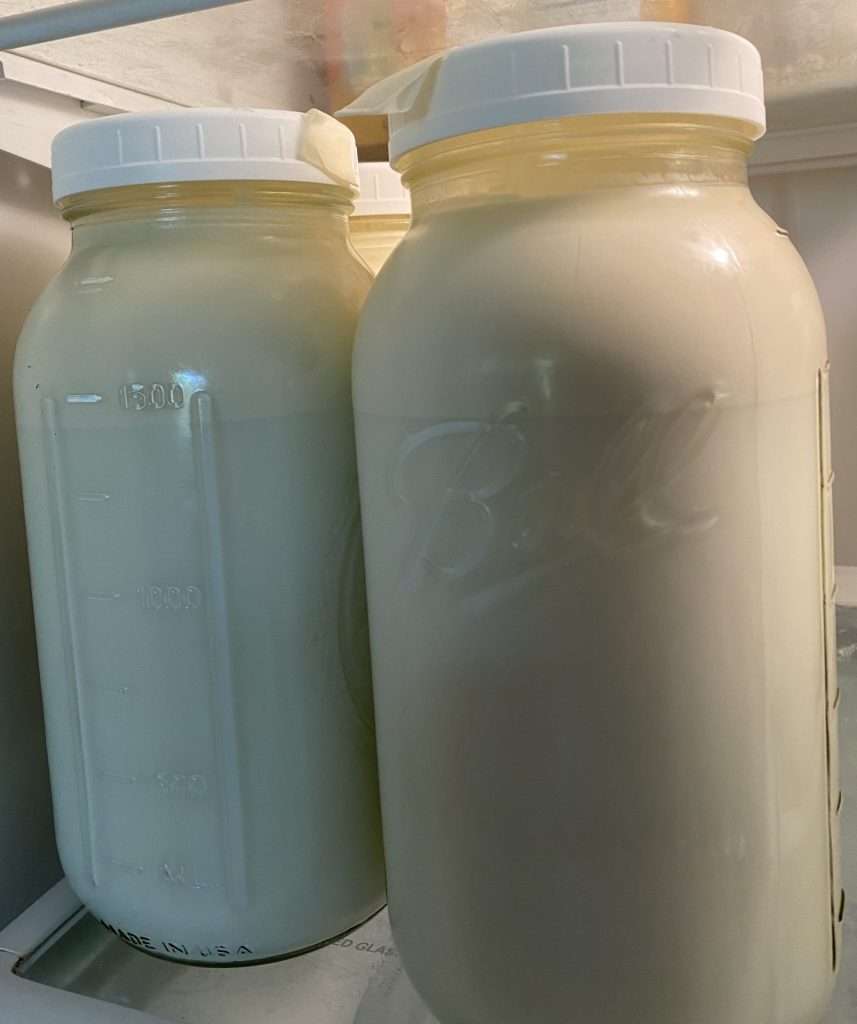
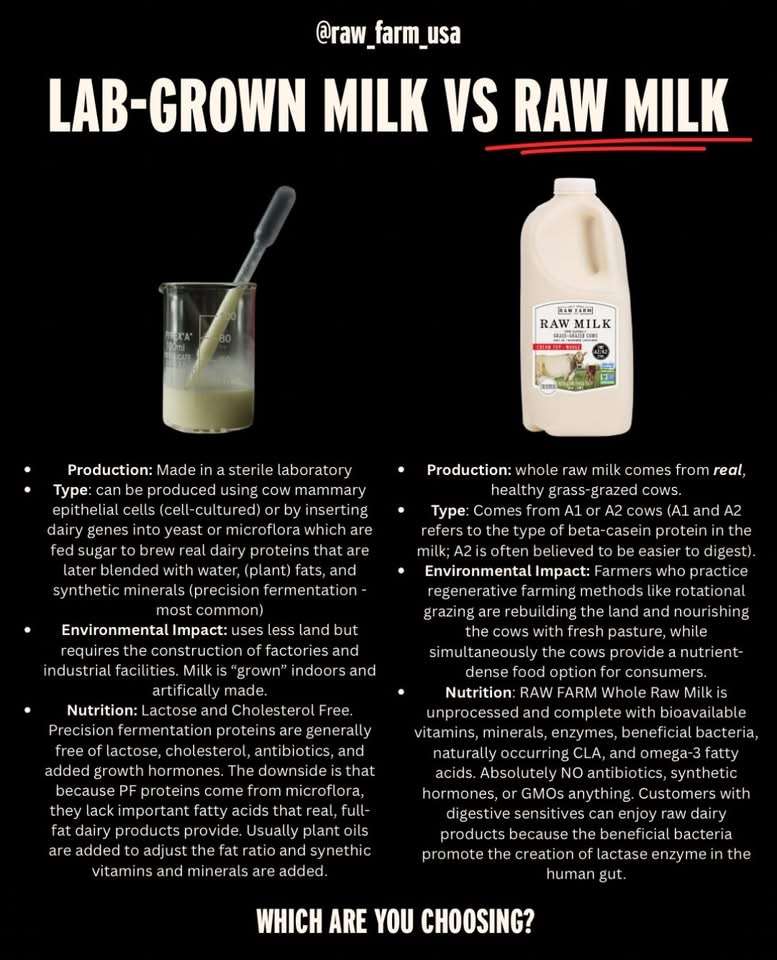
Interesting study from The National Library of Medicine
How raw dairy can possibly positively affect your weight Read More »
Milking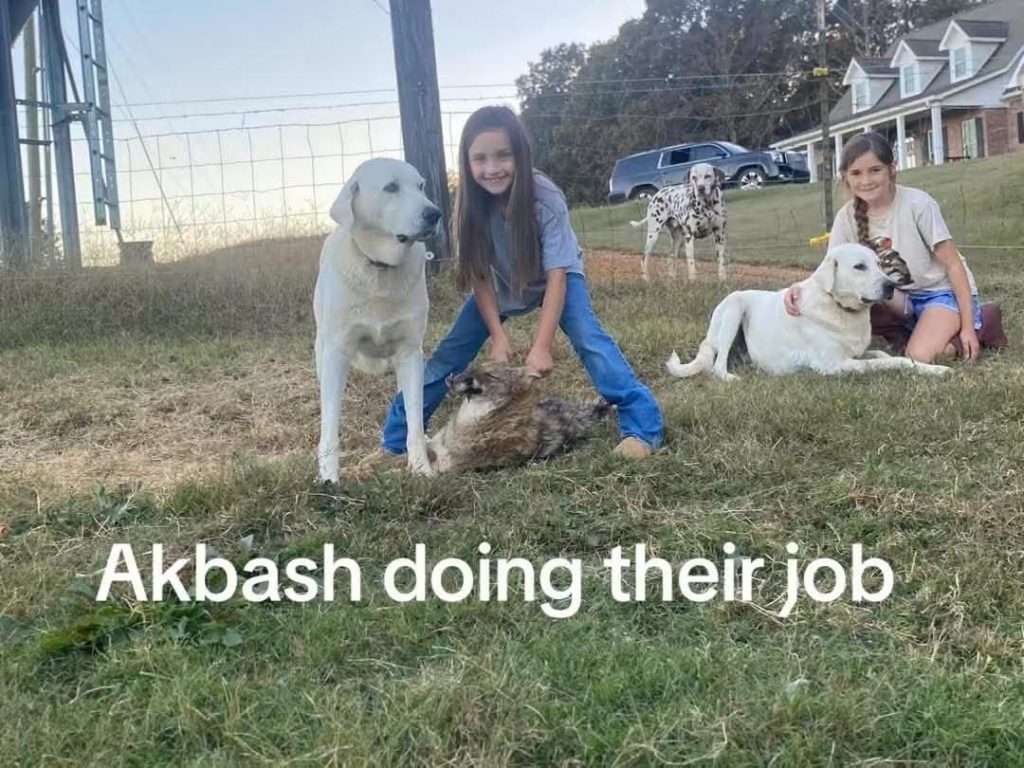
Pest control on the Homestead
Rodent and pest control on the homestead can be a challenge. At our farm we use a multi pronged approach.
We use peppermint oil, glue boards, mouse traps, barn cats, muscovy ducks, chickens, guardian dogs and recently birth control. I have even seen folks use rat terrier dogs. What ever works for you, but it may take a multiple methods to get the job done.
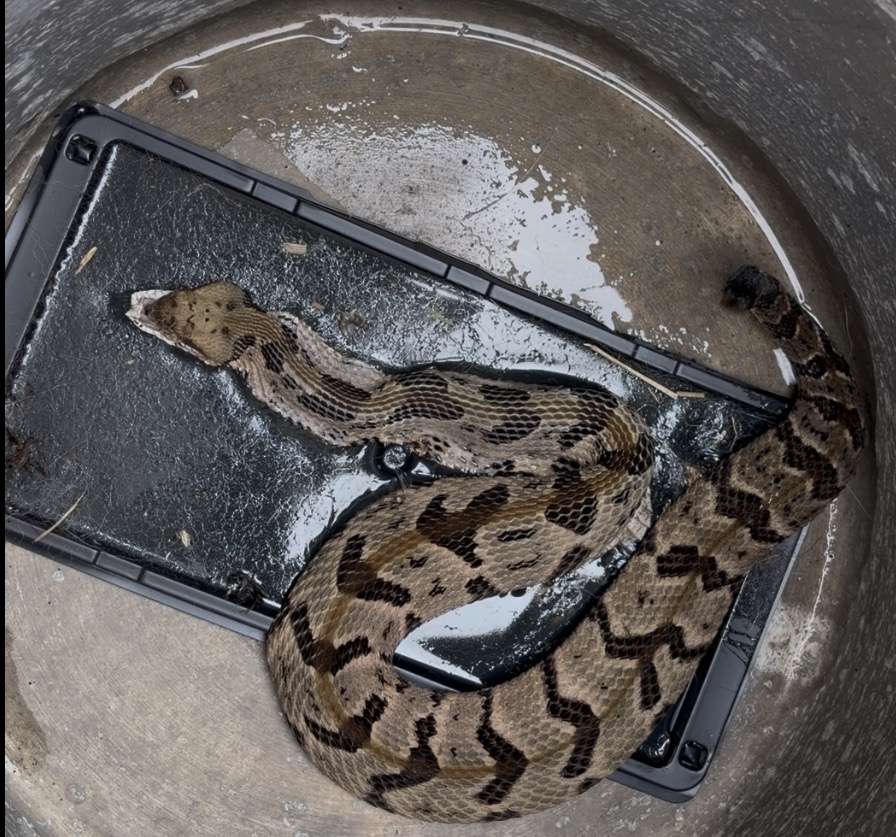
We have found glue boards, I know some find them inhumane, but when strategically place can be an effective tool. We do catch the odd thing that we do not want to catch, but we’re glad they were there even if the capture was unintentional…like this one.
We also use a variety of mouse traps baited with things, but placement again is important so as not to catch the barn cats, who are also a useful tool.

In the pastures the muscovy ducks have been know to be a deterrent for snakes, flies and some say fire ants. Chickens are especially useful when they find a nest of mice or rats. They definitely enjoy their meat.
For the larger pests, the guardian dogs help control the unwanted dogs not from the farm, foxes, rabbits, weasels, mink, air strikes from hawks.
Our last edition has been rodent birth control. Yes rodent birth control. The jury is still out on this one…but looks like they are ingesting it… hopefully this will reduce their ability to reproduce and once the adults are caught, we will be able eliminate them. The population is definitely under control.
Pest control on the Homestead Read More »
Homesteading
Finishing Beef on Grass
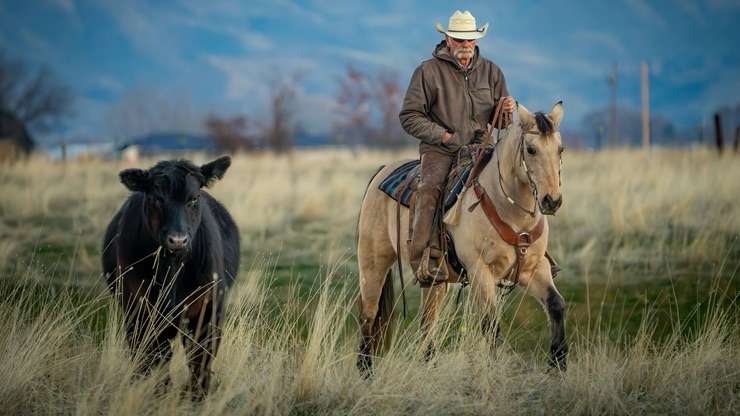
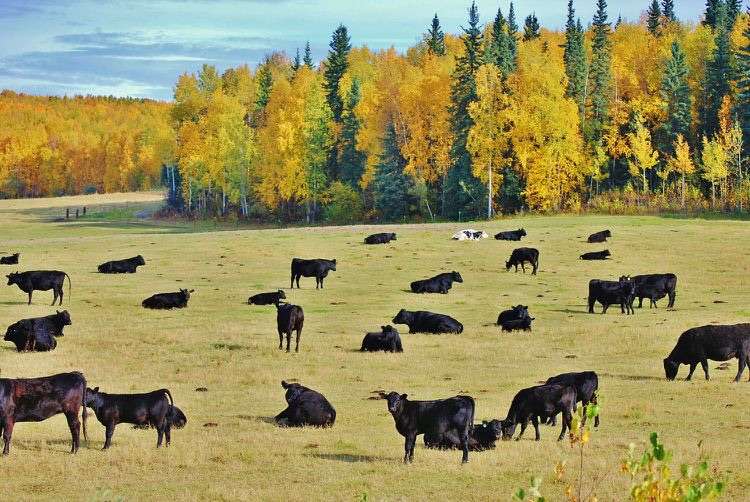
Grass finishing isn’t as easy as sticking some steers out on grass until they’re fat and ready for processing. For really good flavor and tenderness you need a steady rate of gain. For a steady rate of gain you need quality forage – especially leading to finishing. Every beef farmer who finishes on grass is a grass farmer first. Need some tips on finishing your Dexter on grass?
Finishing Beef on Grass Read More »
Beef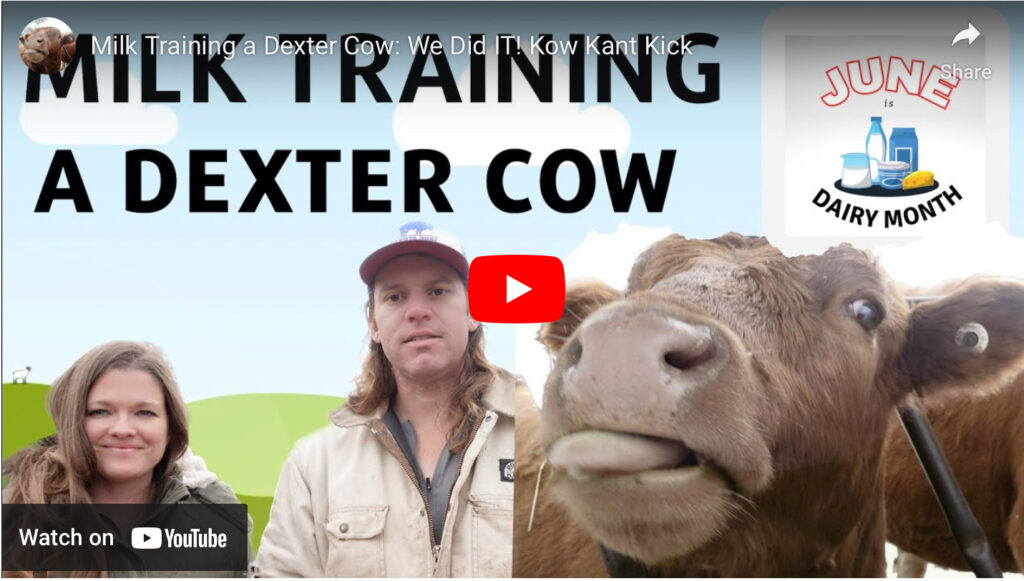
Preparing Your Dexter Cow For Milking
A milk journey from Sweet Briar Farm Submitted by Janelle Soja
https://discover.texasrealfood.com/dexter-cattle/preparing-your-dexter-cow-for-milking
Preparing Your Dexter Cow For Milking Read More »
Milking
Dexter Cattle: Mini Cows Are Perfect For Preppers and Small Homesteads
There is no better way to ensure the survival of the family in case of a SHTF scenario and to create a sustainable homestead than to grow and raise your own groceries. There are a plethora of traditional farm animals which can help keep the family well-fed year around or during a long-term disaster, but when both space and budget are limited, one stands out above many of the rest – Dexter cattle.

Dexter Cattle: Mini Cows Are Perfect For Preppers and Small Homesteads Read More »
Homesteading
10 Ways To Get More From Your Mailing List
In this webinar we’re tackling the idea that mailing lists still work.
10 Ways To Get More From Your Mailing List Read More »
Selling
How To Sell 1/4 Beef On Demand,
In this episode I want to talk about the process of selling (what I refer to as) custom freezer beef/pork/lamb etc.
https://www.grazecart.com/blog/how-to-sell-freezer-beef-on-demand
How To Sell 1/4 Beef On Demand, Read More »
Selling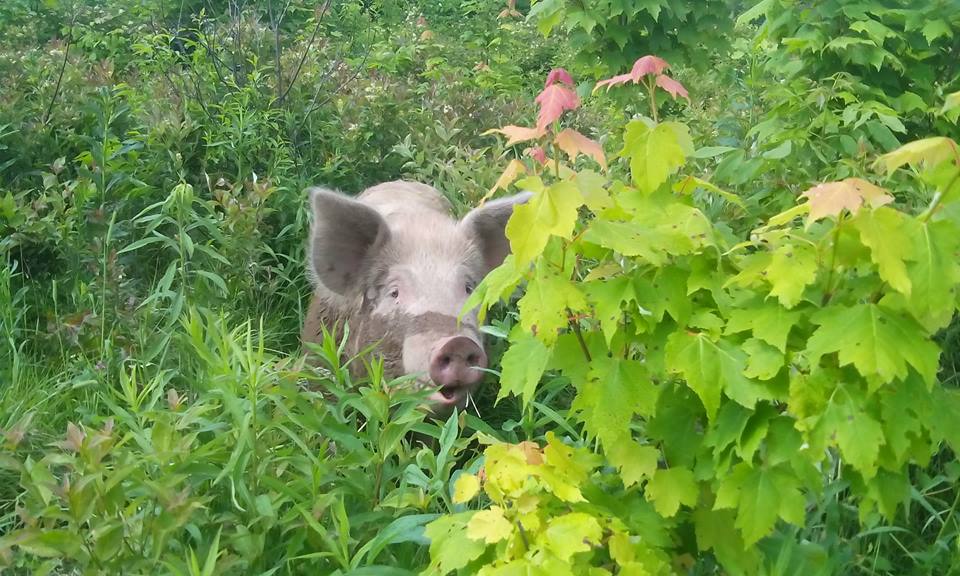
Marketing and Selling Pastured Pork – Dexters Too !
The time, energy and money you invest in this can give you access to the entire U.S. market.
Raising pigs on pasture is wonderfully rewarding work, but it will not lead to a viable farm enterprise unless we take the time to develop our marketing program for effectively selling pastured pork. In this article I share some key points and tips I have gleaned in five years of pork production.
Marketing and Selling Pastured Pork – Dexters Too ! Read More »
Selling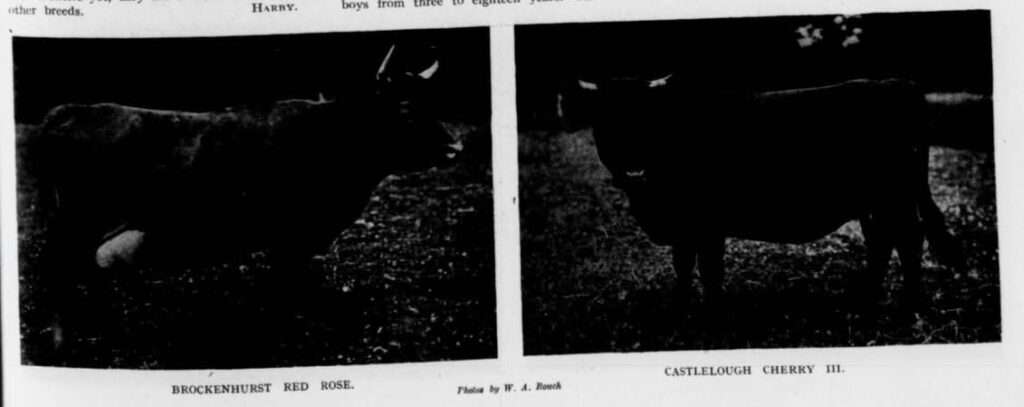
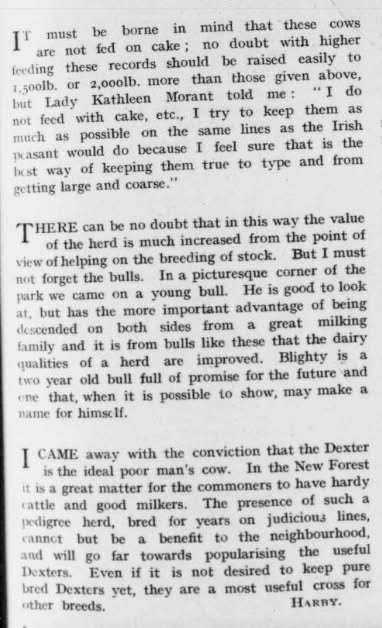
The importance of the Dexter Head
Did you know the look of a Dexter’s head was important to breeders and that there was what was considered a “Dexter Head”?
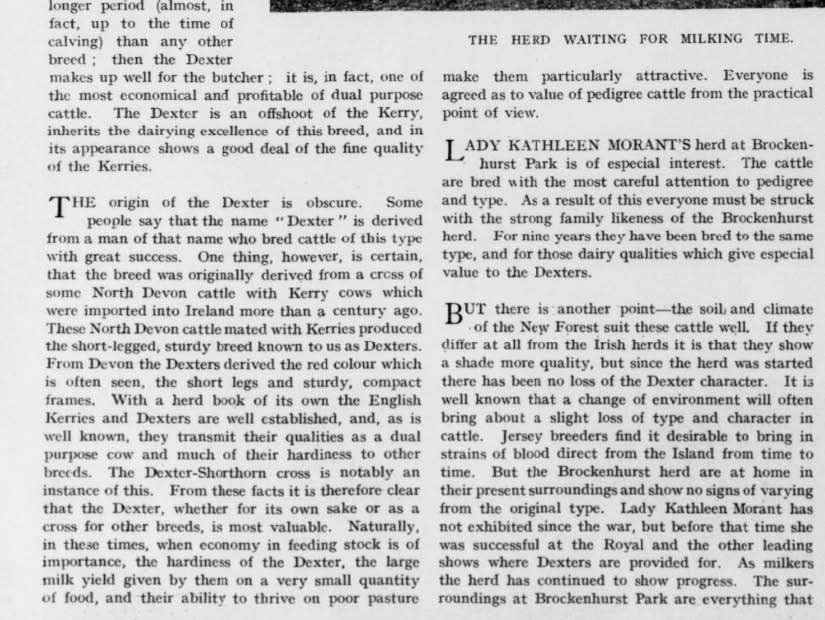
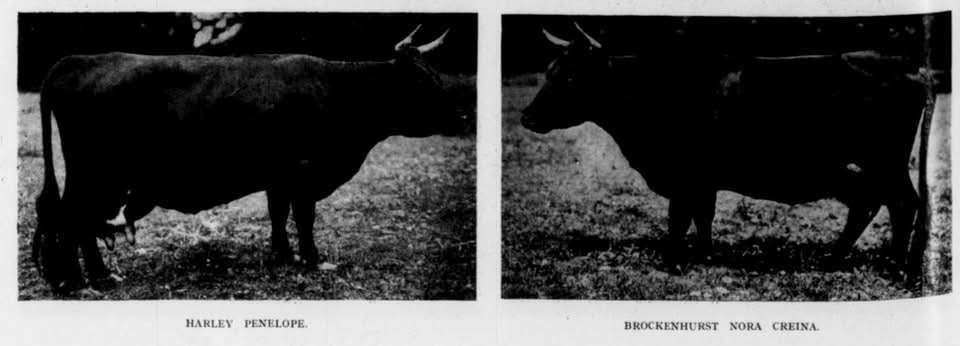
“Harley Penelope is good to carry in one’s eye as a type of a good Dexter cow. She has the quality and character, a sweet small Dexter head and carries her horns well.”
“I lost my heart to Red Rose, a very beautiful cow, she has the Dexter head to perfection”
Did you know that Dexters were known to give a good milk yield for their size and excelled on lower quality pasture?
“Naturally in these times, when the economy of feeding stock is of importance, the hardiness of a Dexter, the large milk given by them on a small quantity of food, and their ability to thrive on poor pastures make them particularly attractive”
Did you know that breeders put a lot of emphasis of breeding to “pedigree and type” not just pedigree or type alone? That people wanted to keep their diets similar so that they could retain their original attributes including size and hardiness.
“It must be born in mind that these cows are not fed on cake: no doubt on higher feeding these records should be raised to 1500lb or 2,000 lb more than those given above, but Lady Kathleen Morant told me: I do not feed with cake ect., I try to keep them as much as possible on the same lines as the Irish peasant would do because I feel that is the best way of keeping them true to type and from getting them large and coarse.”
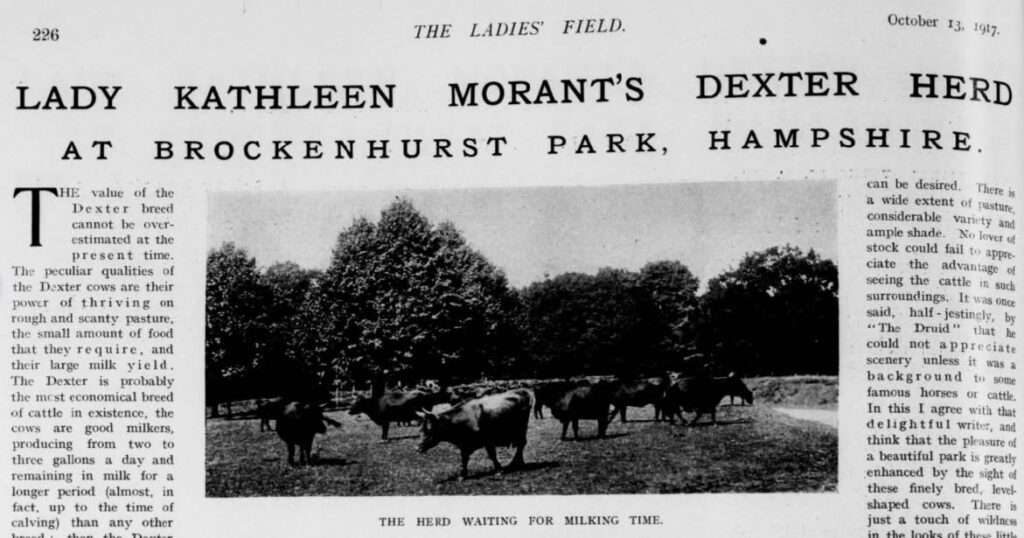
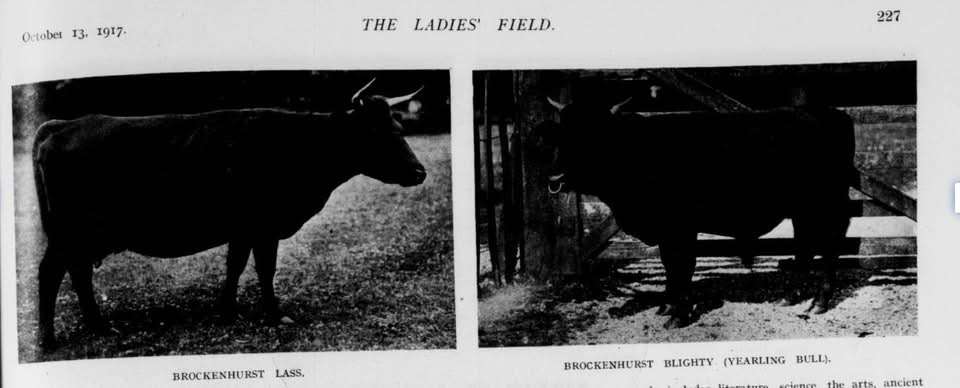
All these thoughts can be found in this newspaper clipping from 1917, in reference to Kathleen Morant’s Dexter herd along with pictures that describe even more than the words written in black and white can relate.
The importance of the Dexter Head Read More »
Historical
Grain Finishing Beef
There are as many ways to finish beef as there are farming setups. If you prefer the taste and ease of grain finished beef, here are some great tips for grain finishing your beef steers on the farm and reaching that choice taste and tenderness.
Grain Finishing Beef Read More »
Beef
Getting And Keeping Your Dexters In Optimal Condition.
Minerals are very important!
We’ve shared several articles on the importance of minerals for your Dexters.
We are discussing it again, as it’s a very important topic for the health of your herd. We cannot express loudly enough how important minerals are for your Dexters. Loose minerals are better than blocks, as they can consume much more in loose form, than they can by licking a block. Minerals are made by several different manufacturers. As with anything, you get what you pay for. We esp. like the VitaFerm brand. Many companies offer minerals that target different seasons or issues, i.e. supporting the reproductive system during breeding, heat stress in the summer, selenium, high mag, and others. Consult with your vet, mentor or a feed rep, to determine what could be lacking in your area and thus what you need to support in your herd.
Some people have their hay tested, so that they can determine what they need to make up for in the minerals they supply for their cows.
Next, let’s talk about Kelp. We started using Kelp this year, for the first time. Thorvin Kelp, is an organic, natural supplement that is packed full of bioavailable minerals and vitamins. It can also be fed to other animals on your farm. The benefits of feeding Kelp to your herd are many. Some of those are improving breed back time, helping with weight gain, preventing foot rot & pink eye. It basically boosts the animal’s immune system. In turn, this helps lower your vet bills and helps keep your livestock healthier. Kelp can be fed free choice, alongside your loose mineral or it can be blended into a feed ration. Talk with your vet or feed rep, with any questions you may have for feeding Kelp to your herd.
Apple Cider Vinegar or ACV, is another tool that many use to help build up their animals’ immune systems. We prefer the raw ACV, with “the mother” in it. Some say it helps improve cattle health and feed utilization. Others say it also helps prevent and eliminate parasites and resist disease. It’s also been said to reduce horn flies, by making their skin more acidic. It’s going to depend on the size of your water troughs, on how much to add. One recommendation I found, is to mix in 1-2 cups of ACV, per 20 gallons of water or ¼-1/2 cups per 5 gallons of water. Sick or stressed animals can get more, double or triple the amount of ACV, however I would check with my vet, before increasing it too much.
Worming: There are several different types of wormers available, that target different types of worms and parasites. They come in pour ons, oral, injection and block or pellet forms. If you have pregnant or lactating cows, make sure the one you chose is safe to use on them. Ask your vet or a mentor. Some breeders have a yearly worming schedule.If you have a poorly looking animal that is thin & has a dull looking coat, or it might have diarrhea or blood in their feces, the first thing you may want to do is to gather a fecal sample into a clean container and take it to your vet for testing. This isn’t costly and it will tell them/you the correct treatment to use. The problem can range from the animal needing worming, to possibly having coccidia or another disease that needs treated.
A lot of our Country is experiencing high temperatures right now. Usually, any added stress to cattle, can lower their immunity to some things. Higher temperatures can be stressful on animals. If possible, consider moving or working your cattle, during cooler days. Weaning in the hot summer months can be especially stressful for calves. Consider waiting to wean, until cooler months. Make sure they have ample shade to get to, and keep fresh, clean water available, throughout the day.
Veterinarian: YES! You need to establish a veterinary relationship early in your Dexter journey. They are your first go to in an Emergency and for advice. They need to visit your herd and get to know them. This will benefit you & your herd, in the future. Oftentimes, once they get to know you and the herd, you can obtain advice via a phone call and pick up meds, etc. at their office. Like it or not, there will be an occasion where you need an emergent visit. Your investment in your cattle, is worth calling a vet out in an emergency. Lots of breeders, can give advice from experience, but nothing replaces the professional assessment and treatment of a veterinarian who is familiar with your herd.
We hope the ideas above, give you something to ponder, research and consider doing to benefit the health of your herd.
Getting And Keeping Your Dexters In Optimal Condition. Read More »
Herd Health
Factor Affecting The Composition Of Milk From Dairy Cows
It has been known for years that variations in milk composition occur; Submitted by Riley Wohlgemuth
Factor Affecting The Composition Of Milk From Dairy Cows Read More »
Milking