Pasteurization is a personal choice! This history behind is interesting. Seems like the movement now is for smaller homestead dairies, selling to local folks. Give a listen, she gives many perspectives!
”With the rise of farm-to-table eating and artisanal meats many diners are seeking out flavorful beef from non-commercial cattle breeds. One such breed gaining popularity is Dexter beef a tender, succulent meat from small, hardy cows native to Ireland.”
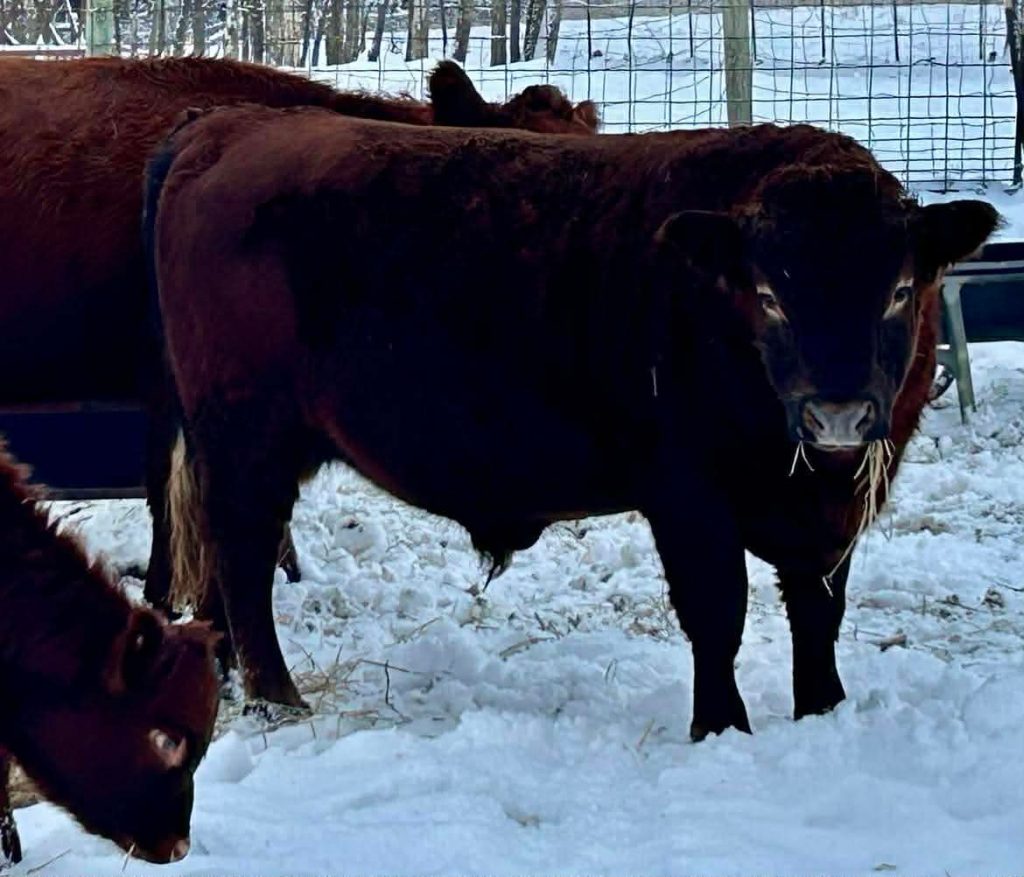
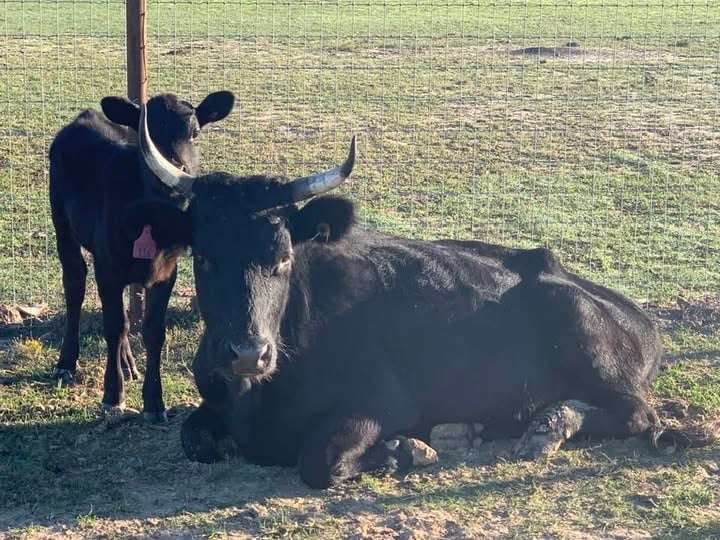
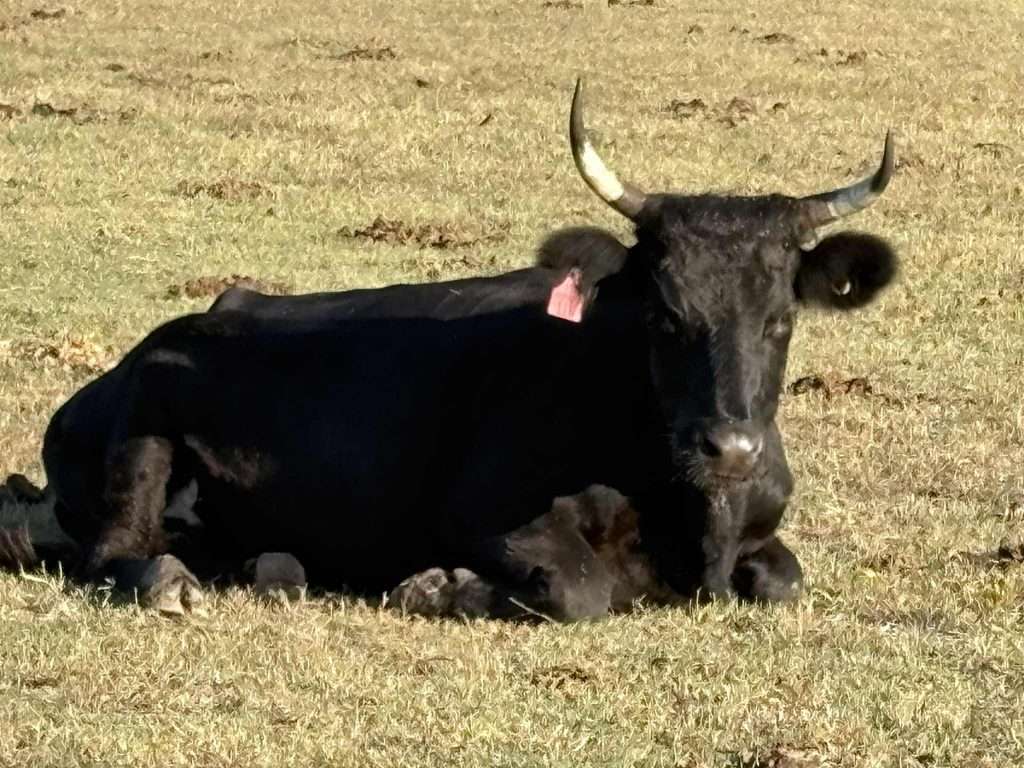
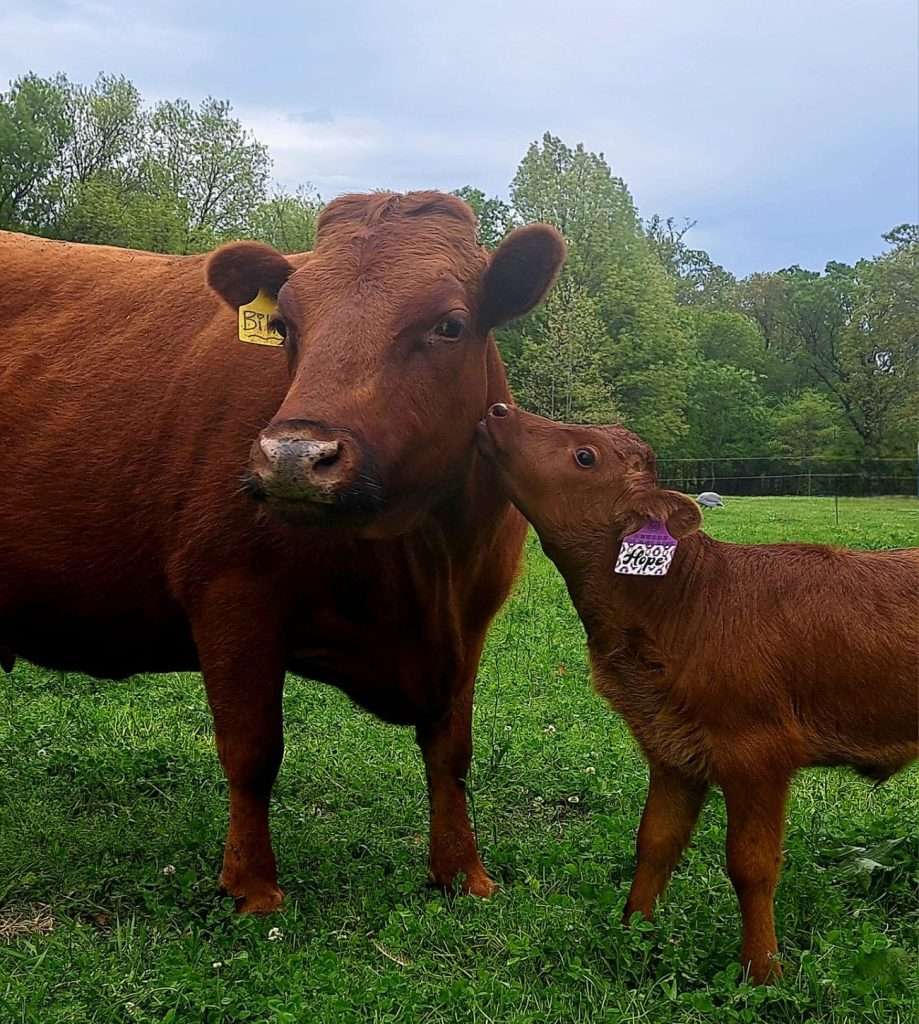
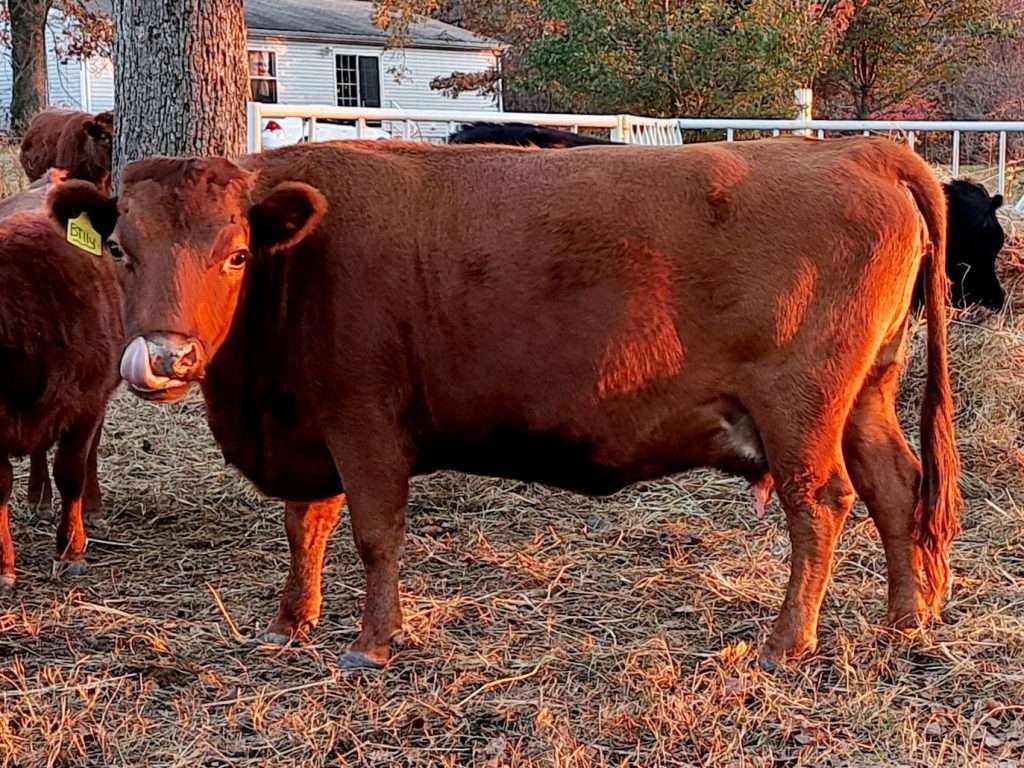
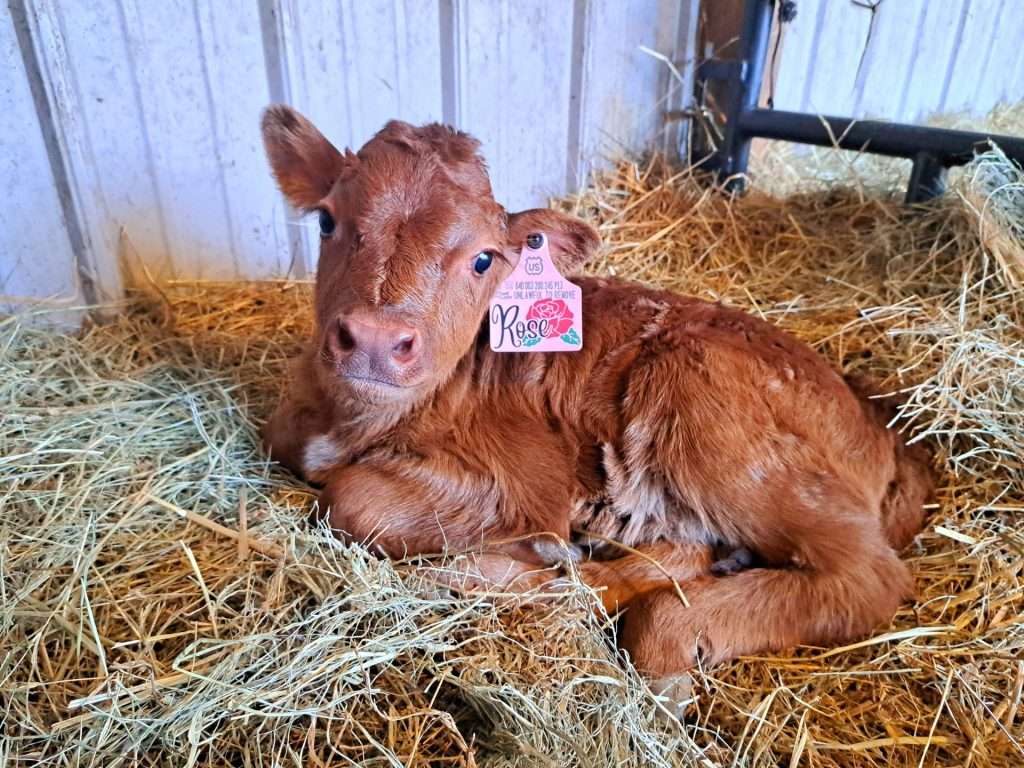
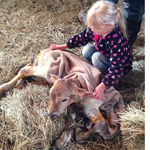
The mama is #116 Briarhook Juno Legacy # L03860LH-19HH and bull calf born September 29 with Fitz’s Golden Legacy Dillen. Dillen is our current sire, and he is the progeny of Colorado Chief and Chautauqua Demelza.
About the author… Angie Gaines grew up in the Sandhill Piedmont of North Carolina. As a child she accompanied her grandpa to cattle auctions. They raised feeder stock in the wonderful sandy loam. Her mother and father raised registered Polled Hereford cattle and their favorite standing bull was called Jerry Justin Banner 3rd. Almost twenty years ago Angie decided to be part of the preservation of the Irish Dexter cattle loved in Ireland. When she shared a photo of her beginning herd her mother aged 78 exclaimed; “Wow, look at those horns”. Angie responded with “ Mama, if a cow wants to hurt you they don’t need horns to do it”. Angie now resides in Texas with her wonderful Irish Dexters and Curly Mustangs.
====================
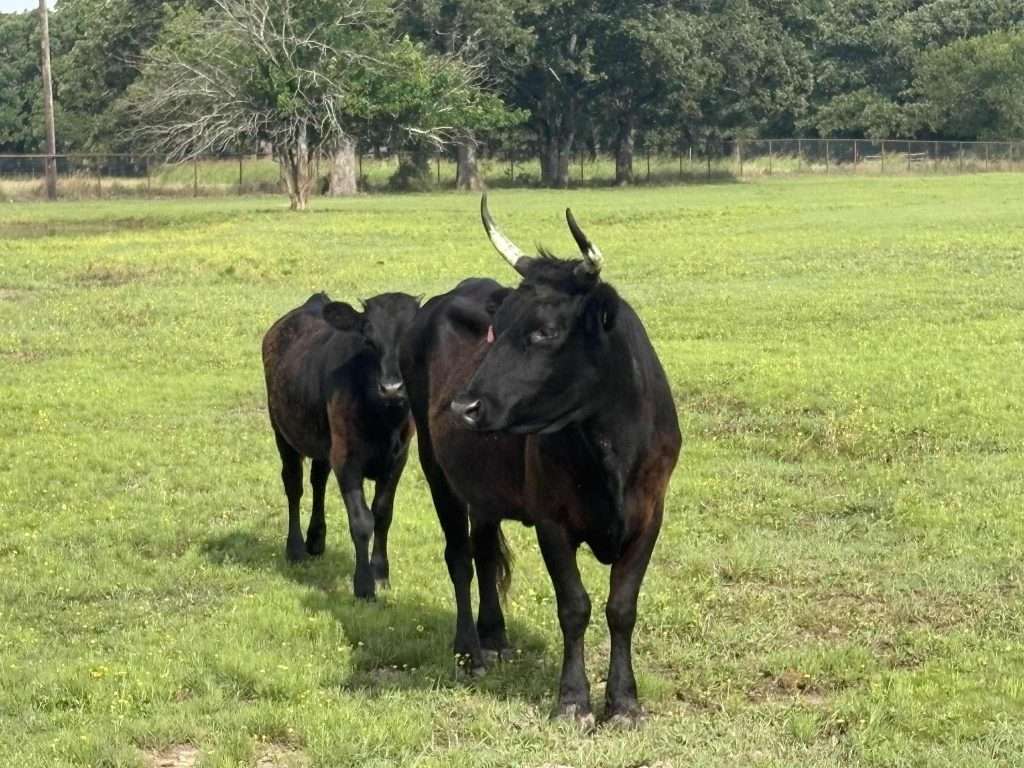
I gaze out my window on a rainy day and see three beautiful Black horned Irish Dexter cows, Juno, Flora and Faye grazing on the lush Spring grass in the Lone Star State. I wonder what it was like when their ancestors grazed just outside a little hamlet known as Argyle about 100 miles Northwest of Dallas, Texas of me. Their ancestors were the foundation for a line of Irish Dexter cattle that 50 years later would be known as the Legacy “Colorado” line and I am intrigued that these wonderful cows have made an interesting journey back to Texas.
“Mark and Marge (Davis) were living in Colorado when they first read about little cows known as Irish Dexters. Mark borrowed a trailer and traveled to Argyle, Texas to purchase his first cow and calf and a 14-month old heifer. ‘The cow was milking, but she was very wild”, he said with a chuckle. “A rancher friend of ours taught me to milk.” The couple later purchased a herd bull from Decorah, Iowa and in 1966, they and 5 cattle moved to Delaware. Mark Davis was a past President of the American Dexter Cattle Association.” He was also the Delaware registered agent for PDCA incorporation until recently.
The oldest Colorado cow owned by Mark and Marge Davis listed in our wonderful resource the Legacy Irish Dexter Registry is Colorado Queen (circa 1967). She goes back to Lady Knight who was bred by Dr. Harvey Goettsche in Dallas, Texas and Edmonde LeRoux, Argyle, Texas. Dr. Goettsche, was a well-known dentist who enjoyed the ranching life as a hobby. His partner Edmond LeRoux, had a beautiful ranch in Argyle, Texas and was a retired American Airline pilot with an impressive history of helping U.S. troops fly to destinations including the Far East, Japan, Australia and more with the Military Airlift Command and American Airlines.
Lady Knight has awesome ancestors who are beloved in our Irish Dexter community including Grinstead and Peerless. She is also the dam of the well-known bull Colorado Chief whose sire was an Irish Dexter bull Mark Davis went to Iowa to and brought back to Colorado. Marge Davis shared this in a phone conversation. She shared the wonderful journey that has become the foundation for the Colorado herd.
Briarhook Juno
Since we have explored how Lady Knight and her heifer left Argyle, Texas and became the foundation of the wonderful Colorado herd, let’s go back and explore how the Irish Dexter cattle came to be found in Texas. Lady Knight was the progeny of a nice bull registered as Captain Fortune and bred by Otto C. Jensen. Captain Fortune’s ancestors were direct registered cattle from the Peerless herd. “The foundation for the Peerless herd at Decorah, Iowa, was obtained by John Logsdon from the Elmendorf Farm, August A. Busch and James J. Hill, in 1919. Later, two bulls were obtained successively from Daniel Guggenheim, owner of Hempstead House herd. In 1944, when the Peerless herd had their first public sale, the herd numbered 150 head of cows and heifers! Peerless herd is the oldest Dexter herd in the United States. “ (Remember the Busch name as we continue this journey through history.)
With the tireless work, Judy Sponaugle has put together a researchers dream, creating the Legacy Irish Dexter Registry. Within a few short strokes on my keyboard and a quality internet connection, I am able to see that Lady Knight’s dam was the beautiful Black Duchess who was born in 1958. Edward Lord bred her with Atlantic Cornelius as her sire and Framfield Roda 7th as her dam. Both of Lady Knight’s parents were registered in the Dexter Cattle Society (DCS) founded in the United Kingdom. Both Atlantic and Framfield’s dams were the well-lovedGrinstead dams and going back till the beginning of the DCS (Dexter Cattle Society) conception circa 1892.
Back to the Lone Star state, we find a handsome Black Bull named Mark Anthony. His parents are Black Duchess and Atlantic Cornelius. His owner and breeder is a well know colorful character in the history of Texas, Clint Murchison. In my search, I have found little documentation about Irish Dexters, but it was well known that Mr. Murchison loved ranching. Ernestine Orrick Van Buren points out in her book Clint: Clinton Williams Murchison: A Biography : “In the late 1930s Murchison began diversifying his investments. He acquired numerous life-insurance companies, banks, bus lines, publishing firms, heavy industrial building materials companies, and an assortment of companies serving such leisure activities as hunting, fishing, travel, and gardening. He was a cattleman throughout his life and acquired extensive ranches in Mexico and East Texas. He experimented in improving cattle strains and in developing superior grazing grasses.”
Yes, millionaires loved our Irish Dexters, too! Speaking of millionaires let’s go back and visit the Anheuser Busch family and their involvement in Irish Dexter cattle and Texas. I ran across a 1916 newspaper article from Waco, Texas where 14 Irish Dexters belonging to Anheuser Busch Dexter Cattle. The cattle was transported via train to show their exhibit known the Bevo during a “tick” quarantine. The event appears to have hugely popular. We do know from well-kept records that , “In 1914, August A. Busch of St. Louis, Missouri purchased Dextersfrom C.D. Gregg of St. Louis and established the Grant’s Farm Herd. Additional animals were purchased by August Busch in 1915 from Elmendorf Farm in Lexington, Kentucky. The Elmendorf Herd was dispersed in 1917.” Perhaps a few of these wonderful cows stayed in Texas.
The Colorado herd of Irish Dexter cattle that Mark and Marge Davis created has an amazing history and enjoyed passage with many friends they encountered along the way. I feel fortunate to be friends with those who continue this line of Irish Dexters including Judy Sponaugle (owner of the Legacy Registry and Preservation Project ), The Mendenhalls, Lori Goldman and several others. I am especially grateful to Pam Baker, for the opportunity to add Juno, Flora and Faye in our herd and welcome them back to the Lone Star state where their ancestors once roamed.
#125 Briarhook Flora Legacy L03859LH-20HH with heifer Fitz’s Golden Finlee, Legacy #L04703TH-23HH. Flora’s sire is Colorado Orpheus Legacy # L01683LH-13HH. Orpheus goes back to Lady Knight and Peerless Perfection II.
This podcast covers some of the questions we all have when starting out with cuts from our Dexters. The cuts will be the same…just different overall yields. They have some interesting ideas for selling to your customer base.
A Deep Dive Podcast, brought to you by Irish Dexter Cattlemen, on topics of interest to all farmers and ranchers. Subscribe to the free, monthly Irish Dexter Cattlemen Tips & Tricks Guide to get early access.
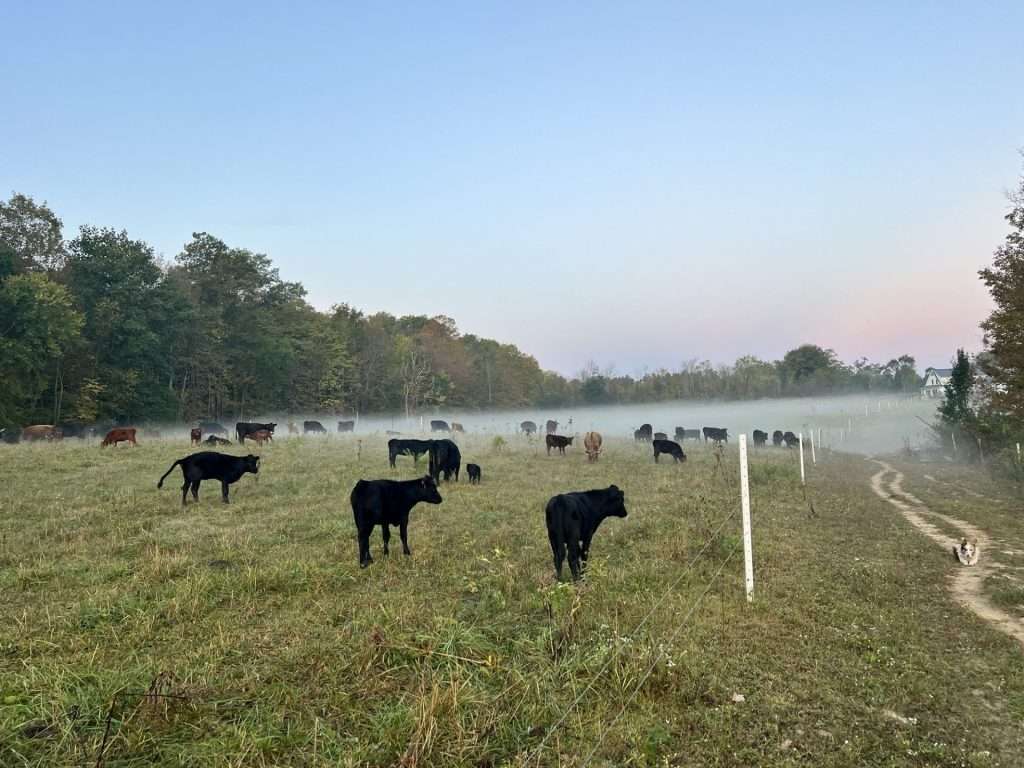
There is a certain peace that settles over a pasture when mature cows are part of the herd. It’s not loud or dramatic, but it is unmistakable. These cows move with confidence, graze without hurry, and respond to the rhythms of the day as if they were written into them long ago. They offer calmness not only to themselves, but to everyone around them.
Mature cows are tried and true. They have lived long enough to show you exactly who they are. Their structure is finished, their udders are known qualities, and their temperaments are no longer a mystery. A mature cow that has already proven herself through her progeny is not a gamble; she is a shortcut. She brings calmness and steadiness into the pasture. She knows the routine of motherhood. They know the value of good grass and warm sun, of shade on a hot afternoon and shelter when the weather turns. There is no wondering what they might become—only an appreciation for what they already are. In a world full of uncertainty, there is deep comfort in that kind of reliability.
Heifer calves, for all their promise, come with risk. They are still growing, still changing, still figuring out how to be cows. An udder has yet to develop. You don’t know how easily they’ll calve, how attentive they’ll be as mothers, or how they’ll handle the pressures of the herd. Sometimes they surprise you in the best way. Other times, they teach you hard lessons. That uncertainty is simply part of the heifer game.
A mature cow removes much of that guesswork. She has calved before. You know whether she raises a strong, healthy calf. You know if she breeds back reliably. You know if she stands quietly or brings unnecessary drama into the herd. What you see is what you get, and that clarity is invaluable. Especially for breeders who are building toward a specific vision.
Beyond their predictability, mature cows bring something harder to quantify but just as important: steadiness. Younger animals often take their cues from older cows, and when experienced matrons are present, the whole herd seems to breathe easier. They lead calmly to water, stand patiently at feeding time, and respond to change without panic. Their quiet confidence sets the tone.
There is also wisdom in choosing animals that have already proven their longevity. A cow that is still productive at ten, twelve, or fifteen years old is telling you a story—one of soundness, fertility, and adaptability. Those traits don’t happen by accident. They are built over time, shaped by good genetics and good management, and they are worth preserving.
For anyone focused on quality rather than quantity, mature cows are a powerful investment. They allow you to move forward with intention instead of hope. They let you build a herd based on evidence, not assumptions. And they reward you with consistency, both in temperament and in production.
In the end, mature cows remind us that not everything valuable is new. Sometimes the greatest strength comes from experience, patience, and having weathered a few seasons. When you welcome these cows into your herd, you’re not just buying an animal—you’re choosing calm, confidence, and the assurance of knowing exactly what you’re getting. When money and space allow for another addition to your farm, watch for herd dispersals. And when you find them, cherish those old ladies. There is a special satisfaction in knowing you made a good choice investing in a cow who has quietly proven herself over a lifetime.
About the Author:
Kimberly Jepsen is the heart behind MooShine Ridge in Vinita, Oklahoma, where she and her husband, Kevin, have been raising dual-purpose Dexter cows since 2015. Their little farm store is a labor of love, offering Dexter beef, raw milk, and artisan cheeses made from their own cows. Kimberly has a deep passion for the Dexter breed and loves nothing more than sharing what she’s learned over the years—whether it’s guiding fellow farmers, helping newcomers discover the joys of small-scale farming, or simply introducing people to the rich, creamy flavors of her handcrafted cheeses. For her, farming isn’t just a business—it’s a way to nurture animals, the land, and the community she cares about. https://mooshineridge.com/https://mooshineridge.com/
Listed below are some things that buyers, especially those new to the breed need to know when purchasing their first registered Dexters. Once you’ve agreed to a purchase, buyers need to be aware of the documentation they should be receiving from the sellers of the cattle. Many new buyers run into a lot of issues, because they don’t know what documents they may need & therefore they don’t know what to ask for. Sellers of registered Dexters should be providing the proper documentation for the buyers of their animals. The buyer will want to be able to register offspring from the cattle they purchase and will need copies of the sire and dam’s genetic testing and case numbers to be able to parent verify the offspring. The following tips are needed, once you have decided on an animal to purchase.
Assuming the buyer is purchasing registered Dexters, they should ask where the Dexter is registered & what is their registration number so that they can look the animal up on the appropriate pedigree page.
If buying an ADCA registered animal, the first owner of the Dexter at birth is the ONLY person who can test and register the animal. Don’t buy an animal that has not been tested & registered by the seller, if you are wanting a registered Dexter. You will not be able to do it yourself.
Seeing and getting a copy of genetic testing is very important for buyers to be able to test and register future calves. Ask to see the animals test results and get a copy of them or at the very least get the case number on the form. You will need this information in the future to test your calves, before registering. We always give copies of the testing on animals we sell.
A PDCA and Legacy animal may be able to be registered with the ADCA, if ADCA requirements are met.
If you want your purchased cattle tested for certain diseases such as Brucellosis, TB, etc. ask if it has been done. If not, ask if the seller is willing to do that and who will cover that expense. This testing is if you ware wanting it for your personal use. It is not required to register.
If the Dexter is being transported across state lines, it likely will need a health certificate from a veterinarian. Different states have different requirements, and your vet should know that info or be able to get it.
If purchasing a bred heifer or cow, do you want to ask for a positive pregnancy test?
If purchasing a young bull, not yet of breeding age the vet will likely list him as a virgin bull on the health certificate. If purchasing a mature bull, a trich test will need to be done.
What form of ID does the animal have? 840tag, tattoo, metal ear clip or Brucellosis tag?
If you live in or are purchasing from a state with brand inspections, ask about those.
When picking up your Dexter, you should leave with these documents from the seller:
Sales Contract – showing purchase price paid, ID of animal or registration number, any pertinent testing, any vaccines, worming or treatments given.
Copies of the animals genetic testing from Texas A&M or UC Davis. This is VERY IMPORTANT. All future calves will need to be parent verified before registration. At the very least, write down the case numbers, if you can’t get copies. You will need to know which lab, the sire and dam of your animal are tested at and if possible, get their case numbers. This is where many run into trouble. They can’t find the parents’ case numbers.
Vet Health Certification for travel, if required with animals ID info.
A pregnancy test, if requested.
A trich test, if purchasing a mature bull.
Brand inspection, if applicable.
Last but not least, please try and keep up with the testing of your calves each year. It will be much easier on you.
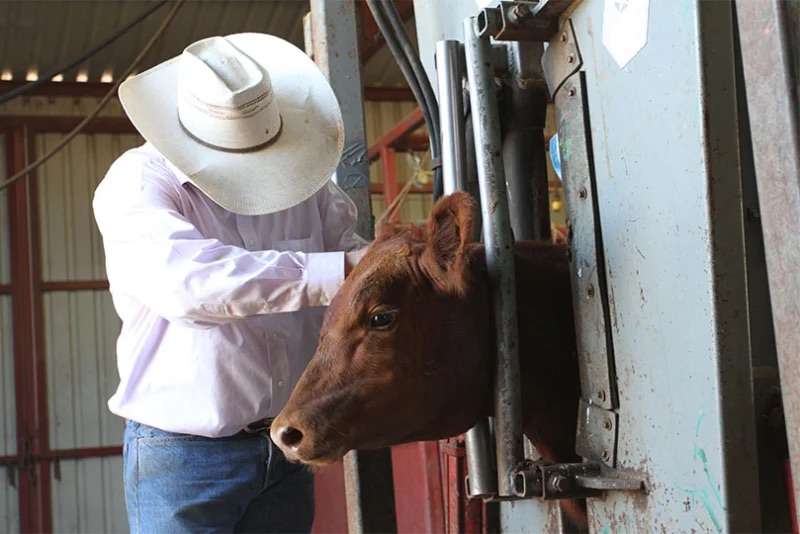
There have been more times than I care to admit where I did something dumb while working our Dexter cattle. In those situations I am always grateful we have chosen to raise Dexters. Even if I sustain an injury, it is much less severe than if I had been handling a full size cow.
Having the proper handling equipment, and having a “no crazy cows” policy on our farm has helped us avoid a lot of injuries. Here is a great article on cattle related injuries to farmers. Being informed and informed and aware goes a long way to keeping safe!
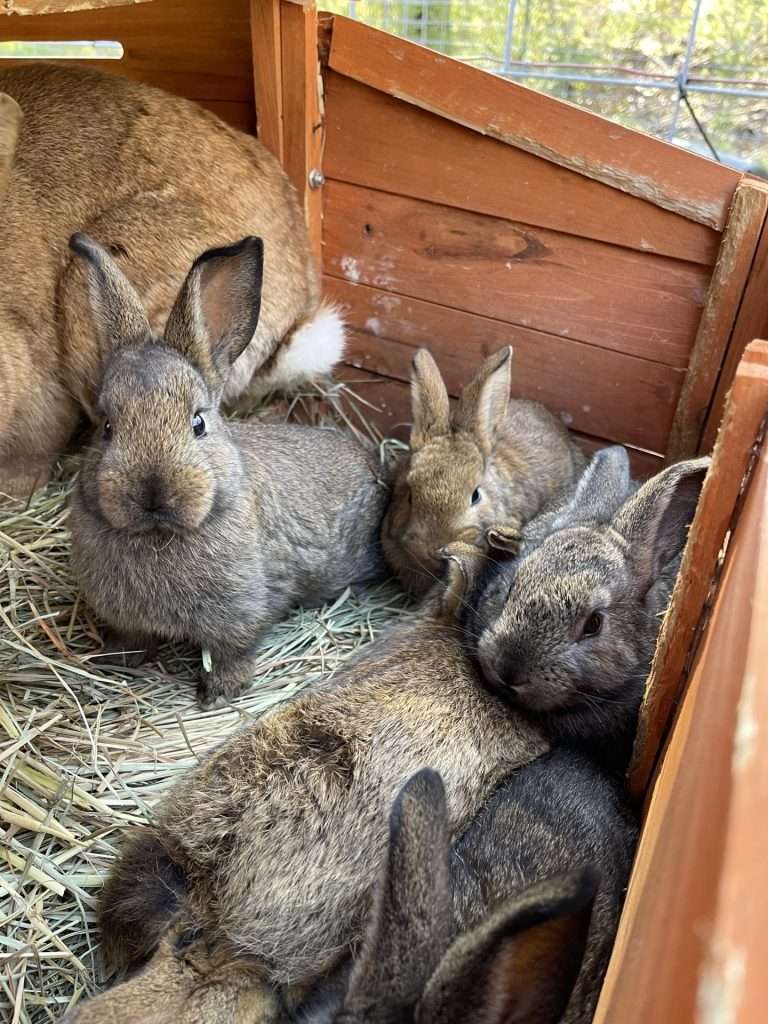
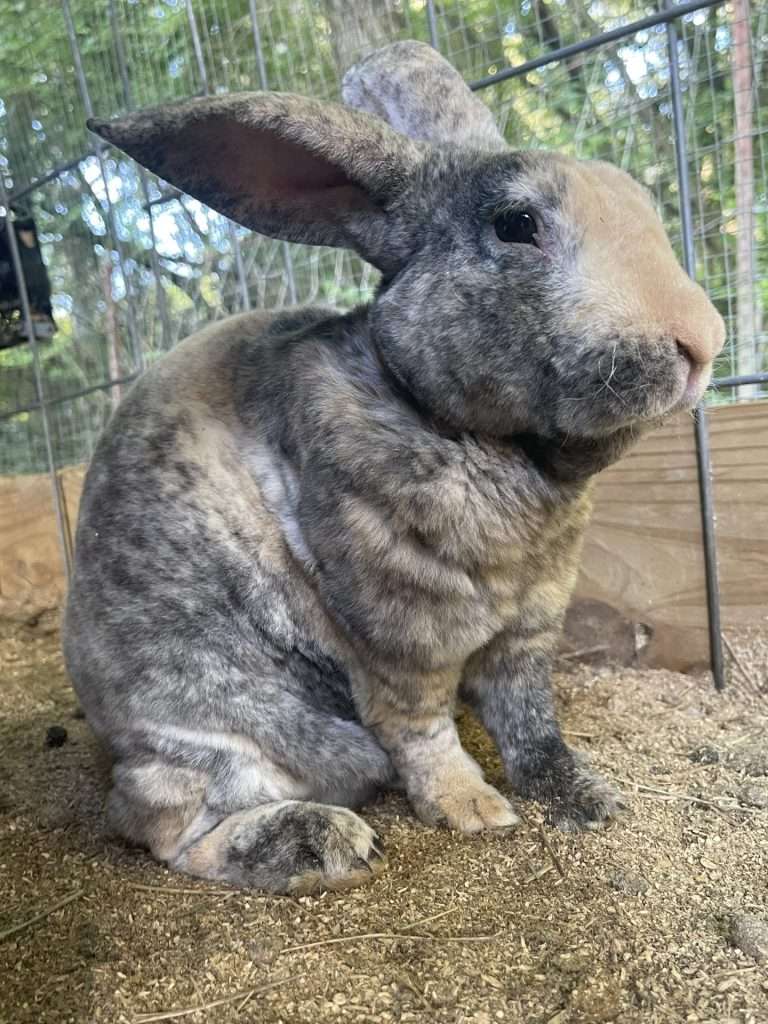
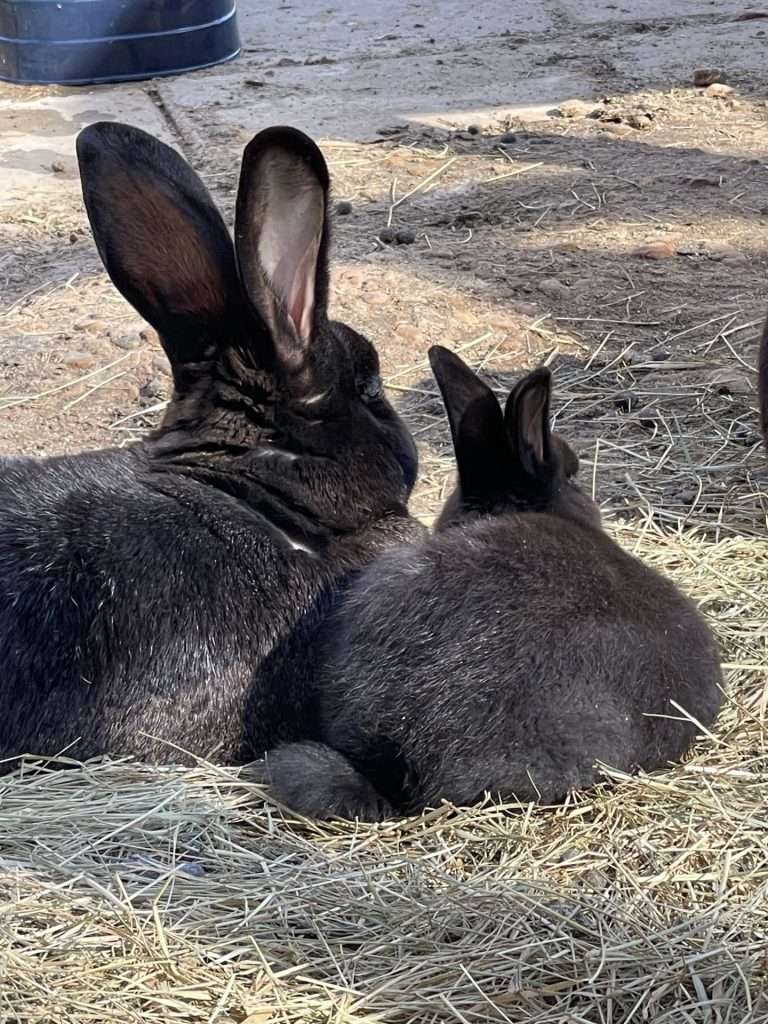
When we started our homestead, we began with chickens. That feels like the natural order of things for most people. Later, we added rabbits. While it was a learning curve, now that we’ve figured out the best care and have our colonies settled, I can confidently make the case for rabbits over chickens.
Here’s why:
Cleaner – Rabbits are tidier and produce manure that’s garden-ready without composting.
Easier to Handle – They’re quiet, gentle, and simple to manage.
Simpler to Process – Butchering rabbits is less labor-intensive than chickens.
Excellent Mothers – Rabbits are attentive and reliable breeders.
Extraordinary compost – Rabbit waste is ready for use immediately and truly enriches soil.
Highly Prolific – With just two does and a buck, you can raise over 200 lbs of organic meat in a year.
Delicious – In my opinion, rabbit meat tastes better than chicken!
I’ll admit, fresh eggs from chickens are nice but meat chickens don’t typically provide eggs. Rabbits, on the other hand, offer consistent meat production year-round.
We raise ours colony style, though many prefer cages. Both methods have advantages, and it’s all about finding what works for you. All in all, raising rabbits is a rewarding endeavor for any small homestead.
Rabbits vs. Chickens: Quick Comparison
Feature
Rabbits
Chickens
Space Needed
Minimal (stackable hutches or colony space)
Larger coop and run required
Noise Level
Silent
Clucking and crowing
Manure
Garden-ready immediately
Requires composting
Meat Yield
200+ lbs/year (2 does + buck)
Varies; meat birds only. no reproduction of meat crosses
Eggs
None
Yes (layers only)
Processing
Easier, less messy
More labor-intensive
Breeding
Year-round, very prolific
Seasonal, less frequent. Meat crosses do not breed true.
Knowing the value of your milk, can help you value the products you make from your milk. Here is one person’s breakdown.
There is a wide range of raw milk dairy prices across the board, but how do you know your prices make sense based off a gallon of milk?
Here is a simple breakdown on price setting costs!
Starting point: Milk value $15/gallon = $7.50/half gallon = $3.75/quart = ~$0.94/cup. This is your base price to compare against, you can enter any value and adjust accordingly.
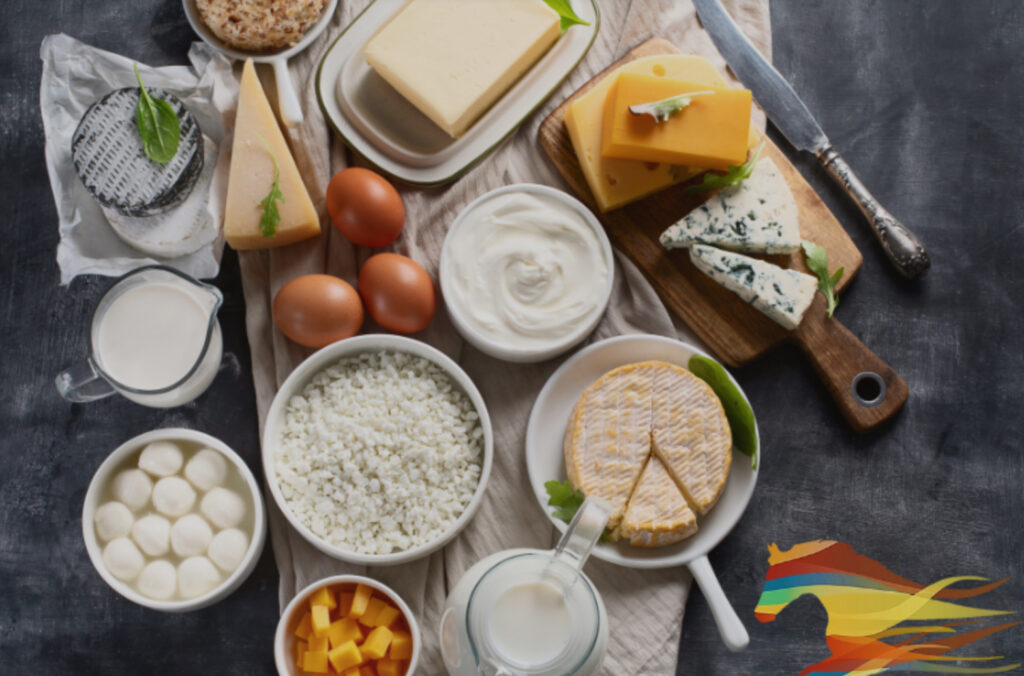
Pricing based on your $15/gal milk: • Butter: $20–$25/lb • Buttermilk: $5–$6/qt • Cream: $12–$15/pint • Yogurt: $5–$6/qt • Fresh Cheese: $15–$20/lb • Aged Cheese: $50–$80/lb
Butter • 1 gallon of milk = ~2 cups cream. • 2 cups cream → ~¾ lb butter + 1 cup buttermilk. • That means ~1 lb butter takes about 2.5–3 gallons of milk. • If 1 gallon milk = $15, then just the milk input for 1 lb butter = $37–$45. 🧀Suggested price: $20–$25 per pound (raw, small-batch butter often runs $20–$30/lb at farmstands).
Buttermilk • Byproduct of butter. • Costs are “covered” by the butter pricing, so you can sell it lower. 🧀Suggested price: $5–$6 per quart.
Cream • A gallon of milk gives ~1 pint of cream, varies with breed/feed/individual cow. • That pint of cream “costs” the $15 you could have gotten for selling the whole gallon. 🧀Suggested price: $12–$15 per pint raw cream is a premium item and can be scarce.
Yogurt • 1 gallon milk makes ~1 gallon yogurt. • Plus starter and incubation, but not much shrinkage. 🧀Suggested price: $15–$18 per gallon, or $5–$6 per quart, slightly higher than milk since it’s value-added.
Cheeses • Yields vary a lot: • Fresh cheeses, chevre, queso fresco, paneer: ~1 lb cheese per gallon milk. • Aged/harder cheeses: ~1 lb cheese per 10 gallons milk. 🧀Suggested pricing: • Fresh cheese: $15–$20/lb. • Aged cheese: $50–$80/lb since the yield is tiny and aging takes space/labor.
As always, know your state regulations for dairy. Know your farmer. Shop local. Barter when you can!
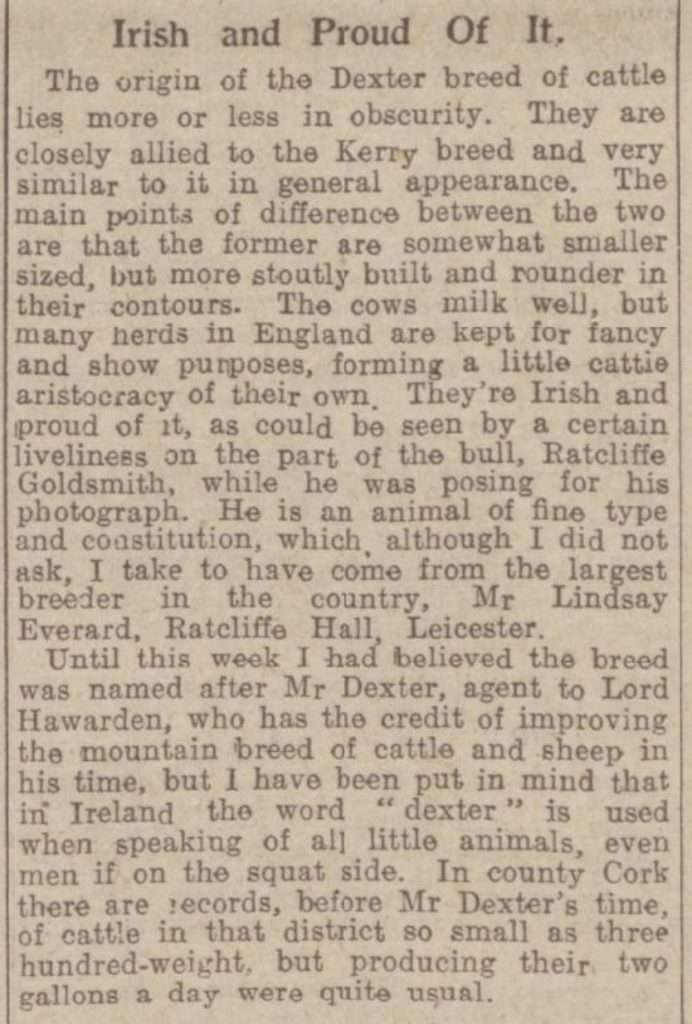
Where ever they roam Dexters are Irish and Proud Of It!
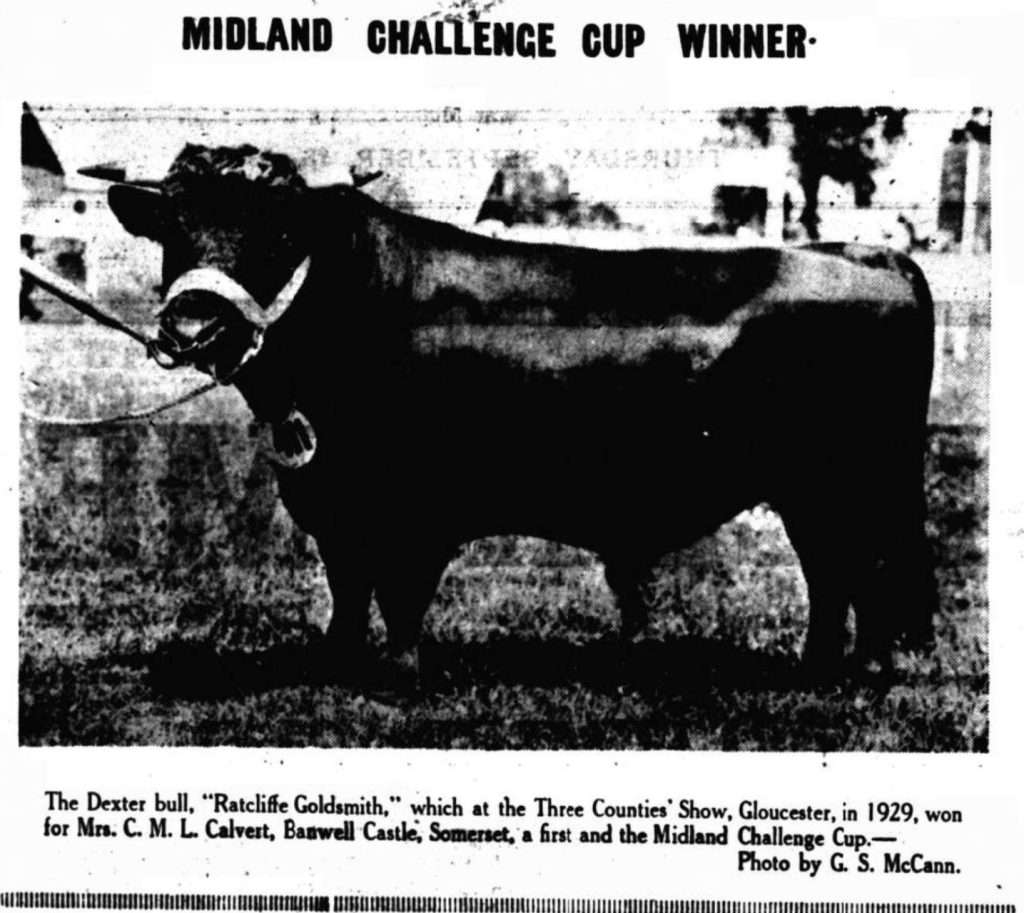
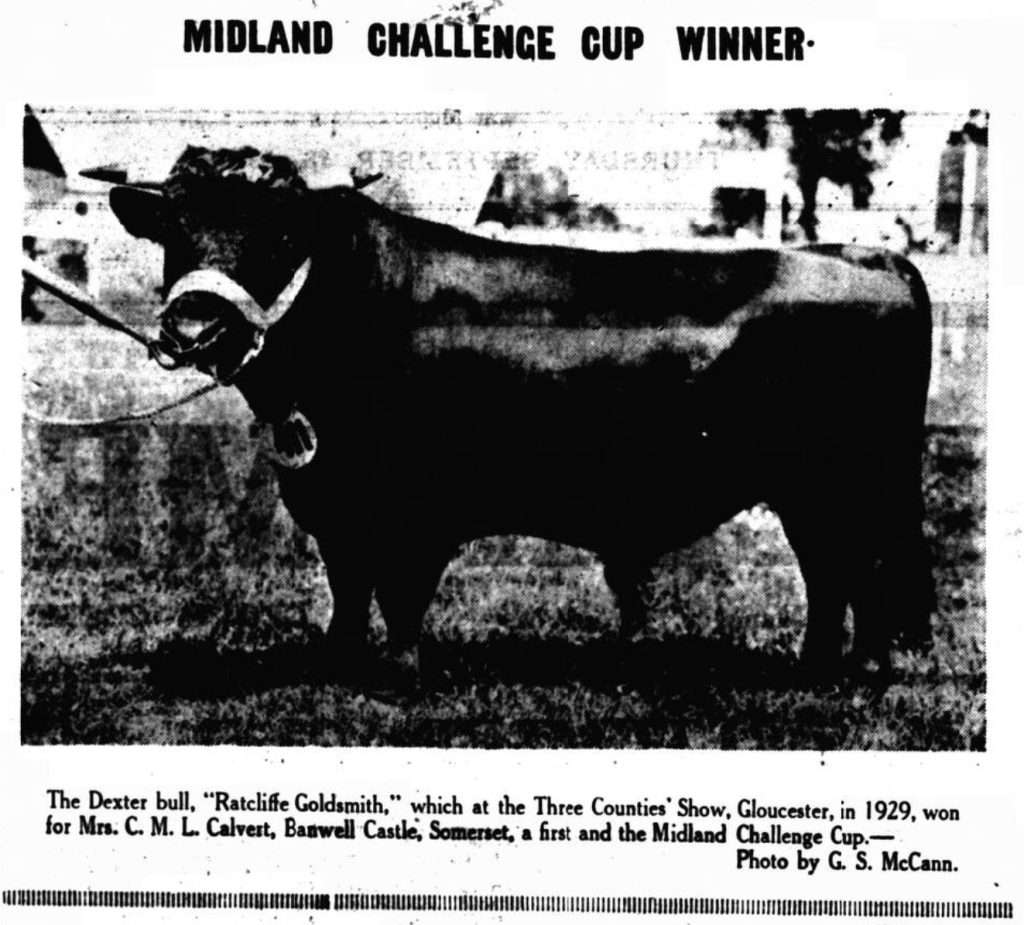
Dexters are well known as Irish Dexters even if many other points about them are debated. The above bull though registered with the Dexter Cattle Society is an Irish Dexter with a “fine type and constitution” as the article states. I checked, he certainly was owned and breed by Mr. W. Lindsay Everard of Ratcliffe. This article holds true to the fact that Dexters are known to be of a small type of cattle. That very small cattle were known to roam Ireland before “Mr. Dexter” was ever penned in History. In Kerry there was known to be some of the smallest type of cattle one can imagine, long before Dexters were ever established or organized into a true breed. So small of an animal that it is mentioned in this paragraph, but yet still producing 2 gallons of milk a day is a marvel indeed. The brown article was written on 14 Nov 1929, it’s from the Western Daily Press Bristol. The picture was taken from a later newspaper published in 1930. Though the Dexter was well known to produce ample milk and was “closely allied to the Kerry breed and very similar to it in general appearance.” The differences being that “Dexters are “more stoutly built and rounder in their contours”.
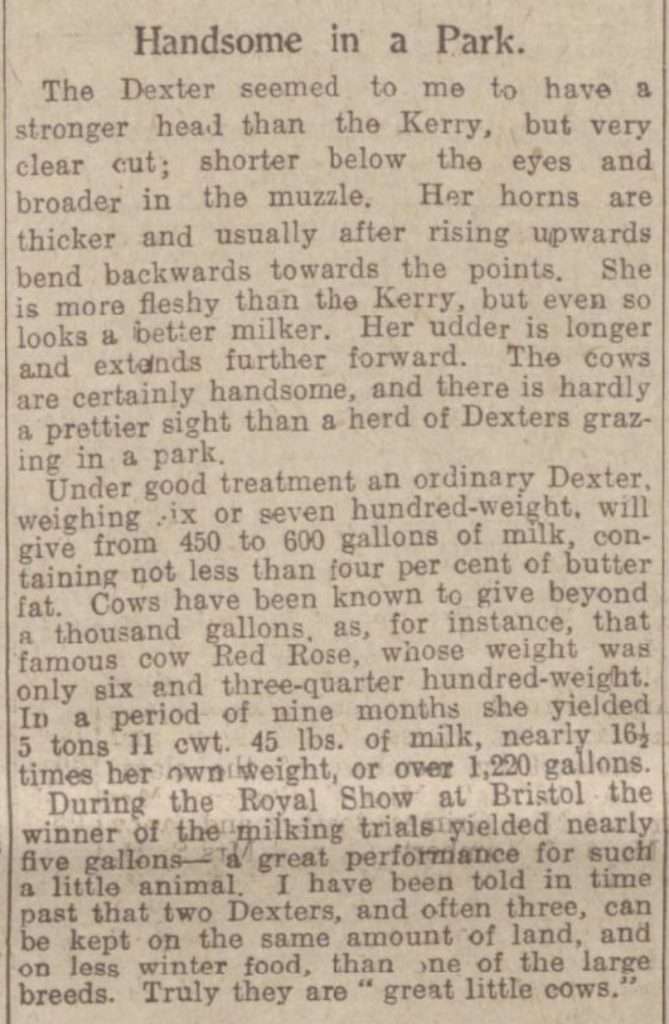
The Dexter has a “stronger head than the Kerry, but very clear cut, shorter below the eyes and broader at the muzzle”. The description of her horns are as follows ” Her horns are thicker and usually after rising upwards bend backwards towards the points”. It is interesting to note that she is even fleshier than the Kerry but was thought to look a better milker than the Kerry. Short cows with large udders seem to showcase the udder in a much more extreme way than a longer legged cow though the udder could be of the same size. The article really goes on to highlight the excellent milking attributes of a Dexter to great lengths. A point worth mentioning is that “there is hardly a prettier sight than a herd of Dexters grazing in a park”. I personally can’t help but look out at my hills and know this rings true to me today, just as much as it must have to the writer of this article in the past! Dexters truly are practical and beautiful when bred for all these amazing Historical traits!
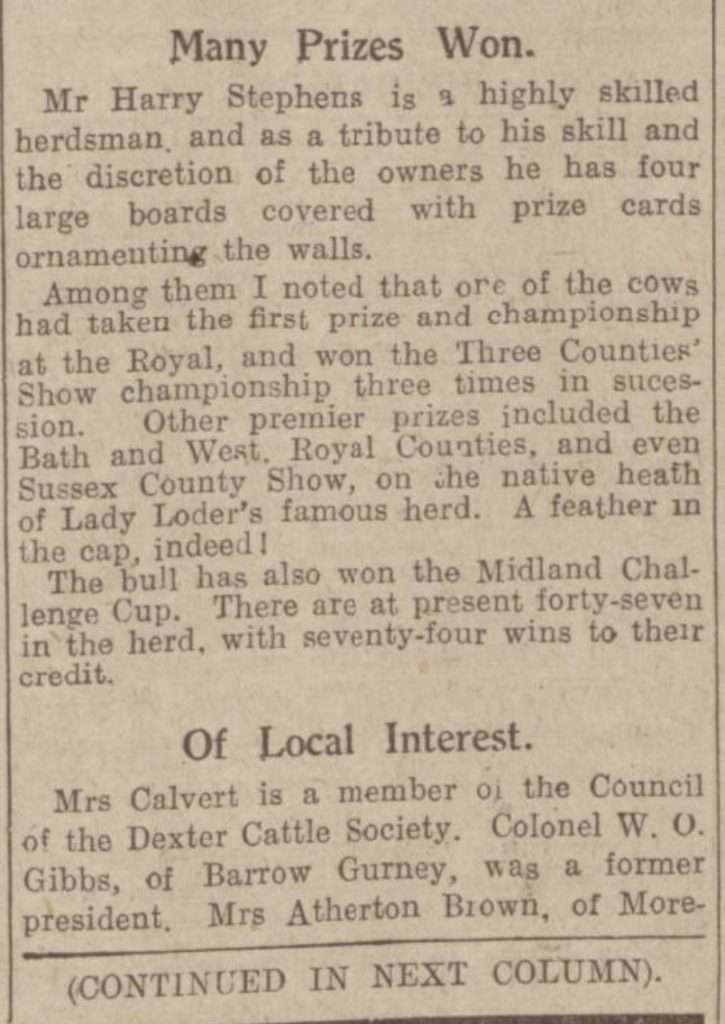
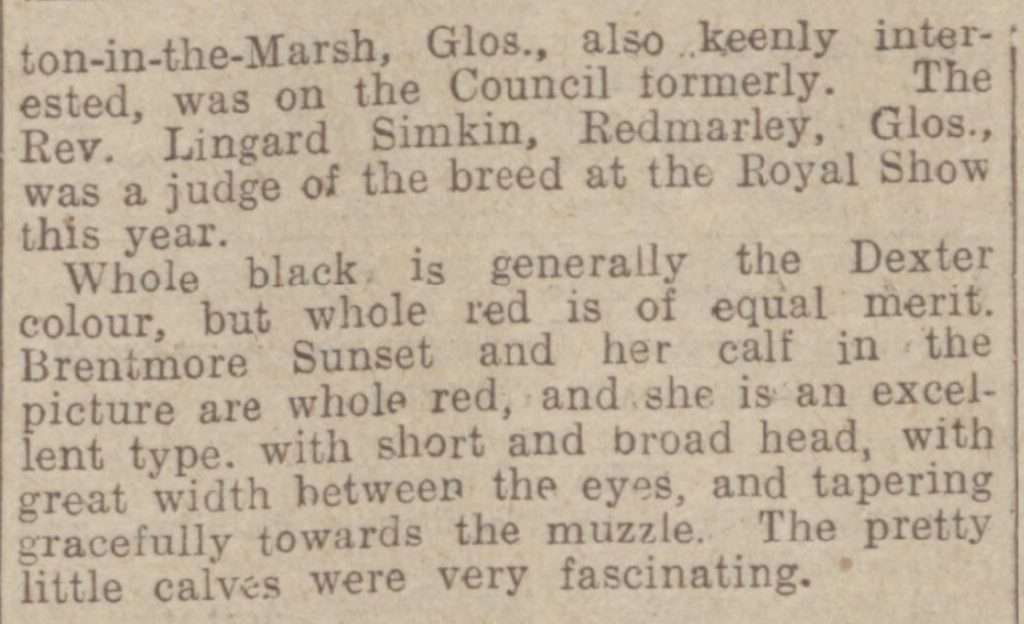
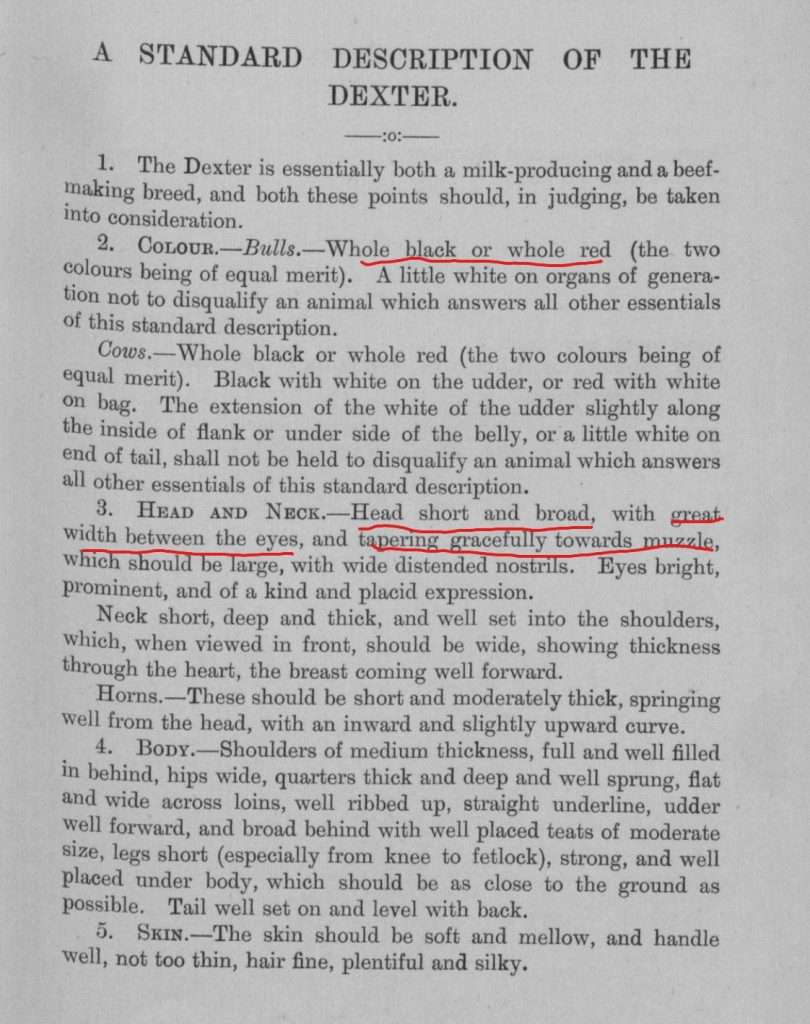
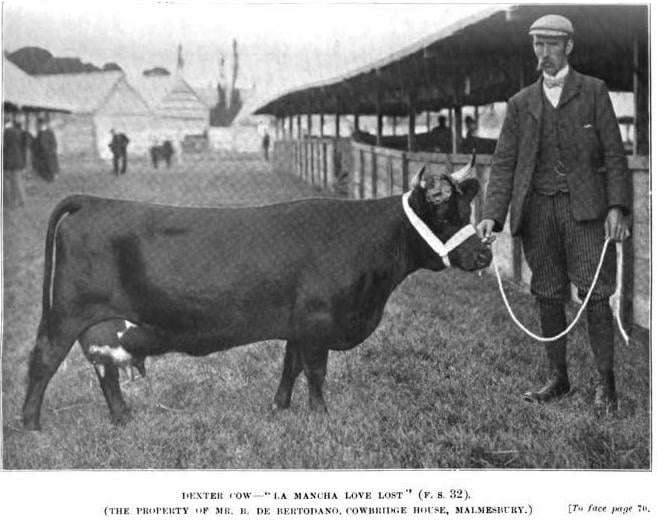
Breeders have long been concerned with breeding to “type” and a few points to mention in this last photo that align with the Standard Description of a Dexter is the color being “Whole black or whole red”. The “Head short and broad” with “great width between the eyes”, and “tapering gracefully twords the muzzle. Dexters definetley impress with their specific beautiful traits and charming ways which took hold of many a wealthy land owner who could aford to buy any exotic cattle they chose. In conclusion Dexters and their “pretty little calves are very fascinating”! They are Irish and Proud of it and those of us who breed them, have been taken by their Irish Charms.
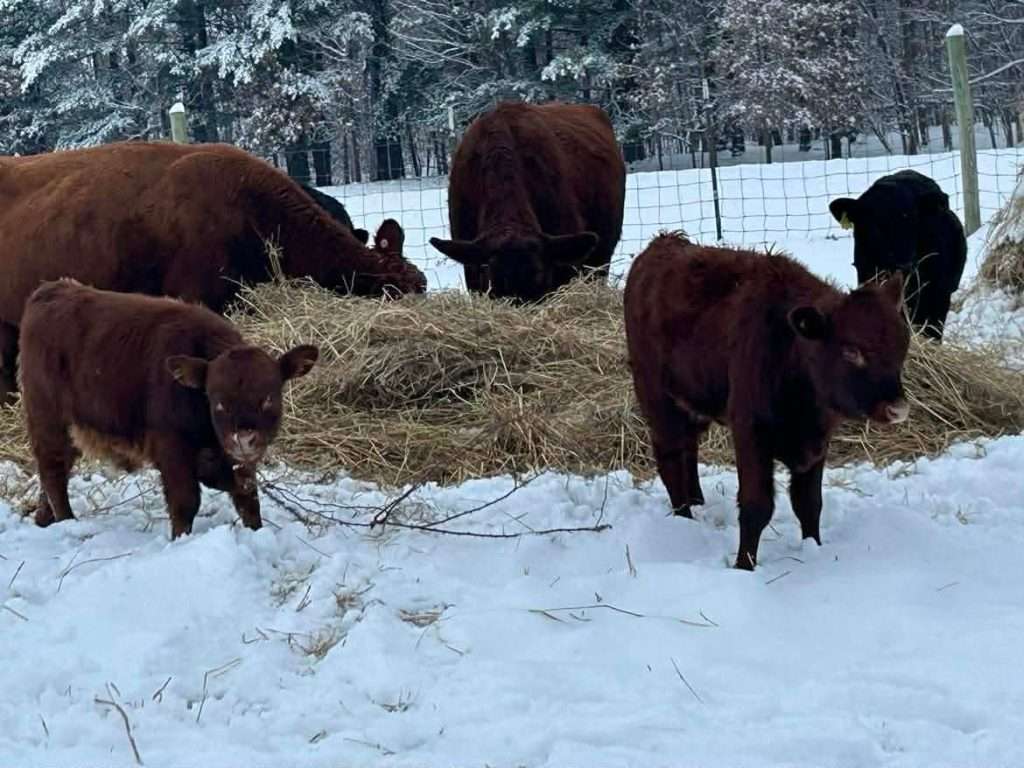
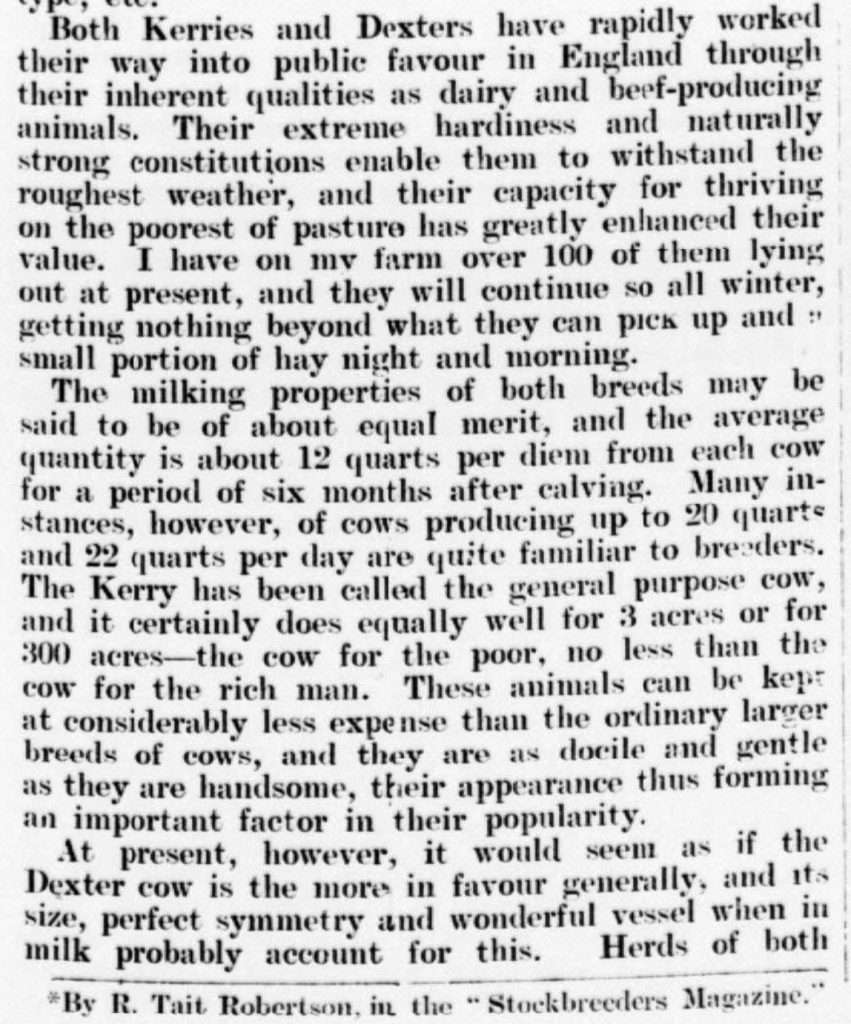
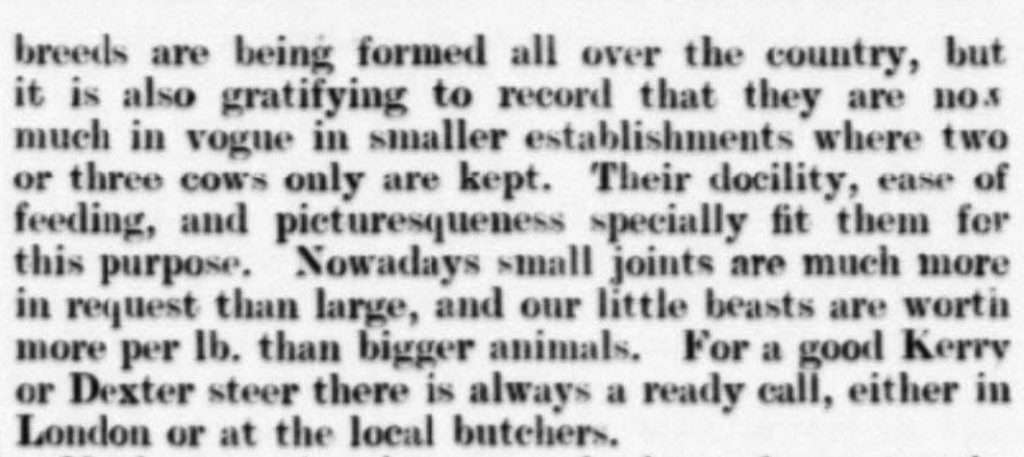
Dexters have long been hailed as hardy and thrifty even adaptable to locations from Africa to snow laden areas. This article I am sharing was written by R. Tait Robertson; he was a famous and most influential Dexter breeder for his day. He was not just any armature Dexter owner, since he was a foundational breeder of Dexter cattle and a generational farmer. He explained that” I have on my farm over 100 of them (Dexters) lying out at present, and they will continue so all winter, getting nothing beyond what they can pick up and a small portion of hay night and morning”. What this means is that Original Dexters could get by on just a little, but of course they could thrive on even more. It was often said that when the Dexters of Ireland went to the manor lands of England they grew greater in size due to the surplus. Dexters can do well on just forage and hay alone with no grain needed. They can excel on the best rations and produce even more, but if times get tough, they can more than get by.
Who was R. Tait Robertson?
Mr. Roberston was a very influential breeder, breeding in Malahide, County Dublin, Ireland. His family later had Church Farm in Babraham, Cambridge. His Dexters were esteemed as quality and were very sought after by the English who wished to keep them. He is the son of James Robertson. They were not just multigenerational farmers but multi-generational Dexter farmers who helped shape Dexters in their early years by breeding and selection. Dexters as we know them then owed a great degree of tribute to this influential family. Mr. R. Tait Robertson was also a judge for Kerry and Dexter cattle. He judged them by the merit that this article speaks to. Someone may say that Dexters are a beef breed that can milk, but Mr. R Tait Robertson said they have “equal merit” to Kerry cattle. They were not transformed in England to a milking breed but rather selected and bred by breeders like the Robertsons for great dual-purpose traits and were heavy in exceptional dairy traits. When R. Tait Robertson speaks to their equal merit remember that he was a judge for both Kerry and Dexter cattle and those judges gave prizes and entered both Kerry and Dexter cattle into the foundation herd books for the Royal Dublin Society. Dexters are not, nor have they ever been a beef breed that can be milked, but rather a dual-purpose breed with equal merit in milking traits to an ancient breed of dairy cattle (Kerry cattle) that can excel at grass-based feeding.
Lamancha Dexter Herd
Mr. R. Tait Robertson was the owner and or collector of the cattle in the La Mancha Herd. He or his family may not have bred them all but rather selected some as foundational cattle for the Dexter breed. You will often see La Mancha Dexters registered to him, his father or Robertsons and sons. His Dexters traveled to many countries and those Dexters that could be found “Lying out all winter long, getting nothing more than what they can pick up and a small portion of hay Night and Morning” run in the veins of our Dexters today. This article I shared was written on 16 December 1899 and La Mancha Love Lost was born in 1897. She was qualified by inspection most likely by Mr. R. Tait Robertson and would have spent time in his field while this article was written. It’s nice to think of such a beautiful cow lying out in your pasture all winter long, getting nothing more than what she can pick up and a small portion of hay night and morning then still looking so beautiful! That’s the kind of Dexter I want.
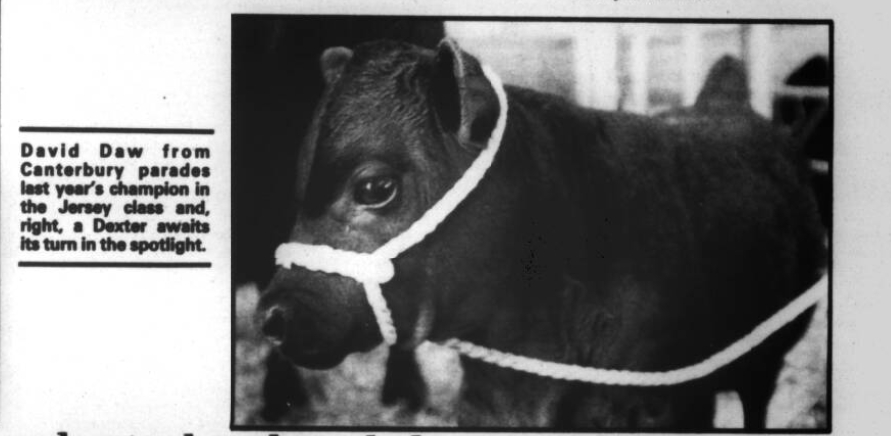
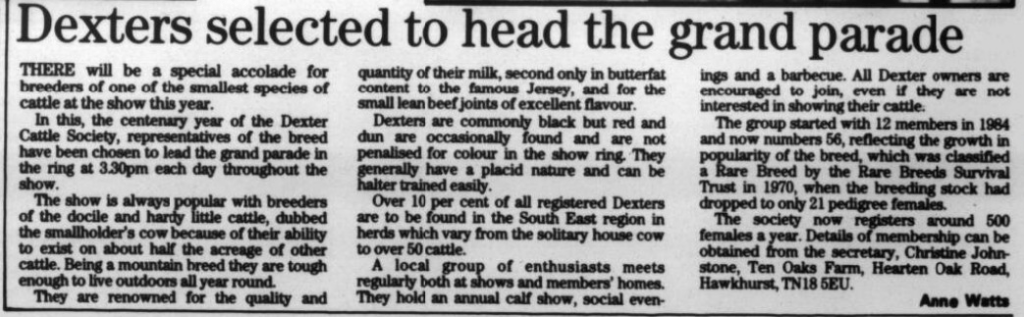
Dexters have long been promoted the same way time and time again, “Docile and Hardy little cattle, dubbed the smallholder’s cow because of their ability to exist on about half the acreage of other cattle.” This is the niche market of a Dexter. They are well suited to beginners because they can endure a bit of accidental neglect from new owners and be a great fit for people who have small acreage. Today when large acreage is becoming increasingly expensive in many areas, but people are feeling a strong draw to get back to the country, the small acreage Dexter cow is the most perfect sell point. This is a Hallmark of the breed and one that should be promoted.
Quality and Quantity of their Milk and Beef
Dexter cattle are also a good fit for people who need a smaller amount of both meat and milk, but yet they are still “renowned for the quality and quantity of their milk, second only in butterfat content to the famous jersey, and for small lean beef joints of excellent flavor”. There are other breeds than Jersey that outperform Dexters in cream content but usually they are not breeds that produce a good quantity of milk. The Highland for instance produces about 10% butterfat, but for its larger size produces quite a bit less by volume for its size. This is why the Dexter is an all-around great little cow.
Great for Small and Big families alike
The current average amount of people in a US family today is 3.15, so in a small 3-person household butchering a Dexter steer goes a very long way. As Dexter beef producers we will have a much easier time selling whole or halves to people. This avoids having to get a USDA certified meat facility which in some areas could save you more money on butchering costs. Many people are more accustomed to the idea of buying meat in a smaller quantity when they need or want it. With smaller sides you can market to people to be able to only fill a portion of their chest freezer and have space left over for other things. If you have a larger family that enjoys eating lots of beef and drinking more milk, no problem, enjoy the benefit of growing out a larger herd with more Dexters!
This article was written 09 July 1992, and you will see the addition of dun is mentioned to the original color of black and red. Dun was added to the allowable Dexter colors and today many people never knew that black and red are the only 2 original colors.
This is an interesting article on how people are returning to the old ways and using more and more of their processed beef. Healthier alternatives are growing in your pastures!
Selling meat directly to consumers is a popular method of adding value to established ranches. For some ranchers, selling directly to consumers is even the primary method of sale. Regardless of how it fits into the operation, there are some key marketing strategies that will take sales to the next level when applied correctly.