August 2025

How To Take Great Photos For Your Online Ads

When it comes to photography for marketing and advertising, creativity and vision are only half the battle.

Images play an essential role in marketing and advertising because they tell a story, convey a brand’s message, and attract widespread attention on social media. Nonetheless, millions of advertising images are on the internet and social media—but only the best images will stand out.

How To Take Great Photos For Your Online Ads Read More »

Selling

Selecting a Bull

Someone recently asked about selecting a bull calf with traditional Dexter characteristics. Many breeders more experienced than me have covered this topic, but having bred Dexters for quite a few years now (and made plenty of mistakes) I am adding my two cents to the topic.

Selecting a bull calf starts before they are even born – by deciding your breeding goals, doing your research, and by collecting as much information as you can about the parents and as far back in their pedigree as you are able.

  1. Decide on breeding goals: We selected Dexters for specific reasons, and those influence our breeding goals. We want cattle with good temperaments, easy to work with. We want low maintenance cattle; great foragers, good mothers, easy calvers, fertile, producing great beef and milk on low inputs. We also want cattle that people can look at and say, that is a Dexter!
  2. Research and information gathering: I read numerous breed standards for the Dexter, I looked at lots of historical photos of Dexters, I studied conformation photos, and I have visited many Dexter farms.
  3. Collecting information on parents: I keep records on our cattle; calving dates (the first cows to calve in your herd are generally the healthiest and most fertile), birth weights, weaning or butcher weights, general health, hoof trimming/care, calving issues, mastitis/udder issues etc. Then, I wait for my best cows to have bull calves. If I’m buying a bull, I am looking for this information from the seller.

Once I have a bull calf on the ground, I am going to be evaluating him from day 1, until his last day on earth. I am looking for him to meet my breeding goals, and the Dexter breed standard. These are the questions I am asking: Is he short and beefy? Is he proportionate? Does he have a nice wide Dexter face with placid eyes? Does he have a shiny coat? Is he curious about humans and his surroundings? I continue asking these questions throughout his life, and then at 10-12 months I’m starting to look for signs of sexual maturity. Is he very bullish looking? Is he getting a thick neck and thick curly hair on his neck and head? Does he have a deep bellow? Are his testicles football shaped, and do they hang evenly? Are his teats evenly spaced and sized? And again when he reaches 3 years of age (this is generally when they have reached their full height), is he in the average range for height and weight? What are his calves like, do I like their birth weight? Were there any calving issues, dystocia, etc? Are the calves vigorous and up nursing quickly? Are the calves growing well? And again when his heifer calves have their first calf, do I like their udder and teat conformation? Are they easy to milk? Do they have good mothering instincts? 

If at any time during his life he (or his offspring) stops meeting my goals, I am going to look to replace him with either another bull from my herd who I feel is an improvement (maybe even one of his sons), or an outside bull.

If there is one thing that has helped me most in selecting future herd sires, I think it would be looking at photos of bulls that embody the purebred Dexter (Hint: Try to go as far back in time as you can to get a complete picture).

In an ideal world we would be able to find or breed a great herd sire. But open cows are a financial drain, especially if it is a family milk cow! So, sometimes we have to make do with what is available. In that case, pick the best bull with the info available to you, with a plan to beef the offspring. If you get something extra special out of your bull (hey, we can all win the genetic lottery sometimes), use that calf to replace your bull.

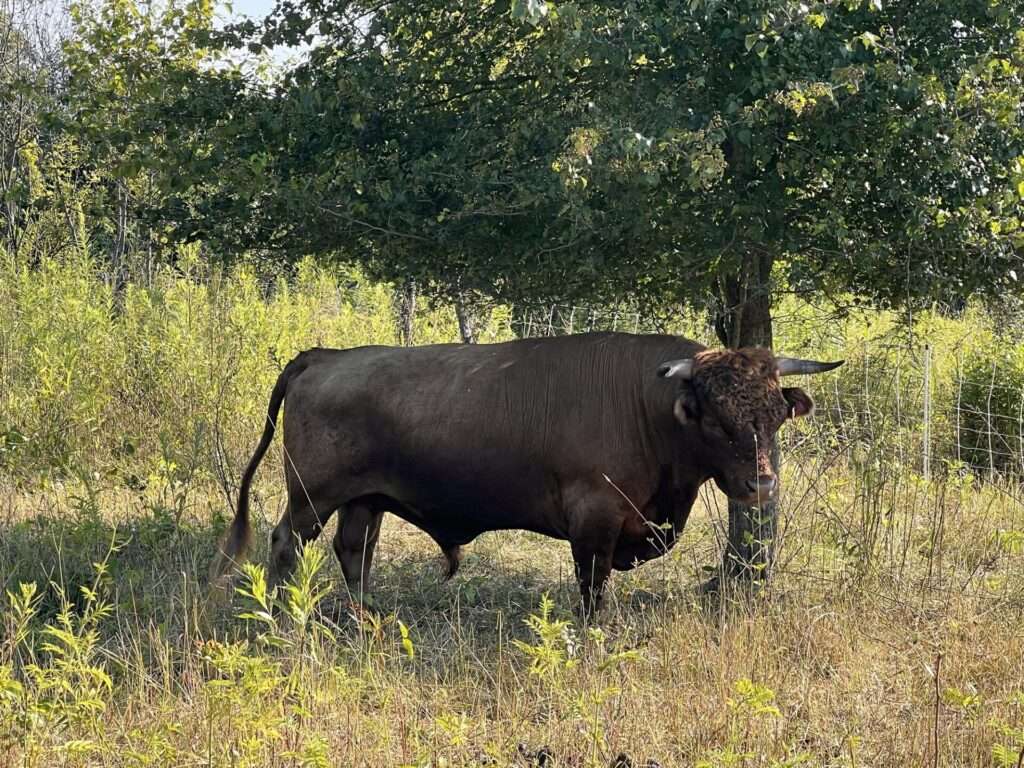
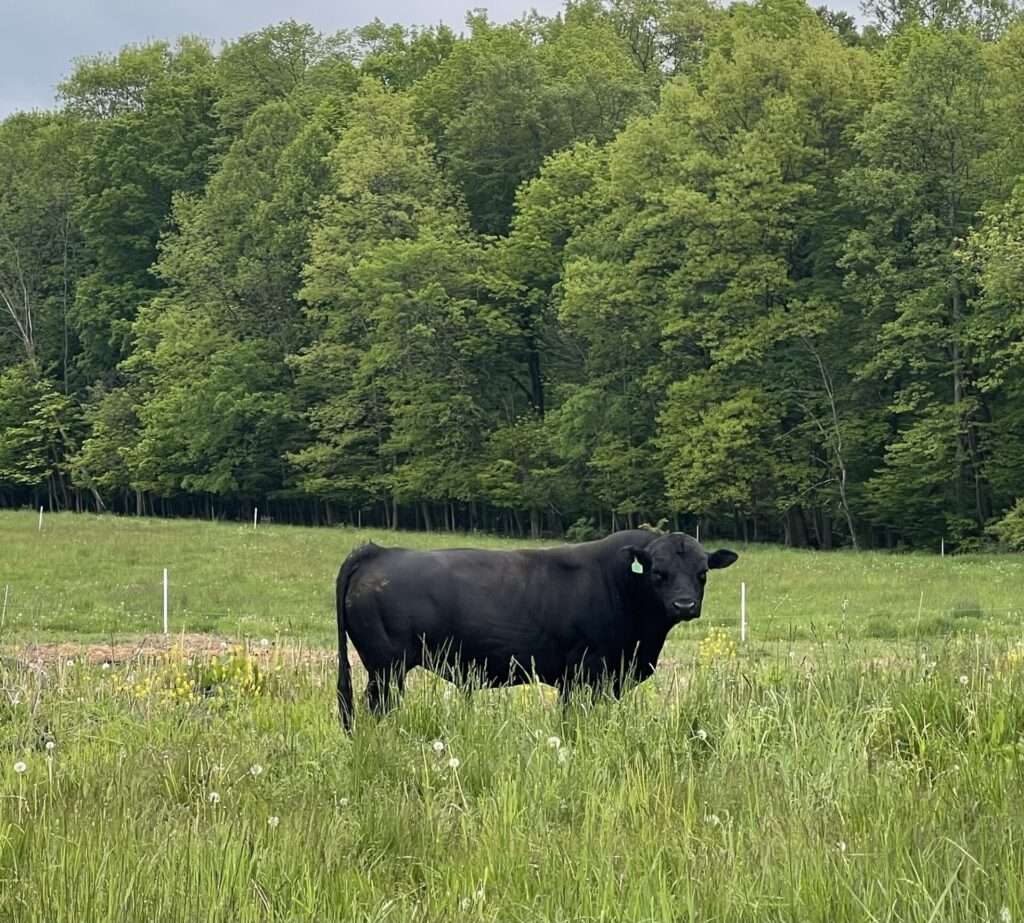
I’ve included photos of two bulls at various ages that we have raised from birth to herd sires in our Dexter breeding program. Feel free to share feedback, I have not reached perfection yet 😄 I hope my experience and photos are helpful.

Selecting a Bull Read More »

Farm Management

Dexter Dun Project – Jessica Petersen, PhD

This is the Dexter Dun Project Webinar, also known as the Carol Davidson Project, hosted by Jessica Petersen, PhD, Department of Animal Science, University of Nebraska-Lincoln, Nebraska

Brought to you by these Breeders, Affiliates, and Sponsors

Bryn Mawr

Since 2026
0 ads

DeVine Farms

Since 2025
0 ads

Grandma's Dexter Farm

Since 2025
22 ads

Dexter Dun Project – Jessica Petersen, PhD Read More »

General

Perceived value ….true for dexter milk, beef and breeding stock

A CONVERSATION ABOUT PERCEIVED VALUE:

A customer asked me how much it would cost for a gallon of raw milk .

I gave them a price of $15/gallon.

The customer responded: That’s seems really high.

I asked: What do you think is a reasonable price for this?

The customer answered: $4 maximum

I responded: Ok, then I invite you to do it yourself.

The customer answered: I don’t know how to.

I responded: Alright, then how about for $4/gallon, I’ll teach you how to. So besides saving you $11, you’ll learn valuable skills that will benefit you in the future.

The customer answered: Sounds good! Let’s do it!

I responded: Great! To get started, you are going to need some things. You will need a cow (≈$3000), 45# of dry matter quality feed A DAY, feeders, waterers, an area to let her be a cow, a shelter, a clean area to milk, a milking machine or supplies to hand milk into, preferably electricity for this indoor area and heated water, countless gallons of water, fencing to contain this cow, etc.
Not to mention, there is a very real possibility that your single cow gets sick and doesn’t produce, a bull or someone to AI her because no pregnancy, no milk. Injury, illness, and unexpected weather conditions are always present. Now, you are back to square 1 if she doesn’t breed, dries up, get sick, or dies.

The customer answered: But I don’t have any of those things and I can’t justify buying all of these for a gallon of milk.

I responded: Ok. Well then for an additional $11/gallon, I can rent my supplies, building, and supply hay/grain/minerals/pasture to you.

The customer answered: Okay. That’s fair.

I responded: Great! We will start the project on Monday.

The customer answered: I work Monday through Friday. I’m only available on the weekends.

I responded: If you want to learn from me then you will need to work when I work. We milk everyday, 2x day, so you will need to be here at least 2 hours every morning and every night year round.

The customer answered: That means I’m going to have to sacrifice a lot of my time!

I responded: That’s true. Remember, when you do a job yourself you need to account for unproductive factors.

The customer answered: What do you mean by that?

I responded: Milking a cow doesnt just take a couple hours morning and night. It takes time to muck out her area, town trips to pick up cleaning supplies/teat dip, trucking for hay. It takes time to bottle the milk cleanly, it takes jars, it takes more cleaning of equipment and facility, it takes wear and tear on your milking equipment and feeding equipment. And thats all on top of your other chores/responsibilities.
So we will see you Monday morning, 6 am.

The customer answered: At 6am?!! My work day doesn’t usually start until 8am!

I responded: A cow thrives on a set schedule, milking 2x day should be as close to 12 hours apart as can be, so if you want to start later, that’s ok. But you will need to come back in the evening after your full day of work and milk again at that time, so if you want to start at 8 am, you will milk again at 8 pm. After clean up and bottling milk… you can head home around 10 pm. Saturday and Sunday included. Blizzards or 100 F. No days off here.

The customer answered: You know, I’m realizing that a lot more goes in to quality food than what a customer sees in the finished project. Your proposal of $15/gallon is very reasonable. I would like you to milk and have it ready for me to just pick up..

CONCLUSION:

When you pay for a job, especially a custom job, (whether it’s a physical project or digital project or GROWING AND RAISING FOOD) you pay not only for the material and the work to be completed. You also pay for:

✔️ Knowledge
✔️ Experience
✔️ Custom Skills
✔️ Tools
✔️ Time to plan
✔️ Time to prepare
✔️ Professionalism
✔️ Work Ethic
✔️ Excellence
✔️ Discipline
✔️ Commitment
✔️ Integrity
✔️ Taxes
✔️ Licenses
✔️ Sacrifices
✔️ Liabilities
✔️ Insurance

If you desire fresh, healthy, locally grown food, please don’t disrespect a farmer by trying to get them to lower their prices.

If their proposal exceeds your budget, there’s nothing wrong with going elsewhere.

Just remember.. you get what you pay for.

👉🏼 FARMERS: Know your worth and be confident in it.

👉🏼 CONSUMERS: Recognize their worth and be respectful of it.

Sharing this to support all my friends, family and clients who are Farmers, Entrepreneurs, Business Owners and Tradesman.

-Unknown and edited

Perceived value ….true for dexter milk, beef and breeding stock Read More »

Selling

How to Successfully Sell Wholesale Produce

A USDA report published in 2021 says that sales of local edible farm products grew 35% from 2015 to 2017. This growth is thanks to increased sales through retailers, institutions, and wholesalers​.

Wholesale or business-to-business (B2B) selling is when a business (farm in this case) sells their products to another wholesale buyer or business (e.g., restaurant, grocery store, meat box service). 

How to Successfully Sell Wholesale Produce Read More »

Selling

Innovations in Yogurt Production Podcast

A Deep Dive Podcast, brought to you by Irish Dexter Cattlemen, on topics of interest to all farmers and ranchers. Subscribe to the free, monthly Irish Dexter Cattlemen Tips & Tricks Guide to get early access.

Brought to you by these Breeders, Affiliates, & Sponsors

Crest Point Farms Online

Since 2024
4 ads

Stay’N Put Farm Online

Since 2024
5 ads

Ashrons Acres

Since 2024
0 ads

Stumpys Acres

Since 2024
0 ads

Maple Creek Dexters

Since 2024
1 ad

Pipe Dreams Farm Butchery

Since 2025
0 ads

Hayburner Acres

Since 2025
0 ads

Grandma's Dexter Farm

Since 2025
22 ads

DeVine Farms

Since 2025
0 ads

Bryn Mawr

Since 2026
0 ads

Innovations in Yogurt Production Podcast Read More »

Podcasts

The Importance of Minerals Podcast

An Irish Dexter Cattlemen Deep Dive Podcast on topics of interest to all farmers and ranchers. Subscribe to the free, monthly Irish Dexter Cattlemen Tips & Tricks Guide to get early access.

Brought to you by these Breeders, Affiliates, & Sponsors

Crest Point Farms Online

Since 2024
4 ads

Stay’N Put Farm Online

Since 2024
5 ads

Ashrons Acres

Since 2024
0 ads

Stumpys Acres

Since 2024
0 ads

Maple Creek Dexters

Since 2024
1 ad

Pipe Dreams Farm Butchery

Since 2025
0 ads

Hayburner Acres

Since 2025
0 ads

Grandma's Dexter Farm

Since 2025
22 ads

DeVine Farms

Since 2025
0 ads

Bryn Mawr

Since 2026
0 ads

The Importance of Minerals Podcast Read More »

Podcasts

Reproduction and AI, by Kim May of the Facebook group The Science Of Owning Dairy cattle.

REPRODUCTION AND AI

For those interested in learning more about the bovine reproductive cycle and how we manipulate it, here is a basic summary.

Bovine Estrous Cycle Physiology

The bovine estrous cycle typically consists of 21 days, plus or minus a few days in each direction. Estrus is the period where the cow is receptive to the male or in a standing heat (not to be confused with estrous). Estrus (or heat) typically lasts around 20 hours. Signs of estrus include vocalizing, standing to be mounted, clear discharge from the vulva, increased activity, etc. During the period of estrus, progesterone is low and estrogen is high. Luteinizing hormone (LH for short) also increases during estrus and is the hormone that initiates ovulation. Ovulation is the release of an ovum or egg from the ovary. Ovulation actually occurs 10-15 hours after the end of estrus, in a period called metestrus. Metestrus lasts 3 to 5 days. During this period, an early corpus luteum (CL) is also forming. So where did this CL come from? It came from ovulation! When the ovary releases an egg, the left over structure on the ovary becomes the CL. During metestrus, you may notice a slightly bloody discharge from her vulva. Progesterone is still low during this period but it is starting to rise. The growing CL is actually what is producing the progesterone, and as it grows in size and maturity will be able to produce more progesterone.
As the CL continues to mature, we enter the phase of diestrus. At this point progesterone is high and this period lasts about 12 days.
Next up is proestrus. At this point in the cycle, the CL is regressing and progesterone is decreasing. Estrogen and LH do not like progesterone. They cannot increase until progesterone is low which is why they are increasing at this point as the CL is regressing. Estrogen and LH are increasing and getting the egg on the ovary ready to be released. Then the cycle starts all over again with estrus!
So basically, during heat LH initiates the egg to be released and the leftovers become a structure called a CL that produces progesterone. That CL will grow and produce more progesterone but will eventually fade away. This allows estrogen and LH to increase again and produce another egg.
In order to maintain a pregnancy, there must be a functioning CL. The high progesterone from the CL is what keeps the fetus from being aborted for the first few weeks.

Disclaimer: This is a very basic summary on the estrous cycle. There are other things going on (follicular waves, etc.) but in an effort to simplify things this includes only the major details.

Medications used to change the estrous cycle

Using medications to change the estrous cycle is super common. It can be used for synchronizing a herd to breed them at the same time, using a timed AI approach, or implanting embryos.

Lutalyse or PG: This medication lyses or destroys a CL. Because it gets rid of a CL, it also causes progesterone to decrease.

CIDR: This is an intravaginal device with slowly releasing progesterone. This will increase progesterone in the blood and stop LH and estrogen from increasing.

GnRH also known as Fertagyl or Factrel: This causes an LH surge and thus ovulation.

You’ll hear a lot that lutalyse will bring a cow into heat. While this can be true, it depends on where she’s at in the cycle. If it’s during diestrus where she has a mature CL, great! The CL will lyse, estrogen and LH will rise and then ovulation. If she is in metestrus or proestrus, lutalyse will do nothing for a young maturing or a regressing CL and she will not go back into heat any faster.

There’s many different AI protocols and what works best for you will depend on your cow, labor intensity desire, and cost.

Let’s start with AI on a natural heat. There’s a common AM PM rule when it comes to inseminating cattle. The rule basically states that when a cow comes into heat she should be AI’d 12 hours later. So she is in standing heat in morning, then AI in the evening and vice versa. If we think back to the estrous cycle, this makes sense. Estrus lasts about 20 hours and ovulation occurs 10-15 hours after the end of estrus. Cows typically come into standing heat around the middle of estrus. Let’s say hour 10. So then I would AI at hour 22. The cow should ovulate between hours 30 and 35. You don’t want to AI at the time of ovulation because the sperm have to go through a process before they can fertilize an egg. That process takes several hours. Early AI tends to lead to higher quality embryos but less of them for this reason. Whereas later AI can lead to higher chances of embryos but not great quality so lesser chance of an actual pregnancy. How long sperm last depends on the bull, extender used, and sexed vs conventional. Conventional should last about 24 hours. (Although I’ve played around with semen before and have had it last about 3 days in the fridge.) Sexed will last a little less than that so sometimes people with sexed semen will wait more like 16 hours vs 12 to account for that.

For timed AI…

Double ovsynch can be very useful for high producing first lactation dairy cows. It has about a 10% higher conception rate compared to regular ovsynch. That 10% difference is a little bit less as the cow gets older. The difference of double ovsynch from regular ovsynch is that you are presynchronizing the cow prior to AI to make sure she is at the ideal part of her cycle. For older cows, there’s also some evidence that 2 lutalyse injections 24 hours apart increases conception rates. The 2 injections basically make sure the CL is completely regressed. However, cons to the double ovsynch over regular is that it takes twice as long, more labor, and more drugs are used therefore increasing cost.

Ovsynch does not work as well in heifers. For heifers, I’m partial to 5 day CIDR. I included charts for double ovsynch, regular ovsynch, and 5 day CIDR.

For the girls that have a history of being more difficult to breed, I’ll always give a GNRH injection at time of breeding and AI again 12 hours later. I’ll also check the sperm. Just recently got a batch of brand new straws that only had 10% progressive motility.

I know that was a bunch of information to throw at everyone, so if you have any questions feel free to ask

or check out this site, which was used to write this article https://extension.psu.edu/timed-ai-protocols-double-ovsynch

Reproduction and AI, by Kim May of the Facebook group The Science Of Owning Dairy cattle. Read More »

Milking

Dexters – Poor Man’s Cow to Luxury Cow By Danielle Lowther

Poor Man’s Cow to Luxury Cow

How did the Poor Man’s Cow become owned by the wealthy and famous. Dexters and Kerry Cattle became recognized for their unique hardy attributes, Kerry for milk and Dexter for milk and meat. Dexters were known to get by on less, produce rich milk and raise a healthy vigorous calf for their owner’s table. Dexters were bred to their breed specific traits transforming them from just any poor Irish cows to these 2 beautiful, registered Dexter cows we see in these two later photos.

They were rare and they were at risk of being cross bred out of existence, but breeders in Ireland started selecting and registering Dexter cattle with breed defining traits to preserve and register them in a herd book. Once the promotion of Dexters began every wealthy aristocrat wanted one. All of a sudden, they were not the Poor Man’s cow but rather for a short spell until the numbers grew, cattle that only the wealthy could afford. Consider as this article states a $200 dollar Dexter cow from 1915. This is the equivalent of $6221.78. I checked multiple inflation calculators to verify that number as being correct. With the highest price the ad mentions at $350 in 1915, you would pay $10,936.81 today! Consider today we pay less for quality breeding stock. Rarity always drives the price up and just like with the rarity of gold it dictates the price.
Registered cows were important then and today. Registered Dexters will always hold a higher value than unregistered. Still with Dexters it took devoted breeders to breed Dexters according to the Dexter Standard to the highest quality like the 2 cows you see in the photographs. Not every Dexter cow was nearly as ideal as these two beauties. Compton Daphne, I speculate is a Chondro Carrier while Grinstead Watercress I speculate to be a non-carrier. Of course, we can never go back and test them so it’s just speculation. Both are extremely well bred and both fit the standard well.

So, as you can see Dexters are a dual-purpose breed that can be bred by multiple types of people regardless of fortune because they are a great pick for everyone. Whether you’re a small homesteader trying to save money with a thrifty headache free cow or someone who just wants to raise them as beautiful lawn mowers true Dexters are a great fit for these reasons and so many more!

30 Jan 1915 is the date of article written.
Photo of cattle in town are common type of Celtic cow that roamed Ireland.
Other two photos are of registered Dexters.

Dexters – Poor Man’s Cow to Luxury Cow By Danielle Lowther Read More »

Historical